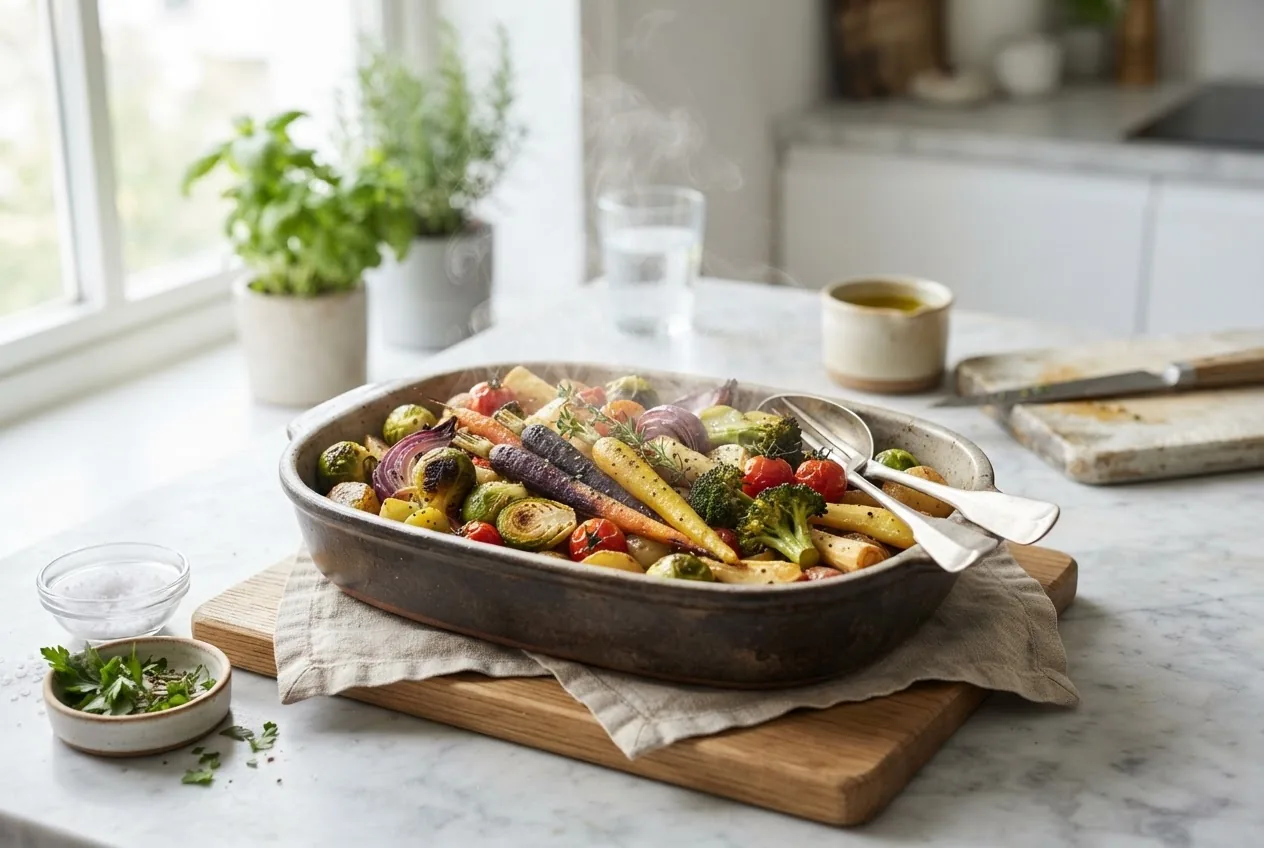
hot vegetable dishes you can rely on: by the end you’ll be able to plan, cook, and store five versatile hot vegetable meals using techniques that preserve flavor and nutrients. Total time: plan 1–3 hours (recipes vary). Skill level: confident beginner to intermediate home cook.
Before you start, this hands-on guide lists tools, seasonal produce tips for Texas markets, and step-by-step procedures so you avoid overcooking and get reliable results every time.
Before you start
- Prerequisites: basic knife skills, a reliable oven and stovetop, and a thermometer for roasts (optional).
- Tools and materials: wok or large skillet, sheet pan, roasting rack, steamer basket, chef’s knife, cutting board, measuring spoons, mixing bowls.
- Pantry staples to have on hand: olive oil, neutral oil (grapeseed), kosher salt, black pepper, smoked paprika, cumin, soy sauce, apple cider vinegar, vegetable broth.
- Texas produce advantage: look for local carrots, cabbage, broccoli, and seasonal peppers at farmers markets between spring and fall.
Core steps to master hot vegetable dishes are below. Each numbered step opens with a bold action phrase and includes the relevant H2 content so you can use this as a checklist while cooking.
-
Understand what hot vegetable dishes deliver
Introduction to Hot Vegetable Dishes
By “hot vegetable dishes” we mean cooked-vegetable preparations served warm as mains, sides, or components in soups and casseroles. These range from quick sautéed vegetable recipes to slow-roasted root vegetables and hearty vegetable casseroles. Cooked vegetables provide comforting textures and often release flavor compounds that raw produce does not. Expect better digestibility for some vegetables (like cruciferous types) and deeper, caramelized flavors from roasting or sautéing.
Cooking transforms texture, aroma, and nutrient availability. For example, cooking increases lycopene bioavailability in tomatoes and softens fibrous stems so nutrients are easier to extract. If you want foundational knowledge about produce categories before applying cooking techniques, refer to the main
fruit types guide.Transition: now that you know what hot vegetable dishes are and why they matter, let’s explore the popular types and when to use each method.
-
Identify the popular categories and when to use them
Popular Types of Hot Vegetable Dishes
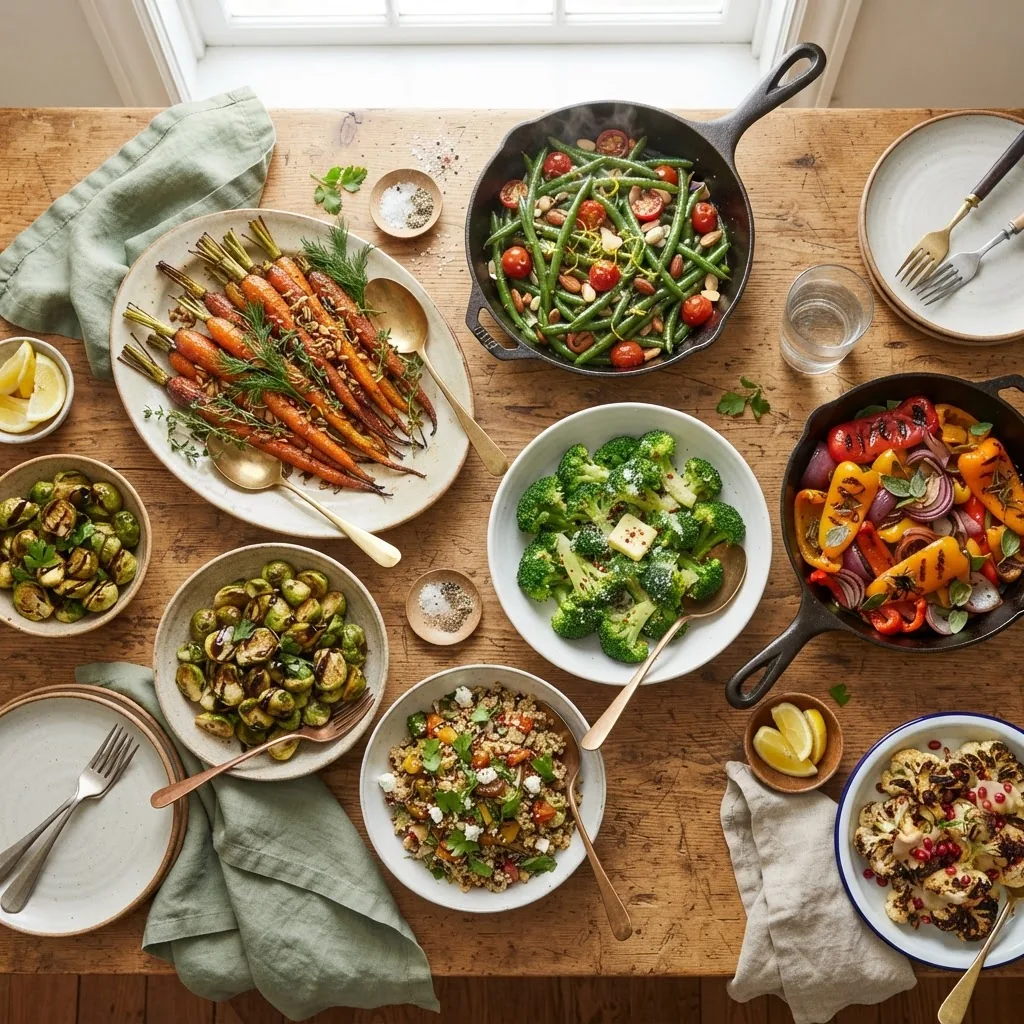
- Roasted vegetables — Root and hearty veg (carrots, potatoes, beets, winter squash). High-heat (400–450°F / 200–230°C) roasting yields caramelization and crisp edges. Best when you want concentrated sweetness and a rustic texture. Serve with herbs and a squeeze of citrus.
- Sautéed vegetables — Quick-cooking leafy and tender veg (greens, zucchini, mushrooms, bell peppers) in a hot pan with oil and aromatics. Use medium-high heat, 4–8 minutes, stirring frequently for even browning and minimized moisture accumulation.
- Steamed vegetables — Gentle method for broccoli, green beans, asparagus. Short steam times (2–6 minutes) preserve bright color and some heat-labile nutrients. Finish with a drizzle of olive oil or a citrus vinaigrette.
- Stir-fry / wok — High-heat, fast-cook for thinly sliced veg (bell peppers, snap peas, bok choy). Use a hot wok, 1–3 minutes per tender component. The method relies on quick searing to keep vegetables crisp-tender.
- Grilled vegetables — Grill peppers, eggplant, and corn for smoky flavors; char directly on medium-high heat for 6–12 minutes, rotating once. Works beautifully with Texas summer peppers.
- Vegetable soups and stews — Combine slow-simmered root and cruciferous veg for comfort meals; long simmering (20–45 minutes) develops body and blends flavors—adjust salt late in cooking.
- Vegetable casseroles and gratins — Baked dishes with a binder (cheese, béchamel, or a light cream sauce) and topping; typical bake time 25–45 minutes at 350°F (175°C) until bubbling and golden.
- Blanched and finished — Blanch (briefly boil) then finish vegetables in butter or oil to preserve color and texture, useful for green beans and asparagus. Blanch times: 1–3 minutes depending on size.
- Stewed or braised vegetables — Slow-cooked with liquid for tender results; tomatoes, eggplant, and cabbage become silky with low simmering for 25–40 minutes.
Tip: when you want to dig deeper into specific varieties used in these styles, check the guide to vegetable names and nutritional facts for pictures and nutrient data.
vegetable names and nutritional factsTransition: with types sorted, the next step is mastering the techniques that make them sing.
-
Master the essential techniques
Essential Cooking Techniques for Hot Vegetable Dishes
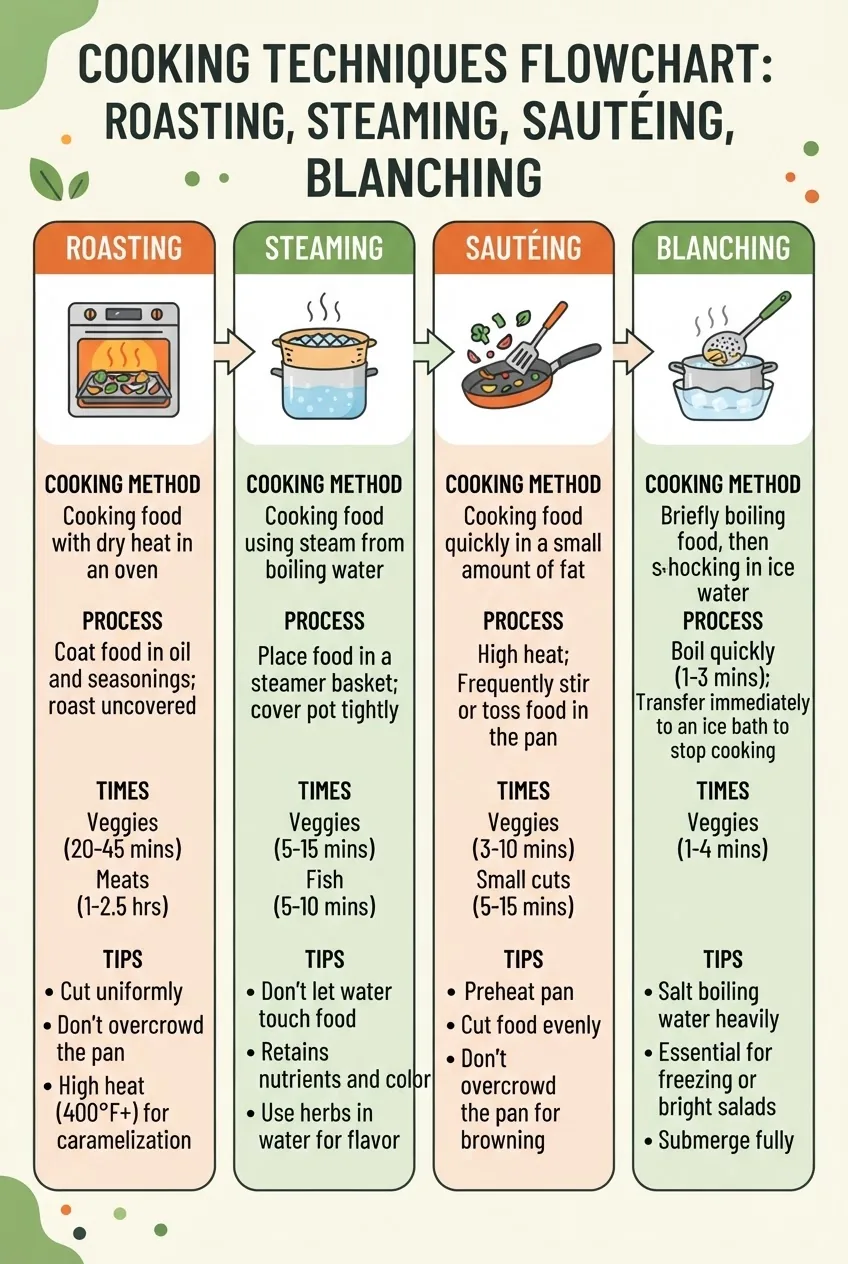
This section explains how to execute and why each technique matters. Where useful, I include typical settings and timing so you can reproduce results reliably.
1. Blanching (what & how)
Blanching means boiling vegetables briefly then shocking in ice water to stop cooking. Use a large pot of boiling salted water (1 tbsp salt per 4 quarts) and an ice bath. Timing: thin green beans 1–2 minutes; broccoli florets 2–3 minutes; asparagus 1–3 minutes depending on thickness. Purpose: set color, remove raw bitterness, and prep for finishing sauté or freezing.
2. Roasting tips and settings
Preheat oven to 400–425°F (200–220°C). Toss chopped vegetables in 1–2 tbsp oil per pound, season with ¾–1 tsp kosher salt per pound, and spread in a single layer on a sheet pan. Roast small diced root veg 25–35 minutes; larger wedges 35–50 minutes, turning halfway. For even caramelization, avoid overcrowding; use two pans if necessary.
3. Steaming durations and technique
Steaming preserves color and texture. Bring 1–2 inches of water to a simmer under a steamer basket. Cover tightly to trap steam. Typical times: broccoli florets 4–6 minutes, green beans 3–5 minutes, spinach 1–2 minutes. Remove promptly and toss with oil or butter to coat.
4. Sautéing methods and caramelization
Use a heavy skillet over medium-high heat. Heat 1–2 tbsp oil until shimmering. Add aromatics (garlic/onion) first for 30–60 seconds, then add vegetables in order of density—harder vegetables first. For caramelization, avoid crowding and allow 1–2 minutes of contact time before stirring; this builds flavorful brown edges. Caramelization is the Maillard reaction and happens best between 300–400°F surface temperature.
5. Stir-frying in a wok
Preheat the wok until smoking slightly for high heat. Use a neutral oil with a high smoke point (grapeseed, peanut). Cut vegetables thin and uniform (⅛–¼ inch). Stir constantly; toss every 15–30 seconds. Add sauce at the end (1 tbsp soy + 1 tsp cornstarch + 2 tbsp broth) and cook 30–60 seconds until glossy.
6. Combining methods (e.g., blanch then sauté)
For bright, tender-crisp greens, blanch for timing above, drain and dry, then finish in a hot skillet with 1 tbsp oil and aromatics for 1–2 minutes. This gives color preservation plus flavor development.
7. Food safety basics while cooking (temperatures and timing)
Keep cooked vegetables at or above 140°F (60°C) if holding; cool cooked dishes from 140°F to 70°F within two hours and to 41°F within an additional four hours when refrigerating. For authoritative guidance, consult the USDA Food Safety resources.
Transition: with techniques practiced, it’s time to cook—below are five detailed recipes with exact quantities and timings, including a real example where I describe outcomes and substitutions common in Texas kitchens.
-
Cook five top hot vegetable recipes with step-by-step instructions
Top Hot Vegetable Recipes with Step-by-Step Instructions
Each recipe serves 4. Read fully before starting; prep times and cook times are listed.
Recipe 1 — Roasted Broccoli with Lemon-Almond Gremolata (30 min)
Serves 4. Prep 10 min, cook 20 min.
Ingredients: 1.5 lb (700 g) broccoli florets, 2 tbsp olive oil, ¾ tsp kosher salt, ½ tsp black pepper, 1 lemon (zest + 1 tbsp juice), ¼ cup sliced almonds toasted, 1 garlic clove minced.
- Preheat oven to 425°F (220°C). Line a sheet pan.
- Toss broccoli with oil, salt, and pepper; spread in a single layer (no crowding).
- Roast 18–20 minutes, stirring once at 10 minutes, until edges are browned and stems are tender when pierced with a fork.
- Make gremolata while broccoli roasts: combine almond, lemon zest, garlic, and lemon juice; adjust salt.
- Toss and serve hot with gremolata sprinkled on top. Outcome note: the florets should be tender with crisped tips; if they steam instead of roast, your pan is overcrowded—use two pans next time.
Serving tip: pairs with grilled fish or as a hearty side for tacos. For nutrients on broccoli, consult broccoli nutrition facts.
Substitution note from experience in Texas kitchens: when spring broccoli is small, roast whole small florets 12–15 minutes for best texture.
Recipe 2 — Tex-Mex Sautéed Green Beans with Roasted Poblano (18 min)
Serves 4. Prep 8 min, cook 10 min.
Ingredients: 1 lb (450 g) green beans trimmed, 1 roasted poblano pepper (skin removed, sliced), 1 tbsp olive oil, 2 garlic cloves sliced, ½ tsp smoked paprika, ½ tsp kosher salt, 1 tbsp lime juice.
- Heat skillet over medium-high; add oil and garlic, 30 seconds.
- Add green beans and toss 5–7 minutes until bright and tender-crisp.
- Stir in sliced roasted poblano, smoked paprika, and salt; cook 1–2 minutes more.
- Finish with lime juice and serve immediately. Outcome note: aiming for snap when bitten; if soft, reduce initial cooking by 1–2 minutes next time.
Nutrition tip: green beans benefit from a short cook to keep vitamin C and texture. For classification details that affect prep, see green beans classification.
Recipe 3 — Cabbage and Carrots Braised in Mustard-Dill Broth (45 min)
Serves 6. Prep 10 min, cook 35 min.
Ingredients: 1 medium green cabbage (about 2 lb / 900 g) cored and sliced, 3 medium carrots (about 300 g) peeled and thickly sliced, 2 tbsp olive oil, 1 onion diced, 2 garlic cloves minced, 1 cup low-sodium vegetable broth, 1 tbsp Dijon mustard, 1 tbsp apple cider vinegar, 1 tsp dill (fresh or ½ tsp dried), 1 tsp salt, ½ tsp pepper.
- Sauté onion in oil over medium heat 4–5 minutes until translucent; add garlic 30 seconds.
- Add carrots and cabbage; stir 2 minutes to wilt slightly.
- Pour broth, mustard, and vinegar; bring to a simmer, cover, and cook 20–25 minutes until carrots and cabbage are tender.
- Uncover and raise heat 2–3 minutes to evaporate excess liquid; finish with dill, salt, and pepper. Outcome note: this yields silky cabbage with a tangy finish—if too watery, simmer uncovered longer.
Serving: spoon over brown rice or serve alongside roasted pork. For calorie and nutrient detail on cabbage, see the cabbage calorie and nutrition guide.
Recipe 4 — Hearty Vegetable Soup with Seasonal Texas Produce (1 hour)
Serves 6. Prep 15 min, cook 45 min.
Ingredients: 2 tbsp olive oil, 1 onion chopped, 2 carrots diced (about 200 g), 2 celery stalks diced, 2 medium potatoes diced (about 400 g), 1 cup chopped tomatoes (canned or fresh), 1 cup chopped kale, 1 cup corn kernels (fresh if in season), 6 cups low-sodium vegetable broth, 1 tsp dried thyme, 1 bay leaf, 1 tsp salt, ½ tsp pepper.
- Sauté onion, carrot, and celery in oil over medium heat 6–8 minutes until softened.
- Add potatoes, tomatoes, broth, thyme, and bay leaf; bring to a simmer and cook 20–25 minutes until potatoes are tender.
- Stir in kale and corn; simmer 3–5 minutes until kale wilts and corn is tender.
- Adjust salt and pepper; remove bay leaf and serve hot. Outcome note: soup thickens slightly on standing; reheat gently.
Pair with crusty bread or a grilled cheese for a comforting dinner. Tip: swap in summer squash or poblano for local Texas flavor.
Recipe 5 — Wok Vegetable Stir-Fry with Ginger-Soy Glaze (20 min)
Serves 4. Prep 10 min, cook 10 min.
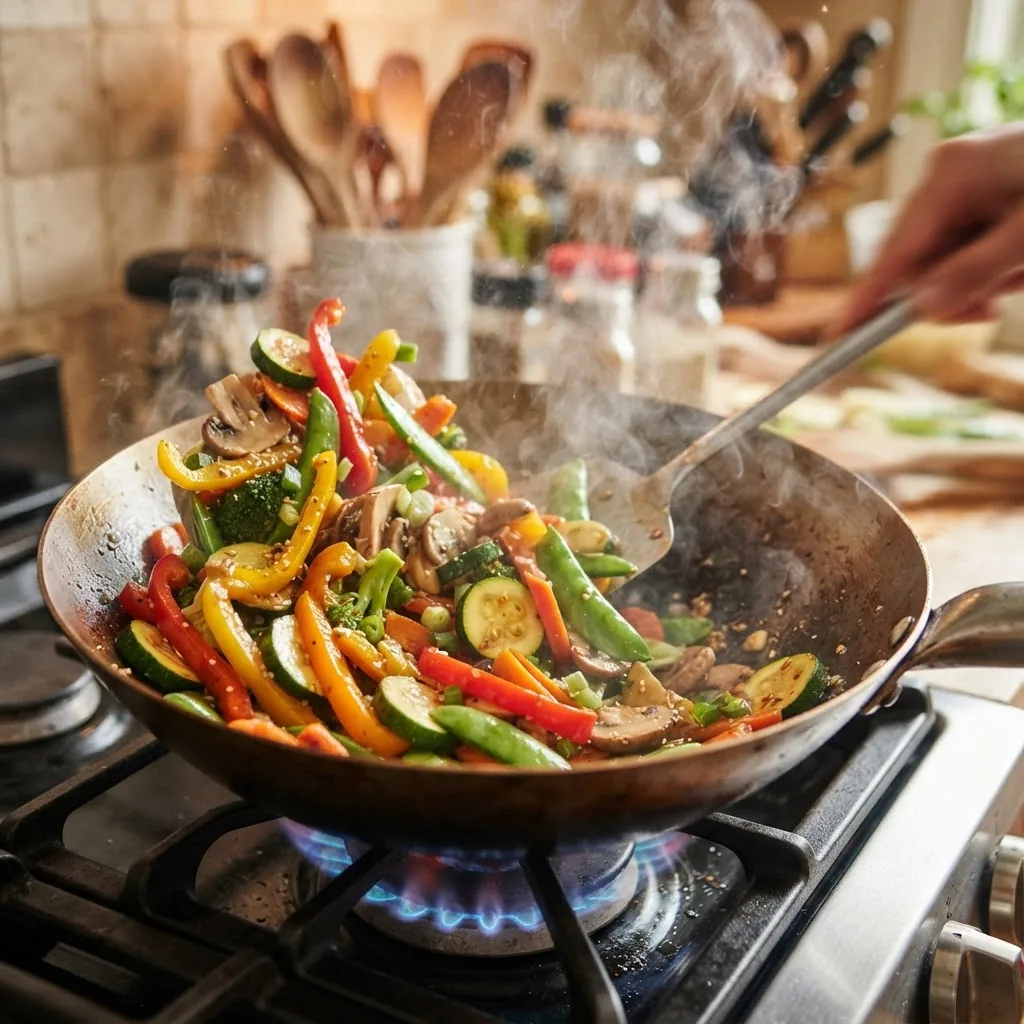
Ingredients: 2 tbsp neutral oil, 1 red bell pepper thinly sliced, 1 yellow zucchini sliced into half-moons, 1 cup snap peas, 1 cup sliced mushrooms, 1-inch ginger grated, 2 garlic cloves minced, 2 tbsp low-sodium soy sauce, 1 tbsp rice vinegar, 1 tsp honey or agave, 1 tsp cornstarch mixed with 2 tbsp water (slurry).
- Preheat wok until very hot; add oil and swirl.
- Add ginger and garlic 10–15 seconds, then vegetables in order of density, stir-frying 2–3 minutes per group.
- Mix soy sauce, rice vinegar, honey; add to wok and stir 30 seconds.
- Add cornstarch slurry and cook 30–60 seconds until glaze thickens and coats vegetables. Outcome note: vegetables should be bright and crisp-tender. Serve over brown rice.
For visual technique, follow the stir-fry image above while cooking.
Transition: after practicing these recipes you’ll have applied the core techniques. Next we examine how cooked vegetables affect nutrition and health.
-
Review nutritional benefits and trade-offs
Nutritional Benefits of Hot Vegetable Dishes
Cooking often increases availability of certain nutrients (like lycopene and beta-carotene) while reducing some heat-sensitive vitamins (like vitamin C and some B vitamins). Below are key, evidence-based benefits with links to reputable resources.
- Increased bioavailability: Cooking boosts lycopene in tomatoes and beta-carotene in carrots; according to a 2023 USDA report on nutrient retention, heat can improve absorption of some carotenoids when combined with fat (USDA Nutrient Database).
- Improved digestibility: Cooking softens fibrous cell walls in crucifers and legumes, making nutrients easier to access.
- Antioxidants and phytonutrients: Many cooked vegetables maintain strong antioxidant properties; the trade-off depends on time and temperature.
- Fiber retention: Total fiber remains largely intact after cooking; cooked vegetables still support gut health and satiety.
- Heart health benefits: Diets high in cooked vegetables are associated with improved cardiovascular markers; see the American Heart Association guidance on vegetable-rich diets (American Heart Association).
Additional reading: to address misconceptions about vegetable harm or benefit, consult the vegetables health benefits overview. For avocado-related nutrient info often used as a finishing ingredient, see avocado nutrition. To pair vegetable-rich meals with weight objectives, check weight loss friendly fruits and vegetables.
Practical caveat: cooking losses vary by method—short steaming or quick sautéing preserves most vitamins, while prolonged boiling causes greater leaching into cooking liquid. If you use the liquid (soups, stews), you retain those water-soluble nutrients.
Transition: with nutrition clear, apply the practical seasoning, timing, and storage tips in the next section.
-
Apply professional tips and avoid common pitfalls
Tips and Tricks for Perfect Hot Vegetable Dishes
- Season at two points: salt lightly at the start (about ½ tsp per pound) for internal seasoning and adjust at the end to taste.
- Avoid mushy vegetables: use high heat and short times for tender vegetables; when blanching, shock immediately. Example: for broccoli, roast at 425°F for 18–20 minutes rather than boiling for 10–15 minutes.
- Balance flavors without excess fat: use lemon zest, vinegars (1 tbsp), or concentrated condiments (soy, miso—1 tsp) to add depth without extra oil.
- Adjust cooking time for size: dice size dictates roast and sauté time—cut uniform pieces (½–1 inch) for even doneness.
- Use heat layering: cook dense vegetables first, add tender ones later in stir-fries and sautés to keep texture contrast.
- Rest roasted vegetables briefly: allow 3–5 minutes to let steam escape so they stay crisp rather than soggy.
- Storage best practices: cool cooked vegetables to room temperature within 2 hours and refrigerate in shallow airtight containers up to 4 days; reheat to 165°F (74°C) before serving.
- Freeze smartly: blanch then freeze on a tray before bagging to retain texture; most cooked vegetables keep 8–12 months if blanched properly.
- Vegetable preparation fundamentals: for more step-by-step prep techniques, see vegetable preparation and cooking tips.
Examples from experience: I often reduce oil by 25% and compensate with a teaspoon of toasted sesame oil at the end for aroma; that yields perceived richness without excess calories. If a pan steams rather than browns, increase heat and dry your veg before adding to the skillet.
Transition: you’ll want quick answers to common questions; the FAQ section and JSON-LD below make those clear and sharable.
-
Review common mistakes and how to avoid them
Common mistakes in cooking vegetables
I learned this the hard way: I once tried to roast mixed vegetables without staggering their sizes and ended up with both burnt and undercooked pieces. From that failure I now always cut vegetables uniformly (½–1 inch) and roast similar-density items together. Other frequent mistakes I see:
- Overcrowding pans — causes steaming instead of roasting. Fix: use two sheet pans or roast in batches.
- Adding salt too late or too heavily — season lightly early and adjust at the end.
- Not drying vegetables before sautéing — wet veg lowers pan temperature; pat dry first.
- Boiling without using the cooking liquid — if you boil vegetables for flavor, reuse the liquid in soups to keep nutrients.
-
Use a final checklist and know when to call a pro
Storage tips for cooked dishes
Store cooled dishes in shallow containers, labeled with date: refrigerate at 40°F (4°C) or below up to 4 days; freeze up to 8–12 months for blanched veg. Reheat thoroughly to 165°F (74°C). For safety guidance see the USDA Food Safety pages listed earlier.
Final checklist
Task Threshold Uniform cutting ½–1 inch pieces for even cooking Roast temperature 400–425°F (200–220°C) Sauté oil quantity 1–2 tbsp per pound Storage fridge ≤4 days at ≤40°F (4°C) When to call a professional
If you need large-quantity, food-safe delivery for events (hundreds of servings), or have questions about allergies and cross-contamination in commercial kitchens, consult a professional caterer or food safety consultant. Also call a nutritionist for complex dietary restrictions beyond general vegan/vegetarian compatibility.
Conclusion: Mastering a few core techniques—roasting, sautéing, steaming, and proper seasoning—lets you turn local Texas produce into nourishing hot vegetable dishes that are flavorful and healthful. Start with one recipe above, practice the timing and pan techniques, then expand with seasonal swaps. Ready to cook? Try the roasted broccoli or stir-fry tonight and compare results.
Call to action: bookmark this guide, pick one recipe, and commit to practicing that technique three times this month to lock in skill and flavor confidence.
A pragmatic note from the author: when summer peppers are abundant at Texas markets, I substitute poblano or jalapeño in stir-fries and roasted dishes for a localized flavor profile—roast at 450°F until charred, then peel and slice.