Yes — you can eat too much fruit if your portions push daily calories, sugar or fructose beyond individual metabolic limits; most adults should aim for about 2 cups (2–3 servings) per day as part of a balanced diet, adjusting for activity, diabetes, pregnancy and weight goals to avoid blood sugar spikes and weight gain.
How much fruit is too much for an average adult?
Answer: For most adults, more than 2–4 cups (about 2–4 servings) daily can be “too much” if it increases total calories or sugar beyond energy needs; safe upper limits depend on activity, body size and medical conditions.
U.S. dietary guidance commonly recommends 1.5–2 cups of fruit per day for adults as a baseline; active people can tolerate more because they burn additional calories. “Too much” means fruit intake that regularly adds excess calories or sugar without displacing nutrient-dense foods like vegetables, whole grains and protein.
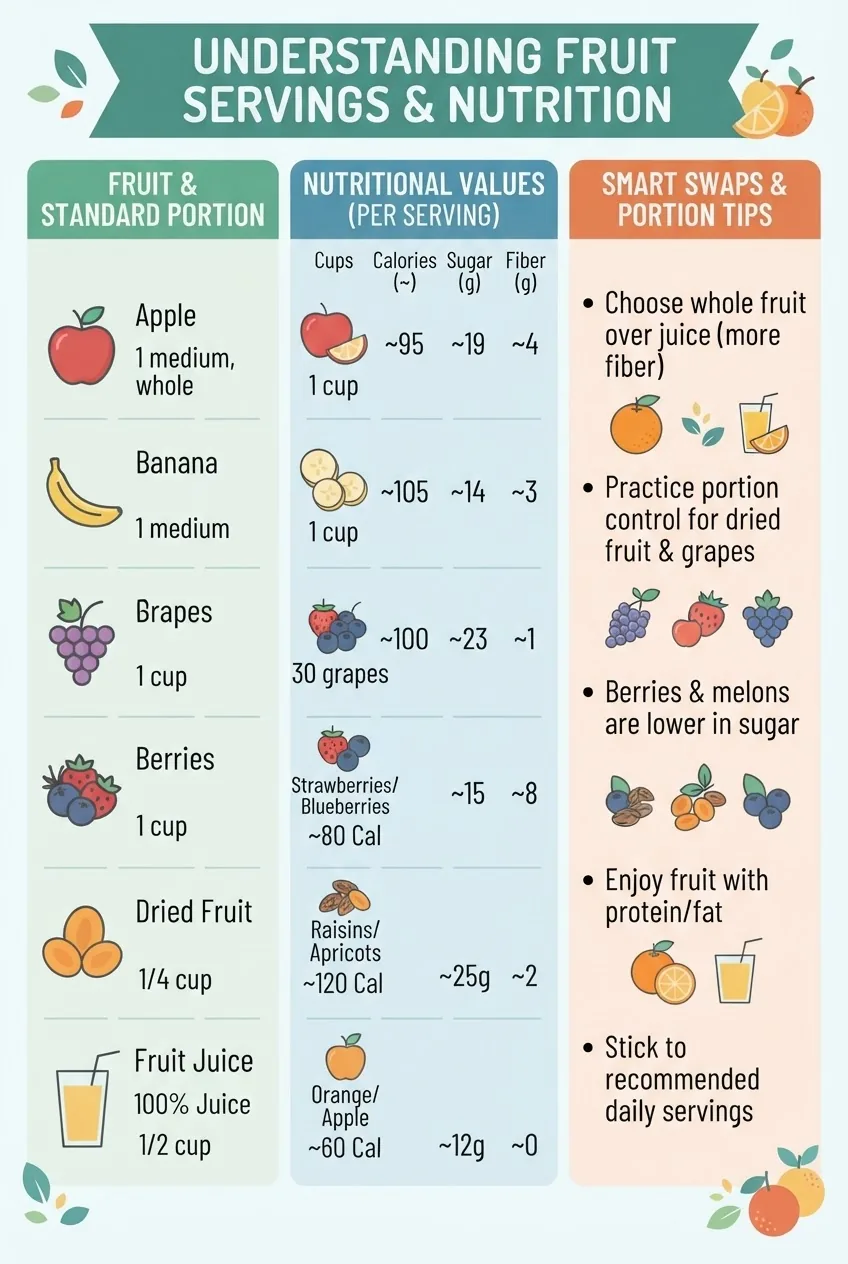
Serving definition: In U.S. terms a “cup” of fruit equals 1 cup raw or 1/2 cup dried fruit or 1 cup 100% fruit juice; a serving typically maps to one medium fruit like an apple or banana (about 1 cup raw).
What counts as a serving of fruit and how do I measure it?
Answer: One serving is typically 1 medium fruit (apple, orange), 1 cup chopped fruit, 1/2 cup cooked or dried fruit, or 3/4–1 cup berries; use bowls, kitchen scales, or quick visual cues (fist-sized = ~1 cup) to measure portions.
Term: Serving: a standard portion size used to compare foods and track intake, often defined by volume (cups) or weight (grams).
Practical measures: an average medium apple or orange ≈ 150 g ≈ 1 cup; a cup of grapes ≈ 150 g; 1/2 cup raisins ≈ 80–90 g but contains concentrated sugar; 1 small banana ≈ 100–110 g and counts as about 2/3–1 serving depending on size. Use a kitchen scale or the food label when available.
Is eating too much fruit bad for you?
Answer: Eating too much fruit can be harmful if it causes chronic calorie excess, elevated blood sugar or dental decay; however, whole fruit rarely harms when consumed within recommended servings and balanced with proteins, fats and fiber-rich vegetables.
Whole fruits contain fiber, water and micronutrients that blunt sugar absorption compared with juice, but excessive amounts can still provide surplus carbohydrates and energy. Risk increases with frequent intake of high-sugar fruits, fruit juice, or dried fruit where sugar is concentrated.
Fructose: a simple sugar naturally found in fruit that the liver metabolizes differently than glucose and can, in high amounts, contribute to triglyceride production and fatty liver.
How does fruit sugar affect blood glucose and diabetes risk?
Answer: Whole fruit produces slower, smaller blood glucose rises than refined sugars or juices because of fiber; however, excessive fruit—especially high-glycemic fruits or juices—can raise average glucose and complicate diabetes control.
Glycemic index: a numbered scale that measures how quickly a carbohydrate-containing food raises blood glucose compared with a reference (pure glucose).
People with type 2 diabetes should prioritize low-to-moderate glycemic fruits (berries, apples, pears) and avoid large portions of high-glycemic choices (ripe bananas, watermelon) and fruit juices. Pair fruit with protein or fat at meals to slow glucose absorption and monitor post-meal blood glucose to individualize safe portions.
Does fruit cause weight gain?
Answer: Fruit alone does not inherently cause weight gain, but excess fruit calories added on top of daily needs can; weight gain occurs when total daily calories exceed expenditure, regardless of whether they come from fruit.
Worked example: three medium bananas ≈ 315–360 kcal total; if your daily maintenance is 2,200 kcal, and you add those bananas without reducing other calories or increasing activity, weekly surplus calories can produce measurable weight gain over months. Fruit used as a snack replacement for higher-calorie processed foods typically supports weight control.
Are some fruits safer than others if you eat a lot?
Answer: Yes — fruits higher in fiber and lower in sugar per serving (berries, apples, pears) are safer when eaten frequently; high-sugar fruits (grapes, mangoes, cherries) and concentrated forms (dried fruit, juice) create greater metabolic load.
When comparing fruits, consider sugar grams, fiber grams and portion size together. Berries offer 3–8 g fiber per cup and modest sugar, while tropical fruits like mango can contain 45–50 g sugar per medium fruit. Choose whole, lower-sugar fruits for higher daily intake.
| Fruit (typical serving) | Calories | Sugar (g) | Fiber (g) | Notes |
|---|---|---|---|---|
| Apple (1 medium, 182 g) | 95 | 19 | 4.4 | High fiber, good snack |
| Banana (1 medium, 118 g) | 105 | 14 | 3.1 | Higher sugar when ripe |
| Blueberries (1 cup, 148 g) | 84 | 15 | 3.6 | Antioxidant-rich |
| Grapes (1 cup, 151 g) | 104 | 23 | 1.4 | Quick sugar load |
| Mango (1 cup, 165 g) | 100 | 23 | 2.6 | Tropical, sweeter |
| Orange (1 medium, 131 g) | 62 | 12 | 3.1 | Vitamin C source |
Are dried fruit and fruit juice worse than whole fruit?
Answer: Yes — dried fruit and fruit juice are more concentrated forms of sugar and calories and are easier to overconsume; swap them for whole fruit or limit serving size to avoid excess sugar and calories.
Dried fruit: water removed increases sugar density—1/4 cup raisins ≈ 120 kcal and equals ~1 cup fresh grapes in sugar. Juice: removes fiber and speeds sugar absorption; 8 oz of orange juice can equal 3–4 oranges by sugar content. Use the 1/2-cup dried fruit = 1 cup fresh rule and treat juice as a small occasional serving.
| Form | Common serving | Calories | Practical note |
|---|---|---|---|
| Fresh fruit | 1 medium piece or 1 cup | ~60–120 | Best fiber and satiety |
| Dried fruit | 1/4–1/2 cup | ~100–200 | Easy to overeat |
| 100% fruit juice | 8 fl oz (1 cup) | ~100–130 | Lacks fiber; treat like soda replacement |
How should people with diabetes or prediabetes manage fruit intake?
Answer: People with diabetes should limit fruit to measured portions, prefer low-glycemic fruits, pair fruit with protein or fat, and monitor post-meal glucose; individualized targets often range from 1–2 servings per meal depending on medications and glucose response.
Check blood glucose 1–2 hours after fruit-containing meals to see personal responses. If using insulin or insulin-secretagogues, coordinate fruit portions with carbohydrate counting. Fruit choices and timing should be discussed with a registered dietitian or diabetes educator for tailored guidance.
Can eating too much fruit cause high triglycerides or fatty liver?
Answer: In susceptible people, excessive fructose from high fruit intake, fruit juices or sugary foods can raise triglycerides and contribute to nonalcoholic fatty liver disease (NAFLD); moderation and replacing concentrated sugars with whole low-fructose fruits reduces risk.
Fructose is metabolized primarily in the liver; unlike glucose, excess fructose can fuel de novo lipogenesis (new fat creation) when consumed in large quantities. Individuals with existing fatty liver, high triglycerides, metabolic syndrome or heavy soft-drink/dietary-fructose intake should limit high-fructose sources and consult their clinician.
Insulin resistance: a metabolic state where cells respond less effectively to insulin, often raising circulating blood sugar and triglycerides and increasing cardiovascular risk.
What are signs you’re eating too much fruit?
Answer: Key signs include unexplained weight gain, persistent high post-meal blood glucose, rising fasting triglycerides on labs, frequent dental cavities, and gastrointestinal symptoms like bloating or diarrhea from excessive fiber or fructose.
- Weight gain despite unchanged diet: suggests caloric surplus.
- Higher blood glucose readings after meals: check meter readings 1–2 hours after fruit intake.
- Lab changes: rising triglycerides or ALT/AST suggesting liver stress.
- Oral health: increased cavities or sensitivity linked to prolonged sugar exposure.
- GI distress: osmotic diarrhea or bloating from excessive sorbitol/fructose in some fruits.
How to balance fruit with other foods to avoid excess sugar and calories?
Answer: Balance fruit by pairing 1 serving with 5–10 g protein or a small healthy fat, spacing fruit across meals rather than eating many servings at once, and substituting fruit for processed snacks instead of adding it on top of current intake.
Practical combinations: apple with 1 tbsp peanut butter, berries mixed into plain Greek yogurt, or an orange with a small handful of almonds. These pairings slow absorption, increase satiety and reduce the chance that fruit will simply add extra calories to the day.
How many fruits can I eat in a day if I’m trying to lose weight?
Answer: When losing weight, aim for 1.5–2 cups of fruit daily as part of a calorie-restricted plan, focusing on low-calorie, high-fiber fruits and using fruit to replace higher-calorie snacks to keep total daily calories lower than expenditure.
Example target: for a 1,800 kcal/day weight-loss plan, allocate ~150–250 kcal to fruit (1–2 servings) and use fruits that deliver fiber and volume (berries, apples) to support fullness. Track total daily calories to ensure fruit fits the deficit rather than adding to it.
What are worked examples showing when fruit intake becomes excessive?
Answer: Two worked examples show how fruit additions convert to excess calories: 1) Adding four medium bananas (≈420 kcal) daily without calorie substitution can create a weekly 2,940 kcal surplus, yielding ~0.8 lb fat gain per month; 2) Drinking 16 oz orange juice daily (≈220 kcal per 8 oz → 440 kcal) quickly adds calories and sugar without fiber.
Worked calculation 1 — bananas:
- One medium banana ≈ 105 kcal; four = 420 kcal/day.
- 420 kcal/day × 7 = 2,940 kcal/week surplus if not offset.
- Approximate weight gain: 3,500 kcal ≈ 1 lb fat; 2,940 kcal ≈ 0.84 lb gain/month if sustained.
Worked calculation 2 — juice:
- 8 fl oz orange juice ≈ 110–130 kcal; 16 fl oz ≈ 220–260 kcal.
- Replacing a 400 kcal snack with 16 fl oz juice still reduces satiety because juice lacks fiber, so overeating later is common.
How should children, pregnant people and athletes adjust fruit intake?
Answer: Recommendations vary: children need smaller serving sizes (1–1.5 cups/day depending on age), pregnant people need about 2 cups/day plus attention to weight gain and gestational diabetes risk, and athletes can safely consume higher fruit amounts to meet energy needs—up to 3–4 cups daily—if training volume requires it.
Children: 2–3 years old = ~1 cup/day; 4–8 years = 1–1.5 cups; older children and teens follow adult ranges adjusted for growth and activity. Pregnant people: emphasize whole fruit, avoid excessive fruit juice, and screen for gestational diabetes. Athletes: use fruit strategically around workouts for carbohydrate fuel and recovery, but monitor total sugar intake across the day.
Do different ripeness levels change how risky fruit is to overeat?
Answer: Yes — riper fruit contains more simple sugars from starch conversion, increasing glycemic effect and sweetness and making it easier to overconsume; choose less-ripe fruit for lower immediate sugar impact if needed.
Example: a green banana has more resistant starch and lower glycemic effect versus a very ripe banana that has converted starch to simple sugars. For blood sugar control or weight management, prefer slightly underripe starchy fruits or combine ripe fruit with protein to blunt spikes.
How to replace high-sugar fruit choices without losing flavor or nutrition?
Answer: Replace high-sugar fruits with lower-sugar alternatives (berries, green apple, citrus segments), add spices like cinnamon to enhance sweetness perception, and combine small amounts of sweeter fruit with high-fiber yogurt or nuts to keep satisfaction high with fewer sugar grams.
- Swap a mango cup for 1 cup mixed berries plus 1 tbsp chopped nuts.
- Use sliced apple with cinnamon and a smear of nut butter instead of a candy bar.
- Mix a small amount of dried fruit into unsweetened Greek yogurt rather than eating dried fruit alone.
How do medications or medical conditions interact with high fruit intake?
Answer: Certain medications and conditions change how your body handles fruit: SGLT2 inhibitors (diabetes drugs) and SUs affect blood sugar patterns; fructose malabsorption causes GI symptoms; and those with kidney disease may need to limit high-potassium fruits like bananas and oranges.
If you have kidney disease, check potassium limits with your nephrologist; if taking diabetes meds, coordinate carbohydrate intake with medication timing. Report persistent GI symptoms after fruit to your clinician for testing (breath tests for fructose malabsorption exist).
What lab values or tests indicate fruit intake is a problem?
Answer: Elevated fasting triglycerides, rising ALT/AST (liver enzymes), increasing hemoglobin A1c, and repeated high postprandial glucose readings suggest dietary sugar—including excess fruit—may be contributing to metabolic problems.
Suggested monitoring: fasting lipid panel and liver enzymes annually if you consume high amounts of sugar or have metabolic risk factors; hemoglobin A1c and self-monitored glucose readings for people with diabetes to titrate fruit portions appropriately.
How to track fruit intake efficiently without obsessing?
Answer: Use simple rules: limit whole fruit to 2–3 servings/day for general health, avoid more than one serving of juice or 1/4 cup dried fruit daily, and use a food-tracking app for 1–2 weeks to learn typical intake and make small adjustments.
Tracking tips:
- Weigh or estimate serving sizes for 3–4 days to establish a baseline.
- Set a target (e.g., 2 cups/day) and practice pairing fruit with protein at snack times.
- Reassess after 2–4 weeks; adjust if weight, labs or glucose control change.
What practical meal and snack examples keep fruit intake moderate?
Answer: Use these balanced examples: breakfast with 1/2 cup berries + 3/4 cup Greek yogurt; mid-morning snack: 1 small apple + 1 tbsp almond butter; afternoon: 1 orange with 12 raw almonds; keep total fruit at ~2 cups/day.
Sample day (approximate):
- Breakfast: 1/2 cup oatmeal + 1/2 cup blueberries (~40 kcal + fiber) + 1 boiled egg.
- Snack: 1 medium apple + 1 tbsp peanut butter (~95 + 90 kcal).
- Lunch: mixed salad + 1/2 cup grapes in side salad (optional) + protein.
- Snack: 1 small banana or 1 cup strawberries pre-workout depending on energy needs.
Where can I find more detailed nutrient comparisons and serving charts?
Answer: Comprehensive guides and charts are available that list calories, sugar and fiber by fruit and serving size; consult the site’s Fruit Types Guide and Calories in Fruit Guide for full tables and seasonal choices.
Internal resources on this site that help:
- Fruit Types Guide with Benefits and Nutritional Information
- Calories in Fruit Guide with Kcal and Nutritional Insights
- Is Dried Fruit Good for You? Benefits and Nutritional Guide
When should I see a clinician about fruit-related health concerns?
Answer: See a clinician if you notice unexplained weight gain, persistent elevated blood sugar readings, rising triglycerides or liver enzymes, worsening dental problems, or troublesome GI symptoms after fruit—these signs may suggest medical evaluation and dietary counseling.
Your primary care clinician, registered dietitian or endocrinologist can provide lab testing, medication review and individualized fruit recommendations, especially if you live with diabetes, fatty liver disease, or kidney disease.
What are evidence-based limits for fruit juice and dried fruit?
Answer: Evidence-based guidance suggests limiting fruit juice to ≤4–6 fl oz per day for adults and keeping dried fruit portions to 1/4–1/3 cup as an occasional addition to meals rather than a standalone snack to prevent excess sugar intake.
Rationale: juice lacks fiber and raises glycemic response; dried fruit is calorie-dense. Treat 4–6 fl oz juice as one fruit serving and count dried fruit conservatively (1/4 cup ≈ 1 serving) when calculating daily intake.
How can I enjoy seasonal Texas fruits while staying within safe limits?
Answer: Enjoy Texas seasonal fruits (peaches, plums, melons) in 1-cup portions, prioritize berries and citrus for multiple daily servings, and restrict juice or dried forms; combine fruit with local nuts or yogurt to maintain balance.
Seasonal strategy: use large-volume, low-calorie choices like cantaloupe or watermelon (watch water weight) and intersperse with berries for antioxidants. If attending festivals or fruit-heavy markets, pre-plan meals and bring measured containers to avoid overeating.
Practical tips to enjoy fruit without overeating
Answer: Use measured portions, pair fruit with protein/fat, favor low-sugar fruits, limit juice and dried fruit, and track intake for a short window to learn habits; these steps keep fruit beneficial without excess calories or sugar.
- Pre-portion fruit into single servings when storing to discourage “grazing”.
- Freeze portions of sliced fruit for controlled smoothies with added protein powder or Greek yogurt.
- Use whole fruit as dessert after a balanced meal instead of snacking on top of daily calories.
- When traveling or at events, choose fruit-based desserts sparingly and avoid both juice and sweetened dried mixes.
Summary: can you eat too much fruit and how to avoid it?
Answer: Yes — you can eat too much fruit when it adds excess calories or sugar relative to your needs; follow portion guidelines (about 2 cups/day for most adults), prioritize whole low-sugar fruits, limit juice and dried fruit, and pair fruit with protein to moderate effects.
Quick checklist:
- Aim for ~2 cups of fruit daily unless higher needs are indicated.
- Prefer berries, apples, pears and citrus for multiple servings.
- Limit juice to ≤4–6 fl oz/day and dried fruit to ≤1/4–1/3 cup/day.
- Monitor weight, blood glucose and lipids to adjust intake.
- Consult a registered dietitian or clinician for individualized goals.
Frequently Asked Questions
Can eating too much fruit spike my blood sugar even if I don’t have diabetes?
Yes — large portions of high-sugar fruits or frequent juice intake can cause noticeable blood glucose rises in anyone; fiber in whole fruit blunts the effect, but sustained high fruit sugar can increase average blood glucose and should be monitored if you have risk factors.
How much fruit is too much for weight loss?
During weight loss, limit fruit to roughly 1.5–2 cups/day as part of a calorie-controlled plan and choose low-calorie, high-fiber fruits like berries and apples to promote satiety while keeping total calories in a deficit.
Is dried fruit safe to eat every day?
Dried fruit can be included daily in small portions (1/4–1/3 cup) but is easy to overconsume; prioritize whole fruit most days and reserve larger dried-fruit servings for mixed meals to avoid concentrated sugar loads.
Can children eat the same amount of fruit as adults?
No — children need smaller portions: toddlers 1 cup/day, young kids 1–1.5 cups/day, and older children follow adult guidance scaled to their size and activity; measure portions to avoid excess sugar at snack times.
Are berries the best fruit to eat if I want to avoid overdoing sugar?
Yes — berries typically offer the best balance of low sugar, high fiber and antioxidants per serving, making them a top choice when you want multiple daily fruit servings without a large sugar load.
How quickly can excess fruit cause health problems like fatty liver?
Significant fructose-driven effects on liver fat generally require chronic excess sugar intake over months to years, especially when combined with overall calorie surplus and metabolic risk factors; short-term higher intake rarely causes immediate fatty liver in healthy adults.
Should people on blood pressure or kidney medications avoid certain fruits?
Some fruits high in potassium (bananas, oranges) can raise potassium levels and interact with certain blood pressure or kidney medications; consult your clinician for individualized potassium limits and safe fruit choices.
How do I know if fruit, not something else, is causing my GI symptoms?
If bloating, gas or diarrhea follow fruit consumption consistently, try an elimination for 1–2 weeks then reintroduce single fruits; breath testing for fructose malabsorption or guidance from a gastroenterologist can confirm intolerances.