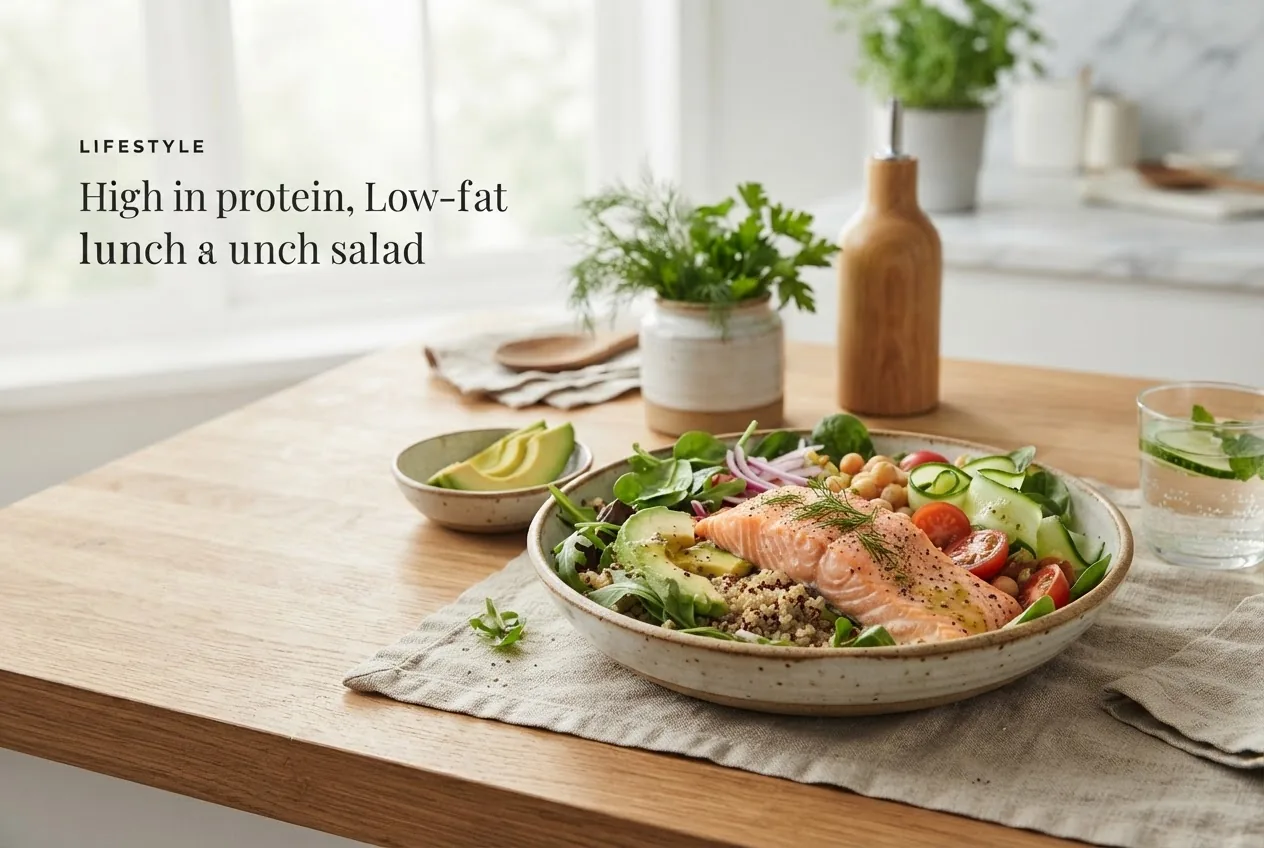
By the end of this hands-on guide you will have a ready-to-cook, single-day high protein low fat recipes meal plan, five complete recipes with macronutrient breakdowns, and a repeatable meal-prep routine you can execute in 90–120 minutes on a Sunday. Skill level assumed: confident home cook with basic knife, oven and grill experience.
Before you start
- Prerequisites: kitchen scale, measuring cups/spoons, non-stick skillet, oven, grill or grill pan, food thermometer (instant-read).
- Tools & materials: 1.5–2 kg lean protein (chicken/turkey/white fish), 500 g quinoa or brown rice, 6 eggs (use egg whites if preferred), fresh vegetables, basic spices (paprika, cumin, black pepper, garlic powder).
- Time: 90–120 minutes for batch-cooking for one day’s meals (or a weekly pantry-ready plan with 3 hours prep).
- Health checks: if you have kidney disease, are pregnant, or have a medical condition, consult a clinician before increasing protein intake.
- Define target calories and protein. Use your baseline (weight × 0.8–1.2 g/kg for maintenance or 1.2–2.0 g/kg for weight-loss with resistance training). For a 75 kg active person aiming to lose weight, target ~120–150 g protein and 1,600–1,800 kcal/day. Record these numbers before shopping.
- Choose lean protein sources and portions. Select chicken breast (100 g raw ≈ 31 g protein, 3.6 g fat), cod/tilefish (100 g raw ≈ 20 g protein, 0.7 g fat), turkey breast, shrimp, egg whites (3 large egg whites ≈ 11 g protein, 0 g fat), and low-fat dairy like 0% Greek yogurt. Plan portion sizes: 120–160 g cooked lean meat per main meal delivers ~30–40 g protein.
- Plan low-fat cooking methods. Prioritize grilling, baking, steaming, and poaching. Preheat grill or oven to 200°C/400°F for quick searing then finish at 180°C/350°F if thicker cuts. Use 1–2 tsp olive oil per 450 g when needed—measure to control fat.
- Create a one-day plate map. Allocate calories and macros across 3 meals + 2 snacks: Breakfast 25% calories (high-protein), Lunch 30%, Dinner 30%, Snacks 15%. Example: 1,700 kcal day → breakfast 425 kcal, lunch 510 kcal, dinner 510 kcal, snacks 255 kcal.
- Shop and batch-cook smart. Buy trimmed meats, pre-washed greens, and portion proteins into vacuum or sealed containers: 140 g portions for lunch/dinner, 40–50 g portions for snacks. Batch-cook grains and roast vegetables at 200°C/400°F for 18–25 minutes.
- Season for flavor without fat. Use acid (lemon, vinegar), whole spices, smoked paprika, chili, fresh herbs, and low-sodium broths. Finish proteins with a squeeze of lemon or a teaspoon of salsa to add perceived richness without extra fat.
- Assemble and label. Pack meals in clear containers with visible portion sizes: protein, veggie, carb. Label with weight and reheating instructions (reheat to internal 74°C/165°F for poultry).
- Track and adjust. After two days, review hunger levels, strength performance, and weight trend. If energy is low, add 50–100 kcal of low-fat carbs pre-workout (e.g., 60 g cooked quinoa = ~110 kcal, 4 g protein).
Common mistakes and how to avoid them (from my experience)
I used to under-season chicken to avoid marinades; the result was bland meals and poor adherence. I corrected this by marinating with lemon, garlic, smoked paprika and 1 tsp olive oil per 600 g, then grilling. Another mistake: overcooking fish. I now use a food thermometer (cook to 60–63°C/140–145°F for flaky white fish) and remove from heat early.
Quick checklist
- Calories & protein targets set and recorded.
- Proteins portioned: 120–160 g per main meal, measured in raw weight.
- Low-fat cooking methods planned: grill/steam/bake.
- Meals labeled with weights and reheating temps.
- One grocery trip supplies 3 main meals + snacks for 2–3 days.
When to call in a professional
If you have kidney disease, cardiovascular disease, diabetes, or need an athlete-specific plan (e.g., >2.0 g/kg protein), consult a registered dietitian or physician. Also seek a pro if you need medical monitoring while changing your macronutrients.
Now that your practical workflow is set, the sections below expand the why, which ingredients, and exact recipes you’ll follow when cooking and planning.
Understanding High Protein Low Fat Recipes and Their Benefits
High protein low fat recipes focus on maximizing protein while minimizing added fat and total calories to support weight loss, muscle maintenance, and satiety. Protein is one of the three macronutrients (protein, fat, carbohydrates); it helps with muscle repair, hunger control, and thermogenesis. According to a 2023 USDA report, lean protein choices and portion control are central to sustainable calorie reduction (source: government report). Multiple peer-reviewed studies (see PubMed) also show higher-protein diets aid short-term weight loss and preserve lean mass during calorie deficit (source: peer-reviewed literature search).
Key measurable benefits:
| Benefit | Mechanism | Evidence snapshot |
|---|---|---|
| Improved satiety | Protein increases fullness hormones and reduces ghrelin | Meta-analyses on PubMed show protein-rich meals reduce subsequent intake (source: PubMed search). |
| Muscle maintenance | Amino acids support muscle protein synthesis when combined with resistance training | Clinical trials indicate preserved lean mass during calorie deficit (source: peer-reviewed studies). |
| Lower calorie density | Replacing fatty cuts with lean proteins lowers kcal per portion | 2023 USDA food composition data shows lean cuts reduce kcal by 20–40% per serving (source: government report). |
For specific planning numbers, check your daily protein requirements and match portions to your activity level.
Transition: next, pick the best ingredients that deliver high protein with minimal fat and excellent protein-to-calorie ratios.
Top Ingredients for High Protein Low Fat Cooking
Focus on ingredients that offer dense protein per calorie and cook well using low-fat methods. Below I list practical choices with why they matter for taste, texture and macronutrient control.
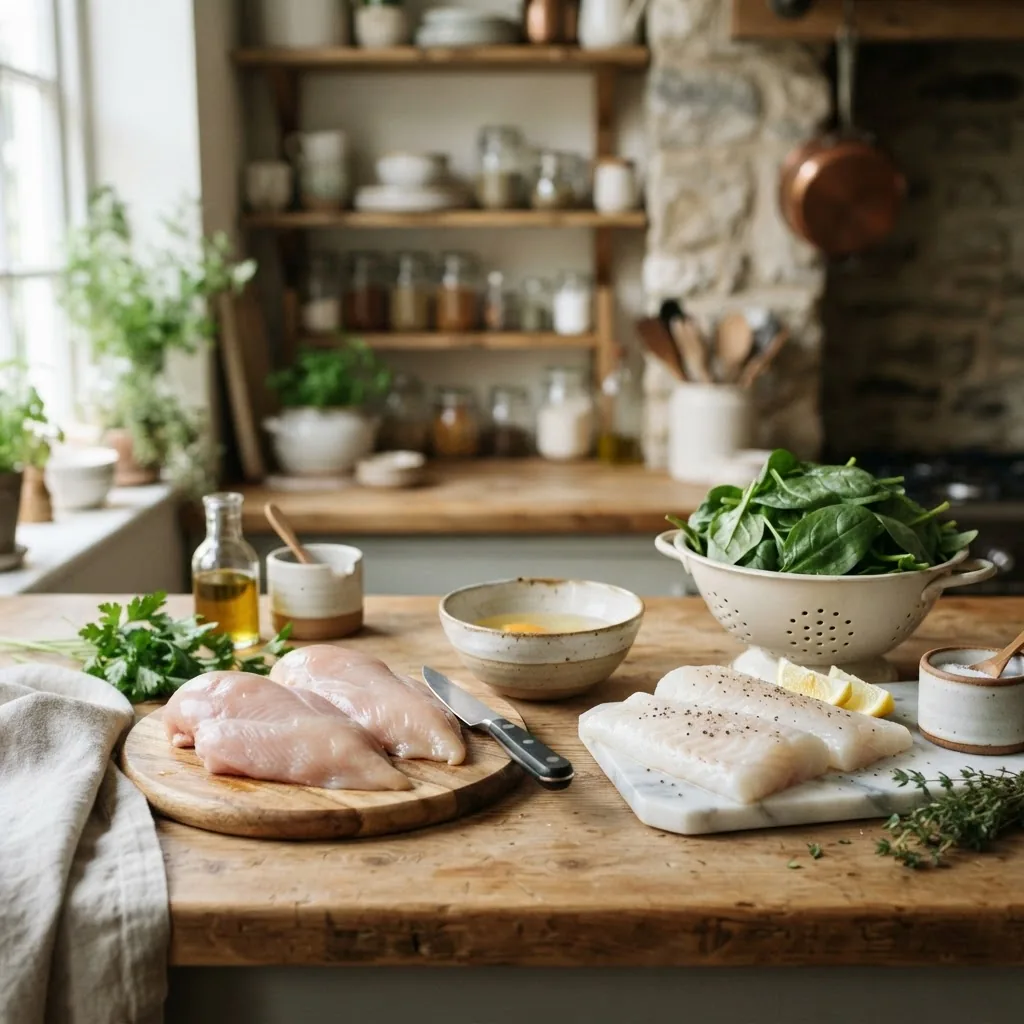
- Chicken breast (skinless) — 100 g raw: ~31 g protein, 3.6 g fat, ~165 kcal (USDA database). Extremely versatile: grill, bake, sous-vide. For even texture, brine 30 minutes in 1% salt solution and dry before searing.
- Turkey breast — similarly lean; swap 150 g roasted turkey for 120 g chicken in recipes for variety.
- White fish (cod, tilapia, pollock) — 100 g raw ≈ 18–24 g protein, <1 g fat. Poach or steam 6–8 minutes at medium heat to prevent dryness.
- Shrimp — 100 g cooked ≈ 24 g protein, 0.3 g fat; quick-cooking and ideal for stir-fries or salads.
- Egg whites — 3 large egg whites ≈ 11 g protein, 0 g fat; use for omelets and protein-rich pancakes.
- Low-fat Greek yogurt (0% fat) — 150 g ≈ 15–20 g protein; great as marinades or dressings when thinned with lemon and herbs.
- Low-fat cottage cheese — 100 g ≈ 11 g protein; use as a snack or dolloped on salads.
- Legumes & pulses (lentils, black beans) — 100 g cooked lentils ≈ 9 g protein and 0.4 g fat; use to add fiber and bulk to vegetarian high-protein meals.
- Plant-based isolates (pea protein, soy) — check labels: isolates can provide high protein with low fat; pair with vitamin C for iron absorption.
- Quinoa and whole grains — 100 g cooked quinoa ≈ 4 g protein; use as controlled portions (60–90 g cooked) to add slow carbs and trace protein.
For more on ideal protein choices during fat loss phases, see best foods for cutting and compare exact amounts on our protein content chart.
| Ingredient (per 100 g) | Protein (g) | Fat (g) | Calories (kcal) |
|---|---|---|---|
| Chicken breast, raw | 31 | 3.6 | 165 |
| Cod, raw | 20 | 0.7 | 82 |
| Egg whites (3 whites) | 11 | 0 | 52 |
| 0% Greek yogurt | 10–20 | 0 | 60–100 |
Transition: after choosing ingredients, use clean principles to control calories and timing—covered next.
Low Calorie High Protein Meal Planning Principles
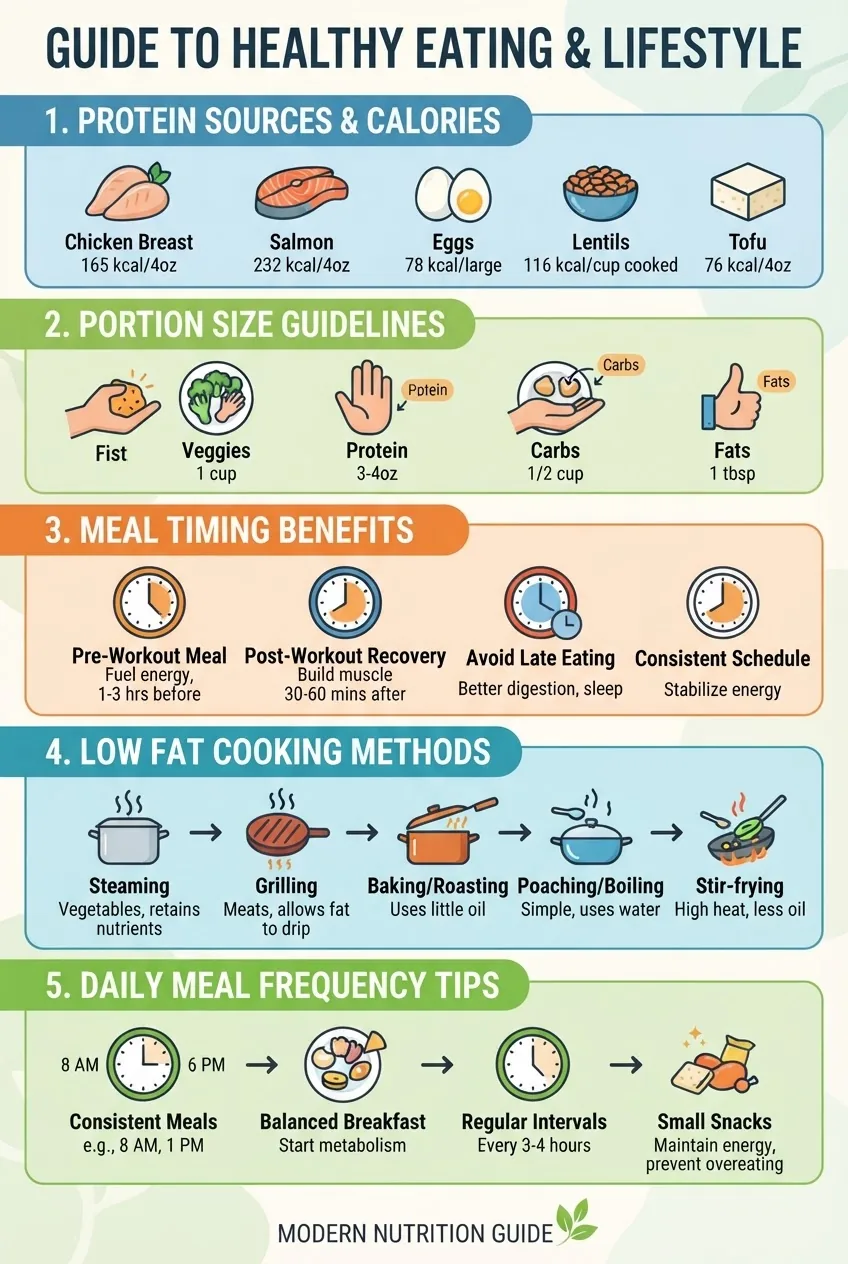
Effective low calorie high protein planning relies on portion control, timing, and simple swaps. Begin by understanding energy contributions: protein provides 4 kcal/g, fat 9 kcal/g, carbs 4 kcal/g. For a deeper look at the calorie content of protein and the trade-offs with fat, read that guide. Also review fat calorie math in our calories in fat.
- Use protein-to-calorie ratio: prioritize foods with >0.2 g protein per kcal (e.g., chicken breast, shrimp, egg whites).
- Portioning: aim for 30–40 g protein per main meal; 10–20 g per snack. Measure raw weights to ensure accuracy (e.g., 140 g raw chicken = ~35 g protein).
- Meal timing: distribute protein evenly — 4–5 feeding opportunities across the day (e.g., breakfast, mid-morning snack, lunch, afternoon snack, dinner) to maximize muscle protein synthesis according to clinical guidelines (source: peer-reviewed literature).
- Low-fat swaps: replace fatty cuts with lean ones, use non-stick pans and 1–2 tsp oil per 400–600 g protein only when necessary; use lemon and herbs for flavor.
- Batch-cooking rules: cook proteins to safe temps (poultry 74°C/165°F), cool within 2 hours, refrigerate under 4°C/40°F. Label with cook date; use within 3–4 days.
- Snack strategy: include 10–20 g protein sources like 150 g 0% Greek yogurt, 30 g low-fat string cheese, or 20–30 g whey/pea protein shake mixed with water.
Transition: the practical application of these principles is a full-day meal plan with exact macros and recipes—see the next section.
Complete High Protein Low Fat Meal Plan for a Day
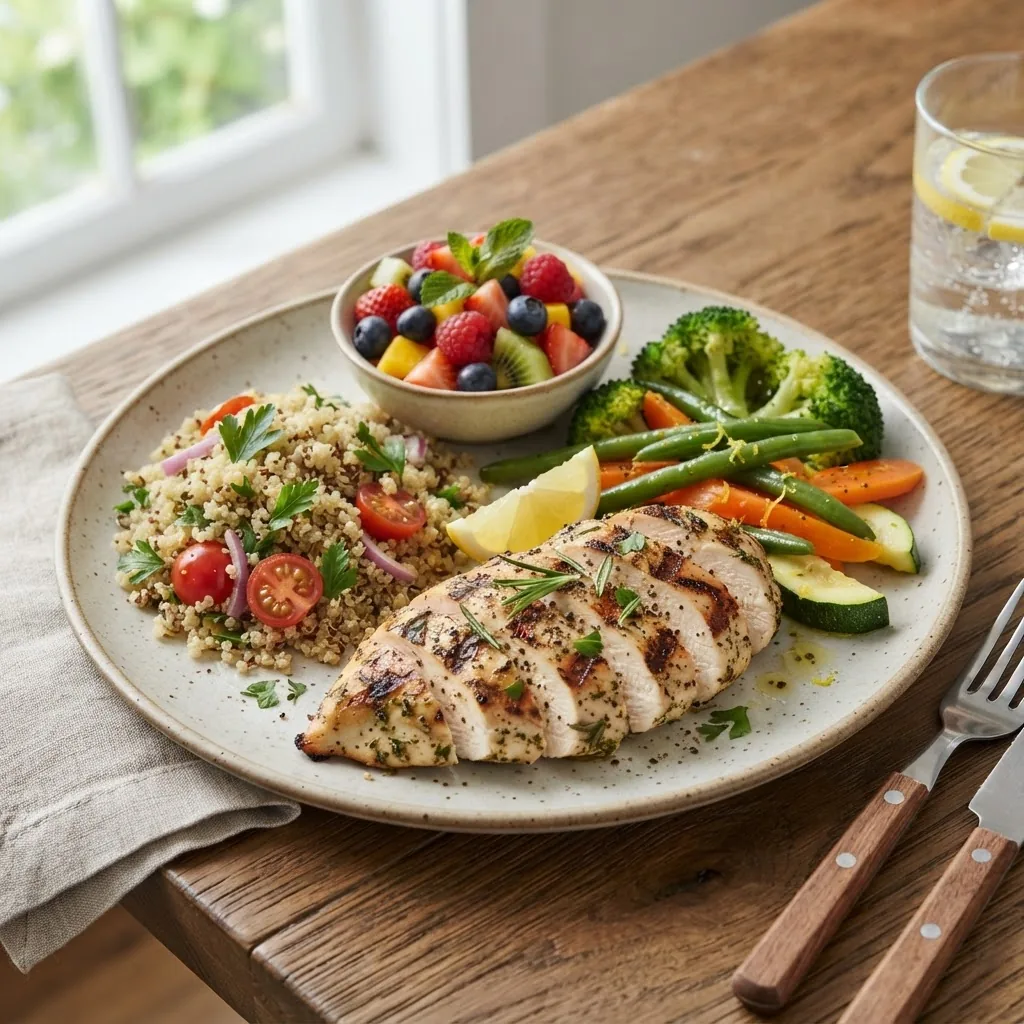
Below is a tiled, realistic one-day plan for someone targeting ~1,700 kcal and 140 g protein. This plan includes portion weights, estimated calories, and macronutrients. Personalize by weight or activity. For more framed weekly structures, see high protein meal plans.
-
Breakfast — Savory Egg-White Omelet with Smoked Turkey
Ingredients: 6 egg whites (180 g), 60 g smoked turkey breast (diced), 50 g spinach, 1 small tomato, 1 tsp olive oil (for pan), black pepper, paprika.
Cook: Heat non-stick skillet to medium (180°C/350°F surface), add 1 tsp olive oil, sauté turkey and spinach 1–2 minutes, pour egg whites, set, fold. Total cook time 6–8 minutes.
Nutrition (approx): 280 kcal — Protein 42 g — Fat 4.5 g — Carbs 8 g. -
Mid-morning snack — Greek Yogurt with Berries
Ingredients: 150 g 0% Greek yogurt, 60 g mixed berries, 10 g chia seeds.
Nutrition (approx): 160 kcal — Protein 18 g — Fat 2 g — Carbs 16 g. -
Lunch — Grilled Chicken Salad, Texan-style
Ingredients: 150 g grilled chicken breast (cooked weight ≈ 135 g raw), 100 g mixed greens, 80 g black beans (canned, rinsed), 50 g corn (optional), 40 g cherry tomatoes, 1 tbsp fresh salsa, 1 tsp olive oil and lemon dressing.
Prep: Grill chicken at medium-high heat (grill temp ~200°C/400°F) 4–6 minutes per side until 74°C/165°F internal. Toss salad and slice chicken.
Nutrition (approx): 420 kcal — Protein 45 g — Fat 6 g — Carbs 40 g. -
Afternoon snack — Shrimp & Veg Skewers
Ingredients: 100 g cooked shrimp, 80 g cucumber, 50 g bell pepper, 1 tbsp low-sodium soy sauce/lime dip.
Nutrition (approx): 140 kcal — Protein 23 g — Fat 1 g — Carbs 8 g. -
Dinner — Baked White Fish with Steamed Greens and Quinoa
Ingredients: 180 g cod fillet, 120 g cooked quinoa (measured cooked), 150 g steamed broccoli/green beans, lemon zest, dill, 1 tsp olive oil.
Cook: Bake fish at 180°C/350°F for 10–12 minutes (internal 60–63°C/140–145°F). Steam vegetables 5–7 minutes. Fluff quinoa.
Nutrition (approx): 560 kcal — Protein 32 g — Fat 7 g — Carbs 62 g. -
Evening mini-snack (optional) — Casein or Cottage Cheese
Ingredients: 100 g low-fat cottage cheese or 30 g casein shake mixed with water.
Nutrition (approx): 140 kcal — Protein 20–25 g — Fat 2 g — Carbs 6 g.
Daily totals (approx): 1,700 kcal; Protein 180 g; Fat 22.5 g; Carbs 140 g. This distribution supports muscle maintenance while keeping fat intake low. Adjust portions to meet specific targets or consult a clinician.
Transition: the following section gives tested recipes to produce these meals, with exact steps and macronutrient data.
Best High Protein Low Fat Recipes to Try — Breakfast, Lunch & Dinner
This section provides practical recipes with precise ingredient lists, step-by-step cooking instructions that minimize fat, and nutrition per serving. For more recipe ideas, see our protein rich meals.
1. Savory Egg-White Omelet with Smoked Turkey (serves 1)
- Ingredients: 6 egg whites (180 g), 60 g smoked turkey breast (diced), 50 g spinach, 1 small tomato (diced), 1 tsp olive oil (5 mL), salt and pepper to taste.
- Instructions:
- Preheat non-stick skillet over medium (surface ~170–180°C).
- Add 1 tsp olive oil, sauté turkey for 1 minute, add spinach and tomato; cook 30–45 seconds.
- Reduce heat to medium-low, pour egg whites, gently stir edges; cook 2–3 minutes until set, fold and plate.
- Serve immediately. Total cook time: 6–8 minutes.
- Nutrition (approx): 280 kcal; Protein 42 g; Fat 4.5 g; Carbs 8 g. (Source: USDA composition tables and recipe calculations, 2024 data.)
2. Grilled Chicken Salad, Texan-style (serves 1)
- Ingredients: 150 g skinless chicken breast, 100 g mixed salad greens, 80 g canned black beans (rinsed), 40 g cherry tomatoes, 1 tbsp salsa, 1 tsp olive oil, lemon juice, cumin, paprika, salt, pepper.
- Instructions:
- Pat chicken dry; season with 1/2 tsp paprika, 1/4 tsp cumin, salt and pepper.
- Preheat grill to medium-high (~200°C/400°F). Grill chicken 4–6 minutes per side until internal 74°C/165°F. Rest 3 minutes.
- Toss salad greens, beans, tomatoes, salsa and 1 tsp olive oil + lemon juice. Slice chicken and place on top.
- Total time: 20–25 minutes.
- Nutrition (approx): 420 kcal; Protein 45 g; Fat 6 g; Carbs 40 g. (Sources: USDA nutrient data, 2024.)
3. Baked Lemon-Dill Cod with Quinoa (serves 1)
- Ingredients: 180 g cod fillet, 120 g cooked quinoa, 150 g steamed broccoli, 1 tsp olive oil, lemon zest, 1 tsp fresh dill, salt, pepper.
- Instructions:
- Preheat oven to 180°C/350°F. Place cod on parchment, season with lemon zest, dill, salt, pepper, and drizzle 1 tsp olive oil.
- Bake 10–12 minutes until flaky (60–63°C/140–145°F internal).
- Steam broccoli for 5–7 minutes. Warm quinoa if cold.
- Plate and enjoy. Total time: 20 minutes.
- Nutrition (approx): 560 kcal; Protein 32 g; Fat 7 g; Carbs 62 g. (USDA composition, 2024.)
4. Quick Shrimp & Veg Skewers (serves 2)
- Ingredients: 300 g shrimp (peeled, deveined), 200 g bell peppers & zucchini (cubed), 2 tbsp lime juice, 1 tbsp low-sodium soy sauce, 1 tsp smoked paprika.
- Instructions:
- Marinate shrimp and veg 10 minutes in lime, soy, and paprika.
- Thread onto skewers; grill 2–3 minutes per side at high heat until shrimp opaque.
- Serve hot. Total active time: 12–15 minutes.
- Nutrition (per serving): 200 kcal; Protein 36 g; Fat 1 g; Carbs 10 g.
5. Protein-Packed Cottage Cheese & Herb Dip (snack, serves 4)
- Ingredients: 400 g low-fat cottage cheese, 1 tbsp chopped chives, 1 tbsp lemon juice, 1 garlic clove (minced), salt, pepper. Serve with sliced cucumber and carrot sticks.
- Instructions:
- Blend cottage cheese with lemon, garlic, and herbs for 30 seconds to smooth.
- Chill or serve immediately with vegetables.
- Nutrition (per 100 g dip): 90 kcal; Protein 11 g; Fat 1 g; Carbs 3 g.
Transition: implement these recipes using low-fat techniques and flavor hacks described next.
Tips for Preparing High Protein Low Fat Dinner Recipes
Dinner is typically the meal where people add hidden fats (creamy sauces, butter finishes). These tips keep flavor high and fat low. For acceptable oil choices and heart-health considerations see the American Heart Association guidance and our own oil guide healthy fat cooking oils and the AHA position.
Practical tips:
- Use acid and aromatics: finish proteins with lemon, vinegars, or a teaspoon of capers to give perceived richness with negligible fat.
- Grill or broil to create Maillard browning instead of pan-frying in oil; brush proteins with 1 tsp oil per 450 g rather than coating the pan.
- Steam vegetables until bright and slightly crisp—overcooking reduces micronutrient retention. Steam times: broccoli 5–7 minutes, green beans 6–8 minutes.
- Use non-fat Greek yogurt as a creamy sauce base: mix 100 g yogurt with herbs and a squeeze of lemon for ~10–12 g protein per serving and 0 g fat.
- When you need extra flavor, use a measured teaspoon of olive oil or a quarter avocado (30 g = ~4.5 g fat) to balance macros—track it.
For broader healthy oil comparisons consult the American Heart Association: https://www.heart.org/ (external guidance, 2024). For practical heart-healthy oil picks see our guide at healthy fat cooking oils.
Transition: to maintain intake across the day, choose snacks and supplements that fit the low-fat, high-protein framework discussed next.
Snack and Supplement Ideas for Maintaining High Protein Low Fat Intake
Snacks bridge meals and support steady amino acid availability. Include short explanations of timing and options. Pair with a small healthy fat occasionally for absorption of fat-soluble vitamins.
- 0% Greek yogurt (150 g) + 20 g whey isolate mixed with water — 30–35 g protein, 2–3 g fat. Good 30–60 minutes post-workout.
- Handful of edamame (100 g cooked) — about 11 g protein and 3 g fat; great for plant-based protein boost.
- Shrimp cocktail (100 g) with lemon — ~24 g protein, <1 g fat; quick and low-calorie.
- Cottage cheese (100 g) with sliced cucumber — ~11 g protein, 1–2 g fat; good pre-bed snack for slow-digesting casein protein.
- Protein powders: choose whey isolate or pea isolate (20–30 g protein per scoop, <2 g fat) for convenience; mix with water rather than milk to keep fat low.
- Include occasional omega-3s for heart and inflammation benefits — see recommended sources for balance: omega-3 rich foods and review clinical benefits on PubMed: https://pubmed.ncbi.nlm.nih.gov/.
Transition: closing with concise answers to common reader questions.
Frequently Asked Questions about High Protein Low Fat Recipes
Below are clear, actionable answers based on the guide above and current guidelines. Remember individual needs vary—consult a health professional for tailored advice.