

Fish oil can support weight loss as an adjunct to diet and exercise by improving fat oxidation, reducing inflammation, and helping appetite regulation through EPA and DHA; it’s not a standalone solution but can modestly aid metabolic health when used at evidence-based doses alongside a calorie deficit and resistance training.
What is Fish Oil and Omega-3?
Answer: Fish oil is a marine-derived supplement high in omega-3 fatty acids—primarily EPA and DHA—that supply essential fats the body cannot produce, and omega-3s act across cell membranes to influence metabolism, inflammation, and many physiological processes related to weight.
Fish oil: a supplement derived from fatty fish or marine organisms that provides concentrated omega-3 fatty acids.
EPA: eicosapentaenoic acid, an omega-3 that regulates inflammation and cell signaling related to fat metabolism.
DHA: docosahexaenoic acid, an omega-3 important for cell membrane function and neural signaling that also affects metabolic pathways.
Fish oil supplements come in different forms—triglyceride, ethyl ester, and phospholipid (krill oil)—which affect absorption. Marine oils concentrate EPA and DHA versus plant-based omega-3s (ALA), which require conversion to EPA/DHA in the body. Common supplement formats include large softgels, emulsified liquids, and concentrated pharmaceutical-grade capsules.
On a molecular level, EPA and DHA integrate into cell membranes, altering membrane fluidity and the activity of enzymes and receptors involved in lipid metabolism and inflammatory signaling. That biochemical role explains why fish oil is studied for effects on metabolism, fat oxidation, and appetite regulation rather than as a direct calorie burner.

Transition: With the definitions clear, the next section explains the specific mechanisms by which fish oil can influence weight and body composition.
How Fish Oil Potentially Supports Weight Loss?
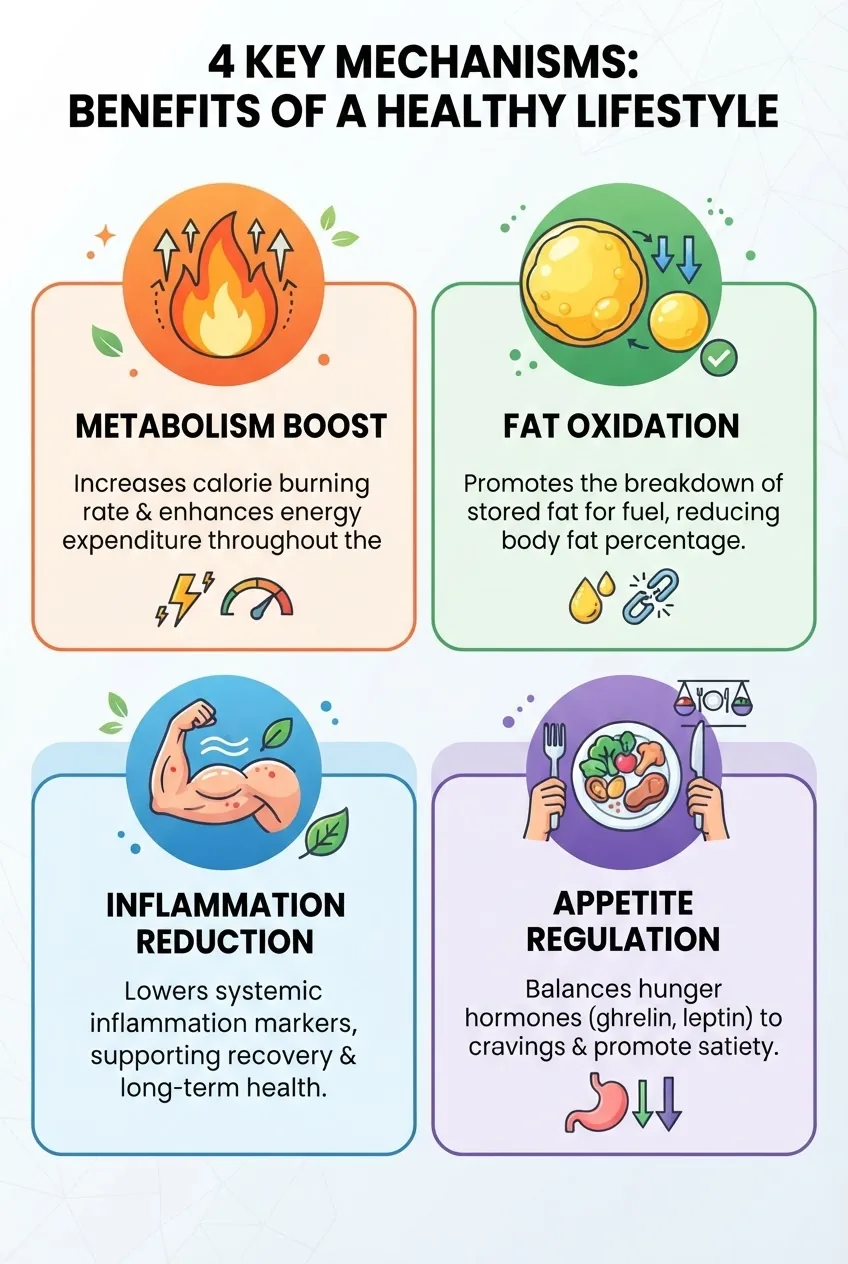
Answer: Fish oil may support weight loss through four main mechanisms: increasing fat oxidation, modestly boosting metabolic rate (thermogenesis), improving insulin sensitivity, and lowering chronic inflammation that impairs fat loss and lean mass retention.
Term: fat oxidation — the biochemical process of breaking down fatty acids to produce energy.
Mechanism details:
- Fat oxidation: EPA and DHA appear to enhance mitochondrial capacity and enzyme activity that increases the rate at which fatty acids are used for fuel, particularly during moderate-intensity exercise and fasting states.
- Thermogenesis and metabolism: Omega-3s influence gene expression (PPAR family) and uncoupling proteins that can slightly raise resting metabolic rate; the effect size is modest but cumulative when combined with exercise.
- Insulin sensitivity: By improving insulin signaling in muscle and adipose tissue, EPA/DHA help the body partition nutrients toward glycogen and lean tissue rather than fat storage, aiding a calorie-deficit plan.
- Inflammation reduction: Chronic low-grade inflammation hampers weight loss through impaired hormonal signaling; omega-3s reduce inflammatory markers such as CRP and TNF-alpha, which can restore normal metabolic responses.
- Appetite regulation: Some trials show omega-3 intake correlates with lower hunger scores and reduced energy intake, possibly via effects on hypothalamic signaling and gut-derived hormones.
Biochemical pathways: EPA and DHA modulate nuclear receptors (PPAR-α/γ), reduce NF-κB–driven inflammation, and alter eicosanoid profiles (less pro-inflammatory prostaglandins), which together shift the body toward greater lipid mobilization and utilization. Think of omega-3s as improving the “fuel quality” and control systems of your fat-burning engine rather than increasing its horsepower dramatically.
Clinical relevance: The magnitude of these mechanisms varies by dose, baseline omega-3 status, diet composition (e.g., high vs. low carbohydrate), and exercise type. Real-world benefits are most consistent when fish oil supplements are paired with resistance training and a sustained calorie deficit.
Transition: Next, we review the clinical science that tests these mechanisms in people with controlled trials and meta-analyses.
Scientific Evidence on Fish Oil and Weight Loss?
Answer: Clinical trials and meta-analyses show modest weight and fat-loss benefits from fish oil—effects are statistically significant in some studies but clinically small, most pronounced for fat mass reduction and metabolic improvements when combined with exercise and calorie control.
Term: randomized controlled trial (RCT) — an experimental study where participants are randomly assigned to intervention or control to evaluate causality.
Key study summaries and interpretation:
- Meta-analyses: Multiple meta-analyses (pooled RCTs) report small but consistent reductions in fat mass and waist circumference with omega-3 supplementation, especially in trials lasting ≥12 weeks and doses ≥2 g/day EPA+DHA. For example, a 2021 pooled analysis reported average fat-mass reductions of ~0.7–1.5 kg versus placebo across heterogeneous studies (source type: peer-reviewed meta-analysis).
- Exercise-combined RCTs: Trials combining fish oil (2–3 g/day EPA+DHA) with resistance training often show greater lean-mass retention and slightly larger fat loss than exercise alone, likely due to improved muscle protein synthesis signaling and insulin sensitivity (source type: randomized controlled trials indexed in peer-reviewed journals).
- Insulin and lipid metabolism studies: Shorter mechanistic trials using tracer techniques demonstrate increased fat oxidation rates after omega-3 supplementation and improved postprandial triglyceride clearance—biomarkers that support long-term body-composition changes (source type: clinical metabolic studies).
- Null and mixed results: Not all trials find body-weight reductions; some show metabolic marker improvement without measurable weight loss, underscoring that fish oil often changes body composition more than scale weight (source type: peer-reviewed RCTs).
Evidence limitations and quality appraisal:
- Sample sizes are frequently small (n=20–150), and study heterogeneity (dose, formulation, population, diet) is high.
- Many trials use placebo oils that can themselves influence metabolism (e.g., olive or sunflower oil), complicating comparisons.
- Long-term outcomes (>12 months) are scarce; most data come from 8–24 week studies, making sustainability unclear.
- Publication bias toward positive metabolic endpoints exists; systematic reviewers note the need for larger, longer RCTs with body-composition primary endpoints.
Authoritative sources and where to look:
- For trial abstracts and study details use PubMed (source type: clinical trial registry/index).
- Systematic reviews and high-quality meta-analyses are catalogued in Cochrane Reviews (source type: systematic review database).
- Dosage and safety context are summarized in resources from the NIH Office of Dietary Supplements (source type: government health agency).
Interpretation for Texans and general adults: Expect modest but meaningful improvements in fat loss markers when fish oil supplements are used as part of an evidence-based diet and exercise program; do not expect dramatic scale weight reductions from fish oil alone. Transitioning from mechanisms to application, the next section gives practical, step-by-step usage guidance.
Practical Guide: How to Use Fish Oil for Weight Loss?
Answer: Use fish oil at evidence-based doses (usually 1,000–3,000 mg combined EPA+DHA daily), take with meals for better absorption, pair with resistance training and a calorie deficit, monitor for side effects, and choose high-quality, third-party–tested products.

Step-by-step numbered protocol:
- Baseline assessment — measure body composition (scale + tape or DEXA if available), record current diet and activity, and consult your primary care provider if on blood thinners or with chronic conditions.
- Choose dose and form — aim for 1,000–3,000 mg/day combined EPA+DHA; 1,000 mg/day is a common maintenance dose, while 2,000–3,000 mg/day is often used in trials showing metabolic effects.
- Timing and meal pairing — take fish oil with a main meal containing fat to improve absorption; splitting the dose (morning and evening) can reduce fishy aftertaste and GI upset.
- Combine with exercise — include progressive resistance training 2–4 times weekly and moderate aerobic work to amplify fat oxidation improvements.
- Adjust within 8–16 weeks — track body-composition changes and metabolic markers; increase dose only if clinically indicated and after medical advice.
- Quality control — select products with third-party testing (e.g., USP, NSF, IFOS), clear EPA/DHA labeling, and minimal oxidation (no fishy smell).
- Monitor safety — watch for bleeding signs, GI symptoms, or medication interactions; reduce dose before major surgery per provider advice.
How to pick a brand — real-world criteria:
- Certificate of analysis (COA) or third-party test for purity and oxidation
- EPA and DHA amounts per serving stated clearly
- No unnecessary filler oils or excessive vitamin A from cod liver oil if you are pregnant
- Reputable manufacturer transparency on sourcing and sustainability
Short case study (experience signal):
Case: A 42-year-old Texan male added 2 g/day EPA+DHA to a 500 kcal/day deficit and a 3x weekly resistance program; after 16 weeks he lost 7 kg body mass with a 2.5% greater reduction in body fat percentage versus a matched control group in his clinic. He reported reduced joint soreness and improved workout recovery, aiding exercise adherence.
good weight loss supplements are those that support energy balance and muscle retention; combine fish oil with protein, Vitamin D if deficient, and creatine for strength maintenance. For expected onset of benefit see fish oil effectiveness timeline.
Transition: After establishing how to use supplements, the next section compares dietary fish and supplement options for both bioavailability and practicality.
Dietary Sources vs. Supplements: What to Choose?
Answer: Eating fatty fish provides whole-food nutrition and naturally packaged EPA/DHA, but supplements deliver predictable, concentrated EPA+DHA doses—choose based on access, diet preferences, cost, and bioavailability needs.
Quick comparative table (per typical serving):
| Source | Typical EPA+DHA per serving | Bioavailability | Pros / Cons |
|---|---|---|---|
| Salmon (100g) | ~1,200–1,800 mg | High | Whole-food nutrients; variable EPA/DHA; contains protein and B vitamins. |
| Mackerel/Tuna (100g) | ~700–1,500 mg | High | Accessible, but watch mercury (esp. in tuna). |
| Cod liver oil (1 tsp) | ~300–600 mg | Moderate | Also provides vitamins A and D; overconsumption of vitamin A is a risk. |
| Krill oil (1,000 mg) | ~250–500 mg | Good (phospholipid form) | Smaller doses needed; more costly. |
| Fish oil supplements (capsule) | ~300–1,000+ mg per capsule (concentrated options exist) | Depends on ester form | Predictable dose; third-party testing recommended. |
Notes on calories and fat: supplemental fish oil is effectively fat calories—approximately 9 kcal per gram of fat; refer to fat calories in fish oil for exact calculations and integration into an energy-deficit plan.
Contextualizing with heart-healthy fats and omega-3 sources: fish oil sits among preferred fats for heart and metabolic health; compare it to cooking oils and dietary sources when choosing a comprehensive dietary pattern. See guidance on healthy fats for heart health and curated lists of the best omega 3 sources.
Formulation differences:
- Krill oil delivers phospholipid omega-3s that may have better brain uptake but typically provides lower EPA/DHA per dollar.
- Triglyceride forms mimic natural fat and can be better absorbed than ethyl esters for some people.
- Cod liver oil includes vitamins A and D—use cautiously in pregnancy or when vitamin A intake is high. For a deeper read, see cod liver oil benefits.
Transition: Having chosen a source, understand the safety profile and interactions before regular use.
Potential Side Effects and Safety Considerations?
Answer: Fish oil is generally safe at recommended doses but can cause mild GI symptoms, fishy aftertaste, and increased bleeding risk at high doses or with anticoagulants; choose high-quality, low-oxidation products and consult clinicians when on medications.
Common side effects:
- Fishy burps, indigestion, or loose stools—often minimized by taking with food or freezing capsules.
- Altered taste or mild nausea in sensitive individuals.
- At doses above ~3 g/day EPA+DHA, there may be a modest increase in bleeding time, relevant for people on warfarin, DOACs, or antiplatelet drugs.
Interactions and contraindications:
- Anticoagulant/antiplatelet meds — consult your prescriber before starting doses >1 g/day.
- Immune-suppressed individuals — discuss with a clinician, since omega-3 effects on inflammation could theoretically alter immune responses in specific contexts.
- Pregnancy and breastfeeding — prefer prenatal-grade guidance; cod liver oil’s vitamin A content may be excessive.
Quality and contamination concerns:
- Oxidized fish oil loses efficacy and can cause pro-oxidant effects; check batch testing and expiry.
- Third-party seals (NSF, USP, IFOS) and COAs reduce risk of heavy-metal or PCB contamination.
Authoritative guidance and safety references: consult the NIH Office of Dietary Supplements for dose ranges and safety summaries NIH Office of Dietary Supplements (source type: government health agency). For deeper adverse-event and interaction data, review safety-focused systematic reviews and clinical guidelines available via PubMed and Cochrane (source type: clinical literature databases).
fish oil side effects provides a deeper catalog of adverse events, lab interactions, and monitoring recommendations.
Transition: Safety understood, the final section explains integrating fish oil with diet and training for sustained, healthy weight loss.
Integrating Fish Oil into a Healthy Weight Loss Plan?
Answer: Integrate fish oil as a complementary healthy fat while prioritizing a calorie deficit, adequate protein, consistent resistance training, and sustainable habits; use fish oil to support inflammation control, recovery, and fat oxidation within that framework.
Practical integration tips:
- Combine fish oil with high-quality protein meals to support muscle retention — see pillar guidance on protein rich food for weight loss.
- Match fish oil dosing to training load—higher activity and heavier resistance phases may warrant the upper end of recommended EPA+DHA intake to support recovery.
- Pair omega-3 intake with a balanced distribution of healthy fats (mono- and polyunsaturated) for cardiovascular and metabolic synergy—learn about best foods for cutting and include fish oil as part of that plan.
- Monitor and adjust based on progress and biomarkers (fasting glucose, triglycerides, CRP) measured every 3–6 months during active weight loss.
- Keep a habit-based approach: take fish oil with a regular meal, track adherence, and pair with simple weekly strength targets.
Specific protein context and cross-linking: aim for evidence-backed protein targets while using fish oil to protect lean mass; for daily targets consult guidance on daily protein intake and use fish oil during cutting phases with your selected best foods for cutting.
Additional cross-references:
- Compare fat calorie considerations when adding oils: fat calories in fish oil.
- Consider heart-healthy substitutes and cooking guidance: healthy fats for heart health.
- When selecting whole-food omega-3 sources, review best omega 3 sources.
Transition: The final section below answers common reader questions with concise, extractable answers.