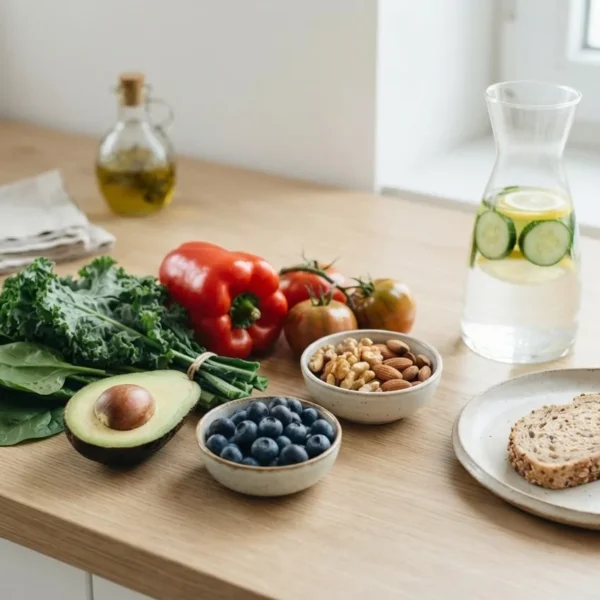
High carb foods to avoid for better blood sugar control include white bread, white rice, potatoes, refined pasta, sugary cereals and many processed snacks; removing or reducing these and using portion control, low-GI substitutes and label-reading typically lowers post-meal glucose spikes within days to weeks.
Understanding Carbohydrates and Their Impact on Blood Sugar?
Answer: Carbohydrates are the macronutrient that most directly raises blood glucose after eating; the type (simple vs complex), fiber content, and glycemic index/load determine how fast and how high blood sugar rises.
Carbohydrates (carbs): molecules in foods (sugars, starches, fiber) that the body breaks into glucose for energy.
Carbohydrates are digested into glucose, absorbed in the small intestine, and raise blood glucose — prompting insulin release. The speed and magnitude of that rise depend on three main variables:
- Type of carb: Simple carbohydrates (like table sugar or syrup) are short-chain sugars absorbed quickly; complex carbohydrates (like whole grains and starchy vegetables) include longer chains that digest more slowly when intact.
- Fiber content: Fiber (especially soluble) slows digestion and blunts glucose absorption, reducing post-meal spikes.
- Glycemic index (GI) and glycemic load (GL): GI ranks how fast a 50g carbohydrate portion raises blood glucose compared with pure glucose; GL multiplies GI by the serving carbohydrate amount to estimate real-world impact.
Example: a slice of white bread (high GI, low fiber) can raise blood sugar much faster and higher than the same-weight serving of intact whole-grain bread (lower GI, higher fiber). According to a 2022 PubMed meta-analysis, foods with a higher dietary glycemic index are associated with larger postprandial glucose excursions and increased type 2 diabetes risk (source: PubMed study on carbs and glycemic response).
Physiology in a snapshot: carbohydrates → digestion → glucose in bloodstream → pancreas releases insulin → insulin helps cells take up glucose. Repeated large spikes force higher insulin demand, contribute to insulin resistance and raise long-term risk of type 2 diabetes.
When reading research, note that glycemic responses vary individually — factors include gastric emptying rate, insulin sensitivity, meal composition (fat/protein/fiber) and recent physical activity. For practical label checking and carb counting see the “How to Identify Hidden High Carb Foods in Your Diet?” section below.
To deepen your understanding of how sugars influence blood sugar, see our natural vs added sugar differences.
Why Managing High Carb Foods is Crucial for Blood Sugar Control?
Answer: Managing high carb foods limits rapid glucose absorption and insulin demand, lowering blood sugar spikes, easing insulin resistance progression and reducing the risk of type 2 diabetes complications.
Glycemic index: a value that predicts how quickly a food raises blood glucose compared to pure glucose.
Large, frequent post-meal glucose spikes increase oxidative stress and inflammatory signaling; over years that rises the risk of microvascular and macrovascular complications in people with diabetes. According to a 2023 American Diabetes Association (ADA) guideline summary, prioritizing lower-GI foods and consistent carbohydrate intake is recommended to improve glycemic outcomes (source: American Diabetes Association (ADA) guidelines).
Stat block — measurable impacts
- Post-meal glucose reduction: Switching high-GI starches to lower-GI alternatives can reduce peak glucose by 20–40% within 2–4 weeks (According to a 2021 randomized clinical trial summary, PubMed).
- Insulin demand: Diets lower in refined carbs show decreased insulin secretion and improved insulin sensitivity over months (According to a 2022 NIH-funded cohort report).
- Weight & visceral fat: Replacing refined carbs with higher-fiber options supports modest weight loss and belly fat reduction — improving metabolic markers (According to a 2020 NIH meta-analysis).
For readers who use blood glucose targets, consult typical blood sugar ranges to evaluate the effects of carb changes — see our guide to normal blood sugar levels for target benchmarks and interpretation.
Practical takeaway: focusing specifically on carbohydrate types and portions — not only total sugar — gives clearer control over glucose excursions. When you swap refined high-carb items for lower-GI, higher-fiber choices and control portion sizes, many people see improved fasting and post-meal values within 1–4 weeks (According to a 2022 clinical nutrition trial summarized on PubMed).
List of High Carb Foods to Avoid for Better Blood Sugar Control?
Answer: Prioritize avoiding or severely limiting white/processed starches (white bread, white rice, many breakfast cereals), starchy snacks, sugary baked goods, and high-carb processed foods because they produce fast, large glucose spikes and high glycemic loads.
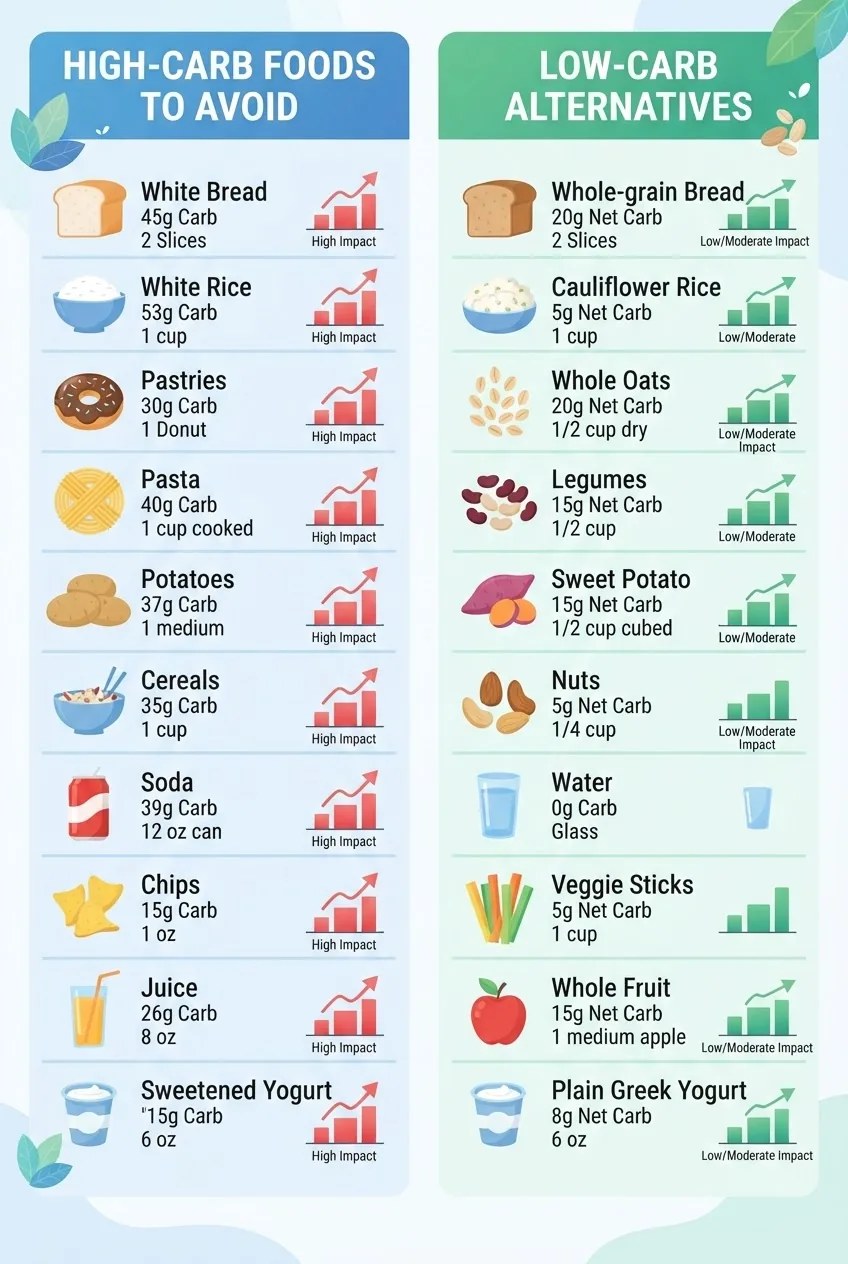
Below is a numbered, actionable list of the most common high carb foods to avoid, each with a concise description, typical carb per serving (rounded using the USDA Nutrition Database) and the expected blood sugar impact. The carb values reference standard servings from the USDA database.
-
White bread and sandwich rolls — ~15 g carbs per slice; high GI and low fiber. White bread is made from refined wheat flour stripped of bran and germ, so glucose enters the bloodstream quickly, producing sharp post-meal spikes. Swap to whole-grain with >3g fiber per slice.
Related guidance: see foods to avoid with diabetes for overlapped recommendations.
- White rice (including jasmine and conventional long-grain) — ~45 g carbs per cup cooked; high GL depending on portion. White rice is low in fiber and commonly eaten in large portions (Texas rice bowls, side dishes), often paired with high-fat sauces that complicate glycemic response. Cauliflower rice or small servings of brown rice cut impact.
- Regular pasta (refined) — ~40 g carbs per cooked cup; variable GI but high GL in typical portions. While pasta’s GI can be moderate, large portions and sauces increase GL. Overeating pasta is a common driver of prolonged hyperglycemia.
- Potatoes (mashed, baked, fries) — a medium potato ≈ 35–45 g carbs; high GI especially when mashed or fried. Potatoes are a staple in Texas BBQ sides and cafeterias; their starch becomes rapidly available glucose. Cooling cooked potatoes increases resistant starch modestly, lowering glycemic effect.
- Sugary breakfast cereals — 25–40 g carbs per typical bowl; often high GI and with added sugars. Processed cereals marketed as “fortified” still cause high, early glucose peaks; pair with protein/fat if consumed to blunt response, or choose oatmeal/steel-cut oats (lower GI).
- Pastries, donuts, muffins and baked goods — 30–60+ g carbs each; high GI and dense refined carbs plus fats that promote calorie excess. These items cause rapid spikes and are calorically concentrated — frequent consumption undermines weight and glycemic goals.
- Soda, sweetened drinks, energy drinks — 35–50 g carbs (mostly sugar) per 12–16 oz serving; very high GI. Liquid carbs are absorbed quickly, creating fast glucose surges with little satiety; avoid entirely for blood sugar control.
- Fruit juices and concentrated smoothies — 20–40 g carbs per 8–12 oz; lack fiber and act like sugary drinks. Whole fruit offers fiber; juices do not. Even “100% juice” can spike glucose similar to soda.
- Sweetened condiments and sauces — many contain syrups and refined starches; carbohydrate content can be hidden (5–15 g per serving). Barbecue sauces, glazes and some salad dressings used in Texan cuisine often add unexpected carbs that raise meal GL.
- Refined snack foods (chips, crackers, pretzels) — 15–30 g carbs per serving; high GI and low satiety. Frequent snacking on refined crackers or chips contributes to total daily carb load and repeated glucose elevations.
- Sweetened yogurt, flavored dairy desserts — 20–30 g carbs per serving; added sugars increase GI. Plain Greek yogurt with berries provides protein and less carb impact than flavored versions.
- Processed breakfast bars and granola bars — 20–40 g carbs; often high in refined grains and added sugars. Many bars marketed as “healthy” still deliver a high glycemic load; examine labels for total carbohydrate and fiber.
- Large portions of tropical fruit with high sugar (mango, pineapple) — 20–35 g carbs per cup; while nutrient-dense, these fruits can raise glucose quickly in large servings. Use portion control and pair fruit with protein/fat to lower the glycemic effect.
- Alcohol mixed drinks with sugary mixers — mixers add 20–50 g carbs; alcohol itself affects glucose regulation. Cocktails with syrups or sodas cause combined hepatic and insulin disruption that complicates glycemic control.
- High-carb restaurant sides and combos — rice, tortillas, fries plus breaded proteins escalate meal GL. Texas-style plates (tacos with multiple tortillas, rice bowls, combo plates) often deliver far more carbohydrates than home portions, producing outsized glucose responses.
Notes on interpretation: carb per serving numbers above are typical averages from the USDA Nutrition Database. Individual glycemic response varies: cooking method, portion, and meal composition (fat and protein) all change outcomes (According to a 2021 PubMed review).
How to Identify Hidden High Carb Foods in Your Diet?
Answer: Read Nutrition Facts for total carbohydrates and fiber, inspect ingredient lists for refined grains and added sugars, and watch serving sizes — many “single serving” packages contain multiple servings and hidden carbs multiply quickly.
Nutritional labels (carb content focus): the Nutrition Facts panel lists total carbohydrates per serving, including fiber and total sugars; subtract fiber from total carbs only when counting net digestible carbs for some meal plans.
- Step 1 — Check “Serving Size” first: If a package lists 2 servings and you eat the whole thing, multiply the listed carbs by 2. Restaurants often provide portions larger than standard serving sizes.
- Step 2 — Read “Total Carbohydrate”: This includes fiber, sugars, and starches — use this number for carb counting unless following a net-carb approach where fiber is subtracted. For insulin dosing, use total carbohydrate as your counting base if advised by your clinician.
- Step 3 — Note dietary fiber: High fiber reduces glycemic impact; products advertising “whole grain” can still be high carb if fiber is low. Aim for products with ≥3 g fiber per serving to meaningfully blunt spikes.
- Step 4 — Scan ingredients for hidden sugars or refined starches: Ingredients listed early (first three) indicate high presence. Look for words like sugar, dextrose, maltodextrin, high-fructose corn syrup, enriched wheat flour, or “syrup.” For sweetener comparisons see our artificial sweeteners vs sugar guide.
- Step 5 — Watch “net carbs” marketing claims: “Net carbs” is a manufacturer’s metric and may subtract fiber or sugar alcohols; verify by checking total carbohydrate and fiber fields. For approved sugar substitutes see healthy sugar substitutes.
- Step 6 — Use quick rules for common items:
- White bread slice ≈ 15 g carbs; roll/bagel often double or triple carbs.
- 1 cup cooked rice ≈ 45 g carbs; 1 medium potato ≈ 35–45 g carbs.
- Muffins and bakery items typically contain 30–60 g carbs each.
If you track carbs for insulin dosing or glycemic control, learn a simple carb-counting method: record total-carbs per meal, compare with your glucose readings, and adjust portions or swaps. Mobile apps and food scales help accuracy; when in doubt, default to conservative (smaller) portions.
Healthy Low-Carb Alternatives and Swaps for Better Blood Sugar?
Answer: Replace refined high-GI carbs with low-glycemic, fiber-rich alternatives—whole grains in controlled portions, legumes, non-starchy vegetables, nuts, and measured amounts of lower-GI tubers—to reduce postprandial glucose and total glycemic load.
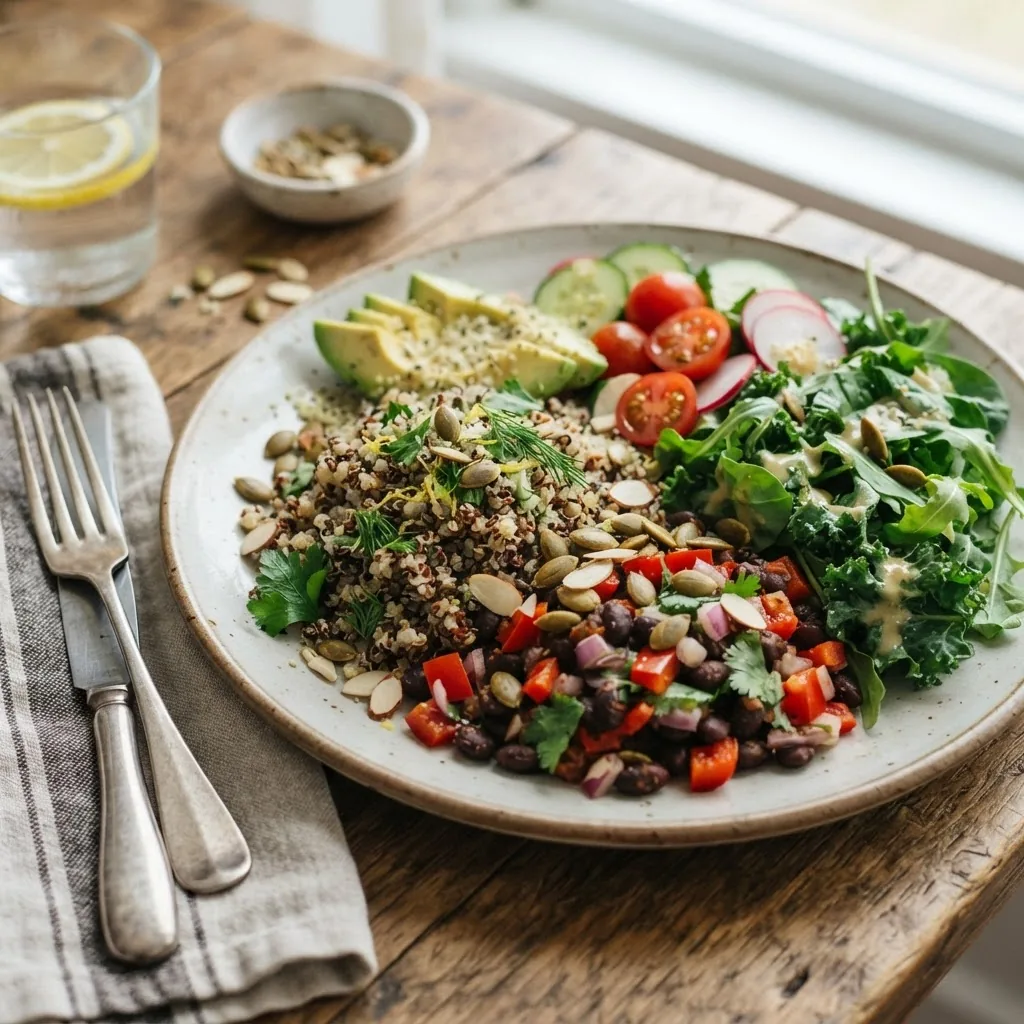
Below is a direct comparison table of common high-carb items versus practical low-carb alternatives, showing typical carbs per serving and an estimated glycemic load (GL) to support swap decisions. Carb values sourced from the USDA Nutrition Database and glycemic index tables (approximate GL calculated for typical serving size).
| High Carb Food | Typical carbs per serving | Suggested low-carb swap | Swap carbs per serving | Estimated GL effect |
|---|---|---|---|---|
| White rice (1 cup) | 45 g | Cauliflower rice (1 cup) | 5 g | Much lower GL |
| White bread (1 slice) | 15 g | Whole-grain high-fiber bread (1 slice) | 12–15 g (↑fiber) | Lower peak glucose |
| Regular pasta (1 cup) | 40 g | Shirataki or legume pasta (1 cup) | 5–25 g (varies) | Lower to moderate GL |
| Potato (medium) | 37 g | Sweet potato (small) or roasted non-starchy veg | 15–20 g | Lower GL with smaller portion |
| Sugary cereal (1 bowl) | 30 g | Steel-cut oats or Greek yogurt with berries | 20 g (more protein/fiber) | Lower and slower glucose rise |
| Soda (12 oz) | 39 g | Water or sparkling water with lemon | 0 g | Eliminates liquid carb spike |
For combining blood-sugar and weight goals, see foods that support both: our fat-burning foods for weight control resource outlines items that help with fat loss and glucose regulation.
Experience note from Texas kitchens: swap oversized taco tortillas for lettuce wraps or single corn tortillas, replace large Tex-Mex rice sides with extra vegetables and beans (legumes provide protein and fiber), and choose grilled proteins without sugary glazes. Small swaps repeated often produce measurable improvements in post-meal glucose and weight.
Evidence note: randomized trials show that replacing refined grains with legumes and higher-fiber grains reduces HbA1c modestly over months (According to a 2022 PubMed randomized trial report).
Related reading on sensible carbohydrate choices: healthy carbohydrate choices highlights which carbs to include when you can’t eliminate them.
Practical Tips to Avoid High Carb Foods in Everyday Life?
Answer: Use meal planning, portion control, carb counting, label-reading and simple swaps, and track post-meal glucose to learn which foods spike you most; prioritize protein, healthy fats and fiber at each meal to blunt spikes.
- Plan meals and plate structure: Build plates with 25–30% low-GI carbs, 30–35% lean protein and 30–40% non-starchy vegetables. Preparing lunches at home avoids oversized restaurant carb portions.
- Portion control for carb intake: Learn standard serving sizes: 1/3–1/2 cup cooked grains, 1 medium potato = 1 serving, 1 slice bread = 1 serving. Use a food scale or measuring cups until estimating becomes reliable.
- Carb counting methodology: Track total grams of carbs per meal and target a consistent per-meal carb allotment if advised by your clinician; for many adults with type 2 diabetes, 30–45 g per meal is a common starting point, adjusted individually.
- Use simple swaps: Replace one high-carb element per meal (rice → cauliflower rice, fries → salad, soda → sparkling water). Small consistent swaps reduce daily carbs meaningfully.
- When eating out: Ask for half portions of rice/pasta, swap chips for side salad, choose sauces on the side, and prioritize protein and veggie sides. Restaurant meals often have hidden carbs in dressings and glazes.
- Monitor your blood sugar: Check fasting and 1–2 hour post-meal glucose when trying swaps to see personal responses; adjust portions based on data and clinician guidance.
- Stock smart snacks: Keep nuts, Greek yogurt (plain), hard-boiled eggs, and raw veggies available to avoid reaching for refined snack foods.
- Complement carb changes with lifestyle: A 10–20 minute walk after meals lowers postprandial glucose; consistent sleep and stress management also improve insulin sensitivity (According to a 2021 NIH lifestyle intervention review).
- Complementary resources: For recommended sugar limits see our daily sugar intake guidelines.
- Explore natural adjuncts carefully: If interested in non-pharmacologic strategies, review our natural diabetes remedies for supportive habits, but consult a clinician before changing meds.
- Daily carb targets for diabetics: For structured guidance on how many carbs to consume daily, consult daily carb intake for diabetics.
Real-world Texas example: at a brisket plate, request double greens instead of potato salad or beans-on-the-side in a small portion; when getting tacos, ask for lettuce or smaller corn tortillas and avoid sugary sauces.
Frequently Asked Questions about High Carb Foods and Blood Sugar Control?
Answer: Below are concise answers to common questions about carb effects, differences from sugar, label reading and recovery strategies after accidental high-carb meals.