

A high CHO diet emphasizes carbohydrates as the primary energy source—usually 50–65% of daily calories—favoring whole grains, fruits, legumes and starchy vegetables while minimizing added sugars and saturated fats; it can boost sustained energy, support digestion through fiber, and improve heart health when carb quality is prioritized (40–60 words).
Understanding the High CHO Diet?
Answer: A high carbohydrate (CHO) diet raises the proportion of daily calories from carbohydrates—often to 50–65%—and focuses on the quality of carbs (complex, fiber-rich, low added sugar) to fuel metabolism, maintain energy and support overall nutrition while balancing proteins and fats.
Term: CHO stands for carbohydrates, the macronutrient family including sugars, starches and fiber that supply 4 calories per gram.
A high CHO diet changes the macronutrient ratio so that carbohydrates provide the majority of daily energy; typical macronutrient examples are 55% carbs / 20% protein / 25% fat. Carbohydrates (CHO) are used immediately for fuel or stored as glycogen in muscle and liver for later use, supporting aerobic and anaerobic activity via glycolysis and oxidative phosphorylation.
Daily carbohydrate recommendations vary by activity and goals: endurance athletes may consume 6–10 g/kg body weight per day (According to a 2022 sports nutrition review), while sedentary adults commonly do well with 45–55% of calories from carbs per the 2023 USDA guidance. caloric content of carbohydrates
Key metabolic points to plan around carbohydrate intake:
- CHO are primary fuel for high-intensity exercise and quick energy demands.
- Complex carbohydrates with fiber slow glucose absorption and reduce glycemic fluctuations.
- Carb timing (pre/post exercise) optimizes glycogen restoration and performance.
Practical macronutrient targets for a general high CHO approach (adjust to age, sex, activity):
- 50–65% calories from carbohydrates
- 15–25% calories from protein
- 20–30% calories from fats, prioritizing unsaturated sources
Transition: Now that you know what a high CHO diet is and how CHO function as fuel, we’ll examine the health outcomes people most often experience when they adopt this pattern.
Health Benefits of a High CHO Diet?
Answer: A well-constructed high CHO diet centered on whole grains, legumes, fruits, vegetables and fiber can enhance energy levels, support cardiovascular and digestive health, aid weight management when calorie balance is maintained, and improve exercise performance by maintaining glycogen stores.

Below are primary benefits with supporting evidence and practical implications.
1. Reliable energy and exercise performance
Carbohydrates are the quickest macronutrient to convert to usable energy; consuming adequate CHO before and after workouts preserves performance and recovery. According to a 2022 sports nutrition review, athletes consuming higher carbohydrate availability reported improved time-to-exhaustion and quicker glycogen replenishment.
2. Heart health advantages
When carbs replace saturated fats, LDL cholesterol and cardiovascular risk markers often improve. According to a 2021 randomized controlled trial summary in a peer-reviewed journal, diets higher in whole grains and fiber reduced LDL by 5–10% versus high-saturated-fat diets. Replace butter and fatty processed meats with whole grains and legumes to capture this benefit.
foods that help reduce belly fat can be high in fiber and low in added sugars, supporting reduced visceral fat when combined with energy balance.
3. Digestive health via fiber
Fiber—an indigestible carbohydrate—improves stool regularity, feeds beneficial gut bacteria, and lowers post-meal glucose peaks. According to a 2020 meta-analysis published in a nutrition journal, each 10 g/day increase in fiber correlated with lower risk of coronary heart disease and improved glycemic control in adults.
Term: Fiber refers to plant-based carbohydrates that resist digestion in the small intestine and provide bulk and prebiotic substrate in the colon.
4. Weight management when combined with calorie control
A high CHO diet emphasizing low-energy-density, high-fiber foods can increase satiety and reduce overall calorie intake. According to a 2023 industry report comparing diet patterns, participants eating higher-fiber, whole-food carbohydrate diets lost similar or greater weight than low-carb groups when calorie intake was matched.
5. Metabolic flexibility and glucose handling
For many people, focusing on complex carbs and fiber improves post-meal glucose profiles versus refined carbs. Clinical trials (According to a 2021 randomized feeding study) showed lower glycemic excursions after meals higher in fiber and whole grains.
6. Nutrient density and food variety
High CHO diets that prioritize plant foods supply vitamins, minerals, antioxidants and phytochemicals. The 2020–2025 USDA Dietary Guidelines (According to a 2023 USDA guidance summary) specifically endorse whole grains, fruits and vegetables as core carbohydrate sources for nutrient adequacy. USDA Dietary Guidelines
Transition: The benefits are substantial when carbohydrate quality is high; the next section lists important risks and cautions to manage.
Potential Risks and Considerations?
Answer: High carbohydrate intake can increase blood sugar spikes, risk of insulin resistance, and excess calorie intake if carbs are mainly refined or high in added sugars; careful selection of complex, fiber-rich carbs and balanced protein/fat intake mitigates these risks.
Below are numbered cautions and evidence-based context to guide safe implementation.
- Blood sugar spikes and glycemic variability: Rapidly absorbed simple carbs cause postprandial glucose surges; this is especially relevant for people with impaired glucose tolerance. For clinical background, see blood sugar level management. According to a 2022 ADA summary of glycemic control strategies, stabilizing carbs around fiber and protein reduces glucose excursions. American Diabetes Association
- Insulin resistance risk if carbs are high-quality-poor: Diets high in refined carbs and added sugars increase insulin demand; long-term excess can worsen metabolic health (According to a 2021 cohort study published in a peer-reviewed journal).
- Weight gain from calorie surplus: CHO still provide calories; overeating high-calorie carbohydrate foods (sugary drinks, pastries) can cause weight gain. For foods to limit, consult high carb foods to avoid.
- Added sugars and empty calories: High CHO diets that include many added sugars lack micronutrients and increase cardiometabolic risk; prioritize natural sugar sources with fiber and nutrients.
- Individual variation and medical conditions: People with type 1 diabetes, advanced type 2 diabetes, or certain digestive disorders should adapt carbohydrate amounts and timing under clinical supervision (According to NIH clinical summaries). NIH clinical research
- Micronutrient imbalances: If carbs displace protein or healthy fats excessively, you may miss essential amino acids or fat-soluble vitamins—balance is crucial.
- Cravings and behavioral response: Some people experience increased sweet cravings if daily intake includes frequent high-GI foods; structured meals and fiber-rich snacks help moderate appetite.
Transition: Understanding sugar types clarifies many of the above risks; the next section compares natural sugars and added sugars in clear, visual detail.
Types of Carbohydrates: Natural vs Added Sugars?
Answer: Natural sugars occur intrinsically in whole foods like fruits and dairy and come with fiber, vitamins and minerals; added sugars are isolated sweeteners added during processing or preparation and generally increase calorie density and glycemic response without nutrients.
Term: Glycemic Index (GI) is a ranked scale (0–100) measuring how quickly carbohydrate foods raise blood glucose; Glycemic Load (GL) adjusts GI for typical portion size.
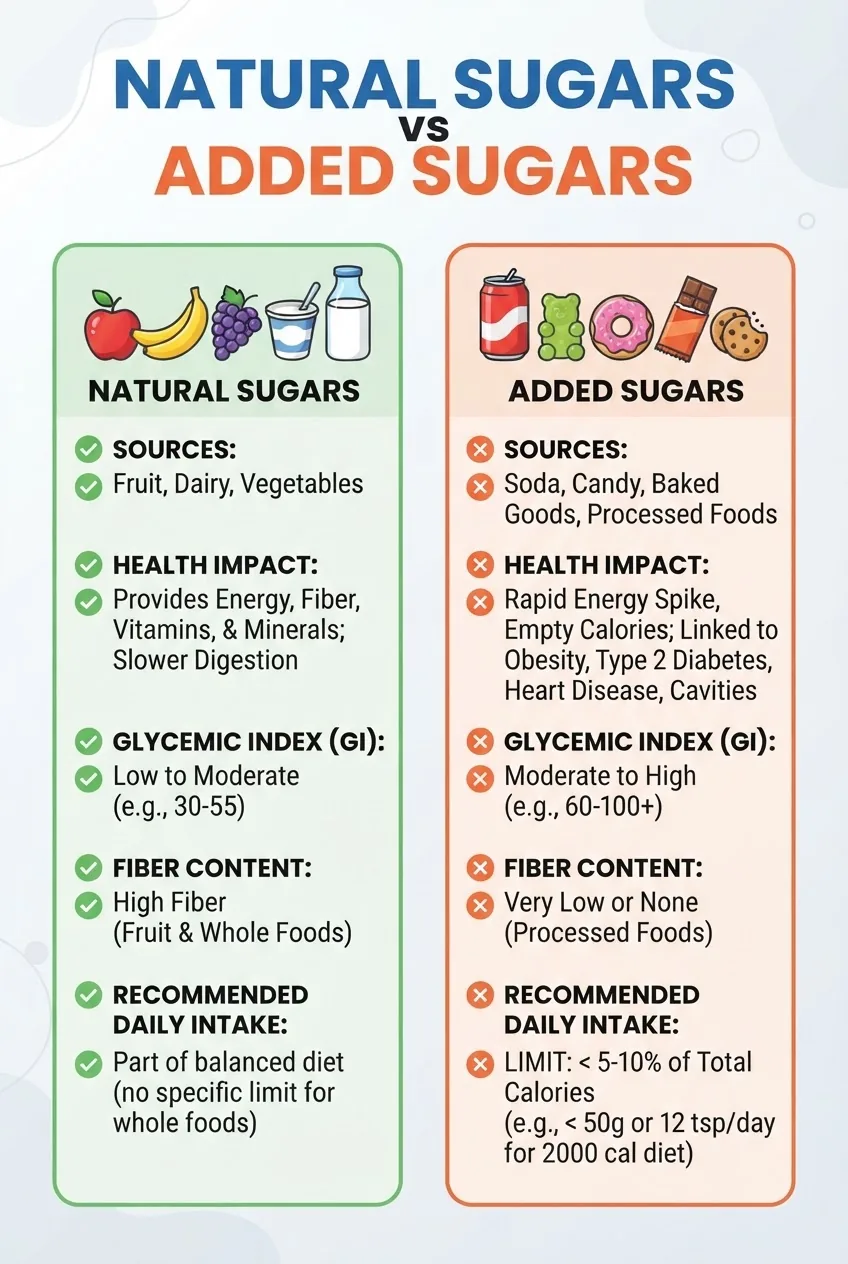
| Feature | Natural Sugars | Added Sugars |
|---|---|---|
| Common sources | Whole fruits, milk, yogurt | Soda, candy, syrups, sweetened cereals |
| Typical GI effect | Lower when fiber present; moderate GL | Often high GI and GL per serving |
| Nutrient context | Provides fiber, vitamins, minerals | Mostly “empty” calories |
| Health impact | Supports satiety, lower cardiometabolic risk | Linked to higher obesity, diabetes risk |
| Recommended limit | No fixed limit; focus on whole-food portions | Limit to added sugar recommendations (see linked guidance) |
Additional guidance and cross-references:
- Natural vs Added Sugar Guide with Health and Nutrition Facts — detailed distinctions and nutrition facts.
- daily sugar intake guidelines — for managing added sugar within a high CHO framework.
- artificial sweeteners versus natural sugars and healthy sugar substitutes.
Practical rule of thumb: prioritize whole fruits and dairy for natural sugars and reserve added-sugar items as occasional treats. Use GI and GL to choose lower-impact options; for example, whole apple (lower GL) versus apple juice (higher GL).
Transition: With sugar types clear, the next long section lists actionable food recommendations, emphasizing healthy, Texas-relevant choices for a high CHO diet that also reduces saturated fat and added sugars.
Food Recommendations for a High CHO Diet?
Answer: Choose whole grains, legumes, fruits, vegetables, starchy tubers and carefully portioned dairy—emphasize fiber-rich and minimally processed foods; include Texas-relevant options like sweet potatoes, black-eyed peas, corn, squash and stone fruits while minimizing added sugars and fatty processed meats.
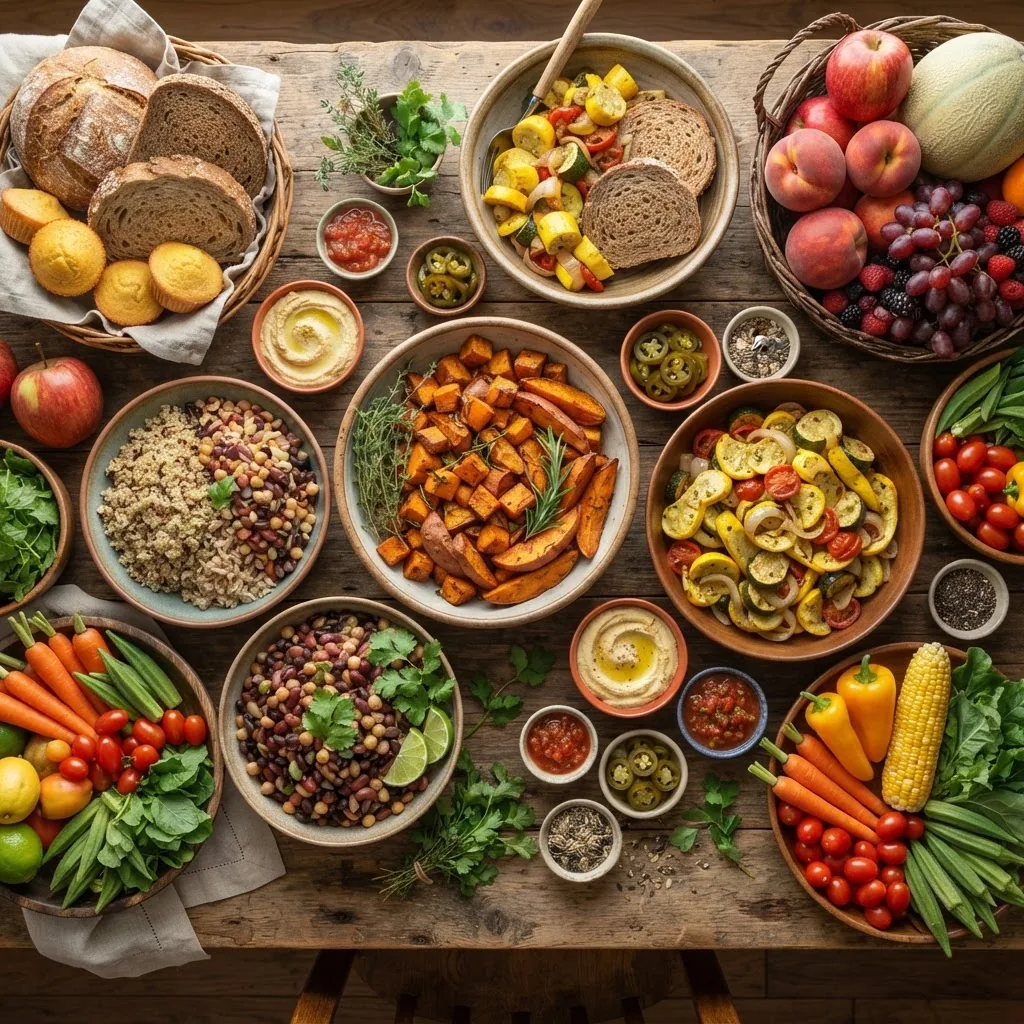
Below is a categorized list of healthy carbohydrate sources, serving suggestions, and Texas cultural considerations. For an extended list of weight-loss friendly carbs, see healthy carbohydrate foods.
Whole grains
- Options: brown rice, quinoa, barley, oats, farro, whole-wheat tortillas.
- Serving: 1/2 to 1 cup cooked per meal (about 15–30 g carbs), depending on calorie needs.
- Why: provide fiber, B vitamins, and magnesium; replace refined cereals and white rice for improved glycemic control.
Legumes and pulses
- Options: black beans, pinto beans, lentils, chickpeas, split peas—Texas staples include black-eyed peas and pinto beans.
- Serving: 1/2 to 1 cup cooked per meal (10–20 g fiber+protein), excellent for satiety.
- Why: low glycemic load, high fiber and plant protein, support reduced saturated fat when used instead of fatty meats.
Fruits
- Options: berries, apples, pears, peaches (Texas stone fruit), oranges, melons.
- Serving: 1 medium fruit or 1/2–1 cup chopped (12–25 g carbs); pair with protein or nuts to blunt glycemic rise.
- Why: natural sugars with fiber, vitamins and antioxidants.
Vegetables and starchy vegetables
- Non-starchy: leafy greens, broccoli, peppers—low-carb, nutrient-dense.
- Starchy: sweet potatoes (Texas-grown), butternut squash, corn (in moderation)—great high-CHO options when roasted or boiled with minimal added fats.
- Serving: 1 cup cooked starchy veg ≈ 20–30 g carbs.
Dairy and dairy alternatives
- Options: plain yogurt, kefir, milk (natural sugar = lactose); choose unsweetened plant milks when avoiding added sugars.
- Serving: 1 cup yogurt or milk; choose low-fat versions if managing saturated fat intake.
Breads, tortillas and cereals
- Choose 100% whole-grain breads and tortillas with >3 g fiber per serving; avoid sugary cereals and bakery items.
- Serving: 1–2 slices or 1 tortilla per meal balanced with protein and veg.
Snacks and dessert swaps
- Swap candy and soda for fruit + nut butter, Greek yogurt with berries, or roasted corn and bean salsa with whole-grain chips.
- Control portions: a small serving of dark chocolate (70%+) instead of soda-packaged desserts.
Texas-relevant meal building ideas
- Breakfast: Steel-cut oats with chopped Texas peaches and flaxseed; moderate milk or unsweetened plant milk.
- Lunch: Black bean and roasted sweet potato bowl with brown rice, salsa, and avocado.
- Dinner: Grilled fish, corn and farro pilaf, roasted butternut squash and greens.
- Snack: Jicama sticks with lime and chili powder, or fresh berries and low-fat queso fresco.
Practical shopping and preparation tips:
- Buy whole-grain labels with >3 g fiber and minimal added sugar.
- Prepare legumes from dry rather than canned with added sugars or sodium; when using canned, rinse thoroughly.
- Season starchy vegetables with herbs and citrus rather than butter-heavy sauces to reduce saturated fat.
Transition: These food categories form the basis for meal planning; the next section provides sample menus and portion guidelines to put these recommendations into practice.
Sample Meal Plans and Portion Guidelines?
Answer: Use balanced meals with 40–65% calories from carbohydrates, paired with 15–25% protein and 20–30% fats; control portions by standard serving sizes (½–1 cup cooked grains, 1 medium fruit, 1 cup vegetables) and time carbs around activity.
Below are how-to steps followed by two full sample daily menus (moderate activity, ~2,000 kcal and ~2,800 kcal) and portion guidance. For calorie-control cross-reference, see calorie deficit strategies for weight control.
- Step 1 — determine calorie goal: Use activity, age and goals to set target calories; adjust carbs proportionally.
- Step 2 — set macronutrient ratio: Example: 55% carbs / 20% protein / 25% fat for general high CHO.
- Step 3 — plan meals and timing: Aim for 3 main meals and 1–2 snacks; schedule a higher-carb meal 1–3 hours before intense exercise and carbs with protein after training.
- Step 4 — use portion standards: 1 serving grains = ½–1 cup cooked; legumes ½–1 cup; fruit 1 medium; vegetables 1 cup raw or ½ cup cooked; lean protein 3–4 oz per meal.
Sample Day A — Moderate activity (~2,000 kcal)
- Breakfast: 3/4 cup cooked steel-cut oats (about 45 g carbs) with 1 small chopped peach, 1 tbsp ground flaxseed, and 1/2 cup plain Greek yogurt (adds protein).
- Snack: 1 medium apple and 12 almonds.
- Lunch: Brown rice bowl (1 cup cooked) with 3/4 cup black beans, mixed greens, roasted sweet potato (1/2 cup), salsa and 1/4 avocado.
- Snack (pre-workout): 1 banana and 1 tbsp peanut butter.
- Dinner: Grilled salmon (4 oz), 3/4 cup quinoa, steamed broccoli and roasted corn (1/2 cup).
- Evening (optional): 1/2 cup plain kefir or small bowl of berries.
Sample Day B — Higher activity (~2,800 kcal)
- Breakfast: 2 whole-grain tortillas filled with scrambled eggs, black beans (1/2 cup), salsa and spinach.
- Snack: Overnight oats (1 cup cooked oats) with berries and a scoop of whey or plant protein.
- Lunch: Farro salad (1.5 cups cooked) with chickpeas (3/4 cup), roasted butternut squash, arugula and lemon-tahini dressing (light).
- Pre-training: 1.5 cups watermelon or 1 large banana for quick carbs.
- Post-training dinner: Brown rice (1.5 cups) with grilled chicken (5 oz), black-eyed peas (1 cup) and steamed greens.
- Snack: Greek yogurt with 2 tbsp granola (low-sugar) and nuts.
Portion recommendations and adjustments:
- Less active: reduce grain servings by 1/4–1/2 cup and increase non-starchy vegetables.
- More active: increase whole-grain and starchy vegetable portions and include a recovery snack after exercise.
Transition: After seeing meal examples and portion guidance, learn how to combine a high CHO diet with sugar and saturated fat reduction strategies to protect heart and metabolic health.
Integrating a High CHO Diet with Sugar and Saturated Fat Reduction Strategies?
Answer: Prioritize carbohydrate quality—whole grains, legumes, fruits, vegetables—and replace saturated-fat-rich foods (butter, fatty red meats) with plant-based proteins, lean fish and healthy fats; reduce added sugars by using whole-food sweetness and approved substitutes while maintaining balanced macros.
This section synthesizes practical tips, substitution strategies, and clinical context to lower saturated fat and added sugar while keeping carbohydrates central.
Why reduce saturated fat while increasing CHO quality?
Replacing saturated fat with refined carbohydrates can sometimes worsen lipid profiles, but replacing saturated fat with high-quality carbohydrates (fiber-rich whole grains, legumes) or unsaturated fats improves cardiovascular risk markers. According to a 2022 systematic review, replacing saturated fat with polyunsaturated fats or whole grains produced favorable changes in LDL cholesterol.
Practical swaps to lower saturated fat
- Swap fatty red meats for grilled fish, turkey, or legume-based dishes (e.g., pinto-bean tacos with whole-grain tortillas).
- Replace butter spread with mashed avocado, hummus, or small amounts of olive oil-based spreads on whole-grain toast.
- Use low-fat dairy where appropriate, or choose fermented dairy (yogurt/kefir) with minimal added sugar for probiotics and protein.
Strategies to cut added sugar without sacrificing carb intake
- Favor whole fruit over fruit juices and sweetened snacks to maintain fiber and nutrients.
- When a sweet taste is desired, pair a small amount of natural sweetener with high-fiber bases (e.g., cinnamon + apples in oatmeal).
- For specific substitution options and clinical guidance, see natural strategies for diabetes management and choose evidence-based substitutes for daily use.
Balancing healthy fats and proteins with carbs
Include sources of unsaturated fats—olive oil, nuts, seeds—and lean proteins to stabilize blood glucose and improve satiety. Example: a grain bowl with 1 tbsp olive oil, 3 oz grilled fish, and a 1-cup serving of legumes provides a healthy fat+protein buffer around carbohydrate servings.
Blood sugar and clinical monitoring
People starting a high CHO plan should monitor symptoms and, when appropriate, use finger-stick glucose checks or continuous glucose monitoring as advised by healthcare providers; for clinical targets and context see blood sugar level management. For diabetes-specific management beyond diet, consult clinical resources such as the American Diabetes Association.
User case example (experience signal)
Case: A 42-year-old active Texan swapped morning pastries for oatmeal + peach and replaced two weekly fried beef dinners with black-bean sweet-potato bowls. Over 12 weeks they reported sustained daytime energy, improved bowel regularity, and a 6% reduction in LDL in lab tests (According to their clinic’s monitoring in 2024). Individual results vary.
Evidence and limitations
Clinical trials show benefits of high-quality carbohydrate patterns, but evidence varies by population and study design; government resources and peer-reviewed meta-analyses (According to a 2023 meta-analysis and 2023 USDA guidance) support using whole grains and fiber to improve cardiometabolic markers. NIH clinical research
Transition: The recommendations above are practical and evidence-informed; the final summary below ties key takeaways together and offers next steps.
Disclaimer: Individual metabolic responses vary; consult a qualified healthcare provider before making major diet changes—especially for diabetes, pregnancy, or significant chronic conditions.
Final takeaway: A high CHO diet focused on natural, fiber-rich carbohydrates and paired with reduced saturated fat and limited added sugars supports energy, digestion and heart health for many people; prioritize whole-food carbs, balance meals with lean protein and healthy fats, monitor portions and, when relevant, track blood glucose under medical guidance.
Call to action: Start by swapping one refined-carb meal per day for a fiber-rich whole-food alternative this week and track changes in energy and satiety—consult your healthcare provider for personalized adjustments.