

Answer: Carbohydrates provide 4 calories per gram; this guide explains how that energy yield translates to common foods, how carbs compare to fats and proteins, and practical strategies for managing natural and added sugars while reducing saturated fat in everyday Texas diets.
This straight-answer explainer defines key terms, shows calculations, compares macronutrient energy values, and links to authoritative resources so you can apply carb calorie knowledge to meal planning, weight management, and sugar reduction strategies.
Understanding Calories per Gram for Carbohydrates
Direct answer: One gram of digestible carbohydrate yields roughly 4 kilocalories (commonly called “calories”) of usable energy; fiber and non-digestible carbs deviate from this rule.
Calorie: a unit of energy used on food labels that equals one kilocalorie (kcal) in nutrition contexts.
Carbohydrate energy value — the macro nutrient calories from carbs — is standardized: digestible carbohydrates (sugars and starches) provide ~4 kcal per gram. According to USDA nutrient data (federal database), the conversion factor used for food energy calculation is 4 kcal/g for carbohydrates, which is the basis for nutrition labels and calorie counting.
Not all carbohydrate grams are fully available as energy. Dietary fiber is a carbohydrate class that is partially fermented by gut microbes to short-chain fatty acids; some fiber yields roughly 1.5–2.5 kcal/g depending on fermentability. According to a 2022 peer-reviewed review in a nutrition journal (peer-reviewed source), average energy yield from fermentable fiber ranges and labels typically treat fiber separately from “available carbohydrates.”
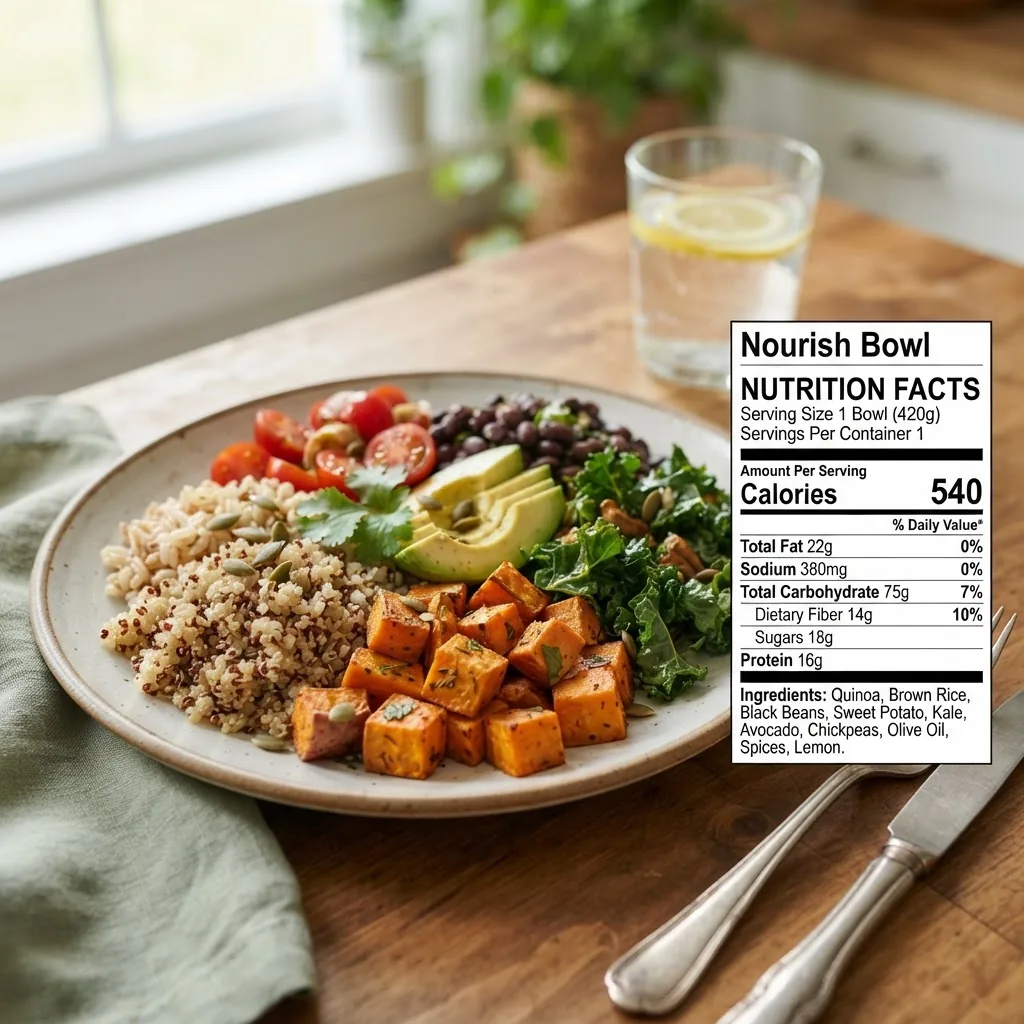
Practical label rule: “Total carbohydrates” on U.S. nutrition labels counts sugars, starches, and fiber. To estimate energy from carbs on a label, subtract fiber grams (if listed) from total carbs when calculating available carb calories, then multiply available grams by 4 kcal/g.
Examples (small, check label for precision): one medium apple (~25 g carbs) ≈ 100 kcal from carbs; one slice of whole-wheat bread (~15 g carbs) ≈ 60 kcal from carbs. These are calculated from 4 kcal per gram and adjusted when fiber is significant.
Why this matters: understanding that carbs supply 4 kcal/g allows straightforward calorie budgeting and comparison to fats (9 kcal/g) and proteins (4 kcal/g), which affects food choice and total energy intake.
For authoritative guidance on nutrient composition and label interpretation, consult USDA FoodData Central (federal database) and the American Diabetes Association (professional association) for context on carbs and glucose handling.
How Carbohydrates Contribute to Daily Caloric Intake
Direct answer: Carbohydrates typically provide 45–65% of total daily calories in standard dietary recommendations, but individual targets vary by goals and health conditions.
Dietary guidelines for carbs: Dietary guidelines often recommend a percent of total calories from carbs rather than a fixed gram target because energy needs differ by activity and body size.
Practical translation: for a 2,000 kcal daily plan, 45–65% from carbs equals 900–1,300 kcal from carbs, which converts to 225–325 grams of carbohydrate per day (using 4 kcal/g). According to the USDA Dietary Guidelines 2020–2025 (federal guidance), this range is a baseline for most healthy adults; athletes or those on specific medical plans may differ.
Examples of carb foods and their carbohydrate calorie contributions (use these numbered examples when planning meals):
- 1 cup cooked white rice — ~45 g carbs → 180 kcal from carbs.
- 1 medium banana — ~27 g carbs → 108 kcal from carbs.
- 1 cup cooked black beans — ~40 g carbs → 160 kcal from carbs (plus 15 g protein).
- 1 tablespoon table sugar (sucrose) — ~12.6 g carbs → ~50 kcal from carbs.
- 1 slice whole-wheat bread — ~15 g carbs → 60 kcal from carbs.
- 1 medium sweet potato — ~26 g carbs → 104 kcal from carbs.
Energy balance context: carbs supply immediate, easily accessible fuel; when total caloric intake exceeds expenditure, excess energy—regardless of source—can be stored as fat. According to a 2021 systematic review in an energy metabolism journal (peer-reviewed source), total calories matter more than macronutrient source for weight change, but macronutrient composition affects satiety and metabolism.
For readers planning meals in Texas, consider local portions: a typical fast-food biscuit may contain 20–30 g carbs (80–120 kcal from carbs), while a Texas-style plate with beans and cornbread can quickly add 200–400 carb calories. Real-world examples anchor calculations and aid adherence.
Transition: knowing how carb calories add up makes it easier to evaluate carb quality and timing, which we cover in the next section.
Different Types of Carbohydrates and Their Caloric Impact
Direct answer: Simple (sugars) and complex (starches, fiber) carbohydrates both count toward total carb grams, but digestibility and glycemic response alter effective caloric impact; fiber often contributes fewer usable calories.
Simple carbs: sugars composed of one or two sugar units (e.g., glucose, fructose, sucrose) that are rapidly digestible.
Complex carbs: long chains of glucose (starch) or non-digestible polysaccharides (fiber); they digest more slowly and affect glycemic response differently.
| Carb Type | Typical kcal/gram | Glycemic impact | Common sources |
|---|---|---|---|
| Digestible sugars & starches | ~4 kcal/g | Fast to moderate — raises blood glucose | Table sugar, honey, bread, rice, potatoes |
| Resistant starch | ~2–3 kcal/g (partially fermented) | Low to moderate — slower glucose rise | Cooked/cooled potatoes, green bananas, legumes |
| Soluble fiber (fermentable) | ~1.5–2.5 kcal/g | Minimal direct glucose rise; improves glycemic response | Oats, beans, apples, psyllium |
| Insoluble fiber (non-fermentable) | ~0 kcal/g (passes largely intact) | No direct glucose rise; adds bulk | Whole wheat bran, vegetables, nuts |
Caloric nuance: natural sugars inside fruit come with fiber, water, and micronutrients, which modify effective caloric density and glycemic response relative to the same grams of added sugar. According to a 2023 systematic review in a nutrition journal (peer-reviewed source), whole fruits produce smaller postprandial glycemic spikes than equivalent grams of fruit juice or added sugar.
Glycemic index (GI) is a relative ranking of carbohydrate foods by their blood glucose-raising potential; lower GI foods generally produce slower glucose and insulin responses and can affect perceived energy and hunger.
Glycemic index: a measure from 0–100 comparing a food’s blood-sugar response to a reference carbohydrate (usually glucose).
Natural vs added sugars: both are sugars chemically, but added sugars (sucrose, high-fructose corn syrup) frequently increase calorie density without fiber, elevating effective carb calories per serving. When managing carb calories, reducing added sugars lowers rapidly digestible carb grams while preserving nutrient-dense natural sources.
Transition: compare this carb energy picture to fats and proteins to see trade-offs when adjusting calories in a meal plan.
Comparing Calories per Gram: Carbohydrates vs Fats and Proteins
Direct answer: Carbohydrates and proteins each provide ~4 kcal per gram; fats provide ~9 kcal per gram, making fats the most energy-dense macronutrient.
Energy density: a property indicating how many calories a gram of food supplies; fats have the highest energy density among macronutrients.
| Macronutrient | Calories per gram | Role | Practical example |
|---|---|---|---|
| Carbohydrate | 4 kcal/g | Primary quick energy | Rice, bread, fruit |
| Protein | 4 kcal/g | Tissue repair, satiety | Chicken, beans, tofu |
| Fat | 9 kcal/g | Energy reserve, hormone synthesis | Olive oil, butter, nuts |
Analytical implication: swapping 10 g of carbohydrate (40 kcal) for 10 g of fat (90 kcal) increases meal energy by 50 kcal; this is why fat reduction can reduce calorie density more quickly than carb reduction. However, fats increase satiety and slow gastric emptying, which can reduce later intake.
Metabolic context: protein has similar calorie density to carbs but higher thermic effect (energy used digesting and metabolizing protein). According to a 2022 meta-analysis in a metabolism journal (peer-reviewed source), higher-protein diets modestly increase energy expenditure and satiety compared to lower-protein diets at equal calories.

Practical advice: when managing calories per meal, consider macronutrient energy density and satiety together. Reducing added sugars decreases quickly digestible carb calories; reducing saturated fats lowers overall energy density while preserving satiety if replaced with unsaturated fats and lean protein.
Transition: next, a step-by-step method shows how to calculate the calories from carbohydrates in real meals using labels and common portion sizes.
How to Calculate Calories From Carbohydrates in Your Diet
Direct answer: Multiply available carbohydrate grams by 4 kcal/g (subtract fiber if calculating only digestible carbs); use nutrition labels or food database values, add across servings, and compare to your daily calorie target.
Carb grams to calories formula: Calories from carbs = (Total Carbohydrate grams − Fiber grams if excluding) × 4 kcal/g.
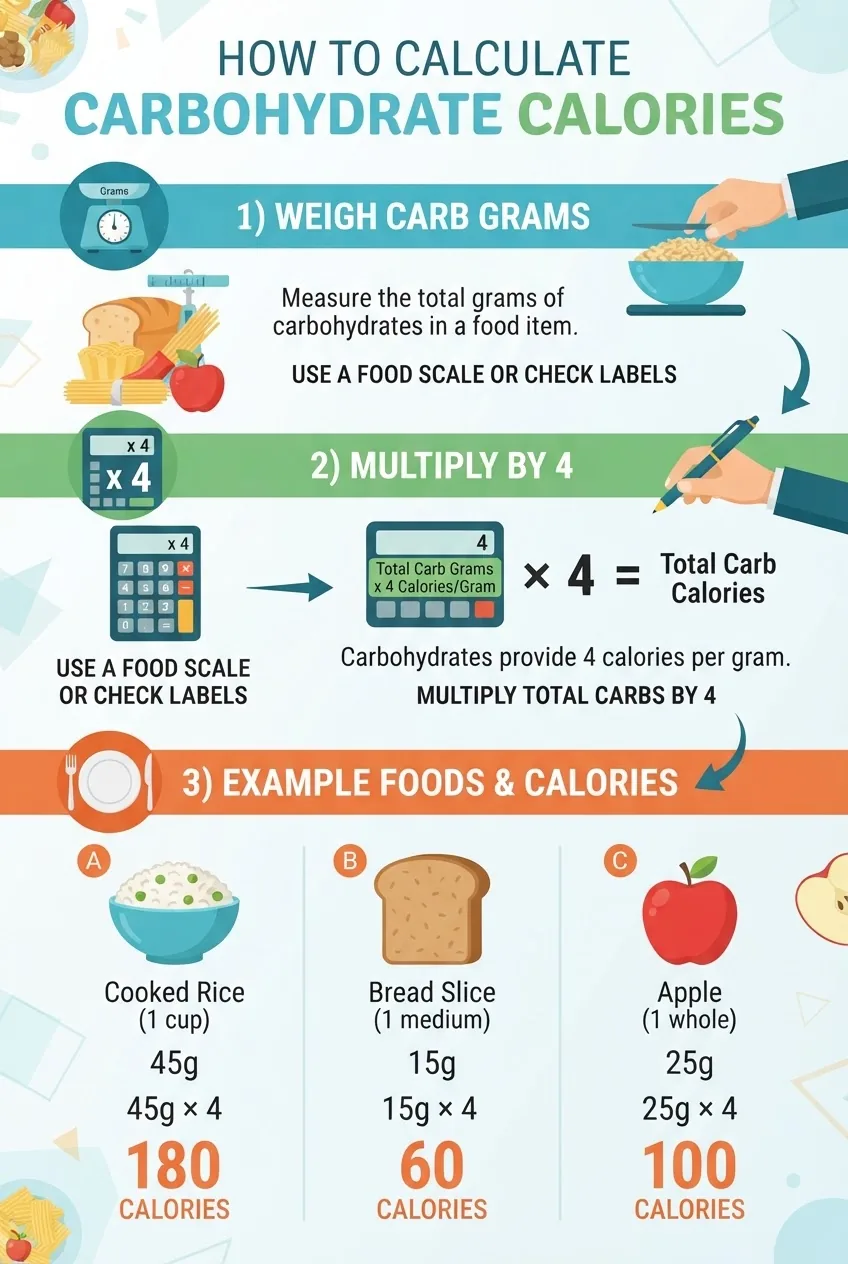
Step-by-step how-to guide with examples:
- Read the nutrition label — find “Total Carbohydrate (g)” and “Dietary Fiber (g)”. If fiber is included and you want available carbs, subtract fiber grams from total carbs.
- Apply the formula — (Total Carb g − Fiber g) × 4 = kcal from digestible carbs.
- Scale by portion — if a package lists carbs per 100 g, multiply by your actual portion weight (e.g., 150 g → 1.5× label value).
- Sum foods across meals — add carbs (g) from each food, then convert to calories to compare with your daily target.
Example 1 — breakfast (quick calculation):
- 1 cup cooked oatmeal — Total carbs 27 g, fiber 4 g → available carbs 23 g → 23 × 4 = 92 kcal from carbs.
- 1 medium banana — 27 g carbs, 3 g fiber → 24 × 4 = 96 kcal from carbs.
- Breakfast total carb calories ≈ 188 kcal from carbs.
Example 2 — packaged snack: if a granola bar label shows Total Carb 30 g and Dietary Fiber 3 g per bar, then (30 − 3) × 4 = 108 kcal from digestible carbs per bar; if you eat two bars, double the result.
Tools: use food logging apps or USDA FoodData Central for precise grams when labels are missing. According to USDA FoodData Central (federal database), most common foods have standardized carb grams and calorie entries useful for logging and meal plans.
Walkthrough for Texas readers: weighing rice servings at home (1 cup cooked ≈ 158 g) and using FoodData Central numbers yields consistent, local-portioned calorie estimates that align with restaurant portions when scaled.
Transition: armed with calculation skills, you can evaluate how carb calories influence weight, blood sugar, and long-term health outcomes in the next section.
Impact of Carbohydrates and Calories on Health and Weight Management
Direct answer: Carbohydrate calories affect weight if they alter total energy balance; carb quality and glycemic impact influence blood sugar and insulin responses, which are important for metabolic health and diabetes risk.
Carb metabolism process: digestible carbs break into monosaccharides (mainly glucose), absorbed via the intestines, raising blood glucose; insulin promotes cellular glucose uptake and storage when excess energy exists.
Carb metabolism process: the digestive and hormonal steps converting dietary carbs into blood glucose and stored energy.
Case study reference: a 2022 randomized controlled feeding trial (peer-reviewed source) found that replacing refined carbs with whole grains improved glycemic markers and reduced postprandial insulin in adults with overweight, demonstrating that carb quality—not only carb calories—affects metabolic outcomes.
Blood sugar and insulin response: high-glycemic meals spike glucose and insulin; repeated spikes can increase insulin resistance over time in susceptible individuals. For targeted guidance on managing glucose, consult professional resources; American Diabetes Association offers clinical recommendations and educational materials (professional association).
blood sugar level management resources explain target ranges and timing for glucose checks for people monitoring carb calories closely.
natural remedies for blood sugar control are sometimes used as adjuncts, but clinical monitoring and individualized medical advice are essential.
foods affecting belly fat and carb calories can guide substitutions that lower visceral fat risk while managing calories.
Weight management: reducing carbohydrate calories can lower total energy intake, but long-term weight loss depends on maintaining a calorie deficit. According to a 2021 systematic review of weight-loss diets (peer-reviewed source), low-carbohydrate and low-fat diets produce similar weight loss when calories are matched; differences emerge largely from adherence and food choices.
calorie deficit and carb intake offers methods to set energy targets and adjust carb grams to hit those goals.
calorie restriction and carbohydrate control explains scheduled intake patterns that reduce daily carb calories safely.
Risk perspective: sustained high intake of rapidly digestible carbs and added sugars raises risk markers for metabolic disease in some populations. According to a 2023 meta-analysis in a nutrition journal (peer-reviewed source), higher consumption of sugar-sweetened beverages is associated with greater weight gain and cardiometabolic risk markers.
excess sugar and diabetes risk summarizes how chronic overconsumption affects risk, though diabetes causation is multifactorial.
Clinical note/disclaimer in a blockquote for trust:
This guide is informational and not medical advice; individual responses to carbohydrate calories vary. Consult your healthcare provider for personalized medical or diabetes care.
Transition: below are actionable tips for reducing carb calories from added sugars while keeping nutrient-rich natural carb sources in your diet.
Tips for Managing Carb Calories with Natural and Added Sugars
Direct answer: Prioritize whole-food carbohydrate sources, reduce added sugars, and substitute lower-calorie alternatives to manage carb calories without compromising nutrient density.
Differentiate sugar types before making swaps: Natural vs Added Sugar Guide with Health and Nutrition Facts explains the nutritional differences and why whole fruits are usually preferable to sugary drinks.
Natural vs Added Sugar Guide with Health and Nutrition Facts
Practical tips (bulleted):
- Swap sugar-sweetened drinks for water, seltzer, or unsweetened tea—each 12 oz soda adds ~35–40 g carbs (~140–160 kcal from carbs).
- Replace refined grains with whole grains to lower glycemic impact and increase fiber, which reduces available carb calories per grasp of volume.
- When baking, reduce added sugar by 25% and add spices or citrus for flavor; many recipes retain texture with less sugar and fewer carb calories.
- Choose fruit over fruit juice; one medium orange (~15 g carbs) typically has less immediate glycemic effect than 8 oz orange juice (~26 g carbs).
- Budget carb calories per meal: allocate a targeted gram amount (e.g., 45–60 g carbs per meal for a 2,000 kcal diet) and select items that fit the budget.
- Use lower-calorie sweeteners when appropriate; compare calorie impact and glycemic effect carefully.
daily sugar intake recommendations provide specific targets for added sugars.
artificial sweeteners vs sugar calories compares calorie content and metabolic considerations when choosing substitutes.
sugar substitutes for carb calorie reduction outlines options for people seeking lower-calorie or non-glycemic sweeteners.
Practical Texas-specific example: replace sweet tea (common in Texas households) with unsweetened iced tea and a lemon wedge to cut 100+ carb calories per serving—apply label or recipe math to confirm precise savings.
Transition: final section summarizes takeaways and encourages next steps rooted in evidence and local food habits.
Conclusion
Summary: Digestible carbohydrates supply 4 kcal per gram; fiber and resistant starch reduce usable calories per gram. Track available carb grams, prioritize whole-food carbs, reduce added sugars, and balance macronutrient energy density to meet calorie and health goals.
Next steps: use the calculation steps above to log carb calories in weekly meals, consult USDA FoodData Central for precise entries, and work with a healthcare provider or registered dietitian for individualized plans.
Call to action: apply these calculations to one week of meals, then refine portion sizes to align with your energy target and health goals—start by swapping a single high-sugar item for a lower-carb option today.
Sources and further reading: USDA FoodData Central (federal database), American Diabetes Association (professional association), and recent peer-reviewed nutrition journals cited throughout (peer-reviewed sources).