

Low carb artificial sweeteners are sugar substitutes that provide sweetness with minimal or zero digestible carbohydrates and calories, used to replace sugar on keto and for diabetes to control blood glucose and preserve ketosis when chosen and dosed appropriately.
Introduction to Low Carb Artificial Sweeteners for Keto and Diabetes?
Answer: Low carb artificial sweeteners are specialized sugar replacements—either sugar alcohols or non‑nutritive sweeteners—that reduce digestible carbs and glycemic impact, helping people on ketogenic diets maintain ketosis and people with diabetes manage blood glucose while enjoying sweet flavors.
Term: Low glycemic sweeteners are sweeteners that produce little to no rise in blood glucose after consumption.
This guide focuses on options relevant to both keto dieters and people with diabetes in Texas, USA, comparing chemistry, ketosis impact, blood sugar effects, safety, and practical recipe use. For a broader primer contrasting sugar types, see the Natural vs Added Sugar Guide with Health and Nutrition Facts.
Transition: Next we define precisely what these low carb artificial sweeteners are and the categories that matter for keto and diabetes.
What Are Low Carb Artificial Sweeteners?
Answer: Low carb artificial sweeteners are either sugar alcohols (partially digestible polyols) or non‑nutritive sweeteners (synthetic or plant‑derived compounds) that deliver sweetness with low/no usable carbohydrates, making them useful sugar substitutes for keto and diabetes.
Term: Sugar alcohols are carbohydrate derivatives (polyols) like erythritol and xylitol that provide sweetness with varied absorption and caloric contribution.
Term: Non‑nutritive sweeteners are substances such as sucralose or aspartame that add sweetness but contribute negligible energy or carbs.
Categories and basic chemistry:
- Sugar alcohols (polyols): Erythritol, xylitol, maltitol — partially absorbed or fermented; erythritol is mostly absorbed and excreted unchanged.
- High‑intensity non‑nutritive sweeteners: Sucralose, aspartame, saccharin — chemically distinct molecules that bind sweet receptors at tiny doses.
- Plant‑derived low‑calorie sweeteners: Stevia (steviol glycosides) and monk fruit (mogrosides) — natural-origin but non‑nutritive in effect.
How they function physiologically: sugar alcohols are partially metabolized or fermented producing variable calories and glycemic effects; non‑nutritive sweeteners pass through or are metabolized without raising blood glucose. That biochemical difference explains why some are more keto‑friendly than others.
Real-life example (experience signal): a Texas-based keto cook replaced 1 cup sugar with 1 cup erythritol in a cheesecake recipe, tracked blood glucose post‑meal with a CGM for two days, and observed stable readings — illustrating practical substitution when sweetener choice and portion control align with personal tolerance.
Transition: The next section compares the most common low carb artificial sweeteners with keto and diabetes suitability in a clear table.
Common Types of Low Carb Artificial Sweeteners Explained?
Answer: Common low carb sweeteners include erythritol, xylitol, stevia, monk fruit, sucralose, aspartame, and saccharin; they vary in sweetness, digestible carb content, calories, keto suitability, and diabetes compatibility—see the comparison below.

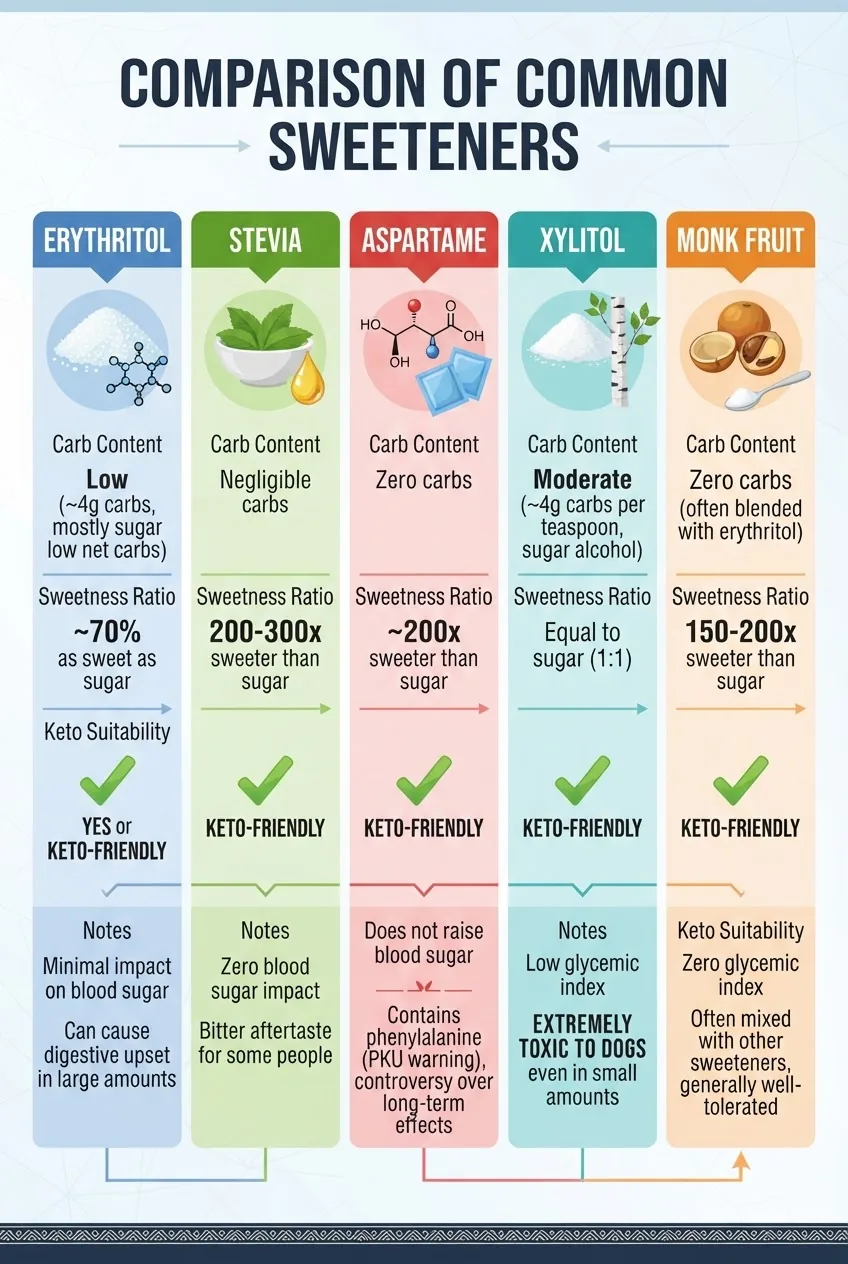
| Sweetener | Carb (per 1 tsp) | Sweetness vs sugar | Calories | Keto suitability | Diabetes compatibility |
|---|---|---|---|---|---|
| Erythritol | ~0 g net carbs (0.2 g total) | ~0.7× sugar | 0 kcal | High — minimal glycemic impact | Generally safe; minimal blood sugar effect |
| Xylitol | ~0.9 g (per tsp) | ~1× sugar | ~2.4 kcal | Moderate — can affect some people | Lower glycemic response than sugar; monitor dose |
| Stevia (extract) | 0 g | 200–400× sugar (varies) | 0 kcal | High — zero carbs, non‑glycemic | Widely used; minimal blood glucose effect |
| Monk fruit (luo han) | 0 g | 100–250× sugar | 0 kcal | High — zero carbs, non‑glycemic | Good option; watch blends with dextrose fillers |
| Sucralose | 0 g (as pure sucralose) | ~600× sugar | 0 kcal | High for pure sucralose; baked products often use bulking agents | No direct glucose rise; mixed reports on insulin effects |
| Aspartame | 0 g | ~200× sugar | 4 kcal/g but used in tiny amounts ≈0 kcal | High — not heat‑stable for long baking | Does not raise blood sugar; not suitable for PKU patients |
| Saccharin | 0 g | ~300–500× sugar | 0 kcal | High — old option, some aftertaste | Little glycemic impact; taste acceptance varies |
Notes on table interpretation: sweetness ratios vary by formulation; many consumer products combine non‑nutritive sweeteners with erythritol or dextrose as bulking agents, which affects net carbs and keto suitability.
Transition: Understanding these differences helps explain how sweeteners impact blood sugar and ketosis; see the next section for the metabolic effects and data references.
How Low Carb Artificial Sweeteners Affect Blood Sugar and Ketosis?
Answer: Most pure low carb artificial sweeteners cause little to no blood glucose rise and usually do not break ketosis, but effects vary: sugar alcohols can have minimal glycemic impact (erythritol none), while some non‑nutritive sweeteners show mixed insulin signalling in studies.
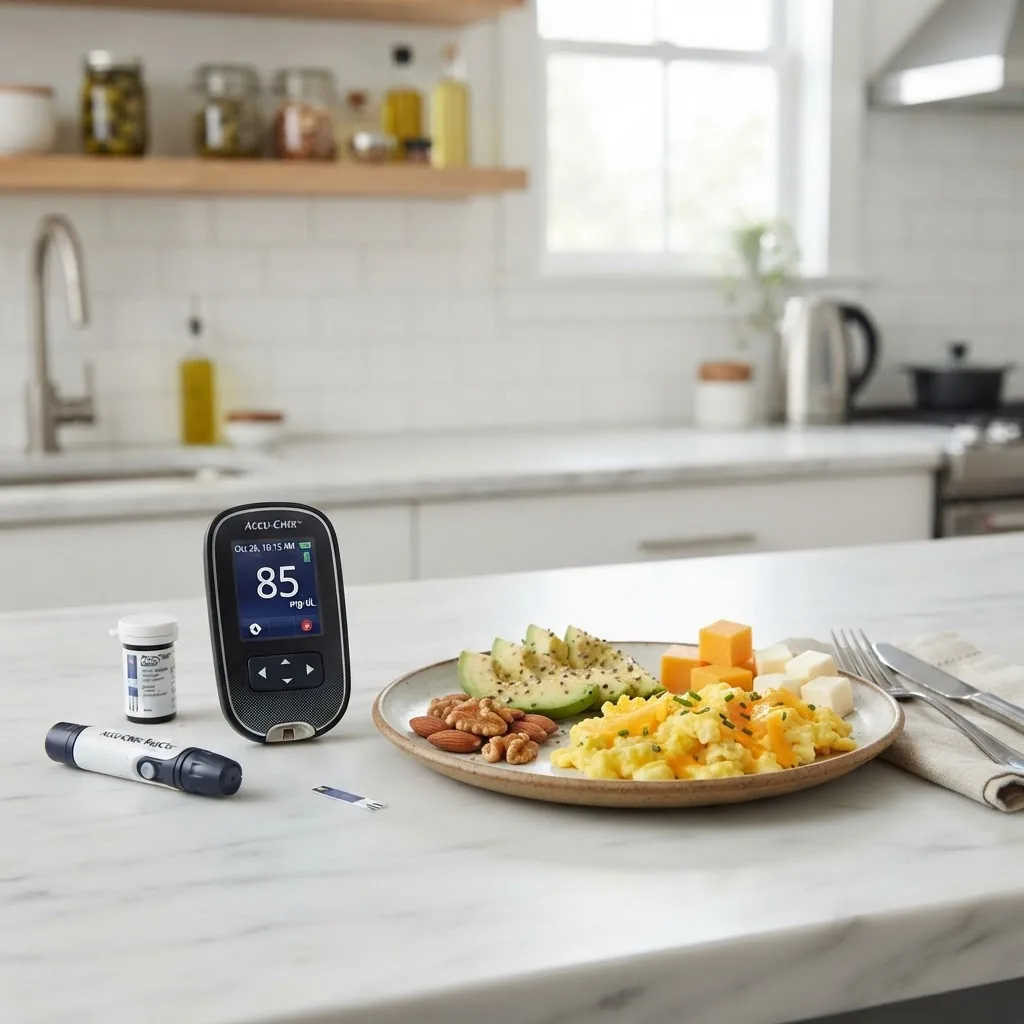
Term: Ketosis is the metabolic state where the body burns ketones, produced from fat, for fuel instead of glucose.
Evidence and data:
- According to a 2018 randomized crossover trial published on PubMed, erythritol produces negligible blood glucose or insulin response compared to sugar (source type: peer‑reviewed study).
- According to a 2021 review on PubMed, non‑nutritive sweeteners like sucralose and aspartame generally do not raise blood glucose, but some studies show altered incretin or insulin responses in certain contexts (source type: peer‑reviewed review).
- According to a 2023 ADA Standards summary, non‑nutritive sweeteners can be used to reduce added sugar intake for people with diabetes when integrated into an individualized meal plan (source type: professional guideline).
Stat block (simple):
- Typical post‑prandial glucose change: sugar raises by 30–80 mg/dL depending on portion (source type: clinical data summarized).
- Erythritol: ~0 mg/dL glucose change (source type: randomized trial).
- Sucralose/aspartame: generally <5 mg/dL change but insulin signalling variable (source type: controlled studies).
Mechanisms that matter for ketosis:
- Digestible carbs raise circulating glucose and insulin; insulin suppresses ketone production—so any sweetener with usable carbs or that triggers insulin can threaten ketosis.
- Sweet taste alone does not automatically raise blood glucose; however, cephalic phase insulin responses have been observed inconsistently with some sweeteners.
Clinical nuance (expertise signal): many keto users monitor ketosis with blood ketone meters; using erythritol, stevia, or monk fruit typically maintains ketone levels, while using products with maltitol, dextrose fillers, or high doses of sugar alcohols can reduce ketones.
For detailed targets and glucose thresholds, consult the blood sugar level management resource to align sweetener choices with personal glucose goals.
Transition: Next, we list the benefits low carb sweeteners offer for keto and diabetes management with practical implications and internal links to related diet topics.
Benefits of Using Low Carb Artificial Sweeteners on a Keto Diet and for Diabetes Management?
Answer: Low carb artificial sweeteners help reduce added sugar and calories, stabilize blood glucose, support adherence to keto by preserving ketosis when used correctly, and can aid hunger and weight control—provided users pick suitable sweeteners and monitor responses.
- Lower glycemic load: Replacing sugar with erythritol or stevia reduces post‑meal blood glucose spikes, aiding glucose control for diabetes (source type: ADA guideline and clinical studies).
- Preserve ketosis: Keto‑friendly options like erythritol and monk fruit maintain ketone production when not combined with carbs—helpful for strict keto adherence.
- Calorie reduction: Non‑nutritive sweeteners provide sweetness without calories, supporting calorie deficit strategies linked to weight loss and metabolic improvement; see how this integrates with calorie deficit plans (source type: nutrition guidelines).
- Improve adherence: Sweet taste without glycemic cost helps people stick with low‑sugar plans.
- Flexible recipe swaps: Many sweeteners substitute directly or in blends for baking and beverages, enabling enjoyable low‑carb meals.
- Support blood sugar targets: Using sweeteners reduces added sugar intake in line with daily sugar intake guidelines (source type: dietary recommendation).
- Synergy with fat-burning keto foods: When combined with fat burning keto foods, low carb sweeteners can support appetite control and metabolic goals (source type: diet guide).
Transition: Benefits are meaningful, but they come with cautions; next we discuss potential risks and side effects with evidence and regulatory context.
Potential Risks and Side Effects of Artificial Sweeteners?
Answer: Risks include digestive issues (especially from sugar alcohols), altered gut microbiome signals in some studies, rare allergic reactions, variable metabolic effects in sensitive individuals, and uncertainty about long‑term outcomes—regulated by the U.S. FDA with approved uses and intake limits.
Term: Gut microbiome refers to the community of microorganisms in the digestive tract that influence metabolism and immune responses.
Digestive and tolerance concerns:
- Sugar alcohols (xylitol, sorbitol, maltitol) can cause bloating, gas, and laxation due to colonic fermentation; erythritol causes fewer digestive symptoms because it is mostly absorbed and excreted (source type: clinical tolerance studies).
- Xylitol is toxic to dogs—household safety is important for pet owners in Texas (source type: veterinary safety alerts).
Microbiome and metabolic debates:
- According to a 2022 PubMed review, some artificial sweeteners may alter gut bacteria in animal models, but human data are inconsistent and the clinical significance remains under investigation (source type: peer‑reviewed review).
- Long‑term population studies show mixed associations between sweetener use and metabolic outcomes, but causation is unclear due to confounding factors (source type: epidemiological research).
Regulatory and safety context:
- According to the U.S. FDA, several sweeteners (aspartame, sucralose, saccharin, stevia extracts, monk fruit extracts, erythritol, xylitol) have recognized approval or GRAS status for specified uses (source type: federal regulatory guidance). U.S. FDA
- ADA guidance (2023) supports the use of non‑nutritive sweeteners as tools to reduce added sugar but recommends individualized plans and monitoring (source type: professional guideline). American Diabetes Association
If you prefer complementary approaches, review vetted discussions on natural diabetes remedies, while keeping in mind evidence quality and safety monitoring.
Transition: Next we’ll cover a stepwise approach to choose the right low carb artificial sweetener for your needs.
How to Choose the Right Low Carb Artificial Sweetener for Your Needs?
Answer: Choose based on keto compatibility (zero/near-zero net carbs), personal blood glucose response, taste preference, recipe use, and tolerance; test one change at a time and measure results with blood glucose or ketone monitoring.
- Assess goals: Are you prioritizing strict ketosis, blood glucose control, or taste? For strict ketosis prioritize erythritol, stevia, or monk fruit.
- Review ingredients: Check labels for bulking agents like dextrose or maltodextrin that add carbs; avoid products with hidden carbs.
- Consider taste and aftertaste: Stevia can be bitter at high doses; monk fruit and erythritol blends reduce bitterness—experiment in small amounts.
- Test personal response: Measure post‑meal glucose and ketones after trying a new sweetener; individual insulin responses vary.
- Watch portion and net carbs: For sugar alcohols subtract non‑glycemic polyols when calculating net carbs per your chosen method; learn the net carbs concept:
Term: Net carbs are total carbohydrates minus fiber and certain sugar alcohols considered non‑glycemic.
- Choose blends thoughtfully: Products combining erythritol with stevia or monk fruit often provide balanced sweetness and bulk for baking.
- Consult guidance: For diabetic-specific selection see the best sugar substitute for diabetics guide.
Decision tree summary:
- If strict keto + baked goods: erythritol blends or monk fruit blends with low-carb bulking agents.
- If heat-sensitive beverages: stevia, monk fruit, or sucralose (sucralose is heat‑stable but check fillers).
- If sensitive gut: prefer erythritol or small amounts of stevia rather than sorbitol/maltitol.
Transition: With choices narrowed, the next section gives practical kitchen tips for using these sweeteners in recipes while keeping carbs in check.
Practical Tips for Using Artificial Sweeteners in Keto and Diabetic Cooking?
Answer: Use taste‑equivalent conversion charts, blend sweeteners for natural flavor, adjust baking chemistry (bulk and browning), calculate net carbs, and test portion effects on blood sugar and ketones.
Step-by-step kitchen tips:
- Follow conversion ratios: High‑intensity sweeteners require tiny amounts; many brands provide cup‑for‑cup erythritol blends to simplify baking.
- Use bulking agents appropriately: Pure non‑nutritive sweeteners lack bulk—use erythritol or low‑carb flours (almond, coconut) to maintain texture.
- Account for moisture and browning: Sugar contributes moisture and caramelization; add a tablespoon of butter or a small amount of allulose (if tolerated) to mimic browning.
- Blend to reduce aftertaste: Combine erythritol (bulk) with stevia or monk fruit (intense sweetness) to balance flavor and reduce cooling effect.
- Adjust leavening: Removing sugar can affect yeast; for keto breads, use chemical leaveners and eggs rather than relying on sugar for fermentation.
- Calculate net carbs: Subtract erythritol grams from total carbs for net carbs if you follow that method; document serving size for accurate carb counting.
- Label reading for keto-friendly products: Check for maltodextrin, dextrose, or inulin as these add digestible carbs—practice reading labels carefully.
- Monitor cost and availability: Bulk erythritol and stevia extracts offer cost savings over branded blends; consider price versus convenience.
Practical recipe examples (experience signals):
- Cheesecake: replace sugar with 1:1 erythritol blend, reduce baking time slightly, and test texture; measure blood glucose after first serving to confirm tolerance.
- Tea/coffee: use stevia drops or monk fruit packets; if bitterness appears, switch to a blend containing erythritol.
For broader carb management strategies and diabetic meal plans that incorporate sweetener use, consult the low carb diet for diabetics guidance.
Transition: Below are concise FAQs answering common practical and safety concerns.