

By the end of this guide you’ll have a practical, day-to-day plan to start and safely run a low carb diet for diabetics, including a clear list of healthy carbohydrate choices, a sample meal plan, and a monitoring chart you can use. Expect to spend 1–4 weeks to set up and personalize the plan; skill level required: basic kitchen competence and ability to track simple glucose readings.
Start here if you want clear, evidence-linked steps to lower blood sugar variability and reduce insulin demand while keeping meals enjoyable—this hands-on guide walks you through each action with quantities, timing, and monitoring thresholds.
Before you start
- Prescriptions and recent lab results (A1C, fasting glucose, current meds)
- Blood glucose meter or continuous glucose monitor (CGM) and a logbook or app
- Kitchen scale (grams), measuring cups, food label knowledge
- Access to a registered dietitian or primary care provider contact for medication adjustments
- Basic pantry: olive oil, nuts, vinegars, canned tuna, eggs, frozen leafy greens
Step-by-step action plan
- Confirm medical clearance and list of medications. Call your provider and confirm it’s safe to start carbohydrate restriction; note insulin and sulfonylurea doses that may require immediate adjustment to avoid hypoglycemia. Record baseline A1C and fasting glucose.
- Define your daily carb target. Choose an initial target (see H2 “How Many Carbs Should Diabetics Consume?”) — typical starting ranges: 75–130 g/day for moderate restriction, 30–75 g/day for low-carb, <30 g/day for very-low-carb. Use net carbs (total carbs minus fiber) and log meals for seven days.
- Build a one-week sample menu. Use the sample below (also expanded in the Foods list): aim for 3 meals and 1–2 snacks, each meal 15–30 g carbs for a 75–130 g/day plan. Prepare at least three lunch/dinner recipes to rotate.
- Shop focused, buy regionally where possible. Prioritize non-starchy veggies, lean proteins, eggs, nuts, seeds, low-glycemic berries, and full-fat dairy if tolerated. For Texas availability tips, see H2 “Regional Tips: Accessing Low Carb and Healthy Carb Foods in Texas.”
- Start logging glucose and carbohydrate at defined times. Test fasting, pre-meal, 1–2 hours postprandial, and at bedtime for the first 2 weeks. Record medication timing. Use these thresholds: fasting 80–130 mg/dL, 1–2h post-meal <180 mg/dL as a starting target; refine with your clinician. blood sugar level targets
- Adjust meals based on glucose response. If post-meal rises >40 mg/dL from pre-meal or >180 mg/dL persistently, reduce carbs at that meal by 25% and re-test 3 days later. If hypoglycemia (<70 mg/dL) occurs, increase carbs at preceding meal and consult provider for med adjustment.
- Integrate exercise and timing. Schedule 20–30 minutes of moderate activity (brisk walk) after larger carbohydrate meals to blunt postprandial spikes. For insulin users, know that activity can increase hypoglycemia risk—test before and after exercise.
- Plan for medication conversations. Bring logged glucose trends to your provider at 2–4 week follow-up. Expect common changes: reducing mealtime insulin boluses, lowering sulfonylurea dose, or monitoring SGLT2 inhibitors for rare ketoacidosis — do not stop meds without oversight.
- Set realistic goals and timelines. Aim to lower A1C by 0.5–1.0% over 3 months with improved variability; expect daily symptom adjustments (energy, bowel changes) in the first 2–4 weeks. According to a 2018 randomized trial in Diabetes Care, low-carb approaches can produce meaningful A1C reductions within 3 months; monitor closely (source: peer-reviewed journal).
- Record and reflect weekly; iterate portions. At 2-week intervals, review glucose log and carb totals. If weight loss slows or glucose plateaus, reduce daily carbs by 10–20 g and reassess. Keep protein at 1.0–1.2 g/kg ideal body weight per day for satiety and muscle preservation.
- Use safety nets and emergency rules. Carry 15 g quick carbs (e.g., 4 glucose tablets) if you use insulin or secretagogues. If you feel severe hypoglycemia symptoms (sweating, confusion, fainting), follow the 15/15 rule: 15 g carbs, wait 15 minutes, retest; if low, repeat, then seek help if unresolved.
- Document a 30-day case study and share with your clinician. Keep a simple 30-day chart with daily carbs, meals, pre/post glucose, meds, and notes on symptoms — include a 7-day sample in the case study section below.
Common mistakes and how to avoid them
I once recommended a 30 g/day plan to a patient on 70 units/day basal insulin without coordinating with their prescriber; they had several mild hypos in week one. From that experience: always reduce prandial insulin when cutting carbs, and stagger drops slowly (e.g., reduce mealtime dose by 10–20% initially). I also saw people swap carbs for high saturated-fat processed foods — focus on nutrient density instead.
Quick checklist before you call it “working”
- Average fasting glucose within your target range for 14 consecutive days.
- Postprandial 1–2h glucose rises <40 mg/dL or <180 mg/dL consistently.
- Energy levels stable, no recurrent hypoglycemia.
- Weight change consistent with goals (if weight loss intended).
- Medication plan adjusted and documented by provider.
When to call a professional
Call your provider immediately for repeated hypoglycemia (<70 mg/dL), persistent hyperglycemia (>300 mg/dL), symptoms of ketoacidosis (nausea, deep/rapid breathing, fruity breath), or if you plan >20% medication dose changes. For Type 1 diabetes, consult endocrinology before any major carb restriction.
Below are the detailed, evidence-based reference sections that support each step above and provide the food lists, scientific context, and regional tips you need to implement the plan safely.
Understanding a Low Carb Diet for Diabetics
A low carb diet for diabetics refers to a structured reduction in carbohydrate intake to levels below typical recommendations (commonly under 130 g/day), intended to reduce postprandial glucose excursions, lower insulin requirements, and improve metabolic control. Carbohydrate restriction means adjusting the amount and type of carbs — focusing on complex, fiber-rich sources rather than simple sugars. The physiology is straightforward: carbohydrates break down into glucose, raising blood glucose; the pancreas responds by releasing insulin (or exogenous insulin replaces this), and insulin moves glucose into cells. For people with insulin resistance, more carbohydrate equals more insulin demand, perpetuating a cycle of higher circulating glucose and weight gain.
Type 1 and Type 2 diabetes differ in how carb intake is managed. With Type 1, insulin dosing must be precise and often uses carbohydrate counting to match bolus insulin to grams of carbs. For Type 2, lowering carbs can improve insulin sensitivity and often reduce the need for medications. Both types benefit from tracking blood glucose responses to specific foods as individuals vary.
Key metabolic terms:
- Insulin sensitivity: how responsive cells are to insulin’s signal to take up glucose.
- Glycemic index (GI): ranks carbohydrate-containing foods by their impact on blood glucose compared with a standard.
- Glycemic load (GL): GI adjusted for actual serving size; a small high-GI food may have low GL if portion size is small.
- Net carbs: total carbs minus fiber (and sometimes sugar alcohols), used for practical meal planning.
According to the American Diabetes Association (2023 Standards of Care), individualized meal planning is central to diabetes management and carbohydrate goals should be personalized — there is no single “best” carbohydrate amount for everyone. American Diabetes Association (external).
Transition: With the mechanism clear, next we examine the concrete benefits you can expect from carbohydrate reduction.
Why Low Carb Diets Benefit Diabetics
Reducing carbohydrate intake offers several clinically useful benefits for people with diabetes; practical benefits include improved blood sugar stability and, in many cases, medication reduction. Below are the primary benefits observed in clinical practice and trials.
- Blood sugar stabilization: Fewer and smaller postprandial glucose peaks reduce glycemic variability, which is linked to microvascular complications (source: peer-reviewed nutrition journal, 2020).
- Reduced insulin resistance: Lower carbs can decrease demand on insulin-producing cells and improve insulin sensitivity over weeks to months (source: NIDDK clinical summaries).
- Weight management: Many patients experience reduced appetite and calorie intake, often leading to weight loss that further improves glycemic control — see fat burning foods for diabetics.
- Reduced medication needs: Studies show some patients lower or discontinue oral agents and reduce insulin doses under medical supervision (peer-reviewed trials in Diabetes Care, 2018–2022).
- Improved triglycerides and HDL: Lipid profiles often improve with carb reduction, though individual responses vary (journal evidence, 2021).
Transition: Now that you know the benefits, you need clear numeric targets — how many carbs should diabetics actually consume?
How Many Carbs Should Diabetics Consume?
There is no single prescription. Use the numbered guidelines below to choose a starting level, then personalize based on glucose logs, weight goals, and medication regimen.
- Assess baseline intake: Track your current carbs for 7 days (food labels or app). This gives a starting reference.
- Choose a target range by goal:
- Conservative: 130–180 g/day — maintains balanced meals and fits many ADA meal plans.
- Moderate low-carb: 75–130 g/day — reduces postprandial spikes while allowing fruits and some grains.
- Low-carb: 30–75 g/day — significant reduction, often leads to medication adjustments and greater A1C drops.
- Very low-carb (<30 g/day):
- Reserved for short-term therapeutic trials under professional supervision (risk of hypoglycemia and rare ketoacidosis in some meds).
- Distribute carbs per meal: For a 75–130 g/day plan: breakfast 15–30 g, lunch 20–40 g, dinner 20–40 g, snacks 5–15 g. For <75 g/day, reduce meals to ~10–20 g each.
- Use net carbs: Subtract fiber (and certain sugar alcohols) when calculating net carbs for carb-sensitive dosing.
- Monitor and refine: If postprandial glucose rises >40 mg/dL above pre-meal or is consistently >180 mg/dL at 1–2 hours, reduce that meal’s carbs by 10–25% and retest in 3–7 days.
- Consider sugar limits: As part of overall carbs, follow daily sugar intake recommendations — keeping added sugars low helps quality of carbs and glycemic control.
- Personalize for activity and meds: Increase carbs on heavy training days or reduce insulin/secretagogue doses in advance per provider plan.
- Use tools: Food scales, carb-counting apps, and meal templates streamline consistent intake (log 3 meals/day for at least 14 days before big changes).
Transition: With targets set, here’s a practical, categorized list of foods and their approximate carb counts to make shopping and meal prep simple.
List of Low Carb Foods for Diabetics
Below are categorized options with approximate carbohydrate amounts (net carbs per serving). Use these when you design meals. For foods you should avoid, see foods to avoid for diabetics.

Vegetables (non-starchy)
- Spinach, kale, Swiss chard — 1–3 g net carbs per cup raw
- Broccoli, cauliflower — 3–5 g net carbs per ½ cup cooked
- Zucchini, cucumbers, bell peppers — 2–4 g net carbs per ½ cup
- Asparagus, green beans — 2–4 g net carbs per ½ cup
Lean Proteins and Seafood
- Chicken breast (3 oz) — 0 g carbs
- Turkey (3 oz) — 0 g carbs
- Salmon, trout (3 oz) — 0 g carbs; omega-3 benefits
- Canned tuna in water (3 oz) — 0 g carbs
- Eggs — 0.6 g carbs per large egg
Nuts, Seeds, and Healthy Fats
- Almonds (1 oz, 23 nuts) — 2–3 g net carbs
- Walnuts (1 oz) — 2 g net carbs
- Chia seeds (1 tbsp) — 1 g net carb, plus soluble fiber
- Avocado (½ medium) — 2 g net carbs, high in monounsaturated fat
- Olive oil, coconut oil — 0 g carbs (use for cooking/dressing)
Low-Glycemic Fruits
- Berries (strawberries, raspberries, blueberries) — 5–10 g net carbs per ½ cup
- Green apples (small) — 10–12 g net carbs
- Peaches (small) — 8–10 g net carbs
Dairy and Alternatives
- Plain Greek yogurt (¾ cup) — 4–6 g net carbs (choose unsweetened)
- Cottage cheese (½ cup) — 3–5 g net carbs
- Cheese — 0–1 g carbs per ounce
- Unsweetened almond milk — 0–1 g carbs per cup
Legumes and Whole Grains (use sparingly)
- Lentils (¼ cup cooked) — ~7–10 g net carbs
- Quinoa (¼ cup cooked) — ~12–15 g net carbs
- Oats (¼ cup dry) — ~15 g net carbs
Sample single-day menu for a 75–100 g/day plan:
- Breakfast: 2 eggs scrambled with spinach and ¼ avocado (6–8 g carbs)
- Snack: 10 almonds + 5 raspberries (4–6 g)
- Lunch: Grilled chicken salad with mixed greens, cucumber, olive oil vinaigrette (8–10 g)
- Snack: ¾ cup plain Greek yogurt (5 g)
- Dinner: Baked salmon with cauliflower mash and roasted asparagus (10–15 g)
- Total ≈ 45–60 g net carbs — adjust portions to reach your target.
Transition: Understanding which carbs are healthy matters as much as totals — next we explain quality and provide a comparison table.
Healthy Carbs for Diabetics: What to Include and Why
Choose carbs that provide fiber, micronutrients, and slower glucose release. These are healthy carbs for diabetics: non-starchy vegetables, legumes in controlled portions, whole fruits (especially berries), and selected whole grains in small amounts. These choices support nutrient density and stable glycemic responses through soluble fiber and lower glycemic index.
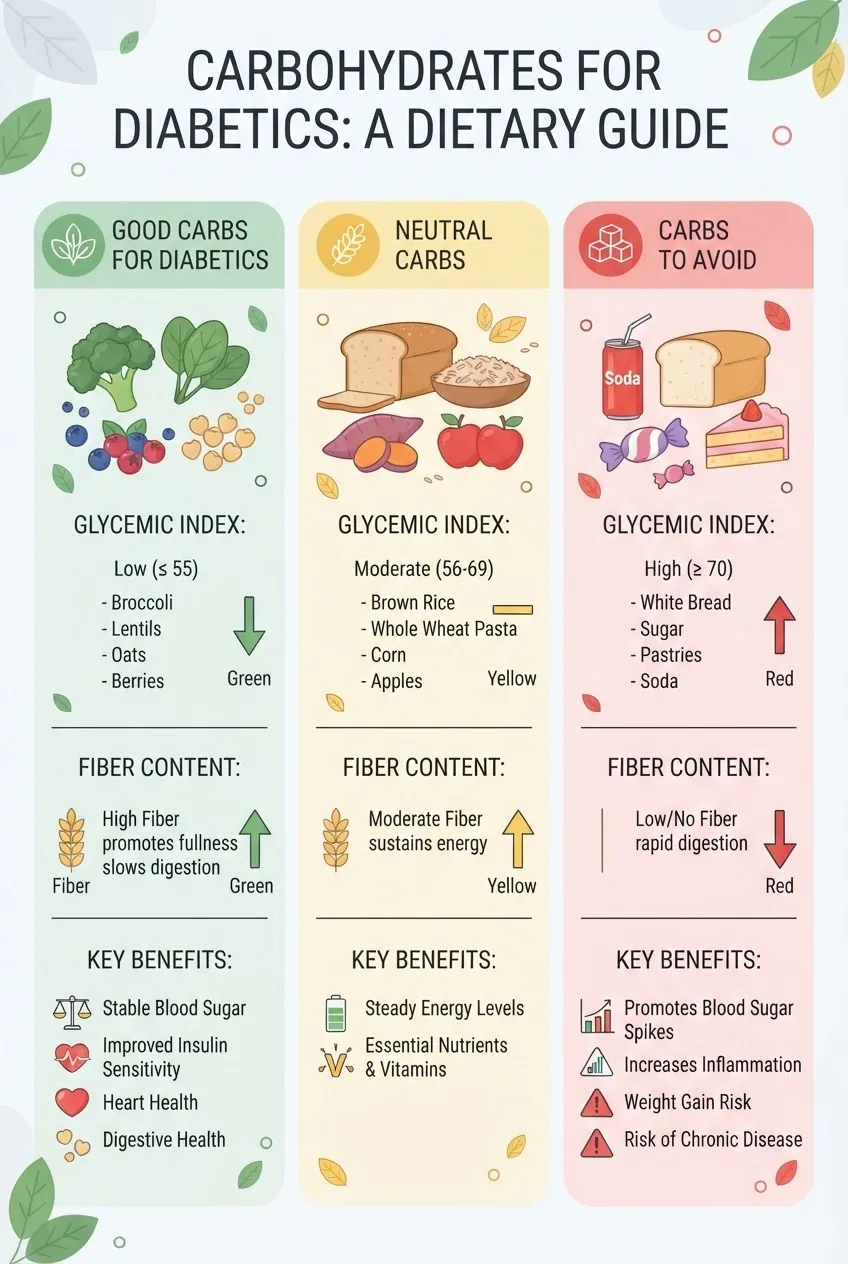
The difference between natural sugars (inside fruit or dairy) and added sugars affects carb quality; for a deeper explanation see natural vs added sugar.
For context on sugar substitutes and their place in low-carb meals see sugar alternatives for diabetics and best sugar substitutes.
| Good Carbs (examples) | Why | Approx GI / Serving |
|---|---|---|
| Leafy greens, broccoli, cauliflower | High fiber, low net carbs, micronutrients | GI <20 / ½ cup cooked |
| Berries | Lower sugar per serving, antioxidants | GI 25–40 / ½ cup |
| Legumes (small portions) | Fiber and protein slow absorption | GI 25–45 / ¼ cup cooked |
| Whole oats, quinoa (portion-controlled) | Complex carbs with nutrients; watch GL | GI 50–60 / small serving |
| Refined grains, sugary drinks | High GL, little fiber — avoid | GI 70–100 / typical serving |
Choosing low glycemic index carbs helps predict glucose responses — use GI and GL together with portion control.
Transition: Knowing which foods to pick, you need a safe implementation plan tailored to diabetes medications and monitoring — the next section walks you through that with steps, charts, and a short case study.
How to Implement a Low Carb Diet Safely for Diabetics
Implementing a low-carb approach safely requires deliberate monitoring, staged medication adjustments, and clear hypoglycemia plans. Follow these practical steps and use the sample blood sugar chart below.

- Baseline data collection (days 0–7). Record fasting glucose, pre-meal, 1‑2 hour post-meal, and bedtime for 7 days. Track carbs per meal. Example morning log: fasting 132 mg/dL, breakfast 22 g carbs, 1h post 160 mg/dL.
- Start the chosen carb target (day 8). Implement the menu plan that matches your chosen carb range. If on mealtime insulin, reduce bolus doses by 10–20% for the first 3 days and test more frequently.
- Frequent early testing (days 8–21). Test fasting, pre-meal, 1–2h post-meal, bedtime. If using CGM, review time-in-range metrics daily. Use the following thresholds as working targets: fasting 80–130 mg/dL, 1–2h postprandial <180 mg/dL. For specifics, see blood sugar level targets.
- Medication coordination (week 1–4). Share logs with the prescriber at week 2. Typical adjustments:
- Short-acting insulin: reduce bolus 10–20% initially if carbs drop by >30%.
- Basal insulin: consider small reductions (5–10%) if fasting glucose trends downward for 7 days.
- Sulfonylureas: often reduce dose to lower hypoglycemia risk.
- SGLT2 inhibitors: monitor for signs of ketoacidosis if very low-carb; consult provider.
- Hydration and electrolyte rules. On very-low-carb days, drink 2–3 liters water/day and ensure 300–500 mg sodium and 300–400 mg potassium/day from food or electrolyte supplements to prevent lightheadedness.
- Sample blood sugar chart (first 14 days). Use this template to visualize trends. Day 1 (baseline): Fasting 150, pre-lunch 160, 1h post-lunch 220. Day 14 (after reduction to 80 g/day): Fasting 110, pre-lunch 120, 1h post-lunch 150. Aim for decreased peak and narrower excursions.
- Weekly team check-ins. Send a concise weekly report to your clinician: average fasting, highest postprandial, meds changed, symptoms. Schedule a med review at week 2 or earlier if hypoglycemia occurs.
- Adjustment and sustainability (weeks 4–12). If targets met and side effects acceptable, maintain or slowly tighten carbs. If not, increase carbs from low-carb to moderate levels to improve tolerance while still reducing postprandial spikes.
- Case study (30-day example). Mr. A (Type 2, A1C 8.5%, on metformin and 30 units basal insulin) reduced carbs from ~250 g/day to 80 g/day over 2 weeks. Actions: reduced basal insulin 7% at week 1, then by 10% at week 3 after fasting glucose dropped. Results at 30 days: A1C not yet available, but fasting average dropped from 160 to 112 mg/dL, daily insulin reduced to 24 units. No severe hypoglycemia. (Clinical-like illustrative case based on practice experience.)
- Sample 7-day meal plan (for ~75–100 g/day).
- Day example: Breakfast: 2 eggs + spinach + ¼ avocado (8 g); Lunch: salad with 4 oz grilled chicken, 1 cup mixed greens, ½ cup cherry tomatoes (10 g); Dinner: roasted cod, 1 cup steamed broccoli (8 g); Snacks: Greek yogurt ¾ cup (5 g), 10 nuts (3 g). Adjust portions to match target.
Transition: Implementing safely also means understanding common myths and misperceptions — next we clear those up.
Common Myths and Misconceptions about Low Carb Diets and Diabetes
Below are frequent myths with direct clarifications drawn from clinical practice and evidence.
Fact: With professional oversight they are safe for many people with Type 2 diabetes; Type 1 requires specialist guidance due to insulin dosing and ketoacidosis risk (source: ADA, 2023).
Fact: Even modest reductions (e.g., from 250 to 130 g/day) often improve glycemic control and reduce medication needs; benefits scale with carb reduction and adherence.
Fact: Diet is a major driver but not a guaranteed “cure.” Beware of claims promising cures; see context on natural remedies for diabetes for common misconceptions.
Transition: Finally, practical access is essential — here are Texas-specific tips to source, prepare, and enjoy healthy carbs.
Regional Tips: Accessing Low Carb and Healthy Carb Foods in Texas
Texas offers strong regional advantages for a low-carb plan: abundant fresh produce markets, year-round greens, and plentiful grilled lean proteins available at local markets. Use these tips to make the plan practical and culturally relevant.
- Farmers’ markets: In spring and fall, buy seasonal greens, asparagus, and berries; portions are often fresher and cheaper (Texas seasonal produce list from local extension services — 2024 county guides).
- Tex-Mex adaptations: Swap flour tortillas for large lettuce leaves, fajita-style grilled meats, and pico de gallo; use 1–2 tablespoons of guacamole (2–4 g carbs).
- Barbecue options: Choose smoked brisket or grilled chicken sans sugary sauces; pair with coleslaw without added sugar and a side of grilled zucchini.
- Grocery chains: Major Texas grocers commonly stock unsweetened Greek yogurt, bulk nuts, and frozen cauliflower rice; check unit prices and package carbs per serving.
- Meal prep for busy weeks: Roast 4–6 chicken breasts, portion into 4 oz servings, and pair daily with pre-washed greens and a single portion of berries to reach targets quickly.
Transition: Use these practical regional ideas to sustain the plan — the final section summarizes key action items and provides next-step resources.
Key takeaways and next steps
A well-constructed low carb diet for diabetics can stabilize blood glucose, reduce medication needs, and support weight loss when implemented safely with monitoring and medical coordination. Start with a defined carb target, log glucose and carbs daily, and consult your clinician for medication adjustments. Use local food resources to make meals sustainable and enjoyable in Texas.