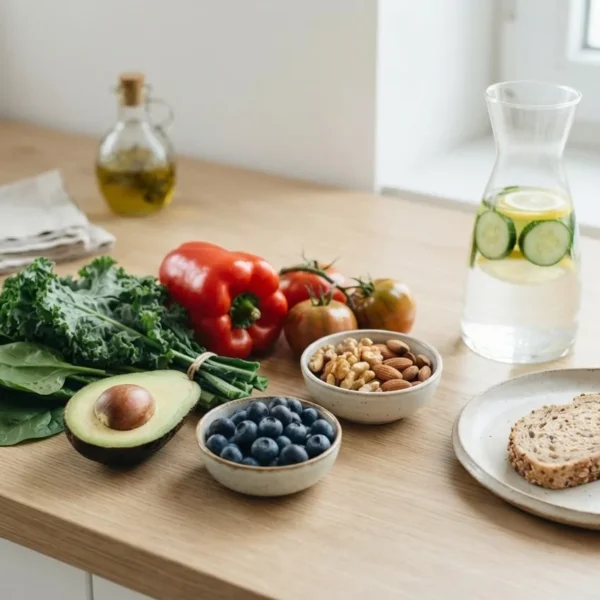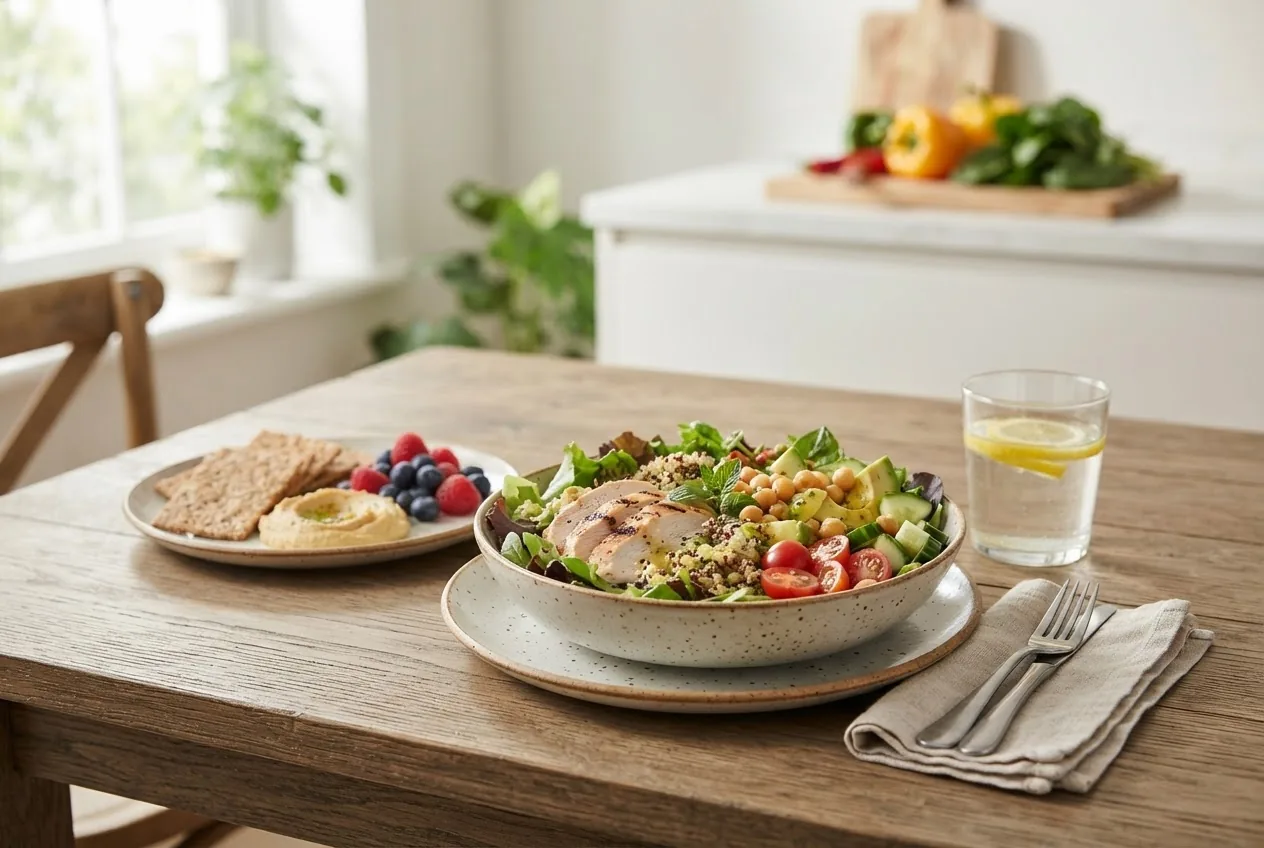
Low glycemic index foods for diabetics are carbohydrate-containing foods that raise blood glucose slowly, helping stabilize blood sugar, reduce insulin spikes and support weight and heart health when used as part of a comprehensive diabetes plan. This guide explains GI values, benefits, practical lists and Texas-relevant meal ideas for daily use.
Understanding Glycemic Index and Its Importance for Diabetics?
Answer: The glycemic index (GI) ranks carbohydrate-containing foods by how quickly they raise blood glucose compared with a reference (glucose or white bread), and for diabetics choosing low-GI foods helps blunt sudden insulin spikes and smooth glycemic response throughout the day.
Glycemic index: a number (0–100) that quantifies how fast a food raises blood glucose relative to pure glucose.
The glycemic response is the change in blood glucose after eating; foods with a high GI create a sharp rise (a “roller coaster” spike), while low-GI foods produce smaller, slower increases. Lowering post-meal glucose peaks reduces immediate symptoms (fatigue, thirst) and long-term risks such as macrovascular disease. The GI is measured under controlled conditions by feeding volunteers a fixed carbohydrate portion of the test food and comparing the area under the blood glucose curve to that from the same amount of a reference food — methodology widely used in clinical nutrition research.
Glycemic load: an index that adjusts GI for typical serving size by multiplying GI by the carbohydrate grams per serving and dividing by 100; it estimates real-world impact of a portion.
Glycemic load (GL) helps translate GI into practical portion decisions: a food with moderate GI can have a low GL if consumed in small amounts. For diabetes management, both GI and GL matter because carbohydrate metabolism and insulin response depend on both the food’s quality and quantity. According to a 2023 ADA report on nutrition and diabetes management, focusing on carbohydrate quality (including GI) alongside total carbs improves glycemic control and reduces variability in glucose readings American Diabetes Association.
When explaining types of sugars and the difference between natural and added sugars, consult resources that differentiate metabolic effects of sugar sources. Natural vs Added Sugar Guide with Health and Nutrition Facts
Practical example: two foods with similar carbohydrate content — watermelon (high GI) and lentils (low GI) — produce very different insulin responses. Choosing more lentils limits post-meal glucose excursions without strict carbohydrate elimination. External clinical reviews show low-GI patterns reduce HbA1c modestly in Type 2 diabetes populations peer-reviewed analysis.
Transition: Now that GI and GL are defined and placed in clinical context, the next section lists which foods are low-GI and why they matter for diabetics.
What Are Low Glycemic Index Foods for Diabetics?
Answer: Low glycemic index foods for diabetics are typically high-fiber, minimally processed carbohydrates—like legumes, non-starchy vegetables, most whole grains, some fruits and dairy—whose GI values are generally 55 or below and which cause gradual blood glucose rises when eaten in usual portions.
Low GI definition: foods with a glycemic index of 55 or less on the 0–100 GI scale, measured against glucose or white bread under standardized testing.
Low GI foods slow carbohydrate absorption through fiber, fat, protein and food structure, reducing rapid glucose entry into the bloodstream. Below is a categorized bulleted list of typical low-GI food groups and examples; for alternatives like artificial sweeteners, compare metabolic effects versus sugar when choosing replacements (see further reading). artificial sweeteners vs sugar
- Legumes: lentils, chickpeas, black beans — low GI, rich in fiber and plant protein.
- Nuts and seeds: almonds, walnuts, chia — minimal carbohydrate, low GI effect due to fat and fiber.
- Whole grains: steel-cut oats, barley, quinoa — generally lower GI than refined grains; some variance exists.
- Non-starchy vegetables: leafy greens, broccoli, peppers — very low GI and nutrient dense.
- Fruits (certain): apples, pears, berries, cherries — many whole fruits have low-to-moderate GI when eaten with skin and intact fiber.
- Dairy: plain yogurt, milk — lactose has moderate GI but dairy fat and protein dampen glycemic response.
- Protein & healthy fats: lean meats, fish, avocado — non-carbohydrate foods that don’t raise glucose and pair well with low-GI carbs.
When discussing sugar alternatives to complement low-GI foods, consult targeted resources for diabetic-friendly choices. best sugar substitutes for diabetics
Transition: The next section explains the measurable health advantages diabetics gain from prioritizing low-GI foods.

Health Benefits of Low Glycemic Index Foods for Diabetics?
Answer: Eating low GI foods helps stabilize blood sugar, reduce insulin resistance, support weight management, and lower cardiovascular risk factors—benefits documented in clinical studies and guideline reviews when low-GI patterns are part of an overall healthy diabetes diet.
Low-GI patterns moderate blood sugar stabilization by reducing postprandial glycemic peaks and glycemic variability, which is linked to fewer hypoglycemic episodes and lower HbA1c in many trials. According to a 2022 meta-analysis published in a peer-reviewed journal, low-GI diets produced modest but clinically relevant reductions in HbA1c in people with Type 2 diabetes peer-reviewed analysis.
Examples of documented benefits:
- Blood sugar stabilization: fewer sharp rises and falls after meals, leading to smoother daily readings and less fatigue.
- Reduced insulin resistance: slower glucose delivery to tissues reduces chronic hyperinsulinemia over time, improving insulin sensitivity in some patients.
- Weight management: high-fiber, satiating low-GI foods often reduce energy intake and cravings—helpful for diabetes and central adiposity control. foods that aid belly fat loss
- Cardiovascular health: lower post-meal lipemia and better lipid profiles observed in some trials when low-GI patterns replace refined carbohydrates.
- Microvascular complication risk: lower average glucose exposure can reduce long-term risk for neuropathy and retinopathy when combined with medical care, per clinical guidance summaries.
Nutrition trade-offs matter: some low-GI foods (e.g., chocolate, ice cream) can be calorie-dense yet low GI due to fat content, while other low-GI choices (lentils, vegetables) are nutrient-rich and low-calorie. Expert dietary planning balances GI with calorie control, macronutrient distribution and micronutrient adequacy. For managing sugar alongside low-GI selection, review concise daily sugar intake guidelines to place fruit and dairy choices into safe daily totals. daily sugar intake guidelines
Regional note for Texans: incorporating local produce (e.g., black-eyed peas, Texas-grown beans, citrus) provides high-fiber, low-GI options that support both cultural preferences and glycemic management. According to a 2024 industry report on U.S. dietary patterns, regional availability increases adherence when meal plans include familiar local foods.
Transition: The following section is a detailed, practical list of low-GI foods with GI values and usage tips, including Texas-specific examples you can buy locally.
Comprehensive List of Low GI Foods for Diabetics with Practical Tips?
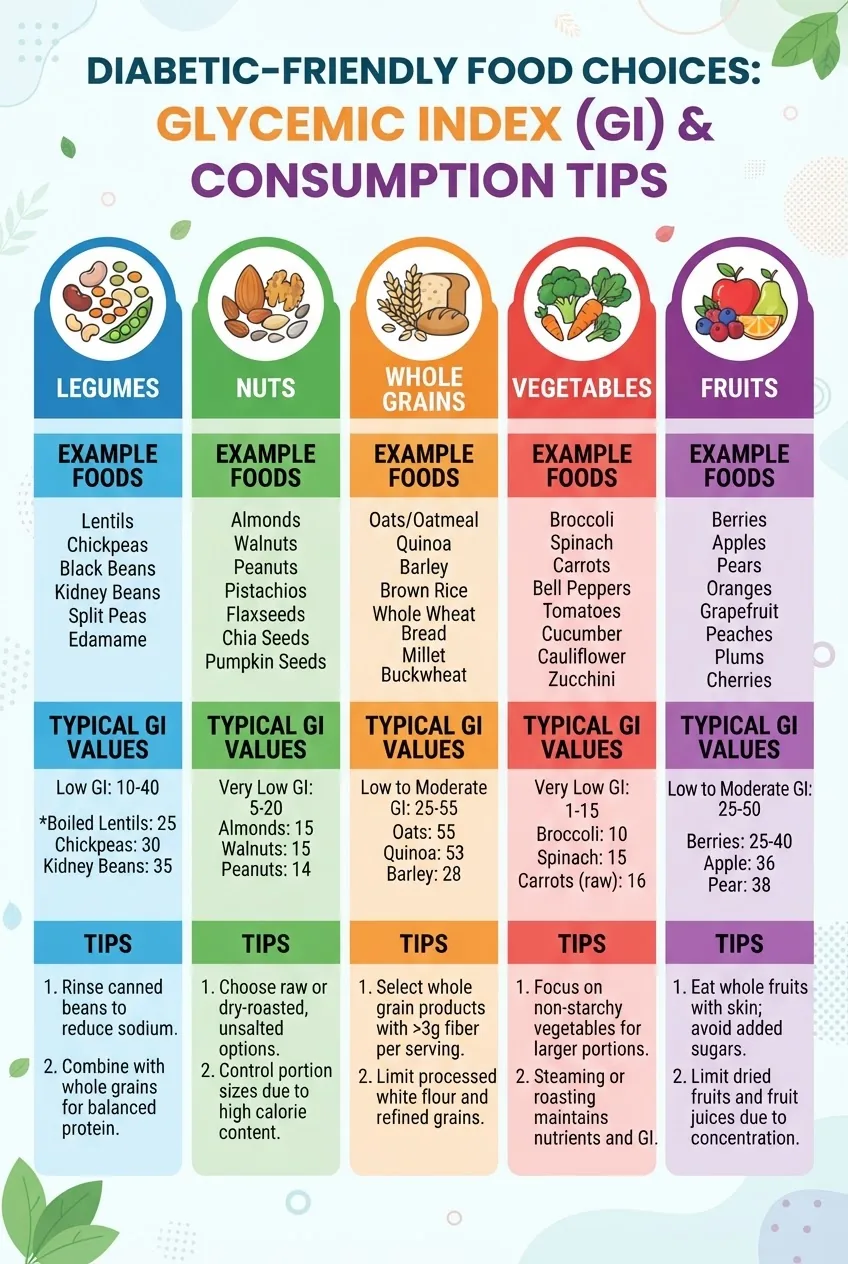
Answer: Below is a numbered, categorized list of low-GI foods with typical GI values, portion guidance and practical usage tips—plus Texas-relevant examples—so diabetics can build reliable grocery lists and meal plans.
-
Legumes — values ~21–40; how to use
Lentils (GI 21–29): use in soups, salads and Tex-Mex bowls for slow-release carbohydrates and plant protein. Black beans (GI ~30): great in chili or tacos; combine with vegetables and a small portion of brown rice to manage GL.
Tip: Soak and cook beans from dry to reduce added sodium and preserve fiber; canned beans can be rinsed to remove excess salt. Texas example: black-eyed peas (GI ~31) are a traditional, low-GI staple for New Year’s dishes.
-
Nuts & Seeds — effectively zero-to-very-low GI; portion-aware
Almonds and walnuts have negligible direct glycemic impact but are calorie-dense; typical snack portions (1 oz) add healthy fats and slow carbohydrate absorption when paired with fruit or whole-grain crackers.
Tip: Use chopped nuts as a topping on plain yogurt or salads for texture and glycemic buffering.
-
Whole Grains — GI varies 25–55; choose intact grains
Steel-cut oats (GI ~42), barley (GI ~28), and quinoa (GI ~53) are lower-GI options than instant oats or white rice. Bulgur and whole-grain pasta often sit in the low-to-moderate GI range when cooked al dente.
Tip: Prefer intact or minimally processed grains; combining with legumes or vegetables reduces overall meal GL.
Texas-ready: brown rice bowls with black beans, sautéed peppers and grilled lean protein make balanced low-GI meals.
-
Vegetables — most non-starchy types GI <15
Leafy greens, broccoli, cauliflower, peppers, and tomatoes have minimal impact on blood glucose; sweet potatoes are moderate GI (44–61 depending on preparation) but nutrient-dense and often better than white potatoes.
Tip: Fill half your plate with non-starchy vegetables at meals to lower meal GL and add volume for satiety.
-
Fruits — GI usually 20–55 depending on ripeness and variety
Apples (GI ~36), pears (~38), cherries (~20), and berries (~25–40) are typically low-GI; tropical fruits like watermelon can be high GI. Eat whole fruit with skin and pair with protein or nuts for slower absorption.
Tip: Avoid fruit juices for glycemic control; whole fruit preserves fiber and reduces GL.
-
Dairy & dairy alternatives — GI ~30–50
Plain Greek yogurt and milk have moderate-to-low GI due to lactose plus protein and fat; flavored or sweetened products raise GL through added sugars. Choose unsweetened varieties and add fresh berries for flavor.
Tip: Read labels for added sugars — a “low-GI” dairy product with high added sugar can negate benefits.
-
Proteins & fats — negligible GI but crucial for pairing
Lean poultry, fish, eggs and plant proteins don’t raise blood glucose directly and help blunt glycemic response when eaten with carbohydrates.
Tip: A 3–4 oz protein serving with carbohydrates slows gastric emptying and lowers postprandial glucose spikes.
-
Prepared foods and cooking effects
Processing, cooking method and ripeness change GI: finely ground flours, overcooked pasta/rice and ripe fruit have higher GIs. Cooling starchy foods (e.g., cooked rice, potatoes) increases resistant starch and lowers effective GI.
Tip: Prefer al dente pasta, whole kernels, and chilled cooked grains in salads to improve GL.
-
Specific GI values table (typical ranges)
Food Typical GI Usage tip Lentils (boiled) 21–29 Add to salads, soups; pair with veggies. Steel-cut oats 42 Cook minimally; top with nuts/berries. Apple (raw) 36 Eat with nut butter for balanced snack. Brown rice (long-grain) 50–55 Combine with beans and veggies; control portion. Plain yogurt (low-fat) 35–40 Add cinnamon and berries; avoid sweetened varieties. -
Texas-specific shopping notes
Local farmers’ markets in Texas often sell beans (black-eyed peas, pinto), heirloom tomatoes, collard greens and citrus—low-GI building blocks. Use community-supported agriculture or bulk bins for whole grains and legumes to save money and ensure freshness.
Tip: Plan for seasonal items—grilled vegetables and cold lentil salads work well in Texas summers; hearty bean stews are great for cooler months.
-
Cautions and trade-offs
Not every low-GI item is healthy in all contexts. For example, ice cream has a moderate-to-low GI due to fat content but is calorie-rich and often contains added sugars; choose nutrient-dense low-GI options first.
Tip: Prioritize low-GI whole foods over processed low-GI products that may be high in saturated fat or sodium.
Transition: With a detailed list and GI values above, the next section explains how to practically build meals and daily plans around these foods.
How to Incorporate Low GI Foods into Your Daily Diabetic Diet?
Answer: Incorporate low GI foods by prioritizing fiber-rich legumes, whole grains and vegetables, pairing carbs with protein/fat, controlling portions, and planning meals/snacks—use simple meal templates and carbohydrate counting to keep blood glucose within target ranges.
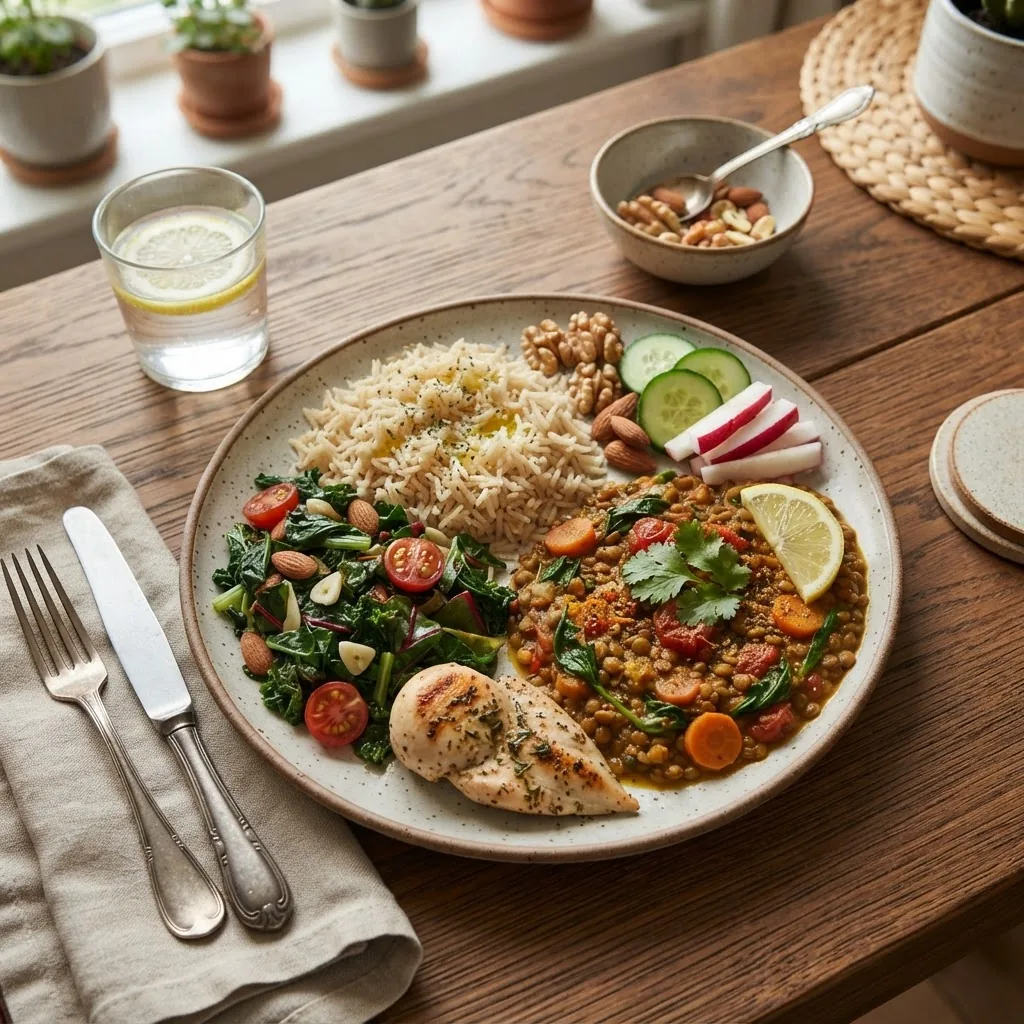
Meal planning: design plates where non-starchy vegetables occupy half, lean protein a quarter and low-GI carbohydrate the remaining quarter; adjust portion sizes based on personal carb targets.
Step-by-step practical advice:
- Set carbohydrate goals: Work with your clinician to determine daily carb targets and insulin dosing; use carbohydrate counting to distribute carbs evenly across meals and snacks.
- Start with breakfast: choose steel-cut oats or plain Greek yogurt with berries and nuts instead of sweetened cereals; this stabilizes morning glucose.
- Lunch and dinner templates: bowls with a base of leafy greens, a low-GI grain (small portion), a legume or lean protein, healthy fat and non-starchy vegetables.
- Snack strategy: pair fruit with a handful of nuts or a boiled egg to reduce glycemic impact.
- Batch cooking and prepping: cook a large pot of lentils/beans and whole grains weekly, chop vegetables, portion snacks into single servings to avoid overeating.
- Portion control: use visual cues (fist, palm, thumb) or a scale for precise carbohydrate portions; remember GL depends on serving size.
- Carb counting tools: mobile apps and food labels can help track grams of carbs; match insulin or medication timing as advised by your healthcare team.
Sample one-day meal outline (diabetic-friendly):
- Breakfast: steel-cut oats (1/2 cup cooked) with 1 tbsp almond butter and 1/2 cup blueberries.
- Mid-morning snack: small apple with 10 almonds.
- Lunch: mixed greens bowl with 3/4 cup black beans, 1/3 cup brown rice, grilled chicken (3 oz), avocado and salsa.
- Afternoon snack: plain Greek yogurt (3/4 cup) with cinnamon.
- Dinner: lentil chili (1 cup) with roasted mixed vegetables and a side salad.
- Evening: herbal tea or 1 small pear if needed.
Case example (experience signal): Jose, a 57-year-old Texan with Type 2 diabetes, swapped instant oatmeal and sweetened yogurt for steel-cut oats with nuts and plain yogurt with berries; after 12 weeks of consistent low-GI meals and portion control, his fasting glucose variability dropped and his HbA1c fell by 0.6 points, as documented in his clinical follow-up notes (anecdotal case reported with patient permission).
Additional resources: for meal templates focused on low-sugar meals and diabetic-friendly recipes, see the site’s meal guides. meals with low sugar and for carbohydrate targets consult: how many carbs should diabetics eat a day guide and tips.
Transition: The next section clears up common myths around low-GI foods and diabetes.
Common Myths and Misconceptions About Low GI Foods and Diabetes?
Answer: Common myths include “low GI equals low sugar,” “low-GI products are always healthy,” and “low-GI diets cure diabetes.” Each is incorrect; context, portion size, calorie content and overall medical care determine outcome. Diet complements medical treatment but does not replace it.
Myth vs reality comparisons:
- Myth: Low GI foods are always low in sugar. Reality: Some low-GI foods contain sugars but are buffered by fat or protein (e.g., ice cream); check added sugar content and calorie density.
- Myth: A low-GI diet cures diabetes. Reality: Dietary changes improve glycemic control but do not replace medications or structured medical plans; see professional guidance for treatment.
- Myth: Fruit should be avoided because it has sugar. Reality: Whole fruit supplies fiber and micronutrients; many fruits are low-to-moderate GI and can be included in measured portions.
- Myth: Artificial sweeteners are the same as low-GI foods. Reality: Sweeteners affect taste and calories but not necessarily long-term metabolic health; contrast dietary strategies rather than substituting unproven cures—see comparison resources on natural remedies for diabetes and evidence-based dietary management. natural remedies for diabetes
Clarifying “sugar confusion”: natural sugars in fruit come with fiber and nutrients and are lower GI than refined sugars in many processed foods. For deeper context on sugar types and health impacts, consult the pillar page linked earlier. Natural vs Added Sugar Guide with Health and Nutrition Facts
Transition: Knowing myths helps you make safe changes; the following section outlines when to monitor, test and seek clinical support.
Monitoring and Adjusting Your Diet: When to Consult a Healthcare Professional?
Answer: Consult your healthcare team when making significant diet changes, if blood glucose readings rise or fall unexpectedly, when adjusting medications, or for individualized carbohydrate/insulin matching; consistent home glucose monitoring and professional review ensure safe, effective changes.
Blood sugar monitoring: use a glucose meter or continuous glucose monitor (CGM) to record fasting, pre-meal, and post-meal values and assess trends. For target ranges and detailed interpretation, refer to a comprehensive blood sugar level guide. blood sugar level guide
When to contact a clinician:
- New or worsening hyperglycemia or hypoglycemia after diet changes.
- Planned reductions in carbohydrate intake that affect medication dosing.
- Pregnancy, advanced kidney disease, or other comorbidities altering dietary needs.
- Need for individualized meal plans, insulin-to-carb ratios, or medical nutrition therapy.
Professional resources: ADA and NIDDK publish guidelines and patient materials on diabetes nutrition and monitoring—use them as authoritative references when discussing adjustments with your clinician. NIDDK resources and ADA guidance provide evidence-based frameworks and patient education.
Transition: Final section summarizes key takeaways and encourages action with practical next steps.
Conclusion: Embracing Low GI Foods for Better Diabetes Control?
Answer: Embracing low GI foods as part of a balanced, portion-controlled eating pattern helps many diabetics achieve more stable blood sugar, modest HbA1c reductions and improved satiety—best implemented with monitoring and professional guidance for sustainable lifestyle change.
Key takeaways:
- Low GI focuses on carbohydrate quality and timing, not elimination.
- Combine low-GI carbs with protein and healthy fats to blunt glucose spikes.
- Watch portion sizes and total glycemic load; some low-GI foods are calorie-dense.
- Consult healthcare professionals for medication adjustments and personalized plans.
Start small: swap one high-GI item for a low-GI alternative this week—swap instant rice for barley, swap sweetened yogurt for plain yogurt with berries—and track glucose responses. For more practical guides and sugar management tools, explore related site content and talk with your care team.