Low carb meals can simplify weight management and improve energy by focusing on protein, healthy fats, and low-glycemic vegetables. This guide gives practical meal ideas, balanced nutrition guidance, and meal prep systems so you can cook efficiently and stay on track all week.
Understanding Low Carb Meals and Their Benefits
Low carbohydrate eating reduces daily carbohydrate intake to encourage greater use of fat for energy, improved blood sugar regulation, and often reduced appetite. Definitions vary: a moderate low carb plan typically provides 80–130 grams of carbs per day; a low-carb ketogenic approach limits carbs to 20–50 grams daily. These ranges influence metabolic responses, satiety, and whether someone enters ketosis.
Key benefits of adopting low carb meals include:
- Weight loss support: Lower carbs often reduce hunger, helping calorie intake drop naturally; a 2022 systematic review in a medical journal reported modestly greater short-term weight loss on low-carb diets compared with low-fat approaches (medical journal).
- Improved insulin sensitivity: For people with elevated blood sugar or insulin resistance, reducing carbohydrate load can lower post-meal glucose spikes (healthcare organization guidance).
- Better appetite control: Higher protein and fat proportions increase satiety, reducing snacking and late-night eating (nutrition research review).
- Reduced added sugar: Limiting processed carbs lowers added sugar intake, beneficial for cardiometabolic health (government nutrition guidance).
- Flexible clinical uses: Low-carb patterns are used therapeutically for type 2 diabetes management and epilepsy (medical society and clinical literature).
Trade-offs and nuances matter. Low-carb is not the same as nutrient-poor: quality matters. Emphasize vegetables low in carbs, minimally processed proteins, and healthy fats to avoid micronutrient gaps. If you consider very low carbohydrate or zero-carb approaches, plan for vitamin, mineral, and fiber sources or supplements when needed.
Evidence and guidelines: USDA dietary guidance supports balanced patterns and emphasizes vegetables and lean proteins (government nutrition agency). For clinical perspectives on low-carb patterns and safety, see resources from the Mayo Clinic (medical clinic) and planning advice from the Academy of Nutrition and Dietetics (professional association).
Yummiest Healthy Recipes Guide with Nutrition Facts and Tips
Transitioning gradually—reducing refined carbs, adding vegetables low in carbs, and prioritizing protein—tends to be more sustainable than abrupt elimination. Track how your energy, sleep, cravings, and blood markers respond; consult a healthcare professional before major changes, especially if you have chronic conditions or take medications.
Key Low Carb Foods to Include in Your Meals
Filling your pantry and fridge with the right ingredients makes low-carb cooking effortless. Below is a concise list of low carb foods to prioritize with examples and quick uses.
- Non-starchy vegetables — spinach, kale, arugula, broccoli, cauliflower, zucchini; use raw in salads, steamed, roasted, or spiralized as pasta substitutes.
- Leafy greens — romaine, butter lettuce, swiss chard; base for salads, wraps, and bowls.
- Healthy fats — olive oil, avocado oil, avocado, olives; use for cooking, dressings, and adding satiety.
- Quality proteins — chicken breast, salmon, tuna, lean beef, pork loin, eggs; core for high protein low carb meals and meal prep.
- Seafood — shrimp, scallops, fatty fish; low in carbs and rich in omega-3s.
- Dairy & alternatives — Greek yogurt (plain, full fat), cottage cheese, hard cheeses; also unsweetened almond or coconut milk for low-carb beverages and recipes.
- Nuts and seeds — almonds, walnuts, chia, flax; great for snacks, toppings, and fiber boosts.
- Low-carb fruit — berries (strawberries, raspberries, blackberries) in moderation; high in antioxidants and fiber.
- Low-carb substitutes — cauliflower rice, shirataki noodles, almond flour; substitute for rice, pasta, and flour in many recipes.
- Herbs and spices — basil, cilantro, cumin, turmeric, garlic powder; flavor without carbs.
Stocking these staples enables quick, carb-conscious meal assembly across breakfasts, lunches, and dinners.
Easy Low Carb Meal Ideas for Breakfast, Lunch, and Dinner
Below are practical, quick-to-make low-carb meal ideas across the day, with short recipe summaries you can adapt for family meals or single-serve prep. These ideas mix carb friendly meals, no carb options, and simple swaps.
- Vegetable omelet with avocado — Whisk 2–3 eggs, sauté diced bell pepper, spinach, and mushrooms in olive oil, pour eggs over vegetables, fold when set; top with sliced avocado. Serves 1. (Approx 20–25g protein, 8–12g net carbs depending on veg.)
- Greek yogurt berry bowl (low-carb) — 3/4 cup plain Greek yogurt, 1/4 cup mixed berries, 1 tbsp chia seeds, cinnamon. Use as quick breakfast or snack. (Net carbs ≈12–15g)
- Egg salad lettuce wraps — Hard-boiled eggs, mashed with Greek yogurt or mayo, mustard, celery, and dill, spooned into butter lettuce leaves. No bread, very low carb.
- Sheet-pan chicken & roasted veggies — Toss chicken thighs or breasts with olive oil, paprika, garlic, roast with broccoli, cauliflower, and brussels sprouts at 400°F / 200°C for 25–30 minutes. Great for batch cooking and family-size dinners. Complement with more simple ideas in Healthy dinner ideas.
- Zucchini noodle shrimp scampi — Sauté shrimp in garlic and butter, add lemon juice and parsley, toss with spiralized zucchini briefly to warm. A fast low-carb dinner ready in 10 minutes.
- Cauliflower fried rice — Pulse riced cauliflower in a food processor, stir-fry with diced chicken, peas, carrots (small amounts), and a scrambled egg; season with tamari or soy sauce. Lower-carb swap for takeout fried rice.
- Salmon and arugula salad with mustard vinaigrette — Pan-seared or baked salmon fillet on a bed of arugula, cucumber, cherry tomatoes, olive oil-mustard dressing. High protein, carb light.
- Beef-stuffed bell peppers (low carb) — Use ground beef or turkey, mix with cauliflower rice, tomatoes, onions, cheese, stuff into halved bell peppers, bake until tender. Family-friendly; scale easily for meal prep. For more small-household options see Healthy dinner recipes for two.
- Mediterranean tuna salad bowl — Canned tuna in water, chopped cucumber, olives, feta, red onion, olive oil, lemon juice on mixed greens. Quick, portable, and carb-friendly.
- Stuffed portobello mushrooms (vegetarian, low carb) — Fill mushrooms with ricotta, spinach, and parmesan; bake until golden. For more plant-focused low-carb dinners try Quick vegetarian dinner recipes.
- Chicken Caesar meal-prep bowls — Grill sliced chicken breast, prepare romaine, Parmesan, and low-carb Caesar dressing; assemble in meal prep containers with dressing on the side. For chicken-focused weekly ideas see Chicken lunch ideas and uses.
- Quick keto meatballs with zucchini ribbons — Mix ground meat with egg and parmesan, bake small meatballs, serve over quick sautéed zucchini ribbons with marinara (low-sugar) for a family-friendly low-carb dinner.
- Avocado tuna melt (low-carb wrap) — Mash avocado with lime, spread on a low-carb wrap or large lettuce leaf, top with tuna and melted cheese. Great portable lunch under 10 minutes.
- Hot breakfast skillet for two — Sauté sausage or tempeh, peppers, and onions; crack eggs over the top and finish in oven until set. Serve with sliced avocado. See more Healthy dinner recipes for two.
For smaller households or two-person meal plans, consult Healthy dinner recipes for two and for vegetarian-focused quick meals, review the Quick vegetarian dinner recipes.
Transition: now that you have practical meal ideas, learn how to target higher protein and use macro balance to boost weight loss and energy.
High Protein Low Carb Meals for Weight Loss and Energy
Focusing on high protein low carb meals helps preserve lean mass during weight loss, supports exercise recovery, and increases satiety. Aim for at least 20–30 grams of protein per main meal for most adults; athletes or strength trainees may need 1.4–2.0 g/kg body weight per day (sports nutrition guidance).
Macro examples for three balanced high-protein low-carb meals:
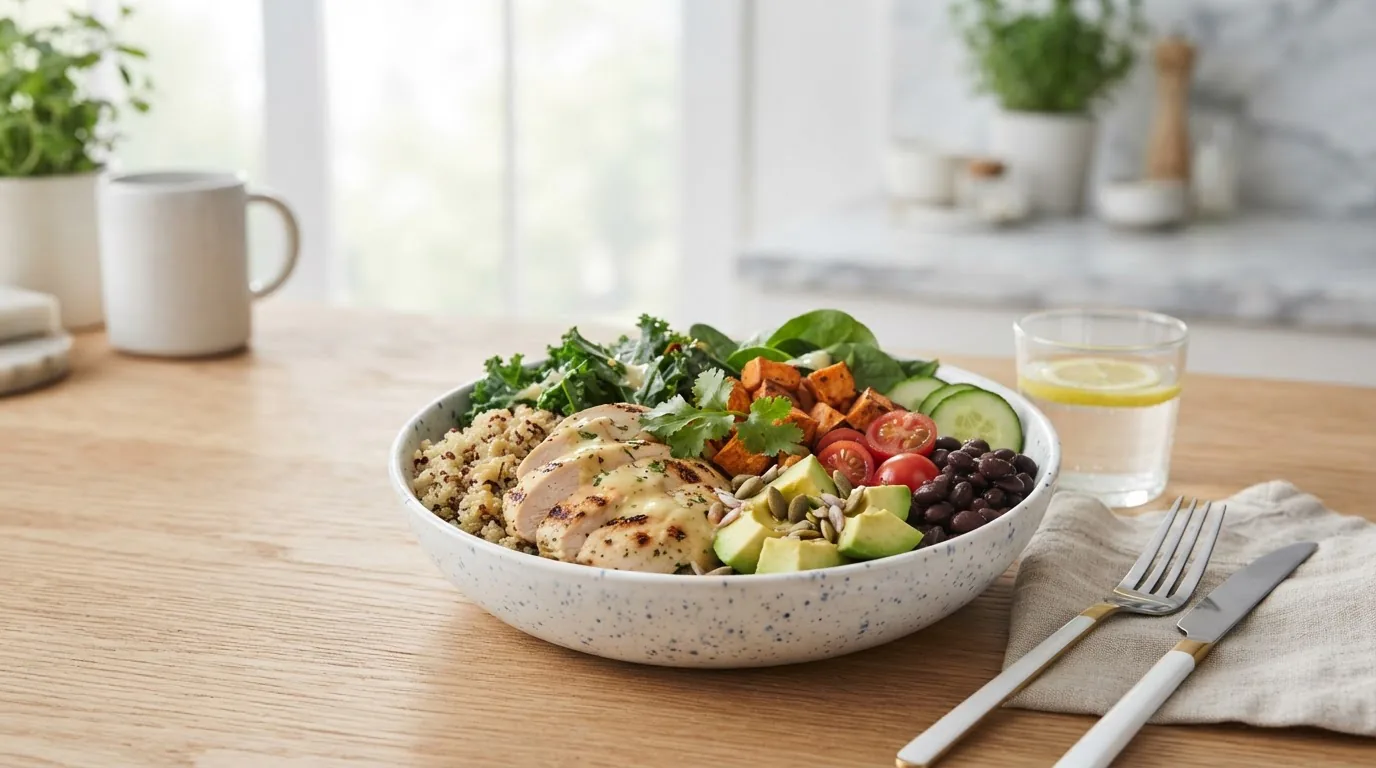
- Grilled chicken bowl — 6 oz chicken breast (approximately 40–45 g protein), 1 cup roasted broccoli, 1/4 avocado, 1 tbsp olive oil. Estimated macros: 45 g protein / 18 g fat / 10–12 g net carbs; ~500 kcal.
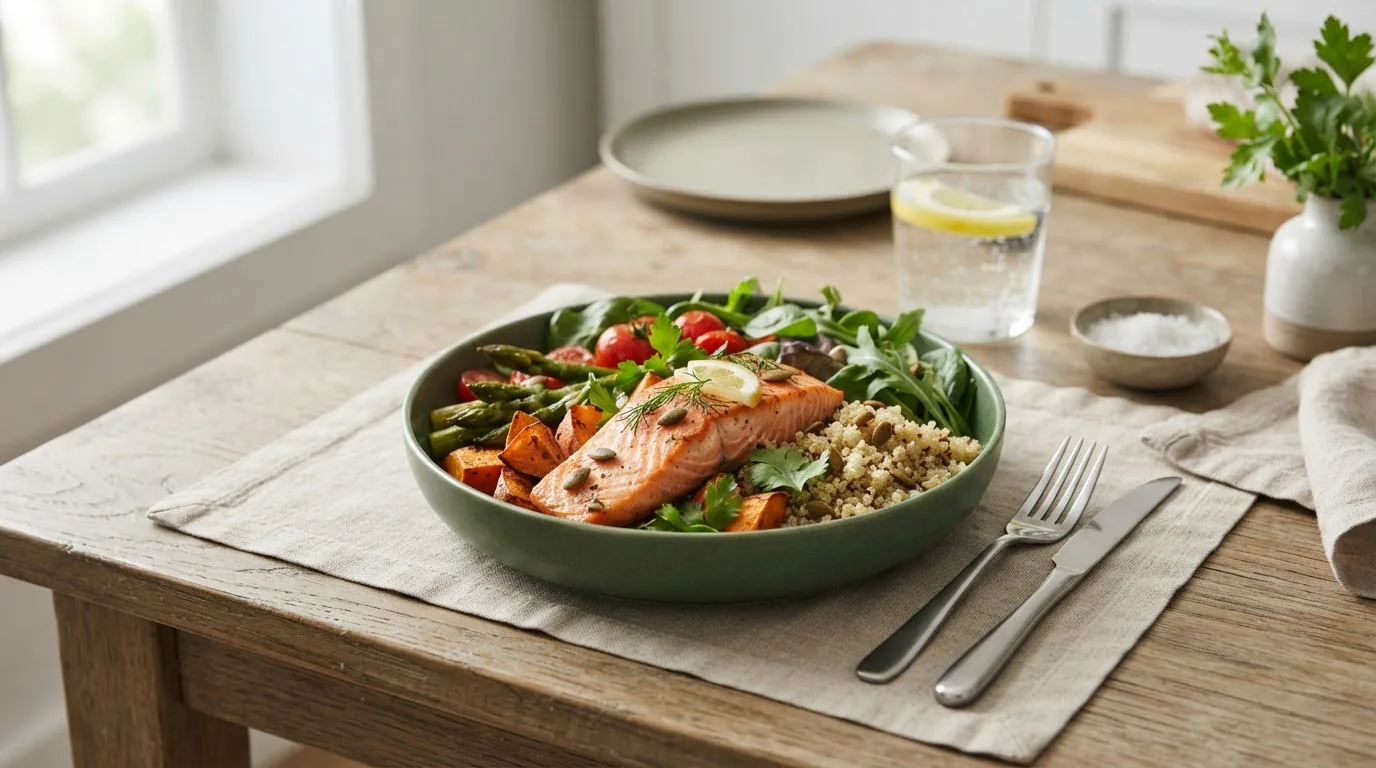
- Seared salmon with asparagus — 5–6 oz salmon (≈34 g protein, rich in omega-3), 1 cup asparagus roasted with 1 tsp olive oil. Estimated macros: 34 g protein / 22 g fat / 4–6 g net carbs; ~420 kcal.
- Turkey & cauliflower rice stir-fry — 5 oz lean ground turkey (≈30 g protein), 1.5 cups cauliflower rice, mixed low-carb vegetables. Estimated macros: 30 g protein / 12 g fat / 10 g net carbs; ~350–400 kcal.
Example recipe highlight: Baked lemon-herb chicken with green beans — Marinate chicken breast in lemon, garlic, thyme; bake at 375°F / 190°C for 20–25 minutes and roast green beans alongside. One serving (6 oz chicken) provides approximately 40 g protein and under 10 g net carbs.
Healthy chicken breast recipes
Case study (anecdote): A 42-year-old teacher adopted a higher-protein low-carb plan—swapping cereal for egg breakfasts and prepping grilled chicken and roasted veg for lunches. Over 12 weeks she lost 9 kg while maintaining strength training performance (self-tracked case example from community weight-loss program). Individual results vary; track energy and adjust protein targets.
Protein timing and distribution: Spreading protein across meals helps muscle protein synthesis and appetite control. Include a protein-rich snack (Greek yogurt, cottage cheese, or hard-boiled egg) between meals if needed.
Balancing fats: Use healthier fats (olive oil, avocado, nuts) to meet energy needs without depending on processed meats or excessive saturated fat. For detailed chicken-based high-protein options, refer to the Healthy chicken breast recipes resource.
Transition: practical meal prep multiplies consistency. Use the next section to learn batch cooking and storage tactics that preserve macros and flavor.
Low Carb Meal Prep Strategies to Save Time and Stay on Track
Meal prep is a cornerstone for sustaining low carb meal prep success. Effective planning reduces decision fatigue and prevents last-minute carb-heavy choices. Below are step-by-step strategies and equipment recommendations to streamline week-long low-carb cooking.
- Plan a weekly menu: Choose 3–4 core proteins (e.g., chicken breasts, salmon, ground turkey, canned tuna), 3 roasted or steamed vegetable options, and 1-2 sauce/dressing choices. Map breakfasts, lunches, dinners, and snacks to avoid repetition fatigue.
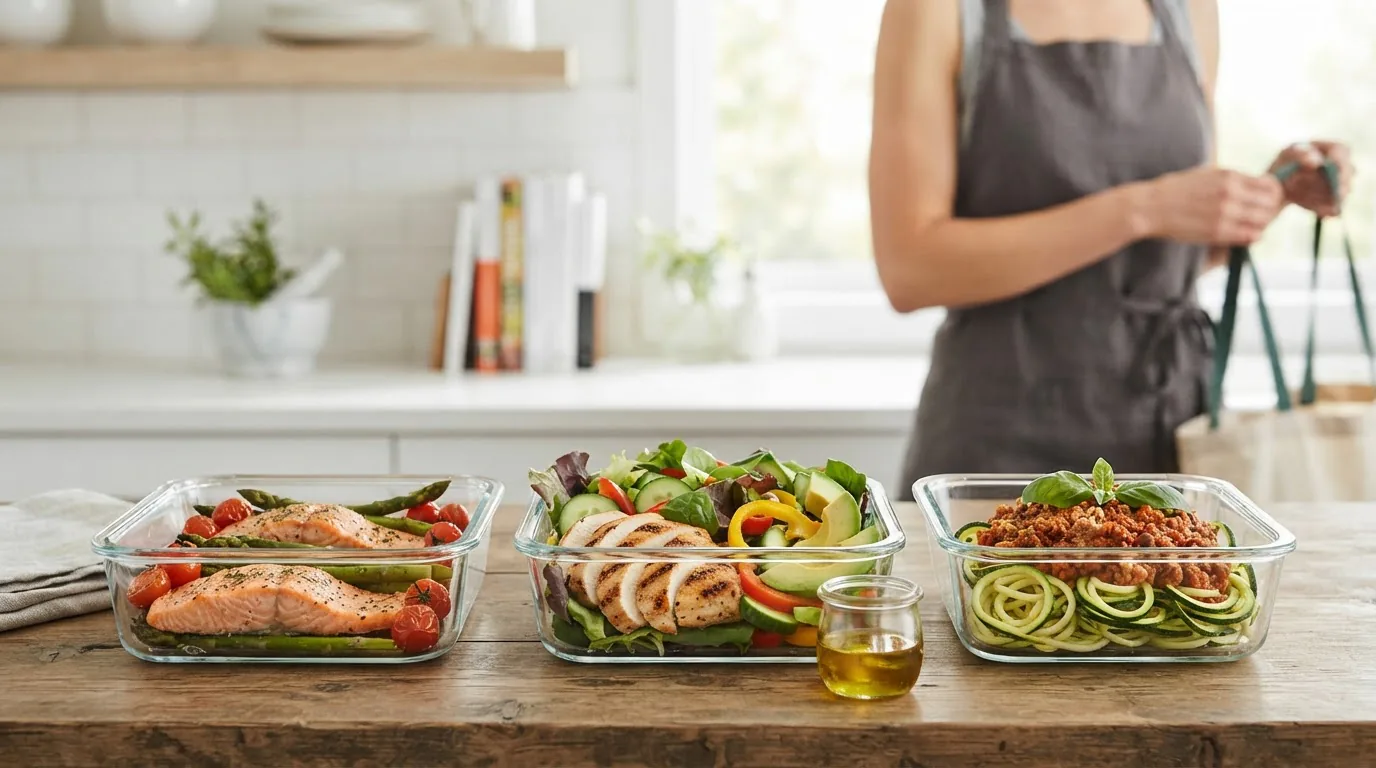
- Batch-cook proteins: Roast or grill several chicken breasts at once, bake salmon on a sheet pan, or brown ground meat for bowls. Store in portioned containers (see storage tips below).
- Prep vegetables and bases: Roast a large tray of non-starchy vegetables, steam greens for quick reheating, and rice cauliflower in a large skillet. Spiralize zucchini or pre-portion salad greens for assembly.
- Assemble modular meals: Use components (protein, veg, fat, sauce) to quickly build different combinations across the week—e.g., chicken + greens + tahini dressing for lunch, or chicken + roasted vegetables + pesto for dinner.
- Use appropriate containers and labels: Choose BPA-free, glass meal prep containers with leakproof lids and compartments for separating dressings. Label with contents and dates for first-in-first-out rotation.
- Freezer-friendly prep: Cooked proteins and some casseroles freeze well—slice and freeze in meal portions. For weekly use, freeze half and refrigerate half to maintain texture variety. For deeper freezer strategies see Freezer Meal Prep Guide: Healthy Make-Ahead Recipes and Tips.
- Label macronutrients when needed: For weight-loss tracking, note protein and estimated carbs per portion on labels; this helps keep meals aligned with targets and avoids surprises.
- Morning assembly hacks: Keep dressings separate; add avocado or nuts at serving time to prevent sogginess. Quick microwave reheat tips: use short bursts to retain texture and nutrients.
- Snack packs: Portion nuts, cheese sticks, and sliced cucumber or bell peppers into snack bags for grab-and-go low-carb choices.
- Weekly rotation example (experience-based): Monday—baked chicken with roasted broccoli; Tuesday—salmon salad; Wednesday—turkey cauliflower stir-fry; Thursday—zucchini noodle shrimp scampi; Friday—leftover sheet-pan hash. This mix reduces monotony and simplifies grocery lists.
Meal prep tools and container recommendations:
- Glass, oven-safe meal prep containers — versatile for baking and storage.
- Freezer-safe vacuum bags or resealable containers — reduce freezer burn.
- Good sharp knives, a quality nonstick skillet, sheet pans, and a food processor for cauliflower rice and nut flours.
- Digital kitchen scale for consistent portions and macro tracking.
Transition: with prep systems in place, use the recipe cards below to build a week of tasty, nutritionally balanced low-carb meals.
Healthy Low Carb Recipes: Breakfast, Lunch, and Dinner Examples
Below are practical recipe cards (5–7) with ingredients, concise instructions, and nutritional highlights. These are designed for easy meal prep, family dinners, or single servings.
1. Spinach and Feta Egg Muffins (Batch Breakfast)
Ingredients (makes 6 muffins):
- 6 large eggs
- 2 cups fresh spinach, chopped
- 1/2 cup crumbled feta
- 1/4 cup diced red pepper
- Salt & pepper, 1 tbsp olive oil for greasing
Instructions: Preheat oven to 350°F / 175°C. Whisk eggs, stir in spinach, feta, and pepper. Grease muffin tin, divide mixture, bake 18–20 minutes until set. Cool, store in fridge up to 5 days or freeze.
Nutritional highlight: Per muffin ≈ 7–9 g protein, 3–4 g net carbs, 80–110 kcal depending on feta amount. Great for grab-and-go breakfasts or protein-rich snacks.
2. Chicken Pesto Zucchini Noodles (Lunch or Dinner)
Ingredients (serves 2):
- 12 oz grilled chicken breast, sliced
- 3 medium zucchinis, spiralized
- 3 tbsp pesto (homemade or low-sugar store-bought)
- 1 tbsp olive oil, salt, pepper, cherry tomatoes to taste
Instructions: Lightly sauté zucchini noodles in olive oil 2–3 minutes. Toss with chicken and pesto; heat through. Top with halved cherry tomatoes.
Nutritional highlight: Per serving ≈ 35–40 g protein, 18–22 g fat (from pesto & oil), 6–8 g net carbs. Quick assembly after batch-grilling chicken.
3. Garlic Butter Shrimp with Cauliflower Rice (Dinner)
Ingredients (serves 2):
- 10–12 oz shrimp, peeled
- 4 cups cauliflower rice
- 2 tbsp butter or ghee, 2 cloves garlic, lemon, parsley
- Salt, pepper, pinch chili flakes
Instructions: Sauté garlic in butter, add shrimp and cook 2–3 minutes per side until opaque. Remove shrimp; stir-fry cauliflower rice 4–5 minutes until tender, return shrimp, finish with lemon juice and parsley.
Nutritional highlight: Per serving ≈ 30 g protein, 12 g fat, 6 g net carbs; rich in selenium and vitamin C from lemon and parsley.
4. Beef & Broccoli Stir-Fry over Shirataki Noodles (Dinner)
Ingredients (serves 2):
- 10 oz flank steak, thinly sliced
- 2 cups broccoli florets
- 1 package shirataki noodles, drained
- 2 tbsp tamari, 1 tbsp sesame oil, ginger, garlic
Instructions: Sear steak quickly, remove. Stir-fry broccoli with garlic and ginger, add shirataki noodles and tamari, return steak to warm through. Serve with sesame seeds.
Nutritional highlight: Per serving ≈ 30–35 g protein, 12–18 g fat, 6–8 g net carbs. A low-carb family-friendly dinner that reheats well.
5. Mediterranean Chickpea-Less Bowl (Low-Carb Vegan Option)
Ingredients (serves 2):
- 1 block (14 oz) firm tofu, pressed and cubed
- 2 cups mixed greens, cucumber, tomato, olives
- 2 tbsp olive oil, lemon juice, 1 tsp za’atar
Instructions: Sear tofu cubes until golden; assemble bowl with greens and vegetables; drizzle with olive oil and lemon, top with tofu.
Nutritional highlight: Per serving ≈ 20–22 g protein, 18–22 g fat, 8–10 g net carbs depending on veg choices. Nutritious vegan low-carb option.
6. Quick Salmon Patties with Dill Yogurt (Meal-Prep Friendly)
Ingredients (makes 4 patties):
- 14 oz canned or cooked salmon, flaked
- 1 egg, 1/4 cup almond flour, 1/4 cup chopped green onion
- Dill yogurt dip: 1/2 cup plain Greek yogurt, lemon, dill
Instructions: Mix salmon with egg and almond flour, form patties, pan-fry 3–4 minutes per side until golden. Serve with dill yogurt and salad greens.
Nutritional highlight: Per patty ≈ 20–22 g protein, 8–10 g fat, 2–4 g net carbs. Freezes well in single portions.
These recipes are designed to be adaptable—double or triple batch sizes for family dinners or weekly prep, and swap proteins or vegetables to suit preferences.
Transition: some people ask about extreme approaches—zero or no carb meals. The next section clarifies risks and realities.
Special Considerations: No Carb and Zero Carb Meals Explained
Zero carb or no carb meals aim to eliminate dietary carbohydrates almost entirely. True zero-carb diets are rare and typically limited to animal products only. Most people follow very low-carb or ketogenic plans instead. Below is a clear comparison to help decide what fits you.
| Approach | Typical daily carbs | Common foods | Pros | Cons |
|---|---|---|---|---|
| No/Zero Carb | 0–5 g | Animal meat, eggs, some oils | Rapid carb elimination; simplifies choices | Very restrictive; risk of micronutrient and fiber deficiencies |
| Ketogenic | 20–50 g | High-fat meats, low-carb veg, dairy | Can induce ketosis; strong appetite suppression | Requires careful planning; side effects during adaptation |
| Moderate Low Carb | 50–130 g | Vegetables, controlled grains, fruits in moderation | More sustainable; easier to meet micronutrient needs | Slower ketone production if any |
Pros of zero/no carb:
- May simplify meal choices and reduce cravings quickly for some individuals.
Cons and safety notes:
- Potential for nutrient gaps (vitamins C, fiber, folate) unless supplemented or carefully planned.
- Long-term sustainability is challenging for many; social and cultural meals often include carbs.
- Rapid weight loss early on is often water loss; long-term outcomes vary (clinical review).
If considering a strict zero-carb plan, consult a registered dietitian or clinician to monitor labs and ensure micronutrient adequacy. For most people, a well-planned moderate low-carb approach offers a better balance of benefits and sustainability.
Transition: avoid common traps to keep low-carb eating healthy and durable over months and years.
Tips for Maintaining a Sustainable Low Carb Diet and Avoiding Pitfalls
Long-term success comes from flexibility, nutrient completeness, and social practicality. Below are actionable tips to maintain a sustainable approach and sidestep common mistakes.
- Rotate vegetables: Regularly swap greens and cruciferous vegetables to provide diverse micronutrients and fiber.
- Avoid ultra-processed “low-carb” packaged foods: They can be high in added fats, artificial sweeteners, and lack nutrients.
- Prioritize fiber: Include chia seeds, flaxseed, and non-starchy vegetables to support gut health; consider a fiber supplement if intake is low.
- Watch sodium when using prepared sauces: Low-carb does not automatically mean heart-healthy; choose low-sodium options.
- Plan for social situations: Bring a low-carb side or opt for protein and vegetable-based menu items to stay on track.
- Manage cravings: Increase protein or healthy fats at meals; include small, satisfying treats (a few berries with full-fat yogurt) to reduce feeling deprived.
- Monitor medication interactions: If you take glucose-lowering medications, blood pressure meds, or diuretics, work with your clinician when changing carbs.
- Track progress beyond the scale: Track energy, sleep, performance, and blood markers where relevant.
- Make it affordable: Use canned fish, frozen vegetables, and buy proteins on sale to reduce costs while eating healthy low-carb meals.
Small, consistent improvements—like swapping sugary cereal for an egg-based breakfast or choosing cauliflower rice instead of white rice—add up. Focus on nutrient-dense choices rather than obsessing over zero carbs.
Frequently Asked Questions
What are low carb meals and how do they work?
Low carb meals limit carbohydrate intake to shift energy toward fats and protein, reducing blood sugar spikes and often appetite. Typical ranges: 50–130 g/day for moderate low-carb, 20–50 g/day for ketogenic approaches. Adjust based on goals, activity, and medical needs.
What is the difference between low carb and no carb meals?
Low carb reduces but still includes vegetables, some fruit, and controlled starches; no carb nearly eliminates all carbs, relying almost entirely on animal products. No-carb is much more restrictive and risks nutrient and fiber deficiencies.
How can I meal prep low carb dinners for the entire week?
Plan three proteins, two vegetable sides, and one sauce. Batch-cook proteins (bake/grill), roast vegetables, portion into containers, and store dressings separately. Freeze half of cooked portions for variety and longer storage.
What are some high protein low carb recipes good for weight loss?
Choose meals like grilled chicken bowls, salmon with asparagus, turkey cauliflower stir-fry, and egg-based breakfasts. Aim for 20–40 g protein per meal to support satiety and muscle retention during weight loss.
How much does it typically cost to follow a low carb meal plan?
Costs vary widely; using frozen vegetables, canned fish, and buying proteins on sale can keep weekly groceries comparable to a standard diet. Plan meals, buy in bulk, and use inexpensive staples like eggs and canned tuna to lower costs.
What should I do if I experience cravings on a low carb diet?
Address cravings with higher-protein meals, add healthy fats for satiety, ensure adequate sleep, and include small, planned low-sugar treats. Hydration and fiber-rich vegetables also blunt cravings effectively.
Are no carb meals safe and nutritionally balanced?
Very restrictive no-carb diets can lack fiber, vitamin C, and plant-based micronutrients. They may be safe short-term for some but require medical supervision and supplementation for long-term adequacy.
How do I ensure my low carb meals provide enough vitamins and minerals?
Rotate a variety of low-carb vegetables, include seafood and organ meats occasionally, use nuts and seeds, and consider a multivitamin or targeted supplements if lab tests show deficiencies. Work with a dietitian for individualized planning.