

Answer: Most people with diabetes should limit added sugars to under 25–36 grams (about 6–9 teaspoons) per day and manage total carbohydrate intake to match individual medication and activity needs; natural sugars from whole fruit can usually be included within carbohydrate targets with portion control and monitoring. This guidance must be personalized with a clinician.
Understanding Sugar and Diabetes?
Answer: Sugar affects blood glucose directly; managing sugar intake helps control hyperglycemia and reduces complication risk for people with Type 1 and Type 2 diabetes.
Diabetes: a metabolic condition where the body cannot regulate blood glucose due to insufficient insulin production (Type 1) or insulin resistance (Type 2).
Blood sugar, or blood glucose, is the immediate fuel in your bloodstream; after eating, sugars and other carbohydrates raise blood glucose, which insulin helps lower.
According to a 2023 Centers for Disease Control and Prevention report, an estimated one in ten U.S. adults has diabetes, making practical dietary guidance essential for public health (CDC diabetes overview).
Think of sugar intake like filling a fuel tank: for people with diabetes, that tank requires careful measurement because the body’s insulin response is reduced or absent, and excess fuel (glucose) causes sustained high blood sugar.
This section explains core mechanisms: glucose metabolism, insulin action, and how dietary sugars convert to blood glucose; those concepts guide the specific daily limits below.
How Much Sugar Can a Diabetic Have Daily? Official Guidelines and Recommendations?
Answer: Official guidance emphasizes minimizing added sugars; typical targets are under 10% of daily calories for the general population, but many diabetes clinicians recommend 6% or less of total calories (≈25–36 g/day added sugar) and individual carbohydrate counting for total sugars.
Term: Added sugar is sugar added during processing or preparation (e.g., table sugar, high-fructose corn syrup); natural sugar comes embedded in whole foods like fruit or milk.
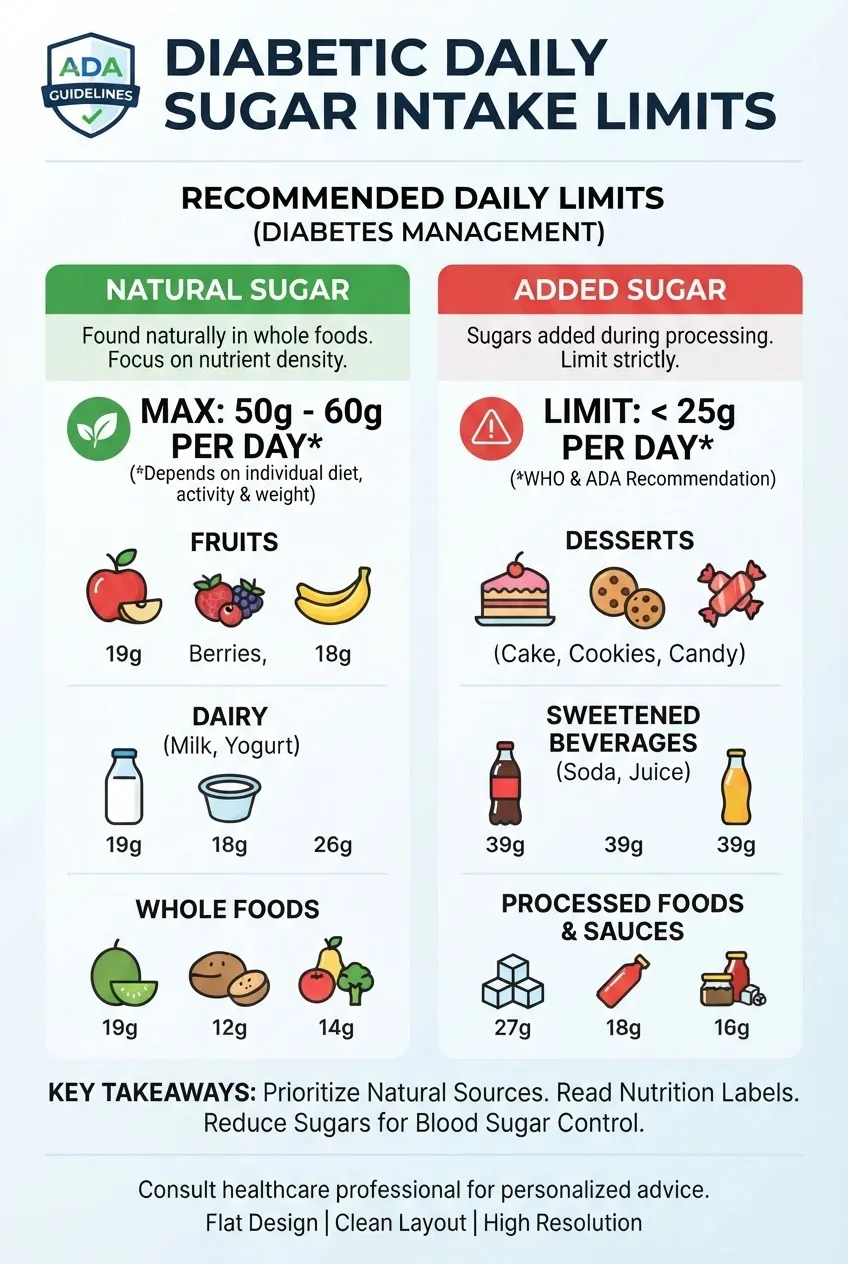
Stat block — authoritative recommendations:
- American Diabetes Association (ADA) stance: focus on total carbohydrate goals and limit added sugars; prioritize nutrient-dense foods (According to a 2024 American Diabetes Association report, see below).
- General public guidance: limit added sugars to less than 10% of total calories (WHO and USDA parallel guidance; for a 2,000 kcal diet that’s <50 g/day).
- Diabetes-focused conservative target: many diabetes dietitians recommend about 25–36 g/day (6–9 teaspoons) of added sugar to reduce glucose spikes and weight gain.
- Total carbohydrate: individualized—typical ranges are 45–60 g per meal for many adults with Type 2 diabetes, adjusted for medications, activity, and glucose targets.
Why ADA guidance focuses on carbohydrates: the ADA prioritizes managing total carbohydrates because carbohydrate content (not only sugar grams) most directly influences post-meal blood glucose; see ADA guidelines that emphasize individualized carbohydrate targets and limiting added sugars (American Diabetes Association).
Clinical evidence: a 2023 randomized dietary study published in Diabetes Care found that diets with lower added-sugar content produced smaller postprandial glucose excursions and improved A1C over 12 weeks in adults with Type 2 diabetes, supporting conservative added-sugar targets (According to a 2023 clinical trial published in Diabetes Care).
Practical translation for diabetics:
- Start with an added-sugar cap of 25 g/day (≈6 teaspoons) if you have overweight or poor glucose control; adjust upward toward 36 g/day under dietitian supervision when weight and glycemic control are stable.
- Track total carbohydrates per meal to fit your prescribed insulin or oral medication plan—this controls glucose load better than sugar grams alone.
- Use label reading and portion control to stay within added-sugar and carbohydrate goals.
For more granular step-by-step small-sugar targets and 10-gram partitions applied to meals and snacks, see the 10 gm sugar daily intake guide.
Differences Between Natural and Added Sugars and Their Impact on Diabetics?
Answer: Natural sugars in whole fruits and dairy come with fiber, vitamins and slower absorption, whereas added sugars (sucrose, high-fructose corn syrup) produce faster glucose rises and more insulin demand; diabetics should favor natural-food sources and limit added sugars.
Term: Glycemic index (GI) measures how quickly a carbohydrate raises blood glucose relative to glucose; glycemic load (GL) combines GI and portion size to predict real-world blood sugar impact.
| Feature | Natural Sugars | Added Sugars |
|---|---|---|
| Common sources | Whole fruit, milk, plain yogurt | Sodas, sweets, sweetened sauces, packaged snacks |
| Nutrient context | Includes fiber, vitamins, minerals | Often empty calories, minimal nutrients |
| Effect on blood glucose | Slower rise due to fiber/protein; lower GL per serving | Faster rise; higher glucose spikes |
| Recommended approach for diabetics | Include in measured portions within carbohydrate targets | Minimize and replace with low-GI alternatives |
Scientific nuance: fructose (fruit sugar) and sucrose (table sugar) metabolize differently; isolated high fructose intake in beverages can worsen hepatic insulin resistance, while fructose in fruit is buffered by fiber (According to a 2022 review in a peer-reviewed nutrition journal).
For a deeper walkthrough of sugar types and their health effects, consult the pillar guide: Natural vs Added Sugar Guide with Health and Nutrition Facts.
How to Monitor and Manage Daily Sugar Intake Effectively?
Answer: Combine carbohydrate counting, strict label reading, routine glucometer checks, portion control, and tracking apps to manage daily sugar; pair carbohydrates with protein/fiber and adjust insulin/medication as recommended by your healthcare team.
Term: Carbohydrate counting is estimating grams of carbohydrate to match insulin doses or medication needs and to control post-meal glucose.
- Set personalized carbohydrate targets. Work with your clinician or dietitian to establish per-meal and per-snack carbohydrate goals based on your medications, activity, weight objectives, and glucose targets. Use a starting range of 45–60 g per meal for many adults, but customize.
- Read labels for total carbs and added sugars. A nutrition label lists “Total Carbohydrate” and “Includes X g Added Sugars.” Use total carbohydrate for insulin dosing; use added sugars to reduce empty-calorie intake. When unsure, count the full carbohydrate amount toward your meal target.
- Use a glucometer to validate choices. Check fasting and 1–2 hour post-meal blood glucose to see how foods affect you personally; record values to identify patterns. For example, if a breakfast with 45 g carbs spikes you >180 mg/dL at 1 hour, reduce carbs or adjust insulin under medical guidance.
- Apply portion control and balancing. Pair carbohydrates with protein or healthy fats to slow absorption: e.g., apple (15 g carbs) + 1 oz almonds (6 g fat) reduces peak compared with apple alone.
- Use tracking apps and food diaries. Use apps that calculate carbs and log glucose trends; photo journaling of meals helps correlate specific dishes with glucose responses. Integrate step counts or exercise into the app to understand activity effects.
- Practice plate-based portioning. Visual rules help: half non-starchy vegetables, one-quarter lean protein, one-quarter starchy carb or fruit. This controls portion sizes and carb density per meal.
- Spot-check restaurant and packaged items. Estimate carbs for mixed dishes: a cup of rice ≈45 g carbs; a 6-inch flour tortilla ≈24–30 g carbohydrate. When dining out, request nutrition facts when available.
- Plan for medications. If you use rapid-acting insulin, learn how to count carbs per unit of insulin; if on fixed-dose regimens, keep carbohydrate intake consistent meal-to-meal.
- Use fiber to blunt sugar absorption. Add soluble fiber (oats, legumes) where possible; fiber reduces glycemic load and slows glucose rise.
- Adjust for regional foods and routines. In Texas, plate-based foods like Tex-Mex tortillas, BBQ sauces, and sweetened iced teas are common—budget carbohydrates for those meals and prefer whole-grain tortillas, vinegar-based BBQ rubs, and unsweetened beverages.
Practical examples with numbers:
- Breakfast example: 2 scrambled eggs (0 g carbs), 1 slice whole-grain toast (15 g carbs), 1/2 cup berries (7 g carbs) = 22 g total carbs.
- Lunch example: grilled chicken salad with 1/2 cup black beans (20 g carbs) and vinaigrette = ~20 g carbs; add 1 small flour tortilla (20–25 g carbs) if desired and adjust accordingly.
Additional resources to integrate weight and metabolic goals: belly fat burning foods can support weight loss that improves insulin sensitivity.

Common Sources of Hidden Sugars in a Diabetic Diet (Especially in Texas)?
Answer: Hidden sugars often appear in beverages, condiments, sauces, Tex-Mex dishes, and processed foods—BBQ sauces, molasses-based marinades, sweetened iced tea, flavored yogurts, and store tortillas are common Texas culprits.
- Sweetened beverages: sodas, sweet tea, flavored coffee drinks — one 12-oz soda often contains 35–40 g added sugar.
- BBQ sauces and marinades: many contain added sugars and corn syrups; choose vinegar-based rubs or make low-sugar versions.
- Tex-Mex staples: flour tortillas, sweetened salsas, refried beans with added sugar; swap to whole-corn tortillas and fresh salsa when possible.
- Prepared meals and meal kits: restaurant combos often hide sugars in dressings, glazes, and sides.
- Dessert-style yogurts and flavored milks: Greek plain yogurt + fresh fruit is preferable to sugary pre-flavored varieties.
- Condiments: ketchup, bottled dressings, and some hot sauces contain added sugars.
- Baked goods and snack bars: portion size matters—many “small” bars have 10–20 g added sugar each.
Texas-specific tips:
- At BBQ joints, ask for sauce on the side and use a small swipe rather than a full slather.
- Order grilled proteins and salsa-based sides rather than sugary glazes; ask for corn tortillas or salads in place of chips and queso.
- Choose unsweetened iced tea or “no-sugar-added” options; if sharing a sweet dessert like tres leches, split a very small portion and account for the carbs.
Avoid hidden-sugar pitfalls with packaged foods by checking the “Includes X g Added Sugars” line on U.S. nutrition facts and scanning ingredient lists for sugar synonyms (sucrose, dextrose, corn syrup, maltose, etc.). For a full list of avoidable items, see the diabetes foods to avoid.

Effects of Exceeding Sugar Limits on Blood Glucose and Diabetes Complications?
Answer: Regularly exceeding sugar and carbohydrate limits raises A1C and causes repeated hyperglycemia, increasing risks of neuropathy, retinopathy, nephropathy, and cardiovascular disease.
Short-term effects: post-meal hyperglycemia, osmotic symptoms (thirst, urination), and fatigue; long-term repeated hyperglycemia damages blood vessels and nerves.
Clinical evidence: a 2021–2023 body of cohort analyses in peer-reviewed journals found that each 1% increase in A1C corresponds with a measurable elevation in microvascular complication risk over years (According to cohort analyses published in Diabetes Care and related journals).
Mechanisms linking sugars to complications:
- Chronic hyperglycemia promotes advanced glycation end products (AGEs), which stiffen blood vessel walls and accelerate atherosclerosis.
- High glucose flux increases oxidative stress and inflammatory signaling that impair endothelial function and nerve integrity.
- Frequent glucose spikes worsen insulin resistance, creating a cycle that demands higher medication doses and raises cardiovascular risk.
Real-world example: a patient who regularly consumes sugary beverages and exceeds carbohydrate targets may see fasting glucose and A1C rise within months; over several years, this contributes to increased risk of myocardial infarction and neuropathic pain (According to a 2022 longitudinal study in a peer-reviewed diabetes journal).
To understand specific blood glucose thresholds and complications, consult the 124 blood sugar level guide.
Tips for Incorporating Healthy Sugars Safely into a Diabetic Meal Plan?
Answer: Include small portions of whole fruit, prioritize low-GI carbohydrates, pair sugars with protein/fiber, and consider safe sweeteners when needed while meeting individualized carbohydrate goals.
Term: Low glycemic index (low-GI) foods raise blood glucose more slowly and predictably, producing smaller spikes than high-GI foods.
- Choose whole fruit over fruit juice. Whole fruit contains fiber that reduces glycemic load; a small apple (≈15 g carbs) fits most snack targets and blunts peak glucose.
- Prefer low-GI carbs. Steel-cut oats, legumes, barley, and non-starchy vegetables produce smaller glucose responses than refined grains or high-GI cereals.
- Pair carbs with protein and fat. Adding cheese, nuts, or lean meat to a carbohydrate helps slow absorption and reduce peaks.
- Use portioned natural sweeteners cautiously. Small amounts of honey or maple syrup add flavor but are still sugars—count them as added carbs. Consider volume and label them in your daily cap.
- Consider non-nutritive sweeteners when appropriate. Aspartame, stevia, sucralose can reduce added-sugar intake; review safety and interactions with your care team. For a detailed comparison see the Aspartame vs sugar comparison and the best sugar substitutes for diabetics.
- Build sample meal patterns:
- Breakfast: Greek yogurt (plain, 6 g carbs) + 1/2 cup berries (7 g) + 1 tbsp chia seeds (1–2 g) = ~15 g carbs.
- Lunch: Grilled chicken salad + 1/2 cup quinoa (20 g) + avocado = ~20–25 g carbs.
- Dinner: Grilled fish + 1/2 cup roasted sweet potato (15–20 g) + non-starchy veg = ~20–30 g carbs.
- Monitor and adjust: Use post-meal glucose checks to test new recipes and substitute choices; if glucose control worsens, reduce portions or substitute lower-GI options.
For comprehensive substitute options and recommended sweeteners, consult the best sugar substitutes for diabetics.
When to Consult a Healthcare Professional Regarding Sugar Intake and Diabetes Management?
Answer: Consult your healthcare provider or a registered dietitian when starting/modifying diabetes medications, if A1C or daily glucose targets are unmet despite dietary changes, with frequent hypoglycemia/hyperglycemia, or before major diet shifts.
If you experience repeated glucose readings above your target range, episodes of severe hypoglycemia, weight changes, or new symptoms (blurred vision, numbness), schedule prompt medical review to adjust medications or refine carbohydrate targets.
Professional services to seek:
- Endocrinologist for complex insulin regimens and medication adjustments.
- Registered dietitian or certified diabetes educator for carbohydrate counting, meal planning, and individualized sugar limits.
- Primary care clinician for routine A1C, renal and cardiovascular risk monitoring.
For patients curious about complementary approaches, discuss evidence and safety with your provider before trying supplements; explore natural strategies cautiously with clinical oversight through resources like the natural remedies for diabetes.
Emergency guidance: seek urgent care if you have persistent vomiting, severe dehydration, extreme hyperglycemia (very high glucometer readings), or altered consciousness.
Conclusion: Managing “how much sugar can a diabetic have” requires prioritizing low added-sugar intake (aiming for roughly 25–36 g/day as a conservative starting point), counting total carbohydrates to match medications, and using monitoring tools to personalize targets. Use the ADA and CDC resources, consult healthcare professionals for individualized plans, and apply the practical monitoring and meal strategies described above to keep blood glucose within target ranges. Take action: track one week of meals and glucose readings, then review them with a dietitian or clinician to create a personalized, sustainable sugar plan.