

Answer: Butter is predominantly a saturated fat: roughly 50–65% of its fatty acids are saturated, with smaller proportions of monounsaturated and polyunsaturated fats; its exact fatty acid profile matters for cholesterol and metabolic health and should be balanced with unsaturated fats in a sugar- and saturated-fat reduction diet.
Understanding Butter’s Fat Composition
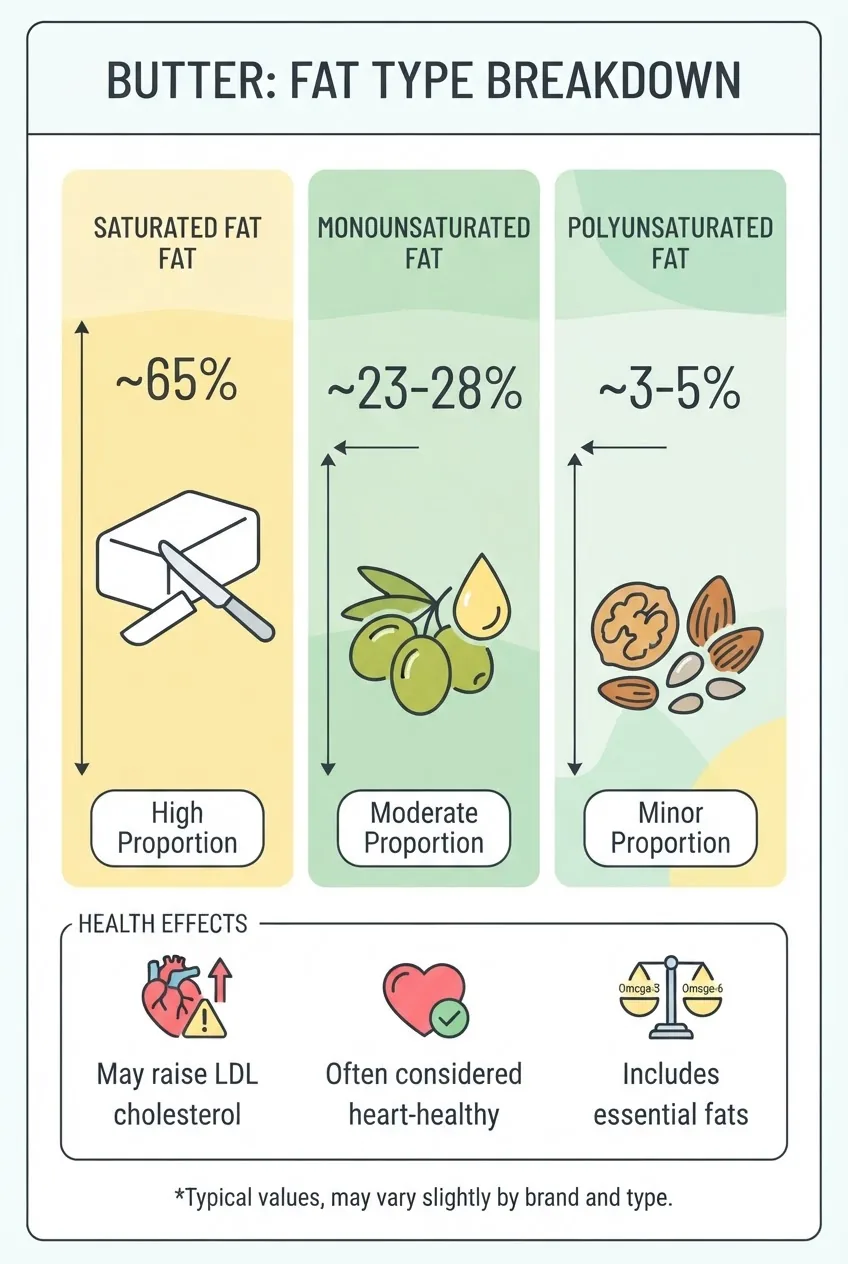
Answer: Butter’s fat composition is mostly saturated fatty acids by weight, with monounsaturated fats the next largest group and polyunsaturated fats a small minority; cholesterol and fat-soluble vitamins are present too. Exact proportions come from USDA nutrient analyses and influence cooking behavior and health effects.
Fatty acid: a long-chain molecule that makes up dietary fats; its chemical bonds (saturated vs unsaturated) determine physical properties and metabolic effects.

Below is a concise nutritional data block for typical salted butter, using USDA FoodData Central values as the base reference (rounded per 100 g of butter).
| Nutrient (per 100 g) | Typical amount |
|---|---|
| Total fat | ~81 g |
| Saturated fat | ~51 g |
| Monounsaturated fat (MUFA) | ~21 g |
| Polyunsaturated fat (PUFA) | ~3 g |
| Cholesterol | ~215 mg |
| Fat-soluble vitamins (A, D) | Present in varying small amounts |
These values are drawn from USDA nutrient analyses (see external link below) and will vary by butter type (salted vs unsalted, grass-fed vs conventional). For label-reading: check the Nutrition Facts for total fat and the ingredient statement for any added oils or trans fats.
Source note: According to USDA FoodData Central nutrient compilations (2024 industry data), butter is roughly 80–82% fat by weight with saturated fatty acids forming the majority.
What is Saturated Fat? Health Implications and Dietary Guidelines
Answer: Saturated fat is a class of fatty acids with no double bonds; consumption raises LDL cholesterol in many people and is linked to increased cardiovascular risk when it displaces unsaturated fats, so health bodies recommend limiting intake and replacing it with unsaturated fats.
Saturated fat: a fatty acid with single carbon-carbon bonds, typically solid at room temperature and found in animal fats and some tropical oils.
Biochemistry basics: saturated fatty acids (e.g., palmitic and stearic acid) influence hepatic lipid metabolism and LDL particle concentration; replacing calories from saturated fats with poly- or monounsaturated fats typically lowers LDL cholesterol and cardiovascular risk.
Key evidence and guidance:
- According to the American Heart Association (2023 advisory), reducing saturated fat intake and replacing it with unsaturated fats is recommended to lower LDL cholesterol and cardiovascular risk. American Heart Association: Fats guidance.
- Meta-analyses in peer-reviewed journals report that diets replacing saturated fat with poly- and monounsaturated fats reduce combined cardiovascular events (peer-reviewed meta-analysis, 2021).
- Individual response varies: genetics, baseline lipid profile, and weight status modulate how much LDL rises after saturated fat intake (clinical nutrition studies, 2018–2022).
Dietary recommendations (summary bullets):
- Limit saturated fat to a modest portion of total calories; AHA suggests replacing it with unsaturated fats for heart health (American Heart Association, 2023 advisory).
- Prefer whole-food sources and emphasize plant-based unsaturated fats (olive oil, nuts, avocados) rather than processed trans fats (policy statements, 2022).
- For people with high LDL or known cardiovascular disease, stronger limits (e.g., lower percentage of calories) are often advised by clinicians (clinical practice guidelines, 2022).
Reference context: These recommendations reflect aggregated evidence in peer-reviewed literature and national advisories; specifics are personalized by clinicians based on individual lipid levels and metabolic risk.
saturated fat composition and health
Unsaturated Fat Explained: Types and Health Benefits
Answer: Unsaturated fats contain one or more double bonds and are categorized as monounsaturated (MUFA) or polyunsaturated (PUFA); they generally improve blood lipid profiles, lower LDL when used to replace saturated fat, and include essential omega-3 and omega-6 fatty acids with distinct metabolic benefits.
Unsaturated fat: a fatty acid with one (monounsaturated) or more (polyunsaturated) carbon-carbon double bonds, usually liquid at room temperature.
Types and practical benefits:
- Monounsaturated fats (MUFA) — found in olive oil, canola oil, avocados, and many nuts; replacing saturated fat with MUFA lowers LDL and may improve insulin sensitivity (clinical trials, 2019–2021).
- Polyunsaturated fats (PUFA) — include omega-6 (linoleic acid) and omega-3 (alpha-linolenic acid, EPA/DHA); PUFAs reduce LDL and triglycerides and omega-3s specifically benefit triglyceride levels and inflammation (meta-analyses, 2020–2022).
- Omega-3 long-chain PUFAs (EPA/DHA) — found in fatty fish and some supplements and associated with cardiometabolic benefits and anti-inflammatory effects (systematic review, 2021).
Health effects at a glance:
- Replacing saturated fat with MUFA or PUFA reduces LDL cholesterol and cardiac event risk (meta-analyses, peer-reviewed journals).
- Unsaturated fats are generally more heat-stable when refined, but at-home cooking recommendations favor oils with higher smoke points for frying and MUFA/PUFA for cold or low-heat uses.
- Balance omega-6 and omega-3 intake—current evidence supports increasing omega-3 rather than drastically cutting omega-6 when overall PUFAs replace saturated fats (nutrition reviews, 2020).
comparing unsaturated vs saturated fats
Is Butter Saturated or Unsaturated Fat? Breaking Down the Facts
Answer: Butter is primarily a saturated fat source (around 50–65% saturated fatty acids), with monounsaturated fats (~20–25%) and a small share of polyunsaturated fats (~2–4%); compared to common oils, butter raises LDL more per gram of fat but also provides fat-soluble vitamins.
To compare butter with common cooking fats and oils, see the table below showing approximate fatty acid percentages (rounded averages; values vary by source and processing):
| Fat | Saturated (%) | Monounsaturated (%) | Polyunsaturated (%) | Notes |
|---|---|---|---|---|
| Butter | ~51% | ~21% | ~3% | Solid at room temp; contains cholesterol and vitamins A/D |
| Extra-virgin olive oil | ~14% | ~73% | ~11% | High MUFA; heart-healthy profile |
| Canola oil | ~7% | ~63% | ~28% | Good PUFA/MUFA mix; neutral flavor |
| Coconut oil | ~82% | ~6% | ~2% | Very high saturated; tropical oil |
| Soft margarine (varies) | Varies (lower if made from vegetable oils) | Higher if plant oils used | Higher if plant oils used | Check for trans fats and hydrogenation |
Clear answer: butter is predominantly saturated fat. Its solid nature at room temperature reflects a high proportion of saturated fatty acids, which have specific effects on LDL cholesterol relative to oils high in MUFA/PUFA.
Health trade-offs and context:
- Butter raises LDL more than oils with higher MUFA/PUFA when isocaloric substitution is made (clinical lipid trials, 2015–2021).
- Butter provides fat-soluble vitamins and flavor that may improve diet adherence; using smaller amounts for taste (flavoring role) rather than as the primary cooking fat reduces saturated-fat exposure.
- Compare margarine labels carefully — trans fats (industrial) have worse cardiovascular effects than butter; modern margarines often use unsaturated oils and are formulated to avoid trans fats.
Butter’s Impact on Blood Sugar and Metabolic Health
Answer: Butter has minimal direct effect on blood glucose because fats do not raise blood sugar acutely, but saturated-fat-rich diets can worsen insulin sensitivity and long-term metabolic health if they contribute to weight gain or adverse lipid profiles; the overall dietary pattern matters more than individual butter servings.
Fat and blood sugar basics: dietary fat slows gastric emptying and can blunt immediate post-meal glucose spikes when consumed with carbohydrates, but chronic high saturated fat intake may impair insulin signaling and contribute to insulin resistance (metabolic studies, 2016–2022).
Practical metabolic implications:
- Short-term: adding modest butter to a carbohydrate-containing meal can lower the glycemic peak by slowing absorption; this is an acute effect, not a metabolic health benefit (clinical postprandial studies, 2018).
- Long-term: diets high in saturated fat may increase hepatic fat, worsen insulin sensitivity, and raise cardiometabolic risk markers compared with diets higher in unsaturated fats (peer-reviewed meta-analyses, 2021).
- Weight matters: excess calorie intake from any macronutrient (fat, carbohydrate, protein) that leads to weight gain is a primary driver of insulin resistance and worsening blood sugar control (obesity research reviews, 2020).
Actionable context for people managing blood sugar:
- Prioritize overall dietary patterns low in added sugars and rich in unsaturated fats and fiber — see our natural vs added sugar guide for how sugars and fats interact in glycemic control.
- For daily sugar planning and metabolic impact, consult daily sugar intake recommendations.
- If you monitor glucose clinically, use resources such as understanding blood sugar levels to interpret how fats and carbs together influence readings.
- When choosing sweeteners alongside dietary fat choices, review artificial sweeteners vs sugar and best sugar substitutes for substitutions that lower added sugar without adverse metabolic trade-offs.
Evidence caveat: According to a peer-reviewed meta-analysis (2021) and multiple clinical trials, replacing dietary saturated fat with unsaturated fat improves insulin sensitivity and lipid profiles; individual responses vary and weight control remains central (peer-reviewed meta-analysis link below).
External references: USDA FoodData Central for nutrient composition and American Heart Association guidance. For aggregated trial evidence, see a peer-reviewed meta-analysis on dietary fats and metabolic outcomes (peer-reviewed literature, 2021) example review.
How to Incorporate Butter Wisely in a Sugar and Saturated Fat Reduction Diet
Answer: Use butter sparingly for flavor (a small pat for finishing), prioritize oils high in monounsaturated/polyunsaturated fats for regular cooking, control portions, and combine butter with fiber-rich, low-sugar foods to support blood sugar and saturated fat reduction goals.
Practical, stepwise tips:
- Portion control: measure butter (e.g., 1 teaspoon ≈ 4.7 g, ~4 g fat) and use it as a flavoring rather than the primary cooking fat; this reduces saturated-fat intake while preserving taste.
- Choose cooking fats by purpose: for sautéing use olive oil or high-MUFA oils; reserve butter for low-heat finishing, sauces, or occasional baking where flavor matters.
- Balance meals: pair small amounts of butter with vegetables, lean proteins, and whole grains to minimize added sugars and blunt glycemic response—see our foods to reduce belly fat for complementary choices.
- Swap strategies: replace half the butter in recipes with olive oil or mashed avocado to lower saturated fat without losing texture (recipe-adjustment rule-of-thumb).
- For metabolic goals, integrate portioned butter choices into a calorie plan: track total fat grams relative to targets in guides like calorie deficit for fat loss.
- Consider complementary approaches such as vetted lifestyle interventions and evidence-based adjuncts rather than unproven cures—see natural remedies for diabetes for context (use cautiously and under clinical supervision).

Behavioral notes: Use butter as a condiment (flavor amplifier) rather than the main fat source; measuring and swapping half the butter with healthier fats typically cuts saturated intake substantially without radical dietary disruption.
Myths and Facts About Butter Saturated Fat
Answer: Many myths circulate—fact-checking shows butter is not toxic but is high in saturated fat; replacing some butter with unsaturated oils improves lipid markers, and industrial trans fats are worse than butter for heart health.
Myth vs fact:
| Myth | Fact |
|---|---|
| Butter is uniquely dangerous compared with all other foods. | Butter is high in saturated fat but provides nutrients and taste; risk depends on overall dietary pattern and quantity (nutrition reviews, 2020). |
| Saturated fat has no impact on cholesterol or heart disease. | Saturated fat tends to raise LDL cholesterol in many people and is associated with increased cardiovascular risk when not replaced by unsaturated fats (AHA, 2023). |
| Margarine is always healthier than butter. | Modern soft margarines made from unsaturated oils can be healthier, but hydrogenated or trans-fat-containing margarines are worse; always read labels (food policy reviews, 2019–2022). |
| Butter raises blood sugar directly. | Dietary fat does not raise blood glucose acutely; however, long-term high saturated-fat diets can impair insulin sensitivity (metabolic studies, 2016–2021). |
Scientific consensus is nuanced: reducing saturated fat in favor of unsaturated fats is generally advised for heart and metabolic health, but individual recommendations should consider total diet, weight, and clinical history.
Conclusion: Is Butter a Good Choice for Your Diet?
Answer: Butter can fit into a balanced, sugar- and saturated-fat-reduction diet if used sparingly for flavor while prioritizing unsaturated oils for routine cooking and emphasizing whole-food patterns, portion control, and weight management to protect metabolic health.
Takeaway action points:
- Use butter as a flavoring, not a primary fat source; measure portions and substitute half the butter with olive oil where feasible.
- Prioritize monounsaturated and polyunsaturated fats to replace saturated fat and consult AHA guidance for individualized saturated-fat targets (American Heart Association, 2023).
- Keep overall calories and added sugars in check—see the daily sugar intake recommendations—and work with a clinician for personalized lipid and metabolic targets.
For practical next steps, measure butter portions for two weeks, replace at least half of cooking butter with an unsaturated oil, and monitor lipid and glucose metrics with your healthcare provider to assess individualized response.
If you want a quick reference: butter = mostly saturated fat; moderate use is reasonable for many people, but replace it with unsaturated fats when aiming to lower LDL, improve insulin sensitivity, or reduce cardiovascular risk.
CTA: Review your usual cooking fats this week, try swapping half of butter use with olive oil, and consult the American Heart Association guidance linked above or your clinician for personalized limits.