
32 oz of water is a simple, practical portion many people use to track daily hydration. This guide explains exactly what 32 oz means, how to convert it, and how to use a 32 oz-based hydration intake calculator to set personalized water goals you can actually follow.
What Does 32 oz of Water Mean?
32 oz of water is a volume measure commonly used in the United States and on many consumer bottles. “Oz” here refers to fluid ounces, not weight ounces. Understanding the equivalent cups, liters, and other everyday measures makes it easier to plan and track hydration.
| Measure | Equivalent | Notes |
|---|---|---|
| Fluid ounces (fl oz) | 32 fl oz | U.S. fluid ounces |
| Cups | 4 cups | 1 cup = 8 fl oz (U.S.) |
| Liters | ~0.946 liters | 32 fl oz × 29.5735 mL = 946 mL |
| Gallons | 0.25 gallons | 4 quarts = 1 gallon; 128 fl oz = 1 gallon |
| Milliliters | 946 mL | Exact approximate conversion |
Common LSI terms for this section include fluid ounces, cups, volume measurement, ounces to liters, and drinking containers. A 32 fl oz portion is a quarter-gallon or roughly the same volume as many “large” reusable bottles sold in the U.S.
To understand how 32 oz of water compares to the common daily recommendation of 2 liters, see our detailed guide: 2 liters of water guide.
For basic definitions and health context about hydration, consult hydration definition and health.
Conversion reminders:
- 8 fl oz = 1 cup
- 32 fl oz = 4 cups = ~0.95 L
- 128 fl oz = 1 gallon
These quick rules let you translate bottle labels and recipes into hydration targets.
Transition: Now that you know the raw conversions, let’s look at what 32 oz actually feels like in daily life and common containers.
How Much Is 32 oz of Water in Practical Terms?
Translating volume into everyday items helps form realistic hydration habits. Here are practical examples and common container references so you can visualize 32 oz without a measuring cup.
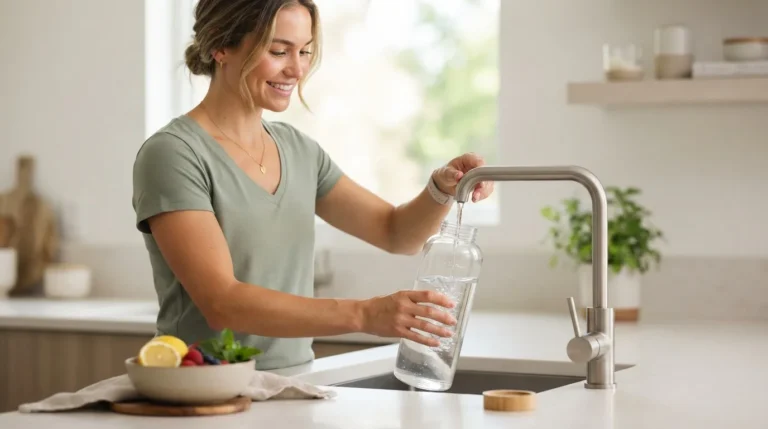
- Standard reusable bottle: Many large reusable bottles are marketed as 32 oz — fill one in the morning and you have a clear single-portion target.
- Four standard cups: If you use an 8 fl oz drinking glass, four full glasses equal 32 oz.
- Two large restaurant cups: Many fast-food beverage cups are 16–20 fl oz; two medium-large servings approximate 32 oz.
- Coffee thermos: A common 32 oz thermos holds about four standard coffees (8 fl oz each) or two large coffees.
- Half a liter comparison: 32 oz = ~0.95 L, which is nearly two typical 500 mL single-use bottles combined.
When shopping for bottles, a helpful reference is the water bottle size chart, which lists typical dimensions and materials.
To check how many ounces are in common glassware, see the glass of water sizes guide.
Practical tips:
- Carry one 32 oz bottle and refill it twice for a 96 oz day (about 2.8 L).
- Mark the bottle with times (e.g., 9am, 12pm, 3pm) to pace drinking.
- Use measurement marks or a labeled bottle to avoid guesswork.
Transition: Knowing how big 32 oz is helps, but why has this portion become a common hydration unit? Let’s explore the reasons.
Why Is 32 oz of Water a Common Hydration Measure?
Thirty-two ounces sits at a practical intersection between convenience and effectiveness. Below are reasons why individuals and brands often use 32 oz as a standard hydration measure, organized by habit, physiology, and logistics.
Convenience and Portion Control
Eating and drinking habits benefit from simple, repeatable units. A 32 oz bottle is:
- Large enough to reduce frequent refills but small enough to carry easily.
- Easy to divide into halves or quarters for pacing (16 oz or 8 oz increments).
- Visible — many bottles have measurement marks to track progress.
This makes 32 oz a useful tool for habit formation and portion control in daily routines.
Hydration Efficiency
Drinking in moderate, repeated volumes helps maintain plasma volume and supports kidney processing. Moderate boluses like 16–32 oz spaced across the day balance absorption and urine output, helping retain fluids for cellular use without placing excessive load on kidneys. For scientific discussions about fluid balance and absorption dynamics see reputable reviews and guidelines such as those from government health agencies and peer-reviewed journals — for example, the NIH and nutrition research articles provide evidence on fluid distribution and kidneys’ role.
Behavioral Science: Habit Formation
Behavioral research favors simple rules that are easy to remember. “Drink one 32 oz bottle before lunch” is easier to follow than a complex per-hour formula. A single repeated target reduces decision fatigue and increases the chance of consistency, which is essential for forming a hydration habit.
Product Standardization
Manufacturers standardize bottles and cups to common sizes; 32 oz is a widely produced size for reusable bottles and thermoses. This production standardization reinforces user adoption because the bottle becomes the measuring tool.
Many people ask whether other fluids count toward hydration. For facts about beverages such as coffee, see does drinking coffee count as water, and for guidance on alternative fluids see best hydrating beverages.
To understand hydration demands in relation to body composition, review the percentage of body water guide.
For broader beverage choices and their hydration qualities, see healthy hydrating drinks and healthier soft drink options.
To refresh why water is essential for bodily functions, including transport of nutrients and temperature regulation, see why water is essential.
For details on how water quality and mineral content can affect hydration, consult best water for hydration.
Transition: A common next step is translating these ideas into a calculator tailored to your body and lifestyle. The section below walks through using a 32 oz-based hydration intake calculator step by step.
How to Use a 32 oz Hydration Intake Calculator
This section gives a detailed, step-by-step walkthrough for calculating your daily water goal using 32 oz portions. The method combines widely accepted formulas with simple behavior-friendly rules.
Inputs the Calculator Needs
- Body weight (in pounds or kilograms)
- Age and sex (to adjust general needs)
- Typical daily activity level (sedentary, moderate, high)
- Exercise duration and intensity (minutes per day)
- Environmental factors (hot climate, high altitude)
- Special conditions (pregnancy, breastfeeding, illness)
Common Calculator Methodologies
Hydration calculators often use one or more accepted approaches:
- Weight-based rule: typically 0.5–1.0 ounce per pound of body weight per day (widely used consumer formula).
- ML per kg: 30–35 mL/kg/day for general adults (used in clinical and nutrition settings).
- Activity adjustments: add ~12–24 oz per hour of intense activity depending on sweat rates.
- Clinical modifiers: increase for fever, diarrhea, vomiting, or specific medical needs.
These methodologies are supported by nutrition guidance and clinical practice; for comprehensive calculator options, see an advanced resource like water intake calculator and guide or daily water intake and calculator.
Step-by-Step Calculator Walkthrough (32 oz-based)
- Enter body weight. Example: 160 lb (73 kg).
- Select base formula. We’ll use 0.5 oz per lb as conservative daily minimum: 160 lb × 0.5 = 80 oz/day.
- Convert to 32 oz portions: 80 oz ÷ 32 oz = 2.5 → round up to 3 portions (96 oz) for simplicity and safety.
- Add activity adjustment: if exercising 60 minutes at moderate intensity, add 16–24 oz. Choose 20 oz → new total 96 + 20 = 116 oz → divide by 32 = 3.625 → round to 4 portions (128 oz) if preferred for simplicity.
- Adjust for climate/altitude: if in hot weather, add another 8–16 oz per day as needed.
- Final practical plan: aim to drink 4 × 32 oz bottles spaced across the day (morning, midday, afternoon, evening), adjusting as necessary for thirst and urine color.
Sample calculation scenarios, illustrating real-world variation:
Sample Calculation: Office Worker
160 lb, sedentary work, 30 minutes of light exercise most days.
- Base: 160 × 0.5 = 80 oz → 2.5 × 32 oz → round to 3 bottles (96 oz).
- Exercise add: +12 oz → 96 + 12 = 108 oz → ~3.4 bottles → practicality: carry 3 bottles and one small cup, or round to 4 if preferred.
Result: 3–4 × 32 oz bottles per day depending on convenience.
Sample Calculation: Active Runner
180 lb, intense training 60–90 minutes/day.
- Base: 180 × 0.6 = 108 oz (using 0.6 oz/lb for higher needs) → 3.375 bottles → round to 3.5–4 bottles.
- Exercise add: +20–32 oz depending on sweat rate → total ~128–140 oz → 4–5 bottles.
Result: 4–5 × 32 oz bottles daily, with additional electrolytes during prolonged sweat sessions.
When applying these steps, remember to include disclaimers about medical conditions: consult your healthcare provider for pregnancy, kidney disease, heart failure, or other conditions where fluid balance must be medically managed.
For official hydration guidance and clinical nuances, consult government resources such as the NIH, and clinical references in peer-reviewed journals like those indexed at NCBI/NIH.
Transition: After you calculate a target, you need to adapt 32 oz portions to your lifestyle; the next section shows how to personalize these portions safely.
Personalized Hydration: Adjusting 32 oz Portions to Your Lifestyle
One-size-fits-all hydration is rarely optimal. Personalization adjusts 32 oz portions based on body weight, activity, climate, age, and health conditions. Below are clear adjustments and decision points.
Body Weight and Basic Scaling
- Use weight-based rules (0.5–1.0 oz per lb) to generate a base daily target.
- Convert that target into 32 oz increments for easy tracking — round up to the nearest half-bottle for simplicity.
Activity Level and Sport-Specific Needs
- Add approximately 12–24 oz per hour of moderate exercise; heavy, prolonged exercise may need 16–32 oz plus electrolytes.
- Monitor sweat rate by weighing before and after workouts: each 1 lb lost ≈ 16 oz fluid deficit to replace.
Climate and Altitude
- Hot, humid environments increase sweat losses; add 8–16 oz daily as a baseline increase.
- High altitude can raise fluid needs due to diuresis and breathing rate; consider modest increases and monitor symptoms.
Age and Health Conditions
- Older adults may have a blunted thirst response — scheduled drinking using 32 oz portions can prevent underdrinking.
- Certain medical conditions (heart failure, kidney disease) require individualized fluid targets; consult a clinician before adjusting up or down.
If you’re changing fluid habits during fasting periods, review water fasting rules and safety for specific guidance.
For people increasing fluid intake after illness, see dehydration recovery options.
Some follow larger daily targets such as a gallon; compare strategies in our drinking a gallon of water daily guide.
Remember that alcohol increases urine output — learn how it affects fluid needs in alcohol effects on hydration.
For those using water to support weight goals, see water intake and weight loss.
Transition: Tracking benefits and limitations helps you use 32 oz portions wisely — next we cover those pros and cons and potential risks.
Benefits and Limitations of Tracking Water Intake in 32 oz Increments
Using 32 oz increments to track water intake has clear benefits but also limitations. Below is a pros and cons list with practical explanations and safety notes.
Pros
- Simple and memorable: one 32 oz bottle is an easy daily unit.
- Convenient for purchasing and carrying standardized bottles.
- Reduces measurement errors — visible marks on bottles and reusable containers.
- Encourages habit: repeating a single task (finish a 32 oz bottle) fosters consistency.
- Flexible: you can split the bottle into smaller timed goals (morning, midday, afternoon).
Cons and Limitations
- Individual needs vary: one or two 32 oz portions may under- or overshoot needs depending on body weight and activity.
- Overhydration risk if combined with excessive intake, particularly in people with kidney or cardiac issues.
- Fluid quality and electrolyte balance are not addressed by volume alone; some situations require drinks with electrolytes.
- People with small bladder capacity or medical restrictions may find 32 oz intervals impractical.
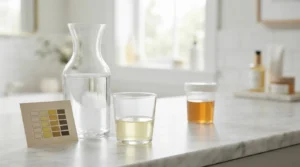
To add an objective hydration check, use urine color as a quick monitor — see the urine color hydration indicators.
If you track hydration because of blood pressure concerns, review evidence on dehydration and low blood pressure.
To understand how hydration influences fatigue and performance, see hydration and energy levels.
Water quality can affect hydration effectiveness; for mineral content and taste preferences, consult best water for hydration.
Recognize warning signs of chronic underhydration in our side effects of dehydration resource.
Note: 32 oz portions are for adults; for infants and young children consult pediatric guidance such as infant dehydration signs.
Some symptoms, like stomach pain, can be linked to hydration — see dehydration and stomach pain.
For a review of too much fluid and hyponatremia, consult risks of overhydration.
Transition: Knowing the pros and cons, here are practical tools and tips to make 32 oz portions work for your day-to-day life.
Tools and Tips for Using 32 oz Water Portions Effectively
This listicle offers actionable, tool-focused advice for integrating 32 oz portions into daily hydration routines. Each tip is practical and easy to adopt.
- Choose a 32 oz bottle: Buy a durable bottle clearly marked at 32 oz (or 1 L markings). Use it as your single measurement device.
- Time-based pacing: Aim to drink one 32 oz bottle by mid-day and one by late afternoon; adjust based on your total target.
- Visual markers: Add tape marks for half-bottle checkpoints to encourage steady sipping.
- Set reminders: Use phone alarms or smart watch reminders to sip — many hydration apps let you log 32 oz as a unit.
- Log in simple units: If you track digitally, log whole 32 oz portions to reduce friction; split into halves only when necessary.
- Electrolyte strategy: For long workouts, add electrolyte drinks or tablets rather than pure water alone.
- Keep a backup bottle: At home or work, store an extra 32 oz bottle so you can finish your goal if you miss scheduled refills.
- Flavor tricks: Add citrus, cucumber, or a splash of juice to make water more appealing without adding many calories.
- Track trends not perfection: Weekly totals matter more than exact timing; aim for consistent patterns of 32 oz portions across days.
- Use apps and journals: Hydration apps, simple spreadsheets, or a paper log help maintain accountability; search for trackers that allow custom 32 oz entries.
For buying decisions, consult the water bottle size chart.
Transition: With tools in place, here’s a concise summary and next steps to incorporate 32 oz portions into a long-term hydration plan.
Summary: Incorporating 32 oz Water Portions Into Your Hydration Plan
Using 32 oz of water as a unit gives a practical, repeatable framework for daily hydration. Convert your personal target from weight-based or clinical formulas into whole or half 32 oz portions, add activity and climate adjustments, and use a marked bottle plus reminders to stay consistent.
For more comprehensive hydration strategies, see our practical guide: 5 tips to stay hydrated and improve wellness.
Key takeaways:
- 32 oz = 4 cups ≈ 0.95 L — a handy, portable portion.
- Translate weight-based formulas into 32 oz units and round for simplicity.
- Adjust portions for exercise, climate, age, and medical factors.
- Use tools: a marked 32 oz bottle, reminders, and weekly trend tracking.
Final note: Consult your healthcare provider for tailored guidance if you have medical conditions affecting fluid needs. Ready to start? Choose a 32 oz bottle, calculate your target, and set a simple daily plan to build a reliable hydration habit.
Frequently Asked Questions
What is 32 oz of water equivalent to in cups and liters?
Thirty-two fluid ounces equals 4 U.S. cups and about 0.946 liters (946 mL). Use the rule 8 fl oz = 1 cup and 29.5735 mL per fl oz for precise conversion.
How much water should I drink if I consume 32 oz servings throughout the day?
Calculate your daily need (e.g., 0.5 oz per lb). Divide that total by 32 to find the number of 32 oz servings. Round up for simplicity and add exercise or climate adjustments as needed.
How do I use a hydration intake calculator based on 32 oz increments?
Enter weight, activity, and climate into the calculator. Convert the resulting total ounces to 32 oz portions (total ÷ 32), then round to whole or half bottles and schedule them across the day.
Is drinking 32 oz of water enough to stay hydrated during exercise?
One 32 oz serving may be enough for short, light exercise, but for moderate to intense sessions you typically need an additional 12–32 oz per hour depending on sweat rate and temperature.
How long does it take for the body to absorb 32 oz of water?
Water begins entering the bloodstream within minutes, but full distribution and measurable hydration effects can take 30–60 minutes. Exercise, stomach contents, and temperature influence absorption speed.
What are the signs I need to drink more than 32 oz of water per serving?
Signs include persistent thirst, dark urine, dry mouth, dizziness, or heavy sweating. Increase intake during prolonged activity, illness, or hot weather and monitor urine color and performance.
Can drinking 32 oz of water too quickly cause any health issues?
Drinking 32 oz very rapidly can cause stomach discomfort and in extreme cases temporary electrolyte dilution. Sip steadily; replace large volumes over hours rather than all at once for safety.
How do I ensure the quality and safety of the water I drink in 32 oz portions?
Use filtered or municipal-treated water, clean reusable bottles regularly, and store bottles away from heat or contaminants. Test private wells and follow local water advisories if concerns arise.