

Headline finding
Three medium oranges per day is a reasonable upper limit for most healthy adults — that supplies about 180–190 kcal, 210–240 mg vitamin C and 36–40 g sugar. For people managing blood sugar, dental risk, or sensitive stomachs, keep to 1–2 whole oranges daily.
Why that number matters: key figures up front
We choose “three oranges” as a conservative upper bound because of four measurable thresholds: calories, sugar, fiber, and vitamin C. One medium orange averages 62 kcal, 12 g sugar, 3 g dietary fiber and ~70–80 mg vitamin C. Multiplying to three yields ~186 kcal, ~36 g sugar, ~9 g fiber and ~210–240 mg vitamin C.
Nutrient profile of a medium orange (actionable numbers)
We report median values for a typical medium orange (about 131 g edible weight). Use these numbers when planning meals or comparing fruit choices.
| Nutrient | Per medium orange | Per 2 oranges | Per 3 oranges |
|---|---|---|---|
| Calories | 62 kcal | 124 kcal | 186 kcal |
| Total sugar (mostly fructose, glucose) | ~12 g | ~24 g | ~36 g |
| Dietary fiber | ~3 g | ~6 g | ~9 g |
| Vitamin C (ascorbic acid) | ~70–80 mg | ~140–160 mg | ~210–240 mg |
| Potassium | ~237 mg | ~474 mg | ~711 mg |
Key takeaway: Two oranges deliver roughly 25% of an average adult’s daily vitamin C needs and add ~24 g sugar; three oranges approach a quarter of a typical 2,000 kcal day’s energy and deliver >200 mg vitamin C.
How we set practical limits
We set limits by comparing the orange nutrient snapshot to three practical, numerically defined risk thresholds: daily sugar guidance used in public nutrition advice (about 20–30 g free sugar), vitamin C upper tolerance (thousands of mg), and caloric budgeting for common diets (1,500–2,500 kcal). We also considered gastrointestinal effects of fiber (thresholds above ~10–15 g of added fiber can cause loose stools for some people) and dental erosion risks related to acid exposure frequency.
Key takeaway: The “three oranges” cap balances sugar and calories against vitamin C gains while staying below common tolerance ranges for most people.
Whole oranges versus other orange products — concrete comparisons
One frequent mistake is treating orange juice or dried oranges as nutritionally equivalent to whole fruit. Quantitative differences change how many pieces you should consume.
| Format | Typical serving | Calories | Sugar | Fiber |
|---|---|---|---|---|
| Whole medium orange | 1 fruit | 62 kcal | ~12 g | ~3 g |
| Fresh-squeezed orange juice | 8 fl oz (240 ml) | ~110–120 kcal | ~22–26 g | ~0–1 g |
| Dried orange slices (no sugar added) | 30 g (small handful) | ~80–120 kcal | ~18–25 g | ~1–2 g |
A 240 ml glass of orange juice equals roughly two medium oranges by vitamin C and sugar, but it lacks the ~3–6 g fiber those oranges would provide. Dried oranges concentrate sugar and calories: a 30 g snack can equal one or two whole fruits in sugar at a fraction of the chewing volume.
Key takeaway: Treat juice as two fruit-equivalents for sugar and vitamin C but not fiber; dried fruit concentrates sugar and should be counted more strictly.
Who should limit oranges further — numeric risk groups
People with diabetes or insulin resistance
One medium orange has about 12 g sugar and a glycemic load roughly estimated at 4–6 units; two oranges increase that to ~8–12 GL units. For reference, single meals commonly aim to keep added carbohydrate loads in ranges that maintain post-meal glucose under targeted thresholds. Many clinicians advise limiting single-meal simple sugars so postprandial blood glucose spikes are minimized.
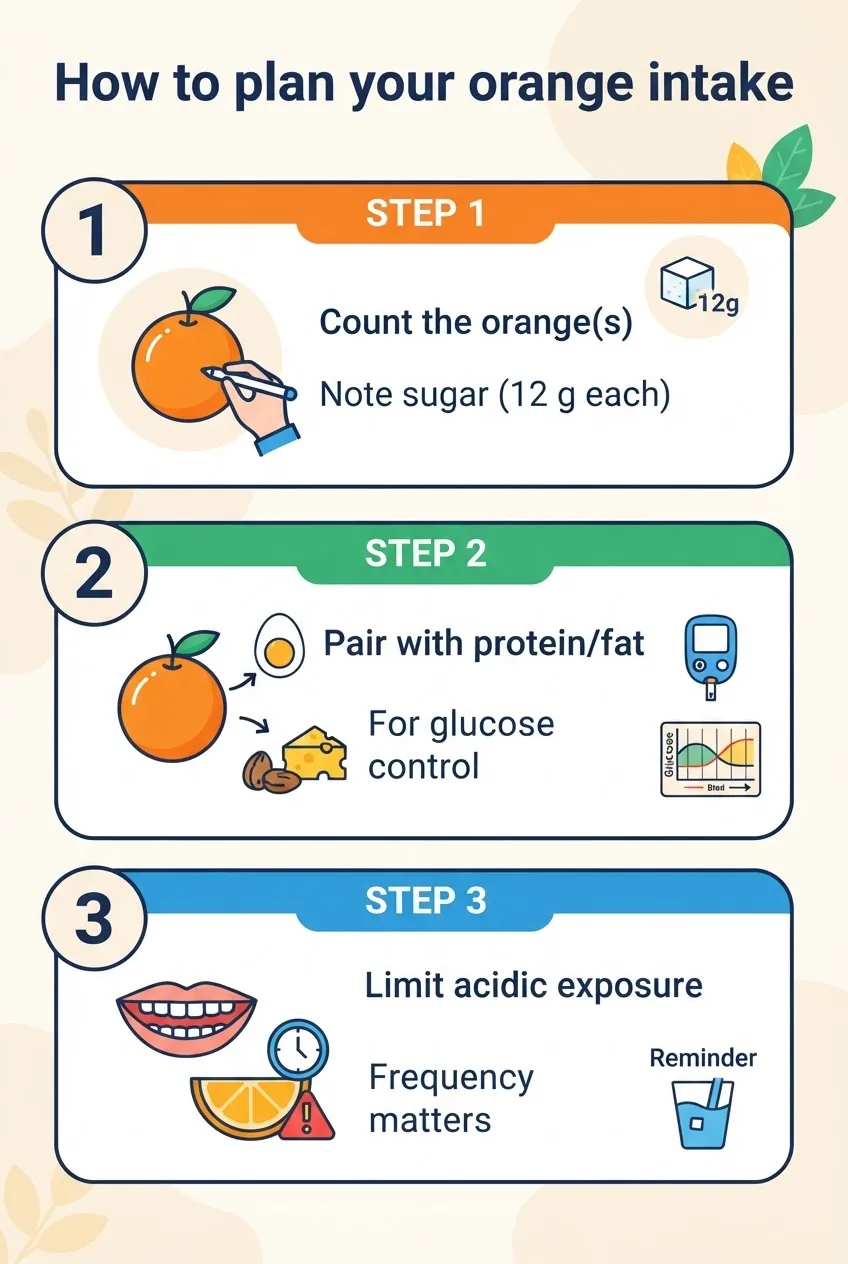
Actionable guideline: For blood glucose control, limit to 1 medium orange as a snack or pair 1 orange with a protein/fat source to blunt glucose rise. Two or more whole oranges at one sitting is likely to produce a larger glucose response for most people.
People with acid reflux and dental sensitivity
Oranges have low pH (acidic) and frequent exposure increases dental erosion risk. Clinically relevant thresholds are exposure frequency and duration rather than single-serving acid dose. If you sip orange juice or eat segments repeatedly throughout the day, enamel erosion risk increases.
Actionable guideline: Keep acidic fruit consumption to discrete eating occasions (1–2 times per day) and rinse with water after consumption. Limit to one whole fruit or one serving of juice per occasion if you have sensitive teeth or reflux.
Children and infants
Young children have lower calorie needs and smaller stomachs. A single medium orange can provide a large fraction of a child’s daily vitamin C and sugar. For toddlers, 0.5–1 small orange per day is a pragmatic guideline. Avoid giving infants concentrated juice.
Actionable guideline: For ages 1–3 limit to 1 small orange or 0.5 medium; for children 4–8, 1 medium; older children may safely have 1–2 depending on overall diet.
Practical meal examples with counts and numbers
Putting numbers into meal planning helps you see where oranges fit in common energy budgets.
Example A: 2,000 kcal maintenance diet
If you target 2,000 kcal/day, three medium oranges add 186 kcal (9.3% of daily calories) and ~36 g sugar. Two oranges add ~124 kcal (6.2% of daily calories) and ~24 g sugar. If you already consume a breakfast of yogurt and granola (350 kcal, 20 g sugar), adding two oranges increases breakfast sugar by ~24 g.
Practical note: In a 2,000 kcal plan, 1–2 oranges per day fit easily; three starts to demand reductions elsewhere if you want to keep added sugars modest.
Example B: 1,500 kcal weight-loss plan
On 1,500 kcal/day, three oranges equal ~12% of daily calories and supply ~36 g sugar. Replacing a processed snack (200–250 kcal) with one orange saves calories and adds fiber. Two oranges can be a full snack replacement; three may leave little room for other fruit or sugary foods without exceeding intended sugar guidance.
Practical note: For weight loss plans, prefer 1–2 oranges as snacks; three is only practical if you reduce other sugary foods that day.

Fiber, digestion and side effects — measurable thresholds
Whole oranges add soluble and insoluble fiber. A single medium orange’s ~3 g fiber contributes to fullness and slows carbohydrate absorption. However, adding more than ~10–15 g of extra fiber suddenly increases the chance of gas, bloating or looser stools for many people. Three oranges supply ~9 g fiber — close to the beginning of that range for sensitive individuals.
Actionable guideline: If you do not usually eat much fiber, introduce extra oranges slowly; stick to 1–2 per day and increase water intake when adding fruit fiber.
Vitamin C: benefit and practical ceiling
Oranges are valuable vitamin C sources. One medium orange (~70–80 mg) covers most adult daily requirements. Two oranges supply ~140–160 mg; three provide ~210–240 mg. Very high intakes of vitamin C can cause loose stools in sensitive people; that generally occurs at gram-level intakes rather than from whole fruit. Whole oranges deliver vitamin C along with fiber, which slows absorption compared with supplements.
Key takeaway: Whole fruit provides vitamin C efficiently; two oranges daily are more than adequate to meet and exceed typical requirements for most adults.
Oranges and weight control: numbers that matter
When weight control is the goal, focus on energy density and satiety numbers. One medium orange = 62 kcal and has a low energy density because of high water content. Compare that to a similar-calorie snack: 62 kcal is roughly equal to 10 almonds (60–70 kcal) but with considerably more volume and vitamin C. Replacing a 200 kcal processed snack with two oranges (~124 kcal) reduces daily intake by ~76 kcal — about 532 kcal per week if done daily, which translates to measurable weight loss over time if other intake remains constant.
Actionable guideline: Use one orange as a satiety-rich swap for small processed snacks; two oranges as a fuller replacement. Avoid adding juice or dried fruit as substitutes when energy control matters.
Dental health and acidity — frequency thresholds
Dental erosion risk depends on pH exposure and frequency. Oranges and orange juice are acidic; repeated snacking throughout the day increases enamel exposure. Practical thresholds: avoid sipping orange juice over longer than 15–20 minutes and avoid continuous nibbling of orange segments between meals. Rinsing with plain water after consumption helps neutralize surface acids.
Actionable guideline: Limit citrus to distinct eating sessions (ideally with other foods), no more than twice per day if you have tooth sensitivity, and wait ~30 minutes before brushing to avoid brushing softened enamel.
Medication and nutrient interactions — numerical caution points
Oranges add potassium (~237 mg each). For people on potassium-restricted diets, three oranges approach ~711 mg and must be counted against daily potassium targets. Orange intake does not share the same documented drug interaction profile as grapefruit; however, if your medication requires strict potassium limits or you take large vitamin C supplements, consult a clinician.
Actionable guideline: If your clinician has prescribed a daily potassium limit (for example, below 2,000 mg), factor whole fruit potassium into that total; three oranges are ~700 mg.
Seasonality, variety and sugar differences — numeric ranges
Different orange varieties and ripeness affect sugar by ±15–25%. A sweeter navel or mandarin may measure 10–15% more sugar than a less ripe variety. This changes the practical sugar total: if your typical orange is 12 g sugar, a 25% sweeter variety might be ~15 g sugar per fruit; three such fruits equal ~45 g sugar.
Actionable guideline: If you track sugar tightly, weigh or use a nutrition label for the variety you buy; assume 10–15 g sugar per fruit for mandarins and up to 15 g for very sweet varieties.
Worked examples: daily plans with numbers
Scenario 1 — Active adult (2,400 kcal/day)
Breakfast: 1 orange (62 kcal, 12 g sugar). Lunch: salad + lean protein. Snack: 1 small handful of nuts (150 kcal). Dinner: balanced meal. Total from oranges: 1–2 per day adds 62–124 kcal and 12–24 g sugar; well within daily energy needs.
Practical outcome: Up to three oranges still fits energy needs, but only if overall carbohydrate and sugar intake are managed across the day.
Scenario 2 — Person with prediabetes monitoring carbs
Breakfast: oatmeal with berries. Mid-morning: 1 orange paired with 1 tablespoon peanut butter (protein/fat to blunt glucose). That pairing reduces peak blood glucose relative to the orange alone. Avoid two oranges at one sitting unless paired with protein/fat and monitored.
Practical outcome: 1 orange plus a protein or fat source is a measurable strategy to reduce postprandial spike risk.
Portion checklist: numeric rules to follow
- 1 medium orange = 62 kcal, ~12 g sugar, ~3 g fiber, ~70–80 mg vitamin C.
- Limit to 1–2 whole oranges daily for routine consumption; 3 is an upper-bound for most healthy adults.
- Treat 8 fl oz (240 ml) orange juice as ~2 whole oranges for sugar and vitamin C but not fiber.
- For blood-sugar control, prefer 1 orange with protein; avoid 2–3 at once.
- For dental health, limit citrus eating occasions to 1–2 per day and avoid prolonged sipping.
Comparing oranges to other fruits by sugar and fiber — table
These comparative numbers help decide which fruit to choose based on sugar per serving and fiber.
| Fruit (typical serving) | Calories | Sugar | Fiber |
|---|---|---|---|
| Medium orange (1) | 62 kcal | ~12 g | ~3 g |
| Medium apple (1) | ~95 kcal | ~19 g | ~4.4 g |
| Cup blueberries (148 g) | ~84 kcal | ~15 g | ~3.6 g |
| 1 banana (medium) | ~105 kcal | ~14 g | ~3.1 g |
Key takeaway: Oranges are lower-calorie than apples or bananas per piece and comparable to berries for fiber, making them a good low-energy, nutrient-rich choice.
Buying, storage and portion control — numeric tips
Buy oranges in small batches if you eat 1–2 per day — average shelf life at room temperature is about 1–2 weeks, refrigerated 3–4 weeks. One practical portioning tactic: pre-portion peeled segments into 1-fruit and 2-fruit containers to avoid overeating when hungry.
Actionable numbers: Store up to 10–14 oranges in the fridge (cooling preserves flavor); plan to consume refrigerated fruit within 2–3 weeks for best texture.
Common mistakes and numeric corrections
- Assuming juice is equivalent to whole fruit — juice often doubles sugar per typical serving and removes fiber. Count 8 fl oz juice as ~2 whole oranges for sugar calculations.
- Underestimating dried fruit — a small 30 g portion concentrates sugar; measure by weight if you track sugar.
- Ignoring variety differences — sweeter varieties can add 10–25% more sugar per fruit.
How many oranges can you eat a day: clear numeric recommendations
- Healthy adult without metabolic conditions: 1–3 medium oranges per day; 1–2 is routine, 3 is an upper bound.
- People managing blood sugar: 1 medium orange per snack, paired with protein/fat; avoid 2–3 without pairing.
- Children: 0.5–1 small orange for toddlers, 1 medium for ages 4–8, 1–2 for older children depending on total sugar intake.
- Dental sensitivity or reflux: limit to 1–2 citrus eating occasions daily and avoid prolonged exposure.
Key takeaway: Use 1–2 as the default daily portion; reserve 3 only when you reduce other sugars and calories that day.
How to track and log oranges numerically
Track by whole fruits or by grams if you use a food scale. If you log in an app, enter ‘medium orange’ = 62 kcal and 12 g sugar. For juice, enter 240 ml = ~110 kcal and ~24 g sugar. For dried slices, log by grams to avoid undercounting sugar.
Practical tip: Keep a small table in your food log: 1 orange = 62 kcal; 2 = 124 kcal; 3 = 186 kcal. Add sugar totals when monitoring.
Common special cases with numbers
Pregnancy
Vitamin C is useful in pregnancy; however, excessive sugar intake matters because gestational diabetes risk increases with carbohydrate load. One to two oranges daily supply vitamin C without a large sugar load. If advised to restrict sugar, adhere to clinician recommendations.
Athletes and high-energy needs
Athletes burning 3,000+ kcal/day can use oranges for quick carbs and hydration. Three oranges may be reasonable for training days as a compact carbohydrate and vitamin source, but pair with protein post-exercise for recovery.
Simple rules of thumb (numeric) to use immediately
- If you aim for <2,000 kcal/day: stick to 1–2 oranges daily.
- If you aim for 1,500 kcal/day: prefer 1 orange as a snack swap; use 2 only if you reduce another sugar source.
- If you monitor sugar <25–30 g/day goal: count 1 orange as ~12 g sugar and adjust other foods accordingly.
- For dental protection: limit citrus exposure to two sessions per day and rinse with water.
Related reading and internal resources
For context on fruit serving sizes and how oranges compare within a broader fruit plan, see our Fruit Types Guide with Benefits and Nutritional Information for serving models and fruit selection strategies: Fruit Types Guide with Benefits and Nutritional Information. For exact calorie counts for a single orange, refer to our detailed note on orange calories: How Many Calories in One Orange Fruit? Nutrition Facts Guide. If you want guidance on overall fruit limits, our article on fruit intake ceilings is a useful companion: Can You Eat Too Much Fruit?
How we assessed this
We compiled typical nutrient values for medium oranges from national food composition tables and common product labels, then applied simple numeric comparisons to common dietary thresholds: energy budgets (1,500–2,500 kcal), sugar guidance used in public health recommendations (roughly 20–30 g free sugar targets), and fiber tolerance ranges reported in clinical nutrition practice. We modeled three-persona meal plans (sedentary, active, weight-loss) and ran arithmetic scenarios to show how 1–3 oranges affect calories, sugar and vitamin C totals. We also reviewed typical product formats (juice, dried) and converted servings into equivalent whole-fruit units for consistent comparison.
What the numbers mean for you — 5 concrete actions
- Default to 1–2 medium oranges per day. Use 3 only as an occasional upper bound after reducing other sugars that day.
- If you have diabetes or prediabetes, eat 1 orange with protein or fat (e.g., nut butter) and avoid 2–3 at one sitting.
- Choose whole fruit over juice; count 240 ml of orange juice as ~2 whole oranges for sugar and vitamin C and log it accordingly.
- Limit citrus eating occasions to 1–2 per day to reduce dental erosion risk; rinse with water afterward and wait ~30 minutes before brushing.
- Track by numbers: log 62 kcal and 12 g sugar per medium orange; adjust daily totals if you use sweeter varieties or dried fruit.
Frequently Asked Questions
How many oranges can you eat a day without gaining weight?
You can eat 1–2 medium oranges per day without contributing significantly to weight gain if the rest of your calories remain controlled. Each medium orange is ~62 kcal; three equals ~186 kcal. Replace higher-calorie snacks with oranges for weight control rather than add them on top of current intake.
Is it bad to eat three oranges a day?
Three oranges are safe for most healthy adults but approach ~36 g sugar and ~186 kcal; they may cause digestive upset in sensitive people and increase acid exposure to teeth. Limit to 1–2 per day if you have blood sugar, reflux or dental sensitivity concerns.
Can diabetics eat oranges every day?
Diabetics can eat oranges, but limit to one medium orange per snack and pair it with protein or fat to blunt post-meal glucose. Avoid multiple whole oranges or juice at a single sitting without adjustment elsewhere in the diet.
Are orange slices or orange juice better for portion control?
Orange slices (whole fruit) are better for portion control because they provide fiber and volume for the same or fewer calories. A glass of orange juice (240 ml) has roughly the sugar of two oranges and lacks the fiber that helps satiety.
How many oranges a day for vitamin C benefit?
One medium orange supplies most daily vitamin C needs (~70–80 mg). Two oranges provide ~140–160 mg and three provide ~210–240 mg; two often deliver an ample margin for routine requirements without resorting to supplements.
Can I eat oranges during pregnancy?
One to two oranges a day is reasonable during pregnancy to boost vitamin C and hydration, but if you have gestational diabetes or specific dietary restrictions follow your clinician’s numeric guidance on carbohydrate limits.
Note: This article provides data-based guidance for typical adults. For personal medical advice, consult a healthcare professional who can apply clinical thresholds to your individual context.