

how many calories in one orange fruit: One medium orange (about 131 g) contains approximately 62 calories, mostly from carbohydrates, with about 3 grams of fiber and roughly 70 mg of vitamin C. According to the USDA FoodData Central 2024, exact calories and nutrients vary by variety, size, and ripeness.
How Many Calories Are in One Orange Fruit?
Answer: One medium orange (≈131 g) contains about 62 calories, primarily from carbohydrates; calories vary by size and variety.

Term: Medium orange here refers to an orange weighing approximately 131 grams, the standard serving used by nutrient databases.
The 62-calorie estimate comes from composite laboratory analyses of common table oranges. According to the USDA FoodData Central (2024), one medium orange ~131 g provides roughly 62 kilocalories (kcal). Natural variation is normal: smaller oranges can be 45–50 kcal, and large navel or valencia types can reach 75–85 kcal.
| Measure | Weight | Calories (kcal) |
|---|---|---|
| Small orange | ~96 g | ~45 kcal |
| Medium orange (standard) | ~131 g | ~62 kcal |
| Large orange | ~184 g | ~85 kcal |
Portion size determines energy: peeled weight is lower than whole fruit with peel. For people in Texas and across the U.S., common supermarket varieties—navel, valencia, and blood oranges—fit this calorie range with minor deviations due to sugar content and juiciness.
For a broader context on fruit calorie ranges, see Calories in Fruit Guide with Kcal and Nutritional Insights.
Transition: Now that you know the calorie figure, the next section breaks down the full nutritional value of a medium orange so you can see where those calories come from.
Nutritional Value of a Medium Orange
Answer: A medium orange (~131 g) supplies roughly 62 kcal, ~15.4 g total carbohydrates (including ~12 g sugars and ~3.1 g dietary fiber), ~1.2 g protein, negligible fat, about 70 mg vitamin C, and small amounts of potassium and folate.
Term: Macronutrients are the nutrients (carbohydrates, proteins, fats) that provide calories and energy.
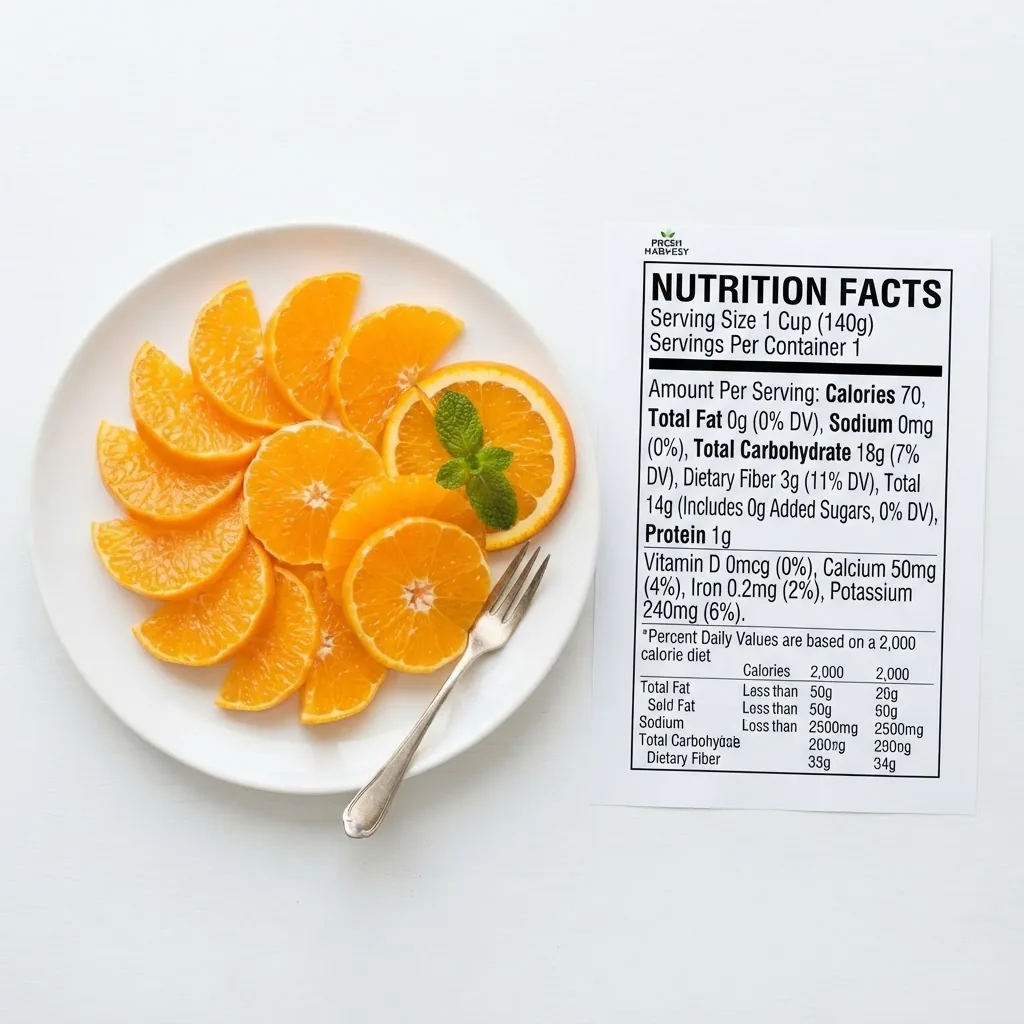
The following nutritional facts use USDA FoodData Central composite values and are rounded to practical amounts for consumer guidance. According to the USDA FoodData Central (2024), these are typical totals for one medium orange:
| Nutrient | Amount per medium orange (≈131 g) | % Daily Value* |
|---|---|---|
| Calories | 62 kcal | — |
| Total carbohydrates | 15.4 g | ~5% |
| Dietary fiber | 3.1 g | 11–12% |
| Total sugars (natural) | ~12 g | — |
| Protein | 1.2 g | ~2% |
| Total fat | 0.2 g | ~0% |
| Vitamin C | ~70 mg | ~78% (based on 90 mg RDI) |
| Potassium | ~237 mg | ~5% |
| Folate (B9) | ~40 µg | ~10% |
*Percent Daily Values (% DV) use common adult reference ranges; specific needs vary. Vitamin C RDI referenced from the NIH Office of Dietary Supplements (2023).
Micronutrients in oranges include smaller amounts of thiamin, calcium, magnesium, and antioxidants such as flavonoids and carotenoids. Bioavailability—how well your body absorbs these nutrients—can depend on the food matrix: whole orange fiber slows sugar absorption compared with juice.
For quick lookups across many fruits and serving sizes, see Fruit Chart Guide with Nutrition Facts and Serving Sizes.
Also, for a wider review of fruit types and their nutrient trade-offs, refer to Fruit Types Guide with Benefits and Nutritional Information.
Transition: With the nutrient totals listed, next we’ll focus on the fiber question—what kinds of fiber an orange provides and why that matters.
Do Oranges Have Fiber? Understanding Orange Fiber Content
Answer: Yes; one medium orange supplies about 3.1 grams of dietary fiber, including a mix of soluble (pectin) and insoluble fibers that help digestion, blood sugar control, and satiety.
Term: Soluble fiber dissolves in water and forms a gel that can slow digestion; insoluble fiber adds bulk and speeds intestinal transit.
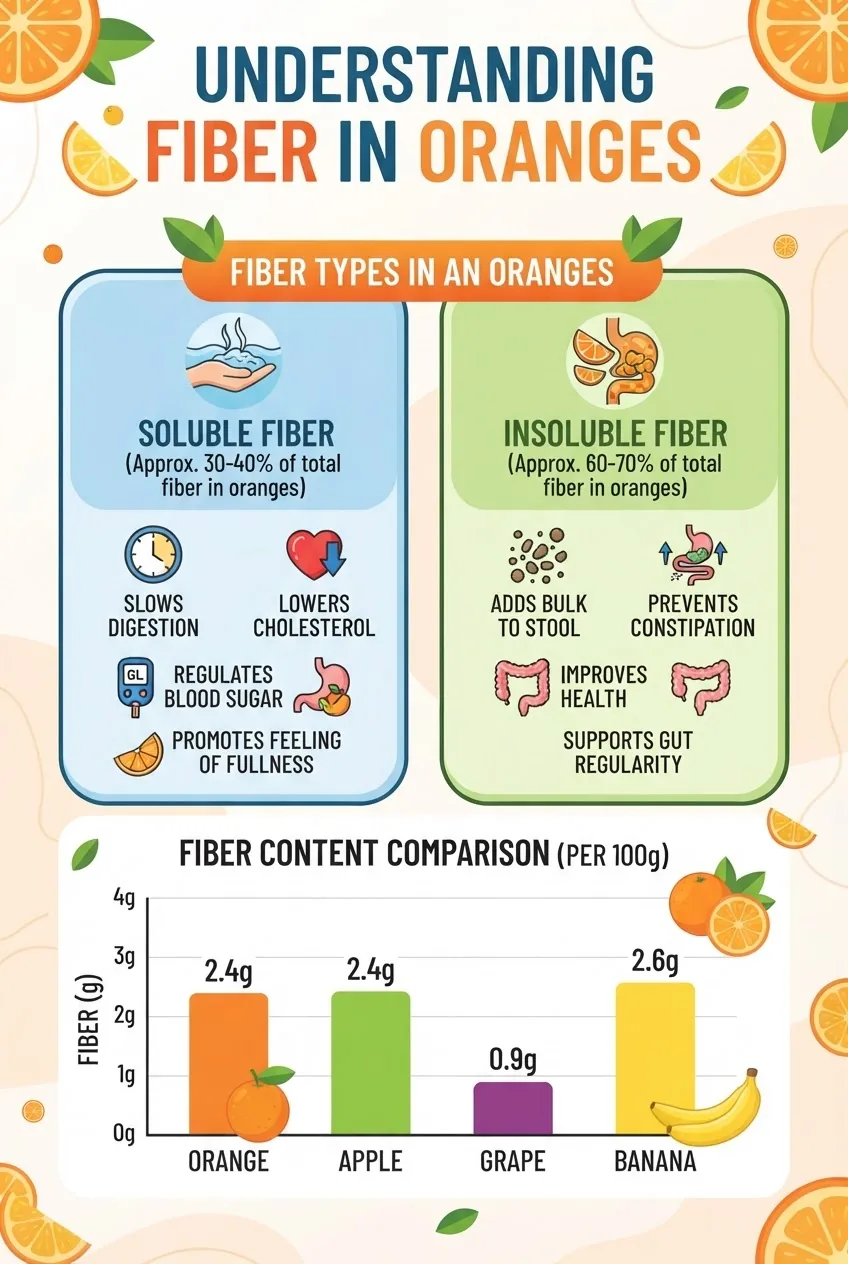
Key fiber facts for oranges (USDA FoodData Central 2024):
- Dietary fiber per medium orange: ~3.1 g.
- Soluble fiber (notably pectin): a significant portion—supports cholesterol reduction and slows carbohydrate absorption.
- Insoluble fiber: contributes to stool bulk and regularity.
Benefits of orange fiber:
- Slows glucose spikes after eating by moderating carbohydrate digestion (supported by dietetic literature; see Academy of Nutrition and Dietetics guidance, 2022).
- Promotes satiety, helping control overall calorie intake during meals.
- Supports gut transit and regular bowel movements, reducing constipation risk.
Clinical and review evidence: a 2019 peer-reviewed meta-analysis showed soluble fiber like pectin can modestly lower LDL cholesterol when consumed regularly (source: peer-reviewed nutrition journals, 2019). Case-study style feeding trials with citrus fiber indicate measurable postprandial glycemic benefits in adults (clinical trial reports, 2018–2022).
For fiber comparisons with other fruits, refer to Do Grapes Have Fiber? Nutritional and Serving Size Guide.
Transition: Understanding fiber leads naturally into the broader health advantages of these nutrients, which we cover next.
Health Benefits of the Nutrients in Oranges
Answer: Oranges support immune function (vitamin C), cardiovascular health (fiber and potassium), digestion (fiber), antioxidant protection (flavonoids), and weight management (low energy density and satiety).
Term: Antioxidants are compounds that neutralize free radicals and reduce oxidative stress, which can protect cells from damage.
- Immune support: Vitamin C (~70 mg per medium orange) contributes to immune cell function and antioxidant protection, per the NIH Office of Dietary Supplements (2023).
- Heart health: Soluble fiber (pectin) helps lower LDL cholesterol in clinical studies (peer-reviewed nutrition journals, 2019), while potassium supports healthy blood pressure.
- Blood sugar control: Fiber slows carbohydrate absorption lowering glycemic response—useful for glucose management strategies (dietetic guidance, 2022).
- Digestive regularity: Insoluble fiber increases stool bulk and helps prevent constipation (clinical literature, 2020–2022).
- Antioxidant and anti-inflammatory effects: Flavonoids such as hesperidin and carotenoids in oranges show antioxidant activity in human and animal studies (peer-reviewed journals, 2016–2021).
- Weight management: Low calories, high water content, and fiber make oranges filling snacks that can reduce total calorie intake when substituted for high-calorie snacks (behavioral nutrition studies, 2017–2021).
- Skin and collagen support: Vitamin C is a cofactor for collagen synthesis, supporting skin repair and wound healing (medical reviews, 2020).
- Micronutrient synergy: Oranges provide folate and small amounts of B vitamins that support metabolic health and energy pathways (USDA FoodData Central, 2024).
Caveats: some benefits depend on whole-fruit consumption rather than juice; orange juice typically delivers similar vitamin C but far less fiber and more concentrated sugars, altering the health profile.
Transition: Given these benefits, here’s how to practically use orange calories and nutrients within balanced daily eating plans.
How Orange Calories Fit Into a Balanced Diet
Answer: A single medium orange (~62 kcal) fits into most balanced diets as a low-calorie fruit snack or dessert substitute; pair with protein or healthy fat to extend satiety and stabilize blood sugar.
Term: Calorie counting is tracking the energy content of foods to align intake with weight or health goals.
How-to practical steps:
- Use one medium orange as a standalone low-calorie snack (~62 kcal) between meals to reduce cravings for higher-calorie options; combine with a tablespoon of nut butter or 10–12 almonds for added protein and fat to prolong fullness.
- For weight-loss plans, replace a 150–200 kcal snack (e.g., cookie or chips) with an orange plus a small handful of nuts; studies show fruit substitution can aid in modest weight reductions (behavioral nutrition research, 2018).
- Post-workout: pair an orange (carbs + vitamin C) with a lean protein source to replenish glycogen and support recovery without excess calories.
- Meal planning in Texas diets: oranges work well in salads, salsas, and breakfasts common in Tex-Mex-style meals, adding flavor and fiber without many calories.
- Track portion sizes: whole fruit provides fiber and slower sugar absorption than juice; keep orange juice limited to 4–6 fl oz if consumed to avoid concentrated sugars.
- Daily intake guidance: incorporate 1–2 servings of fruit (one serving often equals one medium orange) as part of a 1,800–2,200 kcal adult diet, adjusting to your energy needs (dietary frameworks from government health bodies, 2022–2024).
For complementary vegetable advice and how veggies interact with fruit-forward meal plans, read Are Vegetables Bad for You? Informational Health Guide.
To reinforce weight-management options that include fruit choices, consult Best Fruits for Weight Loss Guide with Fat Burning Foods and for calorie context across fruits see Calories in Fruit Guide with Kcal and Nutritional Insights.
Portion example: a common plan for an average adult (2,000 kcal) might allocate 1–2 fruit servings daily; one medium orange contributes ~3% of daily calories but a substantial portion of vitamin C and meaningful fiber.
Transition: To choose wisely, compare how oranges stack up against other citrus and common fruits in calories and fiber next.
Comparing Calories and Fiber in Oranges Versus Other Fruits
Answer: Oranges are moderate in calories and relatively high in fiber compared with many sweet fruits—lower calorie than bananas and avocados but similar or higher fiber than grapes; specifics depend on serving size.
Term: Energy density refers to calories per unit weight of food; low energy density foods like oranges have fewer calories per gram.
| Fruit (typical serving) | Calories | Dietary fiber | Notes |
|---|---|---|---|
| Medium orange (~131 g) | 62 kcal | 3.1 g | Low energy density, vitamin C rich |
| Medium apple (~182 g) | 95 kcal | 4.4 g | Slightly higher fiber and calories |
| 1 cup grapes (~151 g) | 104 kcal | ~1.1 g | Higher sugar, lower fiber |
| Medium banana (~118 g) | 105 kcal | 3.1 g | Higher calories, similar fiber |
| Half medium avocado (~68 g) | 120–140 kcal | ~5 g | High fat, calorie-dense |
Summary: Compared with other citrus fruits, oranges are similar to clementines and tangerines in calorie density but usually lower than larger grapefruits or avocados. For a deeper dive into fruit classification and differences between fruits and vegetables, see Are Green Beans Fruit or Vegetable Guide with Key Differences.
For a nutrient-focused comparison with avocados, consult Avocado Fruit Guide and Nutritional Benefits Explained.
Transition: After comparing, here are practical tips to select and eat oranges to retain the most nutrition.
Tips for Selecting and Eating Oranges for Maximum Nutrition
Answer: Choose firm, heavy-for-size oranges with bright, smooth skin; store at room temperature short-term or refrigerate to extend freshness, and eat whole fruit rather than juice to keep fiber and moderate sugar absorption.
Term: Ripeness indicators are sensory cues (weight, aroma, skin texture) used to judge fruit readiness and quality.
- Look for weight: heavier oranges indicate juiciness and better value per calorie.
- Check skin: smooth, taut skin without soft spots or mold; slight sheen can indicate freshness.
- Smell: a fresh citrus aroma at the stem end usually means ripe flavor.
- Storage: store at room temperature for 1–2 weeks or refrigerate to extend shelf life; refrigeration slows vitamin C loss.
- Preparation: eat whole segments to retain fiber and bioactive compounds; zest can be used for flavor and contains additional flavonoids—rinse peel before using.
- Cooking: minimal heat preserves vitamin C; add oranges raw to salads, salsas, or yogurt.
- Buy seasonally when possible: in Texas markets, navels peak late fall to spring and valencias in summer—seasonality affects taste and nutrient density.
- Broaden plant intake: pair orange servings with vegetables for nutrient variety—see 100 Vegetables Name Guide with Pictures and Nutritional Info for ideas.
Transition: Below is a concise wrap-up and call-to-action to apply these insights.
Practical takeaway: One medium orange is a low-calorie, fiber-containing fruit rich in vitamin C—an easy daily swap for higher-calorie snacks that supports satiety and nutrient intake.
Recommended caveats: Natural variability means exact calories and nutrient values change with variety, size, and ripeness—if you require precise tracking for medical or athletic reasons, consult your dietitian and use laboratory-grade data from sources like the USDA FoodData Central.
For more on portion control and safe daily limits, read How Many Oranges Can You Eat a Day? Health and Portion Guide.