
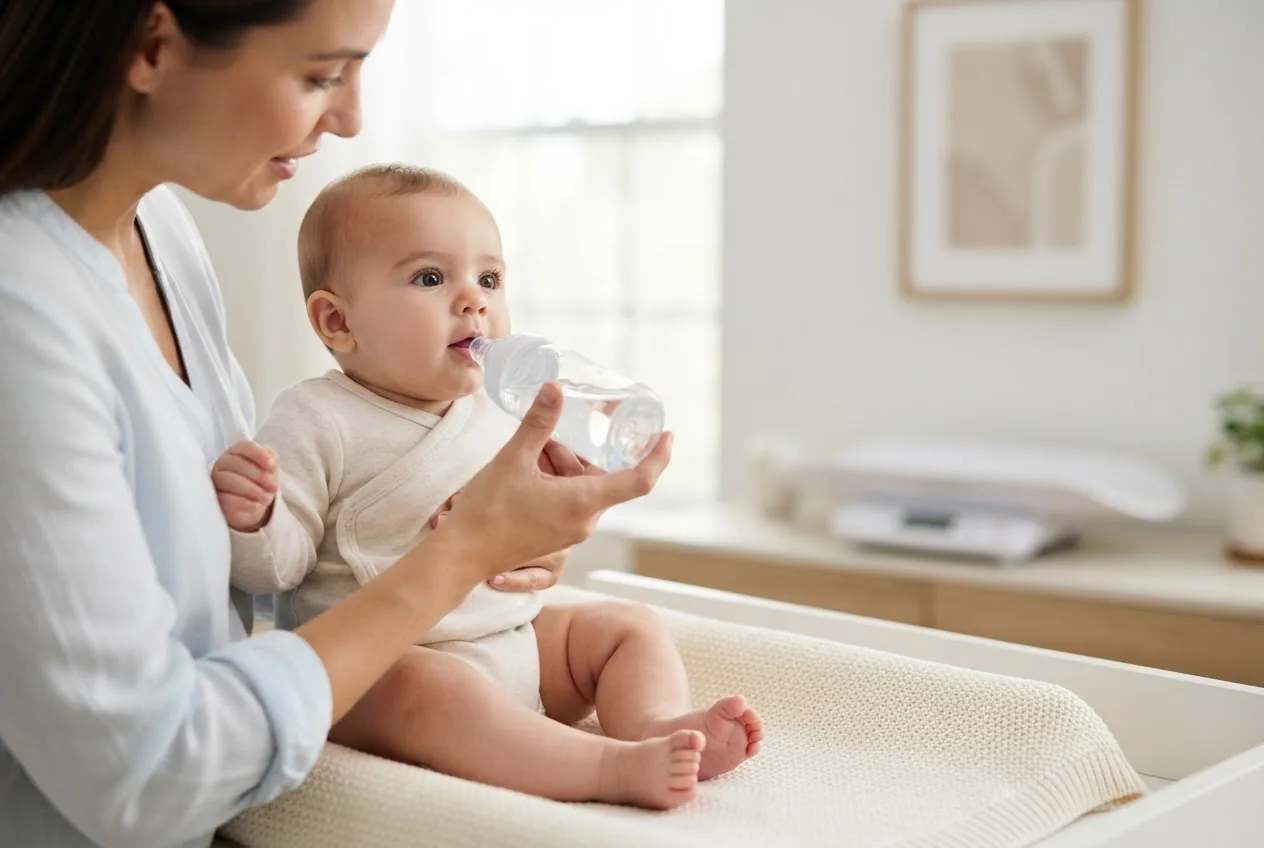
Signs of dehydration in babies include fewer wet diapers, dark concentrated urine, dry mouth and lips, sunken eyes or fontanelle, poor skin turgor, lethargy or irritability, and decreased tear production; initial care is increased breastfeeding or measured oral rehydration solution, close monitoring of output and behavior, and urgent medical attention for severe signs.
What are the most common signs of dehydration in babies?
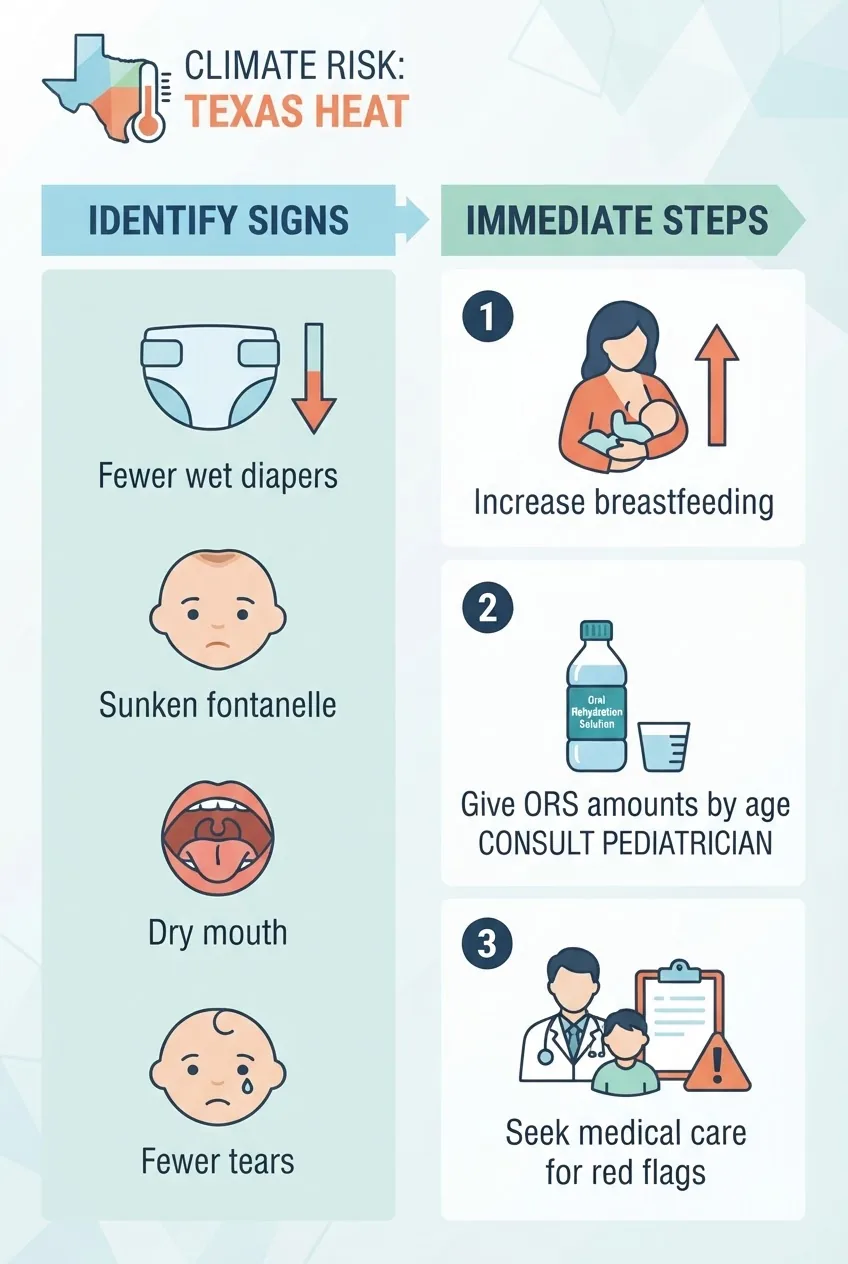
The most common signs are fewer wet diapers, dry mouth, sunken soft spot, reduced tears, and unusual sleepiness or irritability.
Recognizing these signals early helps prevent progression from mild to moderate or severe dehydration. Look for changes from the baby’s baseline: if a usually active infant becomes listless, or a breastfed baby nurses less than usual, those are red flags.
- Decreased wet diapers: fewer than expected wet diapers for age (see monitoring section).
- Dark, strong-smelling urine or concentrated yellow color.
- Dry or sticky mouth and lips; cracked lips.
- Fewer tears when crying.
- Sunken eyes or depressed fontanelle (soft spot on skull).
- Poor skin turgor: skin that doesn’t return quickly when pinched.
- Unusual sleepiness, irritability, or low activity.
- Rapid breathing or heart rate in more severe cases.
Dehydration: a state when the body loses more fluid (and often electrolytes) than it takes in, impairing normal cellular and organ function.
How do you know if an infant is dehydrated right now?
Confirm dehydration by checking output (diapers), behavior, physical signs (fontanelle, skin turgor, mucous membranes), and vital signs; use a diaper-count and visual checklist immediately.
Do a rapid bedside check:
- Count wet diapers over 6–24 hours relative to age.
- Inspect urine color and smell.
- Look for dry mouth and cracked lips.
- Assess tear production when baby cries.
- Gently pinch skin on the abdomen or thigh to assess turgor.
- Observe the fontanelle for noticeable sinking.
- Note alertness: difficulty waking, no interest in feeding, or extreme irritability indicate concern.
If any severe signs appear—no urine for 8–12 hours, very fast breathing, blue lips, or limpness—seek emergency care immediately.
Fontanelle: the soft spot on an infant’s skull where the bones have not fused; its sunken appearance can indicate reduced fluid volume.
What causes dehydration in babies?
Dehydration is caused by fluid losses (vomiting, diarrhea, fever, sweating), inadequate intake, or increased losses due to illness or environmental heat.
Common immediate causes include:
- Gastroenteritis with vomiting and/or diarrhoea (common infectious cause).
- High fever increasing insensible losses.
- Reduced feeding due to illness, sore mouth, or poor latch in neonates.
- Prolonged hot-weather exposure without compensatory fluids.
- Excessive diuretic medications or certain metabolic disorders (less common).
Infants dehydrate faster per kilogram of body weight than older children because they have higher metabolic rates and a larger surface-area-to-volume ratio, so small absolute fluid losses matter.
Which babies are at higher risk for dehydration?
Higher-risk infants include newborns, underweight babies, those with frequent vomiting or diarrhea, babies with fever, and those in hot climates or with limited access to fluids.
Specific risk factors:
- Age under 6 months—especially neonates under 28 days.
- Poor feeding, low birth weight, or preterm infants.
- Concurrent respiratory infections causing increased breathing losses.
- Chronic illnesses (congenital heart disease, renal problems).
- Caregiver barriers to frequent feeds (lack of access to formula, inability to breastfeed).
- High environmental temperatures like Texas summers without cooling measures.
How do clinicians diagnose infant dehydration?
Clinicians diagnose dehydration using clinical assessment (history, exam), urine output, weight change, and, when needed, laboratory tests for electrolyte and acid-base status.
Typical clinical assessment includes:
- History of fluid intake and losses (vomiting/diarrhea frequency, feeds missed).
- Physical exam: mucous membranes, skin turgor, capillary refill, fontanelle, respiratory and heart rate.
- Measurement of weight loss compared with baseline (percent body weight lost is key).
- Point-of-care urine testing or measurement of urine output.
Laboratory tests when severity or electrolyte disturbance is suspected:
- Serum electrolytes: sodium, potassium, chloride.
- Serum urea and creatinine to assess kidney perfusion.
- Blood gas if acid-base disturbance is suspected.
Tachycardia: a faster-than-normal heart rate; in infants it can be an early sign of dehydration or shock.
What are infant dehydration signs and symptoms by severity?
Mild dehydration shows slight reduction in urine and dry mouth; moderate causes fewer wet diapers, sunken fontanelle, and irritability; severe includes very low urine output, lethargy, rapid breathing, and shock signs.
| Severity | Key signs | Immediate action |
|---|---|---|
| Mild (3–5% body weight loss) | Slightly fewer wet diapers, thirsty, mild dry mouth, normal activity | Offer frequent breastfeeds or measured ORS; monitor output closely |
| Moderate (6–9% weight loss) | Very reduced diaper output, sunken fontanelle, decreased tears, restless or sleepy | Begin ORS immediately; contact pediatrician; consider clinic evaluation |
| Severe (≥10% weight loss) | Very low or absent urine, very sunken fontanelle, cold/mottled extremities, lethargy, rapid breathing/heart rate | Emergency department for IV fluids and monitoring; do not delay |
How should mild dehydration be treated at home?
Treat mild dehydration by increasing feeding frequency and providing small, frequent volumes of fluid (breastmilk, formula, or measured oral rehydration solution) while monitoring diapers and alertness.
Practical steps by feeding type:
- Breastfed babies: offer the breast more often (every 1–2 hours if willing) and allow unrestricted nursing; the composition of breastmilk supports rehydration.
- Formula-fed babies: offer smaller, more frequent feeds; do not over-dilute formula to stretch supply—follow mixing instructions.
- Using oral rehydration solution (ORS): give guided amounts based on age and severity (see dosing below).
When using small frequent sips, use a spoon, syringe (without needle), or cup, especially if vomiting; pause for comfort and continue slowly.
Oral rehydration solution (ORS): a balanced fluid containing specific concentrations of sodium and glucose designed to promote intestinal absorption of water and electrolytes.
How much ORS should I give an infant and how fast?
Give ORS in small, frequent amounts: for babies under 12 months, 50–100 mL (about 1.7–3.4 fl oz) after each loose stool for mild dehydration; for moderate dehydration follow pediatric guidance or clinic protocol for structured replacement.
Practical dosing guidelines (general):
- Infants under 12 months: 50–100 mL ORS after each loose stool; if vomiting, give 5–10 mL every 1–2 minutes by syringe.
- Children 1–5 years: 100–200 mL after each loose stool (adjust by size).
- Use small sips frequently rather than large volumes at once to reduce vomiting risk.
If a baby refuses ORS or vomits repeatedly, contact a clinician; persistent vomiting may require intravenous fluids.
When should you use oral rehydration solution versus breastmilk or formula?
Use breastmilk as first-line for most mildly dehydrated infants; add ORS when diarrhea or vomiting causes measurable losses or when breastfeeding/formula alone doesn’t restore output.
Comparison of common rehydration options:
| Fluid | When to use | Benefits & limits |
|---|---|---|
| Breastmilk | First-line for exclusively breastfed infants with mild losses | Provides appropriate fluid and electrolytes; readily available; may not fully replace losses in severe diarrhea |
| Infant formula | When not breastfeeding and illness allows feeding | Nutritionally complete; avoid over-dilution; vomiting or intolerance may limit use |
| Oral rehydration solution (ORS) | When diarrhea or vomiting causes measurable dehydration or breastmilk/formula insufficient | Electrolyte-balanced; specifically designed for rehydration; should be used per dosing guidance |
| Clear liquids (juice, sports drinks) | Not recommended for infants under 6 months; use only if clinician approves | Can have too much sugar or improper electrolytes; risk of osmotic diarrhea |
| IV fluids | For moderate to severe dehydration or persistent vomiting | Rapid restoration of intravascular volume under medical supervision; requires facility care |
How is moderate to severe dehydration treated medically?
Moderate dehydration is usually treated with high-volume ORS under supervision or supervised IV fluids; severe dehydration requires rapid IV or intraosseous fluid replacement and monitoring in a medical facility.
Medical treatment elements:
- Immediate assessment of airway, breathing, and circulation.
- Rapid IV bolus of isotonic crystalloid (e.g., normal saline or lactated Ringer’s) for severe dehydration or shock—clinician-directed dosing.
- Electrolyte and glucose monitoring; correction of severe sodium abnormalities must be gradual and supervised.
- Treatment of underlying cause (antibiotics if bacterial infection, antiemetics for severe vomiting when appropriate).
- Admission for observation when urine output remains low or when oral intake is unreliable.
Do not attempt aggressive IV treatment at home; transfer to the nearest emergency facility. For neonates (under 28 days), any sign of dehydration typically warrants clinician evaluation.
Hypotension: low blood pressure; a late and serious sign of severe dehydration and reduced organ perfusion in infants.
What warning signs mean I should go to the emergency room now?
Go to the emergency room immediately if the baby has no urine for 8–12 hours, is very lethargic or unresponsive, has difficulty breathing, has blue lips, or shows signs of shock such as cold extremities and a weak pulse.
Other urgent signs:
- Repeated vomiting and inability to keep any fluids down.
- Seizures or severe confusion.
- Signs of severe dehydration listed in the severity table (≥10% weight loss).
- Neonate under 28 days with fever and poor feeding—seek immediate medical evaluation.
How can caregivers monitor hydration at home between visits?
Monitor by counting wet diapers, observing urine color, tracking weight where possible, watching for normal feeding patterns, and checking for normal activity and tears.
Practical home monitoring checklist:
- Record number of wet diapers in 24 hours: newborns typically should have 6–8 wet diapers per day after first week.
- Note urine color: pale/straw is normal; dark yellow suggests concentration.
- Weigh infant on same scale, with minimal clothing, to detect small weight changes when possible.
- Note number and quality of feeds: shorter or missed feeds increase risk.
- Observe behavior: alertness, consolability, and active movements.
If any monitored parameter worsens, increase fluids and contact the pediatrician promptly.
Are there special considerations for newborns and exclusively breastfed infants?
Yes — newborns and exclusively breastfed infants can dehydrate quickly and should be checked by a clinician for any feeding reduction or signs of dehydration, especially within the first week of life.
Guidance specifics:
- Newborns: weight loss of up to 7–10% in the first days can be normal, but over 10% requires evaluation.
- Latch and supply: poor latch or infrequent feeds reduce intake; consult lactation support early.
- Supplementation: clinicians may recommend expressed breastmilk or formula temporarily if breastfeeding alone is insufficient, under supervision.
- Frequent follow-up: early postnatal check (within 48–72 hours) to reassess weight and hydration.
How does the Texas heat affect childhood dehydration and what practical adjustments help?
Hot, dry Texas weather increases insensible fluid losses; increase feeding frequency, ensure shade and cooling, and monitor infants more closely during heat waves.
Practical adjustments for hot climates:
- Avoid prolonged sun exposure and outdoor activity during peak heat (midday).
- Dress infants in light, breathable layers; use a hat and shade for strollers.
- Offer breastfeeds more often; for formula-fed infants, offer extra feeds if tolerated.
- Use a cool cloth to reduce fever-related fluid losses, and keep indoor environments ventilated or air-conditioned when possible.
- Be vigilant during power outages—have a plan for alternative feeding and cooling strategies.
Can certain illnesses make dehydration worse or harder to detect?
Yes — illnesses with fever, rapid breathing, or high-output diarrhea increase fluid losses; concurrent respiratory distress or sepsis can mask classic dehydration signs and require clinician evaluation.
Examples and caveats:
- Respiratory infections: fast breathing increases insensible water loss; nasal congestion can reduce effective nursing.
- Urinary tract infections or congenital renal disease: can affect urine output patterns.
- Metabolic disorders: rare conditions may alter thirst mechanisms or electrolyte handling.
- Antipyretics reduce fever but don’t replace fluids—active rehydration is still necessary.
What complications can result from untreated dehydration in infants?
Untreated dehydration can progress to electrolyte imbalances, acute kidney injury, shock, seizures, and, in extreme cases, death; early intervention prevents serious outcomes.
Potential complications listed:
- Electrolyte derangements: hypernatremia or hyponatremia affecting neurologic function.
- Renal impairment from poor perfusion.
- Hypovolemic shock leading to organ dysfunction.
- Seizures due to sodium imbalance or hypovolemia.
- Delayed growth or feeding aversion if illness and dehydration recur.
What follow-up care is needed after treating dehydration?
Follow-up includes monitoring urine output, weight recovery, return of normal feeding patterns, and clinician review within 24–72 hours depending on severity; document recovery milestones.
Specific follow-up actions:
- Recheck weight until back to baseline or expected trajectory.
- Ensure urine output returns to normal for age (newborns: 6–8 wet diapers/day after first week).
- Watch for delayed irritability, poor feeding, or new vomiting—repeat evaluation if these occur.
- Schedule a provider visit after moderate/severe dehydration or if underlying cause (e.g., bacterial infection) needs treatment.
What practical prevention strategies reduce childhood dehydration risk?
Prevent dehydration by maintaining regular feeding, offering extra fluids during illness or heat, recognizing early signs, and having ORS available for diarrhoea-prone infants.
Prevention checklist for caregivers:
- Feed on demand, especially in hot weather or during illness.
- Keep ORS packets at home and know mixing instructions (follow product guidance).
- Monitor diapers and weight trends—establish a baseline for your baby’s typical output.
- Know when to call the pediatrician early rather than waiting for severe signs.
- Prepare a hot-weather plan: shade, frequent feeds, and emergency contacts accessible.
How should parents prepare for dehydration risk at home and while traveling?
Prepare by keeping appropriate feeding supplies, pre-measured ORS, a working thermometer, a contact plan for the pediatrician and nearest emergency department, and knowing how to assess diapers and fontanelle.
Packing checklist for outings or travel:
- Extra expressed breastmilk or formula and clean feeding supplies.
- Pre-measured ORS packets and a small clean cup or syringe for administration.
- Thermometer and small cooler if carrying perishable milk in hot weather.
- List of local emergency departments and the pediatrician’s after-hours contact.
- Shade, sun protection, and methods to cool the infant safely if overheated.
How long does it take for a baby to recover from dehydration?
Recovery time depends on severity: mild dehydration often improves within 24–48 hours with proper rehydration; moderate to severe cases may require days of medical care and monitoring for full recovery.
Expected timelines:
- Mild: urine output and activity usually normalize within 24–48 hours with increased feeds or ORS.
- Moderate: may need clinic treatment and 48–72 hours of observation for weight and output to normalize.
- Severe: hospitalization and IV fluids; recovery may take several days to stabilize electrolytes and organ function.
What are common parent questions about rehydration and electrolytes?
Parents often ask whether to add salt, use sports drinks, or when to resume normal feedings; do not add salt, avoid sports drinks in infants, and resume breastfeeding/formula as primary nutrition unless instructed otherwise.
Quick guidance:
- Do not add salt to baby fluids or foods unless directed by a clinician—improper sodium can harm infants.
- Avoid commercial sports drinks and sodas for infants; they have inappropriate sugar and sodium content.
- Resume age-appropriate feeds as hydration allows; small frequent feeds are usually better tolerated during recovery.
What should caregivers expect at a pediatric visit for dehydration?
Expect measurement of weight, vital signs, a focused physical exam, review of intake/output, possible urine testing, and directed treatment plan including ORS instructions or referral to emergency care for IV fluids if indicated.
Information clinicians typically collect:
- Duration and frequency of vomiting/diarrhea.
- Number of wet diapers and recent weights.
- Feeding type (breastmilk, formula) and any recent changes.
- Medication history and any underlying medical conditions.
Which related resources can help me learn more about hydration and preventing dehydration?
Read the broader hydration guidance and related articles on dehydration, diarrhea, and drink choices to understand prevention and safe rehydration strategies.
- Essential Guide with 5 Tips to Stay Hydrated and Healthy — general hydration principles for families.
- Diarrhoea and Dehydration Guide: Causes and Prevention Tips — practical steps when diarrhea is present.
- Understanding 32 Oz of Water and Hydration Requirements Guide — context on fluid needs across ages.
- Complete Guide to the Best Hydrating Beverages for Wellness — safe beverage choices for older children.
How can caregivers choose between home care and clinic care for dehydration?
Choose home care for mild dehydration with good feeding response and reliable follow-up; seek clinic or emergency care for moderate to severe signs, poor response to ORS, neonates, or concerning comorbidities.
Decision points to move from home to clinic care:
- Poor improvement after 2–4 hours of ORS or increased feeds.
- Worsening signs: reduced consciousness, rapid breathing, persistent vomiting.
- Infant younger than 28 days with any dehydration signs or fever.
- Lack of caregiver ability to administer fluids safely or no access to follow-up care.
What safety tips reduce risks when giving fluids at home?
Safety tips: use measured amounts, avoid force-feeding, use ORS per package instructions, and stop fluid administration immediately and seek care if the baby becomes distressed or has respiratory compromise.
Practical safety rules:
- Measure ORS accurately with a syringe or cup—do not guess volumes.
- Give small, frequent sips to reduce vomiting risk (especially after vomiting episodes).
- Do not prop the infant upright and pour fluids rapidly—use caregiver-held, controlled administration.
- Watch for choking or coughing during feeds; if present, stop and reassess airway.
How should caregivers document symptoms for the pediatrician?
Document timing and quantity of vomiting/diarrhea, number of wet diapers by time period, recent weights, feeding frequency and volume, and any medications given to provide a clear clinical picture.
Use a simple log format:
- Time-stamped entries for each vomiting or loose stool event.
- Number and time of wet diapers with approximate urine color.
- Amounts fed and tolerated (ml or ounces if possible).
- Any fever readings and antipyretic administration times.
What are key takeaways for caregivers about infant dehydration?
Key takeaways: watch diaper output and behavior, prioritize breastfeeding, use ORS for diarrhoea-related losses, act early when signs appear, and seek emergency care for severe signs or poor response to rehydration.
- Early recognition and simple measures prevent escalation in most cases.
- ORS is safe and effective when used correctly; breastmilk remains first-line for young infants.
- Neonates and severely ill infants need immediate clinician evaluation.
- Environmental heat increases risk—take preventive measures in hot climates like Texas.
Frequently Asked Questions
How many wet diapers indicate dehydration in a baby?
After the first week, fewer than six wet diapers in 24 hours suggests possible dehydration; in newborns, watch for progressive decreases and contact a clinician if output drops compared with the baby’s usual pattern or if other signs appear.
Can breastfeeding prevent and treat dehydration in infants?
Yes — breastfeeding is the preferred first-line fluid source for most infants; it provides water, electrolytes, and calories, but if significant diarrhea or vomiting occurs, add ORS per pediatric guidance and seek evaluation if output does not improve.
Is it safe to give an infant sports drinks, juice or Pedialyte?
Avoid sports drinks and juices for infants due to high sugar; use age-appropriate oral rehydration solutions (e.g., pediatric ORS) when recommended—consult the pediatrician before offering alternative fluids to infants under 12 months.
How quickly can dehydration become dangerous in a baby?
Infants can progress from mild to severe dehydration within hours, especially with repeated vomiting or high-volume diarrhoea; neonates and young infants are at highest risk and should be evaluated early if signs develop.
When should I take my baby to the emergency room for dehydration?
Go to the ER for no urine for 8–12 hours, severe lethargy or unresponsiveness, rapid breathing or heart rate, blue lips, or persistent vomiting that prevents any fluid intake—these are signs of severe dehydration or shock.
How do I prepare ORS at home safely?
Prepare ORS with clean water following package instructions precisely; measure concentrate and water accurately, give small frequent sips, and discard any unused reconstituted solution per product directions to avoid contamination.
Can teething cause dehydration in infants?
Teething may reduce feeds temporarily but is an uncommon primary cause of dehydration; if feeding drops significantly or diarrhoea and fever accompany teething, monitor closely and contact the pediatrician if concerns arise.