Yes — drinking water improves energy indirectly by restoring blood volume, supporting cellular ATP production, aiding nutrient transport, and improving cognitive alertness; mild dehydration reliably reduces performance and mood, so replenishing fluids raises perceived and measurable energy within minutes to hours when intake corrects a deficit.
Does water directly provide energy in the form of calories?
No — plain water contains no calories and does not provide metabolic energy, but it enables the body’s energy-producing systems to work efficiently.
Water itself has zero kilocalories and is not a substrate for ATP (adenosine triphosphate) production.
Term: ATP is the cellular molecule that stores and delivers usable chemical energy for biological processes.
Instead of supplying calories, water maintains the environment where biochemical reactions occur, keeps blood volume adequate for oxygen and nutrient delivery, and prevents the concentration changes that slow enzymes and cellular transport — all of which indirectly sustain physical and mental energy.
How does hydration affect cellular energy production?
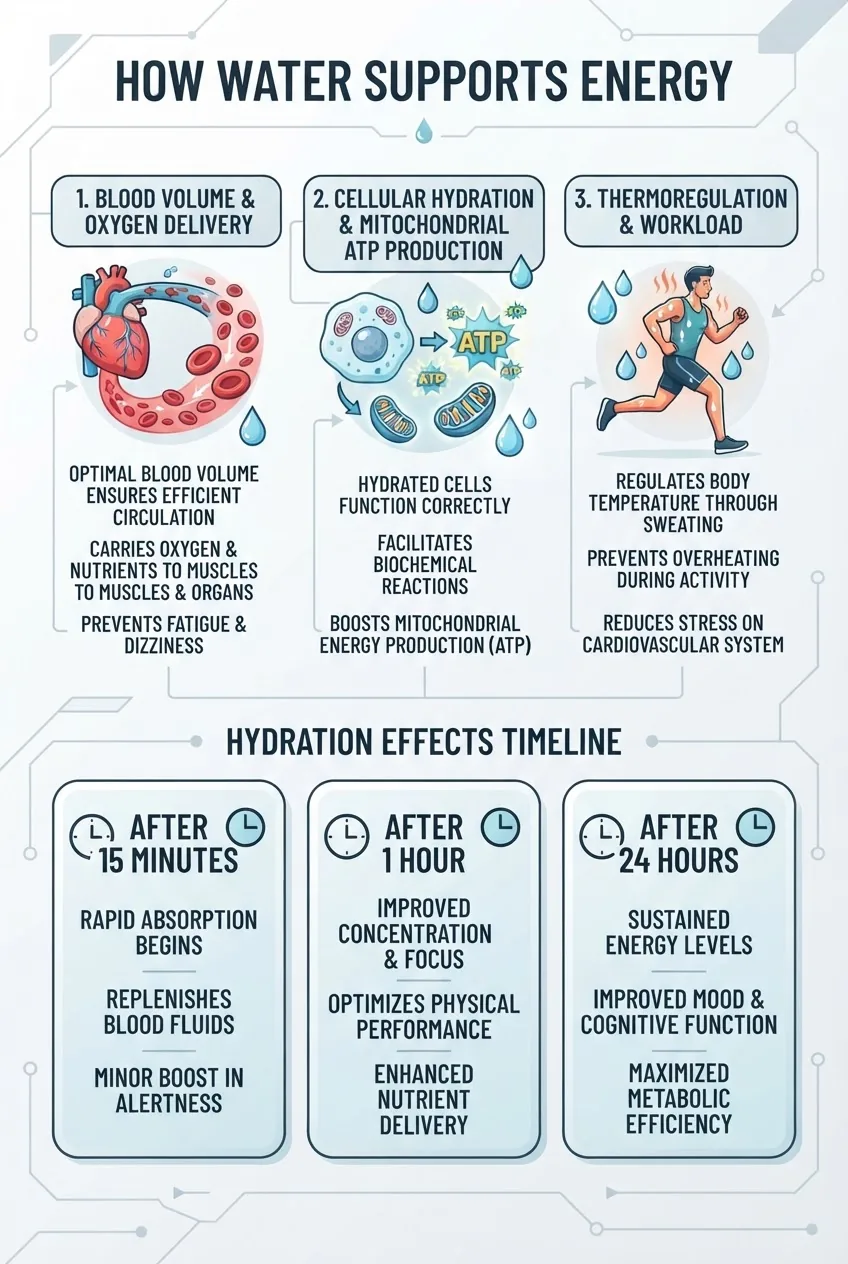
Hydration supports cellular energy by preserving intracellular fluid balance, enabling mitochondria to generate ATP efficiently and maintaining enzyme activity essential for metabolism.
Term: Mitochondria are organelles inside cells that convert nutrients and oxygen into ATP, the cell’s immediate energy currency.
When cells lose water, intracellular ionic concentrations and viscosity change, which slows metabolic enzyme kinetics and mitochondrial function; adequate water keeps the cytosol at optimal volume so glycolysis, the Krebs cycle, and oxidative phosphorylation proceed at their normal rates.
Term: Intracellular osmolarity is the concentration of solutes inside a cell; large shifts disrupt enzyme activity and cellular transport.
Maintaining proper hydration preserves mitochondrial membrane potential and substrate delivery (glucose, fatty acids, oxygen), reducing subjective fatigue and preserving measurable performance in endurance and cognitive tasks.
What physical processes link water intake to feeling more energetic?
Water increases energy by restoring blood volume, improving cardiovascular efficiency, aiding thermoregulation, transporting nutrients, and preserving brain function and mood.
Key processes:
- Blood volume and circulation — adequate plasma maintains stroke volume and reduces heart rate for the same workload.
- Thermoregulation — water enables sweat and evaporative cooling, lowering cardiovascular strain in heat or exercise.
- Nutrient transport — water is the solvent for glucose and oxygen delivery to muscle and brain cells.
- Waste removal — fluid supports renal filtration and lactate clearance, reducing fatigue-related metabolites.
- Cognitive function — brain volume and neurotransmitter balance are sensitive to hydration, affecting alertness and motivation.
Term: Plasma is the liquid component of blood that carries cells, nutrients, hormones, and waste products.
What does the research say: does water give you energy?
Clinical and experimental studies show even 1–2% body mass loss from dehydration reduces cognitive performance, mood, and endurance; rehydration consistently improves these measures, though effects vary by task, baseline hydration, and population.
Systematic reviews and randomized trials report:
- Mild dehydration (1–2% body weight) impairs attention, working memory, and increases perceived effort during exercise.
- Rehydration improves mood, lowers headache incidence, and reduces perceived exertion during physical tasks.
- Laboratory tasks show variable effect sizes; real-world benefits are larger for older adults, athletes, and heat-exposed workers.
Evidence quality ranges from short-term trials to observational studies; few long-term randomized trials exist that examine habitual increased water intake and chronic energy levels, but mechanistic consistency supports the observed short-term benefits.
How much water should you drink to improve energy?
Aim for a baseline of roughly 30–35 mL per kg body weight per day, plus additional fluid for activity, heat, and losses; correct deficits quickly by drinking 250–500 mL and assessing response within 15–60 minutes.
Term: Baseline fluid recommendation is the daily volume to replace normal insensible and sensible water losses without accounting for added activity or environmental stress.
Practical formulas and examples:
- Basic guideline: 30–35 mL/kg/day. For a 70 kg adult that equals 2.1–2.45 L/day baseline.
- Exercise addition: add ~0.5–1.0 L per hour of moderate activity, more for hot conditions or heavy sweat rates.
- Rapid rehydration: start with 250–500 mL (8–17 oz) and repeat every 15–30 minutes until symptoms improve.
Example calculations for Texas summertime conditions:
- Sedentary 80 kg adult: 80 kg × 35 mL = 2.8 L/day baseline; add 0.75 L for a 45-minute outdoor walk = 3.55 L total.
- Athlete 70 kg training 90 minutes in heat: baseline 2.1–2.45 L + 1.0–1.5 L for exercise = ~3.5–4.0 L/day.
Which beverages count toward hydration and energy?
Plain water, low-sodium electrolyte drinks, milk, tea, and coffee all contribute to hydration; sugary drinks provide calories but may cause energy crashes, while alcohol is dehydrating and counterproductive.
Table comparing common fluids for hydration and energy impact:
| Beverage | Hydration value | Energy effect | Notes |
|---|---|---|---|
| Plain water | High | Indirect; quick relief of thirst and improved alertness | No calories; best baseline choice |
| Sports drinks (electrolytes) | High | Sustained during long exercise; contains carbs for fuel | Useful for >60–90 minutes activity |
| Coffee/tea | Moderate to high | Caffeine gives rapid alertness but can mask dehydration | Count toward fluids; monitor tolerance |
| Juice & sugary drinks | Moderate | Short sugar-driven energy; risk of crash | Adds calories; not ideal for sustained hydration |
| Alcohol | Low (diuretic) | Reduces energy and sleep quality | Avoid when seeking energy |
When should you time fluids to maximize an energy boost?
Drink water proactively: on waking, 10–15 minutes before cognitively demanding tasks, 30–60 minutes before exercise, and in small, regular sips throughout the day to prevent dips that reduce energy.
Timing specifics:
- Morning: 250–500 mL on waking restores overnight fluid losses and reduces morning grogginess.
- Pre-task: 150–250 mL 10–15 minutes before meetings or study supports attention.
- During exercise: sip 150–350 mL every 15–20 minutes depending on sweat rate and intensity.
- Post-exercise: 1.0–1.5 L per kg of fluid lost (measured by body mass change) over several hours with electrolytes if sweat losses were large.
Regular intake beats large doses; small frequent drinks maintain plasma volume and steady cognitive function without gastric discomfort.
Can drinking more water replace caffeine or calories for energy?
No — water cannot replace calories or the stimulant effect of caffeine, but rehydration reduces fatigue that may be mistaken for low calories or lack of caffeine and can amplify the effect of modest caffeine doses.
Comparison points:
- Caffeine stimulates the central nervous system and raises alertness irrespective of hydration.
- Calories provide metabolic substrates for ATP; water only facilitates their delivery and processing.
- Combining hydration with moderate caffeine (e.g., 75–150 mg) often yields superior cognitive and performance benefits versus either alone.
Who benefits most from water’s energizing effects?
People most likely to notice energy gains from hydration are older adults, endurance athletes, shift workers, people in hot climates (like Texas summers), and those with chronic low intake or illnesses that increase fluid losses.
Why these groups:
- Older adults have reduced thirst sensation and are prone to dehydration-related cognitive decline.
- Athletes and outdoor workers lose larger volumes of water and electrolytes and experience measurable performance drops when underhydrated.
- Shift workers and sleep-deprived people often substitute caffeinated or sugary drinks and may benefit from baseline hydration to preserve alertness.
What signs show low water is causing my low energy?
Key indicators that dehydration is lowering energy include dark urine, increased heart rate at rest, headaches, dizziness, poor concentration, and a measurable body mass loss after activity.
Diagnostic checkpoints you can use at home:
- Urine color: pale straw to light yellow indicates adequate hydration; dark yellow suggests deficit.
- Resting heart rate: an unexplained rise may indicate reduced plasma volume.
- Orthostatic symptoms: lightheadedness on standing signals inadequate circulating volume.
- Weight change: a 1–2% reduction after exercise is meaningful; replace with fluids equal to the mass lost.
Term: Orthostatic hypotension is a drop in blood pressure and lightheadedness when standing up, sometimes caused by low fluid volume.
Can you drink too much water trying to gain energy?
Yes — excessive water without electrolytes can dilute blood sodium (hyponatremia), causing nausea, headache, confusion, seizures, and in severe cases death; avoid drinking extreme volumes rapidly unless replacing sweat sodium as well.
Term: Hyponatremia is a low blood sodium concentration that can cause neurological symptoms due to water movement into brain cells.
Safe practices:
- Limit rapid intake to less than 1 L per hour unless medically directed and include electrolytes during prolonged high sweat losses.
- Aim to replace fluid deficits gradually and monitor urine color and body weight.
- Seek medical care for persistent vomiting, severe headache, confusion, or seizure after heavy fluid intake or endurance events.
How to measure hydration accurately and conveniently?
Use a combination of urine color, daily body-mass trends, and for precision, urine specific gravity or plasma osmolality measured clinically; for athletes, pre- and post-exercise body weight change is a simple gold-standard field method.
Measurement methods:
- Urine color chart — inexpensive and practical for everyday use.
- Body mass change — weigh naked before and after exercise; 1 kg loss ≈ 1 L fluid lost.
- Urine specific gravity (USG) — a urine dipstick or refractometer gives objective concentration data (USG >1.020 suggests dehydration).
- Plasma osmolality — the clinical reference method for research and diagnosis.
Combine a quick daily urine check with weekly weight monitoring for long-term trends; if USG or osmolality results are abnormal, consult a healthcare provider.
What practical hydration plan increases daily energy (worked example)?
A pragmatic daily plan: baseline 30–35 mL/kg, 250–500 mL on waking, small sips before tasks, 150–250 mL every 1–2 hours, and additional 300–750 mL per hour for exercise, with electrolyte replacement for prolonged or heavy sweat losses.
Worked 3-day example for a 75 kg Texas resident with moderate activity (numbers show fluid volume only):
- Day 1 (Rest, office work, AC indoors): baseline 75×35 = 2.6 L. Morning 300 mL, mid-morning 200 mL, lunch 300 mL, afternoon 300 mL, evening 400 mL = 1.5 L distributed + 1.1 L with meals = 2.6 L total.
- Day 2 (Outdoor work, 90 min moderate): baseline 2.6 L + 1.0 L exercise = 3.6 L. Plan: 400 mL on waking, 250 mL pre-shift, sip 200–300 mL every 20 minutes during work totaling ~1.5 L, post-shift 500 mL + evening 450 mL.
- Day 3 (Gym session 60 min high sweat): baseline 2.6 L + 0.75–1.0 L = 3.35–3.6 L. Pre-workout 300 mL, during 600 mL (200 mL/20 min), post 600 mL plus day intake spread evenly.
Electrolyte recipe for extended activity (makes ~1 L): mix 800 mL water with 200 mL orange juice, 1/4 tsp table salt (≈600 mg sodium), and 1–2 tsp honey or sugar for 15–30 g carbs; use commercially formulated sports drinks if preferred.
How does water interact with food and nutrients to affect energy?
Water aids digestion, nutrient absorption, and glycogen storage, so adequate hydration improves the availability and use of calories for energy rather than being a passive factor.
Specific interactions:
- Digestion — gastric secretions and transit depend on adequate fluid; constipation and slow gastric emptying from low water reduce nutrient absorption efficiency.
- Glycogen storage — glycogen is stored with water; dehydration alters glycogen turnover and may reduce available carbohydrate during prolonged exercise.
- Nutrient transport — blood plasma carries glucose and amino acids to cells; reduced volume slows delivery and clearance of metabolites.
Term: Glycogen is the stored form of glucose in liver and muscle, bound with water molecules for storage and mobilization during activity.
What do hydration intake benefits studies recommend for energy and health?
Studies recommend maintaining euhydration (normal fluid balance) with individualized goals based on body mass, activity, and climate; public health guidelines advise 2–3 L/day for most adults, adjusted upward in heat and exercise.
Consensus points from trials and reviews:
- Preventing even mild hypohydration preserves cognitive performance and mood.
- Individualize intake using weight-based formulas and sweat-rate measurements for athletes.
- Combine water with electrolytes during prolonged high sweat losses to prevent hyponatremia and sustain performance.
For practical steps and daily strategies see the pillar guidance on staying hydrated and healthy: Essential Guide with 5 Tips to Stay Hydrated and Healthy, and read specific risks of low intake in the sibling guide to 16 Alarming Side Effects of Not Drinking Enough Water.
How quickly will drinking water boost my energy and focus?
Expect subjective improvements within 15–60 minutes after rehydration for cognitive alertness and reduced headache; physical performance improvements may appear within an hour and stabilize over several hours as plasma volume and cellular hydration normalize.
Time-course details:
- Immediate (5–15 minutes): oropharyngeal sensation of thirst relieved, small improvements in mood and alertness.
- Short-term (15–60 minutes): partial plasma volume restoration, clearer thinking, reduced headache for many people.
- Medium-term (1–4 hours): improved endurance, thermoregulation, and metabolic enzyme normalization.
What are common misconceptions about water and energy?
Misconceptions include thinking water directly supplies calories, that coffee fully hydrates, or that more water always equals more energy; the truth is water supports energy systems but cannot replace calories or stimulants, and excessive intake can be harmful.
Correctives:
- Coffee and tea contribute to fluid balance but their diuretic effect is minor at moderate doses; monitor total intake and symptoms.
- Drinking large volumes rapidly does not create proportionally greater energy and may dilute electrolytes.
- Perceived “instant energy” after water is often relief from thirst and improved concentration rather than metabolic fuel provision.
How should athletes and outdoor workers use water to maximize energy safely?
Measure sweat rate, replace 50–100% of sweat losses during activity, include sodium in drinks for sessions >60–90 minutes, and avoid overdrinking by checking body-weight changes and urine color.
Practical athlete plan:
- Measure sweat rate: (pre-exercise weight − post-exercise weight) in kg plus fluid consumed minus urine output, divided by time gives L/hr sweat rate.
- Replace fluid during long sessions according to sweat rate; include 300–700 mg sodium per liter for heavy sweaters or hot conditions.
- Post-exercise: consume ~1.25–1.5 L per kg of body mass lost, with electrolytes and some carbohydrates to aid recovery.
Term: Sweat rate is the amount of fluid lost through perspiration per unit time, commonly measured in liters per hour.
What are safe, evidence-based tips for increasing water to improve daily energy?
Start by adding 250–500 mL at key times (wake, before tasks, before/after exercise), monitor urine color and weight, include electrolyte drinks during long or hot activities, and adjust intake to thirst and daily losses.
Step-by-step checklist:
- Carry a reusable bottle and sip regularly rather than chugging large amounts.
- Set simple volume targets: e.g., one 500 mL bottle by 10:00, another by lunch, one in afternoon, one evening.
- If working outdoors or in heat, increase intake by 0.5–1.0 L per hour of exposure depending on sweat.
- Use flavored water, herbal tea, or diluted juice if plain water is unappealing, keeping added sugar moderate.
How does climate (like Texas heat) change hydration strategies for energy?
Hot, humid climates increase sweat losses and the need for electrolytes and more frequent fluid intake; pre-cooling, scheduled sipping, and electrolyte-containing beverages help sustain energy and reduce heat strain.
Texas-specific considerations:
- High afternoon temperatures and humidity raise sweat rates; increase baseline by 0.5–1.5 L/day on hot days depending on exposure.
- Use electrolyte drinks during long outdoor shifts and take cooling breaks to reduce cardiovascular load.
- Monitor workers and athletes for early signs of heat-related illness and prioritize shade, rest, and fluids.
How do medical conditions modify hydration needs and energy responses?
Medical conditions like heart failure, kidney disease, or certain endocrine disorders change fluid and sodium handling, so hydrate according to professional medical advice; in many conditions, both under- and overhydration can worsen energy and health.
Clinical considerations:
- Heart failure and advanced kidney disease often require fluid and sodium restrictions; follow clinician instructions to avoid fluid overload.
- Diuretics increase urine output and may increase need for monitoring electrolytes and fluid intake timing.
- Endocrine disorders such as diabetes insipidus cause unusually high fluid needs and require medical management.
What quick tests can you try today to see if water will improve your energy?
Try drinking 250–500 mL of water now, wait 20–60 minutes, and note changes in alertness, headache severity, or perceived exertion; concurrently check urine color and resting heart rate for objective markers.
How to run the quick self-test:
- Baseline: note current alertness on a 1–10 scale, urine color, and resting pulse.
- Intervention: drink 300–500 mL water over 5–10 minutes.
- Reassess at 20 minutes and 60 minutes for changes; repeat on another day to confirm.
Documenting repeated results helps determine whether hydration is a primary factor in your daily energy fluctuations.
How does hydration relate to sleep, and does that affect energy?
Proper hydration supports sleep by reducing nighttime headaches and cramps and by preventing overnight dehydration that can impair morning alertness, though excessive late-night fluid can disrupt sleep with nocturia.
Guidelines for balancing sleep and hydration:
- Consume most daily fluids earlier in the day and taper intake 1–2 hours before bedtime to reduce sleep disruption.
- Address causes of nocturnal dehydration like alcohol or diuretics to improve morning energy.
- If you wake with headaches or dry mouth, consider a modest pre-bed 150–250 mL of water and evaluate nightly patterns.
Where can I read more and find related guides on hydration and energy?
This article sits within a hydration cluster that includes practical guides on daily intake, side effects of low water, and beverage choices—see linked sibling articles for details and personalized calculators.
Recommended internal resources:
- Essential Guide with 5 Tips to Stay Hydrated and Healthy — practical daily strategies and habit tips.
- Guide to 16 Alarming Side Effects of Not Drinking Enough Water — consequences of chronic low intake and when to seek care.
- How Much Water Should You Drink a Day: Recommended Guide — calculators and weight-based examples.
Frequently Asked Questions
Does water give you energy right away?
Yes — many people feel clearer and less fatigued within 15–60 minutes after drinking 250–500 mL if they were mildly dehydrated; physiological benefits like plasma volume and cellular hydration begin quickly, though full recovery for strenuous tasks may take several hours.
How much water increases energy for a 150 lb person?
A 150 lb (≈68 kg) person should aim for about 2.0–2.4 L/day baseline (30–35 mL/kg), plus extra fluids for exercise or heat; adding 250–500 mL when symptomatic often produces noticeable energy gains within an hour.
Does drinking water replace the need for sports drinks during exercise?
Not always — for activities longer than 60–90 minutes or heavy sweating, sports drinks with electrolytes and carbohydrates help maintain performance and energy better than plain water alone and reduce hyponatremia risk.
Can dehydration cause chronic fatigue?
Chronic low intake can contribute to persistent tiredness by reducing nutrient delivery, impairing sleep, and increasing cardiovascular strain; correcting hydration often improves energy but consult a clinician when fatigue is severe or persistent.
Is coffee better than water for boosting morning energy?
Caffeine provides faster central nervous system stimulation than water, but combining modest caffeine with proper hydration produces superior alertness and cognitive performance compared with caffeine or water alone.
How can I check if water will improve my workday energy?
Perform a simple test: drink 300–500 mL, note alertness and headache at baseline, then reassess at 20 and 60 minutes; improved scores suggest hydration was a limiting factor and scheduling regular fluids will help.
What are safe limits for rapid rehydration?
Generally avoid drinking more than about 0.8–1.0 L per hour unless you’re losing fluids at an equal or greater rate (e.g., heavy sweating) and include electrolytes for long durations; seek medical advice if you have heart or kidney disease.
Which signs mean hydration isn’t the cause of my fatigue?
If hydration tests don’t improve symptoms, persistent shortness of breath, chest pain, unexplained weight changes, severe mood shifts, or sleep disturbances likely indicate other causes requiring medical evaluation.