
Yes — dehydration can cause low blood pressure (hypotension) by reducing circulating blood volume, which lowers cardiac output and arterial pressure; this effect is most common in moderate to severe fluid loss, when symptoms include dizziness, fainting, rapid pulse and confusion, and it requires prompt rehydration and sometimes medical treatment.
Dehydration: loss of body water and salts sufficient to impair normal physiology.
Blood pressure: the force of blood pushing on artery walls, expressed as systolic/diastolic millimeters of mercury (mmHg).
Does dehydration directly lower blood pressure?
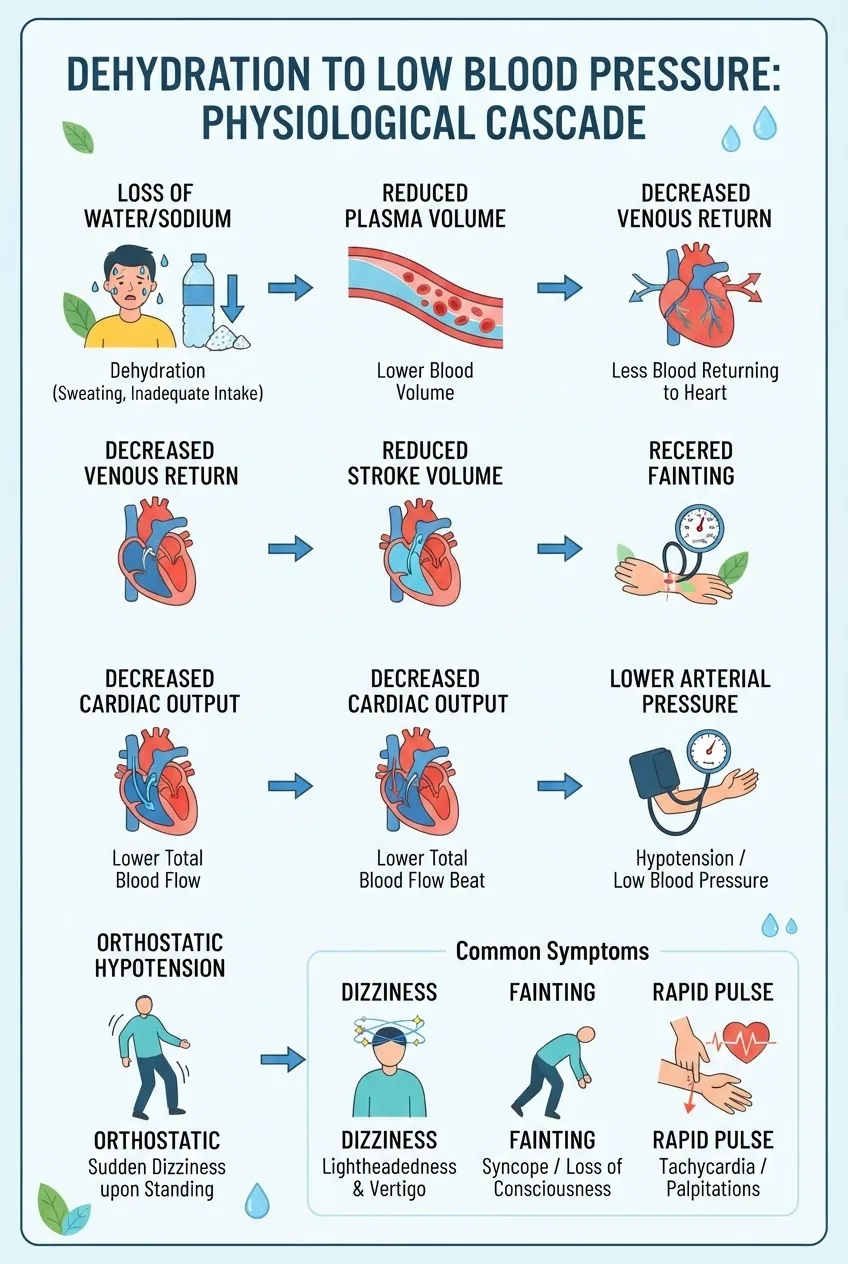
Yes — dehydration lowers blood pressure primarily by decreasing blood volume (hypovolemia), which reduces venous return, stroke volume, and ultimately cardiac output, causing a drop in measured arterial pressure.
When you lose water (through sweating, vomiting, diarrhea, bleeding, or inadequate intake) the plasma volume contracts. Lower plasma volume means less preload — the blood returning to the heart — which lowers stroke volume according to the Frank–Starling mechanism, then reduces cardiac output and arterial pressure.
Hypovolemia: a medical term for abnormally low circulating blood volume, often produced by dehydration or blood loss.
Magnitude of blood pressure fall depends on:
- Volume lost (mild vs. moderate vs. severe).
- Speed of loss (rapid losses cause larger immediate drops).
- Cardiovascular compensation (heart rate increase, vasoconstriction).
- Baseline health (older adults or those on antihypertensives are more vulnerable).
How fast can dehydration lower blood pressure?
It can happen within minutes to hours for rapid fluid losses (vomiting, diarrhea, hemorrhage) and over days for chronic low intake; symptomatic hypotension commonly appears after moderate-to-severe volume loss (roughly ≥5–10% body water depending on the person).
Examples by scenario:
- Acute gastroenteritis: significant hypotension can develop in hours with persistent vomiting/diarrhea.
- Heat illness with heavy sweating: hypotension may appear within hours, worsened by salt loss.
- Low daily intake: mild hypotension may develop over 24–72 hours, especially in elderly.
Factors accelerating onset include diuretics, alcohol, and conditions causing sodium loss. Rapid falls in blood pressure are more likely to produce fainting or shock and need urgent care.
What symptoms indicate low blood pressure from dehydration?
Dizziness, lightheadedness on standing, weakness, rapid heartbeat, dry mouth, decreased urine output, confusion and fainting are key symptoms linking dehydration to low blood pressure.
Common symptom clusters:
- Volume depletion signs: dry mucous membranes, reduced skin turgor, darkened urine.
- Cardiovascular signs: tachycardia (fast pulse), weak pulse, low systolic pressure.
- Neurological signs: dizziness, syncope (fainting), confusion, lethargy.
Orthostatic symptoms — lightheadedness when standing — are a hallmark because blood pressure fails to rise appropriately during postural change.
What is orthostatic hypotension and how is it related to dehydration?
Orthostatic hypotension is a drop in blood pressure when moving from lying to standing, often caused by reduced blood volume from dehydration that impairs rapid vascular compensation.
Orthostatic hypotension: defined as a ≥20 mmHg systolic or ≥10 mmHg diastolic decrease within three minutes of standing.
Dehydration worsens orthostatic hypotension because less circulating volume means the autonomic nervous system and baroreceptor reflexes have less reserve to maintain blood pressure during positional changes.
How is dehydration-related low blood pressure diagnosed?
Diagnosis combines blood pressure measurements (supine and standing), history of fluid loss, physical exam, and targeted lab tests (electrolytes, BUN, creatinine, hematocrit) to confirm volume depletion and rule out other causes.
Key diagnostic steps:
- Measure vital signs including orthostatic vitals (lying, sitting, standing).
- Assess fluid losses and intake history.
- Physical exam: skin turgor, mucous membranes, capillary refill.
- Laboratory tests: basic metabolic panel to detect elevated BUN/creatinine ratio suggesting dehydration, and electrolyte abnormalities.
Urine specific gravity and osmolarity can support dehydration assessment; in severe cases, clinicians evaluate for shock and order more invasive hemodynamic monitoring.
What lab and bedside tests confirm volume depletion?
Elevated BUN-to-creatinine ratio, concentrated urine (high specific gravity), low urine output, hemoconcentration (elevated hematocrit), and electrolyte changes (e.g., hypernatremia) are common lab indicators of dehydration.
Typical tests used:
- Basic metabolic panel (Na+, K+, BUN, creatinine, glucose).
- Complete blood count (hemoconcentration shows relative polycythemia).
- Urine studies (specific gravity, osmolality, dipstick).
- Point-of-care orthostatic vitals and focused cardiac/volume ultrasound in hospital settings.
Interpretation: an elevated BUN/creatinine ratio (>20:1) often suggests prerenal azotemia due to volume depletion, while hypernatremia indicates water deficit relative to sodium.
How is dehydration-related low blood pressure treated at home?
Mild cases respond to oral rehydration with water plus electrolytes (oral rehydration solutions or salty snacks) taken steadily; rest and slow positional changes help until vitals normalize.
Home treatment steps:
- Sit or lie down until lightheadedness passes and avoid sudden standing.
- Sip oral rehydration solutions (ORS) or make 1 L water + 1/2 tsp salt + 6 tsp sugar as a simple ORS if packaged solutions unavailable.
- Increase electrolyte-rich fluids (sports drinks, broths) for moderate salt loss; avoid plain water overload if sodium is low.
- Stop alcohol and diuretics if safe and as advised by a clinician.
Seek medical care if symptoms worsen, urine output remains low, confusion develops, or heart rate becomes very rapid.
When does dehydration-related low blood pressure require emergency care?
Seek emergency care for severe hypotension signs: fainting, persistent confusion, rapid shallow breathing, very low systolic pressure (<90 mmHg), cold clammy skin, or if oral fluids cannot be retained.
Emergency indicators:
- Systolic blood pressure consistently <90 mmHg or MAP <65 mmHg.
- Anuria or very low urine output despite attempted rehydration.
- Altered mental status, seizure, or chest pain.
- Signs of shock: pale, cool extremities; rapid, weak pulse.
Emergency treatment often includes intravenous (IV) isotonic fluids (normal saline or lactated Ringer’s) and monitoring; severe cases may require vasopressors and ICU support.
What intravenous fluids and protocols are used in hospitals?
Initial hospital resuscitation uses 0.9% normal saline or lactated Ringer’s given rapidly (e.g., 500–1000 mL boluses) until perfusion improves; choice depends on electrolyte status and comorbidities.
Common IV strategies:
- Isotonic crystalloid boluses (normal saline or LR) 500–1000 mL quickly, reassessing after each bolus.
- If heart failure or renal impairment present, give smaller amounts and monitor closely for volume overload.
- Replacement of electrolytes according to labs — e.g., potassium repletion if hypokalemic.
- Vasopressors (norepinephrine) if hypotension persists despite adequate volume resuscitation and MAP remains low.
Special populations (elderly, heart disease) need tailored rates and monitoring with bedside ultrasound or central venous pressure if necessary.
Who is most at risk of low blood pressure from dehydration?
Older adults, infants, people on diuretics or multiple blood-pressure medicines, athletes in heat, and those with chronic illnesses (diabetes, cardiac or renal disease) are at higher risk of dehydration-induced hypotension.
Risk-enhancing factors:
- Age-related reduced thirst and renal concentrating ability.
- Medications: diuretics, ACE inhibitors, ARBs, beta-blockers, and some antidepressants.
- Acute illnesses: gastroenteritis, heatstroke, sepsis with ongoing losses.
- Substance use: alcohol and stimulants can increase fluid losses or impair awareness.
Clinicians should maintain a lower threshold for checking vitals and labs in these groups and advise preventive hydration plans.
Can dehydration cause syncope (fainting) or shock?
Yes — severe dehydration can cause syncope by failing circulatory compensation and, in extreme cases, progress to hypovolemic shock characterized by critically low blood pressure and organ hypoperfusion.
Pathway to syncope and shock:
- Volume loss reduces cerebral perfusion causing lightheadedness and syncope.
- If untreated, continued volume deficit leads to inadequate perfusion of vital organs, metabolic acidosis, and multi-organ failure — hypovolemic shock.
- Shock signs include prolonged hypotension, tachycardia, cold extremities, and reduced urine output.
Early recognition and rapid IV fluid resuscitation are essential to prevent irreversible organ injury.
How do medications affect dehydration and blood pressure?
Certain medications (diuretics, ACE inhibitors, ARBs, some antidepressants, and alpha-blockers) can amplify dehydration’s blood-pressure lowering effects by reducing volume or impairing compensatory mechanisms.
Medication considerations:
- Diuretics increase fluid and electrolyte losses directly.
- ACE inhibitors/ARBs and beta-blockers can blunt reflexes that maintain blood pressure.
- Anticholinergics and some antipsychotics can impair thirst recognition, increasing dehydration risk.
If you suspect medications contributed to hypotension, consult your clinician before stopping prescribed drugs; they may adjust dosing or recommend closer monitoring during illness or heat exposure.
How can you calculate approximate fluid deficit and replacement needs?
Estimate percent body weight loss to gauge fluid deficit: multiply baseline weight by percent deficit (mild 1–3%, moderate 3–7%, severe >7%); replace deficits gradually using oral or IV fluids based on severity and clinical status.
Worked example:
| Severity | Percent weight loss | Approx fluid deficit (70 kg person) | Replacement approach |
|---|---|---|---|
| Mild | 1–3% | 0.7–2.1 L | Oral fluids, electrolytes, monitor |
| Moderate | 3–7% | 2.1–4.9 L | ORS or IV fluids, lab monitoring |
| Severe | >7% | >4.9 L | Urgent IV resuscitation, possible ICU |
Note: these are approximations; clinical evaluation and laboratory values guide exact replacement volumes and rates, especially for comorbid patients.
What are safe oral rehydration solutions and homemade recipes?
Safe ORS contains water, sodium, and glucose in precise ratios to enhance intestinal absorption; commercial ORS packets are ideal, but a simple homemade solution (1 L water, 6 tsp sugar, 1/2 tsp salt) is effective for most adults.
Accepted ORS principles:
- Glucose or carbohydrate improves sodium and water uptake via sodium-glucose cotransport.
- Sodium concentration should be sufficient (around 75–90 mmol/L in medical ORS) to restore intravascular volume without causing hyponatremia.
- Avoid plain water alone in severe sodium losses — it may dilute serum sodium dangerously.
For infants or patients with special needs, use pediatric ORS formulations or consult medical guidance rather than homemade mixes.
How long does blood pressure take to recover after rehydration?
Blood pressure often improves within minutes to hours after adequate fluid resuscitation; complete recovery of orthostatic tolerance and renal function may take 24–72 hours depending on severity and comorbidities.
Typical timelines:
- Mild dehydration: vitals normalize within hours of oral rehydration.
- Moderate dehydration: improvement within 6–24 hours with oral/IV therapy and electrolyte correction.
- Severe dehydration/shock: stabilization can take days with ICU-level support and organ monitoring.
Persistent hypotension beyond expected timelines warrants re-evaluation for ongoing losses, sepsis, adrenal insufficiency, or cardiac causes.
How do you prevent dehydration-related low blood pressure during exercise or heat?
Prevent by prehydrating, sipping fluids regularly during activity, replacing electrolytes when sweating heavily, scheduling exercise during cooler parts of the day, and adjusting intensity and clothing to conditions.
Practical prevention checklist:
- Drink 400–600 mL (about 14–20 oz) of fluid 2–3 hours before exercise.
- Sip 150–350 mL (5–12 oz) every 15–20 minutes during prolonged exercise; more if very hot or heavy sweating.
- Include electrolyte drinks for sessions >60 minutes or high sweat rates.
- Rehydrate after exercise until urine is pale and output normalizes.
Athletes with extreme sweat sodium losses may need individualized salt replacement strategies guided by sweat testing or clinician advice.
Are there long-term health effects of repeated dehydration-related hypotension?
Repeated or chronic dehydration with recurrent hypotension can impair kidney function, increase fall risk in older adults, and worsen cardiovascular strain; however, long-term damage depends on frequency, severity and coexisting conditions.
Possible chronic effects:
- Chronic kidney disease progression from recurrent prerenal insults.
- Increased falls, fractures and functional decline in elderly due to syncope.
- Worsening ischemic heart disease in vulnerable patients if perfusion is repeatedly compromised.
Prevention and early management of dehydration episodes reduce the risk of cumulative organ injury.
How does salt intake influence dehydration and blood pressure?
Sodium helps retain water in the intravascular space; moderate salt intake supports blood volume and can mitigate hypotension in dehydration, but excessive salt without water worsens hypernatremia and cardiovascular risk.
Key points:
- When fluid lost includes sodium (sweat, diarrhea), replacement must include sodium to restore plasma osmolality and volume.
- For routine hydration, balanced electrolytes are better than plain water after heavy sweating.
- People with heart failure or severe hypertension should follow clinician guidance before increasing salt intake.
What monitoring should you do at home if you had dehydration-related low blood pressure?
Monitor blood pressure and heart rate (supine and standing), urine output and color, mental status, and weight; record trends and seek care for persistent hypotension, low urine, or worsening symptoms.
Home monitoring steps:
- Take BP lying down and after 1 and 3 minutes of standing; note drops.
- Track urine frequency and color — aim for pale yellow and >0.5 mL/kg/hr in adults.
- Weigh daily if at risk — sudden weight loss indicates fluid loss.
- Keep a fluid-intake log for 24–72 hours while recovering.
Share these logs with your clinician to guide replacement plans and medication adjustments.
How do you distinguish dehydration-induced hypotension from other causes?
Look for a clear history of fluid losses or low intake, lab markers of volume depletion, improvement after fluid replacement, and absence of primary cardiac or endocrine causes to attribute hypotension to dehydration.
Distinguishing features:
- Response to fluids: rapid improvement suggests hypovolemia.
- Labs: high BUN/creatinine ratio and concentrated urine favor dehydration.
- Non-dehydration causes like cardiogenic or neurogenic shock often show poor response to fluids and require different diagnostics (ECG, troponin, echo).
When in doubt, clinicians may perform bedside ultrasound to evaluate cardiac filling and inferior vena cava variability as volume-status indicators.
What lifestyle and dietary strategies reduce the risk of dehydration-related low blood pressure?
Maintain regular fluid intake, consume balanced electrolytes during heavy sweating, avoid excessive alcohol, adjust diuretics with medical advice during illness, and schedule medical reviews for high-risk medication regimens.
Actionable strategies:
- Set fluid reminders and carry a water bottle during warm weather.
- Choose electrolyte beverages when exercise exceeds 60 minutes or in heat.
- Plan healthcare check-ups to reassess antihypertensive or diuretic dosages seasonally.
- Educate family/caregivers on early signs of dehydration in vulnerable individuals.
In Texas’s hot summers, proactive adjustments (timing outdoor activity, wearing breathable clothing) significantly lower risk.
How should older adults and caregivers manage dehydration risk?
Older adults should schedule regular fluid intake, use beverages they enjoy, monitor urine color and volume, adjust medications with clinicians, and avoid long periods without supervision during illness or heat exposure.
Caregiver checklist:
- Offer fluids hourly during waking hours and at night if safe.
- Monitor for confusion, dizziness, or reduced urine output.
- Keep a simple ORS available and encourage small, frequent sips if intake is poor.
- Coordinate with prescribers to temporarily reduce diuretics during acute illness if advised.
Are there special considerations for infants and children?
Yes — infants and young children dehydrate faster and show hypotension later; early signs include decreased wet diapers, sunken eyes/fontanelle, lethargy, and poor feeding, requiring prompt pediatric evaluation and ORS or IV fluids.
Parents should:
- Count wet diapers — fewer than 6–8 per day suggests dehydration in infants.
- Offer frequent small feeds or ORS; avoid sugary sodas.
- Seek immediate care for persistent vomiting, high fever, bloody diarrhea, poor responsiveness, or reduced urine output.
Pediatric dosing and fluid choices differ from adults; consult a pediatrician rather than using adult recipes.
What are common misconceptions about dehydration and low blood pressure?
Misconceptions include: “plain water is always best” (electrolyte balance matters after salt loss), “thirst always prevents dehydration” (thirst declines with age), and “only athletes get dehydrated” (anyone with illness or poor intake can suffer clinically meaningful dehydration).
Corrections:
- Electrolyte replacement can be critical after heavy sweat or diarrhea.
- Older adults often need scheduled fluids because thirst cues are blunted.
- Medications and chronic disease are frequent contributors to dehydration risk.
How do comorbid conditions change management?
Comorbidities (heart failure, kidney disease, adrenal insufficiency, diabetes) require tailored fluid rates, close lab monitoring, and potential specialist input because both under- and over-resuscitation carry risks.
Management adjustments:
- Heart failure: slower IV rates, monitor for pulmonary edema, use smaller boluses and early diuretics adjustment.
- Kidney disease: monitor electrolytes and fluid balance; dialysis patients need individualized plans.
- Adrenal insufficiency: require steroid replacement if present and may have refractory hypotension until addressed.
Which specialists treat severe or complicated cases?
Emergency physicians, intensivists (critical care), nephrologists (kidney), cardiologists, and endocrinologists may be involved depending on the cause and complications of dehydration-related hypotension.
Referral triggers:
- ICU admission: persistent hypotension, organ dysfunction, or shock.
- Nephrology: acute kidney injury or complex electrolyte disturbances.
- Cardiology: suspected cardiogenic components or poor cardiac reserve complicating volume management.
What is the relationship between dehydration, low blood pressure and falls?
Dehydration-induced hypotension and orthostatic intolerance increase fall risk by causing dizziness, blurred vision, weakness or syncope, particularly in older adults and those on sedating medications.
Prevention measures to reduce falls:
- Ensure steady hydration, especially before standing after prolonged sitting/lying.
- Use assistive devices for mobility when dizziness occurs.
- Review medications that increase orthostatic risk with a clinician.
How should clinicians document and code dehydration-induced hypotension?
Clinicians should document history of fluid loss, orthostatic measurements, lab evidence of volume depletion, response to fluids, and any complications; coding typically uses dehydration and hypotension ICD codes per local billing rules.
Clinical documentation essentials:
- Specify source of fluid loss (vomiting, diarrhea, heat, diuretics).
- Record serial blood pressures and orthostatic changes.
- Include lab values (BUN, creatinine, electrolytes) and urine output trends.
Where can you read more about hydration and preventing low blood pressure?
For practical hydration tips and broader context on staying hydrated, see our pillar guide and related cluster articles that explain daily intake, urine indicators, and drink choices for different scenarios.
- Essential Guide with 5 Tips to Stay Hydrated and Healthy
- Guide to 16 Alarming Side Effects of Not Drinking Enough Water
- Understanding Dehydrated Urine and Hydration Color Indicators
Frequently Asked Questions
Can dehydration cause low blood pressure immediately?
Yes. Significant fluid loss from vomiting, diarrhea, or heavy sweating can lower circulating volume within minutes to hours, causing an immediate drop in blood pressure; rapid losses often produce the most pronounced, symptomatic hypotension requiring prompt rehydration or emergency care.
How can I tell if low blood pressure is due to dehydration or another problem?
Look for recent fluid loss, reduced urine, dry skin/mouth, concentrated labs (high BUN/creatinine ratio), and improvement after fluids; lack of fluid-loss history or poor response to fluids suggests cardiac, endocrine, or septic causes requiring further evaluation.
What fluids should I drink to raise low blood pressure from dehydration?
Use oral rehydration solutions or balanced electrolyte drinks; a homemade option is 1 L water with 6 tsp sugar and 1/2 tsp salt for adults; avoid plain water alone when significant sodium loss has occurred because electrolytes are needed to restore volume effectively.
When should I go to the ER for dehydration and low blood pressure?
Go to the emergency department for fainting, persistent inability to keep fluids down, very low systolic pressure (<90 mmHg), confusion, rapid breathing, or little to no urine output despite attempted rehydration — these are signs of severe dehydration or shock.
Can older adults prevent dehydration-related hypotension at home?
Yes. Preventive steps include scheduled fluid intake, monitoring urine color and frequency, adjusting medications with clinician input during illness or heat, and avoiding prolonged inactivity without supervision; caregivers should be alerted to early signs like dizziness or reduced urine.
Do sports drinks prevent low blood pressure during intense exercise?
Sports drinks with electrolytes can reduce the risk of exercise-related hypotension by replacing sodium and carbohydrates lost in sweat, but selection should match exercise duration/intensity — longer sessions generally need greater electrolyte replacement than short workouts.
Can alcohol cause dehydration-related low blood pressure?
Yes. Alcohol is a diuretic and can impair thirst awareness, increasing fluid loss and reducing circulating volume; combined with poor intake or heat, alcohol can precipitate symptomatic hypotension and should be limited when hydration is critical.
How long after rehydration will orthostatic symptoms resolve?
Orthostatic symptoms often improve within hours after adequate rehydration, but full recovery of orthostatic tolerance and kidney function may take 24–72 hours depending on severity and underlying health; persistent symptoms require re-evaluation.