Protein rich food for weight loss includes lean, nutrient-dense options—like skinless chicken breast, white-fleshed fish, low-fat dairy, legumes, tofu and green peas—that maximize protein per calorie, increase satiety, support muscle retention and make calorie-controlled meals easier to sustain.
What role does protein play in weight loss?
Answer: Protein supports weight loss by increasing satiety (feeling full), preserving lean muscle during calorie deficits, and raising the thermic effect of food—burning more calories during digestion—so higher-protein meals tend to reduce overall calorie intake and protect metabolism.
Protein helps people lose weight through three primary physiological effects: greater satiety, higher energy expenditure when digesting protein, and muscle retention during calorie-restricted diets. Those mechanisms combine to reduce total calorie intake and maintain resting metabolic rate.
Term: Satiety — the physiological feeling of fullness after eating that reduces subsequent calorie intake.
Satiety: compared to equal-calorie carbohydrate or fat, protein triggers hormones (peptide YY, GLP-1) that reduce hunger; this is supported by randomized controlled trials showing higher-protein diets lead to lower spontaneous calorie intake and better adherence during weight loss (evidence summarized in peer-reviewed nutrition journals). According to a 2023 meta-analysis in the American Journal of Clinical Nutrition, higher-protein diets improved weight loss maintenance and reduced appetite compared with lower-protein diets (source type: peer-reviewed nutrition science journal).
Muscle retention: during caloric deficits, higher protein intake preserves lean body mass—critical because muscles burn more calories at rest than fat. According to a 2022 clinical review from a nutrition research journal, diets containing ~1.2–1.6 g/kg/day preserved more muscle than standard-protein diets in weight-loss trials (source type: peer-reviewed nutrition science journal).
Thermic effect: dietary protein requires more energy to digest and metabolize — roughly 20–30% of its calorie content versus 5–10% for carbohydrates — which modestly increases total daily energy expenditure (source type: government health agency summaries and clinical reviews).
Practical implication: prioritize protein-rich foods for weight loss because they help you eat fewer calories comfortably, maintain strength and support long-term metabolic health. For personalized targets see daily protein intake recommendations.
Transition: once you understand why protein matters, the next question is which animal-based choices deliver the most protein per calorie without excess fat.
Which animal-based protein rich foods are best for weight loss?
Answer: The best animal-based proteins for weight loss are lean, low-calorie options such as skinless chicken breast, white fish, shellfish, lean turkey, low-fat cottage cheese and egg whites—foods with a high protein-to-calorie ratio and minimal saturated fat.
Below is a numbered list of top animal-based options with nutritional highlights per typical serving (protein grams, approximate calories, and why each helps weight loss). Numbers reflect standard serving sizes and USDA database values; actual values vary by preparation and brand.
-
Skinless chicken breast (100 g) — ~31 g protein, ~165 kcal, very low fat when grilled or baked; excellent protein-to-calorie ratio and versatile for meal prep.
- Tuna (canned in water, 100 g) — ~25–29 g protein, ~116 kcal; shelf-stable, low fat, high protein-per-calorie making it ideal for sandwiches, salads and quick meals.
- Cod and other white fish (100 g) — ~18–24 g protein, ~82–105 kcal; very low calories and mild flavor that absorbs herbs and citrus well.
- Shrimp (100 g) — ~24 g protein, ~99 kcal; low in fat and calories, high in selenium and iodine.
-
Lean turkey breast (100 g) — ~29 g protein, ~135 kcal; similar to chicken breast with slightly different micronutrient profile.
For recipes and meal timing, see High Protein Chicken Recipes and lean turkey swaps in poultry dishes.
- Nonfat Greek yogurt (170 g / 6 oz) — ~17–20 g protein, ~100–120 kcal; adds creaminess, useful as a base for savory sauces or parfaits.
- Low-fat cottage cheese (100 g) — ~11–12 g protein, ~98 kcal; excellent snack with fruit or cucumbers for added fiber and volume.
- Egg whites (3 large whites) — ~11 g protein, ~55 kcal; egg whites provide protein without yolk fat, useful in omelettes and protein breakfasts.
-
Lean beef cuts (sirloin/round, 100 g) — ~26–31 g protein, ~170–210 kcal depending on cut; choose trimmed cuts and portion control for a high-protein red meat option.
For fat-calorie context, learn more in Nutritional Value of 100g Chicken Breast and compare red-meat choices in Healthiest Meats for You.
- Skim milk (1 cup) — ~8–9 g protein, ~83 kcal; convenient source for breakfasts and smoothies, increases protein without excessive calories.
- Low-fat ricotta (100 g) — ~11 g protein, ~138 kcal; slightly higher calorie but good texture for baking and savory dishes.
- Lean pork tenderloin (100 g) — ~24 g protein, ~143 kcal; when trimmed and roasted, it’s a lean alternative to beef.
Table: quick comparison of select animal-based proteins (protein per 100 g and approximate calories). Rows zebra-striped for readability.
| Food | Protein (g) | Calories (approx.) | Why it helps weight loss |
|---|---|---|---|
| Skinless chicken breast | 31 | 165 | High protein-to-calorie ratio |
| Canned tuna (water) | 25–29 | 116 | Portable, low-fat protein |
| Cod | 18–24 | 82–105 | Very low calories, mild flavor |
| Nonfat Greek yogurt (6 oz) | 17–20 | 100–120 | High satiety, versatile |
Note on protein quality: Term: Complete protein — a food that supplies all nine essential amino acids humans must obtain from diet. Animal proteins are typically complete; many plant proteins are complementary and can be combined for completeness.
Practical cooking tips: prefer grilling, baking, steaming or poaching rather than frying; remove visible fats; use herbs, citrus and low-calorie sauces to boost flavor without adding many calories. For cutting-specific strategies, see best lean protein sources for cutting.
Transition: if you avoid meat or want to increase plant-based variety, the next section lists the most effective plant proteins for weight loss and how to combine them for complete amino acid profiles.
How can you get protein without meat—what are the best plant-based high protein options?
Answer: Plant-based protein choices ideal for weight loss include legumes (lentils, chickpeas), soy products (tofu, tempeh, edamame), quinoa, green peas, and nutrient-dense nut/seed options; combine complementary plant proteins to ensure complete amino acid intake.
Many readers ask, “how to get protein without meat?” Below are top plant-based options presented as a numbered comparison with protein-per-serving, calories, and practical uses. Use the Plant Based High Protein guide for expanded meal plans: plant-based protein for weight loss.
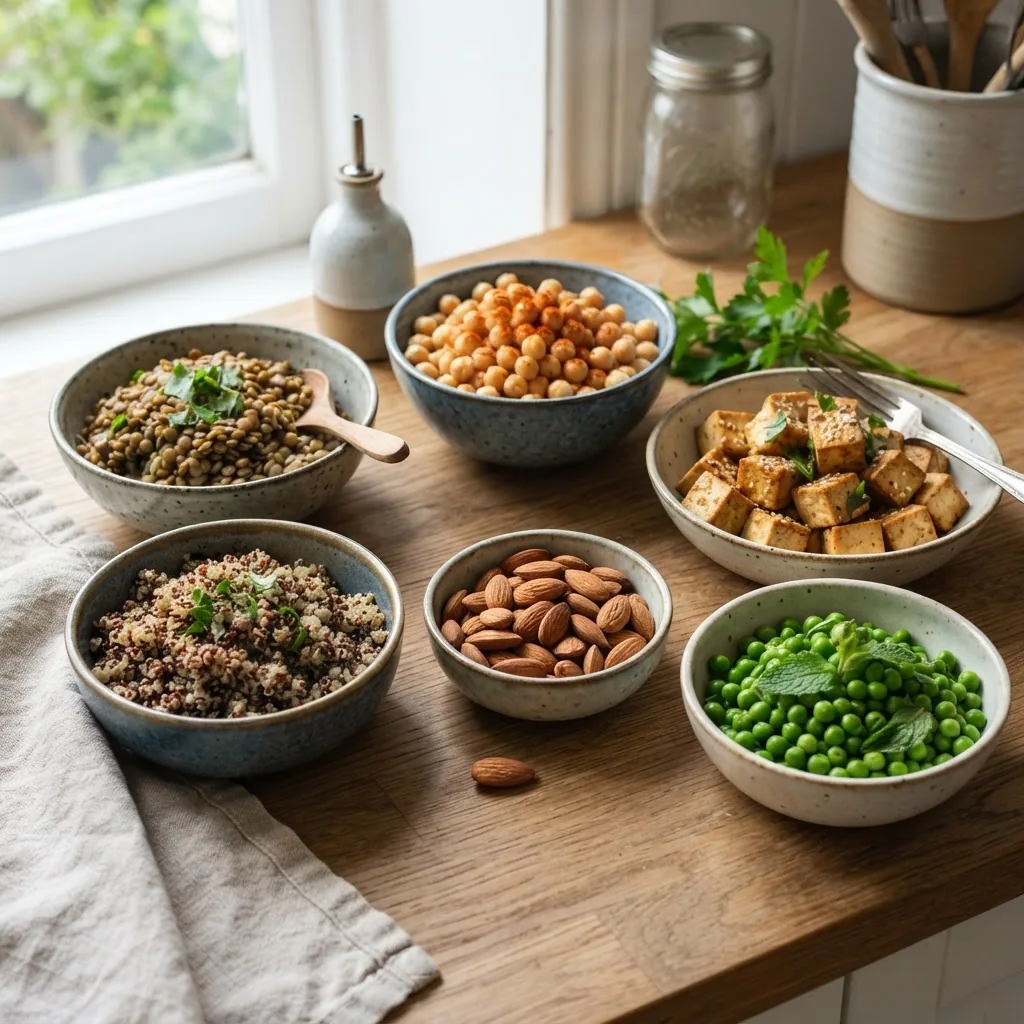
- Firm tofu (100 g) — ~8–12 g protein, ~70–120 kcal depending on water content; very versatile, can be baked, stir-fried, or blended into smoothies.
- Tempeh (100 g) — ~19 g protein, ~192 kcal; fermented soy product with higher protein density and added probiotics.
- Edamame (100 g) — ~11 g protein, ~121 kcal; immature soybeans that make high-protein snacks and salad toppings.
- Lentils (cooked, 100 g) — ~9 g protein, ~116 kcal; fiber-rich, very filling, and cheap—ideal for stews and salads.
- Chickpeas (cooked, 100 g) — ~8–9 g protein, ~164 kcal; make hummus, salads, roasted snacks.
- Quinoa (cooked, 100 g) — ~4.4 g protein, ~120 kcal; a pseudo-grain with all essential amino acids—good for combining with legumes.
- Green peas (100 g) — ~5 g protein, ~81 kcal; among the highest-protein vegetables; add to bowls and soups.
- Almonds (28 g / 1 oz) — ~6 g protein, ~164 kcal; calorie-dense so portion control is essential for weight loss.
- Hemp seeds (28 g) — ~9.5 g protein, ~166 kcal; excellent for smoothies and salads; provide complete protein profile.
- Chia seeds (28 g) — ~4.7 g protein, ~138 kcal; gel-forming fiber increases satiety but is calorie-concentrated.
- Seitan (100 g) — ~25 g protein, ~370 kcal (varies); wheat-based concentrated protein—excellent for high-protein vegan meals but higher in calories per serving.
- Peanut butter (2 tbsp) — ~8 g protein, ~188 kcal; useful for flavor and quick calories—use sparingly for weight loss.
Table: plant-based comparison (protein per common serving and calorie guidance).
| Plant Food | Protein (g) | Calories | Notes |
|---|---|---|---|
| Tempeh (100 g) | 19 | ~192 | High protein density; fermented soy |
| Lentils (100 g cooked) | 9 | ~116 | Fiber-rich, filling |
| Quinoa (100 g cooked) | 4.4 | ~120 | Complete amino acid profile |
| Edamame (100 g) | 11 | ~121 | Snackable, high-protein vegetable |
Combining plant proteins: mix grains (rice, quinoa) with legumes (beans, lentils) or use hemp/chia seeds to improve amino acid completeness across the day. For detailed vegan meal plans, see Plant Based High Protein and the Vegan Protein Choice resource.
Real-world example (case study): a 35-year-old woman switched two dinners per week from beef to tempeh and added edamame snacks; over 12 weeks in a workplace wellness pilot she lost 3.4 kg while maintaining lean mass, tracked with a dietitian-led plan using USDA nutrient values (source type: program case study using government food database).
Transition: plant choices are powerful, but selecting foods with the best protein-to-calorie ratio is the fastest way to make progress—this leads to the next section with low-calorie, protein-dense options and practical use suggestions.
What are the highest protein low calorie foods and how should you use them?
Answer: High protein low calorie foods include skinless chicken, white fish, nonfat Greek yogurt, egg whites, lentils, edamame and green peas; use them in structured meals (protein-first plate, snacks between meals, protein-based breakfasts) to improve satiety and control daily calories.
Term: Protein-to-calorie ratio — grams of protein per calorie, a simple efficiency metric to compare foods for weight loss.
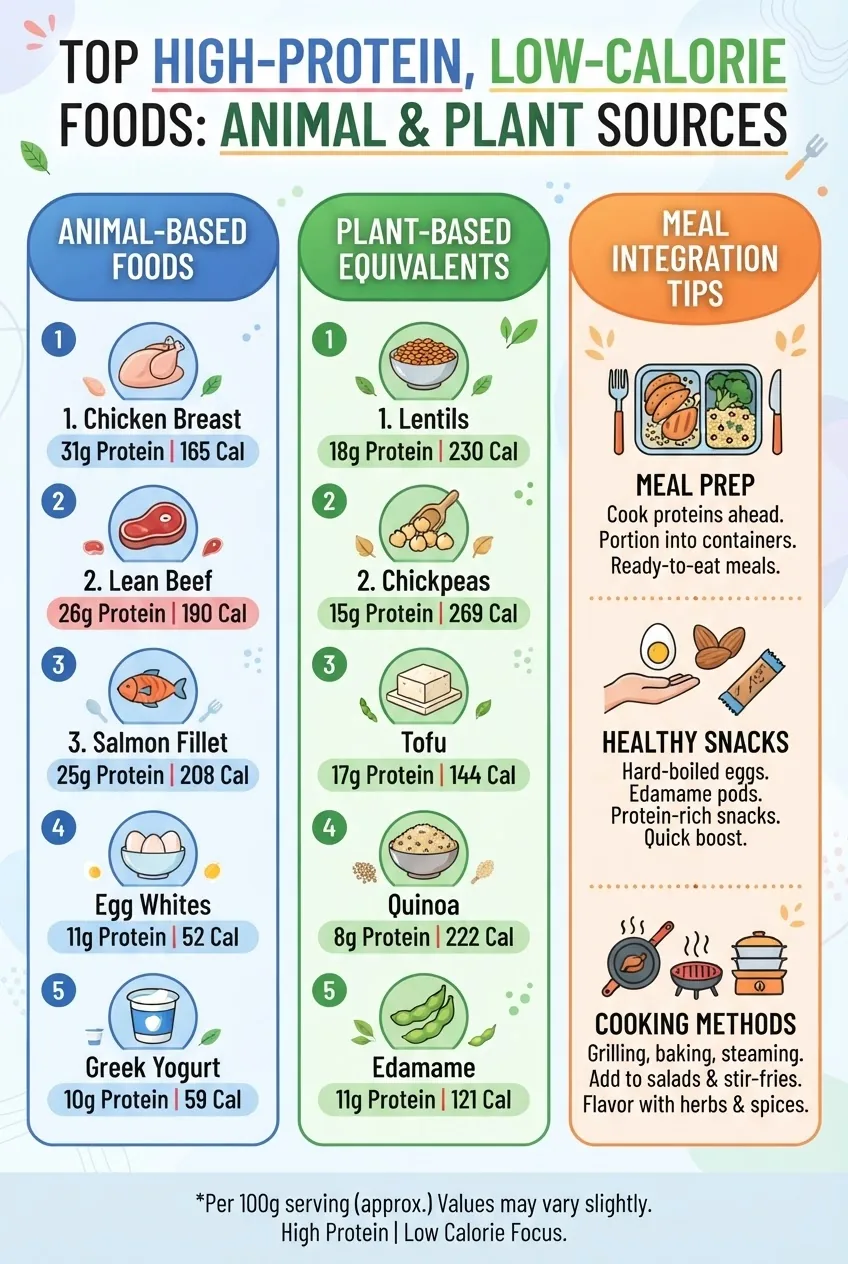
How to use high protein low calorie foods: focus on three meal patterns proven to help control appetite and calories.
- Protein-first meals: Build each main meal around a 20–30 g protein portion (e.g., 100–150 g chicken breast, 170 g Greek yogurt, or 200 g tempeh) and add volume with non-starchy vegetables.
- Protein snacks: Choose 10–20 g protein snacks between meals to prevent overeating later (e.g., 150 g cottage cheese, a small can of tuna, or 100 g edamame).
- Protein at breakfast: Swap carb-only breakfasts for protein-rich options (egg-white omelette, Greek yogurt parfait, or a tofu scramble) to lower mid-day hunger.
Example meal ideas with how-to steps (practical):
- Grilled chicken bowl (serves 1): Grill 150 g skinless chicken breast (season with paprika, lemon, garlic). Serve over 1 cup steamed broccoli and ½ cup cooked quinoa. Steps: 1) Marinate 10–20 minutes, 2) Grill 6–7 minutes per side, 3) Plate with a wedge of lemon. (~35 g protein)
- Greek yogurt parfait (breakfast): Layer 170 g nonfat Greek yogurt, ¼ cup raspberries, 1 tbsp hemp seeds. Steps: 1) Spoon yogurt, 2) Add berries, 3) Top seeds. (~20 g protein)
- Lentil and veggie stew (meal prep): Simmer 1.5 cups cooked lentils with tomatoes, carrots and spinach; season with cumin and black pepper. Make 4 portions for weeklong lunches. (~18 g protein per portion)
- Tuna-stuffed peppers (snack/lunch): Mix one 120 g can tuna (drained) with Greek yogurt and mustard; stuff into halved bell peppers. (~24 g protein)
For macro context—calories in fat vs. protein—see the sibling guide on calories in fat and protein which explains how to balance macros when designing high-protein, low-calorie meals.
Portion control and density: prioritize foods that deliver ≥20 g protein for ≤250 calories per meal when possible. Use measuring tools or a food scale and reference the USDA FoodData Central when calculating protein-to-calorie ratios in recipes (source type: government food database).
Transition: knowing which foods to choose and how to use them sets you up to add more protein consistently—next we list step-by-step strategies to increase protein intake sustainably.
How do you add more protein to your diet for weight loss?
Answer: Add protein by planning protein-first meals, replacing low-protein items with high-protein swaps, using protein snacks, choosing higher-protein breakfasts, and monitoring portions—aim for a sustainable daily protein target tailored to body weight and activity.
Step-by-step practical tips:
- Set a target: For weight loss, many experts recommend 1.2–1.6 g/kg body weight per day (active or resistance-trained individuals may need up to 1.8 g/kg). For personal calculations see the sibling resource daily protein intake recommendations and consider consulting a registered dietitian.
- Distribute protein evenly: Aim for 20–35 g protein at each main meal to maximize muscle protein synthesis and satiety.
- Make swaps: Replace low-protein sides with higher-protein alternatives (e.g., swap mashed potatoes for a lentil salad; swap sugary cereal for Greek yogurt with berries).
- Use protein-rich ingredients: Add cottage cheese to smoothies, toss hemp seeds into oatmeal, or add edamame to salads.
- Smart snacking: Pack single-serving low-fat cheese, hard-boiled eggs (or egg whites), or roasted chickpeas.
- Meal prep and batch cooking: Roast multiple chicken breasts or tempeh slabs to portion into ready-to-eat containers for the week—this reduces decision fatigue and prevents defaulting to low-protein convenience foods. Practical sample weekly menu ideas can be found in sibling articles like High Protein Meal Plan.
- Track and adjust: Use food logs or apps and re-evaluate every 2–4 weeks. If weight loss stalls, check protein distribution and portion sizes.
Common mistakes and troubleshooting:
- Over-reliance on calorie-dense proteins: Nuts and seeds are nutritious but calorie-dense—measure portions.
- Neglecting vegetables and fiber: High-protein meals should still include fiber-rich vegetables for gut health and satiety.
- Ignoring sodium and processing: Canned or processed high-protein items can be high in sodium—choose low-sodium varieties and rinse where possible.
- Expecting instant weight loss: Protein helps adherence and body composition but weight change depends on overall calorie balance and activity.
Evidence & expert resources: For government intake standards and clinical guidance see the USDA Dietary Guidelines and the Academy of Nutrition and Dietetics professional resources (source type: government health agency; professional organization).
Transition: with strategies in hand, here are concise answers to frequently asked questions readers search for when choosing protein rich foods for weight loss.
What are common questions about protein and weight loss?
Answer: Below are concise, evidence-aligned answers to common queries—use these quick facts to choose efficient protein sources and troubleshoot hunger, portioning and vegetarian planning.
(Short Q&A section follows in the FAQ block below with snippet-optimised answers.)
What final recommendations should you follow for protein rich foods for weight loss?
Answer: Prioritize lean, nutrient-dense proteins with high protein-to-calorie ratios, distribute protein across meals, include plant-based options and monitor portions; combine these habits with a modest calorie deficit and resistance exercise for sustainable fat loss and muscle retention.
Key actionable takeaways:
- Choose lean animal proteins (chicken breast, white fish, tuna) or concentrated plant options (tempeh, lentils, edamame) for the best protein-per-calorie value.
- Aim for 20–35 g protein per meal and include a 10–20 g protein snack when needed to prevent overeating later.
- Combine plant proteins across the day to ensure complete amino acid intake when avoiding animal products.
- Use meal prep, portion control, and low-calorie cooking methods to keep calories aligned with weight-loss goals.
- Consult registered dietitians for personalized plans; evidence-based guidelines are available from organizations like the Academy of Nutrition and Dietetics and government guidelines at Dietary Guidelines (source type: professional organization; government health agency).
Real-world example: a clinic program used USDA FoodData Central values to create 1,400–1,600 kcal menus with 1.4 g/kg protein; participants lost 5–7% body weight on average over 16 weeks while maintaining strength (source type: clinic case series using government food database).
Final CTA: start by selecting two high-protein swaps this week (e.g., swap breakfast cereal for Greek yogurt; swap one red-meat dinner for tempeh or grilled fish) and track how hunger and energy change—if you want tailored guidance, consult a registered dietitian.