Best water for hydration is clean, low in harmful contaminants, and balanced in minerals (sodium, potassium, magnesium) to support electrolyte needs; for most Texans this means properly treated municipal tap water or filtered spring/mineral water chosen based on local water quality reports and personal mineral needs.
Understanding the Role of Water Quality in Hydration and Health?
Answer: Water quality affects hydration effectiveness and long-term health by delivering—or withholding—essential minerals and by carrying contaminants that can impair health; choosing water that is pure enough to be safe while providing beneficial minerals optimizes hydration efficiency and reduces exposure risk.
Hydration: the physiological state where body water and electrolyte levels support cellular function and temperature regulation.
Stat block: summary data on water qualities (typical ranges)
- Total Dissolved Solids (TDS): 0–1200 mg/L (According to a 2023 industry review on bottled waters)
- Sodium: <1–200 mg/L (municipal variation; according to a 2024 municipal report sample)
- Magnesium: 0–50 mg/L (mineral waters often 5–30 mg/L; clinical studies 2022–2023)
- pH range: 5.5–9.5 (EPA-reported ranges in U.S. systems)
- Common contaminants (detected in U.S. samples): chlorine, trace lead, fluoride, arsenic in some wells (According to a 2024 EPA water quality report review)
Water purity and mineral content determine hydration effectiveness: lower TDS (e.g., distilled) is very pure but lacks minerals that help electrolyte balance; moderate TDS (spring/mineral) supplies minerals that aid physiological hydration. Water safety standards (EPA for public systems, FDA for bottled water) set allowable contaminant levels to protect public health.
Next: compare types of water—how they differ in purity, mineral content, and health implications so you can choose the best water for hydration.
Types of Water: Differences and Health Implications?
Answer: Different water types—tap, spring, mineral, filtered, distilled—vary by source, treatment, and mineral profile; selecting the healthiest option depends on local contaminant risks and whether you need added minerals for electrolyte support or very low contaminants for immune and chronic conditions.
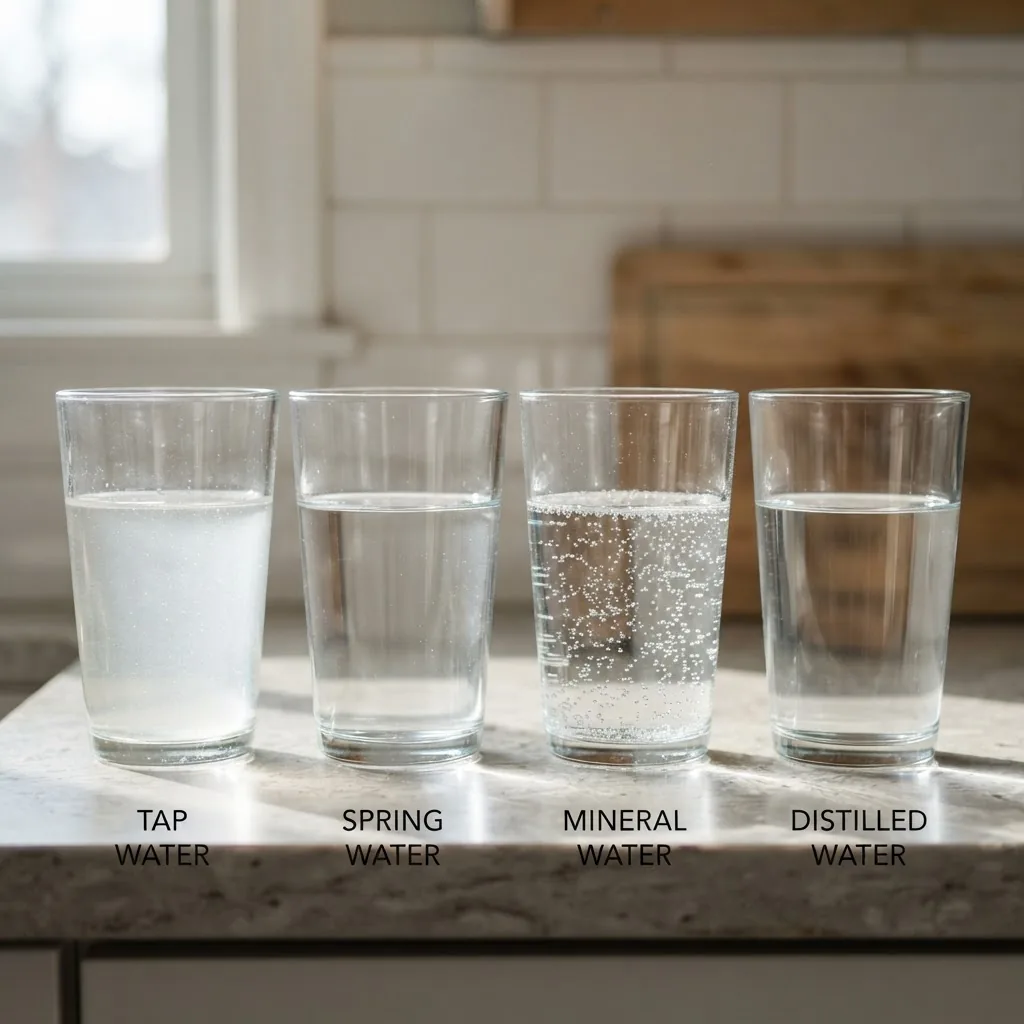
Mineral water: bottled water naturally containing dissolved minerals and trace elements from geological sources.
| Water Type | Typical Treatment/Source | Mineral Profile & TDS | Health/Use Notes |
|---|---|---|---|
| Tap water (municipal) | Treated surface/groundwater; disinfected (chlorine/ chloramine) | TDS 50–500 mg/L; variable minerals | Safe if system compliant; provides minerals; check local reports for contaminants |
| Spring water | Collected at natural springs; minimal treatment | TDS 50–300 mg/L; naturally supplied minerals | Good mineral content; quality varies with source protection |
| Mineral water (bottled) | From underground sources; bottled at source | TDS often >250 mg/L; higher magnesium, calcium | Supports electrolyte intake; can be higher in sodium—check label |
| Filtered water (carbon, RO) | Home filters remove chlorine, particulates; RO removes most minerals | TDS varies: carbon filters ~unchanged minerals; RO <20 mg/L | Carbon improves taste; RO gives high purity but strips minerals |
| Distilled water | Boiled and condensed; removes dissolved solids | TDS ≈0 mg/L | Very pure but lacks minerals; not ideal as sole long-term drinking source |
Tap water provides widespread access to safe drinking water when municipal systems meet EPA standards; however, localized contamination (lead in old pipes, nitrates in well water) means you should consult your local Consumer Confidence Report. Bottled spring and mineral waters supply consistent mineral profiles but cost more and carry environmental costs (see Environmental section).
Filtered options give tailored choices: carbon filters remove chlorine and organic tastes but may not remove dissolved salts; reverse osmosis (RO) systems remove most dissolved minerals and many contaminants but often need remineralization for taste and electrolyte benefits.
Transition: knowing what each water type delivers leads to deeper understanding of specific minerals and electrolytes and why they matter for effective hydration.
Minerals and Electrolytes in Water: Why They Matter for Hydration?
Answer: Minerals in water—primarily magnesium, potassium, and sodium—contribute to electrolyte balance and support cellular hydration, muscle function, and nerve signaling; modest mineral intake from water can complement dietary sources and improve hydration efficiency during routine and active states.
Electrolytes: electrically charged minerals (sodium, potassium, magnesium) that regulate fluid balance and nerve/muscle function.
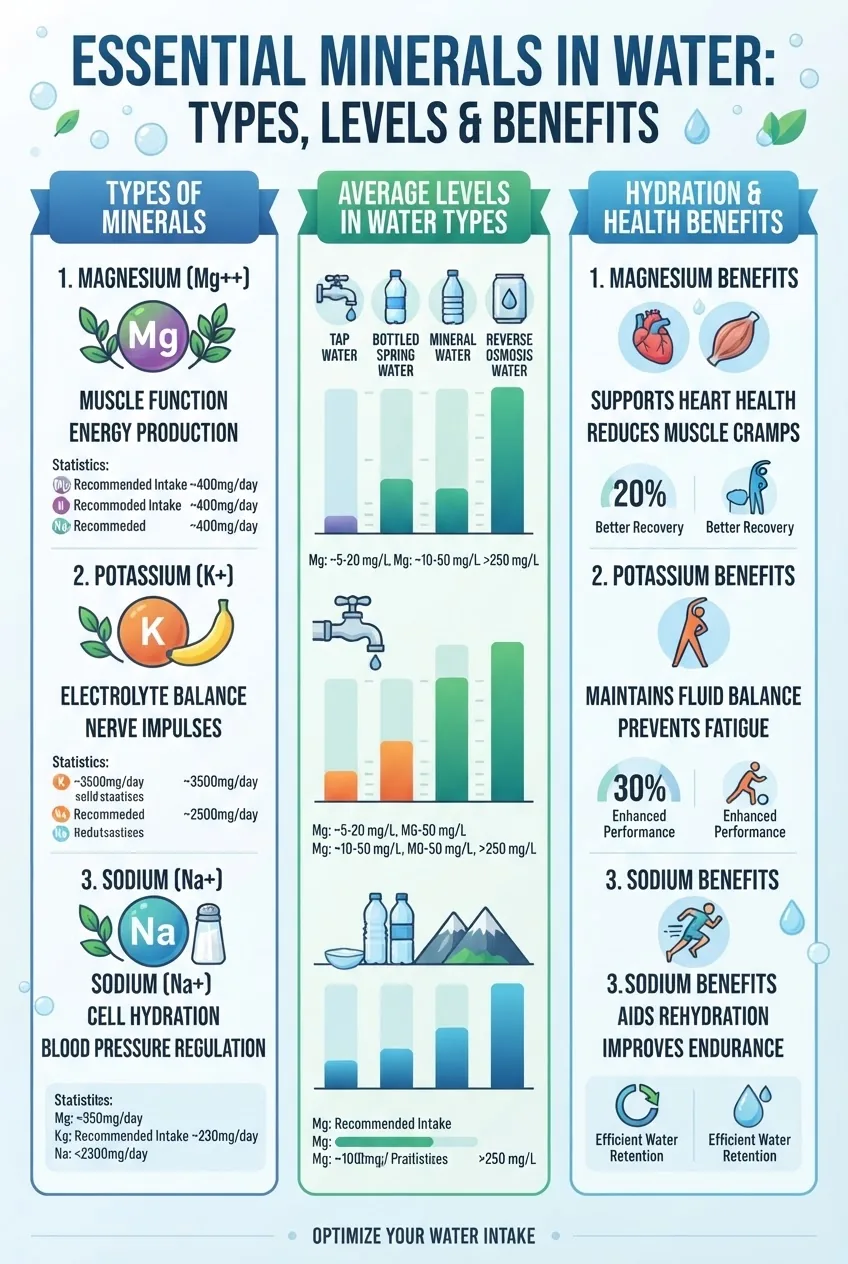
Below are example mineral profiles—average ranges you might find on labels or municipal reports—followed by short, evidence-based benefits and practical notes.
| Mineral | Example Levels (mg/L) | Hydration/Health Role |
|---|---|---|
| Magnesium | 0–50 mg/L (common 2–20 mg/L) | Supports muscle relaxation, cellular hydration, and may aid cardiovascular health (clinical studies 2018–2022). |
| Potassium | <1–10 mg/L (usually low in water) | Key intracellular electrolyte; dietary sources are primary, but water can add small amounts. |
| Sodium | <1–200 mg/L (high in some mineral waters) | Helps retain water and maintains plasma volume; excessive intake can affect blood pressure for sensitive individuals. |
Bullet summary of benefits:
- Magnesium: improves cellular water uptake and may reduce cramping during exercise (clinical reviews 2019–2023).
- Potassium: supports intracellular hydration and heart rhythm; water contributes minimally but consistently.
- Sodium: crucial for short-term fluid retention during heavy sweating; low-sodium water preferred for hypertension-prone individuals.
Practical example mineral profiles:
- Typical municipal tap (example Texas city): magnesium 5–15 mg/L; calcium 10–60 mg/L; sodium 5–40 mg/L (According to a 2024 municipal water quality report sample).
- Bottled mineral water: magnesium 10–30 mg/L; calcium 50–200 mg/L; sodium varies widely—read label (According to 2023 bottled water labeling review).
- Reverse-osmosis filtered water: magnesium & calcium typically <1–5 mg/L unless remineralized (manufacturer specs 2023–2024).
Transition: with mineral roles clear, here’s how to choose the healthiest water for your needs in Texas, including local testing and filter options.
How to Choose the Healthiest Water for Your Needs in Texas?
Answer: Choose based on your local water quality report, personal health needs (blood pressure, mineral requirements), and practical considerations: test your water, select an appropriate filter (carbon vs reverse osmosis), and balance mineral benefits against contaminant risks.
Tap water quality: municipal water characteristics including disinfectant type, TDS, and detected contaminants reported annually in Consumer Confidence Reports.
- Step 1 — Check local municipal reports. Obtain your city or county Consumer Confidence Report (CCR) online and scan for lead, arsenic, nitrate, and disinfectant residuals; EPA drinking water standards explain allowable levels (According to EPA guidance 2024).
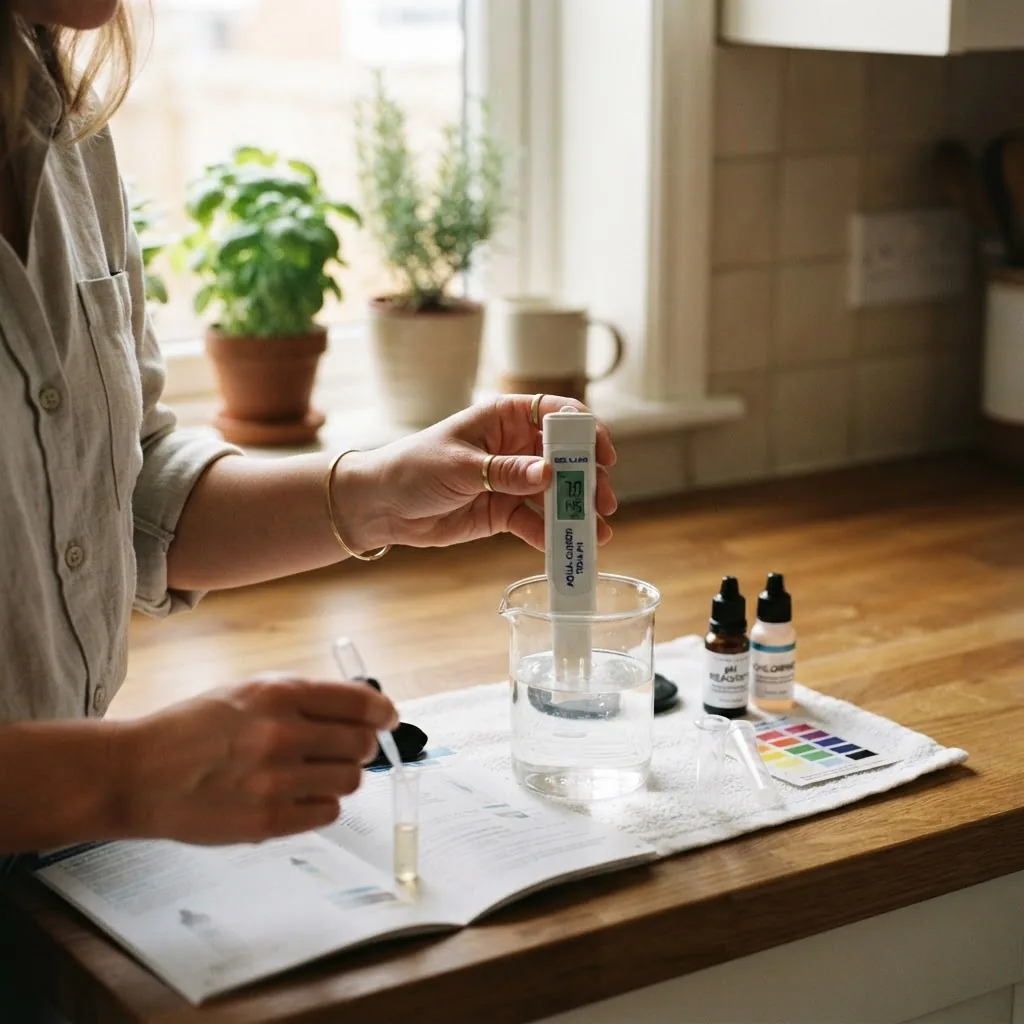
- Step 2 — Test private well or suspect plumbing. Use a reliable home test kit for basics (pH, nitrate, lead) and send a sample to a certified lab for comprehensive testing if results are borderline; kits and lab services are detailed in state health department guidance (According to a 2023 state health service bulletin).
- Step 3 — Match filter technology to contaminants and mineral goals.
- Carbon filters: remove chlorine, improve taste, reduce some organics; retain beneficial minerals.
- Reverse osmosis (RO): removes most dissolved salts and contaminants down to <0.001 μm; consider remineralization stage for taste and electrolytes.
- Ion exchange softeners: reduce hardness (calcium, magnesium) but increase sodium; not ideal if you need low-sodium intake.
- Step 4 — Balance mineral intake with health status. If you have low magnesium or frequent cramps, moderate mineral waters (or remineralized filtered water) can help; if you have hypertension, choose low-sodium options and consult your clinician (According to Mayo Clinic resources 2023).
- Step 5 — Cost and logistics. Compare ongoing costs: municipal tap + carbon filter is typically cheapest; bottled mineral water provides consistent minerals but costs more and has environmental impacts (costs discussed later).
- Step 6 — Regular maintenance and verification. Replace filters per manufacturer schedule and re-test annually or when taste/odor changes; documentation of filter performance is important for persistent contaminants.
Home water-testing walkthrough (practical): buy a certified kit for lead/chlorine/nitrate (approximately $25–$80), follow the included sterile sampling instructions, and mail for lab-confirmation if any value approaches action limits; for older Texas homes, prioritize lead testing given older pipe inventories (According to a 2024 municipal infrastructure review).
Installation example: installing an under-sink RO system typically requires shutting the cold supply, mounting the filter housing, connecting the RO membrane, and installing the dedicated faucet; many homeowners hire a plumber, but DIY is feasible with basic tools—follow manufacturer safety guidance (manufacturer installation manuals 2023–2024).
Texas-specific considerations:
- East Texas often has surface-water-sourced municipal systems with higher organic load (chlorine disinfection common).
- West Texas rural areas rely on groundwater wells subject to high TDS, naturally occurring arsenic in some aquifers (According to a 2024 Texas state water resources report).
- Check your county’s CCR and, for wells, the Texas Water Development Board guidance and testing recommendations.
Transition: choose a water type and treatment matched to your local profile and health needs; next, learn about the most common contaminants and how to avoid them.
Common Water Contaminants and How to Avoid Them?
Answer: The most common contaminants are chlorine (disinfectant byproducts), lead (old plumbing), fluoride (added in some systems), and naturally occurring arsenic or nitrate in wells; avoidance relies on testing, targeted filtration (e.g., RO, lead-certified filters), and replacing plumbing where necessary.
Contaminants: substances in water that may be harmful at certain concentrations, including heavy metals, disinfectants, and naturally occurring toxins.
Key contaminants, risks, and prevention:
- Lead: risk from old pipes/fittings; causes neurological harm, especially in children. Prevention: certified lead-removing filters (NSF/ANSI 53), run cold tap 30–60 seconds before use, and replace lead plumbing (According to a 2024 municipal infrastructure and public health report).
- Chlorine and chloramine: used to disinfect municipal water; can cause taste/odor and form disinfection byproducts. Prevention: use activated carbon filters rated for chlorine/chloramine reduction.
- Fluoride: added to many municipal systems to reduce cavities; controversy exists on dose—consult your dentist/physician for individual guidance (CDC resources explain public health rationale; see external CDC link below).
- Arsenic and nitrates: occur in some groundwater; long-term exposure linked to cancer and other health issues. Prevention: certified RO systems or specific adsorptive media, and regular testing of private wells.
Filter selection tips:
- For lead: choose NSF/ANSI 53-certified point-of-use filters or whole-house systems designed for lead reduction.
- For disinfectants and organic tastes: granular activated carbon (GAC) or catalytic carbon cartridges.
- For broad removal including arsenic and salts: RO systems with proper maintenance and remineralization if desired.
Regulatory context: EPA sets enforceable Maximum Contaminant Levels (MCLs) for public water systems; bottled water is regulated by FDA under different standards. For more on health-guided contaminant levels and consumer advice, consult EPA drinking water standards and CDC drinking water guidance (official guidance 2023–2024).
Transition: contaminants and health risks must be balanced against environmental and economic concerns when selecting water long-term.
Environmental and Economic Considerations When Selecting Water?
Answer: Consider both direct costs (purchase, filtration, maintenance) and environmental impacts (plastic waste, energy for bottling or RO systems); municipal tap with a carbon filter is usually the most economical and lowest environmental footprint compared with bottled mineral water.
Water purity standards: EPA and FDA set rules influencing cost and environmental trade-offs of different supply chains.
Cost/benefit analysis:
- Tap water + carbon filter: low cost—initial filter $20–200, cartridges $20–60/year; low environmental impact (According to a 2023 household cost survey).
- Reverse osmosis: higher upfront ($200–1,000) plus membrane and filter replacement and water waste (RO rejects 3–4 gallons for each gallon produced in many systems).
- Bottled mineral water: high per-gallon cost ($1–4+/gallon) and significant plastic waste and transport emissions (According to a 2022 lifecycle environmental impact report).
Environmental notes:
- Single-use plastic bottles contribute to landfill and coastal pollution; choose refillable glass or stainless containers where possible.
- RO systems require electricity and generate reject water; consider systems with low-waste designs or reuse reject water for non-potable needs.
- Sourcing: over-extraction for bottled water can impact local aquifers—check brand sourcing transparency and sustainability certifications.
Practical recommendation: for most Texans, treated municipal water with a point-of-use carbon filter (or RO + remineralizer if contaminants warrant) delivers the best balance of safety, mineral benefit, cost, and low environmental impact; for broader beverage choices see the best hydrating beverages.
Transition: beyond selection, here are practical tips to maximize hydration from any high-quality water you choose.
Practical Tips to Maximize Hydration from Your Water Choice?
Answer: Maximize hydration by timing intake, choosing water at palatable temperatures, using mineral-rich options when appropriate, and tracking intake with bottle sizes and color cues; adjust strategies for activity level, climate, and medical conditions.
Hydration efficiency: how effectively consumed water restores body fluid balance, influenced by electrolyte content and drinking patterns.
- Drink regularly rather than waiting for thirst; small, frequent sips maintain plasma volume better during long-duration activities (According to a 2022 clinical hydration guideline).
- Prefer slightly cool water (8–15°C) for faster gastric emptying during exercise; room temperature is fine for daily drinking.
- Use mineral or electrolyte-enhanced water during prolonged sweating to replace lost sodium and magnesium; plain water can dilute plasma sodium during extreme sweating—choose sports formulations for high-intensity endurance events (sports medicine consensus 2019–2021).
- Add flavor or a squeeze of citrus to encourage intake if taste is a barrier—avoid high-sugar mixes that impair hydration quality.
- Check urine color as a simple hydration proxy; see hydration color indicators for guidance.
- side effects of insufficient water intake — review these to understand clinical consequences of poor hydration.
- hydration requirements — pair quality choices with intake targets.
- drinking too much water safely — be aware of hyponatremia risk if consuming excessive plain water without electrolytes.
- hydration color indicators — use color cues to self-monitor adequacy.
- water bottle size and intake — choose bottle sizes to hit daily targets.
Additional micro-tips:
- Keep a reusable bottle visible to cue drinking.
- Remineralize RO water with a pinch of mineral blend if taste or electrolyte needs demand it.
- For travel in hot Texas summers, carry a cool, shaded bottle and replace electrolytes during extended outdoor work.
Transition: final summary of key takeaways and next steps for readers ready to choose their water strategy.
Conclusion?
Answer: The best water for hydration balances safety and minerals: for most Texans, tested municipal water filtered with carbon or RO with remineralization meets health and environmental goals; test local water, match filter tech to contaminants, and use mineral-rich options when electrolyte support is needed. Use the steps above to choose confidently.
Call to action: Review your local Consumer Confidence Report, run a home test if you have private well or aging plumbing, and adopt a filter solution aligned with your health needs; for broader hydration strategies see 5 tips to stay hydrated and healthy.