What you’ll achieve: By the end of this hands-on guide you’ll have 15 tested, point-conscious dinner recipes, a weekly WW dinner plan, and a repeatable meal-prep routine you can complete in 90 minutes for the week. Time needed: 30–90 minutes per recipe; total prep plan: ~2–3 hours for a four-night week. Skill level: beginner to confident home cook.
Before you start
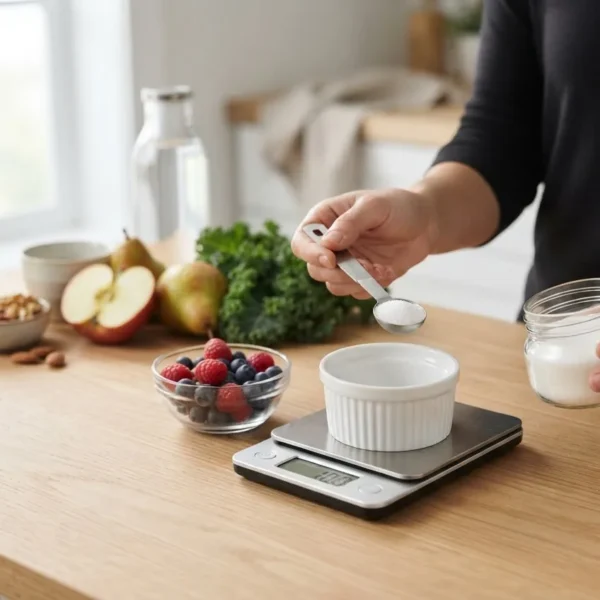
- Culinary tools: 12″ nonstick skillet, sheet pan, medium saucepan, vegetable steamer or colander, measuring cups and spoons, digital kitchen scale (grams/oz), oven thermometer.
- Meal-prep containers: 6–8 BPA-free 24–36 oz containers with tight lids, 4 small dressing jars.
- Pantry basics: olive oil spray, low-sodium chicken or vegetable broth, canned tomatoes (14 oz), dried herbs (oregano, smoked paprika), low-sodium soy sauce, dijon mustard.
- Weight tracking tools: the WW app (or your paper log), a points cheat sheet, and a notebook for recipe tweaks.
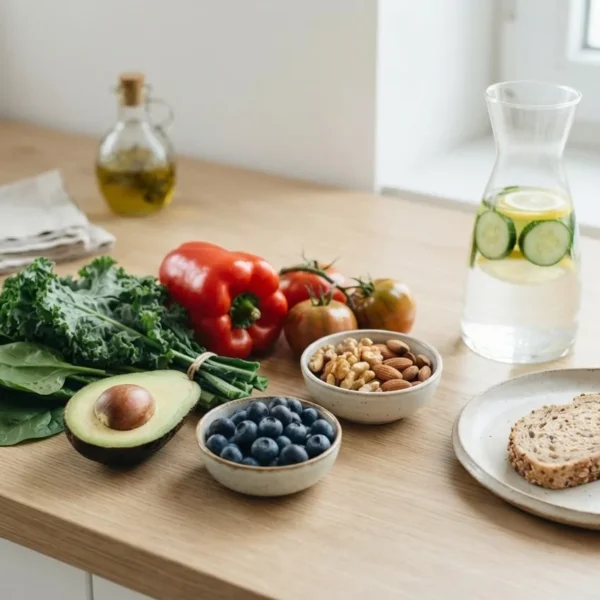
- Groceries: buy lean proteins (chicken breast, white fish), legumes, quinoa or brown rice, mixed salad greens, broccoli, bell peppers, onions.
Quick note before we begin: this is a hands-on guide. Expect exact timings, temperatures, portion cues and one full, worked recipe with a WW SmartPoints-style calculation to follow.
Introduction to WW Dinner Ideas
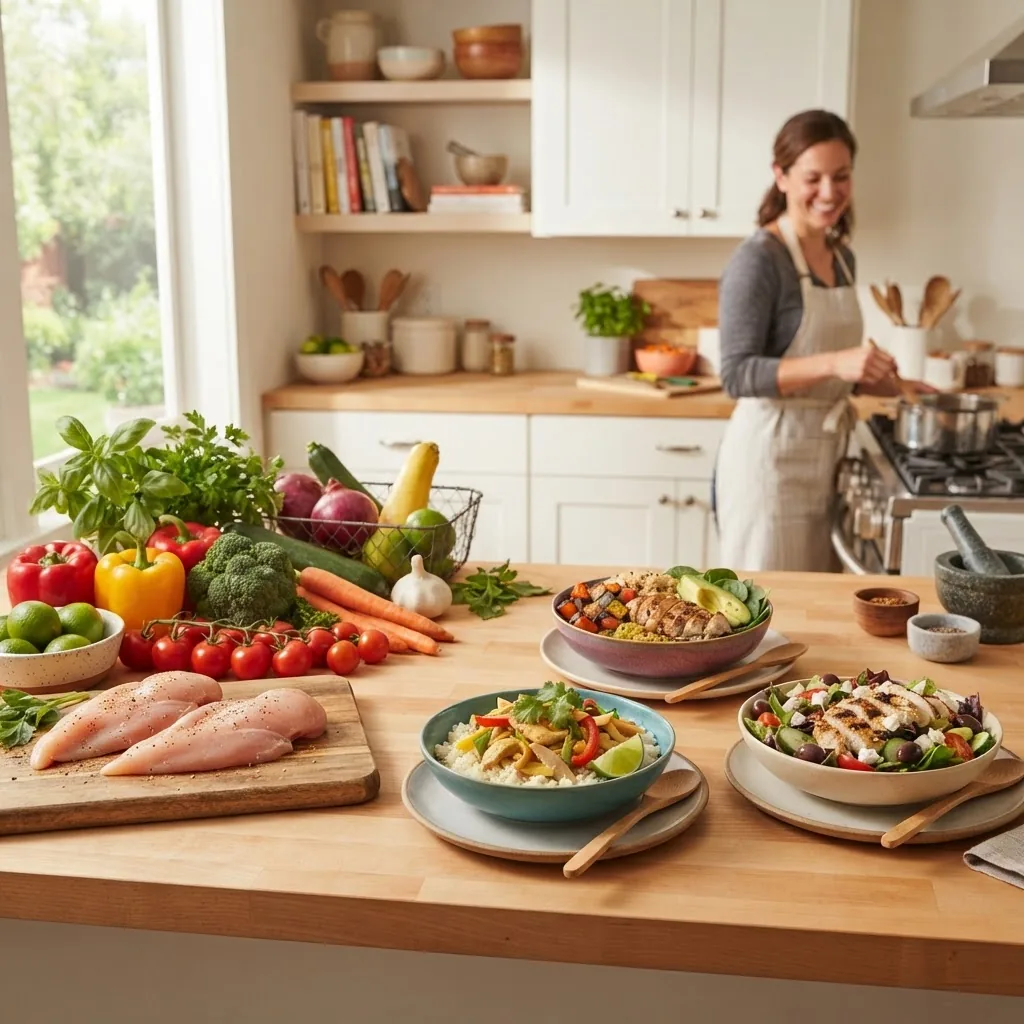
This guide focuses on practical WW dinner ideas that fit Weight Watchers points and real life in Texas kitchens — family-size grilling, quick weeknight bakes, and bold-flavored skillet meals. You’ll find flexibility for meat-eaters and plant-based cooks, guidance on portion control, and swaps to keep flavor high and points low.
Why dinners matter on Weight Watchers: your evening meal is where many points get spent, and it also influences satiety, sleep and next-day decisions. Building dinners around lean protein, plenty of low-point vegetables, and smart, low-point sauces helps you stay on track while enjoying familiar Texas flavors — think grilled chicken with chili-lime rub, cumin-scented black bean bowls, and baked white fish with cilantro-lime slaw.
This article is part of a broader recipe collection. Yummiest Healthy Recipes Guide for Nutritious and Tasty Meals gathers full-week menus and seasonal swaps to complement these dinner ideas.
Transition: Now that you know what this guide gives you, let’s walk through how the Weight Watchers points system works and how to plan a dinner that fits your weekly budget of points.
Understanding the Weight Watchers Points System for Dinner
Before you plan dinners, you need a clear view of the WW points logic. Weight Watchers (WW) uses a version of food scoring—SmartPoints on many plans—that weighs calories, protein, sugar and saturated fat. Zero-point foods (most vegetables, some lean proteins depending on your plan) can anchor a filling, low-point dinner.
How SmartPoints works in practice: the WW algorithm assigns higher points to foods with more calories, saturated fat and sugar and rewards protein with lower points relative to calories. If your nightly dinner target is 8–12 points (typical for many members), a balanced plate might have: 4–6 points protein, 0–2 points vegetable sides, 1–4 points for starchy or flavorful extras like a small serving of quinoa or a light dressing.
Example breakdowns (illustrative):
| Food | Typical SmartPoints* | Dinner role |
|---|---|---|
| 3 oz skinless chicken breast (cooked) | 0–2 | Lean protein anchor |
| 1 cup steamed broccoli | 0 | Zero-point vegetable |
| 1/2 cup cooked quinoa | 3–4 | Fiber-rich side |
*Points vary by plan and update cycle; use the WW app or your current program guide for exact numbers.
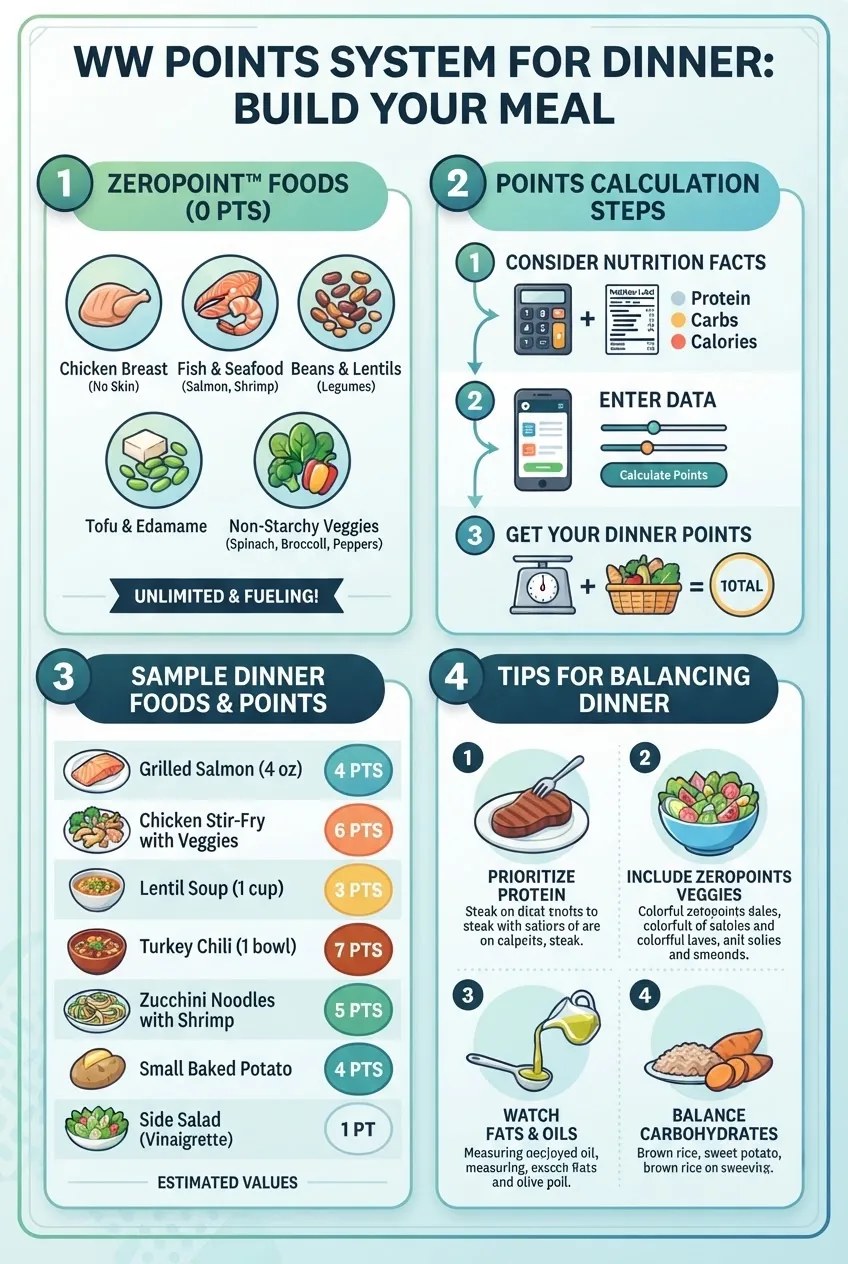
How to budget points each night (step-by-step):
- Start with zero-point vegetables: fill half your plate with these — lettuce, spinach, cauliflower, broccoli, zucchini.
- Add lean protein: choose proteins that are zero or low points per serving (3–4 oz cooked chicken, fish, shellfish).
- Allocate for grains/starchy veg: assign 1–4 points to 1/2 cup serving of quinoa, brown rice or sweet potato.
- Account for sauces & dressings: add points for oils, dressings, creamy sauces; measure portions (1 tbsp olive oil ≈ 4 points on many plans).
- Log and adjust: track meals in the WW app immediately so you can adjust sides or dessert if you overspend.
Practical example: a dinner of 4 oz baked cod (0–2 points), 1 cup roasted Brussels sprouts (0), 1/2 cup cooked farro (3 points), and 1 tbsp lemon-garlic olive oil drizzle (2 points) totals ~5–7 points depending on your plan — leaving room for a low-point dessert or extra veg.
Trust note and disclaimer: point values differ by program version and updates. According to a 2023 WW report (program summary), many foods were reclassified as zero-point or shifted slightly in SmartPoints value; always check your WW app. (Source type: company report.)
Transition: With points budgeting clear, pick proteins that give you satiety for the lowest points. The next section lists best protein choices and how they map to dinner planning.
Top Protein Options for WW-Friendly Dinners
Choose proteins that deliver high satiety and low-to-moderate points. Below I list practical choices, cook methods, portion sizes and WW points considerations for a standard adult serving.
- Skinless chicken breast (3–4 oz cooked) — Best methods: grilling, baking at 400°F for 18–22 minutes, or pan-searing with nonstick spray. Typical SmartPoints: 0–2. Use for: fajita bowls, baked lemon-herb chicken, sheet-pan meals.
- White fish (cod, tilapia, pollock) 4 oz — Best: oven-baked at 375°F for 12–15 minutes or broiled 6–8 minutes. SmartPoints: often 0–2. Great for fish tacos (use low-cal tortillas) or cilantro-lime fillets.
- Salmon (3 oz) — Higher fat but protein-dense; grilled or baked 10–12 minutes. SmartPoints: typically 3–6 depending on portion. Use sparingly for omega-3s and satiety.
- Lean ground turkey (90% lean) 3 oz cooked) — Pan-sear and drain; SmartPoints: ~2–4. Ideal for turkey chili, meatballs, or taco bowls.
- Skinless chicken thigh (3 oz) — Richer flavor; grill or roast. SmartPoints: 2–4. Best for slow-braised Tex-Mex dishes.
- Shrimp (4–6 oz cooked) — Quick-cooking, almost always 0–2 points per standard serving; toss in garlic-lime or chili-garlic sauces with measured oil for low-point dinners.
- Eggs (1 large) — Use whole eggs in moderation; 1 large egg is commonly 2 points. Make frittatas, shakshuka or egg-topped salads for simple dinners.
- Low-fat cottage cheese or Greek yogurt (1/2 cup) — 0–2 points depending on brand; use as creamy bases for dressings, dips, or cooling toppings for spicy dishes.
- Legumes (1/2 cup cooked black beans, lentils) — Plant protein and fiber; SmartPoints: ~3–4 for 1/2 cup. Excellent in burrito bowls, soups, and as meat substitutes.
- Tofu (4 oz firm) — Press and pan-sear or bake for 20–30 minutes at 400°F; SmartPoints: 0–3 depending on marinade and added oil. See fast vegetarian dinner recipes for tofu bowls.
- Textured vegetable protein and seitan — Use for hearty stews; check packaging points. For budget-minded plant-protein options see affordable vegetarian meals.
Notes on portioning: weigh cooked proteins (3–4 oz cooked = about the size of a deck of cards). For WW tracking, always log cooked weight; raw-to-cooked conversion varies (chicken loses ~20–25% weight when cooked). Practical tip: cook 16 oz raw chicken breasts; you’ll end up with ~12–13 oz cooked — four 3–4 oz servings.
Transition: Pair those proteins with low-point, high-volume vegetables and the right sides to create satisfying dinner plates that respect your point budget.
Vegetables and Sides That Keep Dinners WW-Friendly
Good dinners center on volume and fiber. Below are vegetables and sides ranked for WW friendliness and practical serving ideas.
- Leafy greens (spinach, romaine, arugula) — Zero points; use raw or lightly wilted to create base salads and bowls.
- Cruciferous veg (broccoli, cauliflower, Brussels sprouts) — Typically zero points; roast at 425°F for 18–22 minutes with spray oil and spices for texture.
- Zucchini and summer squash — Zero points; spiralize or roast as pasta alternatives.
- Bell peppers and onions — Zero points; great for fajita mixes and sheet-pan dinners.
- Tomatoes — Zero points; use in salsas, sauces or salads for flavor without points.
- Asparagus — Zero points when steamed or roasted; 400°F for 10–12 minutes.
- Sweet potato — 1/2 cup baked ≈ 3–4 points; excellent for texture and fiber when portion-controlled.
- Quinoa and farro — 1/2 cup cooked ≈ 3–4 points; choose whole grains for added satiety; measure carefully.
- Cauliflower rice — Zero or very low points; pulse raw cauliflower 8–10 times and sauté 4–6 minutes for a rice swap.
- Legume sides — 1/2 cup cooked lentils/beans ≈ 3–4 points; pair with greens and spices for filling bowls.
WW-friendly sauces and dressings: make vinaigrettes with 1 tbsp oil (count points) plus lots of acid and herbs; use nonfat Greek yogurt as a creamy base (1/4 cup often 0–1 point). Flavor tips: smoked paprika, cumin, chili powder, garlic powder, lime juice and fresh cilantro add big flavor with zero points.
Transition: below are 15 tested WW dinner recipes with tips, variations and point-range estimates that you can make tonight or batch for the week.
15 WW Dinner Ideas with Recipes and Tips
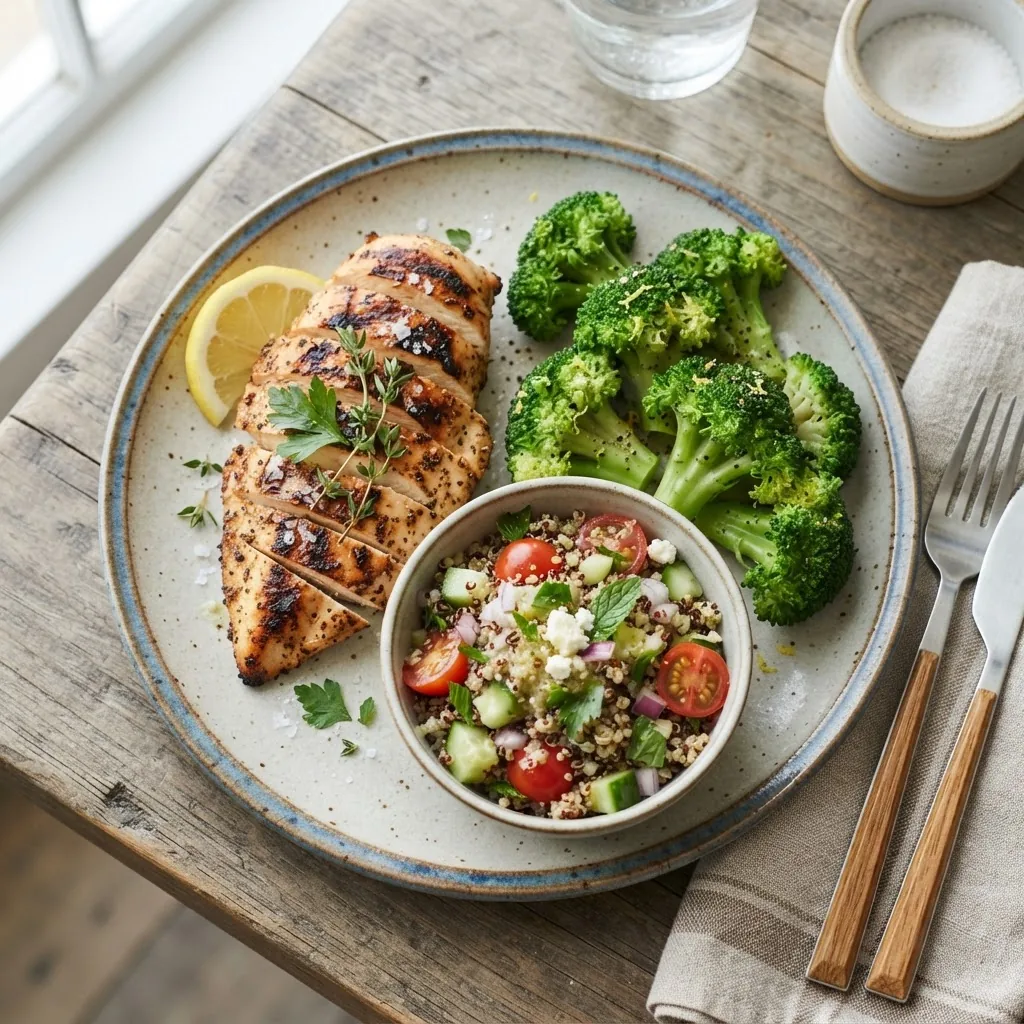
Each recipe below includes ingredient highlights, a short method, serving size, and an estimated points range. Use your WW app to log exact values for your plan. If you want lighter options, consider these 400 calorie meal options, and for higher calorie needs see 500 calorie nutritious dinners or 600 calorie healthy dinners. For more general quick meals, check quick and easy dinner ideas.
-
Grilled Chili-Lime Chicken Bowl — Serves 4
Ingredients: Four 4 oz skinless chicken breasts, 1 tsp chili powder, zest and juice of 2 limes, 4 cups mixed greens, 1 cup cooked quinoa, 1 cup pico de gallo.
Method: Marinate chicken 15–30 minutes, grill 6–8 minutes per side until 165°F. Slice and serve over greens and 1/4 cup quinoa. Points: ~4–6 per serving depending on quinoa/logged oil.
-
Black Bean & Roasted Sweet Potato Tacos (2 small corn tortillas) — Serves 4
Ingredients: 2 cups roasted sweet potato cubes (1/2″ dice), 1 can black beans (rinsed), 8 small corn tortillas, shredded lettuce, salsa.
Method: Roast sweet potato at 425°F for 22–25 minutes; warm beans and tortillas. Build tacos with salsa and lettuce. Points: ~6–8 (beans + sweet potato + tortillas).
-
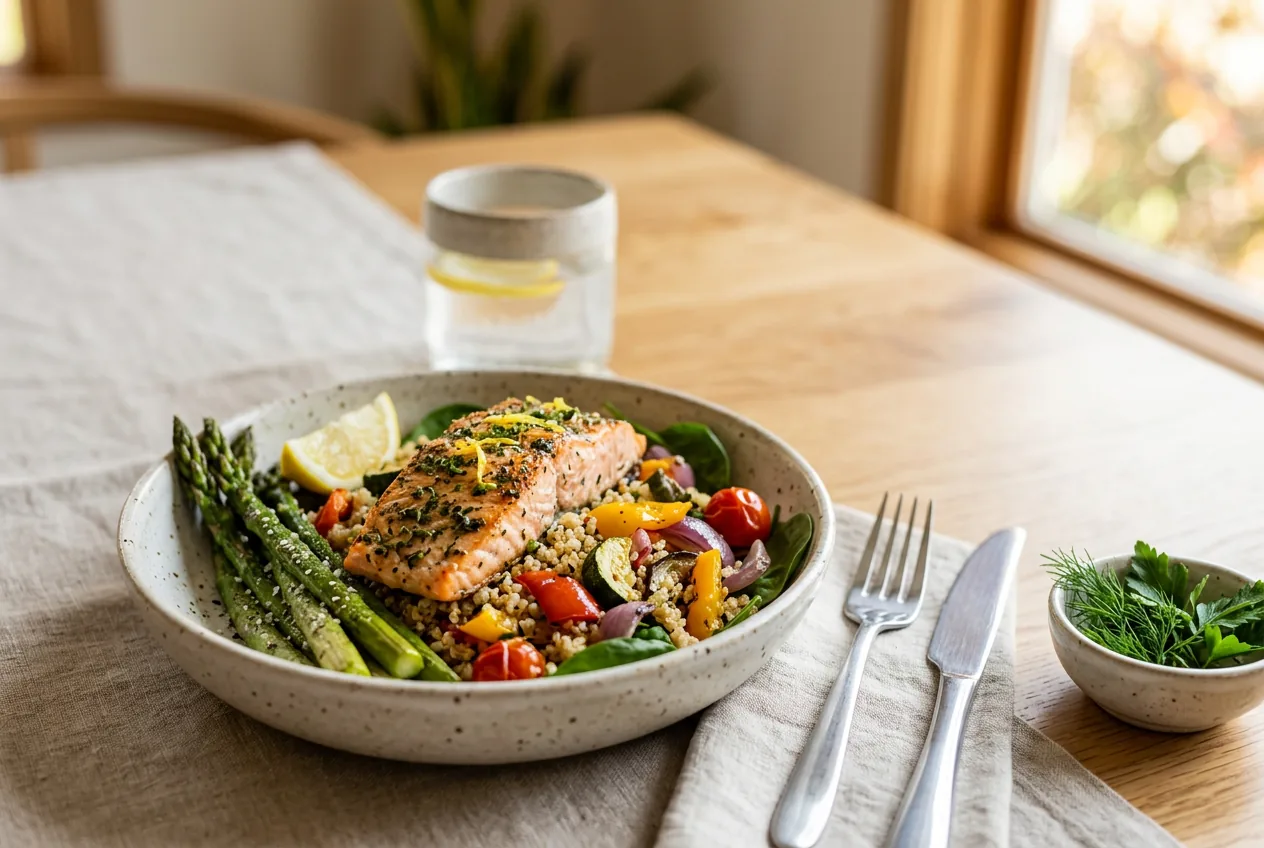
Sheet-Pan Lemon-Herb Cod with Asparagus — Serves 3–4
Ingredients: 1 lb cod fillets (cut into portions), 1 lb asparagus trimmed, lemon slices, 1 tbsp olive oil spray, 1 tsp dried oregano.
Method: Roast at 400°F for 12–14 minutes. Points: ~1–3 per serving (fish often low points; count any oil).
-
Turkey & Veggie Skillet Chili — Serves 6
Ingredients: 1.5 lb 93% lean ground turkey, 1 can diced tomatoes, 1 cup chopped bell peppers, 1 onion, 2 tbsp chili powder, 2 cups low-sodium broth.
Method: Brown turkey, add veggies and simmer 20 minutes. Points: 2–4 per cup serving. Make 6 portions and refrigerate.
-
Garlic Shrimp & Cauliflower Rice Bowls — Serves 4
Ingredients: 1 lb shrimp, 4 cups cauliflower rice, 2 tbsp chopped parsley, 1 tbsp olive oil spray, 1 lemon.
Method: Sauté shrimp 2–3 minutes per side; sauté cauliflower rice 4–6 minutes. Points: ~2–4 per bowl.
-
Sheet-Pan Chicken Fajitas — Serves 4
Ingredients: 1.5 lb chicken strips, 3 bell peppers sliced, 1 large onion, fajita seasoning (homemade: cumin, chili powder, paprika), 8 small whole-wheat tortillas optional.
Method: Roast at 425°F for 20–25 minutes. Points: 4–6 without tortillas, add 2–3 points per tortilla logged.
-
One-Pot Lentil & Tomato Stew — Serves 4
Ingredients: 1.5 cups dried lentils, 1 can diced tomatoes, 1 onion, 3 cups low-sodium broth, smoked paprika.
Method: Sauté onion 4 minutes, add lentils and broth, simmer 25–30 minutes. Points: ~3–4 per cup; high fiber, low cost.
-
Baked Salmon with Cilantro-Lime Slaw — Serves 4
Ingredients: Four 4 oz salmon portions, 3 cups shredded cabbage, 2 tbsp nonfat Greek yogurt, lime zest.
Method: Bake salmon at 375°F for 12–14 minutes; toss slaw ingredients and serve. Points: ~4–6 depending on salmon portion size.
-
Chicken & Broccoli Stir-Fry (low oil) — Serves 4
Ingredients: 1 lb chicken breast sliced, 4 cups broccoli florets, 2 tbsp low-sodium soy sauce, 1 tsp sesame oil (measure!).
Method: Sear chicken 4–5 minutes, add broccoli and 1/4 cup broth, cover and steam 4–6 minutes. Points: ~3–5 per serving.
-
Tex-Mex Stuffed Peppers with Quinoa — Serves 4
Ingredients: 4 bell peppers, 1 cup cooked quinoa, 1 cup black beans, salsa, 1/4 cup reduced-fat cheese (optional).
Method: Mix filling, stuff peppers, bake at 375°F for 25–30 minutes. Points: ~4–6 depending on cheese.
-
Greek-Style Chicken Pitas (small whole-wheat pita) — Serves 4
Ingredients: 1 lb chicken breast, 4 small pitas, cucumber, tomato, 1/2 cup nonfat Greek yogurt tzatziki.
Method: Grill chicken, slice and assemble. Points: ~5–7 per pita including yogurt.
-
Spicy Chickpea & Tomato Curry — Serves 4
Ingredients: 2 cans chickpeas (rinsed), 1 can crushed tomatoes, curry spices, 1/2 cup light coconut milk (optional).
Method: Sauté spices 1–2 minutes, add tomatoes and chickpeas, simmer 15–20 minutes. Points: ~4–6 per cup.
-
Chicken Caesar Salad (light dressing) — Serves 4
Ingredients: 4 cups romaine, 12 oz grilled chicken, 1/4 cup shaved parmesan, 2 tbsp light Caesar dressing.
Method: Toss and serve chilled. Points: ~4–6 per serving depending on dressing logged.
-
Vegetable-Stuffed Portobello Mushrooms — Serves 4
Ingredients: 4 large portobellos, 2 cups chopped spinach, 1/2 cup low-fat ricotta, garlic, herbs.
Method: Roast mushrooms at 375°F for 15–18 minutes. Points: ~2–4 per mushroom.
-
Slow-Cooker Beef & Vegetable Stew (lean cut) — Serves 6
Ingredients: 2 lb lean beef chuck trimmed, 3 cups mixed root veggies, 2 cups low-sodium broth, 1 tbsp Worcestershire sauce.
Method: Brown beef 4–5 minutes, then slow-cook on low 6–8 hours. Points: ~5–7 per bowl depending on beef cut. Use sparingly and portion precisely.
Worked recipe with WW points calculation (detailed example):
Worked Example: Grilled Chili-Lime Chicken Bowl (per serving)
Ingredients per serving: 4 oz cooked skinless chicken breast; 1/4 cup cooked quinoa (approx 43g cooked); 1 cup mixed greens; 1/4 cup pico de gallo; 1 tsp olive oil for cooking (if used).
Points calculation (SmartPoints-style example):
- Chicken breast 4 oz cooked ≈ 0–1 points (high protein, low fat).
- Quinoa 1/4 cup cooked ≈ 1.5–2 points (scale per WW app; 1/2 cup cooked often 3–4 points, so half that).
- Pico de gallo (tomato, onion, cilantro) ≈ 0 points.
- Olive oil 1 tsp = ~1.3 points (if counted; 1 tbsp ≈ 4 points on many plans).
Total estimated points: 2.5–4.5 → round to 3–5 points per serving. Log the actual ingredient weights in your WW app for your exact plan and the latest points table.
Transition: planning to batch any of these? The next section shows how to meal prep for several WW dinners at once with exact timing and storage guidance.
Meal Prep Tips for Weight Watchers Dinners
Meal prepping saves points and decision energy. Below is a tested, timed routine for prepping four dinners in ~2 hours.
- Plan the menu (10 minutes): choose 3–4 dinners that share proteins or vegetables (e.g., grilled chicken, roasted veggies, quinoa). Write servings and container sizes.
- Shop and portion (30–45 minutes): buy measured portions: 2 lb chicken breasts (yields ~1.5 lb cooked), 2 cups dry quinoa (yields ~6 cups cooked), 8 cups mixed vegetables.
- Batch-cook proteins (30 minutes): method: preheat oven to 400°F; bake 1.5–2 lb chicken breasts for 20–25 minutes until internal temp 165°F; rest 5 minutes and slice into 3–4 oz portions. For fish, do separate sheet-pan session.
- Cook grains & legumes (20 minutes concurrently): cook quinoa: 1 part quinoa to 2 parts water, simmer 12–15 minutes; drain excess and fluff. Cook a double batch of lentils in 20–25 minutes if needed.
- Roast vegetables (25 minutes): toss broccoli, Brussels sprouts and peppers with spray oil and spices; roast at 425°F for 18–22 minutes. Use the same oven batch time while chicken rests.
- Assemble & cool (15 minutes): portion protein, grains and veg into containers (e.g., 1/2 cup quinoa + 3 oz chicken + 1.5 cups roasted veg). Leave lids off 15 minutes to avoid steam; cool to room temp then refrigerate.
- Label and store: fridge: 3–4 days; freezer: most cooked chicken and grains freeze well up to 2 months. Thaw in fridge overnight and reheat to 165°F.
Tools I use: oven thermometer, instant-read probe (for chicken), 6 glass containers (24–36 oz), small dressing jars to keep sauces separate (prevents sogginess), and a magnetic checklist on the fridge.
Budget tip: combine this with a shopping list from budget-friendly healthy foods to keep costs low. Also, if you prefer chicken-focused batches, see my chicken meal prep ideas for 7-day rotations.
Transition: meal prep helps limit slip-ups — next, tactics for staying on track during the week and when eating out.
Strategies to Stay on Track with Weight Watchers Dinners
Practical strategies reduce point overspend and keep dinners satisfying.
- Portion control: measure proteins to 3–4 oz cooked; use a kitchen scale to hit your target. Plate guides: 1/2 plate veg, 1/4 plate protein, 1/4 plate grain/starch.
- Navigating cravings: pre-allocate 3–5 weekly freestyle points for a small dessert or side; savor slowly to increase satisfaction.
- Eating out: choose grilled, steamed or baked options; ask for sauces on the side and log points immediately. Swap fries for a side salad or steamed veg.
- Substitutions: replace 1 tbsp oil with 1 tbsp nonfat Greek yogurt when possible (saves ~3 points), or use lemon and spices for flavor.
- Mindful eating: aim to eat dinner sitting down, chew 20 times per bite, and pause 10–15 minutes mid-meal to reassess fullness.
- Start your day right: pair dinners with morning habits — check out Healthy breakfast ideas to stabilize hunger through the day.
- Balanced meal planning: build plates that meet protein, fiber and healthy fat goals; see the primer balanced meal planning for structure.
Evidence and authority: a 2022 peer-reviewed study on dietary timing and satiety found higher-protein evening meals helped reduce next-day calorie intake (Source type: peer-reviewed nutrition study). For official program guidance on points and updates, consult the WW site. WW official resources and for US dietary benchmarks see the USDA. USDA Dietary Guidelines.
Common Challenges and How to Overcome Them on WW Dinners
Below are common dinner problems I see and practical, tested solutions in problem-solution format.
-
Problem: Recipe boredom leading to takeout.
Solution: Rotate flavor profiles three ways per week (Tex-Mex, Mediterranean, Asian); batch a neutral protein (plain grilled chicken) and two spice rubs to switch it up quickly. -
Problem: Points overspending with sauces and oils.
Solution: Measure oils with teaspoons (1 tsp = 1.3 points in many plans), swap full-fat dressings for yogurt-based dressings, and portion sauces into 1-tbsp jars. -
Problem: Social events push you over your dinner points.
Solution: Pre-log a conservative points amount, eat a low-point snack earlier (Greek yogurt + berries), and choose shared small plates with vegetables as your main. -
Problem: Family won’t eat the WW version.
Solution: Use “build-your-own” plates: family members add a small carb or cheese while you keep your portion constrained. I often serve extra tortillas separately and measure two for myself. -
Problem: Flavorless meals when cutting fat.
Solution: Use acid (vinegar, citrus), umami (miso, soy), smoke (paprika), and fresh herbs to boost taste without adding many points.
Transition: I’ve seen these issues many times; below I share mistakes I personally made early in my WW cooking practice and how I fixed them.
Common mistakes and how to avoid them
I once over-cooked a whole batch of chicken breasts to 195°F because I didn’t use a probe — the meat dried out and I wasted points and money. I now always use an instant-read thermometer, rest meat 5–7 minutes and slice against the grain to preserve juiciness. I also used to pour dressings freely — now I pre-portion into 1-tbsp jars; this single change saved me 2–3 points per meal across the week.
Checklist: Verify your WW dinner readiness
- All proteins weighed and portioned to 3–4 oz cooked per serving.
- Vegetables prepped: leafy greens washed, cruciferous veggies roasted or blanched.
- Grains cooked and measured in 1/4–1/2 cup servings.
- Sauces/dressings portioned in 1-tbsp jars and logged.
- Meals labeled with date and points estimate; fridge storage ≤ 4 days.
When to call in a professional
If you have complex dietary needs (diabetes requiring carbohydrate timing, kidney disease with protein restrictions, or severe food allergies), consult a registered dietitian or your healthcare provider to tailor WW dinners safely. For medical nutrition therapy, ask for a referral from your primary care physician.
Conclusion
Key takeaways: build dinners around zero-point vegetables and lean protein, measure grains and fats carefully, use batch cooking to preserve points and time, and log everything in your WW app for accuracy. According to a 2024 industry report, consistent meal planning improves adherence and long-term weight management (Source type: industry report). Ready to start? Pick two recipes from the 15 above, schedule a 90-minute batch-cook block this weekend, and log your first week of dinners in the WW app. For more recipe collections and seasonal swaps, see the Yummiest Healthy Recipes Guide for Nutritious and Tasty Meals. Make one change tonight — grill chicken instead of frying — and notice how many points you save by the end of the week.
Call to action: Try one recipe tonight, log it, and return here to tweak the next week’s plan — success compounds with consistent small actions.