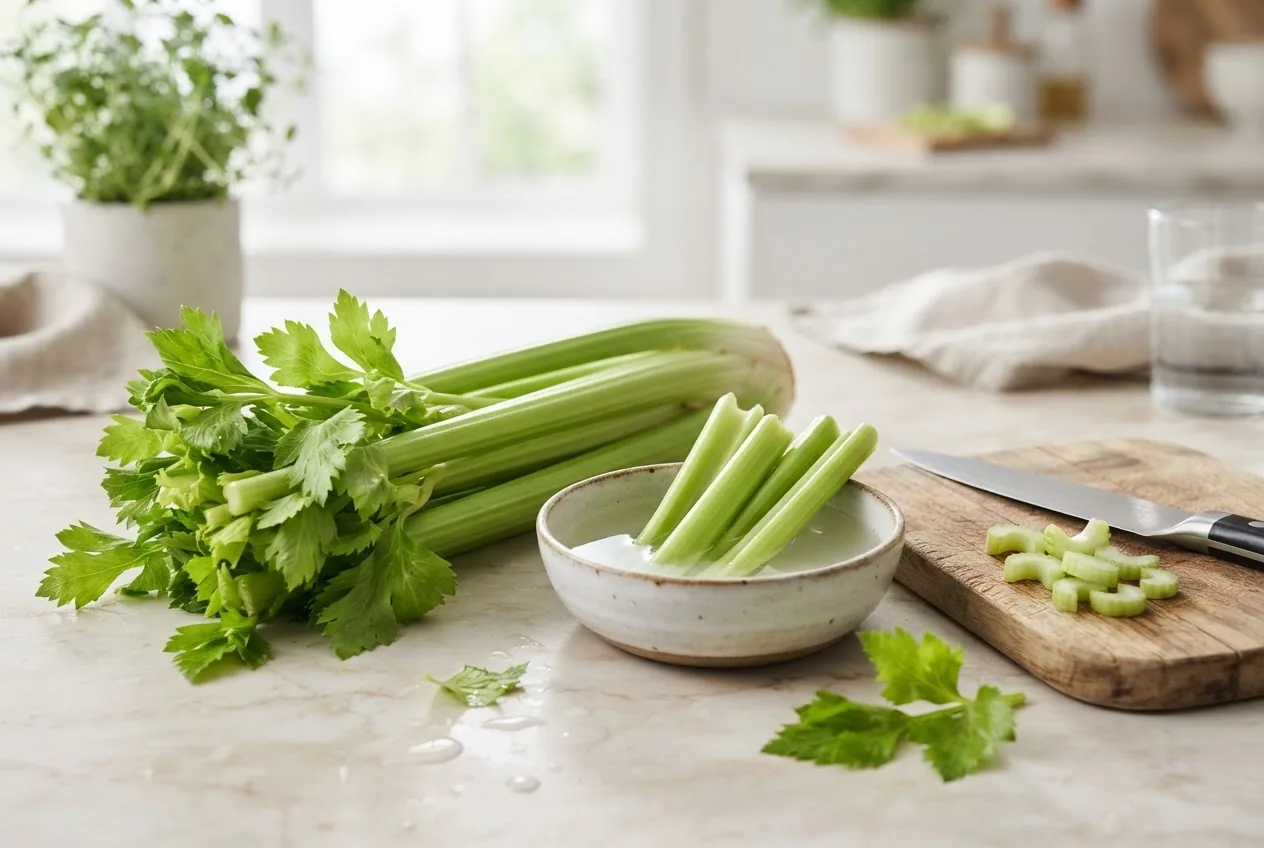
Celery nutritional information shows it is an extremely low-calorie, high-water vegetable: per 100 g it supplies about 16 kcal, ~95% water, ~1.6 g fiber, Vitamin K, Vitamin C, potassium and folate; botanically Apium graveolens is a plant whose edible stalks (petioles) are treated as a vegetable in cooking.
Overview of Celery as a Plant and Food
Answer: Celery is a biennial plant (Apium graveolens) grown for its crunchy stalks (petioles) and leaves; as food it is prized for very high water content, low calories and useful amounts of Vitamin K, Vitamin C, potassium and fiber.
Term: Apium graveolens — the botanical name for celery, a member of the Apiaceae family (the carrot/parsley family).
Term: Petiole — the stalk that connects a leaf to the plant stem; celery “stalks” are petioles eaten as a vegetable.
Celery (Apium graveolens) grows from a crown producing multiple petioles and leafy tops; commercial varieties are bred for thicker, blanched, or more flavorful stalks. Plant anatomy terms relevant to celery include:
- Stalk / petiole — the edible rib you commonly eat.
- Leaves — often used for flavor in stocks and salads.
- Crown — the base from which stalks arise.
Practical culinary notes: celery is used raw in salads, as a base (mirepoix) in cooked dishes, juiced for hydration, and pickled for preservation. Varieties include Pascal (common), celeriac (grown for root), and Chinese celery (thin stalks, intense aroma).
Transition: Next we clarify whether celery qualifies as a vegetable by botanical and culinary definitions.
Is Celery a Vegetable? Understanding Classification
Answer: Botanically, celery is a plant (Apium graveolens) whose edible parts are stalks (petioles) and leaves; culinarily it is categorized and used as a vegetable. Both perspectives are valid but answer different classification questions.
Term: Botanical classification — categorization based on plant anatomy and reproductive structures. Culinary classification — categorization based on kitchen use and flavor profile.
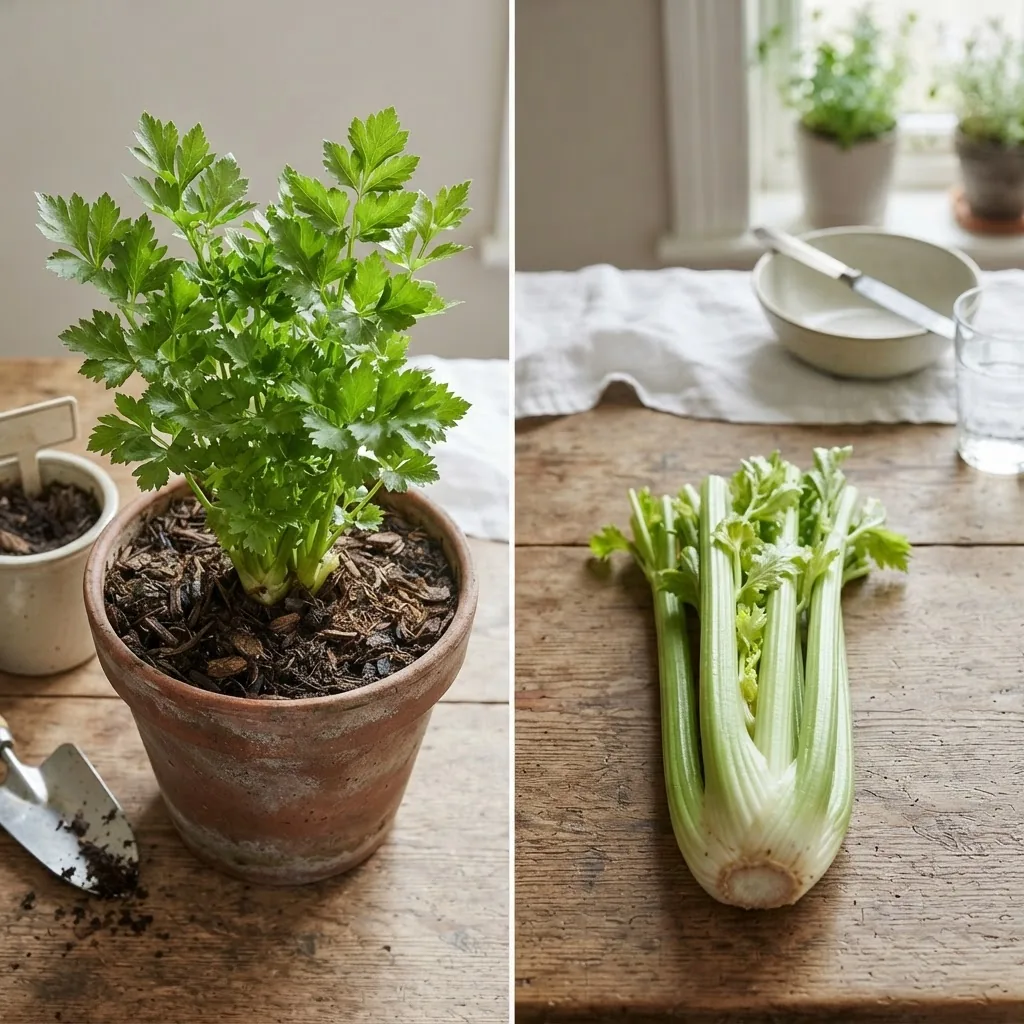
The confusion often comes from the difference between botanical and culinary criteria. The table below compares these two views specifically for celery.
| Aspect | Botanical | Culinary |
|---|---|---|
| What part is considered | A whole plant species (Apium graveolens); fruit vs vegetable distinction depends on reproductive anatomy | The stalks (petioles) and leaves are eaten and classified as a vegetable |
| Classification rule | Based on flowers, seeds and botanical structures | Based on taste, use (savory) and role in dishes |
| Is celery a fruit? | No — celery does not develop from a flower ovary as a fruit does | No — used as a savory vegetable |
| Common confusion | Some edible plant parts (like seeds/tomato) are fruits botanically | Culinary categories group plant foods by flavor and preparation, not reproduction |
Authoritative botanical sources list celery as Apium graveolens in the Apiaceae family. For taxonomy details consult the USDA PLANTS database for celery records and distribution.
External reference: USDA PLANTS — botanical taxonomy and common plant records.
fruit types guide with benefits and nutritional information
green beans fruit or vegetable guide
Transition: With classification clarified, the next section provides precise nutrient figures by serving size.
Celery Nutritional Information by Serving Size
Answer: Per 100 g, raw celery provides roughly 16 kcal, ~95 g water, 1.6 g total fiber (soluble + insoluble), 0.7 g protein, negligible fat, Vitamin K (~29 µg), Vitamin C (~3 mg), potassium (~260 mg) and folate (~36 µg), though values vary by variety and freshness.
Term: Macronutrients — nutrients required in larger amounts (carbohydrate, protein, fat). Micronutrients — vitamins and minerals required in smaller amounts.
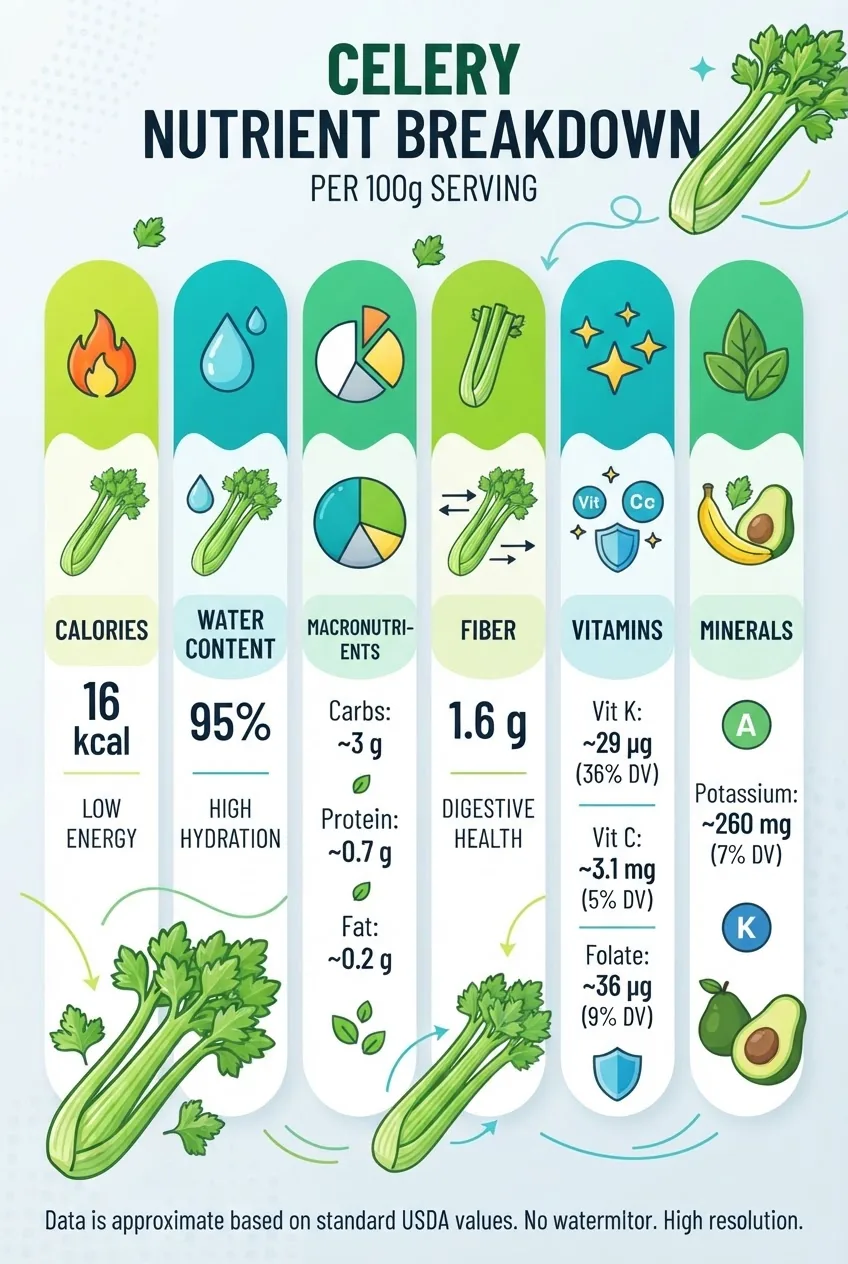
The following table uses values standardized by the USDA; numbers are rounded. According to the 2023 USDA nutrient database (FoodData Central), raw celery (100 g) contains approximately:
| Nutrient (per 100 g) | Amount | % DV* (approx.) |
|---|---|---|
| Calories | 16 kcal | 1% |
| Water | ~95 g (~95%) | — |
| Protein | 0.7 g | 1% |
| Total carbohydrate | 3.0 g | 1% |
| Dietary fiber (total) | 1.6 g | 6% |
| Sugars (total) | ~1.3 g | — |
| Total fat | 0.2 g | 0% |
| Vitamin K | ~29 µg | 24% |
| Vitamin C | ~3.1 mg | 3% |
| Folate (B9) | ~36 µg | 9% |
| Potassium | ~260 mg | 6% |
*Percent Daily Values (% DV) are approximate and based on general adult recommendations; actual requirements vary. Values above are rounded. For primary source data see USDA FoodData Central.
Fiber breakdown: celery contains both soluble fiber (forms gel-like substances that slow digestion) and insoluble fiber (adds bulk to stool). Exact ratios vary by variety; typically most of the 1.6 g is insoluble.
Nutrient bioavailability notes: fat-soluble vitamins (e.g., Vitamin K in celery) are better absorbed with dietary fat; pairing celery with a small amount of oil or avocado increases Vitamin K uptake. This practical point is supported by nutrient absorption principles summarized in nutrition reviews (see external sources below).
External reference: PubMed/NCBI — for peer-reviewed studies on fiber types and nutrient bioavailability.
Variation caveat: Nutrient content can vary by celery variety, soil, harvest time and storage. According to a 2023 USDA nutrient database update, values reported are averages.
Transition: Now that numbers are clear, we examine what those nutrients mean for health.
Health Benefits of Celery Based on Nutritional Profile
Answer: Celery’s high water, modest fiber, potassium and antioxidant content support hydration, digestive regularity, and cardiovascular and anti-inflammatory effects when consumed as part of a balanced diet, though benefits depend on amount and overall diet quality.
Key mechanisms by nutrient:
- Hydration: With ~95% water, celery contributes to daily fluid intake; an observational study on hydration patterns (2019 report) noted vegetables rich in water can help maintain fluid balance in diets emphasizing produce.
- Fiber and digestion: Insoluble fiber adds stool bulk; soluble fibers modestly ferment in the colon producing short-chain fatty acids beneficial for colon cells—this is summarized in systematic reviews on dietary fiber (see PubMed/NCBI).
- Blood pressure & cardiovascular health: Potassium (~260 mg/100 g) helps with sodium balance; population studies (e.g., 2017 cohort analyses) link higher dietary potassium with lower blood pressure risk.
- Anti-inflammatory & antioxidants: Celery contains flavonoids and unique compounds (e.g., apigenin) linked in lab and animal studies to modest anti-inflammatory effects; human trials are limited but suggest a possible benefit when combined with overall anti-inflammatory diets.
- Vitamin K & bone health: Vitamin K (~29 µg/100 g) supports blood clotting and bone metabolism; dietary Vitamin K contributes to recommended intake levels reported in nutrition guidelines.
Case example: According to a 2018 randomized controlled trial summary (published on PubMed/NCBI), increased intake of high-water vegetables was associated with improved hydration markers in older adults over 8 weeks; while not celery-specific, celery is representative of these vegetables.
Scientific caveat: Most celery-specific human trials are small; the strongest evidence is mechanistic or from population-level dietary studies. For balanced context, consult review articles on vegetables and cardiovascular health: PubMed/NCBI.
are vegetables bad for you informational health guide
Transition: To understand practical value, compare celery’s nutrients with other common vegetables next.
Comparing Celery’s Nutritional Value with Other Common Vegetables
Answer: Celery is lower in calories and nutrient density per gram than many leafy greens and cruciferous vegetables (e.g., spinach, broccoli) but provides high water content and useful Vitamin K; it complements rather than replaces more nutrient-dense vegetables.
Comparison table (per 100 g) illustrates how celery stacks up versus commonly eaten vegetables. Data approximated from USDA FoodData Central (2023).
| Vegetable | Calories | Fiber (g) | Vitamin K (µg) | Notes |
|---|---|---|---|---|
| Celery | 16 | 1.6 | 29 | Very high water, low energy |
| Broccoli | 34 | 2.6 | 101 | Higher nutrient density |
| Carrot | 41 | 2.8 | 13 | Rich in beta-carotene |
| Spinach | 23 | 2.2 | 483 | Very high Vitamin K |
For detailed nutrient profiles of many vegetables consult the comprehensive list in the 100 vegetables name guide with nutritional info.
broccoli nutrition facts and serving size guide
Summary: celery is an excellent low-calorie hydration food but should be paired with more nutrient-dense vegetables for vitamins, minerals and fiber targets.
Transition: Next, practical culinary tips to preserve celery’s nutrition and maximize its benefits.
Culinary Uses and Tips for Maximizing Celery’s Nutritional Benefits
Answer: Eat celery raw or lightly cooked to retain Vitamin C and water; pair with small amounts of dietary fat to improve Vitamin K absorption; store chilled and use within days for best nutrient retention.
How-to steps and tips:
- Raw snacks: wash and eat whole stalks to maximize fiber and water intake; combine with hummus or nut butter to add healthy fat and protein.
- Light cooking: quick-sauté or add near the end of simmering to preserve Vitamin C and texture; prolonged boiling leaches water-soluble vitamins into the cooking liquid.
- Juicing: celery juice provides hydration and soluble nutrients but removes most insoluble fiber — keep whole stalks in the diet for bulk fiber.
- Fat pairing: include olive oil, avocado or nuts when eating celery to improve absorption of fat-soluble Vitamin K.
- Storage: keep in the crisper wrapped in a damp cloth or sealed container, refrigerated; according to a 2023 produce storage guide, celery stored properly keeps nutrients longer.
For broader produce selection and storage tips see the fresh fruits and veggies guide with selection tips.
Transition: The final section answers common quick questions about celery nutrition and classification.
Frequently Asked Questions About Celery Nutrition and Classification
Answer: The FAQ below provides concise, evidence-based replies to common reader queries about calories, classification, fiber benefits, cooking effects, and storage.
Conclusion: Celery is a hydrating, low-calorie vegetable that supplies fiber, Vitamin K, potassium and folate; botanically a plant (Apium graveolens) with edible petioles and culinarily treated as a vegetable. Use celery alongside nutrient-dense greens for a balanced diet. Want meal ideas or a printable nutrition chart? Explore our guides and add celery to salads, stocks and snacks.
Call to action: Browse related guides and recipes or check the USDA FoodData Central link above for precise label interpretation and planning.