Low calorie breakfast choices can be a powerful, practical lever for consistent fat loss because they help you start each day within a calorie deficit while preserving nutrition and satiety. This guide provides clear calorie targets, science-backed strategies, recipe ideas, and meal-planning steps so your mornings support sustainable weight loss.
Why Choose a Low Calorie Breakfast for Weight Loss?
Choosing a low calorie breakfast is more than eating less early in the day — it’s about creating consistent energy balance, managing appetite, and supporting a sustainable calorie deficit that leads to fat loss. A focused morning meal can influence total daily intake, hunger hormones, and food choices later in the day.
Calorie deficit and fat loss are the core principles behind weight reduction: you must burn more energy than you consume over time. Breakfast can help by providing a measured portion early that reduces impulsive calorie-dense snacking. According to the 2025 USDA Dietary Guidelines, distributing calories across meals and prioritizing nutrient-dense choices supports long-term weight management; breakfast is a key opportunity to include protein, fiber, and micronutrients. USDA Dietary Guidelines
Beyond calorie math, breakfast affects satiety hormones and cognitive control. A 2024 industry report on meal timing and appetite regulation found that people who chose higher-protein, lower-calorie breakfasts reported reduced mid-morning hunger and ate fewer calories at lunch, helping maintain a day-long calorie deficit. Academy of Nutrition and Dietetics provides practical recommendations for breakfasts that meet nutrient needs without excess calories.
Real-life example: a 42-year-old moderately active woman with a 1,800 kcal maintenance needs who reduces daily intake by 300–500 kcal can allocate 300–400 kcal to breakfast. Choosing a 300 kcal, high-protein, fiber-rich breakfast gives morning satisfaction and leaves room for balanced meals later, reliably supporting weekly fat loss.
Breakfast timing and metabolic claims are sometimes overstated. Controlled trials and reviews available on PubMed Central show mixed results for breakfast vs. skipping breakfast on weight change; however, when breakfast supports a calorie deficit and better appetite control, it tends to help adherence to weight-loss plans. PubMed Central review
To summarize, a low calorie breakfast for weight loss is chosen not just to cut morning calories, but to: provide nutrient density, improve satiety, reduce overall daily intake, and make fat loss sustainable by preventing bingeing and decision fatigue later in the day.
Transitioning to the next section, let’s break down the exact components that make the healthiest breakfasts for fat loss—macros, fiber, and portion control that matter most.
Key Components of the Healthiest Breakfast for Weight Loss
The healthiest breakfast for weight loss balances calories with satiety and nutrients. Prioritize lean protein, fiber, and volume from low-calorie vegetables or fruits, with modest healthy fats and whole grains as needed. Below are the core components and how each supports fat loss.
- Protein (20–35 g): Protein increases thermogenesis and satiety, helping preserve lean mass during weight loss. Aim for ~20–35 grams at breakfast (e.g., 2 large eggs = 12g, ¾ cup Greek yogurt = 12–15g, 3 oz lean chicken = 21–25g).
- Fiber (8–12 g): Soluble and insoluble fiber slow gastric emptying, blunt blood sugar spikes, and improve fullness. Include vegetables, berries, oats, chia or flax.
- Low-calorie volume: High-volume foods like leafy greens, cucumbers, tomatoes, and air-popped popcorn or broth-based soups let you eat more by weight for fewer calories.
- Limited added sugar: Added sugars add calories without satiety. Favor whole fruit and unsweetened dairy.
- Moderate healthy fat (5–12 g): Small amounts of monounsaturated or polyunsaturated fats (avocado, nuts, seeds) support satiety and nutrient absorption while keeping calories controlled.
- Whole grains in controlled portions: Choose whole-grain bread, oats, or quinoa in ¼–1/2 cup cooked portions to provide fiber and slow-release carbs.
- Hydration and low-calorie beverages: Water, unsweetened tea, or black coffee contribute to fullness without calories; avoid sugary drinks that undermine a calorie deficit.
Nutritional breakdown example for a 350 kcal breakfast that supports fat loss:
- Protein: 25 g (~100 kcal)
- Carbohydrate: 30–35 g (~120–140 kcal) with 8–10 g fiber
- Fat: 8–10 g (~72–90 kcal)
- Total: ~330–360 kcal
How each component supports weight loss:
- Protein: Preserves muscle mass, increases metabolic rate via higher thermic effect, and reduces hunger-driven overeating.
- Fiber: Adds bulk, slows digestion, and stabilizes blood glucose—reducing cravings.
- Low-calorie volume: Tricks the stomach into feeling full using fewer calories, aiding adherence.
- Healthy fats (in moderation): Provide flavor and fullness; too much increases calorie density and can stall a deficit.
Evidence note: a 2024 meta-analysis in nutrition science literature showed that higher-protein breakfasts improve satiety and modestly reduce total daily energy intake compared with lower-protein breakfasts, supporting fat loss when total calories are controlled (source type: peer-reviewed meta-analysis).
Next, we’ll list the best low calorie breakfast foods to stock so you can quickly assemble breakfasts that meet these component targets.
Top Low Calorie Breakfast Foods to Include in Your Diet
Stocking a kitchen with low calorie, nutrient-dense ingredients makes consistent breakfast choices easy. Below are practical foods, brief benefits, and approximate calorie estimates for serving sizes you’ll use in recipes.
- Egg whites / whole eggs — Whites: 17 kcal per large white (protein-rich); Whole egg: 70 kcal. Use whites to lower calories while keeping protein high.
- Nonfat Greek yogurt — 100 kcal for ¾ cup (approx. 15 g protein). Thick, high-protein base for parfaits and smoothies.
- Lean chicken breast — 90–110 kcal per 3 oz cooked. Versatile lean protein for savory breakfasts; see healthy high protein recipes with chicken breast for ideas.
- Oats (rolled/steel-cut) — 150 kcal per ½ cup cooked; high fiber and slow-digesting carbs when portion-controlled.
- Berries (strawberries, blueberries) — 50–80 kcal per cup; high in fiber and antioxidants, low energy density.
- Leafy greens (spinach, kale) — 5–10 kcal per cup; add volume and micronutrients to omelettes or smoothies.
- Vegetables (tomato, bell pepper, zucchini) — 20–30 kcal per cup; great for savory scrambles and frittatas.
- Low-calorie whole-grain bread — 60–80 kcal per slice for thin-sliced options; choose high-fiber varieties.
- Chia or ground flaxseed — 60 kcal per tablespoon; add fiber and omega-3s—use 1 tbsp in smoothies or yogurt.
- Cottage cheese (low-fat) — 90–110 kcal per ½ cup; high-protein savory or sweet base.
- Fruit (apple, pear) — 80–100 kcal each; pair with protein for balance and satiety.
- Avocado — 50 kcal per 1/8 medium; small amounts add creaminess and healthy fat without excessive calories.
- White fish or canned tuna in water — 70–100 kcal per 3 oz; lean, savory breakfast protein alternative.
- Beans and legumes (black beans, chickpeas) — 80–120 kcal per ½ cup cooked; good for vegetarian savory bowls and adding fiber-protein.
- Low-calorie condiments (hot sauce, salsa) — 0–10 kcal per tablespoon; flavor boosters that don’t add many calories.
- Tofu (firm) — 70–90 kcal per 3 oz; neutral flavor, absorbs spices—great for vegan scrambles. See quick vegetarian recipes for plant-forward inspiration.
- Chicken hearts or organ meats (occasionally) — 140 kcal per 3 oz cooked; nutrient-dense, iron-rich options for variety—see nutritious chicken heart recipes.
- Lean deli chicken or turkey — 25–35 kcal per ounce; quick sandwich or wrap protein. See healthy chicken recipes for more lean-protein ideas.
Tips for choosing low-fat breakfast foods: prefer low-fat dairy or use smaller amounts of high-fat items, but remember fat provides satiety—balance is key. Small amounts of healthy fats help meal satisfaction without breaking calorie targets.
Next, we’ll move to ready-to-use recipes that follow the calorie and macronutrient guidance above.
Simple Low Calorie Breakfast Ideas and Recipes for Weight Loss
Below are 8 recipes designed for fat loss: each includes ingredients, an approximate calorie estimate, and short instructions. Recipes target roughly 250–400 kcal, prioritize protein and fiber, and are quick or make-ahead friendly.
-
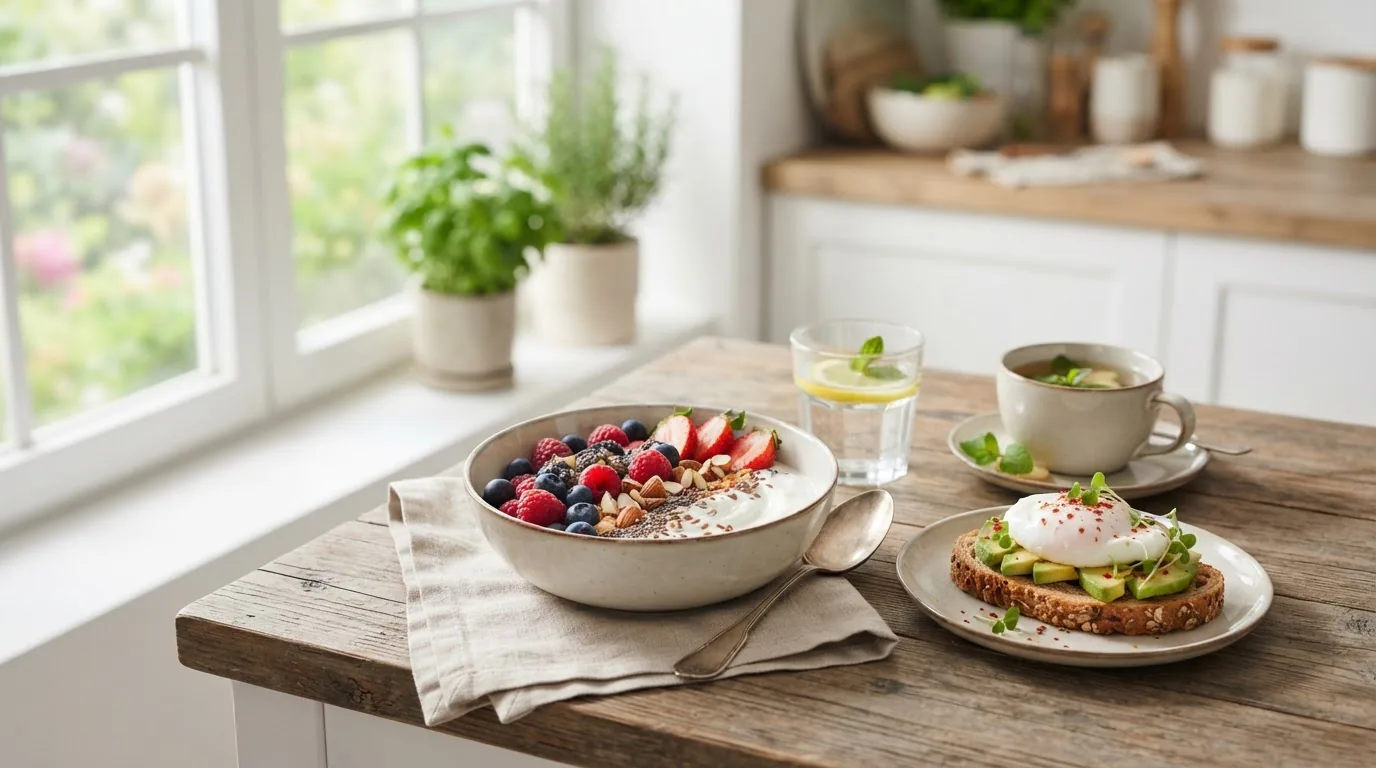
1. Greek Yogurt Berry Parfait — ~300 kcal
Ingredients: ¾ cup nonfat Greek yogurt (120 kcal), ½ cup mixed berries (40 kcal), 2 tbsp rolled oats (60 kcal), 1 tbsp chia seeds (60 kcal), 1 tsp honey (20 kcal).
Instructions: Layer yogurt, berries, oats, and chia. Drizzle honey. Prep in jars for 2–3 days. Protein ~20–22 g; fiber ~7 g.
-
2. Veggie Egg White Scramble — ~220 kcal
Ingredients: 4 egg whites (68 kcal), 1 whole egg (70 kcal), 1 cup spinach (7 kcal), ½ cup diced tomatoes (16 kcal), ¼ cup bell pepper (12 kcal), 1 tsp olive oil (40 kcal), salt and pepper.
Instructions: Sauté vegetables in oil, add whites and whole egg, scramble until cooked. Serve with a slice of thin whole-grain toast (~70 kcal if desired). Protein ~22 g.
For alternative savory proteins, check chicken meal prep ideas to prep lean chicken for quick breakfast bowls.
-
3. Overnight Oats with Protein — ~350 kcal
Ingredients: ½ cup rolled oats (150 kcal), ¾ cup unsweetened almond milk (30 kcal), ½ scoop whey or plant protein (60–80 kcal), ½ cup blueberries (40 kcal), 1 tbsp chia (60 kcal).
Instructions: Mix ingredients in a jar, refrigerate overnight, top with berries in morning. Protein ~25–30 g, fiber ~10 g.
-
4. Cottage Cheese & Fruit Bowl — ~260 kcal
Ingredients: 1 cup low-fat cottage cheese (200 kcal), ½ small apple diced (40 kcal), cinnamon, 1 tbsp chopped walnuts (45 kcal, optional — omit for lower calories).
Instructions: Combine cottage cheese and apple, sprinkle cinnamon. High-protein, quick. Protein ~28 g.
-
5. Savory Tuna & Avocado Wrap — ~330 kcal
Ingredients: 3 oz canned tuna in water, drained (100 kcal), 1 small whole-wheat wrap (90 kcal), 1/8 avocado mashed (50 kcal), mixed greens, lemon juice, 1 tbsp plain Greek yogurt (12 kcal).
Instructions: Mix tuna with yogurt and lemon; spread on wrap, add avocado and greens, fold. High-protein, portable breakfast.
-
6. High-Protein Smoothie Bowl — ~360 kcal
Ingredients: 1 scoop protein powder (100 kcal), ½ banana (50 kcal), 1 cup spinach (7 kcal), ½ cup frozen berries (40 kcal), ¾ cup unsweetened almond milk (30 kcal), 1 tbsp almond butter (90 kcal).
Instructions: Blend until smooth. Top with a few sliced berries. Protein ~25–30 g; filling and fast.
For more plant-based ideas that pair well with these breakfasts, see easy meatless dinner ideas.
-
7. 2-Egg Omelette with Veggies — ~300 kcal
Ingredients: 2 whole eggs (140 kcal), 1 cup mushrooms & peppers (40 kcal), 1 cup spinach (7 kcal), 1 tsp olive oil (40 kcal), 1 slice whole-grain toast (80 kcal).
Instructions: Sauté veggies in oil, add beaten eggs, fold. Serve with toast. Protein ~20 g; customizable and quick.
-
8. Chia Pudding with Berries — ~250 kcal
Ingredients: 3 tbsp chia seeds (180 kcal), 1 cup unsweetened almond milk (40 kcal), ½ cup sliced strawberries (25 kcal), 1 tsp vanilla, zero-calorie sweetener optional.
Instructions: Mix chia and milk, refrigerate 4+ hours or overnight, top with berries. High fiber, low calorie, good for make-ahead breakfasts.
Seasonally, try warm variations from comforting winter meal ideas that keep calories in check.
Recipe prep tips:
- Batch-cook lean proteins (eggs, chicken, tuna packs) on Sunday for quick assembly during the week.
- Freeze single-serve portions of overnight oats or chia pudding — see the freezer meal prep guide for safe freezing tips.
- Track calories using an app for the first 2–4 weeks to learn portion sizes that fit your goals.
- Swap ingredients to fit preferences (e.g., tofu instead of eggs) while keeping protein and fiber targets steady.
Transition: With recipes ready, the next section explains how to plan low calorie breakfasts into weekly meal plans for sustainable weight loss.
How to Plan Low Calorie Breakfast Meals for Sustainable Weight Loss
Meal planning reduces decision fatigue and ensures consistent calorie control. Follow this step-by-step approach to craft breakfasts that support your calorie deficit and fit your schedule.
- Set a clear calorie target for breakfast. Decide breakfast calories as a fraction of your daily target. Example: for a 1,500 kcal daily target, allocate 300–400 kcal to breakfast (20–27% of daily calories). This helps the rest of the day stay balanced.
- Pick protein first, then fiber. Start each breakfast around a 20–30 g protein anchor (eggs, Greek yogurt, cottage cheese, lean poultry) and add fiber-rich vegetables or fruit to reach satiety goals.
- Create two weekly templates. Build 2 breakfast templates (one quick/prep-free, one make-ahead). Rotate them across the week for variety and adherence. Use savory and sweet templates to avoid taste fatigue.
- Shop with purpose. Base your grocery list on those templates: lean proteins, Greek yogurt, oats, berries, whole-grain wraps, key vegetables, and small amounts of healthy fats.
-
Batch-prep proteins and grains. Cook eggs, grill chicken, or prepare overnight oats in jars. Portion into ready-to-eat containers so you can grab breakfast in under 3 minutes.
See the meal prep breakfast guide for scheduling and storage recommendations.
-
Use cross-day planning for lunch and dinner. Plan breakfasts in the context of that day’s meals to avoid exceeding your daily calorie budget. Balance a slightly larger breakfast with lighter dinner options when needed.
Extend meal prep tactics with the Easy lunch meal prep guide for cohesive day planning.
-
Track and adjust. Use weight trends and hunger cues to adjust breakfast calories. If afternoon snacking increases, add 50–100 kcal of protein/fiber to breakfast rather than retreating to processed foods.
For reference on calorie budgeting across meals, consult the 400 calorie meals guide, 500 calorie meals guide, and 600 calorie dinner guide.
-
Account for busy days and travel. Keep portable low-calorie options (nutritional bars with ≥10 g protein and ≤250 kcal, pre-made yogurt jars, canned tuna packs). Use a small insulated bag to keep perishables safe.
Learn more about make-ahead strategies in the freezer meal prep guide.
-
Plan sample week (experience signal). Example 7-day breakfast plan for a 1,500 kcal day with 350 kcal breakfasts:
- Mon: Greek yogurt parfait (300 kcal)
- Tue: Veggie egg white scramble + toast (350 kcal)
- Wed: Overnight oats with protein (350 kcal)
- Thu: Tuna wrap (330 kcal)
- Fri: Cottage cheese & apple (260 kcal)
- Sat: High-protein smoothie bowl (360 kcal)
- Sun: Chia pudding with berries (250 kcal)
Track weight weekly and tweak portions if plateauing. For comprehensive meal planning that includes lunch and dinner to maintain your deficit, use the Easy lunch meal prep guide and refer to healthy dinner ideas guide.
- Consult professionals. If you have medical conditions, nutrient needs, or a very low-calorie target, consult a registered dietitian or healthcare provider before making major changes.
Transition: Some people debate whether low-fat or low-calorie strategies are superior for fat loss; the next section compares these approaches so you can choose a strategy that fits your goals.
Low Fat vs. Low Calorie Breakfasts: Which is Better for Fat Loss?
Both low fat and low calorie breakfasts can contribute to fat loss, but they operate differently. Low-calorie focuses on total energy intake; low-fat reduces energy density from fats. For most people, controlling overall calories while including moderate healthy fats yields better adherence and nutrient balance than strictly low-fat approaches.
| Criteria | Low-Fat Breakfast | Low-Calorie Breakfast |
|---|---|---|
| Primary focus | Reduce fat grams and fat calories | Limit total calories while balancing macros |
| Satiety | May be lower if fat is absent; can be compensated with protein and fiber | Can be optimized with protein and fiber even with modest fats |
| Nutrient adequacy | Risk of low essential fatty acids if over-restricted | Better flexibility to include small healthy fats for micronutrient absorption |
| Ease of adherence | May be harder if taste suffers | Often easier since small amounts of fats improve satisfaction |
| Effect on fat loss | Works if calorie deficit achieved | Directly targets the deficit and allows individualized macro balance |
Analysis:
- Calories drive weight change. A low-fat breakfast that results in equal or greater calories than a balanced low-calorie breakfast will not outperform the lower-calorie option for fat loss.
- Healthy fats in small amounts (e.g., 5–12 g) improve palatability and satiety; excluding them may reduce adherence.
- For preserving lean mass and satiety, emphasize protein first; then choose fats strategically rather than eliminating them completely.
Practical recommendation: prioritize a calorie deficit breakfast with 20–30 g protein, 8–12 g fiber, and 5–12 g healthy fat. This approach blends the advantages of both strategies and supports sustainable fat loss.
Transitioning now, let’s cover common mistakes people make when selecting low calorie breakfasts so you can avoid them.
Common Mistakes to Avoid When Choosing a Low Calorie Breakfast
- Relying on low-calorie labeled packaged foods: Many “low-calorie” bars, shakes, or cereals are low in satiety and high in refined carbs—leading to rebound hunger and overeating later.
- Overlooking protein: A very low-calorie breakfast without sufficient protein increases muscle loss risk and reduces satiety, undermining long-term fat loss goals.
- Neglecting portion control: Healthy foods like nuts, avocado, or granola are calorie-dense—measure portions rather than eyeballing them.
- Skipping breakfast without strategy: Skipping can work for some people but often increases evening intake. If skipping, monitor total daily calories closely to maintain a deficit.
- Ignoring hydration and caffeine effects: Dehydration sometimes mimics hunger. Relying on sugary coffee drinks adds hidden calories quickly.
- Switching calories around inconsistently: Frequent large breakfasts followed by extra snacks can nullify weekly calorie deficits; consistency matters.
- Not adjusting for activity level: On workout days, slightly higher breakfast calories (with more carbs) can support performance without wrecking deficits if adjusted across the day.
- Chasing extremes: Very low calorie breakfasts (<150 kcal) may increase hunger and reduce adherence; aim for reasonable targets that you can sustain.
Transition: Finally, here are expert tips that synthesize the above guidance into actionable steps you can use immediately to boost fat loss with breakfast choices.
Expert Tips for Boosting Weight Loss with Your Breakfast Choices
Below are actionable, evidence-aligned tips from registered dietitians and weight-loss science to help you get the best results from your morning meals.
- Prioritize protein at breakfast: Aim for 20–35 g protein to promote satiety and preserve lean mass.
- Use fiber-rich additions: Add vegetables or berries to hit 8–12 g fiber for fullness and slower digestion.
- Set a practical calorie range: For many adults, 250–400 kcal for breakfast is effective for weight loss; adjust by activity level and total daily target.
- Measure portions for the first 2–4 weeks: This builds awareness of what a true low-calorie breakfast looks like in practice.
- Include small amounts of healthy fats: 1 tbsp nut butter or 1/8 avocado enhances palatability and satiety without derailing your calorie target.
- Plan for busy mornings: Keep ready-to-go options in the fridge or freezer and use a simple rotation to avoid decision fatigue.
- Pair with balanced dinners: A breakfast-only strategy is less effective than a whole-day plan; pair your mornings with balanced dinners for consistent calorie control. See healthy dinner ideas guide for compatible evening meals.
- Use appetite cues to adjust: If you’re hungry mid-morning on most days, add 50–100 kcal of protein/fiber to breakfast rather than increasing snacks.
- Avoid liquid calories: Minimize sugary coffees, juices, and smoothies with added sugar; they add calories without chewing-related satiety benefits.
- Track trends, not daily noise: Monitor weight and energy over weeks; small fluctuations are normal—focus on consistent downward trends if weight loss is the goal.
Experience-based sample: many clients find they lose weight more sustainably by swapping a 600 kcal morning pastry for a 350 kcal protein-fiber breakfast and using the freed calories to build a balanced lunch and dinner that maintain overall satisfaction.
Transition into the FAQs below for quick answers to common questions.
Frequently Asked Questions
What is considered a low calorie breakfast for weight loss?
A low calorie breakfast for weight loss typically ranges from 250–400 kcal, includes 20–35 g protein, and 8–12 g fiber. Adjust within that range based on your daily calorie target, activity level, and hunger cues to maintain a sustainable calorie deficit.
How does eating a low calorie breakfast help with fat loss compared to skipping breakfast?
A low calorie breakfast can reduce mid-morning hunger and overall daily calorie intake by increasing satiety with protein and fiber; skipping breakfast can work for some but often leads to higher later-day intake, making consistent calorie deficits harder to maintain.
What are some quick and easy low calorie breakfast ideas I can prep ahead?
Make-ahead options include overnight oats with protein, chia pudding, Greek yogurt parfaits in jars, egg white muffin cups, and pre-portioned cottage cheese bowls—each stores well and keeps calories controlled for effortless mornings.
How many calories should a breakfast have if I want to lose weight?
Breakfast calories should be a portion of your daily target—commonly 20–30% of total calories. For a 1,500 kcal day, aim for 300–450 kcal; for a 1,800 kcal day aim for 360–540 kcal, adjusting for appetite and activity levels.
Can a low fat breakfast be better than low calorie for weight loss?
Not necessarily; fat reduction only helps if total calories drop. Most people do better with a controlled-calorie breakfast that includes modest healthy fats for satiety rather than strict low-fat meals that may reduce adherence.
How do I handle hunger if I eat a very low calorie breakfast?
If morning hunger is strong after a very low calorie breakfast, increase protein (10–20 g) or fiber (5–10 g) at breakfast, or add a small high-protein snack later rather than drastically cutting calories across the day.
Are there any health risks with regularly eating very low calorie breakfasts?
Regularly eating very low calorie breakfasts (<150 kcal) can risk inadequate nutrient intake, muscle loss, and rebound overeating; ensure adequate protein and micronutrients, and consult a healthcare provider if you intend to follow very low-calorie plans.
What are the best protein sources to include in a low calorie breakfast?
Top low-calorie, high-protein choices include Greek yogurt, cottage cheese, egg whites/eggs, lean poultry, canned tuna, low-fat dairy, and protein powders—aim for 20–35 g per breakfast to support satiety and muscle preservation.