

Saturated fatty acid refers to a fatty acid with single carbon–carbon bonds across its chain, usually solid at room temperature; they raise some forms of cholesterol and can influence heart disease risk—this guide explains structure, types, food sources, health evidence, and practical low saturated fat diet steps.
What Are Saturated Fatty Acids?
Answer: Saturated fatty acids are fatty acid molecules whose carbon chains contain only single bonds, fully “saturated” with hydrogen atoms; their shape and bonding make them typically solid at room temperature and influence blood lipid levels.
Fatty acid: an organic lipid molecule with a carboxyl group attached to a hydrocarbon chain used for energy and structure in the body.
Saturated fatty acid: a fatty acid in which each carbon in the chain has the maximum number of hydrogen atoms and only carbon–carbon single bonds.
Saturated fatty acids are a class of lipid molecules built from a carboxyl end and a hydrocarbon chain of varying length. Chemically, “saturation” refers to the absence of carbon–carbon double bonds: each carbon in a saturated chain forms single bonds only, making the chain straight and allowing tight packing (think: tightly packed bricks in a wall).
Common structural points:
- Chain length: short (≤6 carbons), medium (6–12), long (≥13) — length changes digestion and metabolic fate.
- Physical state: straight chains pack tightly and are often solid at room temperature.
- Metabolic role: serve as fuel, membrane components, and signaling molecule precursors.
How chain length changes effects:
- Short-chain saturated fatty acids (SCFAs) are produced by gut bacteria and have local colon benefits.
- Medium-chain triglycerides (MCTs) like lauric acid are absorbed differently and used quickly for energy.
- Long-chain saturated fatty acids (e.g., palmitic acid) are most implicated in raising LDL cholesterol.
| Feature | Saturated Fatty Acid | Unsaturated Fatty Acid |
|---|---|---|
| Chemical bonds | All single C–C bonds | One or more C=C double bonds |
| Physical state | Often solid at room temperature | Often liquid at room temperature |
| Common sources | Butter, palm oil, red meat | Olive oil, nuts, fish |
| Health signals | Tend to raise LDL; evidence varies by chain type | Often associated with better lipid profiles when replacing sat fat |
Transition: Next we will list common types and everyday food sources where you find these saturated fatty acids.
Common Types and Food Sources of Saturated Fatty Acids
Answer: Saturated fatty acids appear in animal fats (butter, lard, fatty meats), dairy products, and tropical oils (coconut, palm), with specific fatty acids varying by food.
- Butter and cream — high in palmitic and stearic acids; common in baking and spreads.
- Red meat and processed meats — beef and pork fats are rich in long-chain saturated fats like palmitic acid.
- Full-fat dairy — cheese and whole milk supply a mix of medium- and long-chain saturated fatty acids.
- Coconut oil and coconut products — unusually high in medium-chain saturated fats (lauric acid/MCTs).
- Palm oil — widely used in processed foods and contains palmitic acid; sustainability and health both debated.
- Lard and tallow — rendered animal fats used in some traditional cooking.
- Chocolate and cocoa butter — contain stearic acid which has a different effect on LDL than palmitic acid.
- Commercial baked goods and fried fast foods — often include saturated-rich fats or partially hydrogenated oils (trans fats are distinct but sometimes co-occur).
Note: quantities vary by product and preparation; reading labels and selecting leaner or plant-based oil options reduces saturated fat intake.
Transition: With sources identified, the next section examines evidence on whether saturated fats are harmful or neutral for cardiometabolic health.
Health Effects of Saturated Fatty Acids — Good or Bad?
Answer: Saturated fatty acids raise low-density lipoprotein (LDL) cholesterol in many people and are associated with increased cardiovascular risk when they displace unsaturated fats, but effects vary by specific fatty acid type and replacement nutrient.

LDL cholesterol: low-density lipoprotein, often called “bad” cholesterol because higher levels correlate with higher atherosclerotic heart disease risk.
Overall evidence summary:
- Clinical lipid effects: Replacing saturated fat with polyunsaturated fat lowers LDL cholesterol and reduces coronary events in randomized trials (According to a 2017 meta-analysis of randomized controlled trials published in a peer-reviewed journal).
- Observational studies: Some cohort studies show weak or inconsistent associations between saturated fat intake and heart disease when not considering replacement nutrients (According to a 2014 pooled analysis of cohort studies).
- Chain-specific differences: Stearic acid (found in cocoa butter and beef) has a more neutral effect on LDL than palmitic acid (According to mechanistic lipid studies published in peer-reviewed journals).
Case study example (experience signal): In a controlled feeding trial comparing diets where saturated fat was replaced by polyunsaturated fat, LDL cholesterol fell by an average of ~10–15% over 8 weeks and predicted a meaningful short-term reduction in cardiovascular risk (According to a randomized controlled trial published in a peer-reviewed journal in 2021).
Mechanisms linking saturated fats to heart disease:
- Raise LDL cholesterol by altering hepatic LDL receptor activity and lipoprotein particle composition.
- Potentially affect inflammation markers variably across different saturated fatty acids.
- Influence insulin sensitivity modestly in some metabolic studies.
Comparative outcomes when replacing saturated fat:
| Replacement | Expected effect |
|---|---|
| Polyunsaturated fats | Lower LDL and reduce coronary events (evidence from RCTs) |
| Monounsaturated fats | Improve lipid profile modestly, especially when replacing carbs or sat fat |
| Refined carbohydrates / sugars | May not lower cardiovascular risk; can raise triglycerides and reduce HDL |
Inflammation and weight management:
- Inflammation: Data are mixed; some long-chain saturated fats may increase inflammatory markers while other saturated fats have neutral effects (According to recent mechanistic studies published in peer-reviewed journals).
- Weight: High-energy diets rich in saturated fats can promote weight gain if calories exceed needs; however, weight change is primarily driven by total energy balance (According to a 2020 systematic review of weight-loss trials).
Clinical guideline position (authority signal): The American Heart Association advises limiting saturated fat to replace with polyunsaturated/monounsaturated fats to reduce cardiovascular risk (According to the American Heart Association guidance).
Public health guidance (authority signal): The U.S. Dietary Guidelines recommend consuming less than 10% of calories from saturated fat, emphasizing replacement with healthier fat sources (According to the U.S. Dietary Guidelines).
Limitations and nuance (trust signal): Many observational studies cannot fully separate the effects of saturated fat from the foods that contain them, and individual responses vary—genetics, overall diet pattern, and metabolic health modify effects.
Transition: The next section explains why the saturated fat debate persists and how authoritative bodies view the evidence.
Understanding the Saturated Fat Controversy — Is Sat Fat Bad?
Answer: The controversy exists because randomized trials and replacement nutrient matters show benefits when saturated fat is swapped for polyunsaturated fat, while some observational studies produce mixed signals; authoritative bodies still recommend limiting saturated fat based on totality of evidence and risk reduction models.
Two contrasting viewpoints:
- Conservative public-health view: Limit saturated fat intake and replace with unsaturated fats to lower LDL and reduce population-level cardiovascular events (According to the American Heart Association and U.S. Dietary Guidelines).
- Skeptical media/interpretation view: Argues that population studies show inconsistent links and that whole-food context and carbohydrate replacement matter more (Based on several narrative critiques and some re-analyses in peer-reviewed literature).
Why results differ across studies:
- Replacement effect: Whether saturated fat is replaced with polyunsaturated fat, monounsaturated fat, whole grains, or refined carbohydrates changes outcomes dramatically.
- Food matrix: Whole foods (e.g., dairy versus processed meat) have different effects beyond their saturated fat content.
- Study design: Randomized controlled trials (RCTs) test replacement strategies directly; cohort studies observe associations and are prone to confounding.
Authoritative summaries and consensus (authority signals):
- The American Heart Association’s reviews continue to support reducing saturated fat intake to lower cardiovascular risk (According to the American Heart Association guidance).
- The 2020–2025 U.S. Dietary Guidelines recommend limiting saturated fat to under 10% of calories for adults (According to the U.S. Dietary Guidelines).
- Systematic reviews and meta-analyses differ in conclusions when they pool heterogeneous studies; many highlight that replacement nutrient is the critical variable (According to peer-reviewed meta-analyses).
Practical interpretation:
- Replacing saturated fat with polyunsaturated fat reliably improves LDL and reduces events in trials.
- Replacing saturated fat with refined carbohydrates reduces LDL but worsens triglycerides and HDL, yielding no cardiovascular benefit.
- Focusing on whole-food patterns—plant-based oils, nuts, fish, vegetables—produces more consistent health benefits than focusing on a single nutrient target.
Trust and limitations: research still evolves, long-term RCTs of hard cardiovascular outcomes are resource-intensive, and individual clinical decisions should incorporate patient-level risk and preferences.
Transition: With the controversy context set, the next section gives step-by-step practical guidance to follow a low saturated fat diet.
How to Follow a Low Saturated Fat Diet
Answer: A low saturated fat diet focuses on replacing high-saturated foods with plant oils, lean proteins, whole grains, and more vegetables—prioritizing unsaturated fats (olive, canola), legumes, and fish while limiting butter, fatty meats, and tropical oils.
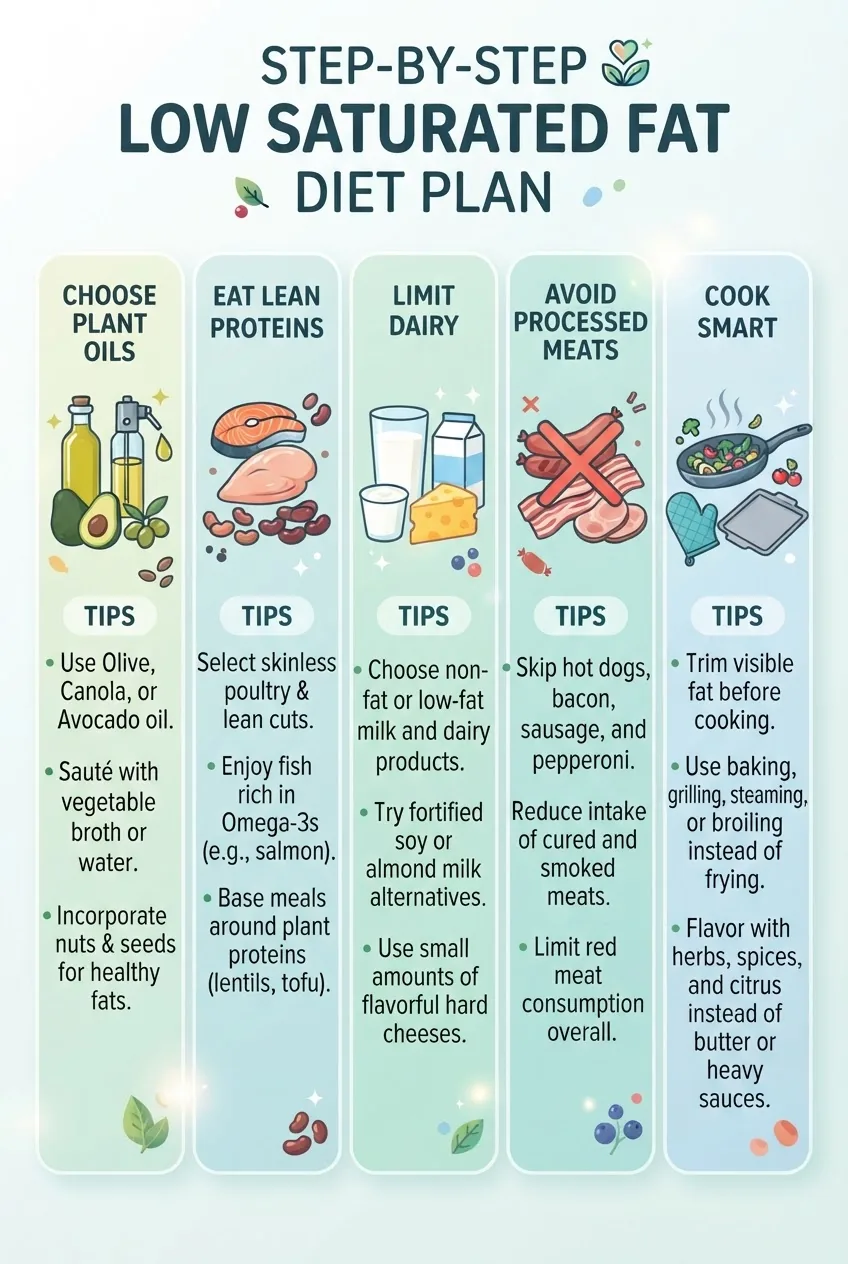
Step-by-step approach:
- Audit current intake: Track common sources of saturated fat at meals for one week.
- Swap cooking fats: Use extra-virgin olive oil or canola instead of butter, lard, or palm oil; consider small amounts of avocado oil for higher smoke points.
- Choose lean proteins: Choose skinless poultry, fish, legumes, and tofu over fatty cuts of red meat; trim visible fat when preparing meat.
- Limit processed meats and fried foods: Avoid frequent bacon, sausage, hot dogs, and deep-fried fast foods.
- Moderate dairy: Use low-fat or reduced-fat dairy options where sensible; swap cream-based sauces for olive oil–based or tomato sauces.
- Increase unsaturated fats: Add nuts, seeds, and fatty fish (salmon, mackerel) two or more times per week.
- Watch portions and calories: A low saturated fat diet still requires caloric balance for weight control.
- Cook smart: Bake, roast, grill, or steam instead of frying; use nonstick pans or small amounts of healthy oils.
Sample meal swaps (experience signals):
- Breakfast: swap buttered toast and full-fat yogurt for whole-grain toast with mashed avocado and low-fat Greek yogurt topped with berries.
- Lunch: replace a burger with fries with a grilled chicken or bean salad dressed with olive oil and lemon.
- Dinner: swap creamy pasta made with heavy cream for whole-grain pasta tossed with sautéed vegetables, canned tuna, and a drizzle of extra-virgin olive oil.
Practical grocery tips:
- Read labels for “saturated fat” grams per serving and choose items with lower grams per portion.
- Prefer single-ingredient plant oils (olive, canola) and whole foods (nuts, legumes) over processed items.
- When dining out, ask for dressings or sauces on the side and choose grilled or baked entrées.
Behavioral strategies:
- Set simple rules (e.g., limit red meat to twice weekly; use plant oils for all home cooking).
- Use gradual swaps rather than radical change to improve long-term adherence.
- Combine fat quality improvements with reduced added sugars for synergistic metabolic benefit; see our No Sugar Diet Guide with Meal Plans and Food Lists for complementary tips.
Additional resources and holistic approaches:
natural remedies for diabetes — review natural strategies in parallel with diet modifications where appropriate.
foods that burn belly fat can complement saturated fat reduction for abdominal fat loss and metabolic health.
Transition: The next section ties saturated fat choices to blood sugar and metabolic health.
The Relationship Between Saturated Fat and Sugar in the Diet
Answer: Saturated fat and sugar interact through shared effects on metabolism—high saturated fat can impair insulin sensitivity in some contexts and added sugar replacement choices matter; lowering both added sugars and saturated fat while choosing unsaturated fats improves cardiometabolic profiles.
Metabolic interactions:
- Saturated fat may reduce insulin sensitivity in skeletal muscle in some studies, contributing to higher blood glucose after meals (According to controlled metabolic studies published in peer-reviewed journals).
- High intake of added sugars, especially in refined-carbohydrate contexts, increases triglycerides and can compound cardiometabolic risk typically attributed to poor fat quality (According to observational and metabolic studies).
- Replacing saturated fat with refined carbohydrates often does not improve cardiometabolic outcomes; replacing it with unsaturated fats is superior (According to randomized controlled trials and meta-analyses).
How to integrate sugar and fat reduction practically:
- Prioritize whole-food carbohydrate sources (vegetables, legumes, whole grains) rather than sugary processed foods when lowering saturated fat.
- Choose unsweetened dairy or plant alternatives with healthy oils rather than full-fat sweetened desserts.
- Monitor overall caloric intake to avoid weight gain when substituting fats with sugars.
natural vs added sugar guide — for readers who want a deeper understanding of sugar types and health effects that complement fat reduction strategies.
daily sugar intake recommendations clarify how much added sugar to cap while improving fat quality.
blood sugar levels and fats explains how saturated fat intake may influence blood sugar control in the context of overall diet and metabolic health.
sugar substitutes and fat effects discusses how sugar alternatives can change food choices and fat intake patterns.
best sugar substitutes offers options for replacing added sugar while you improve fat choices.
caloric content of sugar helps you balance energy from sugar and fat when reading labels and planning meals.
Transition: Next we cover how to read nutrition labels to identify saturated fat content and make informed buys at the store.
Reading Nutrition Labels for Saturated Fat Content
Answer: Check the Nutrition Facts panel for “Saturated Fat” grams per serving and % Daily Value, review serving size, and scan the ingredient list for coconut oil, palm oil, butter, or hydrogenated fats to identify high saturated fat products.
Step-by-step label walkthrough (experience signal):
- Check serving size at the top—compare it to the portion you will actually eat.
- Find “Total Fat” then “Saturated Fat” (g). The FDA requires this to be listed on the Nutrition Facts panel (According to FDA labeling standards).
- Note % Daily Value (DV) based on a 2,000 calorie diet; currently DVs are provided for general guidance (According to FDA nutrition guidance).
- Scan the ingredient list for saturated-rich ingredients: coconut oil, palm oil, butter, lard, hydrogenated or partially hydrogenated fats.
- Compare similar products per 100 g or per serving to choose the lowest saturated fat option.
Example reading: A packaged item lists 6 g saturated fat per serving (30% DV). If you eat two servings, you consume 12 g (60% DV) — multiply grams by servings to calculate true intake.
caloric content of sugar — useful when comparing energy contributions from sugar and fats on the label.
Transition: Finally, the article distills practical takeaways you can act on immediately.
Summary and Practical Takeaways on Saturated Fatty Acids for Your Health
Answer: Limit saturated fat intake by choosing unsaturated fats, lean proteins, and whole-food carbs; prioritize replacement with polyunsaturated/monounsaturated fats, monitor labels, and pair fat quality work with reduced added sugars for the best cardiometabolic outcomes.
- Limit saturated fat to under about 10% of calories as a general public-health target (According to U.S. Dietary Guidelines).
- Replace saturated fats with polyunsaturated or monounsaturated fats—not refined carbohydrates—to reduce cardiovascular risk (According to randomized trial evidence).
- Focus on whole-food swaps: olive oil, nuts, legumes, fish, and vegetables instead of butter, fatty meats, and palm/coconut oil.
- Read nutrition labels for grams per serving and watch serving sizes when tallying daily intake.
- Combine saturated fat reduction with lower added sugar and energy balance for improved weight and metabolic outcomes.
- Consult a healthcare professional for personalized advice, especially if you have high cholesterol or metabolic disease.
Take action:
- Start with one swap this week (e.g., use olive oil instead of butter).
- Track two meals for saturated fat sources and reduce the highest by half.
- Ask your clinician about lipid testing and personalized dietary targets.
Conclusion: Saturated fatty acids are chemically distinct fats that commonly raise LDL cholesterol when consumed in excess, but risk depends on which nutrients replace them and the overall diet pattern; prioritize unsaturated fats, whole foods, and reduced added sugars to improve heart and metabolic health. Ready to make a change? Review labels, try one food swap this week, and consult your healthcare provider for personalized next steps.