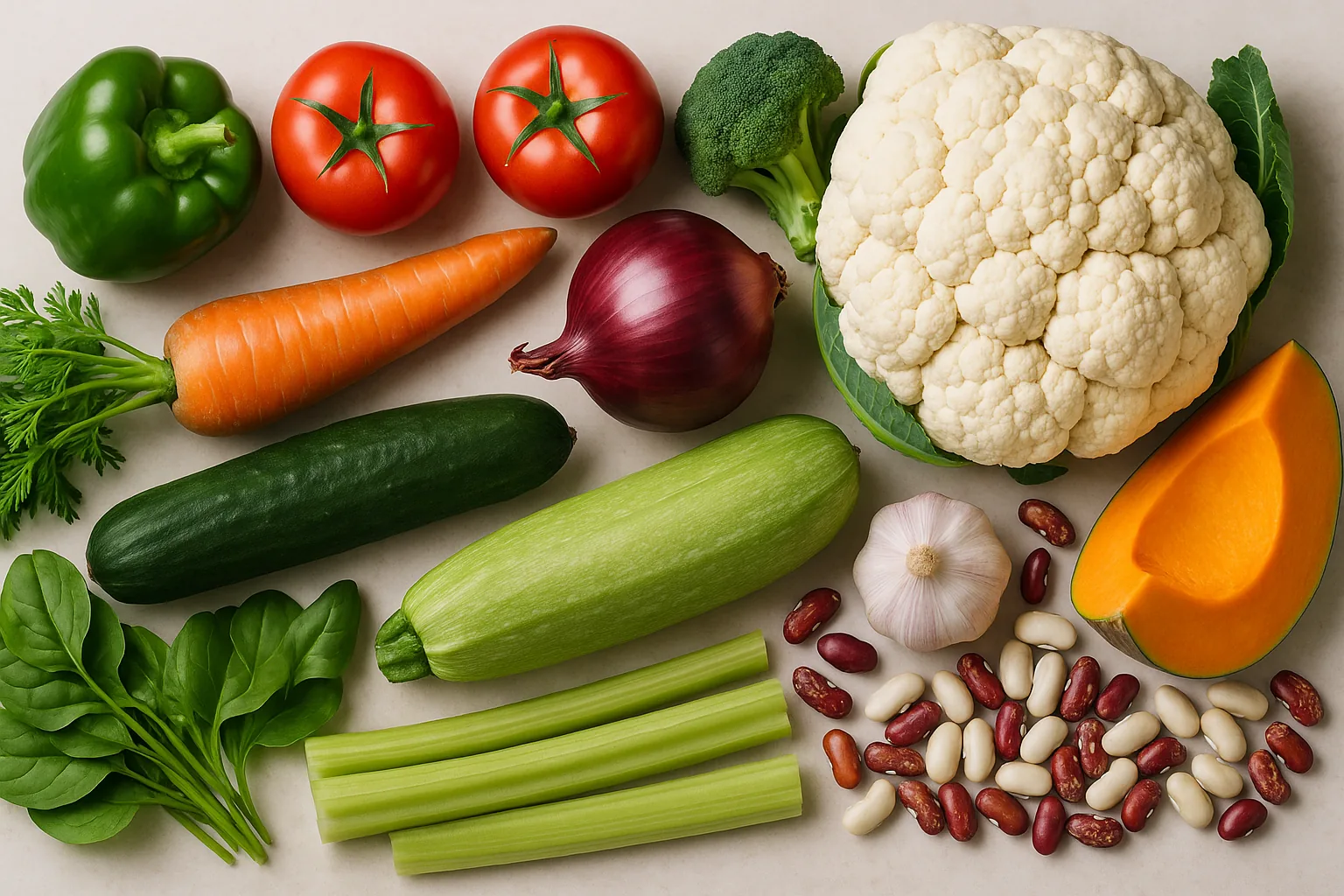
This guide lists 100 vegetables by common name and provides a picture prompt plus a concise per-100g nutrition summary (calories, carbs, protein, fiber, and key vitamins/minerals) for each entry so you can identify, compare, and plan meals quickly without cross-referencing multiple sources.
What is this “100 vegetables name” guide and how is it organized?
Answer: This guide is a curated list of 100 commonly consumed vegetables, organized alphabetically into a single table with per-100g nutrition summaries, a picture generation prompt for each, and supporting sections on reading values, storage, seasonality, and culinary uses.
This main list focuses on commonly sold vegetables in U.S. markets and farmer’s markets, with emphasis on items available in Texas. Each row includes: common name, vegetable subgroup, approximate calories, carbs, protein, fiber per 100 grams, and the most relevant vitamins or minerals to aid selection for health goals.
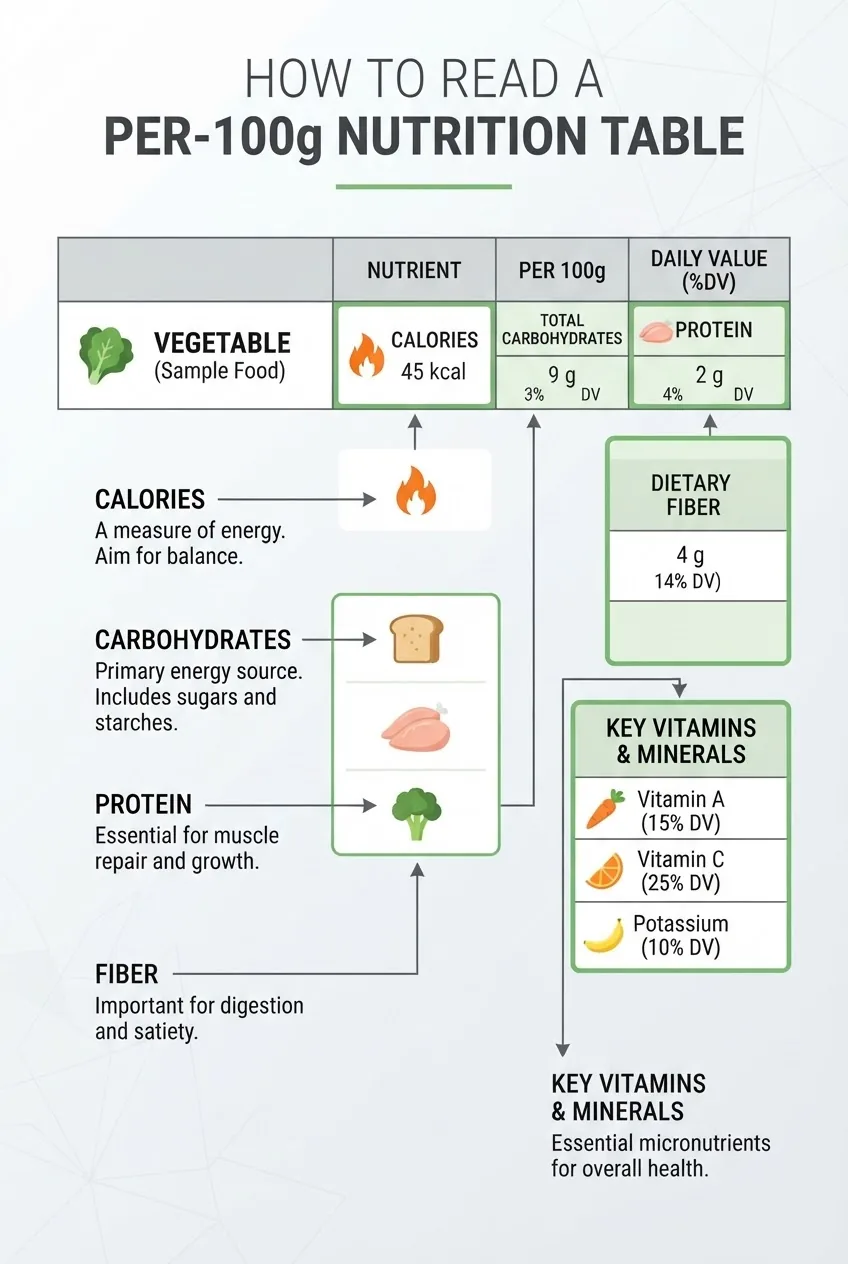
Term: Per-100g nutrition: standardized nutrient amounts measured for 100 grams of edible portion to allow direct comparison between foods.
How do I read the nutrition columns and what do the terms mean?
Answer: Read the table columns as amounts per 100 grams: calories (kcal), carbohydrates (g), protein (g), fiber (g), and a short note on key vitamins/minerals; these give a consistent baseline for comparing energy and macronutrient density across vegetables.
Term: Calorie: a unit of energy used to quantify how much energy the body can get from food; here expressed as kilocalories (kcal) per 100 g.
Term: Carbohydrates: macronutrients that include sugars, starches and fiber and are measured in grams per 100 g; they are the primary source of energy in many diets.
Term: Fiber: the indigestible part of plant foods that aids digestion and is measured in grams per 100 g; includes soluble and insoluble types with different effects on health.
Values are rounded to reasonable precision for quick comparison; for clinical or dietetic use check linked sources or USDA data. Use the key vitamins/minerals note to choose vegetables for specific micronutrient goals like vitamin A, vitamin C, potassium, or iron.
Which 100 vegetables are included and what are their nutrition summaries?
Answer: The 100-item table below lists commonly eaten vegetables with an approximate per-100g calorie, carbs, protein, fiber, and key vitamins/minerals summary plus an image generation prompt you can use to produce a reference photo.
Use this table to scan for low-calorie, high-fiber, or micronutrient-rich choices; the prompts are suitable for generating consistent identification photos for personal use or labeling.
| # | Vegetable | Group | Calories (kcal) | Carbs (g) | Protein (g) | Fiber (g) | Key vitamins / minerals | Picture prompt |
|---|---|---|---|---|---|---|---|---|
| 1 | Artichoke (globe) | Thistle, flower bud | 47 | 11 | 3.3 | 5.4 | Vitamin C, folate, magnesium | Generate a photorealistic image of a fresh globe artichoke on a wooden table with one cut open showing heart |
| 2 | Arugula | Leafy green | 25 | 3.7 | 2.6 | 1.6 | Vitamin K, vitamin A, calcium | Generate a high-quality lifestyle photo of fresh arugula leaves in a market basket |
| 3 | Asparagus | Stem | 20 | 3.9 | 2.2 | 2.1 | Folate, vitamin K, vitamin A | Generate a photorealistic image showing a bundle of green asparagus tips on a white surface |
| 4 | Beetroot (beets) | Root | 43 | 10 | 1.6 | 2.8 | Folate, manganese, potassium | Generate a photorealistic image of raw beetroots with leafy greens and one sliced cross-section |
| 5 | Bell pepper (red) | Fruit vegetable | 31 | 6 | 1 | 2.1 | Vitamin C, vitamin A, potassium | Generate a high-quality image of a red bell pepper halved showing seeds and flesh |
| 6 | Bok choy | Leafy green | 13 | 2.2 | 1.5 | 1 | Vitamin A, vitamin C, calcium | Generate a photorealistic image of baby bok choy bunch on slate |
| 7 | Broccoli | Cruciferous | 34 | 6.6 | 2.8 | 2.6 | Vitamin C, vitamin K, folate | Generate a photorealistic close-up of a broccoli crown with water droplets |
| 8 | Brussels sprouts | Cruciferous | 43 | 8.9 | 3.4 | 3.8 | Vitamin K, vitamin C, manganese | Generate a photorealistic image of roasted Brussels sprouts in a cast-iron skillet |
| 9 | Cabbage (green) | Leafy/cole | 25 | 5.8 | 1.3 | 2.5 | Vitamin C, vitamin K, folate | Generate a photorealistic image of a halved green cabbage head on a butcher block |
| 10 | Carrot | Root | 41 | 9.6 | 0.9 | 2.8 | Beta-carotene (vitamin A), vitamin K, potassium | Generate a photorealistic image of whole carrots with tops on a rustic table |
| 11 | Cauliflower | Cruciferous | 25 | 4.9 | 1.9 | 2 | Vitamin C, vitamin K, folate | Generate a photorealistic image of a cauliflower head with a few florets removed |
| 12 | Celery | Stalk | 16 | 3 | 0.7 | 1.6 | Vitamin K, folate, potassium | Generate a photorealistic image of celery stalks with leaves on a cutting board |
| 13 | Chard (Swiss chard) | Leafy green | 19 | 3.7 | 1.8 | 1.6 | Vitamin K, vitamin A, magnesium | Generate a photorealistic image of colorful Swiss chard leaves with stems |
| 14 | Collard greens | Leafy green | 32 | 7.1 | 3.0 | 4.0 | Vitamin K, vitamin A, calcium | Generate a high-quality photo of collard green leaves stacked on a wooden board |
| 15 | Cucumber | Vine/fruit vegetable | 15 | 3.6 | 0.7 | 0.5 | Vitamin K, potassium | Generate a photorealistic image of sliced cucumber rounds on a white plate |
| 16 | Eggplant (aubergine) | Fruit vegetable | 25 | 5.9 | 1.0 | 3.0 | Fiber, manganese, folate | Generate a photorealistic image of whole and sliced eggplant on a rustic board |
| 17 | Fennel (bulb) | Bulb | 31 | 7.3 | 1.2 | 3.1 | Vitamin C, potassium, fiber | Generate a photorealistic image of a fennel bulb with feathery fronds |
| 18 | Garlic | Bulb/spice | 149 | 33 | 6.4 | 2.1 | Manganese, vitamin B6, vitamin C | Generate a photorealistic image of garlic bulbs and peeled cloves on a wooden board |
| 19 | Ginger (root) | Rhizome | 80 | 17.8 | 1.8 | 2.0 | Potassium, magnesium | Generate a high-quality lifestyle photo of fresh ginger root with a small grater |
| 20 | Green beans | Legume (vegetable form) | 31 | 7 | 1.8 | 3.4 | Vitamin C, vitamin K, fiber | Generate a photorealistic image of trimmed green beans in a bowl |
| 21 | Kale | Leafy green | 49 | 8.8 | 4.3 | 3.6 | Vitamin K, vitamin A, vitamin C, calcium | Generate a photorealistic close-up of curly kale leaves with water droplets |
| 22 | Kohlrabi | Stem/bulb | 27 | 6.2 | 2.7 | 3.6 | Vitamin C, fiber, potassium | Generate a photorealistic image of whole kohlrabi bulbs with a peeled slice |
| 23 | Leek | Allium, stalk | 61 | 14.2 | 1.5 | 1.8 | Vitamin K, manganese, folate | Generate a photorealistic image of fresh leeks arranged on a cutting board |
| 24 | Lettuce (iceberg) | Leafy green | 14 | 2.97 | 0.9 | 1.2 | Vitamin K, folate | Generate a photorealistic image of an iceberg lettuce head split open |
| 25 | Mushroom (white) | Fungi (culinary veg) | 22 | 3.3 | 3.1 | 1.0 | Vitamin D (if exposed), B vitamins, selenium | Generate a photorealistic image of white button mushrooms in a wooden crate |
| 26 | Mushroom (shiitake) | Fungi (culinary veg) | 34 | 7.0 | 2.2 | 2.5 | Vitamin B5, copper, selenium | Generate a photorealistic image of shiitake mushrooms on a market table |
| 27 | Okra | Pod | 33 | 7.5 | 2.0 | 3.2 | Vitamin C, folate, magnesium | Generate a photorealistic image of fresh okra pods clustered on a wooden surface |
| 28 | Onion (yellow) | Bulb | 40 | 9.3 | 1.1 | 1.7 | Vitamin C, potassium, folate | Generate a photorealistic image of yellow onions with papery skins and a halved onion |
| 29 | Parsnip | Root | 75 | 18 | 1.2 | 4.9 | Vitamin C, potassium, fiber | Generate a photorealistic image of parsnips with a few peeled slices next to them |
| 30 | Pea (green) | Legume (pod/seed) | 81 | 14.5 | 5.4 | 5.1 | Vitamin K, vitamin C, manganese | Generate a photorealistic image of fresh green peas in a bowl with pods beside |
| 31 | Potato (white) | Tuber | 77 | 17.5 | 2.0 | 2.2 | Vitamin C, potassium, B6 | Generate a photorealistic image of whole white potatoes with one cut to show flesh |
| 32 | Sweet potato | Tuber | 86 | 20.1 | 1.6 | 3.0 | Beta-carotene (vitamin A), vitamin C, potassium | Generate a photorealistic image of orange sweet potatoes with one baked and split open |
| 33 | Radish | Root | 16 | 3.4 | 0.7 | 1.6 | Vitamin C, folate | Generate a photorealistic image of red radishes with leafy tops and a sliced radish |
| 34 | Rhubarb (stalk) | Stalk (culinary veg) | 21 | 4.5 | 0.9 | 1.8 | Vitamin K, calcium | Generate a photorealistic image of rhubarb stalks with leaves removed on a kitchen counter |
| 35 | Rutabaga | Root | 37 | 8.6 | 1.2 | 2.3 | Vitamin C, potassium, fiber | Generate a photorealistic image of rutabagas with rough skin and one peeled |
| 36 | Scallion (green onion) | Allium | 32 | 7.3 | 1.8 | 2.6 | Vitamin K, vitamin C, folate | Generate a photorealistic image of fresh scallions bundled with rubber band |
| 37 | Snow peas | Pod | 42 | 7.6 | 2.8 | 2.6 | Vitamin C, vitamin K, fiber | Generate a photorealistic image of snow peas with pods open to show peas inside |
| 38 | Snap peas (sugar snap) | Pod | 42 | 8.2 | 2.8 | 2.6 | Vitamin C, fiber, vitamin K | Generate a photorealistic image of sugar snap peas in a rustic bowl |
| 39 | Spinach | Leafy green | 23 | 3.6 | 2.9 | 2.2 | Vitamin K, vitamin A, folate, iron | Generate a photorealistic close-up of baby spinach leaves with dew |
| 40 | Squash (butternut) | Winter squash | 45 | 11.7 | 1.0 | 2.0 | Beta-carotene, vitamin C, potassium | Generate a photorealistic image of a halved butternut squash with seeds visible |
| 41 | Squash (zucchini) | Summer squash | 17 | 3.1 | 1.2 | 1.0 | Vitamin C, manganese | Generate a photorealistic image of sliced zucchini and whole zucchini on a kitchen board |
| 42 | Tomato | Fruit vegetable | 18 | 3.9 | 0.9 | 1.2 | Vitamin C, potassium, lycopene | Generate a photorealistic image of vine-ripened tomatoes clustered on a wooden board |
| 43 | Turnip | Root | 28 | 6.43 | 0.9 | 1.8 | Vitamin C, calcium | Generate a photorealistic image of turnips with green tops arranged on a market stall |
| 44 | Watercress | Leafy green | 11 | 1.3 | 2.3 | 0.5 | Vitamin K, vitamin C, calcium | Generate a photorealistic image of watercress bunches with thin stems on a white plate |
| 45 | Yam | Tuber | 118 | 27.9 | 1.5 | 4.1 | Vitamin C, potassium, manganese | Generate a photorealistic image of whole yams with rough brown skins and a sliced section |
| 46 | Tomatillo | Fruit vegetable | 32 | 6.5 | 1.6 | 1.9 | Vitamin C, niacin | Generate a photorealistic image of husked tomatillos with green husks and firm green fruit |
| 47 | Salsify | Root | 82 | 17.9 | 2.4 | 3.3 | Iron, potassium, fiber | Generate a photorealistic image of salsify roots with soil dust and a cross-section |
| 48 | Horseradish | Root | 48 | 11.3 | 1.2 | 3.3 | Vitamin C, potassium | Generate a photorealistic image of a horseradish root with a peeled portion and grater |
| 49 | Jerusalem artichoke (sunchoke) | Tuberoid | 73 | 17.4 | 2.0 | 1.6 | Iron, potassium, inulin (prebiotic) | Generate a photorealistic image of knobbly sunchokes with light soil and a sliced cross-section |
| 50 | Bamboo shoots | Shoot | 27 | 5.2 | 2.6 | 2.2 | Vitamin B6, potassium, fiber | Generate a photorealistic image of peeled bamboo shoots in a bowl with water droplets |
| 51 | Cassava (manioc, raw) | Tuber (starchy) | 160 | 38.1 | 1.4 | 1.8 | Vitamin C, manganese | Generate a photorealistic image of raw cassava roots with one peeled section |
| 52 | Chayote | Fruit vegetable | 19 | 4.5 | 0.8 | 1.7 | Vitamin C, folate, potassium | Generate a photorealistic image of chayote with one cut to show pale flesh and seed |
| 53 | Chinese broccoli (gai lan) | Leafy/stem | 20 | 3.6 | 1.8 | 2.2 | Vitamin A, vitamin C, calcium | Generate a photorealistic image of gai lan stalks and dark green leaves on a market tray |
| 54 | Celeriac (celery root) | Root | 42 | 9.2 | 1.5 | 1.8 | Vitamin K, phosphorus, fiber | Generate a photorealistic image of a celeriac root with outer skin and a peeled wedge |
| 55 | Chicory (endive) | Leafy/lettuce-type | 17 | 4.7 | 1.3 | 3.1 | Vitamin K, folate, manganese | Generate a photorealistic image of endive heads neatly arranged on a white background |
| 56 | Bitter melon | Vine/fruit vegetable | 17 | 3.7 | 1.0 | 2.8 | Vitamin C, folate | Generate a photorealistic image of sliced bitter melon with textured green skin visible |
| 57 | Lotus root | Rhizome | 74 | 17.2 | 2.6 | 4.9 | Vitamin C, potassium, fiber | Generate a photorealistic image of lotus root with circular holes and sliced rounds |
| 58 | Napa cabbage | Leafy/cole | 12 | 2.2 | 1.2 | 1.0 | Vitamin C, folate | Generate a photorealistic image of a napa cabbage head with pale green layers visible |
| 59 | Peppers (green) | Fruit vegetable | 20 | 4.6 | 0.9 | 1.7 | Vitamin C, vitamin B6 | Generate a photorealistic image of green bell peppers with one cut to reveal seeds |
| 60 | Pepperoncini | Pickled/fruit vegetable | 28 | 6.0 | 0.9 | 1.5 | Vitamin C, capsaicinoids (minor) | Generate a photorealistic image of pepperoncini peppers in a jar and fresh on a board |
| 61 | Poblano pepper | Fruit vegetable | 26 | 5.1 | 1.0 | 2.0 | Vitamin B6, vitamin C | Generate a photorealistic image of poblano peppers on a ceramic plate with one roasted |
| 62 | Hubbard squash | Winter squash | 55 | 12.2 | 1.0 | 2.9 | Vitamin A, vitamin C | Generate a photorealistic image of a large hubbard squash with rough skin and a cut wedge |
| 63 | Kava root | Root (beverage crop) | 100 | 22 | 2.0 | 3.0 | Potassium, manganese (traditional use only) | Generate a photorealistic image of kava roots in bundles on a woven mat |
| 64 | Mooli (daikon radish) | Root | 18 | 4.1 | 0.6 | 1.6 | Vitamin C, potassium | Generate a photorealistic image of a long white daikon radish with greens |
| 65 | Mustard greens | Leafy green | 27 | 4.7 | 2.9 | 3.2 | Vitamin K, vitamin A, calcium | Generate a photorealistic image of mustard green leaves with vivid veins |
| 66 | Nopal (cactus pad) | Succulent pad | 16 | 3.3 | 1.3 | 2.2 | Vitamin C, calcium, magnesium | Generate a photorealistic image of cleaned nopal cactus pads sliced on a cutting board |
| 67 | Peppers (jalapeño) | Fruit vegetable | 29 | 6.5 | 0.9 | 2.8 | Vitamin C, capsaicin | Generate a photorealistic image of jalapeño peppers with one sliced to show seeds |
| 68 | Peppers (habanero) | Fruit vegetable | 40 | 8.5 | 1.5 | 2.0 | Vitamin C, capsaicin (very high) | Generate a photorealistic image of bright orange habanero peppers on a dark background |
| 69 | Persimmon (vegetable usage rare) | Fruit (listed for regional use) | 81 | 18.6 | 0.6 | 3.6 | Vitamin A, vitamin C, fiber | Generate a photorealistic image of ripe persimmons with glossy skin on a market table |
| 70 | Pumpkin | Winter squash | 26 | 6.5 | 1.0 | 0.5 | Beta-carotene, vitamin A, potassium | Generate a photorealistic image of a small sugar pumpkin with one wedge removed to show flesh |
| 71 | Salsify (black) | Root | 74 | 18.8 | 2.3 | 3.1 | Iron, potassium, inulin | Generate a photorealistic image of black salsify roots with peeled white interior revealed |
| 72 | Taro (root) | Corm/tuber | 142 | 34.6 | 0.5 | 5.1 | Vitamin E, potassium, fiber | Generate a photorealistic image of taro roots with fibrous skin and a cross-section |
| 73 | Ube (purple yam) | Tuber | 116 | 27.9 | 1.5 | 4.1 | Vitamin C, anthocyanins, potassium | Generate a photorealistic image of purple ube tubers with vivid purple flesh exposed |
| 74 | Wasabi (root) | Rhizome | 109 | 23.5 | 4.8 | 3.3 | Vitamin C, potassium | Generate a photorealistic image of a fresh wasabi rhizome with a small grater and paste |
| 75 | Water chestnut | Corm/tuber | 97 | 23.9 | 1.4 | 3.0 | Manganese, potassium, fiber | Generate a photorealistic image of peeled water chestnuts in a bowl with water |
| 76 | Sweet corn (kernels) | Grain-like vegetable/seed | 86 | 19.0 | 3.2 | 2.7 | Vitamin B3, B6, folate | Generate a photorealistic image of fresh yellow corn kernels and a halved cob |
| 77 | Cassava leaves (cooked) | Leafy green (regional) | 19 | 3.0 | 2.5 | 2.2 | Vitamin A, iron, calcium | Generate a photorealistic image of cooked cassava leaves in a bowl served with rice |
| 78 | Chives | Allium, herb | 30 | 4.3 | 3.3 | 2.5 | Vitamin K, vitamin C, folate | Generate a photorealistic image of chopped chives sprinkled on a dish and fresh stems |
| 79 | Endive (curly) | Leafy/lettuce | 17 | 3.4 | 1.3 | 3.1 | Vitamin K, folate | Generate a photorealistic image of curly endive leaves fanned on a plate |
| 80 | Lotus stem | Stem (aquatic plant) | 74 | 17.2 | 2.6 | 4.9 | Vitamin C, potassium, fiber | Generate a photorealistic image of lotus stems sliced into rings in a bowl |
| 81 | Purslane | Leafy succulent | 20 | 3.4 | 1.6 | 2.0 | Omega-3 ALA, vitamin A, magnesium | Generate a photorealistic macro image of purslane leaves showing succulent stems |
| 82 | Seaweed (edible, wakame) | Algae (culinary veg) | 45 | 9.1 | 3.0 | 0.5 | Iodine, calcium, vitamin K | Generate a photorealistic image of rehydrated wakame seaweed in a bowl with soup |
| 83 | Kudzu (edible shoots) | Vine shoot | 33 | 7.0 | 2.0 | 3.0 | Vitamin C, fiber, potassium | Generate a photorealistic image of kudzu shoots harvested and bundled on a market table |
| 84 | Kangkong (water spinach) | Leafy aquatic | 19 | 3.1 | 2.6 | 2.1 | Vitamin A, iron, calcium | Generate a photorealistic image of water spinach stems and leaves in a market basket |
| 85 | Mache (lamb’s lettuce) | Leafy green | 21 | 3.6 | 2.0 | 1.8 | Vitamin C, vitamin A | Generate a photorealistic image of mache leaves arranged on a salad plate |
| 86 | Mizuna | Leafy green (mustard family) | 19 | 3.3 | 2.1 | 1.9 | Vitamin K, vitamin A, folate | Generate a photorealistic image of mizuna leaves with feathery edges on a wooden table |
| 87 | Rapini (broccoli rabe) | Leafy/flowering green | 22 | 3.7 | 3.2 | 3.4 | Vitamin A, vitamin C, calcium | Generate a photorealistic image of broccoli rabe stems and florets on a prep table |
| 88 | Romanesco | Cruciferous | 25 | 4.1 | 2.6 | 2.7 | Vitamin C, vitamin K, fiber | Generate a photorealistic image of a romanesco head with fractal florets close-up |
| 89 | Samphire (sea asparagus) | Halophyte/succulent | 20 | 3.7 | 1.2 | 2.8 | Iodine, vitamin C, sodium (naturally salty) | Generate a photorealistic image of samphire sprigs on an oyster shell plate by the sea |
| 90 | Sea beet | Leafy coastal plant | 20 | 3.9 | 2.1 | 2.0 | Iron, vitamin C, calcium | Generate a photorealistic image of sea beet leaves with coastal backdrop and a hand holding a leaf |
| 91 | Sugar cane (young shoots) | Stalk (sugar crop) | 269 | 73 | 0.2 | 0.0 | Minor minerals, mainly sucrose (used for sugar) | Generate a photorealistic image of sugar cane stalks cut into short segments on a wooden board |
| 92 | Sorrel | Leafy/tart herb | 22 | 3.3 | 2.3 | 1.6 | Vitamin C, oxalates (natural), potassium | Generate a photorealistic image of sorrel leaves bright green on a white plate |
| 93 | Skirret | Root | 70 | 17.1 | 0.9 | 3.1 | Iron, potassium, fiber | Generate a photorealistic image of skirret roots with peeled sections showing sweet white flesh |
| 94 | Sugar beet (root) | Root (sugar crop) | 57 | 13.0 | 1.6 | 2.0 | Folate, manganese, used for sugar extraction | Generate a photorealistic image of sugar beets with dirt and a sliced cross-section |
| 95 | Tindora (ivy gourd) | Fruit vegetable | 59 | 13.0 | 1.8 | 3.6 | Vitamin C, beta-carotene | Generate a photorealistic image of tindora vines with small green oblong fruits on a market tray |
| 96 | Yardlong bean | Legume/pod | 47 | 9.4 | 3.5 | 2.1 | Vitamin A, vitamin C, fiber | Generate a photorealistic image of yardlong beans draped over a market stall edge |
| 97 | Winged bean | Legume/pod | 86 | 19.0 | 13.0 | 3.0 | Protein-rich, vitamin A, iron | Generate a photorealistic image of winged beans with winged edges and cross-sections |
| 98 | Zedoary (white turmeric) | Rhizome | 80 | 18 | 2.0 | 4.0 | Vitamin C, potassium, aromatic compounds | Generate a photorealistic image of zedoary rhizomes with peeled and sliced pieces |
| 99 | Burdock root | Root | 72 | 17.3 | 1.5 | 3.3 | Inulin, fiber, potassium | Generate a photorealistic image of burdock roots bundled with a peeled slice showing white interior |
| 100 | Kaffir lime leaves (culinary herb) | Leaf/herb | 1 | 0.2 | 0.0 | 0.1 | Aromatic oils, minor vitamin C | Generate a photorealistic image of kaffir lime leaves stacked with one torn to show texture |
How accurate are the nutrition values and when should I check a primary source?
Answer: The table lists approximate per-100g nutrient values rounded for general comparison; verify precise values using authoritative databases like the USDA FoodData Central for clinical, therapeutic, or lab-accurate needs.
Rounding and natural variation (cultivar, ripeness, soil, storage) cause differences. Use the numbers here for quick meal planning and comparison; consult an RD or USDA for exact macros, micronutrients or to match dietary prescriptions.
Term: FoodData Central: a U.S. Department of Agriculture database providing detailed nutrient profiles for foods and ingredients (useful for precision).
How can I use the picture prompts to generate consistent images for identification?
Answer: Use each row’s generation prompt with an image tool to create consistent, photorealistic identification photos: specify lighting, scale (include a coin or hand for size), angle (three-quarter), and a neutral background for clarity.
Consistent images reduce misidentification: ask for one primary view (whole vegetable) and one cut view showing internal structure. For market labeling, keep lighting neutral and a single-point scale reference to show size accurately.
How do I compare vegetables for weight-loss, blood sugar control, or nutrient density?
Answer: For weight loss, prioritize low-calorie/high-fiber vegetables (e.g., leafy greens, cucumber, zucchini); for blood sugar control choose lower-carb, high-fiber options (leafy greens, cruciferous); for nutrient density choose vegetables high in vitamins/minerals per calorie (kale, spinach, red peppers).
- Weight-loss picks: lettuce, spinach, celery, cucumber, zucchini (low kcal, high volume).
- Blood-sugar picks: non-starchy greens, broccoli, cauliflower, peppers (lower carbs, higher fiber).
- Nutrient-dense picks: kale, red bell pepper, broccoli, sweet potato (high vitamins per calorie).
When substituting, keep serving equivalence in mind: 100 g comparisons highlight per-weight differences but portion size and preparation (added fats/sugars) change outcomes.
How should I store and prepare these vegetables to conserve nutrients and freshness?
Answer: Store most leafy greens in a cool, humid crisper wrapped lightly in a damp paper towel; store root vegetables in a cool dark place; refrigerate cut produce and use quickly. Prepare minimally (steaming, quick roasting, raw) to preserve water-soluble vitamins.
- Leafy greens: fridge crisper, avoid crushing; use within 3–7 days.
- Roots/tubers: cool, dark, ventilated space; keep longer (weeks to months for some).
- Alliums (onion, garlic): cool dry pantry; refrigerate only peeled/sliced.
- Cooking tips: steaming or sautéing preserves more vitamin C than long boiling; roasting concentrates flavor but can reduce some vitamins.
For preservation beyond a few days, blanch and freeze to retain most nutrients and texture for later cooking.
Where and when are specific vegetables in season in Texas and how does seasonality affect nutrition?
Answer: Texas seasonality varies by region: leafy greens (kale, spinach) peak fall–spring; tomatoes, peppers, corn peak summer; root crops often harvest in fall/winter; seasonal produce tends to have higher nutrient content and flavor when freshly harvested.
Seasonal harvesting reduces time from field to table, preserving heat-sensitive vitamins (vitamin C) and phytonutrients. Local farmer’s markets and CSA programs in Texas typically list harvest seasons; check local extension office calendars for exact weeks by region.
Internal link: For broader produce season tips, see the pillar page on fruit and vegetable types and benefits: Fruit Types Guide with Benefits and Nutritional Information.
How do I pick vegetables at the store for best quality and storage life?
Answer: Choose vegetables that are firm, brightly colored, free of soft spots or mold, and smell fresh; leafy greens should be crisp; avoid shriveled or excessively blemished produce for longer storage life.
- Check stems and leaves for freshness (crispness, green color).
- Smell root vegetables and bulbs—off-odors signal spoilage.
- For herbs and delicate greens, buy smaller quantities often to maximize freshness.
Internal link: For storage and prep techniques that preserve nutrients, see How to Prepare Vegetables Guide.
Which vegetables should people with diabetes prefer or avoid?
Answer: Prefer non-starchy, high-fiber vegetables (leafy greens, cruciferous, peppers, green beans); limit or count portions of starchy vegetables (potato, sweet potato, corn) to manage carbohydrate intake and post-meal glucose response.
Portion control and pairing with protein and healthy fats moderate blood sugar impact. For tailored choices, consult a registered dietitian or the guide on good diabetic vegetables: Good Diabetic Vegetables Guide.
How can I plan a week of meals using this 100-vegetable list?
Answer: Build meals by selecting 2–3 vegetables per meal: one leafy or green, one cooked/cruciferous, and one starchy or legume as needed; rotate colors to maximize nutrient variety and use the table to swap equivalents by calories and fiber.
- Breakfast: add spinach or arugula to eggs; use mushrooms and tomatoes for volume.
- Lunch: base salads on mixed greens + one crunchy veg (cucumber, radish) + protein.
- Dinner: roast a cruciferous veg (broccoli) with a starchy side (sweet potato) and a leafy raw side (kale salad).
Internal link: For inspiration on veggie-heavy dinners, see Veg Vegetable Recipes Guide and the Veggie Heavy Meals Guide.
How do I convert the table values to common serving sizes?
Answer: Multiply or divide the per-100g values by the serving weight in grams: e.g., a 50 g serving equals 0.5× the 100 g values; a medium carrot (~61 g) is 0.61× the per-100 g numbers.
Examples:
- 100 g broccoli = 34 kcal; 50 g broccoli = 17 kcal.
- One medium potato (~150 g) = 1.5× 77 kcal = ~116 kcal.
We recommend weighing foods for accuracy or using consistent volume-to-weight conversions from USDA or nutrition apps when tracking intake.
Are there any safety or allergy notes for the vegetables listed?
Answer: Yes: some vegetables are toxic raw (e.g., cassava must be cooked to remove cyanogenic compounds); others can cause allergic reactions (mushroom sensitivities, raw celery allergy), and certain greens are high in oxalates, which may affect people with kidney stones.
- Cassava: requires proper processing and cooking.
- Oxalate-rich greens (spinach, sorrel): limit for people with oxalate kidney stones.
- Allium family (onion, garlic): can trigger intolerances or GERD in sensitive people.
When in doubt, consult a medical professional for allergy testing or specific dietary restrictions. For classification questions like potatoes, see Is Potato a Vegetable?.
How can I use this list to identify nutrient gaps in my eating?
Answer: Compare your regular vegetable choices against the table: if you lack orange vegetables (beta-carotene) or dark greens (vitamin K, folate), deliberately add items like sweet potato, carrot, kale, and spinach to cover gaps.
Steps:
- Log vegetables you eat for a typical week.
- Mark colors and major micronutrients from the table.
- Target missing categories (e.g., add red/orange or cruciferous greens) and monitor over two weeks.
What cooking methods preserve the most vitamins and minerals?
Answer: Steaming, microwaving with little water, and quick stir-frying preserve more water-soluble vitamins (vitamin C, some B vitamins) than long boiling; roasting preserves flavor but may reduce some heat-sensitive nutrients.
Retention tips:
- Use minimal water and shorter cook times for vegetables high in vitamin C.
- Keep skins on roots when edible to preserve fiber and micronutrients.
- Use cooking liquids (broth) in soups to retain leached nutrients.
Which vegetables have the highest carbohydrate content and which are lowest?
Answer: Highest-carb vegetables in the list include cassava, taro, and sugar cane (starchy or sugar crops); lowest-carb include leafy greens (lettuce, kale, arugula) and cucumbers.
| Low-carb examples | Carbs (g/100g) | High-carb examples | Carbs (g/100g) |
|---|---|---|---|
| Lettuce | ~3 | Cassava | ~38 |
| Cucumber | ~3.6 | Taro | ~34.6 |
| Spinach | ~3.6 | Sweet corn | ~19 |
How do cultural and regional names affect identifying vegetables?
Answer: Many vegetables have different regional names (e.g., aubergine/eggplant, manioc/cassava), which can cause confusion; use botanical or common regional synonyms when sourcing or searching recipes to ensure correct ingredients.
Tip: When buying at markets or reading recipes, confirm appearance (shape, color, texture) and use the picture prompts in this guide to reduce errors caused by naming differences.
What are quick swaps to reduce calories yet keep volume and satiety?
Answer: Swap starchy sides for high-volume, low-calorie vegetables: replace fries or roasted potatoes with roasted cauliflower or mashed cauliflower; replace rice with riced cauliflower or steamed zucchini noodles for reduced calories and similar volume.
- Fries -> roasted parsnips (lower fat if baked) or carrot fries.
- Rice -> cauliflower rice or sautéed cabbage.
- Pasta -> spiralized zucchini or spaghetti squash.
How can home gardeners use this list to choose vegetables for a Texas garden?
Answer: Choose vegetables suited to local climate windows: plant heat-tolerant crops (tomato, pepper, okra, sweet potato) for summer and cool-season greens (lettuce, spinach, kale) for fall/winter; use the table to prioritize crops based on nutrition and kitchen use.
Consider days-to-harvest, heat tolerance, and water needs: consult local extension services for planting dates and recommended cultivars for Texas regions. Rotate crops and plan companion planting to maximize yield and soil health.
Frequently Asked Questions
What does “100 vegetables name” mean in this guide?
This guide’s “100 vegetables name” list is an alphabetically ordered set of one hundred commonly eaten vegetables with per-100g nutrition summaries and picture generation prompts to help with identification, meal planning, and comparing calories, carbs, protein, fiber, and key micronutrients.
Can I use these per-100g values for meal tracking?
Yes, use these per-100g values to estimate portion nutrition by scaling the numbers to your serving weight; for clinical accuracy or medical diets verify with USDA FoodData Central or a registered dietitian when precise macronutrient counts are needed.
Are picture prompts safe to use for commercial labels?
Yes, the picture prompts are designed for photorealistic generation and can be used as references for labels if you follow fair-use and image generation licensing for the tool you use; verify commercial licensing of generated images before public use.
Which vegetables are best for reducing blood sugar spikes?
Choose non-starchy, high-fiber vegetables like leafy greens, broccoli, cauliflower, and peppers; these have lower digestible carbohydrate per serving and higher fiber, which helps blunt post-meal glucose increases when paired with protein and healthy fats.
How should I store leafy greens to keep them fresh longest?
Store leafy greens in the refrigerator crisper wrapped loosely in a slightly damp paper towel inside a breathable container or perforated bag; keep them unwashed until use and use within 3–7 days for best texture and nutrients.
Which vegetables have the most vitamin C per 100g?
High vitamin C vegetables in this list include red bell pepper, broccoli, Brussels sprouts, and kale; choose raw or lightly cooked preparations to maximize vitamin C retention since it is heat-sensitive and water-soluble.
How do I swap starchy vegetables for lower-calorie options?
Replace starchy sides (potato, taro, cassava) with lower-calorie, high-volume vegetables such as cauliflower, zucchini, or leafy greens; match cooking methods (roast, mash, steam) to keep texture and satisfaction while reducing calories.
Is it necessary to cook all vegetables to access nutrients?
No, some nutrients are more bioavailable cooked (e.g., beta-carotene in carrots), while others like vitamin C are lost with heat; a mix of raw and cooked vegetables in meals maximizes nutrient variety and absorption.