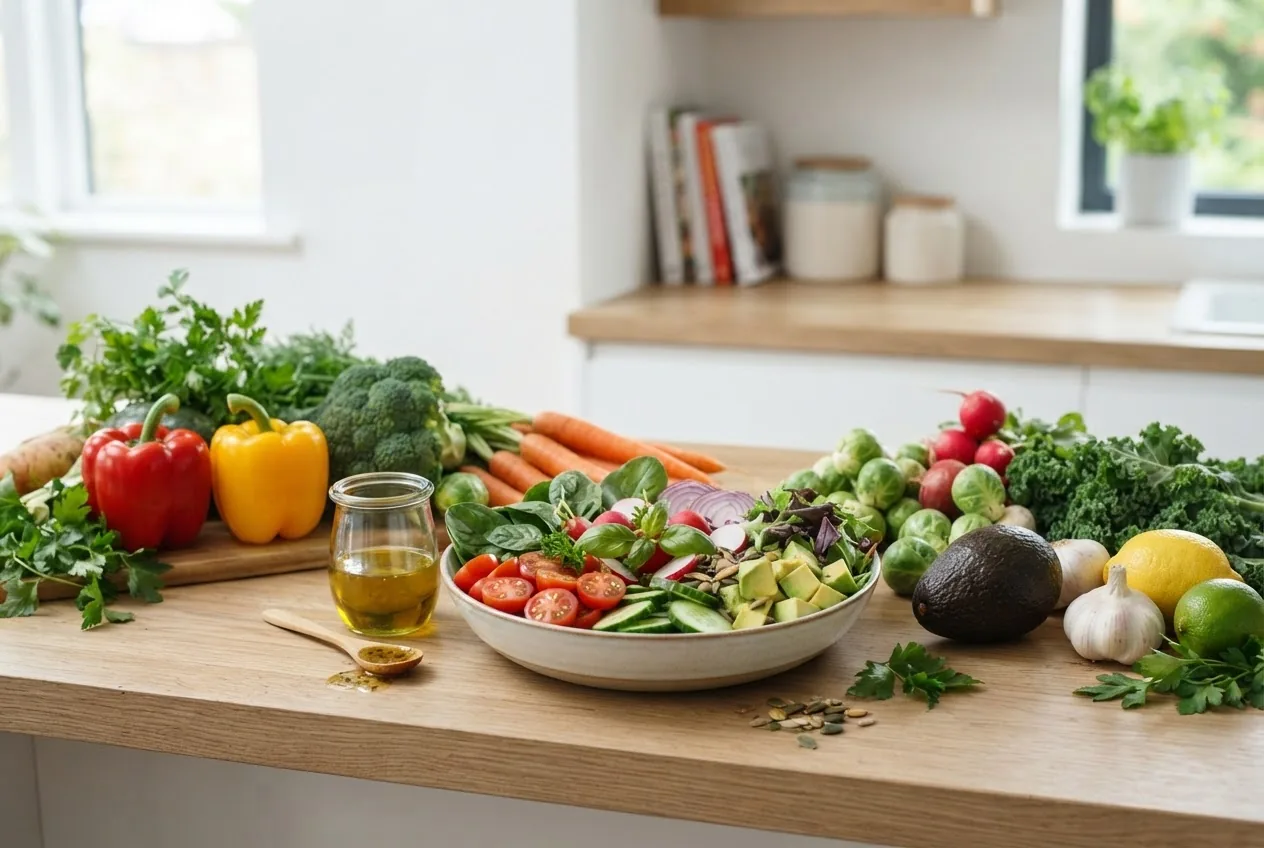
By the end of this guide you’ll have built a practical week of veg vegetable recipes, learned step-by-step cooking techniques, and be ready to make easy, healthy dinners in about 30–90 minutes per recipe; skill level: beginner to confident home cook.
Before you start
- Tools: 1 rimmed baking sheet, a 12″ skillet, a medium saucepan, vegetable peeler, sharp chef’s knife, and a cutting board.
- Pantry basics: olive oil, kosher salt, black pepper, garlic, lemon, soy sauce, apple cider vinegar, Dijon mustard, smoked paprika, cumin.
- Fresh produce to buy for first week: 2 heads broccoli, 4 carrots, 3 bell peppers, 1 zucchini, 1 bunch kale, 1 small cabbage, cherry tomatoes, 2 avocados.
- Time: set aside one 60–90 minute weekly prep session for chopping and par-cooking.
- Allergies/Diet: substitute soy-free tamari or coconut aminos; consult a registered dietitian for medical conditions.
Now follow the numbered hands-on steps below — each step begins with an action-first phrase and contains the full section you need.
-
Read the overview:
Introduction to Veg Vegetable Recipes
This guide is a hands-on manual of practical, tasty veg vegetable recipes and meal ideas focused on getting more vegetables into dinners and everyday meals without fuss. A vegetable dish here means preparing plant-based or plant-forward plates where vegetables play the starring role — whether raw, roasted, sautéed, or blended into sauces. You’ll find quick recipes for weeknights, batch-friendly entrees for meal prep, and some Texan-friendly ideas that use local summer produce like sweet corn, poblano peppers, and summer squash.
Why focus on easy recipes? People cook more often when steps are short, ingredients are familiar, and flavors are bold. Expect clear ingredient lists, approximate cooking times, and realistic tips for novice cooks who want healthy, satisfying dinners.
Curious about classifications? See Are Green Beans Fruit or Vegetable Guide with Key Differences for botanical context.
Transition: With the approach clear, let’s look at why vegetables deserve a regular place on your plate and quick evidence that supports it.
-
Understand the benefits:
Benefits of Including Vegetables in Your Meals
Adding more vegetables to your meals supports overall health through fiber, vitamins, minerals, and phytochemicals. Vegetables are low in energy density and high in satiety factors — which helps with weight management — and they supply essential micronutrients that most adults fall short on.
- Fiber: Vegetables like broccoli, carrots, and cabbage provide soluble and insoluble fiber to support digestion and steady blood sugar.
- Vitamins and minerals: Leafy greens supply vitamin K and folate; orange vegetables (carrots, sweet potatoes) provide provitamin A; bell peppers are vitamin C powerhouses.
- Antioxidants and phytochemicals: Cruciferous vegetables contain glucosinolates and flavonoids linked to cellular health.
- Weight management: Meals with lots of veggies tend to be lower in calories but higher in volume, helping reduce overall energy intake.
- Chronic disease prevention: According to a 2024 USDA report, higher vegetable intake correlates with lower risk markers for cardiovascular disease and type 2 diabetes (population-level associations, not individual medical advice).
Quick evidence links: Are Vegetables Bad for You? Informational Health Guide addresses myths, and Avocado Fruit Guide and Nutritional Benefits Explained showcases a nutrient-dense example often paired with veggies.
For deeper nutrient data, see an authoritative source: USDA reports and nutrient tables provide exact vitamin and mineral amounts per serving (useful when counting micronutrients). For medical studies linking vegetable intake to health outcomes, consult resources like NIH/NCBI.
Transition: Knowing the benefits makes choosing fast-cook vegetables smart — next, we’ll pick the easiest vegetables to keep dinner simple.
-
Choose the quickest veg:
Easy to Prepare Vegetables: Best Choices for Quick Cooking
For weeknight cooking, choose vegetables that require minimal prep and short cook times. Below are 10 reliable choices with their quick-cook methods and flavor notes.
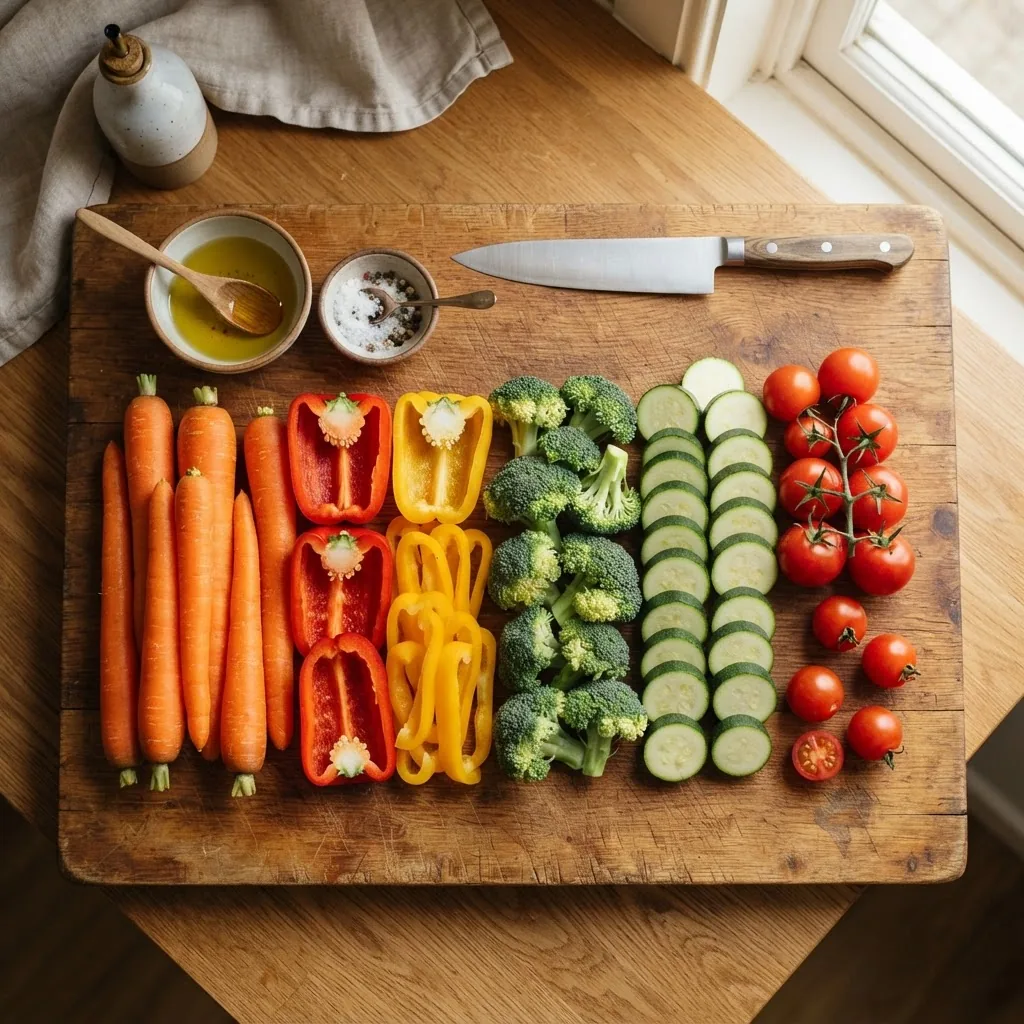
- Spinach — cook time: 2–4 minutes sautéed; flavor: mild, slightly sweet. Use as wilted bed for proteins or in omelets.
- Cherry tomatoes — cook time: 2–6 minutes blistered; flavor: sweet-acidic. Fast in pasta, salads, or roasted with garlic.
- Bell peppers (any color) — cook time: 6–8 minutes stir-fried; flavor: sweet to smoky when roasted. Slice thin for fajitas or salads.
- Zucchini — cook time: 4–6 minutes sautéed or grilled; flavor: tender, mild. Works in ratatouille-style dinners or zoodles.
- Broccoli florets — cook time: 6–8 minutes steamed or roasted 20–25 minutes at 425°F; flavor: nutty when roasted. Perfect for stir-fries and grain bowls. Broccoli Nutrition Facts 100g and Serving Size Guide
- Carrots — cook time: 6–10 minutes roasted or sliced raw; flavor: sweet when roasted. See Calories in Carrots and Fiber Content Nutritional Guide for portion guidance.
- Green beans — cook time: 6–8 minutes blanch or sauté; flavor: crisp-tender. For botanical notes see Are Green Beans Fruit or Vegetable Guide with Key Differences.
- Cabbage — cook time: 8–15 minutes sautéed or braised; flavor: peppery raw, sweet when caramelized. For calories and info see Calorie Content of Cabbage and Nutritional Information Guide.
- Baby potatoes / new potatoes — cook time: 12–20 minutes boiled or roasted; flavor: creamy. Parboil then roast for crisp edges.
- Arugula / mixed salad greens — cook time: raw, 0 minutes; flavor: peppery to mild. Toss with lemon and olive oil as a fast side.
If you want a full picture of other common veggies and their preparation/nutrition, check the 100 Vegetables Name Guide with Pictures and Nutritional Info and the Fresh Fruits and Veggies Guide with Produce Selection Tips.
Transition: With fast veg chosen, next are do-able dinner recipes you can use tonight.
-
Cook a varied set of dinners:
Top 10 Veg Vegetable Recipes for Healthy Dinners
Below are ten practical dinner recipes emphasizing speed, flavor, and nutrition. Each entry lists key ingredients, the cooking method, health highlights, and an approximate time to plate.
-
1. Texas Sheet-Pan Roasted Veg Medley — 35–40 minutes
Description: An easy sheet-pan dinner with seasonal Texas produce: poblano, red bell pepper, sweet corn (cut from the cob), red onion, and baby potatoes, tossed with olive oil, smoked paprika, cumin, and lime.
Key ingredients: 2 poblano peppers (seeded, sliced), 2 bell peppers, 2 ears corn (kernels), 12 oz baby potatoes halved, 1 red onion, 2 tbsp olive oil, 1 tsp smoked paprika, ½ tsp cumin, salt and pepper, juice of 1 lime.
Cooking method: Roast at 425°F for 25–30 minutes, tossing halfway for even caramelization.
Health highlights: High in fiber and vitamin C; the dish is plant-forward and pairs well with grilled tofu or a can of drained black beans for protein.
Notes: I learned this at a summer potluck in Austin — roasting corn with peppers concentrated sweetness and made a weeknight meal feel special.
-
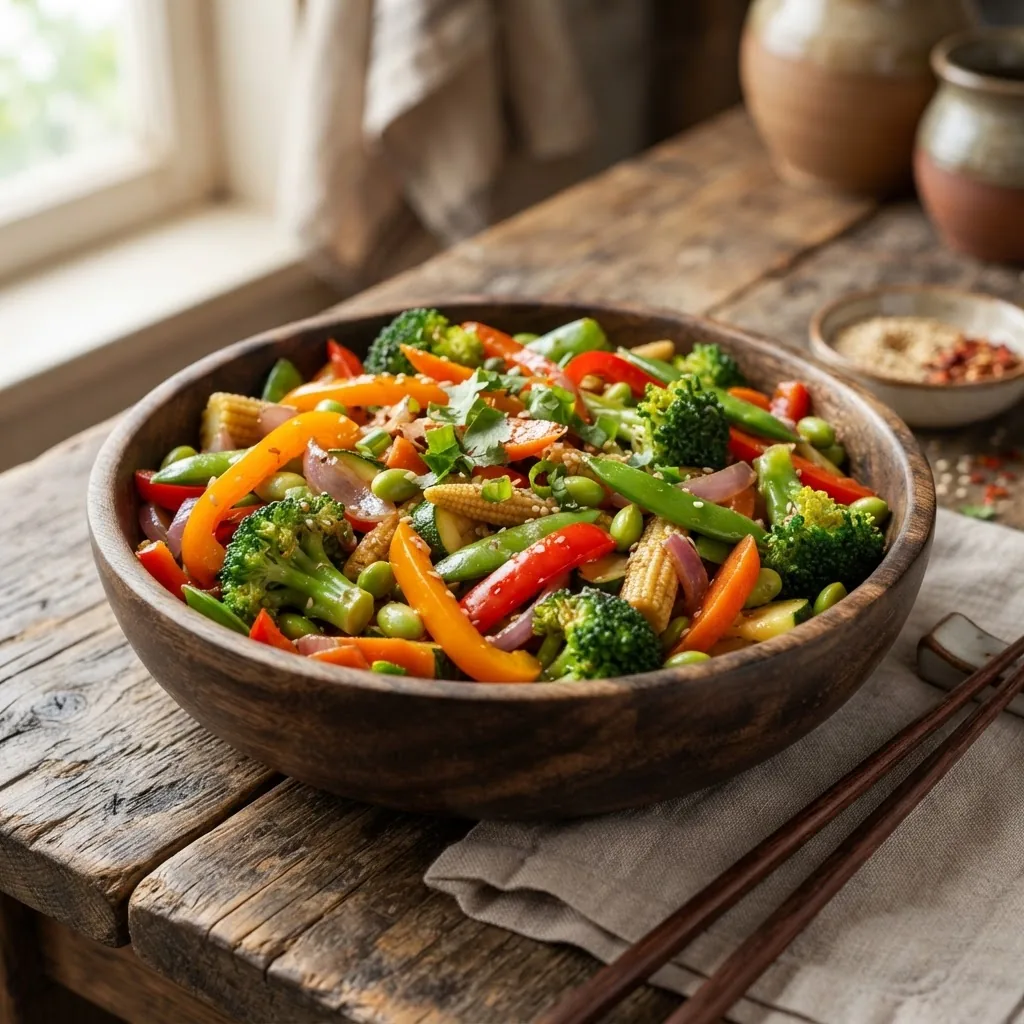
2. 15-Minute Garlic-Ginger Stir-Fry Bowl — 15 minutes
Description: Quick wok-style stir-fry with broccoli, snap peas, carrots, mushrooms, garlic, fresh ginger, and a light soy-citrus sauce over brown rice.
Key ingredients: 2 cups broccoli florets, 1 cup snap peas, 1 carrot julienned, 1 cup mushrooms sliced, 2 cloves garlic, 1″ ginger grated, 2 tbsp soy sauce, 1 tbsp rice vinegar, 1 tsp sesame oil.
Cooking method: High-heat stir-fry in a 12″ skillet or wok, 4–6 minutes total. Serve over 1 cup cooked brown rice.
Health highlights: Fiber-rich, low in saturated fat, nutrient-dense from cruciferous and colored veg.
-
3. Mediterranean Roasted Veggie & Chickpea Bowl — 40 minutes
Description: Roasted eggplant, zucchini, red onion, and cherry tomatoes with lemon-tahini drizzle, served on quinoa and topped with toasted pine nuts.
Key ingredients: 1 medium eggplant cubed, 1 zucchini sliced, 1 red onion wedges, 1 cup cherry tomatoes, 1 can chickpeas (rinsed), 2 tbsp tahini, juice of 1 lemon.
Cooking method: Roast vegetables and chickpeas at 425°F for 25–30 minutes; whisk tahini with lemon and water to desired consistency.
Health highlights: Balanced plant protein and complex carbs; tahini adds calcium and healthy fats.
-
4. Garlicky Sauteed Greens with White Beans — 20 minutes
Description: Kale or Swiss chard quickly sautéed with garlic, then tossed with warm cannellini beans and a squeeze of lemon.
Key ingredients: 6 cups chopped kale, 2 cloves garlic, 1 can cannellini beans (rinsed), 1 tbsp olive oil, lemon zest.
Cooking method: Sauté garlic 30 seconds, add greens and 2–3 tbsp water, cook 4–6 minutes, stir in beans to heat.
Health highlights: High in vitamin K, fiber, and plant protein; simple family favorite for busy nights.
-
5. Cabbage & Apple Slaw with Greek Yogurt Dressing — 10–15 minutes
Description: Crunchy raw slaw that balances cabbage and tart apple with a tangy, protein-rich yogurt dressing.
Key ingredients: 4 cups shredded cabbage, 1 apple julienned, ¼ cup plain Greek yogurt, 1 tbsp apple cider vinegar, 1 tsp Dijon, salt and pepper.
Cooking method: Toss raw; chill 10 minutes to meld flavors.
Health highlights: Low-calorie, fiber-rich, and a good side for grilled proteins.
Calorie Content of Cabbage and Nutritional Information Guide
-
6. Creamy Carrot & Ginger Soup (Blender) — 30 minutes
Description: Roasted carrots blended with low-sodium vegetable broth and fresh ginger for a silky, warming soup.
Key ingredients: 1 lb carrots (trimmed & halved), 1 onion, 2 cups low-sodium veg broth, 1″ ginger, 1 tbsp olive oil.
Cooking method: Roast carrots and onion 25–30 minutes at 400°F, blend with broth until smooth; reheat gently.
Health highlights: Beta-carotene rich and filling; great for batch cooking.
-
7. Zucchini Noodle Primavera — 12–15 minutes
Description: Zoodles tossed with cherry tomatoes, peas, basil, garlic, and a splash of olive oil for a light dinner.
Key ingredients: 3 medium zucchini (spiralized), 1 cup cherry tomatoes halved, ½ cup peas, 2 cloves garlic, handful basil.
Cooking method: Sauté garlic 30s, add zoodles and tomatoes 2–3 minutes; finish with basil and lemon.
Health highlights: Low-carb option with high vegetable volume; easy for picky eaters.
-
8. Broccoli & Tofu Teriyaki Sheet-Pan — 30–35 minutes
Description: Cubed extra-firm tofu and broccoli tossed with a homemade teriyaki glaze, roasted until slightly charred.
Key ingredients: 14 oz extra-firm tofu pressed and cubed, 3 cups broccoli florets, 3 tbsp low-sodium soy sauce, 1 tbsp honey, 1 tsp sesame oil.
Cooking method: Roast at 425°F for 20–25 minutes until edges are crisp; toss halfway.
Health highlights: Balanced plant protein and fiber. For more broccoli nutrition see Broccoli Nutrition Facts 100g and Serving Size Guide.
-
9. Mediterranean Stuffed Peppers (Vegetarian) — 50–60 minutes
Description: Bell peppers stuffed with a warm mix of quinoa, spinach, sun-dried tomatoes, and feta (optional).
Key ingredients: 4 bell peppers, 1 cup cooked quinoa, 2 cups spinach, ¼ cup sun-dried tomatoes, ½ cup feta (optional).
Cooking method: Fill peppers and bake at 375°F for 30–35 minutes until tender.
Health highlights: Fiber and plant protein, satisfying family-style entree.
-
10. Quick Cucumber-Tomato-Avocado Salad — 8–10 minutes
Description: A raw, refreshing salad with creamy avocado, crisp cucumbers, and sweet cherry tomatoes tossed in lemon-Dijon vinaigrette.
Key ingredients: 1 large cucumber diced, 1 cup cherry tomatoes halved, 1 avocado diced, 2 tbsp lemon juice, 1 tsp Dijon.
Cooking method: Toss raw and serve immediately.
Health highlights: Quick, nutrient-dense, and a personal go-to for a 30-minute low-effort dinner when I’ve been on late shifts; avocado adds healthy monounsaturated fats — see Avocado Fruit Guide and Nutritional Benefits Explained.
Transition: These practical recipes are easy to scale for meal prep — next we cover cooking techniques that keep nutrients and flavor.
-
-
Master nutrient-smart cooking:
How to Cook Vegetables to Retain Nutrients and Taste
Cooking changes vegetable nutrient availability. Some methods enhance bioavailability (like lightly cooking carrots to release beta-carotene), while others cause water-soluble vitamin loss. Below are method-by-method instructions, pros/cons, and a step-by-step roasting walkthrough you can reproduce.
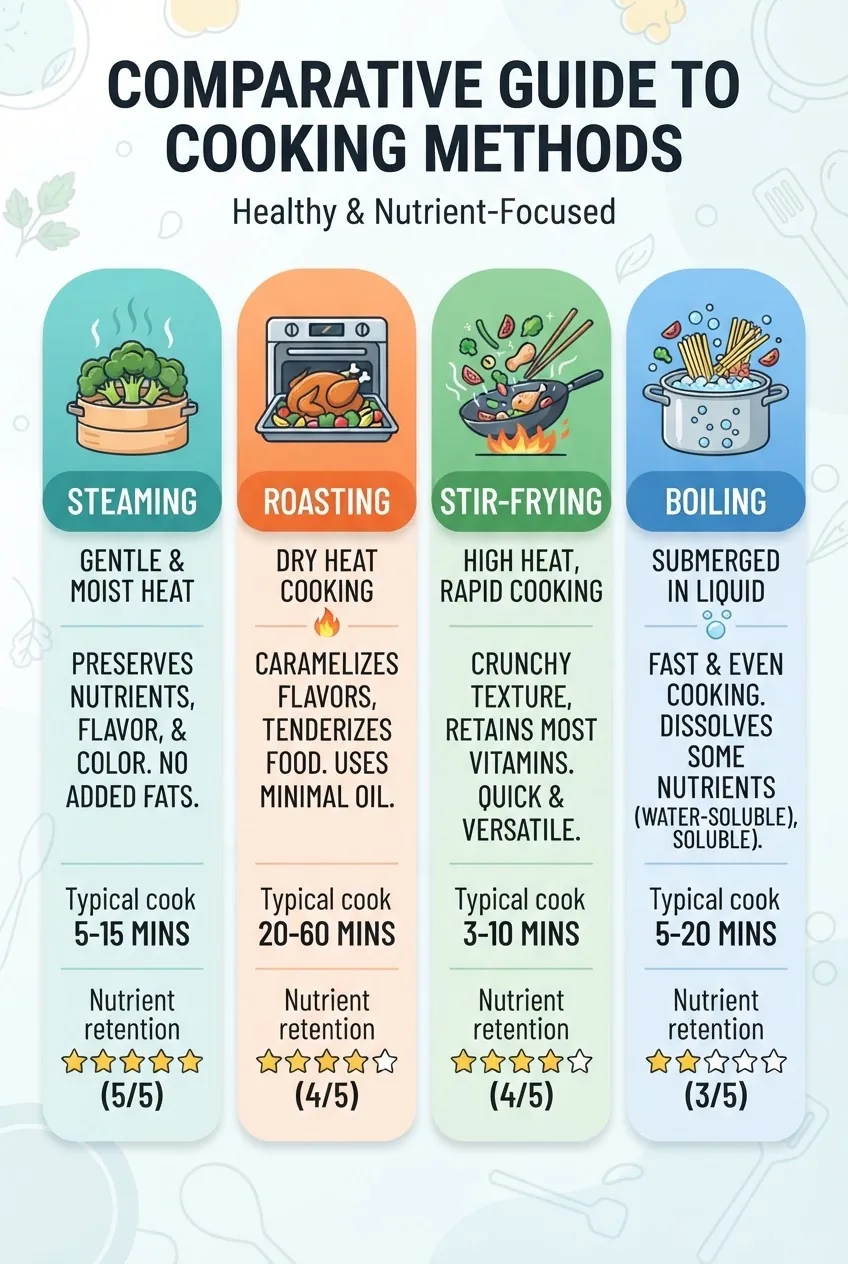
Steaming — best for minimal nutrient loss
How: Steam broccoli florets or green beans 5–7 minutes until bright green and tender-crisp. Use a steamer basket above 1–2 inches of simmering water.
Pros: Preserves water-soluble vitamins and color; quick. Cons: Less caramelization flavor.
Stir-frying — high heat, short time
How: Heat 1–2 tbsp oil in a 12″ skillet or wok over medium-high heat. Add aromatics (garlic, ginger) for 20–30 seconds, then add vegetables in order of cook time (hard veg first). Stir-fry 4–6 minutes total.
Pros: Fast, flavorful, retains texture. Cons: Requires attention to avoid burning.
Roasting — flavor through caramelization
Roasting concentrates flavors as sugars caramelize; it’s ideal for root vegetables, squash, peppers, and broccoli. Below is a step-by-step walkthrough I use when teaching home cooks — it preserves texture and keeps moisture inside.
- Preheat and size: Preheat oven to 425°F (218°C). Cut vegetables into uniform pieces: ½” for broccoli stems/florets, ¾–1″ for potatoes and carrots.
- Dry and toss: Pat vegetables dry. Toss with 1–2 tbsp olive oil per pound of veg, ½–1 tsp kosher salt, and ¼–½ tsp freshly cracked black pepper. Add aromatics (1 tsp smoked paprika or 1–2 cloves minced garlic) if desired.
- Use a hot sheet pan: Spread in a single layer on a rimmed sheet pan — crowding causes steaming, not roasting. Leave ½” – 1″ between pieces where possible.
- Roast and flip: Roast 20–30 minutes depending on vegetable density (root veg 30–40 min; broccoli 18–22 min). Flip once at half-time with a spatula for even browning.
- Finish with acid: Right out of the oven, add a squeeze of lemon or 1 tbsp vinegar per pan to brighten flavors and balance richness.
- Storage tip: Cool to room temp, store in airtight container for up to 4 days for use in bowls, tacos, or salads.
Practical science: According to a 2023 NIH review, steaming and quick stir-frying generally preserve more vitamin C and B vitamins than boiling, while roasting can increase availability of some antioxidants due to breakdown of cell walls (benefit dependent on temperature/time). For more on hot-cooking techniques and step details see Hot Vegetable Dishes Guide with Recipes and Cooking Tips and the Culinary Institute of America’s technique resources at CIA.
Common mistakes include overcrowding pans, overcooking leafy greens beyond 2–4 minutes, and skimping on acid finishes which can make vegetables taste flat. For more on basic prep see How to Prepare Vegetables Guide with Cooking and Nutrition Tips.
Transition: With techniques locked in, next learn practical ways to weave meals with lots of veggies into your routine — including a sample weekly plan.
-
Plan meals that are veggie-forward:
Incorporating Meals with Lots of Veggies into Your Daily Routine
Making meals with lots of veggies habitual comes down to planning: batch-cook, repurpose roasted veg, and design bowls and salads as go-to formats. Below are practical tips and a simple weekly plan you can copy.
Practical strategies
- Batch-roast once, eat twice: Roast 2–3 lbs of mixed veg on Sunday; use it in bowls, tacos, and salads across the week.
- Always have a raw option: Keep pre-washed salad greens and cut veggies in clear containers for 3–5 days.
- Pair veggies with easy proteins: Use canned beans, rotisserie chicken, or tofu for 10–15 minute dinners.
- Grain + veg + sauce template: 1 cup cooked whole grain + 1–2 cups veg + 3–4 oz protein + 1–2 tbsp sauce is a balanced plate framework.
- Snacks: Veg sticks with hummus, roasted chickpeas, or a simple cucumber-avocado mash on toast.
Sample weekly plan (practical, time-efficient)
Set aside 60–90 minutes Sunday to chop, roast, and cook grains. Use these dinners:
Day Dinner Prep time Monday Stir-fry bowl (use roasted broccoli if short on time) 15–20 min Tuesday Roasted Veg Medley with black beans 30–35 min Wednesday Greens sauté with white beans + crusty bread 20 min Thursday Quinoa bowl with Mediterranean roasted veg 25–30 min Friday Zoodle primavera with garlic shrimp or chickpeas 15 min Weekend Experiment with stuffed peppers or soup; use leftover roasted veg for lunches 30–60 min Complementary fruit info for weight management can help design balanced plates — see Best Fruits for Weight Loss Guide with Fat Burning Foods and add small fruit portions to breakfast or snacks.
Transition: Alongside cooked dinners, raw vegetable dishes bring texture and brightness — here are ideas for both raw and cooked options to keep variety high.
-
Mix raw and cooked dishes:
Delicious Raw and Cooked Vegetable Dish Ideas for Every Occasion
Balancing raw and cooked vegetables gives variety in texture and nutrient profiles. Raw dishes preserve heat-sensitive vitamins and provide crunch; cooked dishes often improve digestibility and flavor concentration.
Raw ideas
- Cucumber-Tomato-Avocado Salad: mix cucumbers, cherry tomatoes, diced avocado, lemon, olive oil, and fresh basil.
- Quick slaws: cabbage, apple, and carrot with yogurt or vinegar-based dressings for crunchy sides.
- Crudité platter: raw bell peppers, carrots, and jicama with hummus or yogurt dip as snack or starter.
Cooked ideas
- Roasted root medley: carrots, parsnips, sweet potato, rosemary, and olive oil.
- Sauteed greens: spinach or chard with garlic and a splash of vinegar.
- Stir-fried veg mix: broccoli, snap peas, mushrooms, and bell peppers tossed with a light teriyaki.
Contrast example: Serve a warm roasted broccoli and chickpea bowl with a side of crisp apple-cabbage slaw — the texture and temperature contrast improves satiety and perceived flavor intensity.
Transition: After practicing these dishes, watch for common mistakes and follow a quick checklist to ensure success.
Common mistakes and how to avoid them
I once overloaded a sheet pan with sliced potatoes and ended up steaming instead of roasting; lesson learned — always give veg space. I’ve also seen cooks under-season vegetables; taste and adjust after cooking. Finally, overcooking greens (more than 6 minutes) destroyed texture; I now set timers and cook in batches.
- Overcrowding pans: Use two pans or work in batches to get caramelization.
- Under-seasoning: Salt during and after cooking; finish with acid (lemon, vinegar) to lift flavors.
- Skipping acid finishes: A splash of lemon or vinegar brightens roasted veg dramatically.
- Not pressing tofu: For best texture, press extra-firm tofu for 15–20 minutes before roasting.
Checklist: Have you done this?
- Purchased at least 5 quick-cook vegetables (see the Easy to Prepare list).
- Completed one 60–90 minute prep session: washed, chopped, and roasted grains/veg.
- Tried one new recipe from the Top 10 list this week.
- Used steaming, roasting, or stir-frying as described and noted improvements in flavor.
- Saved leftovers in clear containers for 3–4 days and labelled them.
When to call in a professional
Consult a registered dietitian for personalized nutrient targets, allergy management, or therapeutic diets. Hire a culinary coach if you want individualized technique training or menu design for larger events.
Conclusion: Making Veg Vegetable Recipes a Staple in Your Kitchen
You now have a hands-on set of practical vegetable food recipes, quick-cook vegetable choices, nutrient-friendly techniques, and a sample weekly plan to make healthy vegetable dishes routine. Start with one recipe this week—try the 15-minute Stir-Fry Bowl or the Quick Cucumber-Tomato-Avocado Salad—and build confidence by repeating and varying flavors. For deeper nutrient tables and seasonality, consult the USDA nutrient database and the linked in-site resources.
Ready to experiment? Pick two recipes from the Top 10 list, schedule a 60-minute prep block this weekend, and commit to three veggie-forward dinners next week. Share your favorites and any regional Texan twists — poblano peppers and fresh sweet corn make excellent local variations.
Next step: Try the Texas Sheet-Pan Roasted Veg Medley this week and note timing and seasoning adjustments that suit your stove and oven.