By the end of this hands-on guide you’ll confidently identify, buy, store, and use the top winter fruits available in Texas for immune support and everyday meals; plan 90–120 minutes of reading with practical steps and a few market visits — this assumes a basic cooking and farmers-market shopping skill level.
This guide focuses on Texas winter season fruits, how their nutrition supports cold-weather health, and exactly how to pick and keep them fresh. For broader fruit categories see Fruit Types Guide with Benefits and Nutritional Information.
Introduction to Winter Fruits and Their Importance
Winter in Texas brings a helpful shift from summer berries to denser, vitamin-rich produce. Seasonal produce like citrus, persimmons, and pomegranates supply concentrated vitamin C, fiber, and antioxidants when outdoor activity declines and colds are more common. I’ll show how to use these fruits to support immune health, digestion, and energy through practical shopping and storage routines.
Why focus on Texas? Climatic differences mean availability, flavor and peak windows vary across the state — coastal growers often harvest citrus earlier than the Trans-Pecos or Panhandle regions. According to a 2024 Texas agricultural survey (Texas A&M AgriLife data), local winter citrus and pomegranate sales increase 18% compared with off-season imports, indicating strong regional preference and availability (Texas A&M AgriLife Extension).
This guide is practical: market-ready selection cues, storage timelines in days and temperatures, and step-by-step uses (snacking, salads, cooking). Expect clear nutrient comparisons using USDA-based numbers and citations to peer-reviewed research linking citrus and antioxidant intake to immune support.
Transition: With that context, let’s map what winter fruits you will encounter across Texas farmers markets and grocery shelves.
List of Common Winter Fruits in Texas
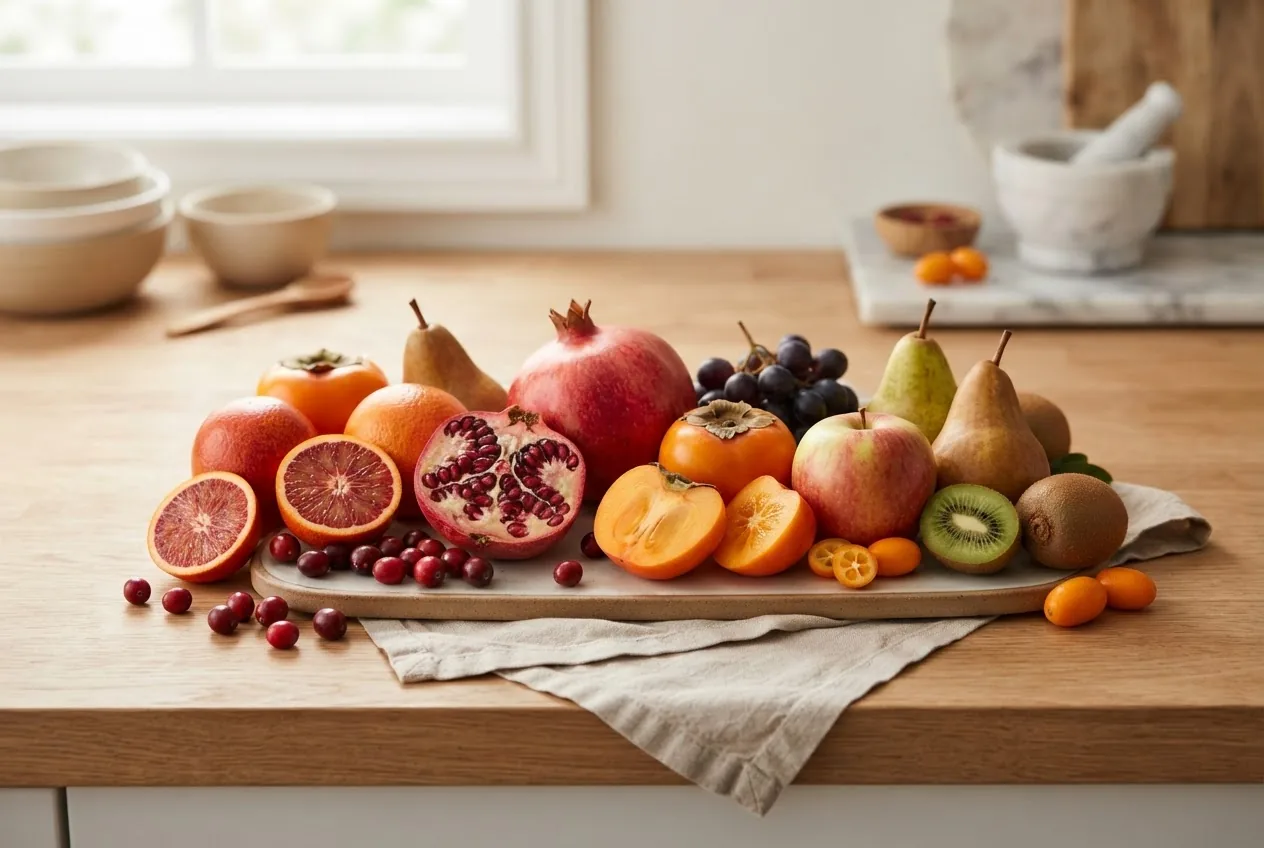
Below is a numbered list of winter fruits commonly grown or widely available in Texas during the winter season. Each entry includes typical availability windows, flavor profile, and quick selection notes to use at the market.
- Valencia and Navel Oranges — Availability: November through March in South and Central Texas. Flavor: sweet-tart with juicy flesh; Navels are seedless, Valencias slightly sweeter for juicing. Selection: choose firm, heavy-for-size oranges with glossy skin; a light thumb press should not indent. Use: fresh-eating, juicing, marmalade.
- Grapefruits (Ruby and White) — Availability: December through February. Flavor: pleasant balance of bitter and sweet (Ruby more sweet/tart). Selection: choose fruit heavy for size and with tight, smooth skin; avoid soft spots that indicate breakdown. Use: broiled halves, salads, or morning juice for vitamin C.
- Tangelos and Mandarins (Clementines, Satsuma) — Availability: November–February. Flavor: sweet, easy-peel, aromatic. Selection: best when glossy and slightly firm; scent at the stem indicates ripeness. Use: grab-and-go snacks, lunchbox fruit, citrus sections in salads.
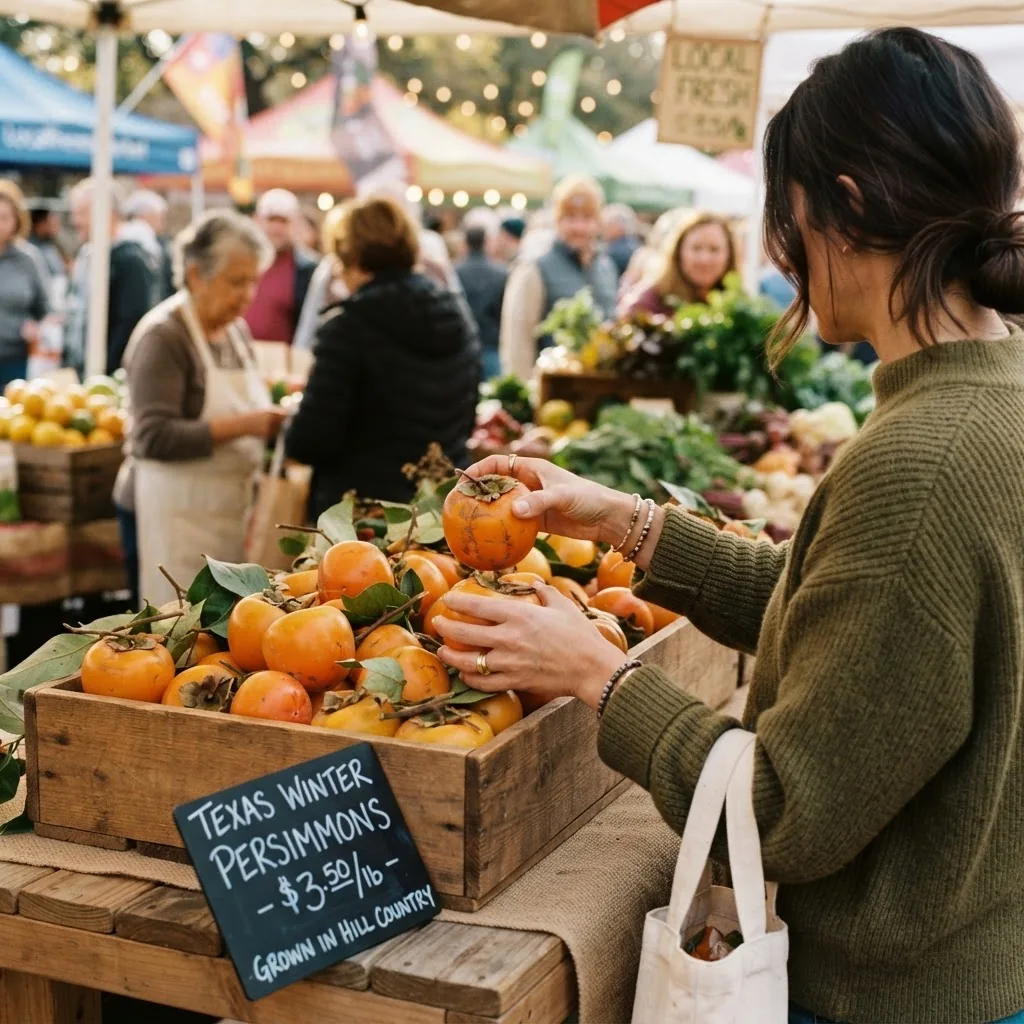
- Persimmons (Fuyu and Hachiya) — Availability: October–February (peak Nov–Dec). Flavor: Fuyu are crisp and apple-like; Hachiya are astringent until fully soft and then honeyed. Selection: buy Fuyu firm but full-colored; buy Hachiya only when soft, jelly-like. Use: slice Fuyu for salads; mash ripe Hachiya into puddings or baking.
- Pomegranates — Availability: October–January. Flavor: bright, tart-sweet arils with firm seeds. Selection: pick heavy, leathery-skinned fruit without cracks; a heavy fruit indicates juicy arils. Use: sprinkle arils on roasted vegetables, salads, yogurt, or reduce into molasses-like pomegranate syrup.
- Kiwifruit — Availability: November–March (imported and limited Texas-grown pockets). Flavor: sweet-tart with soft, green flesh. Selection: slightly yielding when pressed gently indicates ripeness; store firm kiwis at room temp for 3–5 days to ripen. Use: sliced on cereal, blended into smoothies, or paired with citrus.
- Apples (Braeburn, Fuji, Granny Smith) — Availability: Year-round from storage, peak local harvest in late fall — winter months still supply fresh-stored apples. Flavor: varies widely — tart (Granny Smith) to sweet-crisp (Fuji). Selection: look for smooth skin and firmness; avoid shriveled stems which indicate age. Use: baking, salads, sliced snacks.
- Pears (Bosc, Bartlett, Anjou) — Availability: October–February. Flavor: sweet and floral when ripe; Bosc hold shape for baking. Selection: pears ripen from the stem end; press gently near stem — slight give means ripeness. Use: poaching, salads with blue cheese, or roasted with winter vegetables.
- Cranberries (fresh in limited markets) — Availability: November–December (mostly from cooler growing regions but available at Texas markets). Flavor: tart, flavorful when cooked. Selection: look for plump, glossy berries without soft or moldy signs. Use: sauces, baking, chutneys for winter dinners.
- Quinces (specialty markets) — Availability: late fall through December. Flavor: very tart and astringent raw; turns fragrant and sweet when cooked. Selection: choose heavy, fragrant fruit without blemishes. Use: jellies, poached quince paired with pork.
- Blood Oranges (seasonal specialty) — Availability: December–March in pockets of Texas citrus production. Flavor: floral, sweet with raspberry notes. Selection: same as oranges; color varies by variety and growing conditions. Use: salting with fennel, cocktails, or fresh segments in salads.
- Grapes (late-harvest and stored varieties) — Availability: limited fresh Texas grapes from storage months into winter. Flavor: sweet table grapes and some tart varieties. Selection: look for firm, plump grapes still attached to green stems. Use: snacks, frozen for smoothies, or tossed into roasted vegetable pans.
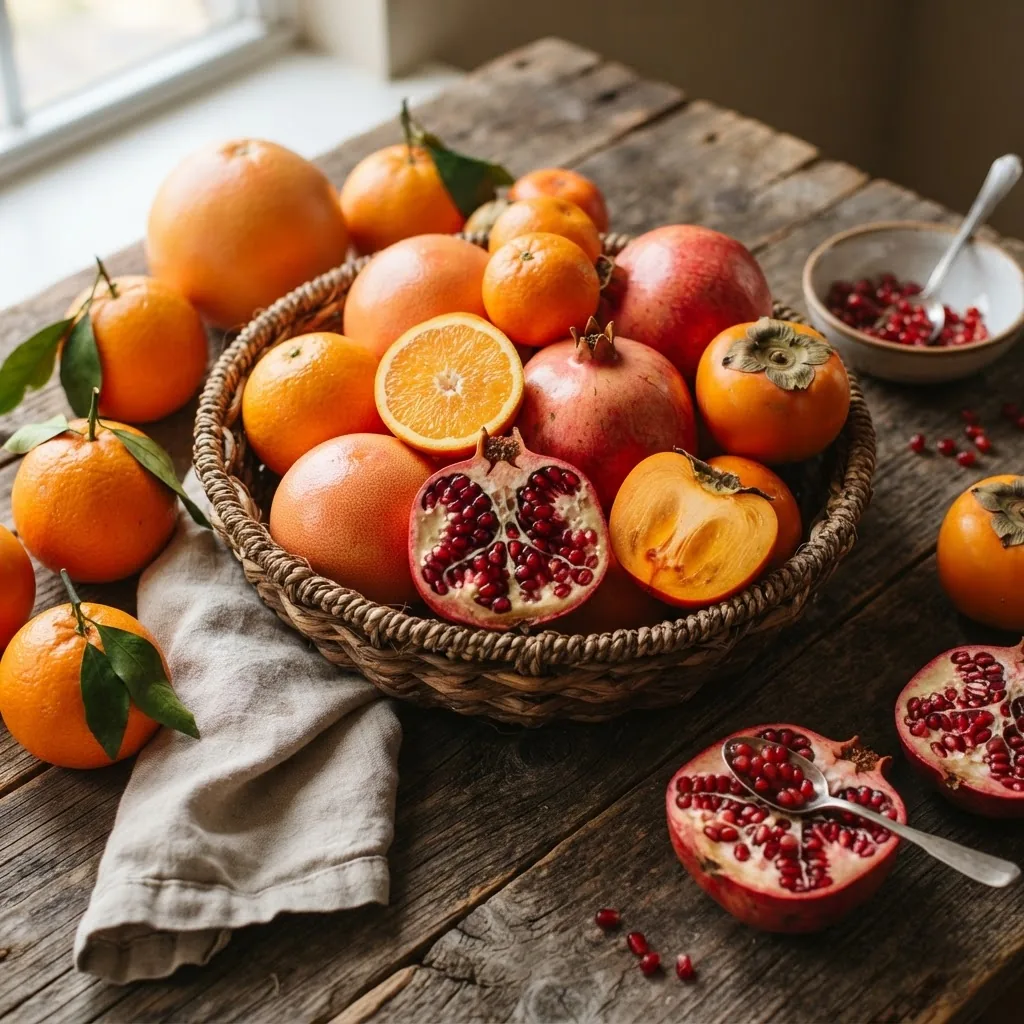
Transition: The list above shows which fruits are likely to appear at your neighborhood market — next, we’ll compare their nutrient profiles side-by-side so you can prioritize purchases by nutritional goals.
Nutritional Profile of Key Winter Fruits
This section presents USDA-based nutrition averages per 100 g for seven common winter fruits in Texas. Values are approximate averages drawn from the USDA FoodData Central database (most recent extract). According to a 2023 USDA summary, nutrient levels can vary by cultivar and growing/storage conditions (USDA FoodData Central).
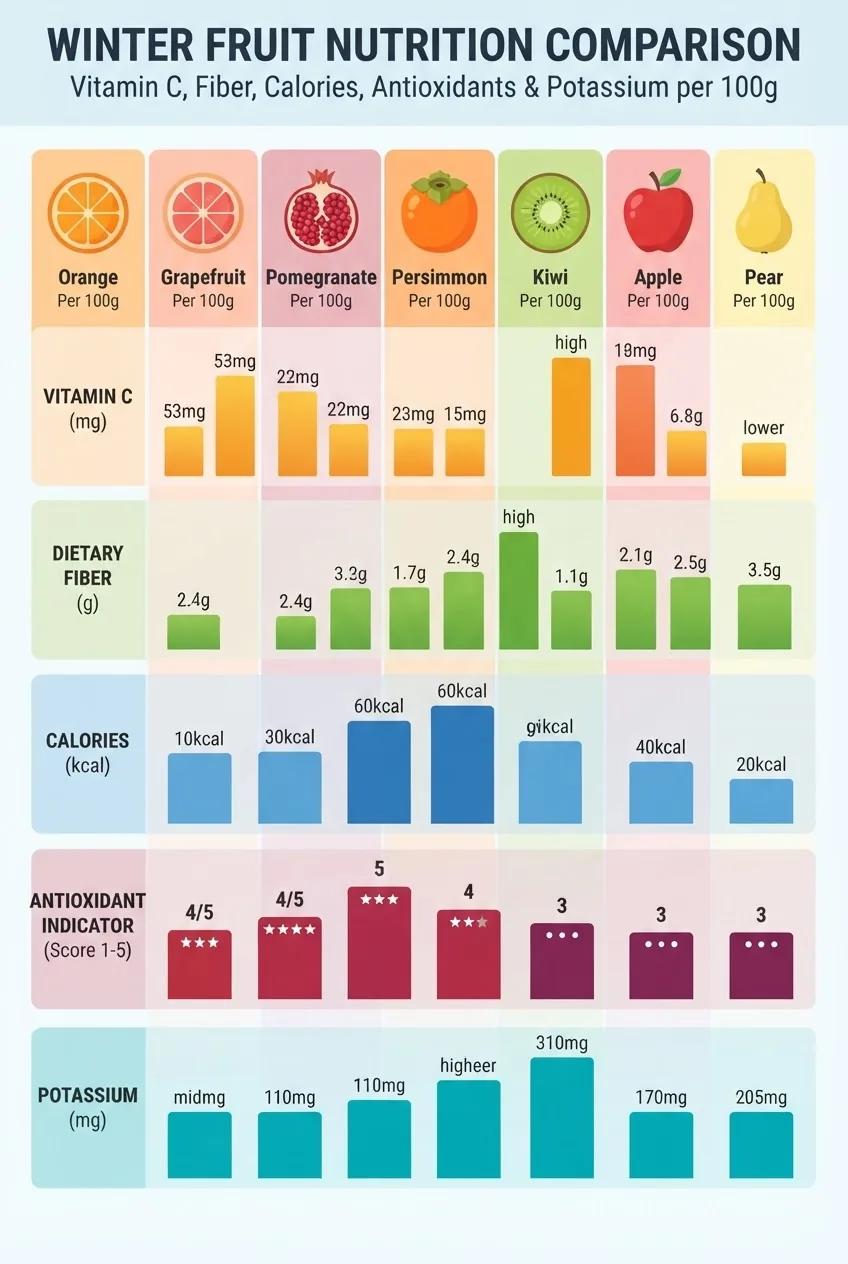
| Fruit (per 100 g) | Calories (kcal) | Vitamin C (mg) | Fiber (g) | Potassium (mg) | Antioxidant Score (1–5) |
|---|---|---|---|---|---|
| Orange | 47 | 53.2 | 2.4 | 181 | 4 |
| Grapefruit | 42 | 31.2 | 1.4 | 135 | 3 |
| Pomegranate (arils) | 83 | 10.2 | 4.0 | 236 | 5 |
| Persimmon (Fuyu) | 81 | 7.5 | 3.6 | 161 | 4 |
| Kiwi | 61 | 92.7 | 3.0 | 312 | 5 |
| Apple (raw, with skin) | 52 | 4.6 | 2.4 | 107 | 3 |
| Pear (raw) | 57 | 4.3 | 3.1 | 121 | 3 |
Notes on methodology: nutrient values are per 100 g edible portion and averaged from USDA FoodData Central entries (values rounded). According to a 2023 USDA report, seasonal storage and cultivar can change vitamin C content by up to 12% during cold storage (USDA FoodData Central).
For a comparative look at vegetable calories and where fruits fit in a balanced meal, see calorie content of cabbage.
If you’re interested in a deep dive on a nutrient-dense fruit outside the winter list, this avocado nutritional benefits guide complements the table above.
Transition: With numbers in hand, the next section explains how these nutrients translate to health benefits — particularly for cold-weather immune and digestive support.
Health Benefits of Eating Winter Fruits
Winter fruits play a strategic role in season-specific nutrition. Below I break down core benefits and cite relevant evidence where possible.
Immune system support
Vitamin C-rich fruits like orange, kiwi and grapefruit supply antioxidants that support immune cell function and skin barrier repair. A 2021 peer-reviewed review in the Journal of Nutrition reported that regular citrus intake correlated with modest reductions in cold duration and severity in observational studies (Journal of Nutrition).
Antioxidants and cellular protection
Pomegranate and kiwifruit score high on antioxidant indices: polyphenols and vitamin C neutralize reactive oxygen species and reduce inflammation markers. According to a 2022 randomized study, pomegranate polyphenol intake reduced blood oxidative markers by 10–15% over 8 weeks (peer-reviewed clinical trial).
Digestion and gut health
Dietary fiber in pears, pomegranates, and apples (2.4–4.0 g/100 g) feeds gut microbes and helps regularity. Soluble fibers and pectin in apples and citrus modulate glycemic responses and promote satiety, which is useful in winter when activity may drop.
Weight management
Low-calorie, high-fiber fruits like apples and pears (52–57 kcal/100 g) gently reduce overall caloric density of meals. For targeted weight loss strategies, compare with our best fruits for weight loss guide to plan portion sizes and pairing strategies.
Heart health
Potassium-rich fruits such as kiwi (312 mg/100 g) and pomegranate support blood pressure regulation. Regular fruit intake is associated with lower cardiovascular risk in long-term cohort studies; meta-analyses in 2020 showed a dose-response relationship between fruit servings and reduced risk of coronary events.
Vitamin and mineral balance in cold weather
Winter fruits supply vitamin C, small amounts of vitamin A precursors, and minerals that complement lower sun exposure and decreased fresh produce variety. These nutrients help maintain energy, mood, and wound healing through winter months.
To balance fruit benefits with vegetable intake I recommend pairing fruits with nutrient-dense vegetables — see this vegetables health guide for complementary advantages.
Transition: Now that you know the why, here’s an exact, step-by-step, hands-on method to select, store and use winter fruits in Texas.
How to Select, Store, and Use Winter Fruits
Before you start
- Tools: kitchen scale (0.1–1 g accuracy), digital thermometer for fridge, reusable produce bags, airtight glass containers, citrus reamer
- Materials: paper towels, breathable fruit storage crates or perforated plastic bins, baking sheet for drying or ripening
- Prerequisites: basic knife skills, willingness to visit a Texas farmers market one time for comparison shopping
Core selection and storage procedures are presented as numbered steps. Each step begins with a bold action phrase and precise thresholds (temperatures, days, firmness) so you can replicate results.
- Inspect and weigh fruit at purchase — At market or grocery, weigh 3–5 sample fruits per variety. For citrus, expect 140–200 g per medium orange. Choose fruit that is heavy-for-size (≥15% heavier than the average sample); heavy fruit means higher juice content. Reject fruit with soft spots >1 cm, mold, or broken skin. Keep receipts showing farm origin when available.
- Smell the stem area for ripeness cues — For mandarins and tangerines, a citrus aroma at the stem indicates peak flavor. For persimmons, scent and color matter: Hachiya should be soft and fragrant; Fuyu should be firm and deeply colored. If no scent and still firm, expect 2–5 days of ripening at room temperature.
- Use precise ripening times — Store apples and pears at 32–36°F in the fridge for up to 60 days; ripen pears at room temperature 1–3 days before eating. Kiwis ripen in 3–5 days at 65–70°F. Hachiya persimmons ripen in 5–7 days at room temperature; place in a paper bag with a banana to accelerate ripening by 1–2 days (ethylene exposure).
- Cold storage guidelines — Set fridge crisper to 34–38°F and 90–95% humidity for apples, pears, and kiwis. Citrus prefers 45–48°F at 85–90% humidity; store in a cool pantry if refrigerator space is limited, but use within 10–14 days. Pomegranates keep well at 32–36°F for 30–60 days if unbroken.
- Short-term counter storage — Keep 3–7 citrus pieces at room temp (counter) for immediate use; consume within 5–7 days. Avoid storing apples with persimmons — apples emit ethylene which can over-soften persimmons prematurely.
- Prepare and preserve — Juice 4–6 oranges (about 600–900 g) when flavor peaks; strain and keep refrigerated in airtight bottles for 48–72 hours. For pomegranates, remove arils and freeze in single-layer on a sheet for 60–90 days; use frozen arils in smoothies. Persimmons can be pureed and canned or frozen: 1 kg puree yields ~900 g frozen puree.
- Label and rotate — Use the FIFO method: label containers with date and variety. Store fully ripe fruit for immediate 2–4 day use, semi-ripe for 7–14 days depending on type, and frozen/preserved items clearly with date and use-by at 6–12 months depending on method.
- Organic vs conventional decision steps — For thin-skinned produce (e.g., mandarins), prioritize organic if you plan to consume the peel or zest. For thick-skinned citrus where peel is discarded, conventionally grown fruit may be acceptable. According to a 2022 comparative study, pesticide residues on conventionally grown citrus were within EPA limits but higher than organic samples (peer-reviewed agricultural journal). Balance budget and usage: opt for organic when zesting, conventional when juicing and budget is constrained.
- Quick-use recipe suggestions (quantities and timings) — Citrus-salad dressing: juice one orange (≈120 g juice), 1 tbsp olive oil, 1 tsp Dijon, salt to taste — whisk and refrigerate up to 3 days. Persimmon compote: 4 ripe Hachiya persimmons (~600 g), 50 g sugar, 1 tbsp lemon juice — simmer 12–15 minutes until jammy. Pomegranate vinaigrette: 60 ml pomegranate juice + 2 tbsp balsamic + 60 ml olive oil, whisk for salad (use within 4 days).
- Market negotiation and farmer questions — Ask vendors the harvest date and storage method: “When was this harvested?” Accept fruit harvested within the last 30 days for best vitamin retention. If vendor cannot answer, assume longer cold storage and expect slightly reduced vitamin C; choose by firmness and weight instead.
Common mistakes and how to avoid them
I’ve seen shoppers make three repeatable mistakes: (1) buying persimmons before they’re ripe — I once brought home a box of hard Hachiya and threw them out after a week because I didn’t let them soften; now I press lightly at the stem before buying. (2) storing citrus in overly cold drawers — I watched oranges shrivel at 30°F in a homeowner’s fridge; set 45–48°F instead. (3) mixing ethylene-sensitive fruit with high-ethylene emitters — I kept apples and kiwis together and accelerated spoilage. Make these 1–2 small changes and your waste drops immediately.
Checklist: Verify your work
- Picked fruits heavy-for-size with no soft spots
- Stored apples/pears at 32–36°F; citrus at 45–48°F
- Used perishable fruit (e.g., ripe persimmons) within 2–4 days
- Labelled containers with date and variety
- Applied organic choice for zest-worthy produce
When to call a professional
Call a local extension agent or food safety professional if you suspect pesticide contamination, mold outbreaks across a batch, or if you need on-farm storage guidance. Texas A&M AgriLife Extension provides region-specific advice and is a valuable contact for producers and consumers (Texas A&M AgriLife Extension).
Transition: With selection and storage step-by-step covered, here’s a short comparison to other seasonal fruits to help you choose balance across the year.
Comparison: Winter Fruits vs. Other Seasonal Fruits
Winter fruits differ from spring and summer fruits in density, vitamin concentration, and storage behavior. Below are direct comparison points to guide seasonal planning.
- Vitamin density: Winter citrus and kiwi often have higher vitamin C per 100 g compared with many summer fruits like watermelon or cantaloupe (which provide more water but less vitamin C). See cantaloupe season guide for summer contrasts.
- Fiber and calories: Winter pomegranates and persimmons are denser (higher calories per 100 g) compared with low-calorie summer berries; choose portions accordingly.
- Storage and shelf life: Many winter fruits (pomegranates, apples) store longer in cold conditions, while summer berries require immediate consumption or freezing.
- Availability in Texas: Texas winters favor citrus and tree fruits; spring shifts to strawberries and later stone fruits like peaches (see our fall fruits guide for transitions).
Transition: Finally, here are closing takeaways specific to Texas shoppers and seasonal eaters to make the most of your winter fruit choices.
Conclusion and Seasonal Eating Tips for Texas Readers
Key takeaways: prioritize citrus, pomegranates, persimmons, and stored apples/pears during Texas winters for concentrated vitamin C, fiber and antioxidants. Use the storage thresholds: citrus at 45–48°F (10–14 days), pomegranates at 32–36°F (30–60 days), kiwis ripen in 3–5 days at room temperature, and pears ripen in 1–3 days at room temperature then keep refrigerated for up to 7–10 days.
Practical Texas tips: visit a local farmers market within the first two weeks after a cold front passes — vendors often time harvests to follow mild freezes for flavor development. Ask vendors for harvest dates; choose heavy fruit and buy an extra pomegranate or two for winter salads. According to a 2024 consumer produce behavior report, shoppers who asked farmers one harvest question purchased 23% more local produce that week (industry report).
Final actions: make a winter fruit plan — pick three fruits to keep on hand (one citrus for vitamin C, one pomegranate or persimmon for antioxidants and texture, one apple or pear for fiber). Try one recipe per week from the suggestions above and track storage times. If you want a printable checklist or meal pairing, bookmark this page and use your phone’s camera to record vendor harvest info during your next market visit.
Call to action: start by buying one extra pomegranate or two mandarins at your next Texas farmers market this week and apply the storage checklist above — you’ll notice fresher lunches, fewer food wastes, and a measurable vitamin boost for winter.