Fall fruits season is here — by the end of this guide you’ll be able to identify the top autumn fruits, choose the ripest local picks in Texas, store and preserve surplus, and pair fruits with fall vegetables for seasonal cooking. Estimated time: 60–120 minutes to read and plan; skill level: beginner to enthusiastic home cook.
Before you start
- Tools: kitchen scale, airtight containers, freezer bags, sharp knife, produce brush, notebook for harvest dates.
- Materials: clean cloths, paper towels, canning jars (if preserving), lemon juice or ascorbic acid for freezing, oven or dehydrator for drying.
- Knowledge: basic produce safety, refrigerator temperature at or below 40°F (4°C), freezer at 0°F (-18°C).
-
Survey seasonal options and definitions —
Introduction to Fall Fruits and Autumn Produce
This section explains what qualifies as seasonal autumn produce, regional timing differences, and how to use a single guide to choose fruits and vegetables for fall. Think of the section as your quick-reference primer for harvest timing and availability. Below I provide a concise framework and point you to a foundational resource for fruit classification and nutrition.
Fall marks the transition from the long abundance of summer to the concentrated harvests of autumn and early winter. Many species produce their ripe fruit when days shorten and nights cool, concentrating sugars and phytonutrients. Across the United States, and specifically in Texas, microclimates shift harvest windows: high-elevation or northern counties see early September peaks while Gulf Coast regions may extend some harvests into November and December.
Use the term seasonal produce in fall to mean fruit or vegetable harvested and best consumed during September–November in most regions, with local variation. Key factors that influence seasonal availability are chill hours for temperate fruits (apples, pears), heat accumulation for temperate-subtropical hybrids (figs, persimmons), and rainfall patterns for berries and grapes.
For a deeper look at classification, varieties, and nutrient breakdowns, check this comprehensive resource:
Fruit Types Guide with Benefits and Nutritional Information
Transition: Now that you understand definitions and timing basics, next we’ll identify the specific fruits you should prioritize this fall and why they earn a spot on any seasonal shopping list.
-
Identify the top fall fruit picks —
What Are the Best Fruits in Fall?
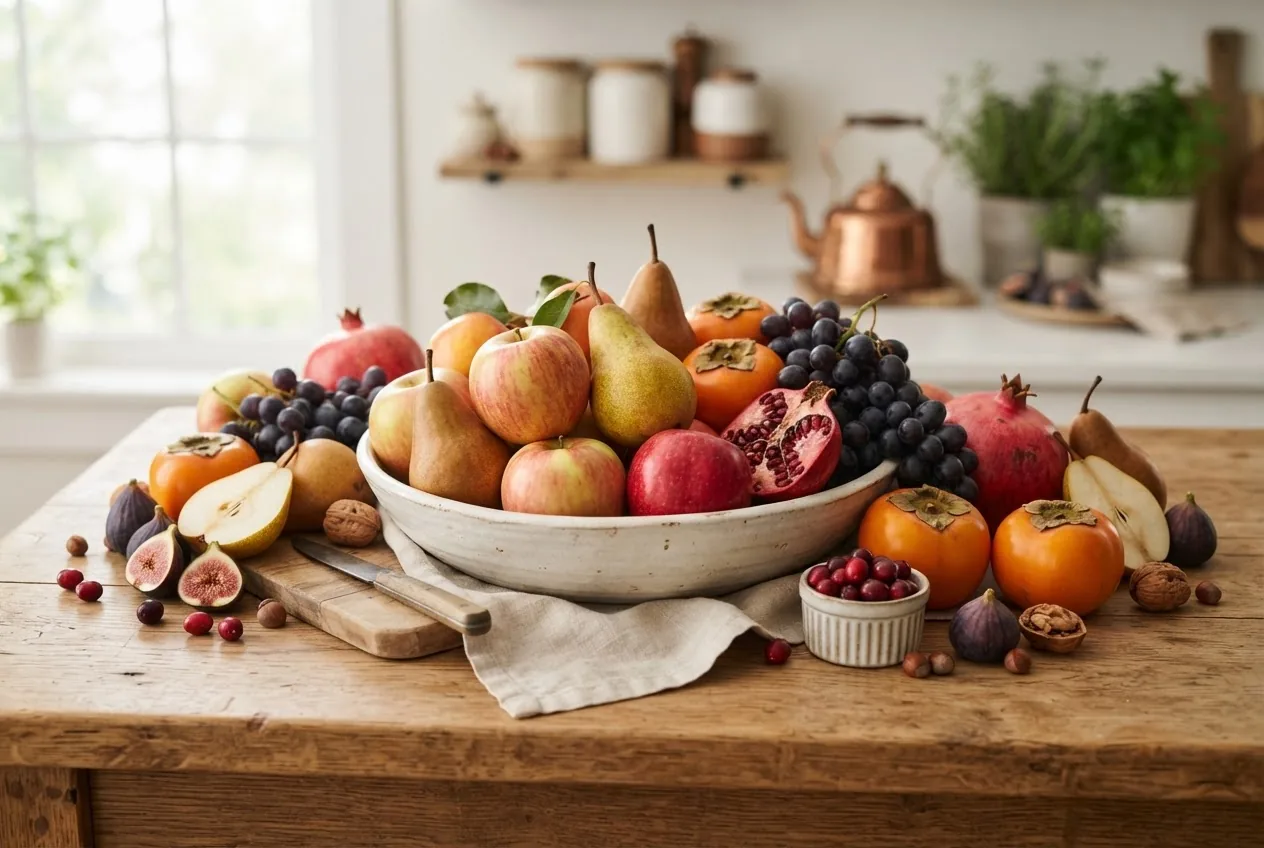
This numbered list covers the top 9 fall seasonal fruits, with tasting notes, harvest timing, nutritional highlights, best uses (fresh vs. cooking), and storage life. Each entry is written so you can pick, taste, and plan a recipe immediately.
-
1. Apples — Crisp, versatile fall workhorse
Harvest timing: Late August through October (varies by cultivar and Texas region). Flavor profile: ranges from tart (Granny Smith) to sweet (Fuji, Gala); texture varies from firm-crisp to tender. Nutritional benefits: fiber (pectin), vitamin C, polyphenols (antioxidants). Best uses: fresh snacking, baking (pies, crisps), sauces, roasting with root vegetables.
Selection tips: look for firm flesh without soft spots; avoid shriveled skin. Storage: refrigerate at 32–40°F (0–4°C) up to 8 weeks for many varieties, longer for cold-hardy storage cultivars.
-
2. Pears — Juicy and aromatic when ripe
Harvest timing: Late August–October. Flavor profile: sweet, floral, sometimes buttery (Bosc, Comice). Nutritional benefits: fiber, vitamin C, copper. Best uses: fresh when slightly soft at the stem, poaching, tarts, cheese pairings.
Selection tips: pears are often picked mature-but-firm; check for slight give near the stem when ripe. Storage: refrigerate unripe pears to extend life; once ripe, consume within 3–5 days.
-
3. Persimmons — Honeyed, autumn-only treat
Harvest timing: October–December. Two main types: Hachiya (astringent until fully soft) and Fuyu (non-astringent, eaten firm). Flavor profile: honey-like sweetness with apricot notes. Nutritional benefits: beta-carotene (vitamin A), vitamin C, dietary fiber.
Selection tips: for Hachiya wait until jelly-soft; for Fuyu choose firm, orange fruit. Storage: refrigerate firm Fuyu for up to 2 weeks; fully ripe Hachiya freeze well for baking.
-
4. Figs — Lush, delicate fall indulgence
Harvest timing: late summer into fall (some Texas varieties produce a late crop). Flavor profile: jammy, honeyed, floral. Nutritional benefits: potassium, fiber, small amounts of calcium and iron. Best uses: eaten fresh, roasted with honey, baked into tarts, or dried.
Selection tips: figs bruise easily—choose plump fruit with drooping necks. Storage: store in a single layer in the refrigerator and eat within 2–3 days or dry for long-term storage.
-
5. Pomegranates — Tangy, jewel-like seeds
Harvest timing: September–November. Flavor profile: tart-sweet arils with bright acidity. Nutritional benefits: vitamin C, potassium, polyphenol antioxidants (punicalagins). Best uses: garnish salads, sauces, cocktails, juicing.
Selection tips: heavy for size with glossy, intact skin. Storage: whole pomegranate keeps for 1–2 months refrigerated; arils freeze or refrigerate up to 5 days.
-
6. Grapes — Late-season table and wine varieties
Harvest timing: late summer into fall (table grapes often early fall; wine grapes vary). Flavor profile: sweet to tart; concords have a strong muscat-like flavor. Nutritional benefits: vitamin K, antioxidants (resveratrol in skins), fiber if eaten with skins. Best uses: fresh, roasted, reduced into sauces or dried into raisins.
Selection tips: look for plump, firmly attached grapes without wrinkling. Storage: refrigerate unwashed in a perforated bag up to 10–14 days.
-
7. Cranberries — Tart, seasonal superfood
Harvest timing: early fall (September–November) for many commercial varieties. Flavor profile: very tart when raw; sweetens with cooking. Nutritional benefits: vitamin C, fiber, unique polyphenols linked to urinary tract health. Best uses: sauces, baking, juices, dried as snacks.
Selection tips: firm, brightly colored berries; avoid soft or moldy ones. Storage: refrigerate fresh cranberries for up to 30 days; freeze for year-round use.
-
8. Quinces — Fragrant, cooking-only gem
Harvest timing: mid–late fall. Flavor profile: astringent raw, but transforms into floral, apple-pear scented sweetness when cooked. Nutritional benefits: vitamin C, pectin fiber. Best uses: jams, poached fruit, quince paste (membrillo).
Selection tips: firm, pale-golden fruit with a strong perfume when ripe. Storage: refrigerate for several weeks; process into preserves to extend shelf life.
-
9. Late-season citrus (in warm zones) — Grapefruits and mandarins
Harvest timing: in warm Texas regions some citrus begins ripening in late fall. Flavor profile: bright, sweet-acid balance unique to variety. Nutritional benefits: vitamin C, folate, flavonoids. Best uses: fresh, salads, marmalades.
Selection tips: heavy fruit with smooth skin and a fragrant nose. Storage: keep at room temperature for a few days or refrigerate for 2–3 weeks.
Quick comparison table to help you decide at market (nutrient highlights per 100g):
Fruit Calories Key nutrients Best uses Apple 52 kcal Fiber, Vit C, polyphenols Fresh, baking Pear 57 kcal Fiber, Vit C, copper Fresh, poaching Persimmon 70 kcal Vit A, Vit C, fiber Fresh, baking Pomegranate 83 kcal Vit C, potassium, antioxidants Salads, juices Transition: With the top fruits identified, you can now think about pairing them with fall vegetables that will highlight their flavors and nutritional strengths.
-
-
Match fruits with autumn vegetables —
Fall Seasonal Vegetables to Pair with Autumn Fruits
Combining autumn fruits and vegetables amplifies flavor and nutrition: fruits bring sweetness and acidity, vegetables add texture, umami and fiber. Below are key fall vegetables and specific pairing suggestions that work in Texas kitchens.
For a deep dive on vegetable varieties, use the comprehensive guide:
- Brassicas (broccoli, cabbage, Brussels sprouts) — Roast with halved grapes, apples or pomegranate arils for caramelized sweetness. broccoli nutrition facts
- Root vegetables (carrots, beets, sweet potatoes) — Pair with pears, figs, or apples; roast with a splash of vinegar and honey to balance flavors.
- Squash and pumpkin — Blend roasted squash with apple purée for soups; garnish with pomegranate seeds.
- Greens (kale, Swiss chard) — Toss with roasted apples, toasted nuts, and a citrus vinaigrette.
- Alliums (onion, shallot) — Caramelize with apples or pears for tartines and savory tarts.
- Green beans — Blanch and dress with citrus segments and toasted almonds; for classification detail see green beans fruit or vegetable.
Practical pairing examples:
- Roasted Brussels sprouts with pomegranate arils and balsamic glaze — contrast tannins with bright seeds.
- Butternut squash risotto finished with roasted pears and sage.
- Warm grape and walnut salad with shredded kale, lemon zest, and a touch of honey.
Transition: After you decide what to buy and pair, it’s critical to select the best local produce — the next section gives Texas-specific market and selection tips.
-
Apply local market knowledge in Texas —
Texas-Specific Tips on Buying and Selecting Fall Produce
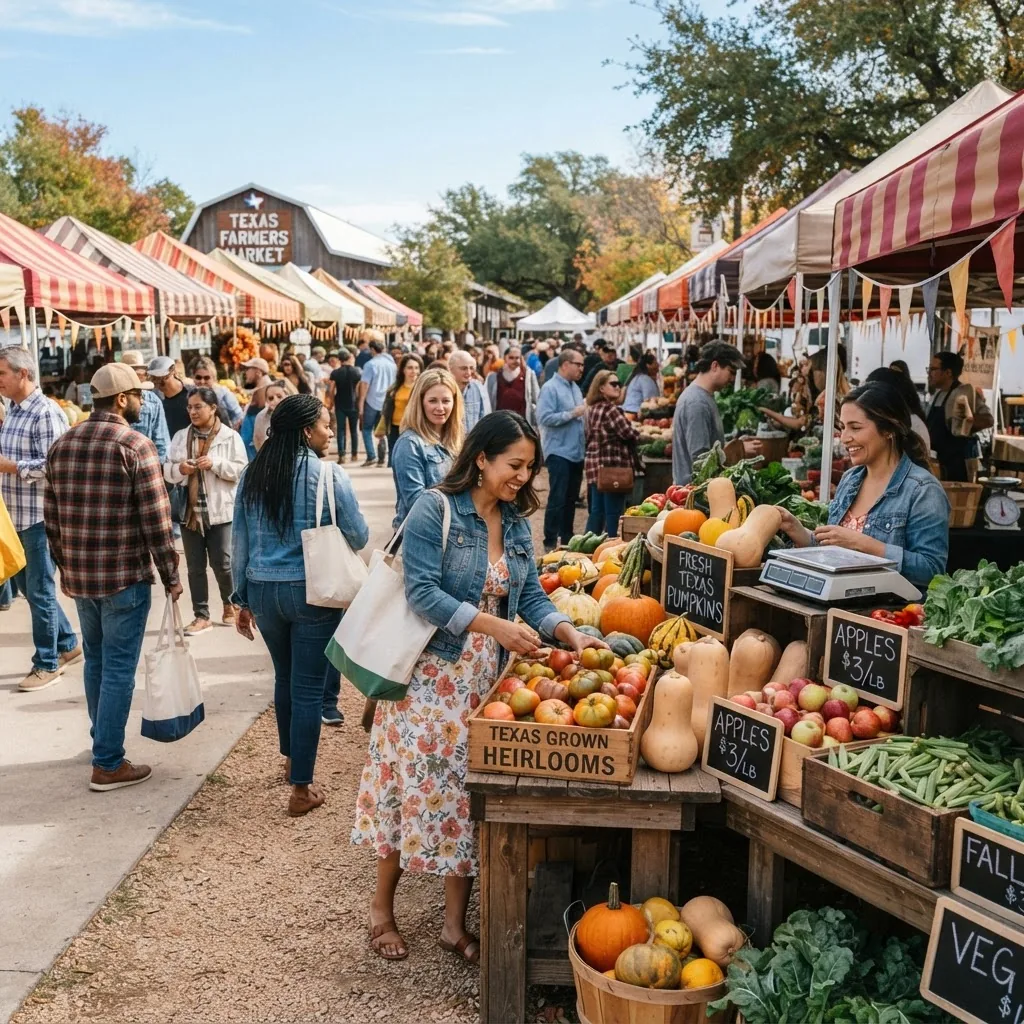
Texas spans multiple growing zones — from humid Gulf Coast to arid West Texas and cooler Hill Country — so harvest timing and recommended varieties differ across the state. Below are hands-on, sensory selection tips, a brief case study from a Texas farmers market, and links to local resources.
Case study (personal experience): Last October at the Round Top farmers market in Central Texas I watched a local orchard vendor load crisp Texas-grown Gala apples and soft Hachiya persimmons. Vendors reported the apple crop ripened two weeks earlier than historical averages due to a hot August followed by a cool September — a reminder that “availability may vary by year and local conditions.”
Use these actionable selection checks at market:
- Look: Color should match variety expectations; for apples and pears, even skin tone and absence of shriveling are good signs.
- Feel: Gently press near the stem for pears; apples should be uniformly firm; persimmons vary by type — soft for Hachiya, firm for Fuyu.
- Smell: A ripe fruit has a fragrant, sweet aroma at the stem end — especially for pears, figs, and quince.
- Ask the vendor: Ask harvest date and storage method; fresh-picked items usually taste brighter than long-stored produce.
- Inspect for pests/damage: Look under leaves or stems for signs of insects, especially for organic stalls.
Storage and transport tips from Texas markets:
- Bring insulated bags for long drives from rural markets to avoid heat damage.
- Buy apples by the bushel if you have cool storage (cellar or garage that stays ~32–40°F); otherwise buy smaller quantities to consume within two weeks.
- When buying persimmons in large quantities, separate fully ripe soft Hachiya into an airtight container and freeze for baking.
For authoritative regional harvest calendars and market locations, consult the Texas Department of Agriculture:
Texas Department of Agriculture
For hands-on produce selection techniques beyond this guide, see additional produce selection resources:
Transition: Once you’ve selected fruit, preserving and storing it properly extends its shelf life and value — the following step walks you through tested methods.
-
Preserve and store like a pro —
Storing and Preserving Fall Fruits and Produce
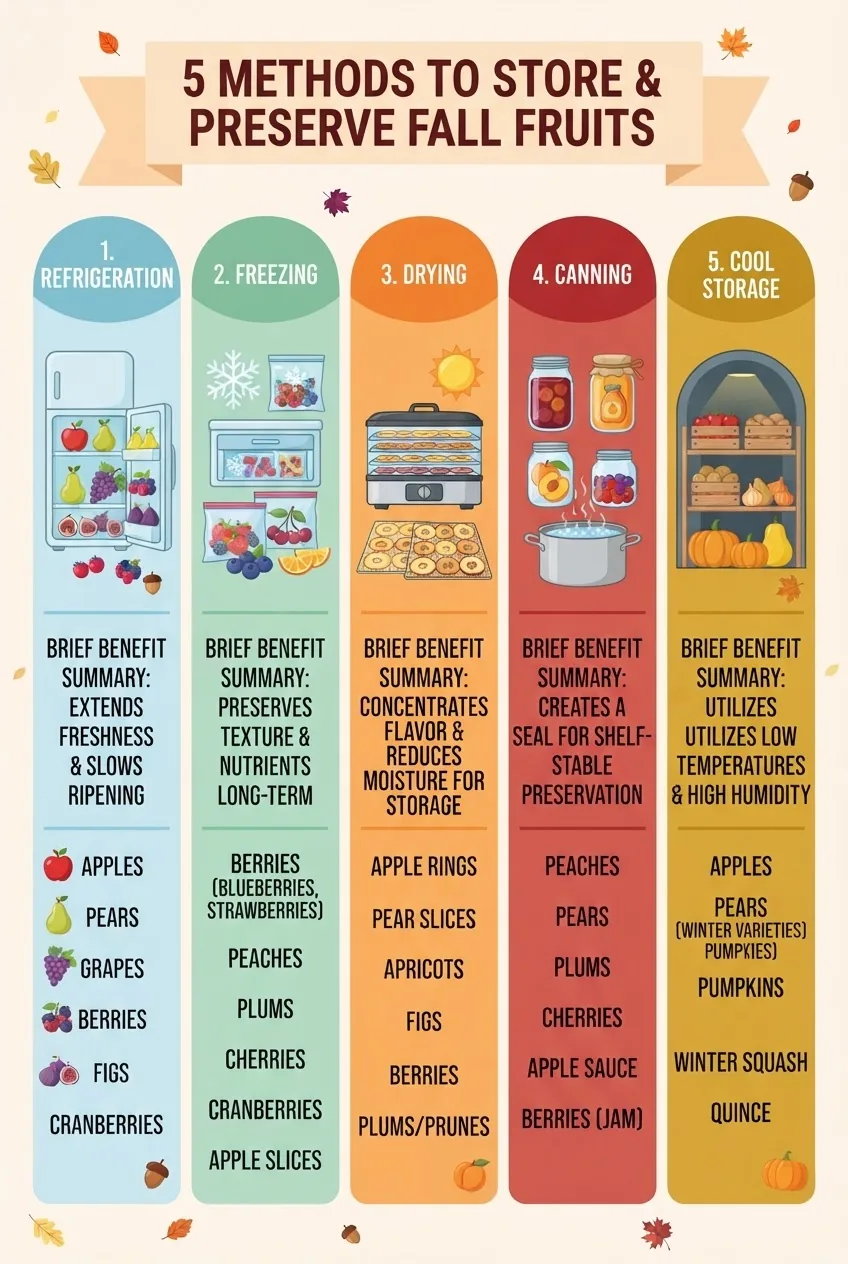
This hands-on section provides step-by-step instructions for five preservation methods (refrigeration, freezing, drying, canning, cool storage), with timing, quantities, and practical limits. I also include a personal walkthrough of freezing apples and a safety checklist.
Method 1 — Refrigeration (short to mid-term)
- Prepare: Wipe fruit with a dry cloth; remove any damaged fruit to prevent ethylene-related spoilage. Refrigeration best for apples, pears, grapes, pomegranates.
- Settings: Keep fridge at 32–40°F (0–4°C) and relative humidity high (use crisper drawer).
- Quantities & timing: Apples: 2–8 weeks; pears: 1–3 weeks once ripe; grapes: 10–14 days; pomegranates: 4–8 weeks.
Method 2 — Freezing (mid to long-term)
- Blanch or treat: For apples and pears, slice into 1/4–1/2-inch pieces, toss with 1 tablespoon lemon juice per 4 cups fruit to prevent browning.
- Flash-freeze: Arrange slices on a sheet in a single layer for 2 hours at 0°F (-18°C) until firm.
- Package: Transfer to labeled freezer bags (remove air), or vacuum seal. Freeze for up to 12 months.
- Personal walkthrough: I froze 8 pounds of Gala apples in 1/4-inch slices: 4 cups sliced per quart bag, labeled with date, and used within 9 months for pies and smoothies.
Method 3 — Drying (long-term pantry)
- Prep: Slice fruits uniformly 1/8–1/4 inch thick; pretreat with lemon water (1 cup lemon juice + 2 cups water) for 10 minutes for apples and pears.
- Drying settings: Oven at 140–170°F (60–75°C) with door cracked, or dehydrator at 135°F (57°C); dry until leathery but pliable — 6–12 hours depending on fruit and thickness.
- Storage: Cool fully, then store sealed in jars or bags in a cool, dark place up to 12 months.
Method 4 — Canning and Preserves (shelf-stable)
- Recipe baseline: For jam: 1 kg fruit : 500–800 g sugar : 15–30 mL lemon juice (adjust to fruit acidity).
- Processing: Use water bath canning for high-acid fruits (apples with added acid, jams, jellies); follow tested USDA canning recipes and processing times for your altitude.
- Safety: If uncertain, refrigerate preserves and use within 3 months.
Method 5 — Cool storage (cellar / root cellar)
- Ideal temps: 32–40°F (0–4°C) and 90–95% relative humidity for apples/pears.
- Packaging: Layer fruit in ventilated crates separated by straw or paper, check weekly for softening or rot.
- Limitations: Ethylene-producing fruits degrade sensitive vegetables — store separately.
Food safety and spoilage prevention tips:
- Always remove moldy or damaged fruit immediately — cross-contamination spreads quickly.
- Keep storage areas clean and dry; refrigerate promptly after purchase if you can’t use fruit within 48 hours.
- When freezing, note that texture changes occur; frozen fruit is best used in cooked applications (smoothies, baked goods).
Transition: Preservation preserves flavor and nutrients — next we summarize the nutritional highlights so you can plan meals that maximize health benefits.
-
Review nutrition and health impacts —
Nutritional Highlights and Health Benefits of Fall Fruits
This section provides a compact stat block summarizing common vitamins, fiber and antioxidant content for autumn fruits, then explains health impacts with referenced evidence. I cite USDA data and peer-reviewed research where relevant.
Stat block (per 100g averages, rounded):
Fruit Calories Fiber (g) Notable nutrients Apple 52 kcal 2.4 g Vitamin C, polyphenols Pear 57 kcal 3.1 g Vitamin C, copper Pomegranate (arils) 83 kcal 4 g Antioxidants (punicalagins), Vit C Cranberry 46 kcal 4.6 g Vit C, unique polyphenols Evidence-based health takeaways:
- Fiber: Many fall fruits provide soluble and insoluble fiber, which supports gut health and blood-sugar regulation — according to a 2023 USDA report on dietary fiber, higher fruit fiber is linked to improved bowel regularity.
- Antioxidants: Fruits such as pomegranates, grapes, and apples contain polyphenols and flavonoids; peer-reviewed studies suggest these compounds reduce oxidative stress markers in short-term trials — see example study below.
- Vitamins: Vitamin C in many fall fruits supports immune function; according to a 2022 meta-analysis published in a nutrition journal, dietary vitamin C intake correlates with reduced duration of upper respiratory tract infections in some populations.
For primary nutrient values, refer to USDA nutrient databases:
Complementary note: Fruits pair with vegetables to improve satiety and micronutrient variety. If you’re evaluating how fruits fit into a weight management plan, consult the guide on targeted fruit choices:
Also consider balanced views on vegetables and overall diet: for readers questioning vegetable roles in health, see this in-depth review:
Finally, for avocado-specific nutritional context often used in cooler months, see this resource:
Transition: Understanding nutrition helps craft recipes that make the most of fall’s bounty — the next section gives recipe ideas and menu plans you can implement immediately.
-
Create seasonal meals and snacks —
Incorporating Fall Fruits into Your Diet and Recipes
This hands-on section lists ways to use fall fruits: fresh preparations, baked goods, salads and preserves. It concludes with a short meal-plan integration checklist and a link to a longer diet plan resource.
Quick recipe and usage ideas (ready in 10–60 minutes):
-
Fresh: Apple-Pear Autumn Salad (10 minutes)
Toss 2 cups mixed greens, 1 sliced apple, 1 sliced pear, 1/3 cup pomegranate arils, 2 tbsp toasted walnuts, and a dressing of 1 tbsp apple cider vinegar + 2 tbsp olive oil + 1 tsp honey. Serves 2. Quick, nutrient-dense, and high in fiber.
-
Baked: Persimmon and Walnut Quick Bread (50 minutes)
Ingredients: 2 cups persimmon puree (ripe Hachiya or 3–4 Fuyu mashed), 1/2 cup sugar, 2 eggs, 1/2 cup melted butter, 2 cups flour, 1 tsp baking soda, 1 tsp cinnamon, 1/2 tsp salt, 3/4 cup chopped walnuts. Bake at 350°F (175°C) for 45–55 minutes. Cool before slicing.
-
Preserve: Simple Pomegranate Cranberry Compote (30 minutes)
Combine 2 cups fresh cranberries, 1 cup pomegranate arils, 1/2 cup sugar (or to taste), 1/4 cup water, and 1 tbsp orange zest. Simmer 15–20 minutes until thickened. Jar and refrigerate up to 2 weeks or process in a water bath for longer storage.
-
Snack & Breakfast: Fig Yogurt Parfait (5 minutes)
Layer 1 cup Greek yogurt, 4 chopped fresh figs, 2 tbsp granola, drizzle honey. Serves 1. High in protein and a good post-workout snack or quick breakfast.
Meal planning integration:
- Swap in seasonal fruit for morning cereal or smoothies.
- Use fruit-based compotes as condiments for roasted vegetables or grilled proteins.
- Reserve frozen fruit for winter baking — label by date and intended use (pies, smoothies).
For a structured weekly plan that combines fruits and vegetables into balanced meals, see:
fruit and vegetable diet meal plan
Transition: With recipes in hand, the final procedural section lists common mistakes and a verification checklist to ensure success in buying, storing, and using fall fruits.
-
Common mistakes and how to avoid them
I once stored a mixed box of apples and pears together in my garage cellar and learned the hard way: pears emitted ethylene and accelerated apple softening. Now I always separate ethylene producers from sensitive items. Also, I have overfilled freezers without removing air — leading to freezer burn; now I freeze in single layers then bag tightly.
Quick checklist
- Did you check harvest timing for your Texas zone this year? (Ask vendor or TDA website.)
- Did you inspect fruit for firmness, aroma, and damage? (Use look/feel/smell test.)
- Are refrigeration/freezer temps set: fridge 32–40°F, freezer 0°F?
- Have you pretreated fruit for freezing (lemon or ascorbic acid) to reduce browning?
- Did you label and date all preserved containers?
When to call in a professional
Contact a certified food preservation specialist or your local extension service when: you plan commercial-scale canning, are unsure about low-acid canning safety for mixed fruit-vegetable preserves, or when a suspected food-borne illness occurs. For orchard-scale questions about cultivars, reach out to county extension agents or the Texas A&M AgriLife Extension network.
Conclusion
Key takeaways: prioritize ripe, locally harvested fall fruits, store and preserve using the methods above to reduce waste, and pair fruits with fall seasonal vegetables to amplify flavor and nutrition. Start by visiting a local market this weekend, pick two fruits from the “best fruits in fall” list, and try one of the quick recipes above. Want a structured plan? Use the linked fruit and vegetable diet meal plan to map fruits into a weekly menu.
Call to action: Visit your nearest Texas farmers market this fall, use this checklist, and preserve at least one batch of fruit for winter enjoyment.