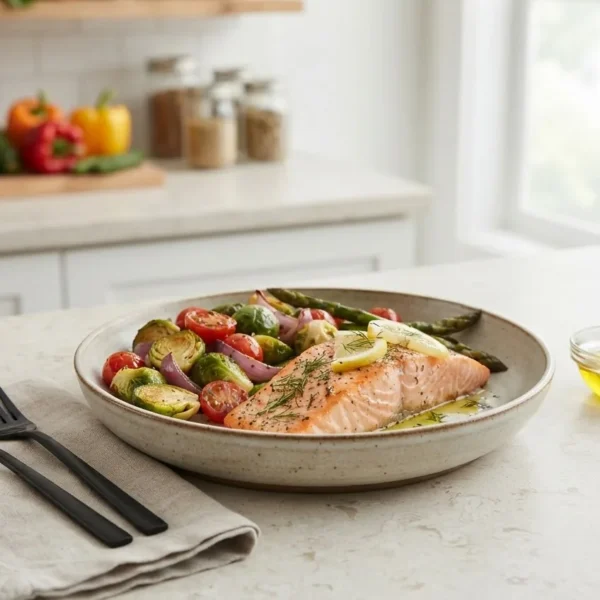
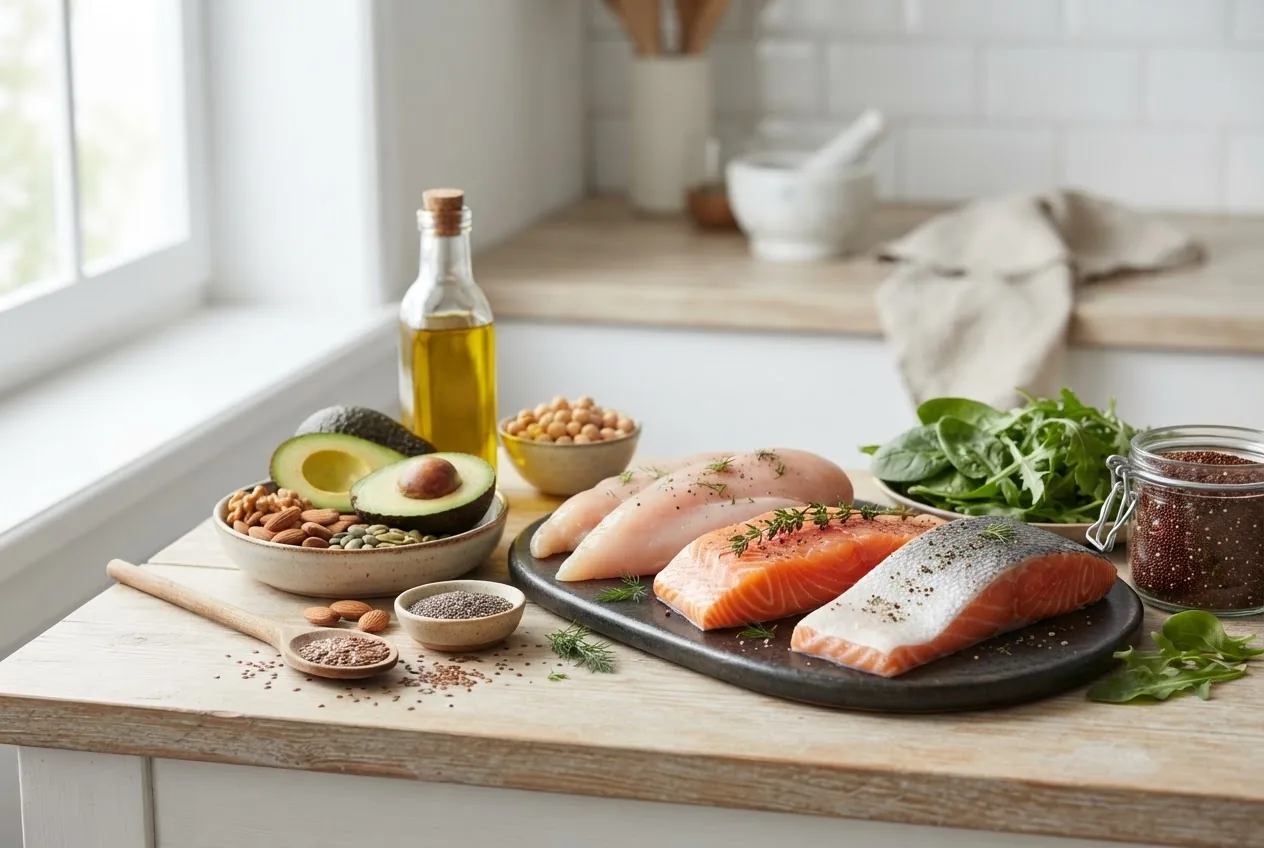
Types of protein include structural categories (fibrous, globular, conjugated) and nutritional categories (animal vs plant, complete vs incomplete); proteins are polymers of amino acids that provide tissue structure, enzymes, hormones and usable calories when needed, with practical selection focused on lean options and amino acid balance.
Transition: The following sections answer key questions about what protein is, how proteins are classified structurally and nutritionally, and how to choose high-quality, lean protein for health goals in the US/Texas context.
Understanding Protein: Definition and Basic Composition
Answer: Protein is a macronutrient made of chains of amino acids containing nitrogen; it builds and repairs tissues, forms enzymes and hormones, and contributes about 4 kcal per gram of energy when oxidized.
Term: Protein — a biological macromolecule composed of one or more polypeptide chains of amino acids linked by peptide bonds, containing carbon, hydrogen, oxygen and nitrogen.
Term: Amino acids — the smaller organic molecules (20 standard types) that join to form proteins; nine are typically classed as essential for adults because the body cannot synthesize them.
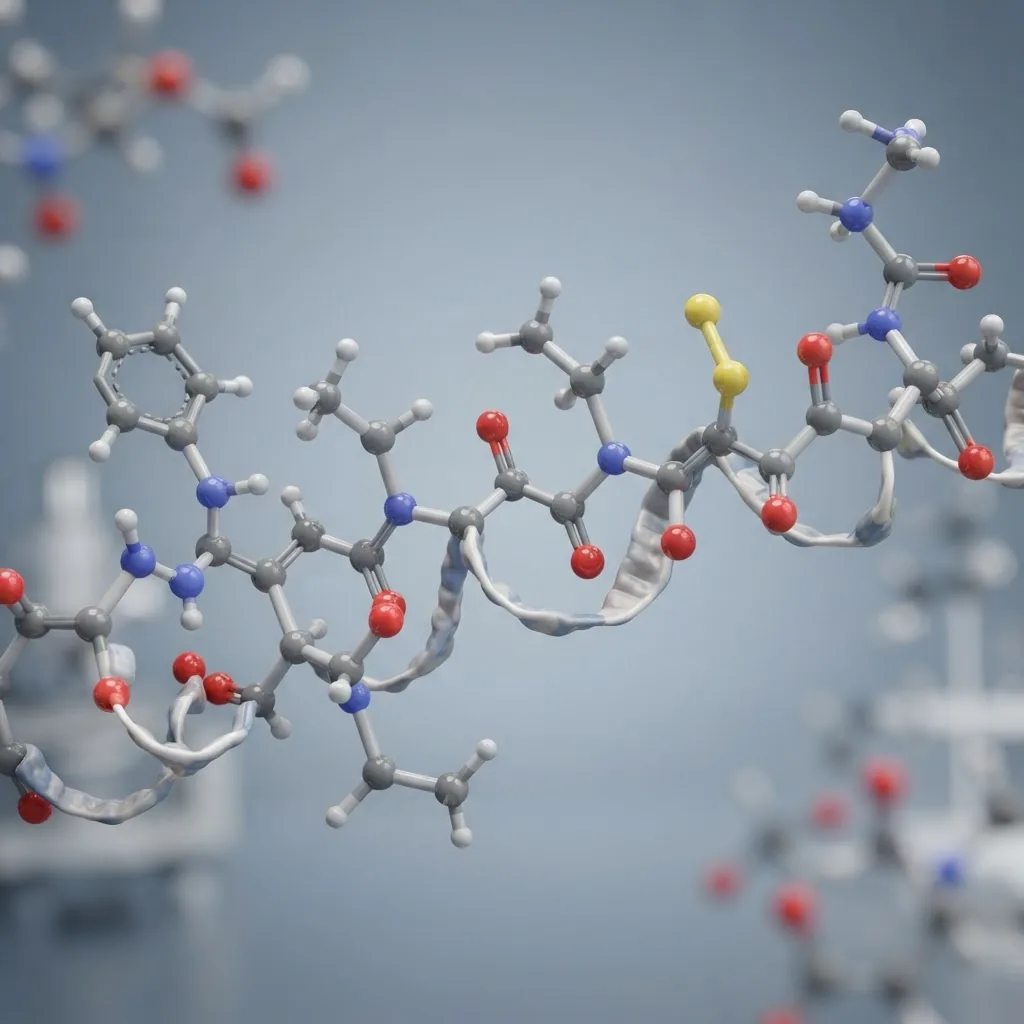
What protein is made of: proteins are polypeptide chains of amino acids linked by peptide bonds; each amino acid has an amino group (—NH2), a carboxyl group (—COOH) and a side chain (R-group) that defines chemical properties and determines protein folding and function.
Key compositional facts (biochemical basics):
- Primary elements: carbon (C), hydrogen (H), oxygen (O), nitrogen (N); some proteins have sulfur (S) via cysteine or methionine.
- Peptide bond: covalent bond formed by condensation between amino and carboxyl groups — backbone of the polypeptide chain.
- Polarity and side chains: R-groups cause hydrophobic, polar, acidic or basic behaviors that drive folding and function.
- Nitrogen balance: dietary protein provides nitrogen needed for synthesis of non-protein nitrogenous compounds and maintenance of lean mass.
Essential vs non-essential amino acids: the nine essential amino acids for most adults include histidine, isoleucine, leucine, lysine, methionine, phenylalanine, threonine, tryptophan and valine; the remaining amino acids are considered non-essential because the body can synthesize them from intermediates.
Practical note for readers in Texas: common supermarket items provide clear examples—100 g cooked chicken breast supplies roughly 31 g protein and minimal saturated fat while 100 g cooked lentils supply ~9 g protein with fiber; nutrition data reference: USDA FoodData Central.
Protein terminology clarified:
- Macronutrient: a nutrient class (protein, carbohydrate, fat) required in gram quantities to meet energy and structural needs.
- Complete protein: contains all essential amino acids in sufficient proportions for human needs (definition elaborated later).
- Lean protein: foods high in protein with low total and saturated fat per serving (examples later).
According to the NIH Office of Dietary Supplements fact sheet (2022), average adult protein needs depend on body weight and activity, but the biochemical role of proteins as amino-acid polymers is consistent across diets; for detailed intake calculations see dedicated intake resources.
Transition: With the biochemical basics established, the next section classifies proteins by their structural and functional categories and explains why structure determines biological role.
Classification of Proteins Based on Structure and Function
Answer: Proteins are classified structurally as primary, secondary, tertiary and quaternary arrangements and functionally as fibrous, globular, membrane or conjugated proteins; structure dictates mechanical, catalytic or transport roles in the body.
Term: Primary structure — the linear amino acid sequence of a polypeptide chain.
- Primary structure — the amino acid sequence; substitution of a single residue can change function (example: sickle-cell mutation in hemoglobin). Primary sequence determines all higher-order folding.
- Secondary structure — local folding patterns stabilized by hydrogen bonds, chiefly alpha-helices and beta-sheets; these motifs underlie stability in fibrous and globular proteins.
- Tertiary structure — the three-dimensional fold of a single polypeptide due to side-chain interactions (hydrophobic packing, disulfide bonds, ionic interactions) that create active sites in enzymes.
- Quaternary structure — assembly of multiple polypeptide subunits (e.g., hemoglobin tetramer) enabling cooperative functions like oxygen transport.
- Fibrous proteins — elongated, structural proteins (collagen, keratin) providing tensile strength; abundant in connective tissue and skin.
- Globular proteins — compact, roughly spherical proteins (most enzymes, hemoglobin, antibodies) primarily involved in catalysis, transport and regulation.
- Membrane proteins — embedded in lipid bilayers; include channels, transporters and receptors that control movement and signaling across cell membranes.
- Conjugated proteins — proteins covalently linked to non-protein groups (glycoproteins, lipoproteins, metalloproteins) where the prosthetic group is essential for function (example: hemoglobin’s heme).
- Enzymes and catalytic proteins — specialized globular proteins that accelerate biochemical reactions via active sites and cofactors.
- Storage and transport proteins — albumin (circulation), ferritin (iron storage) and casein (milk storage) illustrate nutrient storage/transport roles.
- Regulatory and signaling proteins — hormones and transcription factors that regulate metabolism, growth and gene expression.
Structural classification informs nutritional decisions: fibrous proteins (e.g., collagen in connective tissue) are lower in essential amino acid density than muscle-derived globular proteins, influencing whether a food is treated as a high-quality protein source in diet planning.
Functional classification informs health impacts: membrane and conjugated proteins may modulate cholesterol transport (lipoproteins), while enzymes affect nutrient metabolism; biochemical textbooks and peer-reviewed reviews elaborate these relationships — see the NIH overview for enzymatic roles (NIH ODS: Protein).
Transition: Structural categories explain molecular behavior; the next section contrasts nutritional classifications—complete versus incomplete proteins—and practical implications for diet quality.
Nutritional Classification of Protein: Complete vs Incomplete Proteins
Answer: Complete proteins supply all essential amino acids in adequate ratios for human needs; incomplete proteins lack one or more essential amino acids and can be combined to form complete amino acid profiles.
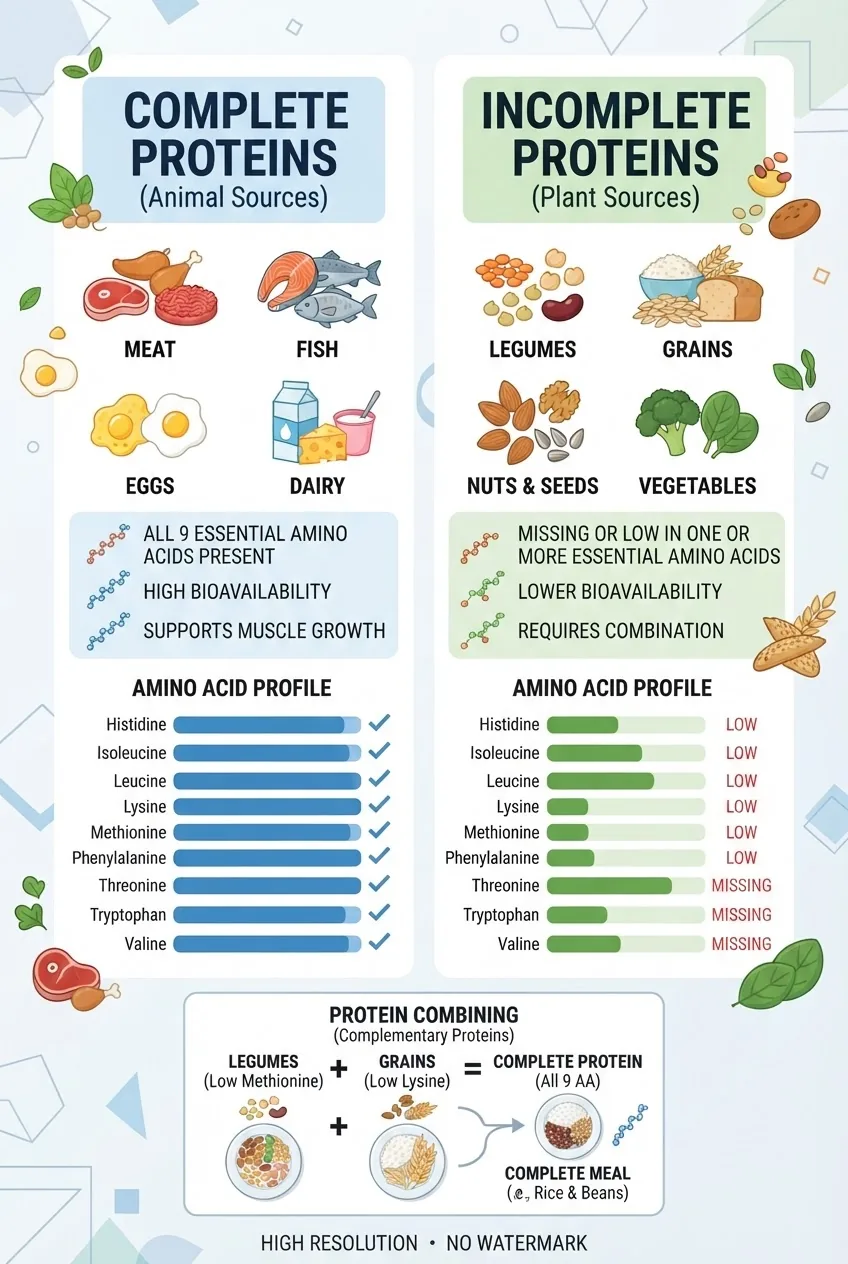
Term: Complete protein — a food or combination of foods that contains sufficient amounts of all essential amino acids to meet human requirements.
| Characteristic | Complete Proteins | Incomplete Proteins |
|---|---|---|
| Definition | Contains all essential amino acids in sufficient amounts | Missing or low in one or more essential amino acids |
| Typical sources | Meat, poultry, fish, eggs, dairy, soy, quinoa | Most legumes, grains, nuts, seeds (individual items) |
| Use in diet | Often used as single-source protein for muscle repair | Combined in meals to achieve complete amino acid profile |
| Examples | Chicken breast, salmon, eggs, Greek yogurt, soy | Lentils, rice, almonds, most vegetables |
Explanatory details:
- Animal proteins are frequently complete because animal tissue mirrors human amino acid needs; eggs and dairy score highly on amino acid adequacy.
- Plant proteins can be complete (soy, quinoa, buckwheat) but many plant staples are limited in specific amino acids—e.g., legumes low in methionine and grains low in lysine.
- Complementary proteins: combining legumes and grains in a day (beans + rice) supplies a full essential amino acid spectrum; complementary pairing timing can be within the same day rather than the same meal.
Practical references and extended lists: for full lists of complete protein foods consult the linked guide that catalogs animal and plant complete sources and their nutrient profiles.
Protein scoring systems (PDCAAS and DIAAS) evaluate how well a protein meets human amino acid requirements and digestibility; these metrics are used to label quality in research and policy (details in the Protein Quality section).
Transition: Nutritional classification guides food selection—next we catalog common animal-based and plant-based protein sources and their nutrition notes for lean diets common in Texas grocery choices.
Types of Protein Sources: Animal-Based and Plant-Based Proteins
Answer: Animal-based proteins (meat, poultry, fish, dairy, eggs) often provide high protein density and complete amino acid profiles; plant-based proteins (legumes, nuts, seeds, grains, soy, quinoa) vary in completeness and often add fiber and phytonutrients.
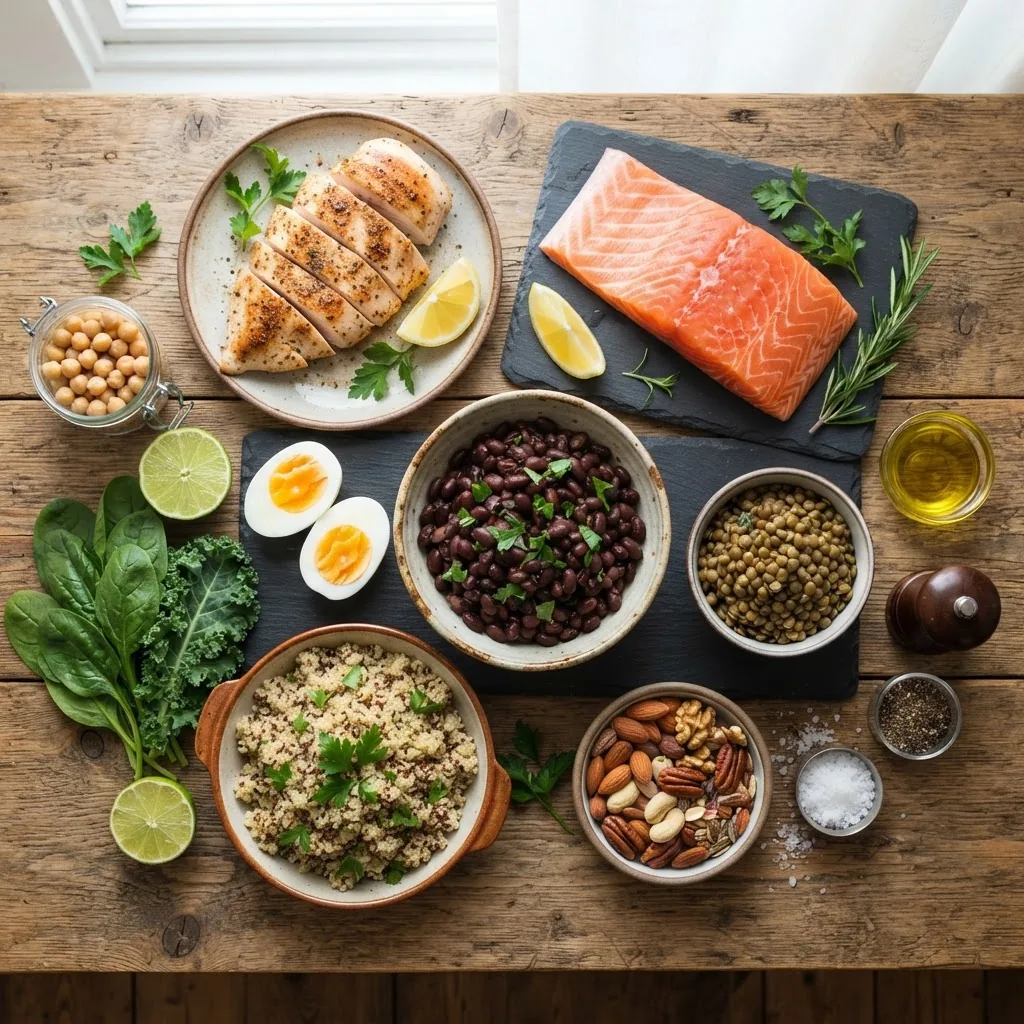
Organization: lists below separate animal-based and plant-based sources with brief nutrition notes emphasizing lean options and fat balance relevant to US/Texas shoppers.
Animal-based protein sources
- Chicken breast (skinless cooked): ~31 g protein per 100 g, low saturated fat; nutrition details.
- Turkey breast: similar to chicken—lean, high-quality amino acid profile.
- Fish (salmon, tuna, cod): complete proteins with varying fat profiles; salmon provides omega-3 EPA/DHA—see omega-3 rich protein sources.
- Eggs: whole eggs are a high-quality complete protein with vitamins and choline; egg whites are virtually pure protein (albumin).
- Dairy (Greek yogurt, cottage cheese, milk): complete proteins plus calcium and often probiotics in fermented options.
- Lean cuts of red meat (top round, sirloin): high protein with iron and B12 but higher in saturated fat; choose trimmed cuts for lean profiles.
Plant-based protein sources
- Legumes (lentils, black beans, chickpeas): ~7–9 g protein per 100 g cooked, high fiber and micronutrients; pair with grains to improve methionine content.
- Soy products (tofu, tempeh, edamame): complete plant protein with favorable PDCAAS/DIAAS scoring.
- Quinoa and buckwheat: plant-complete grains supplying all essential amino acids in meaningful amounts.
- Nuts and seeds (almonds, peanuts, chia, hemp): dense in calories and healthy fats; see Do Nuts Have Protein for per-serving protein and fat details.
- Whole grains (brown rice, oats, barley): moderate protein, usually incomplete; combine with legumes for complementary profiles.
- Plant-based protein powders (pea, soy, rice blends): concentrated protein useful for targeted intake goals.
Lean protein focus for Texas shoppers: typical local options include skinless chicken breast, lean pork tenderloin, Gulf-caught fish (e.g., cod), farm eggs, and Greek yogurt; lean choices minimize saturated fat per 25–30 g protein serving.
Related resources for cutting and targeted lean diets: consult the linked guide for curated lists of lean protein foods.
Experience signal — Texas market example: at H-E-B or Central Market in Austin, shoppers often find boneless skinless chicken breast, wild-caught Gulf salmon and bulk lentils; selecting grilled chicken, baked salmon and mixed-legume salads balances protein with lower saturated fat and adds local availability context.
Transition: Having listed sources, the next section explains how experts measure protein quality and which metrics are most informative when choosing foods.
Protein Quality and Measurement Methods
Answer: Protein quality is measured by PDCAAS (Protein Digestibility-Corrected Amino Acid Score) and DIAAS (Digestible Indispensable Amino Acid Score); DIAAS is currently favored for accuracy in ileal digestibility of individual amino acids.
Term: PDCAAS — a score that adjusts amino acid profile by overall fecal protein digestibility, historically used in regulatory contexts.
Term: DIAAS — a method assessing true ileal digestibility for each indispensable amino acid, giving a more precise quality index for different foods and processing methods.
- PDCAAS: historically used by FAO/WHO and many food labels (simple, uses fecal digestibility).
- DIAAS: increasingly recommended by researchers and some agencies for better accuracy (ileal digestibility per amino acid).
Illustrative examples:
- Milk protein (casein + whey) typically scores near or at 1.00 PDCAAS and high DIAAS values, reflecting excellent essential amino acid profiles and digestibility.
- Soy protein has high PDCAAS (~0.9–1.0) and favorable DIAAS depending on processing; pea and rice proteins vary more.
- Whole grains and legumes may show lower PDCAAS and DIAAS scores unless combined or processed to improve digestibility (fermentation, soaking, cooking).
Pros and cons:
- PDCAAS pros: simple, established regulatory history; cons: can truncate at 1.0, uses fecal rather than ileal digestibility.
- DIAAS pros: measures individual amino acid digestibility at the ileum, avoids truncation and better reflects human requirements; cons: more complex to measure and not yet universally adopted in food labeling.
Caloric context: protein yields approximately 4 kcal per gram; for energy-focused planning see the linked resource on the caloric value of protein.
Authoritative references: FAO technical reports and peer-reviewed reviews discuss PDCAAS vs DIAAS methodology; for database-backed nutrient content consult USDA FoodData Central and for consumer protein guidance the NIH Office of Dietary Supplements provides accessible summaries (NIH: Protein).
Transition: Understanding protein quality and scoring informs how protein benefits the body—next we explain metabolism, digestion and physiological roles tied to protein types.
How Protein Functions in the Body: Metabolism and Benefits
Answer: Dietary protein is digested into amino acids and small peptides, absorbed in the small intestine, used for protein synthesis, enzyme and hormone production, immune function, and can be oxidized for energy when needed; branched-chain amino acids (BCAAs) play specialized roles in muscle metabolism.
Term: Protein synthesis — the cellular process by which ribosomes translate mRNA into polypeptide chains using amino acids as building blocks.
Term: BCAAs — branched-chain amino acids (leucine, isoleucine, valine) are essential and particularly important for muscle protein synthesis signaling.
Digestion and absorption walkthrough (everyday foods example):
- Ingestion: eat a meal with grilled chicken and lentil salad.
- Stomach: gastric acid and pepsin begin denaturing proteins into peptides.
- Small intestine: pancreatic proteases (trypsin, chymotrypsin) and brush-border peptidases produce free amino acids and di-/tri-peptides; absorption occurs primarily in the jejunum.
- Transport: absorbed amino acids enter the portal circulation to the liver where they are used for protein synthesis, deaminated for energy or released to peripheral tissues (muscle uptake for synthesis).
- Metabolism: amino acids contribute to gluconeogenesis during fasting, nitrogen is excreted as urea; branched-chain amino acids are often oxidized in muscle for energy during exercise.
Health benefits linked to protein types:
- Muscle growth and repair: high-quality proteins with sufficient leucine stimulate muscle protein synthesis—valuable for strength training and recovery.
- Satiety and weight management: protein increases satiety hormones and thermic effect compared to fats and carbohydrates, aiding body composition goals.
- Enzymatic and hormonal roles: proteins form enzymes and hormones required for metabolism, immune response and tissue turnover.
- Nitrogen economy: maintaining positive nitrogen balance supports growth, pregnancy and rehabilitation; negative balance indicates catabolism.
Timing and utilization: post-exercise protein plus carbohydrate supports muscle recovery; leucine threshold (~2–3 g leucine per meal) helps trigger synthesis in younger adults—research summaries are available in exercise nutrition literature and NIH resources.
Safety and overconsumption: chronically excessive protein intake can increase renal solute load and displace other nutrients; monitoring is recommended for individuals with existing renal disease. According to a 2023 USDA review of population diets, most healthy adults tolerate a range of protein intakes within recommended dietary patterns.
Transition: With metabolism and benefits explained, the final section provides practical, Texas-relevant guidance for selecting proteins that support health, weight goals and fat balance.
Practical Nutrition Guide: Choosing the Right Protein Types for a Healthy Diet
Answer: Choose lean, high-quality proteins (skinless poultry, fish, low-fat dairy, legumes, soy) prioritized for amino acid completeness and low saturated fat; balance protein portions across meals and pair with healthy fats and fiber for appetite control and nutrient balance.
Actionable steps and practical advice:
- Identify lean options: prioritize skinless chicken breast, turkey, white fish, low-fat Greek yogurt and plant proteins like tofu and lentils for lower saturated fat per protein gram.
- Balance fats: pair proteins with healthy fat choices such as olive oil or avocado oil to maintain heart-healthy patterns and improve satiety.
- Watch calorie trade-offs: understand calories in fat when choosing fattier cuts or nuts to keep energy balance in check.
- Plan intake around activity: for muscle maintenance and growth, distribute protein evenly across meals and consult specific guides for targets like the protein daily intake recommendations.
- Include variety: mix animal and plant proteins across the week to leverage complete amino acid sources and fiber-rich plant foods.
- Consider portion sizing: aim for 20–35 g protein per meal as a practical target for most adults seeking maintenance or modest gains; modify based on body mass and goals.
- Use supplements judiciously: protein powders can help meet targets but prioritize whole-food sources for micronutrients and satiety.
- Read labels: check PDCAAS or DIAAS information where available for processed or fortified proteins; prefer minimally processed items for nutrient density.
Experience-case study (Texas grocery example and weight-loss framing):
- Subject: 35-year-old office worker in Houston aiming for fat loss while preserving muscle. Baseline: moderate activity, 1,800–2,000 kcal/day goal.
- Strategy: replace two higher-fat dinners per week (e.g., ribeye) with grilled salmon or skinless chicken; add a daily 150 g Greek yogurt snack; include 1 cup cooked lentils in salads twice weekly to add fiber and plant protein.
- Outcome (example): after 12 weeks the subject reduced body fat percentage via caloric deficit and preserved lean mass by maintaining 1.2–1.6 g/kg/day protein and resistance exercise. This illustrative case follows general patterns shown in dietary studies on high-protein diets and satiety.
Links to further resources:
protein rich food for weight loss
Additional considerations and safety:
- Adjust protein targets for age, pregnancy, kidney disease and athletic training; consult a registered dietitian or clinician for personalized plans.
- Be mindful of sodium in processed protein products and the added sugars in some flavored yogurts or protein bars.
Recommended next steps for readers: audit weekly grocery choices (check labels and grams of protein per serving), prioritize two to three lean high-quality protein meals daily, and consult linked resources for deeper dive into caloric and intake specifics.
Disclaimer: Individual nutritional needs vary by age, health status and activity level; consult a healthcare professional for personalized recommendations.
Conclusion: Protein types span molecular structural classes and nutritional categories—knowing what protein is made of (amino acids) and how protein quality is measured (PDCAAS, DIAAS) lets you choose lean, complete protein sources that support muscle, metabolism and satiety. For actionable next steps, review the linked resources and adjust choices to local availability in Texas markets; consider prioritizing skinless poultry, fish, low-fat dairy and soy for high-quality, lean protein. Explore deeper guides and tools to calculate individual targets and meal planning.
Call to action: review your weekly protein sources and swap one higher-fat option for a lean complete protein this week to test improved satiety and energy.