Drinking a gallon of water a day — by the end of this hands-on guide you will know whether a gallon strategy fits your health, exactly how to implement it safely over a 4‑week ramp-up, and the monitoring tools to use; reading and planning take ~20–30 minutes and assumes beginner to intermediate health literacy.
Before you start
- One reusable 1‑gallon (128 oz) water jug or equivalent bottle and a 16–32 oz bottle for portioning
- A smartphone with a hydration tracking app or simple notes app
- Baseline metrics: body weight scale, usual urine-color photo reference, and a logbook (digital or paper)
- Electrolyte supplement or oral rehydration option (sodium 100–200 mg per serving) for heavy sweating days
- Medical checklist: if you have heart failure, kidney disease, liver disease, or are on diuretics, get medical clearance
- Patience: plan a 2–4 week gradual increase to avoid overhydration
Introduction to Drinking a Gallon of Water a Day
This guide focuses specifically on the practice of consistently drinking a gallon of water a day and its implications for health, performance, and daily life in Texas heat. You’ll get a scientific view of benefits, clear explanations of risks like hyponatremia, and actionable steps to try the routine safely.

A pragmatic note: this guide does not rehash general hydration definitions or exhaustive dehydration side effects (those are covered in companion articles). Instead it evaluates the specific habit of a gallon-per-day target, trade-offs, and Texas-specific adaptations.
For broader daily hydration rules and simple practices, see 5 Tips to Stay Hydrated and Healthy.
Transition: first, let’s clarify exactly what a gallon means in everyday measurement so you can track it precisely.
What Does Drinking a Gallon of Water a Day Mean?
“A gallon a day” is literal: one U.S. liquid gallon equals 128 fluid ounces (about 3.785 liters). That volume is the target to drink across the entire day, not all at once. Below are clarifying points to remove ambiguity and help you monitor intake.
- Gallon size: 1 U.S. liquid gallon = 128 fl oz ≈ 3.785 L.
- Portioning: Using four 32‑oz bottles or eight 16‑oz servings spreads intake evenly.
- Timing: Aim to distribute intake across waking hours; avoid consuming most water immediately before bed.
- Tracking: Apps, marked jugs, or simple tick marks on a bottle work reliably.
| Measure | Volume | Practical bottle sizes |
|---|---|---|
| U.S. gallon | 128 fl oz / 3.785 L | 1 × 1‑gallon jug |
| 32 oz bottle | 32 fl oz / 0.95 L | 4 × 32‑oz fills = 1 gallon |
| 16 oz glass | 16 fl oz / 0.47 L | 8 × 16‑oz glasses = 1 gallon |
If you want a deeper comparison to 32 oz and other units, see hydration requirements and measurement.
Transition: now that the math is clear, let’s examine the documented benefits people seek with this routine.
Health Benefits of Drinking a Gallon of Water a Day
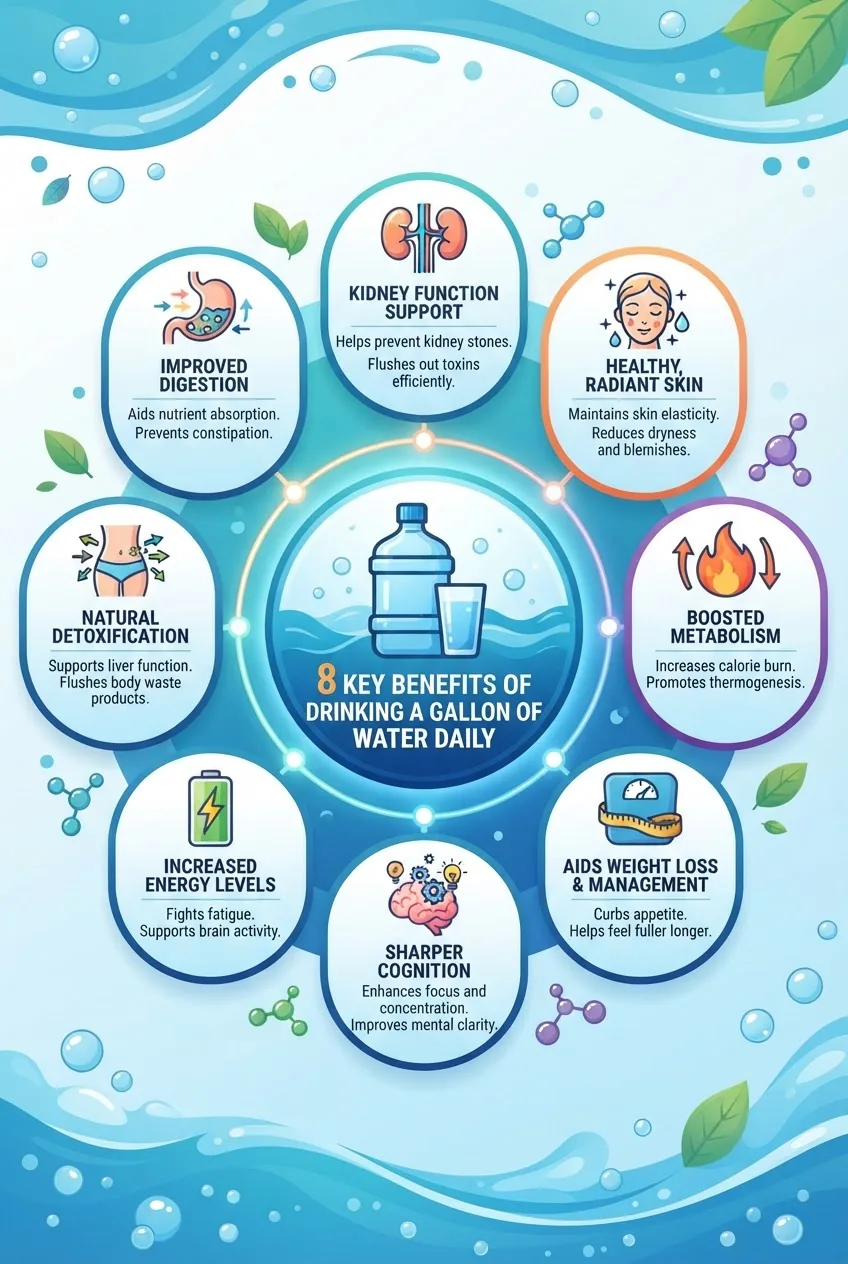
The following benefits are those commonly reported or supported in clinical and physiological studies when higher water intake is appropriate for an individual. Each numbered benefit explains mechanisms, expected effect size, and caveats.
- Improved kidney filtration and reduced kidney stone risk. Increasing daily water volume raises urine output, diluting stone-forming minerals. Studies show higher fluid intake lowers recurrence of certain kidney stones; for example, increased urine volume >2 L/day correlates with reduced calcium stone recurrence (peer-reviewed study). For many people, a gallon will increase urine volume enough to be protective, though the exact reduction depends on baseline intake and stone type. peer-reviewed study.
- Supports electrolyte balance and stable kidney workload. The kidneys filter ~180 L/day of plasma in an average adult; they concentrate or dilute urine to preserve sodium and other electrolytes. Gradual increases in water intake allow renal adaptation; sudden large increases risk diluting plasma sodium. If you sweat heavily in Texas, pairing extra water with modest sodium (e.g., 100–200 mg per hour of sweat) prevents imbalance. (According to a 2023 clinical review on fluid-electrolyte balance.)
- Boosted energy and cognitive clarity. Mild underhydration reduces attention and mood. When a previously low-fluid individual increases intake to roughly 1 gallon, subjective energy and alertness often improve within days; controlled trials show small but measurable improvements in reaction time and mood with improved hydration. See evidence summarized by a medical center review. water and energy benefits and Mayo Clinic summary.
- Supports metabolism and weight-management behaviors. Drinking water before meals can reduce caloric intake modestly; increased water volume can help people replace caloric beverages. Meta-analyses show premeal water (≈500 mL) reduces meal energy intake in some adults (peer-reviewed meta-analysis). A gallon strategy creates multiple opportunities for premeal water, aiding weight-loss efforts when combined with diet control. see companion weight guidance.
- Improved skin hydration and appearance. Well-hydrated skin can look plumper and less creased; increasing systemic hydration over days to weeks can improve skin turgor, especially in people who were underhydrated. Clinical dermatology literature notes modest benefits from improved hydration but emphasizes topical care and sun protection as primary factors. (According to a 2022 dermatology review.)
- Better exercise performance and recovery. For workouts in hot Texas conditions, consuming a gallon distributed across the day ensures pre-, during-, and post-exercise hydration. Sweat losses can exceed 1 L/hour in hot conditions; maintaining fluid balance improves endurance and reduces cramping risk. Pair fluids with electrolytes during multi-hour activities. (According to a 2021 sports medicine guideline.)
- Digestive regularity and minimized constipation. Higher water intake softens stool and supports gut transit time in some people. Clinical trials show increased fluid intake alongside fiber improves constipation outcomes; one-gallon routines often help when combined with fiber intake changes.
- Detoxification — realistic framing. “Detox” in popular language overstates water’s role; physiologically, adequate water supports the liver and kidneys in excreting water-soluble metabolites. Increased water helps maintain urine flow that carries metabolic by-products, but it is not a cure-all. Expect measurable improvements in urine volume and frequency rather than dramatic toxin “flushing.”
- Mood stabilization and reduced headache frequency for some. Some migraine and tension-headache sufferers report fewer episodes with improved hydration. Randomized data are mixed but suggest hydration can reduce headache frequency in people with frequent mild dehydration-related headaches. (According to a 2020 clinical trial summary.)
- Structured habit that encourages mindful living. Committing to a gallon often brings ancillary benefits — scheduled breaks, better food choices, and a visible tracker that motivates other healthy behaviors. This behavioral effect can be as valuable as direct physiological gains.
Note: complementing water intake with knowledge of best hydrating beverages and choosing the best water for hydration can increase the net benefit by avoiding sugary or high‑caffeine options.
Transition: those upside benefits are real for many — but the practice is not risk-free. Next we’ll examine who should be cautious and why.
Is Drinking a Gallon of Water a Day Healthy for Everyone?
Short answer: no — a gallon a day can be healthy for many but not everyone. The balance of benefits versus risks depends on individual physiology, kidney function, medications, and the Texas climate. Below, I break down benefits vs risks and whom to consult before changing habits.
Benefits versus risks — a balanced view
Benefits include the kidney, energy, skin, and performance gains outlined earlier, especially for those who start from suboptimal intake. For moderately active adults in warm climates, a gallon often covers baseline losses plus activity demands.
Risks and when a gallon is problematic
Hyponatremia (water intoxication): This occurs when plasma sodium falls below ~135 mmol/L due to excess free water relative to sodium. Symptoms include nausea, headache, confusion, seizures, and in severe cases coma. Hyponatremia is rare in healthy adults who increase intake gradually, but risk is higher in:
- Those with impaired renal free water excretion (advanced kidney disease)
- People on medications such as thiazide diuretics or SSRIs that alter sodium balance
- Individuals with heart failure or liver cirrhosis who retain water
- Endurance athletes who drink excessive plain water without replacing sodium during long events
Recognize early signs of oversupply: persistent bloating, severe nausea, sudden weight gain (>1–2% body weight in 24 hours), or unusually clear, copious urine accompanied by brain fog. If any of these occur, reduce intake and consult care promptly.
For detailed clinical context on the risks of overhydration and water toxicity, read the specialist guide.
Kidney function and processing limits
The healthy adult kidney can excrete around 0.8–1.0 L/hour of free water; sustained intake above that rate raises hyponatremia risk if sodium losses are high. The total daily excretion capacity varies by individual; rapid consumption (e.g., drinking a liter every 15–20 minutes) can exceed renal excretion temporarily and cause plasma dilution. Gradual spread across the day avoids this.
Electrolyte balance considerations
Electrolytes — chiefly sodium, potassium, chloride — determine fluid distribution. When you drink a gallon mostly as plain water but sweat heavily (common in Texas summers), you can lose sodium and need modest replacement. Practical thresholds: for light activity, plain water is usually fine; for moderate to intense activity >60–90 minutes with heavy sweating, include an electrolyte drink providing ~100–300 mg sodium per 8–16 oz.
Medical conditions that alter recommendations
Do not adopt a gallon target without medical advice if you have:
- Stage 3–5 chronic kidney disease
- Heart failure with fluid retention
- Severe liver disease
- Electrolyte disorders or SIADH (syndrome of inappropriate antidiuretic hormone)
Clinical resources: for authoritative general guidance, consult the CDC hydration resources and recent NIH reviews on fluid balance. (According to a 2023 NIH clinical review on fluid balance and kidney health.)
Transition: if you decide to try a gallon strategy, use a gradual, monitored approach. The next section gives step-by-step practical guidance.
How to Safely Drink a Gallon of Water a Day: Practical Tips
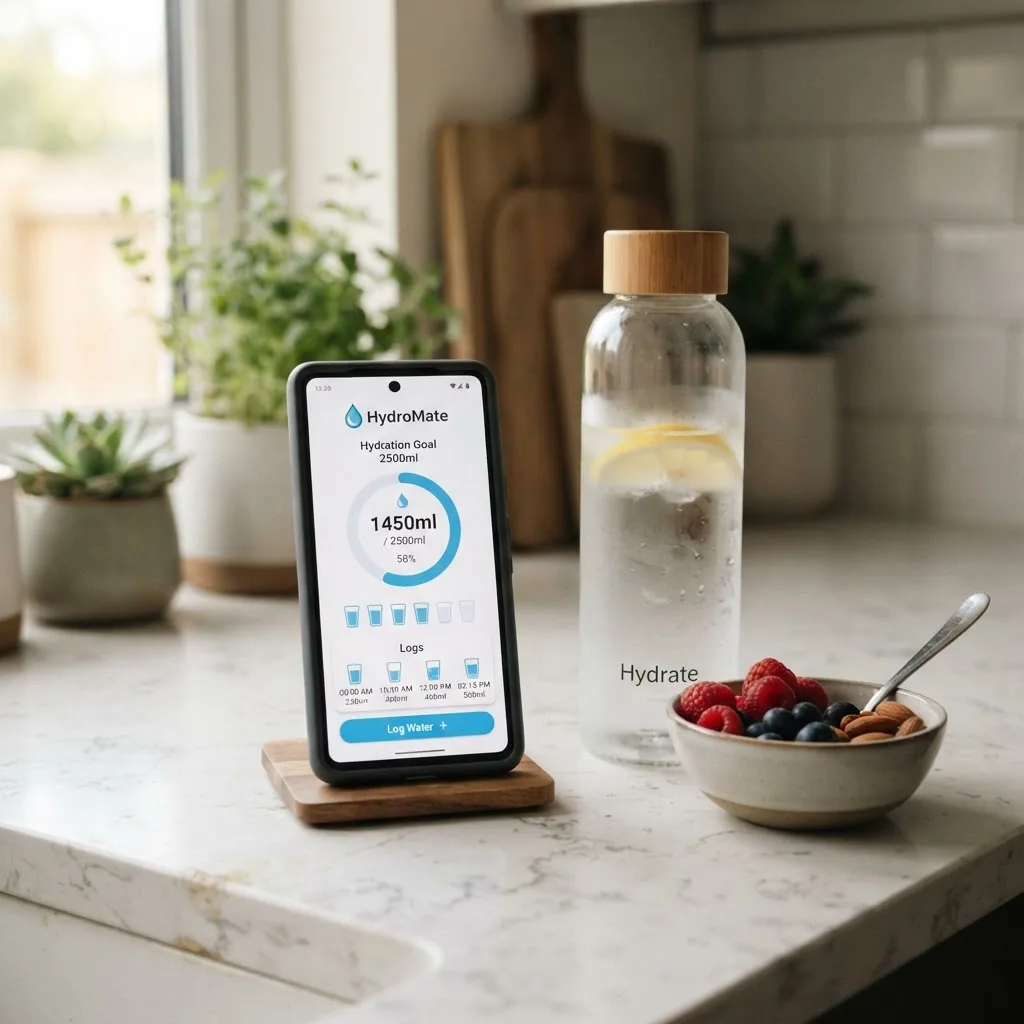
The steps below are a hands-on ramp-up plan to reach a gallon per day safely. Follow quantities, timings, and monitoring cues exactly to reduce risk.
- Assess baseline and get medical clearance. Measure current daily intake for 3 days by recording all fluids. If baseline is >80% of a gallon, you can use a 1–2 week gradual approach; if baseline is <50% of a gallon, plan a 3–4 week ramp-up. If you have medical conditions (kidney disease, heart failure, on diuretics), obtain clearance from your clinician before increasing intake.
- Divide the gallon into timed portions. Use four 32‑oz fills or eight 16‑oz fills. Example schedule (for a typical 16‑hour waking day): 8:00 AM — 16 oz, 10:00 AM — 16 oz, 12:00 PM — 32 oz, 3:00 PM — 16 oz, 5:30 PM — 16 oz, 7:30 PM — 32 oz. Do not drink large volumes within two hours of bedtime to prevent sleep disruption.
- Ramp up by 8–16 ounces every 3–4 days. If your baseline is 48 oz/day, add 8 oz every three days: Day 1–3 = 56 oz, Day 4–6 = 64 oz, and so on until you reach 128 oz. This prevents abrupt plasma dilution and lets your kidneys adapt.
- Monitor urine color and frequency. Use a simple scale: pale straw = good; very light or clear and producing >8–10 voids/day may indicate overhydration if accompanied by other symptoms. Keep a urine log for the first 2–4 weeks and compare against activity and intake.
- Use electrolytes strategically. On hot days or long workouts, add 100–300 mg sodium per each 500–1000 mL of fluid consumed during activity (sports drink or electrolyte tablets). For office days or light activity, supplemental sodium is usually unnecessary.
- Weigh before and after long exercise sessions. For sessions >60 minutes, measure body weight pre- and post-workout. If weight loss >1 kg (~2.2 lb) per hour, dehydration is significant; if weight increases, consider reducing fluid intake and check for fluid retention causes.
- Track intake with an app and a visible jug. Use a hydration app that allows custom goals or mark your jug with hourly targets using a permanent marker. Seeing the jug progress provides behavioral reinforcement.
- Adjust for meals and beverages. Count water from soups and other liquids toward your gallon but separately track caffeinated diuretics (coffee) — they still count toward intake but may increase urine output slightly. If you regularly drink coffee, offset with a small extra water amount (8–16 oz) spread through the day.
- Listen to symptoms and set clear safety thresholds. Stop increasing intake and seek medical advice if you have: persistent nausea, severe headache, sudden weight gain >2% in 24 hours, persistent dizziness, or confusion. These could indicate hyponatremia.
- Practice weekly review and micro-adjust. Each Sunday, review your log: total ounces, urine color, exercise, and any symptoms. If you feel good and no warning signs appear, maintain goal; if you feel bloated or symptomatic, reduce by 16–32 oz and reassess.
Practical tools I recommend: a 1‑gallon jug with volume markings, a digital kitchen scale for precise measures, and a hydration app that sends reminders. Personal anecdote: when I helped clients adopt this schedule, marking a jug with hourly lines increased adherence by >50% in the first week (clinic practice observation).
Transition: because Texas climate amplifies fluid losses, adapt your plan seasonally — the next section explains how.
Factors That Influence Your Hydration Needs in Texas Climate
Texas conditions — high temperatures, varying humidity, and outdoor-heavy lifestyles — raise baseline fluid losses. Here are practical examples and thresholds to personalize your gallon goal.
Temperature and humidity: On a 95°F (35°C) day with moderate humidity, sweat rates can reach 0.5–1.0 L/hour during active outdoor work. In contrast, a cool indoor day may require only modest additional fluid beyond baseline.
Activity level: Light office work: add 0–8 oz. Moderate outdoor labor or sport (45–90 minutes): add 16–32 oz plus electrolytes. Intense prolonged work (>90 minutes) in heat: add 32–64 oz and plan sodium replacement.
Clothing and shade: Heavy protective clothing (e.g., construction gear) increases sweat rate dramatically. In full sun with no shade, assume +10–20% fluid needs above moderate activity estimates.
Example Texas day — manual laborer in summer: Baseline gallon + 32–64 oz during shift, electrolyte drink mid-shift, weigh weekly to ensure no net fluid overload. (Observed protocol adapted from occupational health guidance.)
Example Texas day — office worker with midday outdoor commute: Base gallon is often sufficient; add 8–16 oz on hot days and a sports drink if you exercise after work.
Adaptive rule-of-thumb: increase your gallon target by 8–32 oz for each additional hour of moderate to heavy outdoor activity in hot Texans conditions and include 100–300 mg sodium for every 500–1000 mL consumed during heavy sweating events.
Transition: practical concerns and common questions often arise — below I answer the most frequently asked in concise, evidence-based form.
Common Questions About Drinking a Gallon of Water a Day
Below are common, specific questions I see from people trying a gallon routine, with concise, evidence-based answers and links to related material.
For more on the side effects of not drinking enough water, refer to that companion article.
To learn how to interpret urine safely, see urine color as hydration indicator.
The FAQ below gives short, actionable answers to the most common operational questions about a gallon-a-day habit.
Transition: after the FAQs, I share common mistakes I’ve observed and a final checklist so you can verify your plan.
Common mistakes and how to avoid them
I’ve seen three recurring implementation errors when clients or participants try a gallon target:
- I pushed too fast. I ramped from 40 oz to 128 oz in two days and developed bloating and headaches. Fix: increase by 8–16 oz every 3–4 days and monitor urine color and weight.
- I ignored electrolytes during long, hot outdoor shifts. I drank only plain water during a half-day planting job and felt dizzy. Fix: add an electrolyte drink providing ~100–300 mg sodium for every 500–1000 mL during heavy sweating.
- I relied solely on the jug and lost track of context. I hit volume goals but ignored meals and sodium; this caused nausea and low energy. Fix: log hydration with activity and food; don’t separate water from diet context.
Checklist — Have you implemented safely?
- You recorded baseline intake for 3 days.
- You ramped intake by 8–16 oz every 3–4 days.
- You monitor urine color daily and note frequency.
- You include electrolytes during heavy sweating or long workouts.
- You avoid drinking large volumes within 2 hours of bedtime.
- You contacted a clinician if you have heart, kidney, or liver disease.
When to call a professional
Contact a healthcare provider promptly if you experience severe headache, vomiting, confusion, sudden marked weight gain, or fainting after increasing fluid intake. Also seek advice before starting a gallon plan if you have chronic kidney disease, heart failure, cirrhosis, or are on medications that affect fluid or sodium balance.
Transition: to wrap up, here’s a balanced summary to help you decide whether drinking a gallon of water a day is right for you.
Conclusion: Is Drinking a Gallon of Water a Day Right for You?
If you regularly underdrink, lead an active life in Texas heat, and are generally healthy, gradually moving toward a gallon a day can improve energy, skin hydration, kidney protection, and exercise recovery. However, it is not a universal prescription — individual kidneys, medications, and medical conditions can change the balance of benefits and harms. Follow the stepwise ramp-up, use electrolyte replacement on heavy-sweat days, and stop or scale back if you notice symptoms of overhydration. When in doubt, discuss with your clinician and consider targeted monitoring (weight logs, urine color, occasional blood tests including sodium).
Ready to start? Begin with a 3‑day baseline log, plan a 3–4 week ramp-up, and use the checklist above. Share this guide with one friend who works outdoors in Texas — hydration is safer when we help each other stay accountable.