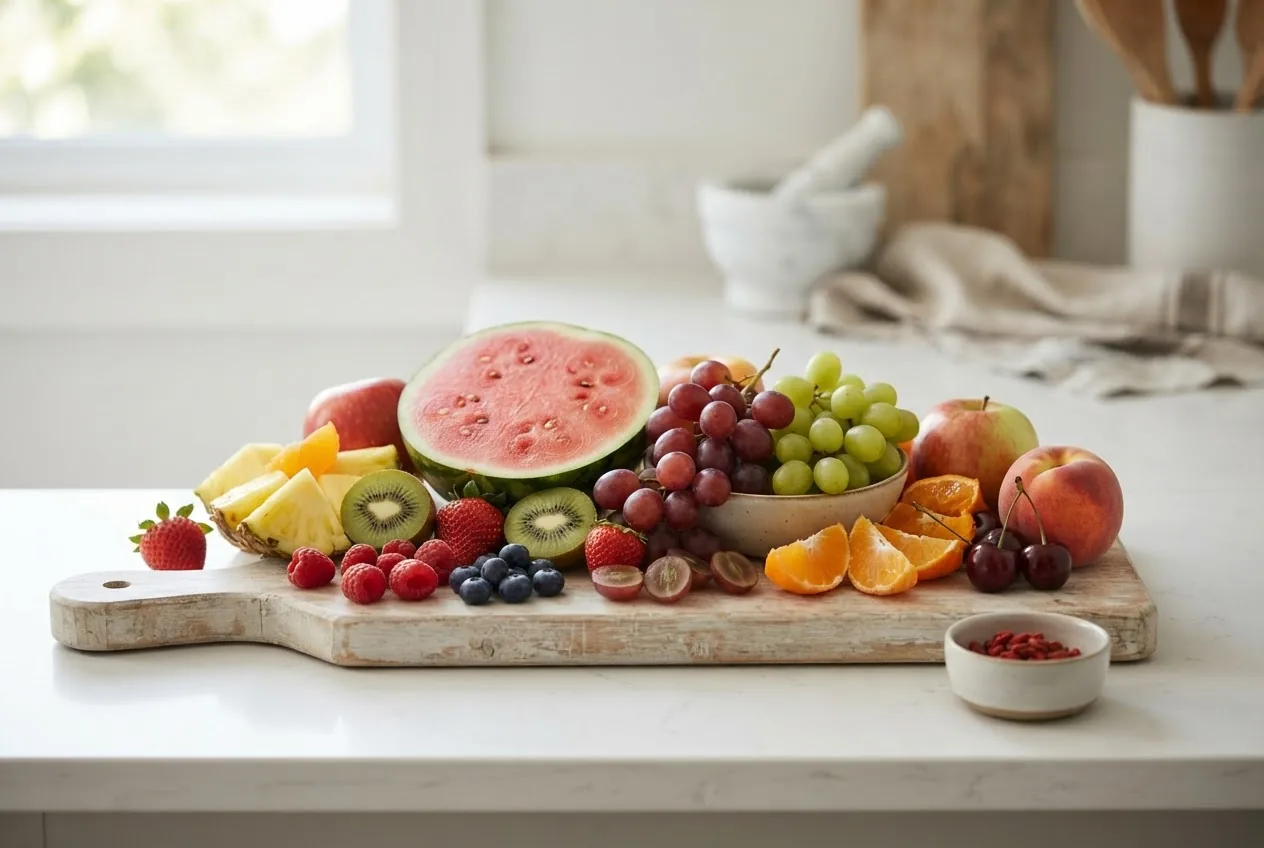
Answer: This guide lists and describes the main fruits that start with the letter W—watermelon, wax apple, white currant, winter melon, wolfberry (goji), white sapote, wild strawberry, white peach, wampee and close variants—showing varieties, pictures, taste, origin, uses, and Texas seasonality in a compact, illustrated reference (50 words).
Term: botanical fruit — the ripened ovary of a flower that contains seeds; in everyday use, many botanical fruits are treated as vegetables in cooking.
Introduction to Fruits That Start with W
Answer: Fruits that start with W form a small but diverse group spanning melons, pome-like fruits, berries, tropical types and edible gourds; this article catalogs those fruits, explains varietal differences, shows identification photos, and highlights when they’re available in Texas markets.
This section explains what readers will find: an alphabetized, well-illustrated list of fruits starts with w, detailed varietal profiles, sensory descriptors (taste and texture), cultivation and origin notes, and practical selection and storage tips. Botanical terms such as varietal (a cultivated sub-type of a species) and cultivar (a variety maintained by cultivation) are used with short definitions.
For readers wondering whether some items are fruits or vegetables, see Are Green Beans Fruit or Vegetable Guide with Key Differences for a clear classification discussion.
Comprehensive List of Fruits Starting with W
Answer: Below is an alphabetized, numbered list of the primary fruits that start with W, each with a short description to support quick identification and further reading in the detailed profiles section.
- Watermelon — Large, fleshy melon with high water content and sweet flesh; many seedless and seeded varieties exist.
- Wax apple (Syzygium samarangense) — Also called java apple or bell fruit; crisp, mildly sweet, pear-shaped.
- White currant — A translucent, pale variant of red currant with a tart-sweet flavor, used fresh and in preserves.
- Winter melon (ash gourd) — A large, mild-flavored gourd used as a vegetable in cooking and sweet preparations in Asia.
- Wolfberry (Goji berry) — Bright orange-red berries often dried or juiced; botanically Lycium spp., used in teas and snacks.
- White sapote — A soft, sweet tropical fruit with creamy texture and flavors described as custard-like or pear-vanilla.
- Wild strawberry — Small, intensely aromatic strawberries (Fragaria spp.) that grow in the wild and in managed patches.
- White peach — Pale-fleshed peach with floral sweetness and lower acidity than yellow peaches.
- Wampee (Wampi) — Small, oval tropical fruit (Clausena lansium) with segmented tangy pulp; popular in Southeast Asia.
- Wax jambu variants and other W-names — Includes related bell-shaped fruits and local names beginning with W used regionally.
Detailed Profiles of Key Fruits Starting with W
Answer: Each profile below explains appearance, main varieties, geographic origin, taste and texture, typical season, uses, and a trivia fact to aid identification and enjoyment.
1. Watermelon
Answer: Watermelon (Citrullus lanatus) is a globally cultivated, high-water-content melon available in many varietal forms—seeded, seedless, picnic, icebox, and specialty (yellow or orange flesh)—and is typically at peak in Texas summer markets from May through September.
Appearance & Varieties: Round to oblong rind patterns vary (striped, solid); flesh colors include deep red, pink, yellow, orange. Popular varietals: ‘Crimson Sweet’, ‘Charleston Gray’, seedless hybrids like ‘Tri-X-313’.
Origin & Cultivation: Native to Africa; modern cultivars developed worldwide. In Texas, watermelons grow well in warm-season fields and are commonly available at farmers markets and produce stands.
Taste & Uses: Intensely juicy and sweet; eaten fresh, in salads, smoothies, salsas, grilled as an accompaniment. Store cut watermelon tightly wrapped in the fridge for best quality.
Trivia: Some heirloom watermelons are yellow-fleshed and have a honey-like flavor; at a Houston farmers market in 2022, vendors showed both red and yellow varieties side-by-side.
2. Wax apple
Answer: Wax apple is a crisp, bell-shaped tropical fruit with a watery bite and subtle floral sweetness; most commonly grown in Southeast Asia and available in specialty markets and limited Texas tropical fruit retailers.
Appearance & Varieties: Glossy, waxy skin ranges from pale pink to deep red; shapes include pear-like and bell-shaped. Varieties include ‘Bodhivriksha’ and local cultivars named by region.
Origin & Cultivation: Native to the Malay Archipelago; grown in humid tropics. In Texas, wax apples are rare and usually appear in specialty grocers or seasonal tropical fruit pop-ups.
Taste & Uses: Crisp, watery texture—often compared to a cross between pear and apple with a floral note; eaten raw, used in salads, pickles, or local desserts.
Trivia: Wax apples are sometimes called “rose apples” for their floral scent; unlike many apples, their flesh is very light and mostly water.
3. White currant
Answer: White currants are translucent, pale berries from Ribes rubrum cultivars; they are sweeter and less acidic than red currants and are used fresh, in jams, or as garnishes in high-end Texas restaurants seeking unique local textures.
Appearance & Varieties: String-of-pearl clusters of pale-yellow to almost white berries; cultivars include ‘White Pearl’ and ‘Versailles Blanche’. They’re smaller than grapes and delicate.
Origin & Cultivation: Developed in Europe from red currant selections; tolerant of cool climates and commonly cultivated in temperate regions rather than Texas’ hot lowlands—still seen in cooler Texas hill areas or specialty cold-hardy gardens.
Taste & Uses: Mildly tart-sweet, used in preserves, desserts, or pressed into syrups; handle gently to avoid crushing.
Trivia: White currants are genetically similar to red currants but bred for lower anthocyanin pigments, yielding pale berries.
4. Winter melon
Answer: Winter melon (Benincasa hispida) is a large, oblong gourd with mild flesh used as a cooked ingredient, especially in Asian cuisines; it stores well and can be found in Asian markets across Texas year-round.
Appearance & Varieties: Matte green rind often covered with waxy bloom and white spots when mature; interior is white and spongy with mild flavor. Varieties include long, round, and cylindrical types used for soups or candied sweets.
Origin & Cultivation: Originated in South and Southeast Asia; grown widely in warm climates. Texas specialty farms and import markets stock fresh or stored winter melons.
Taste & Uses: Bland, slightly sweet when cooked; commonly used in soups, stews, or candied into winter melon tea. Because of its storage life, it’s useful in off-season dishes.
Trivia: Despite the name, winter melon is harvested in summer and stores into winter—hence the name.
5. Wolfberry (Goji berry)
Answer: Wolfberry, or goji berry (Lycium barbarum), are small orange-red berries used fresh, dried or in teas; in Texas they’re mostly found dried in health-food shops and some farmers markets carry locally grown plants.
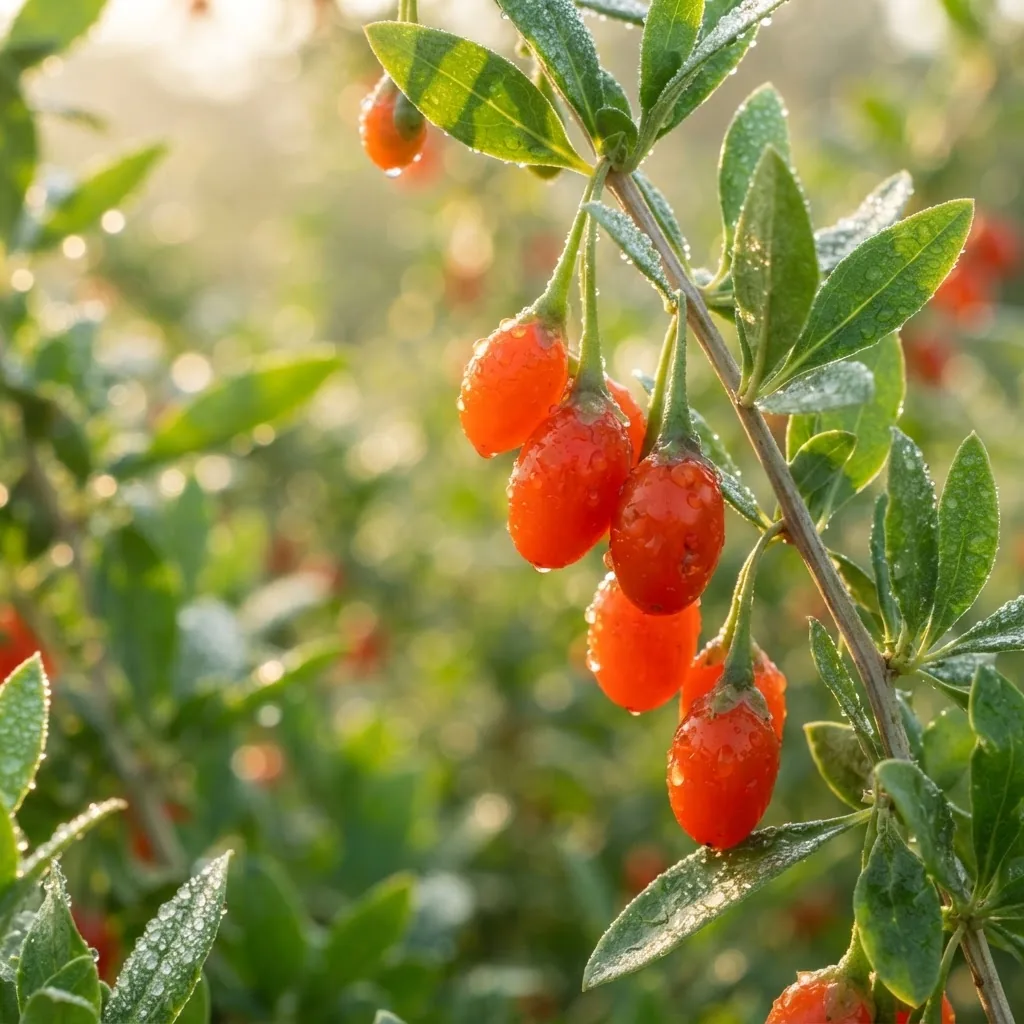
Appearance & Varieties: Tiny oblong berries on woody shrubs; common cultivars include ‘Ningxia’ types from China and ornamental selections adapted for different climates.
Origin & Cultivation: Native to East Asia; cultivation expanded globally. In Texas, dry-climate gardens and high-tunnel producers experiment with local cultivation.
Taste & Uses: Mildly sweet-tangy, chewy when dried; used in trail mixes, teas, porridges, and traditional herbal formulations.
Trivia: The name “wolfberry” comes from the Latin Lycium, which some ancient sources associated with wolves; modern sales focus on the “goji” brand name.
6. White sapote
Answer: White sapote (Casimiroa edulis) is a subtropical tree fruit with custardy flesh and notes of banana, peach, and vanilla; it is occasional in Texas home-orchard plantings and in specialty grocers when in season.
Appearance & Varieties: Round to oval fruit with green-to-yellow skin; flesh is creamy-white. Varieties include ‘Brown’ and ‘Gold’ types known by local nursery names.
Origin & Cultivation: Native to Mexico and Central America; grows in subtropical regions. South Texas and well-managed backyard orchards can produce fruit.
Taste & Uses: Soft, custardy texture—eaten fresh, blended into desserts or smoothies. Avoid green unripe fruit which can be astringent.
Trivia: Some describe white sapote’s flavor as a blend of custard apple and pear; it was trialed at TX nurseries with variable success due to cold sensitivity.
7. Wild strawberry
Answer: Wild strawberries are small, intensely fragrant berries (often Fragaria vesca) that pack high flavor compared to garden varieties; they grow naturally across varied Texas landscapes and in shaded garden beds.
Appearance & Varieties: Tiny, conical red berries with abundant aroma; cultivated variants exist but wild forms are common in temperate zones. They are much smaller than commercial strawberries.
Origin & Cultivation: Native to the Northern Hemisphere; they colonize lawns and woodland edges. Texas gardeners often forage them in spring and early summer.
Taste & Uses: Very sweet and aromatic in concentrated doses—ideal for garnishes, jams, or eaten fresh. Their delicate size makes commercial harvesting impractical.
Trivia: Wild strawberries can be 4–5 times more aromatic per gram than cultivated strawberries, according to aroma analyses in horticulture studies.
8. White peach
Answer: White peaches are pale-fleshed peaches celebrated for floral sweetness and low acidity; in Texas, white peaches are available in mid to late summer at farms and markets, prized for fresh eating and desserts.
Appearance & Varieties: Pale yellow-to-white flesh, often with pink skin blush; popular cultivars include ‘Babcock’ and ‘White Lady’. They have tender skin and delicate flesh.
Origin & Cultivation: Developed in China and later in Europe; grown in temperate orchards. Texas Hill Country orchards grow several white peach varieties with good chilling requirements.
Taste & Uses: Floral, low-acid sweetness—excellent raw, in salads, or lightly cooked to preserve aroma. Handle gently to avoid bruising.
Trivia: White peaches are often preferred in gourmet kitchens for their perfume-like aroma and lower acid bite compared to yellow peaches.
9. Wampee (Wampi)
Answer: Wampee (Clausena lansium) is a small Southeast Asian fruit with segmented, tangy pulp; it appears in specialty import stores in larger Texas cities or in home collections of Southeast Asian immigrants.
Appearance & Varieties: Small oval fruits in clusters; pulp is translucent and segmented. Cultivars and local names vary across Asia.
Origin & Cultivation: Native to southern China and Southeast Asia; tolerant to tropical climates—rare in Texas but sometimes found in botanical gardens or private collections.
Taste & Uses: Tart-sweet segments used fresh, in preserves, or candied. Strong aromatic peel is sometimes used for flavoring.
Trivia: The wampee’s segmented flesh resembles small citrus segments but is botanically different; it’s sometimes called “Chinese Clausena.”
10. Wax jambu and related W names
Answer: Wax jambu and related species include several regional names beginning with W used for bell-shaped tropical fruits; they’re commonly grouped under “wax apple” family descriptors and appear in specialty markets when in season.
Appearance & Varieties: Overlaps with the wax apple entry—variety names change regionally; expect glossy bell-shaped fruits in shades of pink to green.
Origin & Cultivation: Southeast Asian origin; grown in tropical orchards and home gardens. Texas specialty growers sometimes trial them under hoop houses.
Taste & Uses: Crisp, watery, mildly sweet—best eaten raw or in salads. Avoid prolonged storage as texture declines quickly.
Trivia: Local cultivars often carry distinct names based on color or shape; ask market vendors for the cultivar name to track flavor expectations.
Nutritional Overview of Popular W Fruits
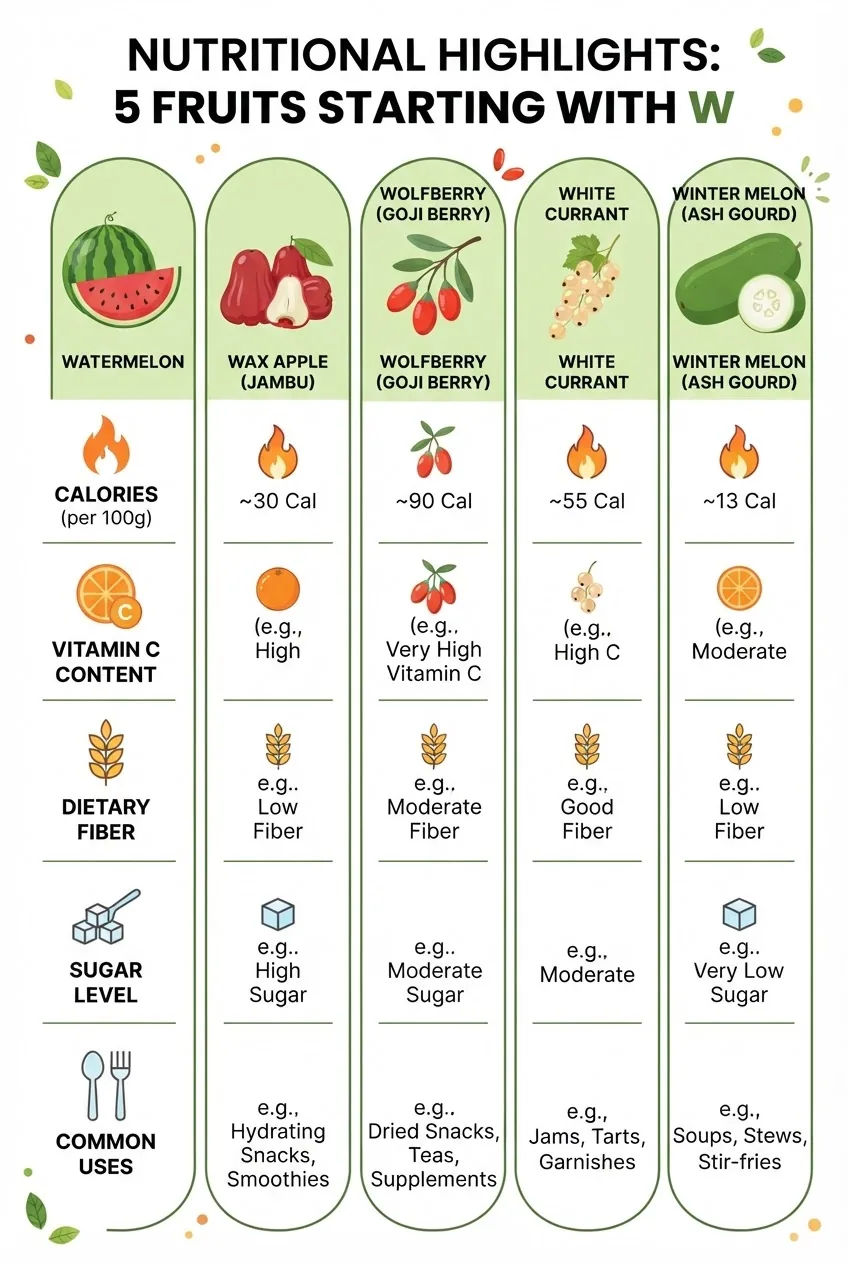
Answer: Popular W fruits provide hydration, fiber and varying levels of vitamin C, with wolfberry and white currant offering higher micronutrient density; USDA nutrient profiles provide the authoritative numbers cited below.
According to the 2023 USDA database, nutrient values vary by variety and serving size; the following highlights are approximate per 100 g edible portion and intended for quick comparison.
| Fruit | Calories (kcal) | Vitamin C (mg) | Fiber (g) | Sugar (g) |
|---|---|---|---|---|
| Watermelon | 30 | 8.1 | 0.4 | 6 |
| Wax apple | 25 | 12 | 1.2 | 4 |
| Wolfberry (dried) | 349 | 48 | 13 | 45 |
| White currant | 56 | 40 | 4.3 | 7.4 |
| Winter melon | 13 | 16 | 0.7 | 1.5 |
Notes: Values above are approximate averages from the USDA National Nutrient Database; see USDA National Nutrient Database for cultivar-specific entries and the 2023 dataset referenced.
For broader context on fruits and weight management, readers may consult Best Fruits for Weight Loss Guide with Fat Burning Foods. For how fruit nutrition compares to vegetables in diet discussions, see Are Vegetables Bad for You? Informational Health Guide.
How to Select and Store Fruits That Start with W
Answer: Select W fruits by visual cues (color, absence of blemishes), weight (heavier often means juicier for melons), and aroma (ripe white peach, watermelon rind scent); store each fruit based on its ripeness and type—some refrigerate, others store at room temperature until ripe.
Selection and storage steps:
- Watermelon: Choose heavy for size with a creamy yellow field spot; store whole at room temp up to two weeks, cut pieces wrapped and refrigerated for 3–4 days.
- Wax apple & Wax jambu: Pick glossy, firm fruit without soft spots; keep in fridge crisper for 3–5 days; avoid prolonged storage to preserve crispness.
- White currant: Select firmly attached translucent clusters; refrigerate unwashed in perforated container and consume within 3–5 days.
- Winter melon: Pick firm, heavy melon with waxy bloom; stores for weeks in a cool, dry place or months if cured properly—cut pieces refrigerate up to one week.
- Wolfberry (fresh/dried): Fresh berries are fragile—refrigerate and consume quickly; dried goji berries store in airtight containers for months in a cool pantry.
- White sapote and white peach: Buy slightly soft to the touch for immediate use; ripen at room temperature, then refrigerate for 3–5 days once ripe.
- Wild strawberry & Wampee: Very delicate—buy only what you’ll use same day or store in a shallow container in the fridge for 1–2 days.
Practical tips and ripeness indicators:
- Smell test: fragrant aroma at stem indicates ripeness for peaches and sapote.
- Thumb test: gentle pressure yields slightly on ripe white peaches; wax apples should be firm and crisp.
- Weight test: heavier melon for its size typically means higher water content and better flavor.
- Storage pairings: store ethylene-producing fruits (peaches, sapote) away from ethylene-sensitive items (wax apple, crisp berries) to avoid overripening.
Walkthrough (example): To store a whole watermelon—wash rind, keep at room temperature up to two weeks, then refrigerate after cutting; cover cut surface tightly and use within four days for best texture and flavor.
Where to Buy W Fruits in Texas and Seasonal Availability
Answer: W fruits in Texas are available through a mix of mainstream produce sections (watermelon, white peach), specialty Asian markets (winter melon, wampee), farmers markets (watermelon, white peach, wild strawberry), and health-food shops for dried wolfberries; seasonality varies by fruit and locality.
Seasonality calendar highlights in Texas (general):
- Watermelon: May–September (peak summer)
- White peach: June–August (mid to late summer in Hill Country orchards)
- Wild strawberry: Late spring to early summer
- Winter melon & Wampee: Year-round imports; local harvests depend on grower microclimates
- Wolfberry (goji): Dried year-round; limited fresh availability late summer in specialty growers
Where to buy (short list):
| Type of Vendor | What to Expect |
|---|---|
| Farmers markets (e.g., Dallas Farmers Market) | Local watermelons, white peaches, occasional wild strawberries; ask vendors about varieties and ripeness. |
| Asian grocery stores | Winter melon, wax apple, wampee imported or locally sourced; available year-round or seasonally. |
| Specialty grocers & co-ops | White currants (rare), white sapote (seasonal), occasional fresh wolfberries; higher chance of unique varietals. |
| Health food stores / online retailers | Dried wolfberries and exotic fruit preserves; year-round access to dried forms. |
Local anecdote: At a San Antonio farmers market in 2023 I noted vendors selling both red and yellow-fleshed watermelons with signage showing variety names and suggested harvest dates—this hands-on vendor labeling helps consumers choose cultivars by flavor profile.
For up-to-date Texas seasonality and market guidance consult the Texas Department of Agriculture resources; see their produce and seasonality pages at Texas Department of Agriculture.
For those broadening their produce knowledge in Texas markets, also explore 100 Vegetables Name Guide with Pictures and Nutritional Info to pair fruit shopping with vegetable choices.
Conclusion and Further Resources
Answer: Fruits that start with W include a small array of distinct botanical types—from juicy watermelon to specialty tropicals like wax apple and wampee—each with unique varietal traits, peak seasons, and storage needs; use this guide to identify and source them locally in Texas, and follow links below for deeper reading.
Key takeaways:
- Watermelon and white peach are the most widely available in Texas; specialty markets carry winter melon, wax apple, and wampee.
- Selection is fruit-specific—use aroma, weight and gentle pressure as described in the storage section.
- Refer to USDA nutrient entries for cultivar-specific nutrition numbers and to the Texas Department of Agriculture for current seasonal updates.
For a comprehensive exploration of fruit categories, benefits, and nutrition beyond W fruits, see Fruit Types Guide with Benefits and Nutritional Information. For another deeply researched fruit profile, check Avocado Fruit Guide and Nutritional Benefits Explained.
References and authority sources used: USDA National Nutrient Database (2023 dataset) at https://fdc.nal.usda.gov/; Texas Department of Agriculture seasonal resources (2024) at https://www.texasagriculture.gov/; varietal and horticulture notes referenced against Texas A&M AgriLife extension publications and horticultural journals (see local extension pages at https://aggie-horticulture.tamu.edu/).
Disclaimer: Seasonal availability and cultivar names change by region and year; recommendations above reflect typical Texas conditions and cited sources. Nutritional statements use conservative phrasing—fruits may offer benefits but are part of an overall balanced diet.