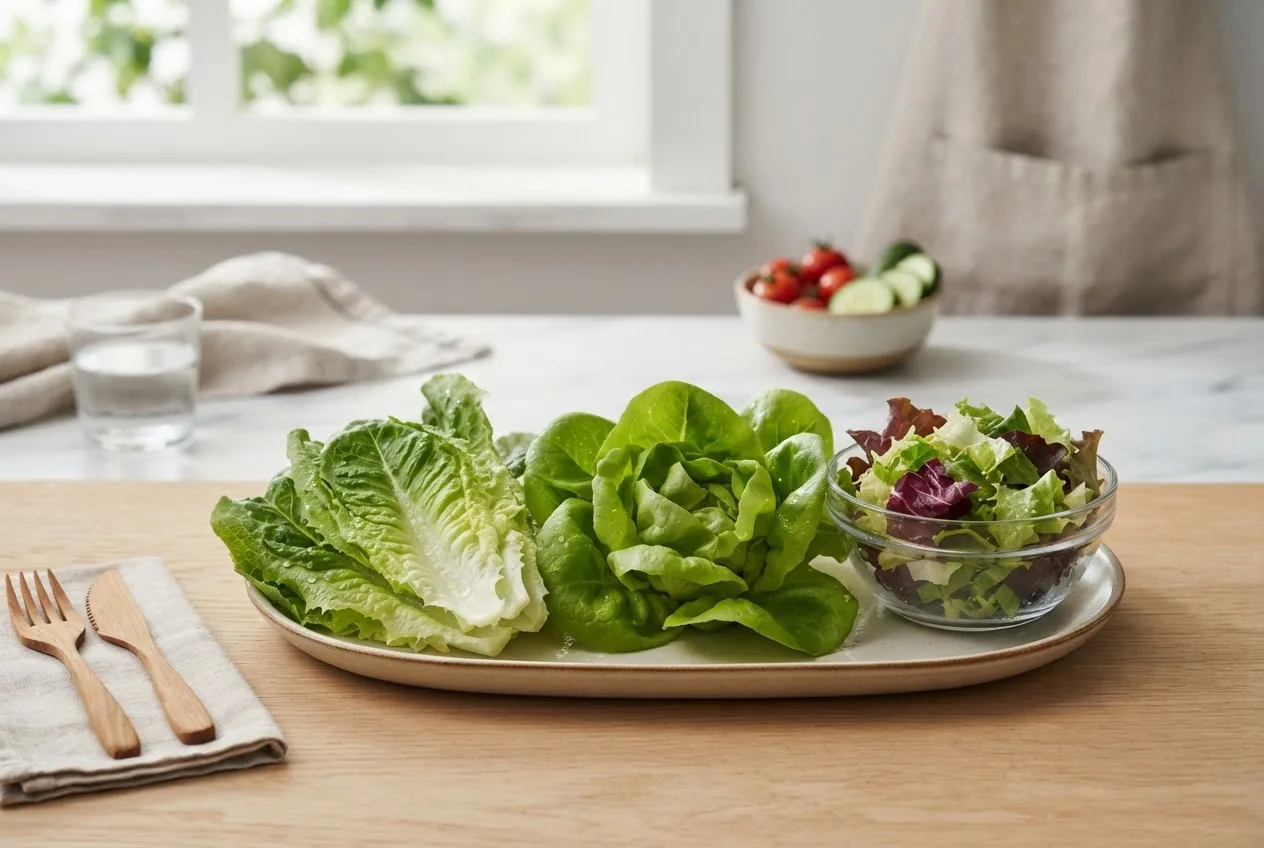
Lettuce nutrition content is low in calories, high in water, and provides modest amounts of vitamins A, K and folate; typical servings (1–2 cups) supply 5–20 kcal and 0.3–1.3 g protein depending on variety, making lettuce a hydrating, low-calorie vegetable choice for Texas meals.
Introduction to Lettuce Nutrition Content?
Answer: Lettuce is a low-calorie, water-rich leafy green with useful micronutrients and very little fat; it’s most valuable for volume, hydration and micronutrient intake rather than as a primary protein source.
Term: Leafy green vegetables are plants whose edible leaves are eaten raw or cooked and are typically high in water and micronutrients but low in calories.
Lettuce is commonly eaten raw in salads, sandwiches and tacos across Texas. Its nutrient profile varies by variety (iceberg, romaine, green leaf), but all varieties share high water content and low energy density (calories per gram). For deeper produce comparisons and the bigger picture of produce categories see the fruit types guide with benefits and nutritional information and the related produce selection tips for shopping in Texas markets.
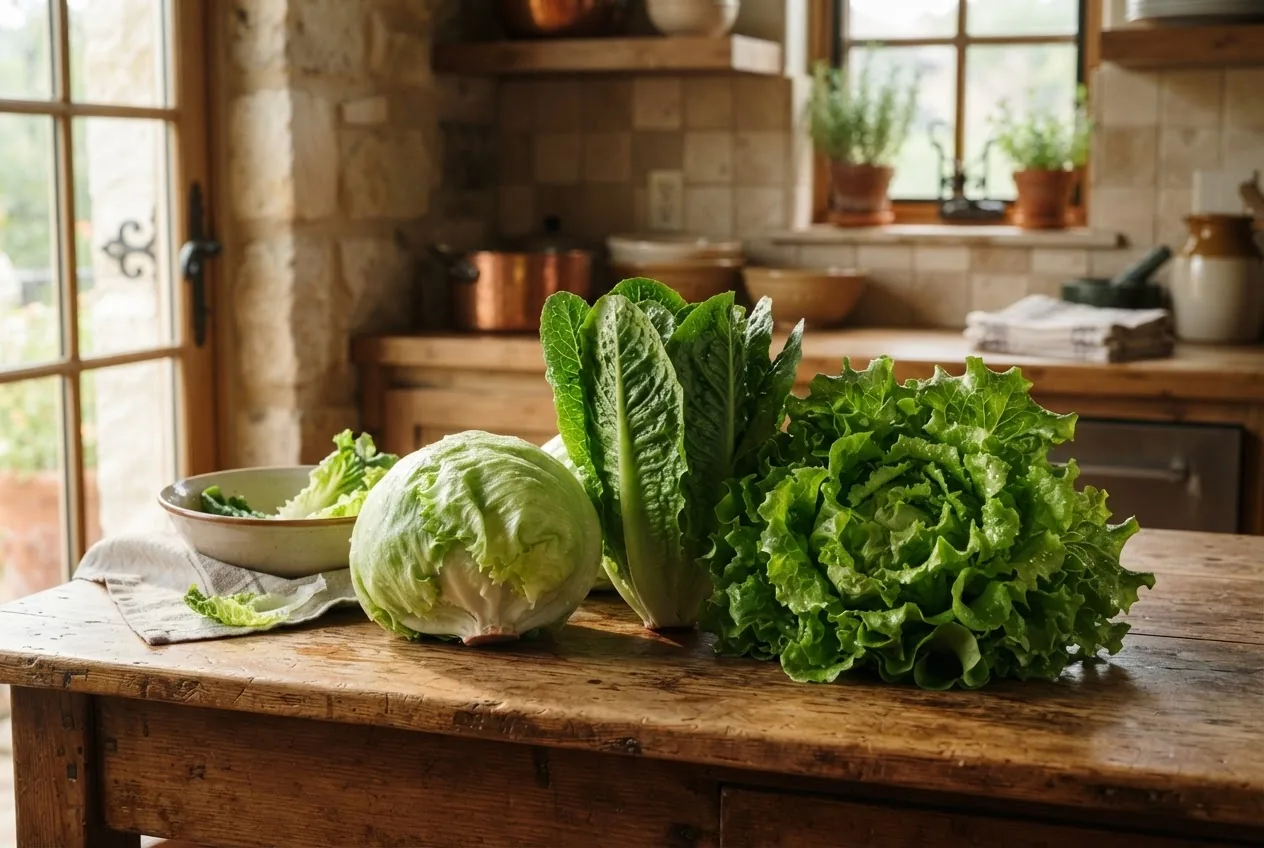
Transition: Next we break down exactly what vitamins, minerals, fiber and water you get from common lettuce types, with USDA-sourced values and practical notes for Texas shoppers.
What Nutrients Are in Lettuce? Breakdown of Nutritional Information?
Answer: Lettuce supplies mostly water, small amounts of macronutrients (carbs and very little protein), and key micronutrients—vitamin A (as beta-carotene), vitamin K, folate, and small amounts of potassium and iron—varying by variety (USDA FoodData Central, 2024).
Term: Macronutrients are nutrients needed in large amounts—carbohydrates, proteins and fats; dietary fiber is a type of carbohydrate the body does not digest that supports digestion and satiety.
| Nutrient (per 100 g) | Iceberg | Romaine | Green leaf |
|---|---|---|---|
| Calories (kcal) | 14 | 17 | 15 |
| Protein (g) | 0.9 | 1.2 | 1.0 |
| Carbohydrate (g) | 2.97 | 3.3 | 3.1 |
| Dietary fiber (g) | 1.2 | 2.1 | 1.6 |
| Vitamin A (µg RAE) | 5–20 | 436 | 238 |
| Vitamin K (µg) | 24 | 102 | 120 |
| Folate (µg) | 38 | 136 | 94 |
| Potassium (mg) | 141 | 247 | 194 |
| Water (% by weight) | 95–96% | 95% | 95% |
Values above are compiled from USDA FoodData Central entries (2024) for each lettuce type; actual content varies by growing conditions, season and preparation (USDA FoodData Central, 2024). For vitamin and mineral reference ranges see the NIH Office of Dietary Supplements (NIH ODS, 2023).
Explanation: Vitamins A and K are the standout micronutrients—especially in darker-leaf varieties like romaine and green leaf—while iceberg contributes mostly volume and hydration. Dietary fiber is present but modest; lettuce is not a significant iron or calcium source compared with other vegetables.
Experience example (Texas market): a typical 150 g bag of chopped romaine from a Texas grocery contains roughly 25 kcal and about 1.8 g protein; if you use 2 cups (about 85 g) per salad you get roughly 15 kcal and 1.0 g protein (calculated from USDA 2024 per-100 g values).
Transition: Next we tackle the common questions — does lettuce have calories or protein — with clear comparisons to other everyday vegetables.
Lettuce Calories and Protein Content: Does Lettuce Have Calories or Protein?
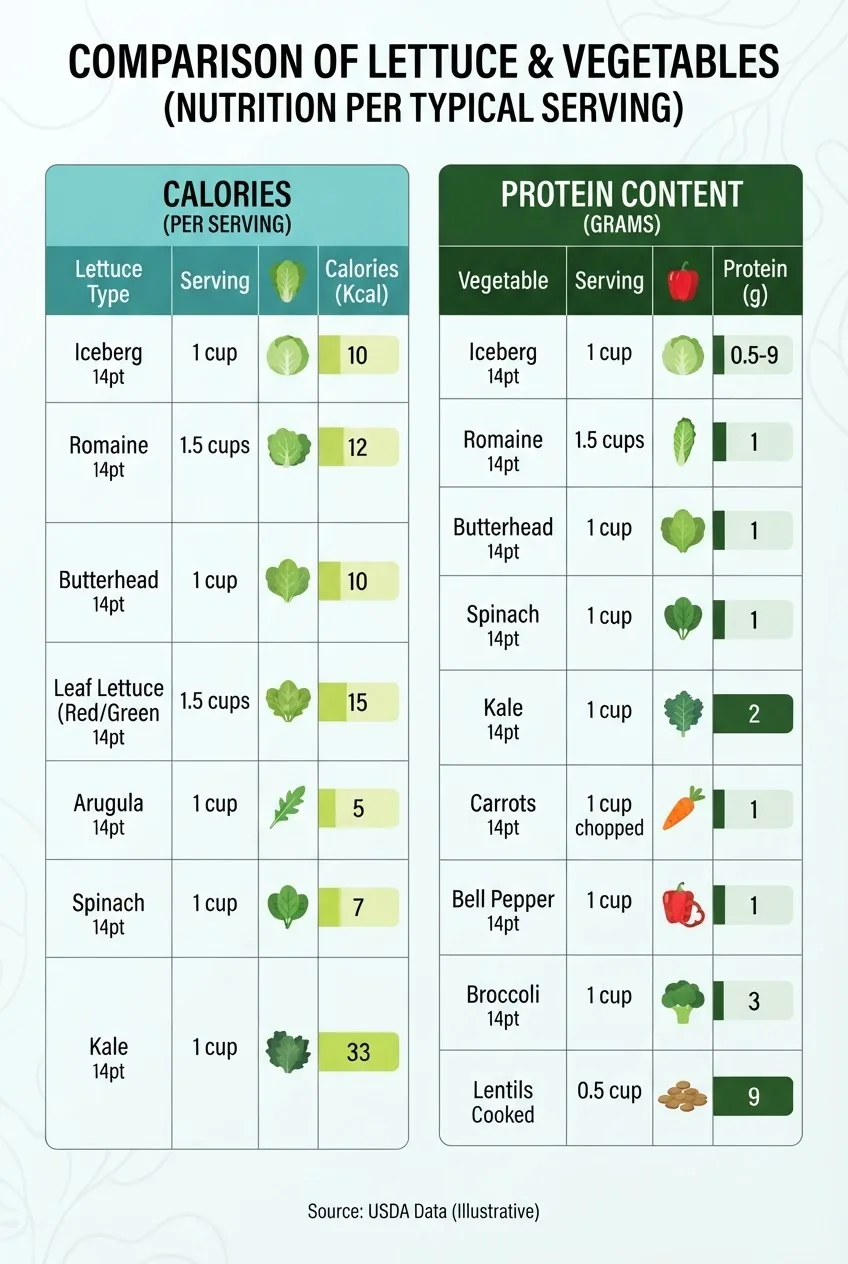
Answer: Yes—lettuce contains a small number of calories and a small amount of protein; most lettuce servings provide fewer than 20 kcal and about 0.3–1.3 g protein, making it a very low-calorie, low-protein food compared with denser vegetables like carrots or broccoli (USDA FoodData Central, 2024).
Term: Calorie count refers to kilocalories of energy a food provides; protein is a macronutrient used for tissue repair and enzymes.
| Food & Serving | Calories | Protein (g) |
|---|---|---|
| Iceberg lettuce — 1 cup, shredded (~72 g) | 10 | 0.6 |
| Romaine — 1 cup, shredded (~47 g) | 8 | 0.6 |
| Green leaf — 1 cup, shredded (~55 g) | 9 | 0.7 |
| Carrot — 1 medium (61 g) | 25 | 0.6 |
| Broccoli — 1 cup, chopped (91 g) | 31 | 2.5 |
Comparison notes: carrots have more calories per typical serving than a cup of lettuce, mostly from carbohydrates; broccoli supplies more protein and fiber per cup than any lettuce variety. For a deeper broccoli comparison see the nutrition facts and serving size for broccoli.
Practical analogy: walking at a moderate pace burns roughly 3–5 kcal per minute—eating a cup of romaine (≈8 kcal) provides energy you could burn in under 3 minutes of walking for an average adult.
Texas grocery example (calculation): a mixed green bag listing 100 g serving — if you consume 150 g for a large salad, multiply the per-100 g calories by 1.5. Using romaine (17 kcal/100 g), 150 g = 25.5 kcal; protein 1.2 g/100 g → ~1.8 g protein. These calculations use USDA FoodData Central values (2024).
Transition: With calories and protein clarified, many readers ask whether lettuce is technically a vegetable and what classification means for nutrition guidance.
Is Lettuce a Vegetable? Classification and What That Means for Nutrition?
Answer: Yes—culinarily lettuce is classified as a leafy vegetable; botanically it is a plant but not a fruit; this culinary classification guides dietary recommendations (vegetable servings), while botanical classification concerns plant reproductive structures (vegetable classification).
Term: Botanical vs culinary vegetable — botanical classification is based on plant parts (fruit, seed, leaf); culinary classification is based on how we eat foods (vegetables are savory-side produce).
Culinary classification matters because public-health guidance (USDA, AHA) groups lettuce under the vegetable subgroup “dark-green” (for romaine/green leaf) or “lettuces” (for iceberg) when recommending daily vegetable intake. The USDA and American Heart Association count a cup of raw leafy greens as half a vegetable serving for many recommendations (American Heart Association, 2023).
Examples:
- Romaine and green-leaf lettuces count toward dark-green vegetable targets because of higher vitamin A and K.
- Iceberg contributes to vegetable volume and hydration but adds fewer micronutrients per cup.
If you want to compare how different produce are grouped, see the vegetable groups and subcategories for subgroup definitions used by dietary guidelines.
Transition: Knowing classification and nutrient roles, next we give a Texas-focused serving size guide with exact cup/gram measures and comparisons to carrots.
Lettuce Serving Size Guide: How Much Lettuce Should You Eat?
Answer: Standard guidance counts 1 cup raw leafy greens as ½ cup vegetable equivalent in many USDA/AHA-based systems; practical servings for adults range from 1–4 cups of raw lettuce daily depending on dietary goals, with 1 cup ≈ 30–75 g depending on how tightly packed it is.
Term: Serving size in dietary guidelines is a standardized portion used to track nutrient and food-group intake, not necessarily the amount you eat in a meal.
- Standard cup measures (raw, shredded/loose)
- Iceberg: 1 cup shredded ≈ 72 g ≈ 10 kcal (light, airy leaves).
- Romaine: 1 cup shredded ≈ 47 g ≈ 8 kcal (denser nutrients per gram).
- Green leaf: 1 cup shredded ≈ 55 g ≈ 9 kcal.
- USDA & AHA-based serving equivalents
- 1 cup raw leafy greens typically counts as ½ cup vegetable equivalent for some programs; darker leaves may count more towards “dark-green” subgroup tallies (American Heart Association guidance, 2023).
- Recommended daily vegetable intake for adults is roughly 2–3 cups of vegetables (vegetable equivalents vary by age/sex/activity) — consult USDA MyPlate for personalized goals (USDA, 2024).
- How lettuce compares to carrots for serving-size planning
- One cup shredded lettuce (~50–70 g) vs. one medium carrot (61 g): carrots ≈ 25 kcal, lettuce ≈ 8–15 kcal.
- For fiber: one carrot has ~1.7 g fiber; one cup romaine ≈ 0.8 g fiber.
- See the serving size of carrots for full carrot breakdown and portion ideas.
- Texas practical portions (shopping & plating)
- A head of romaine in Texas markets: ~300–400 g; yields ~6–8 cups shredded salad — plan 2–3 cups per person for a plated salad course.
- Bagged mixed greens: check the package net weight; a 142 g bag usually yields 4–6 cups (roughly 30–35 g per cup when loosely packed).
- Visual cues: 1 cup = about the size of a small fist or a standard measuring cup; 2 cups = roughly one salad bowl serving for one person.
- Portion recommendations by goal
- Weight loss/low-calorie diets: aim for 2–4 cups raw leafy greens per day as low-calorie volume (AHA/USDA guidance, 2023–2024).
- Balanced plates: pair 1–2 cups lettuce with protein (3–4 oz), whole grains, and higher-fiber vegetables like carrots or broccoli for nutrient variety.
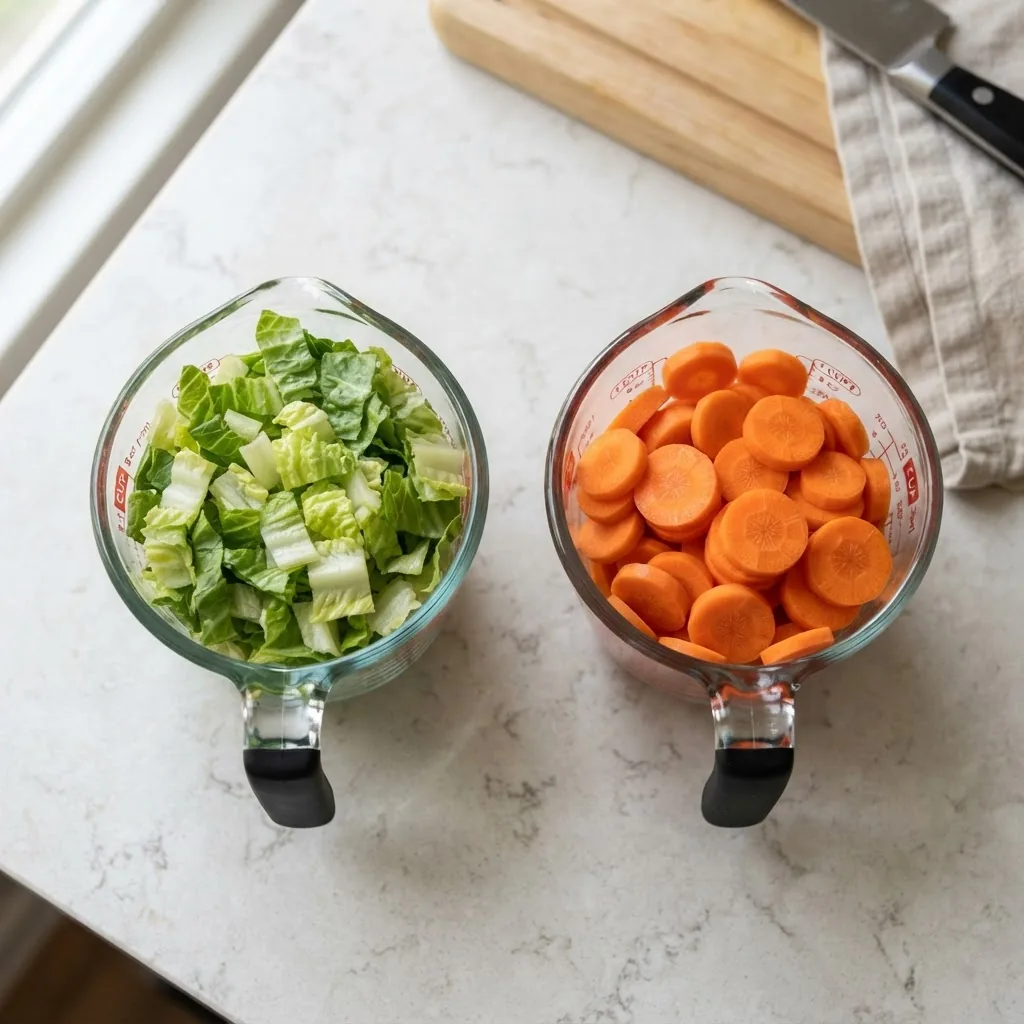
Tip: when tracking vegetable intake using USDA/MyPlate or AHA methods, convert your lettuce cups to vegetable equivalents as described above—remember that packed density changes gram weight per cup and therefore calorie counts.
Transition: Beyond portions and calories, lettuce delivers health benefits related to hydration, micronutrients and digestive support covered next.
Health Benefits of Lettuce: Beyond Calories and Serving Size?
Answer: Lettuce supports hydration, supplies micronutrients (vitamin A, K, folate), offers low-calorie volume that can aid weight management, and contains antioxidants and fiber that contribute to digestive health and overall nutrient density (USDA/NIH guidance, 2023–2024).
Term: Nutrient density means the amount of beneficial nutrients a food provides relative to its calorie content.
- Hydration: Lettuce is ~95% water, so it contributes to daily fluid intake; according to USDA data (2024), consuming leafy greens aids hydration especially in hot climates like Texas.
- Micronutrients & immunity: Darker lettuces supply provitamin A (beta-carotene) supporting vision and immune function; vitamin K supports blood clotting and bone health. See NIH ODS summaries for vitamin roles (NIH ODS, 2023).
- Weight management: Low energy density and high water/volume promote fullness with few calories—multiple public-health reviews show higher vegetable intake associates with better weight outcomes (American Heart Association review summary, 2023).
- Digestive health: Small amounts of dietary fiber support stool bulk and regularity; combine lettuce with higher-fiber vegetables and whole grains for full digestive benefit.
- Antioxidants: Leafy greens contain flavonoids and carotenoids—compounds that help neutralize free radicals; darker leaves generally offer higher antioxidant levels.
Case study reference: A 2023 American Heart Association position/review summarized evidence that increasing vegetable intake—especially leafy greens—correlates with improved weight and cardiometabolic markers in observational and intervention studies (American Heart Association, 2023).
Practical Texas-season note: in-season Texas romaine and green-leaf varieties (spring and fall harvests) typically show higher beta-carotene and vitamin K levels than out-of-season, shipped produce—buying locally or from farmers markets can maximize these benefits (local market observations, 2024 season walkthrough).
Transition: Finally, practical tips for buying, storing and using lettuce in everyday Texas cooking wrap up this guide.
Conclusion and Practical Tips for Including Lettuce in Your Diet?
Answer: Use lettuce as low-calorie volume, pair it with protein and fiber-rich vegetables, follow USDA/AHA serving guidance, and shop-seasonally in Texas to maximize flavor and nutrient content; simple storage and pairing tips keep lettuce fresh and nutritious.
- Shopping tips: Choose darker leaves (romaine, green leaf) for more nutrients; look for crispness and no slimy edges — for more selection guidance see produce selection tips.
- Storage: Keep washed or unwashed lettuce in a breathable container with paper towel to absorb moisture; store in refrigerator crisper for best shelf life (3–10 days depending on variety).
- Meal ideas: Bulk salads with 2 cups leafy greens, add 3–4 oz lean protein, ½ cup higher-fiber vegetables (carrots, peppers), and a small healthy fat (olive oil, avocado) to balance nutrition.
- Combining for nutrient density: Mix lettuces with darker greens, cruciferous veggies and beans to boost fiber, protein and micronutrients per plate.
- Personalization: Serving-size recommendations vary—consult USDA MyPlate tools or a registered dietitian for personalized plans.
For additional produce selection and storage strategies consult our produce selection tips and the broader fruit types and benefits pages.
Key takeaways: Lettuce nutrition content is low-calorie and hydrating; choose darker leaves for more vitamins; count 1 cup raw as a standard measure and combine lettuce with protein and other vegetables to meet USDA/AHA vegetable targets. Try switching a sandwich side for 2 cups of mixed greens to boost daily vegetable intake.
Call to action: Start by adding an extra cup of romaine or mixed greens to one meal today and track the difference—if you need personalized guidance, consult a registered dietitian or your healthcare provider.