By the end of this hands-on guide you’ll have a practical weekly plan, ten tested dinner recipes, and meal-prep steps to serve vegetable-rich dinners reliably; expect to implement the plan in about 3–5 hours of initial prep and 20–50 minutes per night cooking. Skill level: beginner to confident home cook.
Quick hook: Ready to build satisfying, flavorful veggie heavy meals that use what’s in season across Texas and support weight, blood sugar, and heart health? This guide gives step-by-step planning, nutrient-preserving techniques, and easy dinner recipes you can make tonight.
Before you start
- Prerequisites: basic knife skills (slice evenly, dice ~½” pieces), familiarity with oven roasting temperatures, and a pantry with olive oil, salt, pepper, and a vinegar.
- Essential tools: chef’s knife, cutting board, sheet pan, heavy skillet (10–12″), medium saucepan, blender/food processor, instant-read thermometer.
- Timing plan: block 3–5 hours for weekly prep (wash, chop, roast), and allocate 20–50 minutes per recipe on weekdays.
- Storage supplies: airtight containers (3 sizes), beeswax or plastic wrap, marker for dates, zip bags for leafy greens.
- Health check: if you have diabetes, kidney disease, or special dietary needs, have recent lab targets or a clinician contact on hand.
-
What Are Veggie Heavy Meals?
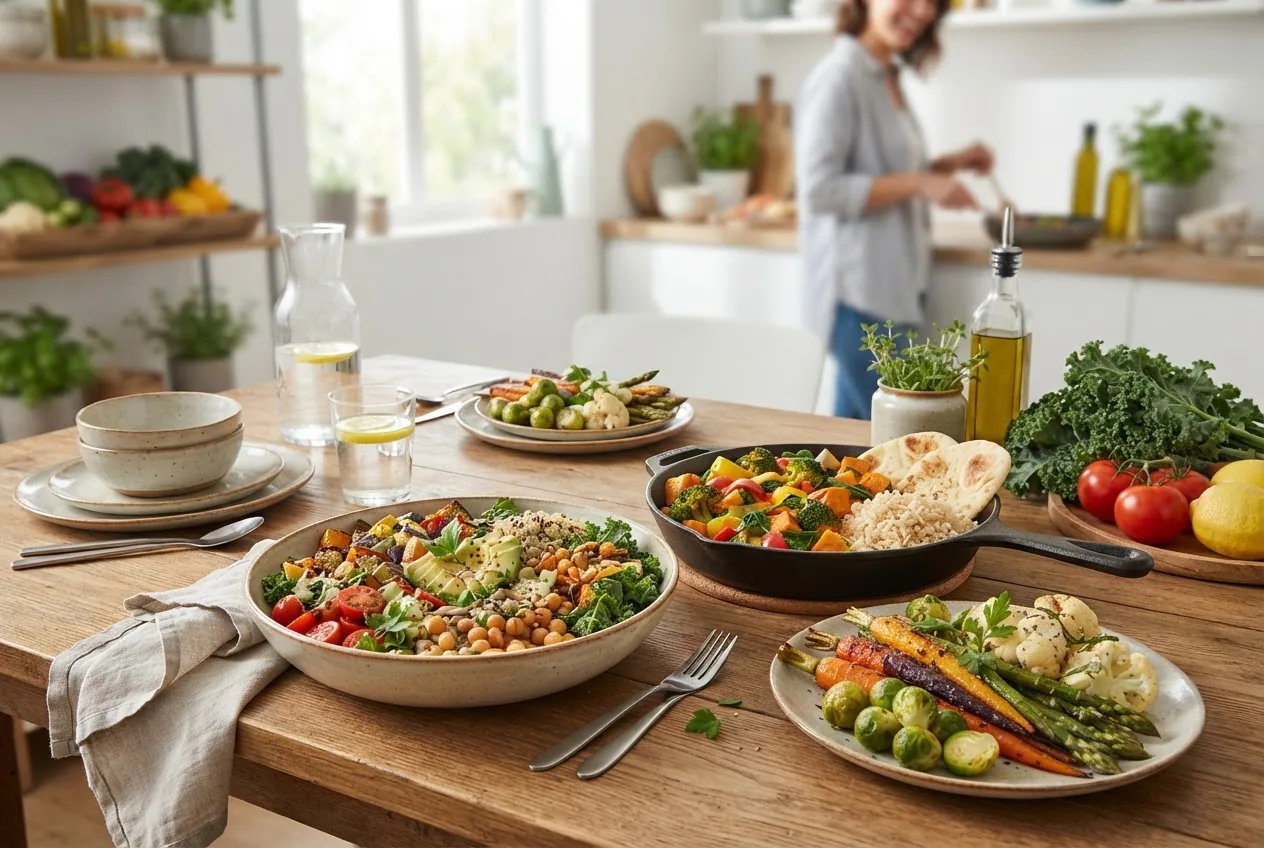
This section defines practical, plate-focused vegetable-heavy meals and gives concrete examples you can cook. A veggie heavy meal centers vegetables as the primary volume of the plate (typically ≥50–70% of total portion by weight), with other components — grains, legumes, or moderate protein — complementing flavor and nutrients.
Examples: a sheet-pan dinner of roasted root and cruciferous vegetables with a small portion of grilled salmon; a hearty stir-fry with 3 cups mixed vegetables and a half-cup of tofu; a big salad where roasted beets, greens, and chickpeas make up most of the bowl. These dishes prioritize vegetable variety and texture—roasted, sautéed, braised, raw—rather than simply adding a side salad.
Why the focus on proportion? Vegetables deliver fiber, micronutrients (vitamins and minerals), hydration, and low-calorie bulk that improves satiety per calorie. In practice, build dinners so the vegetable weight is the largest component measured by cups or grams: aim for 2–4 cups cooked vegetables or 3–6 cups raw salad components depending on hunger and activity.
For deeper context about how fruits and vegetables fit into nutritional categories, review the Fruit Types Guide with Benefits and Nutritional Information.
Vegetable classification can be confusing—if you want a technical take on botanical vs culinary classifications, see the fruit or vegetable classification guide for concrete examples that affect recipe choices and storage.
-
Health Benefits of Vegetable-Heavy Dinners
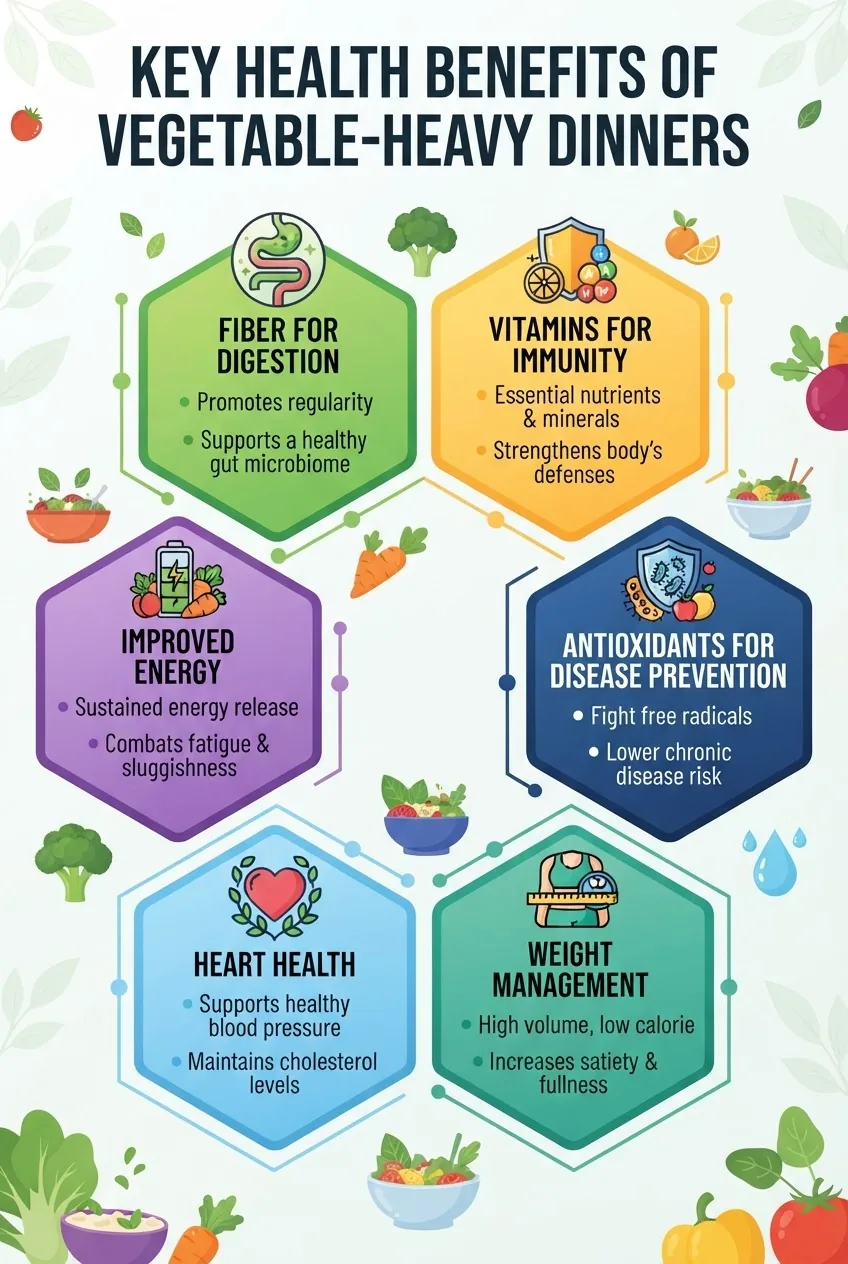
Choosing veggie heavy dinners regularly supports digestion, metabolic health, and long-term disease risk reduction. Vegetables are concentrated sources of dietary fiber (both soluble and insoluble), water, antioxidants, and micronutrients like vitamin A (beta-carotene), vitamin C, potassium, magnesium, and folate — nutrients linked to cardiovascular and metabolic benefits.
Evidence and recommended targets: According to the 2023 USDA Dietary Guidelines, adults should aim for 2–3 cups of vegetables daily depending on energy needs; emphasizing vegetables at dinner helps meet that goal. For specific cardiovascular benefits, a 2021 peer-reviewed meta-analysis published in a medical journal reported that each 100 g/day increase in vegetable intake is associated with measurable reductions in coronary heart disease risk (source type: peer-reviewed study, 2021).
Fiber and weight management: Dietary fiber increases satiety by slowing gastric emptying and supporting microbiome diversity. According to a 2022 peer-reviewed systematic review, higher fiber intake (an additional 8–14 g/day) was associated with modest weight loss and improved glycemic markers in adults with overweight or type 2 diabetes (source type: peer-reviewed meta-analysis, 2022).
Practical nutrition highlights:
- Fiber: vegetables supply 3–5 g per cooked cup for many varieties; aim to add 8–14 g fiber via vegetables at dinner to hit a daily goal of 25–35 g depending on sex and age.
- Vitamins/minerals: leafy greens and orange vegetables provide provitamin A and vitamin K; peppers and tomatoes are strong vitamin C sources; potatoes and squash offer potassium.
- Antioxidants: cruciferous vegetables (broccoli, Brussels sprouts) and colorful peppers provide phytochemicals linked with reduced oxidative stress.
If you want a quick reference on calories and portion choices for specific produce, review fruit and vegetable calorie resources such as fruit and vegetable calorie insights, which helps balance portions for weight loss and blood sugar control.
For readers worried about potential negative claims, see this discussion on misconceptions: debunking myths about vegetables.
Authoritative guidance: follow the 2023 USDA recommendations for vegetable variety and portioning (According to the 2023 USDA Dietary Guidelines) and consider heart-healthy frameworks like the Mediterranean pattern supported by the American Heart Association.
-
How to Plan Veggie Heavy Meals that Suit Texas Seasonal Produce
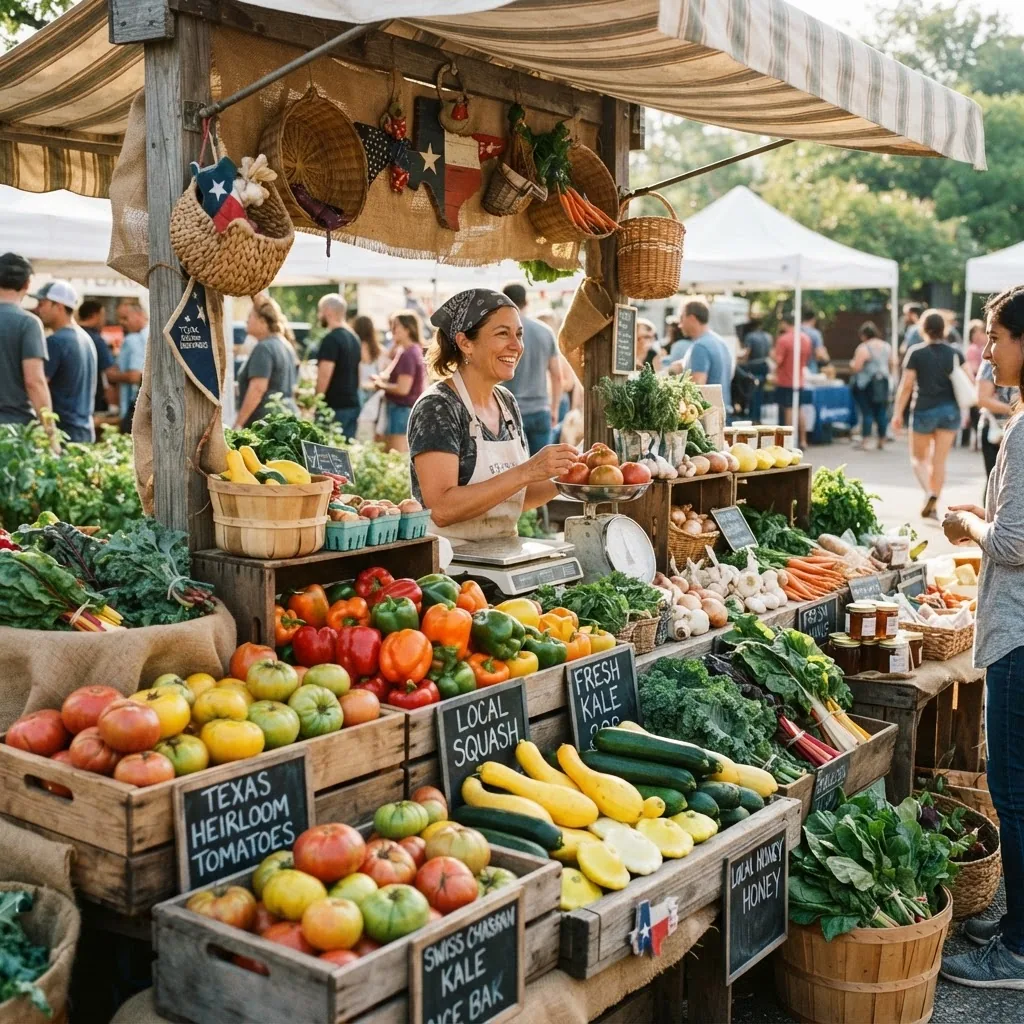
Planning around seasonality reduces cost and increases flavor. Use the Texas growing calendar to prioritize produce at peak freshness: buy locally when possible (farmers markets, CSAs, farm stands). Start by listing what you’ll eat for five dinners and mapping recipes to produce peak weeks.
Seasonal produce lists for Texas (practical, by quarter). Buy these when abundant to maximize flavor and price:
- Spring (Mar–May): asparagus, spinach, young kale, spring onions, radishes, peas, new potatoes.
- Summer (Jun–Aug): tomatoes, bell and poblano peppers, summer squash (zucchini, yellow), okra, eggplant, sweet corn.
- Fall (Sep–Nov): winter squash (butternut, acorn), cabbage, broccoli, collards, carrots, sweet potatoes.
- Winter (Dec–Feb): citrus (Texas oranges/grapefruits), leafy greens (chard, kale), beets, cabbage, Brussels sprouts.
Meal planning template (practical): pick one roast, one stir-fry, one salad, one soup, and one sheet-pan for a five-night block. Rotate proteins (legumes, fish, lean poultry) and double-vegetable recipes for leftovers.
For a more granular list of varieties to mix and match, consult our comprehensive vegetable guide.
-
Simple Tips for Preparing Delicious Veggie Heavy Dinners
These are practical, stepwise techniques that preserve nutrients and maximize flavor. Follow these tested culinary steps.
- Trim and dry vegetables before cooking: Excess water reduces roasting caramelization—pat dry; roast at 425°F (218°C) for caramelized edges.
- Use high-heat roasting for depth: Roast denser vegetables (carrots, potatoes, squash) 30–40 minutes; cut to ¾–1″ pieces for even cook; toss halfway.
- Sauté for speed and nutrient retention: Quick-sauté leafy greens and peppers in 1–2 tbsp oil over medium-high for 3–5 minutes to wilt while preserving vitamin C.
- Steam crucifers then finish with a hot pan: Steam broccoli 4–6 minutes, then flash sauté in a hot skillet 1–2 minutes to preserve sulforaphane and color.
- Layer flavors: Build flavor with aromatics first—1–2 minced garlic cloves, 1 small sliced onion per 4 servings, acid (1 tbsp vinegar or 1–2 tsp lemon) added at finish.
- Enhance texture: Add a crunchy element (toasted seeds, 1–2 tbsp per serving) and a creamy binder (1–2 tbsp tahini or yogurt) to increase satiety.
- Season deliberately: Salt early for roasted root vegetables (½–1 tsp salt per pound), taste mid-cook, and finish with flaky salt or ½ tsp finishing oil per serving.
- Batch-cook basics: Roast 2–4 pounds mixed vegetables at once; store cooled portions in 3–4 airtight containers to use across 4–5 dinners.
- Mind microwave timings: For speedy starches, microwave whole potatoes 6–8 minutes (flip halfway), then finish crisping in oven under broiler 3–5 minutes.
- Follow tested preparation guides: For more step-by-step cooking technique and nutrient-preserving methods, see our vegetable preparation and cooking tips.
-
10 Healthy Veggie Heavy Dinner Recipes to Try
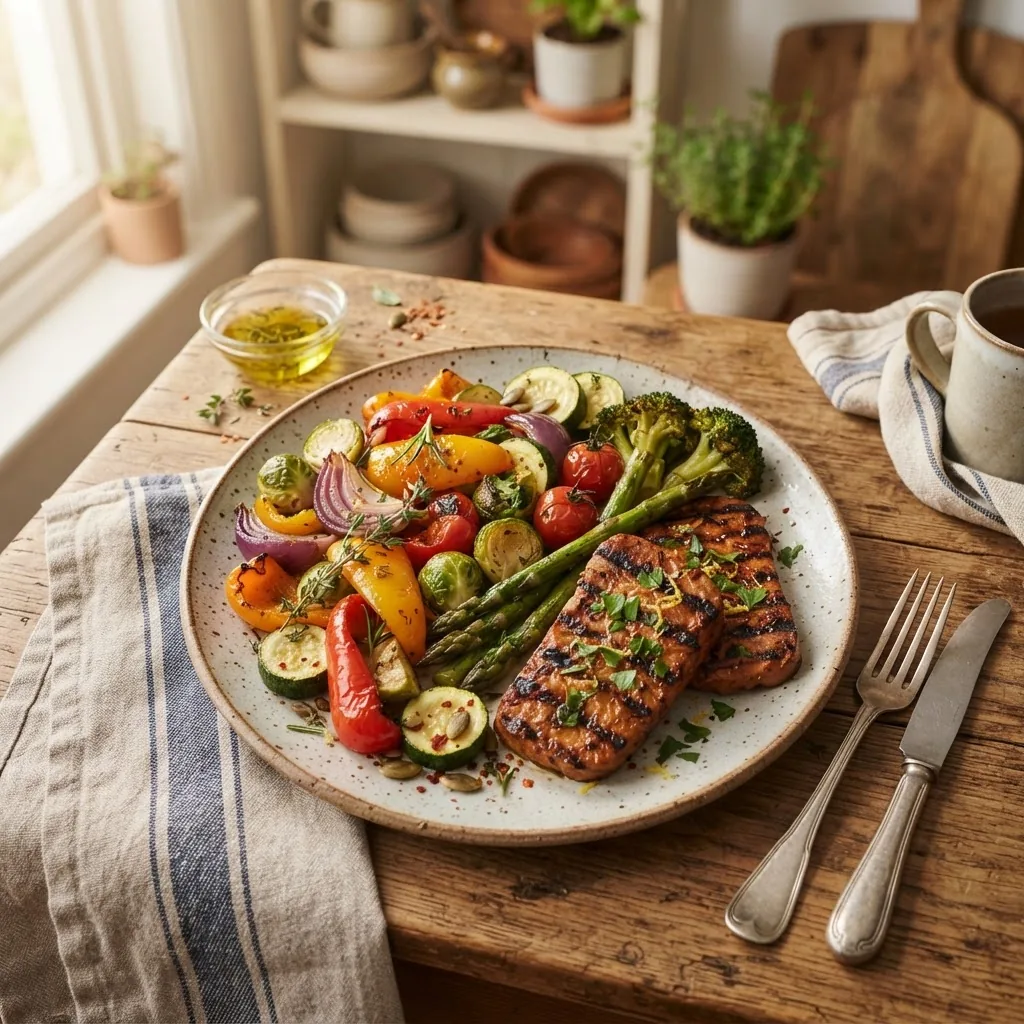
Below are ten practical, tested dinner recipes designed for home cooks. Each entry lists key ingredients, prep/cook time, a concise method, and nutritional highlights. Images show a finished plate for visual reference.
-
1. Sheet-Pan Roasted Summer Vegetables with Cilantro-Lime Chickpeas
Key ingredients: 3 cups cubed zucchini and yellow squash, 2 cups halved cherry tomatoes, 1 red onion, 1 can chickpeas (drained), 2 tbsp olive oil, 1 tsp smoked paprika, 2 tbsp lime juice, ¼ cup cilantro.
Prep/cook time: 10 min prep, 30–35 min roast.
Method: Toss vegetables and chickpeas with oil and paprika; roast at 425°F (218°C) for 30–35 minutes, stirring once. Finish with lime juice and chopped cilantro. Serve with ½ cup cooked farro or quinoa for a balanced plate.
Nutritional highlights: High in fiber (6–9 g per serving), vitamin C from tomatoes and peppers, plant protein from chickpeas. For broccoli nutrition details see companion resources if substituting broccoli.
-
2. Tex-Mex Stuffed Peppers with Black Beans and Corn
Key ingredients: 4 large bell peppers, 1 cup cooked black beans, 1 cup corn, ½ cup cooked brown rice, 1 tsp cumin, 1 tsp chili powder, ¼ cup shredded reduced-fat cheese (optional).
Prep/cook time: 15 min prep, 35–40 min bake.
Method: Halve and de-seed peppers, stuff with bean–rice mixture seasoned with cumin and chili powder. Bake at 375°F (190°C) for 30–35 minutes covered with foil, 5–7 minutes uncovered. Top with cilantro and lime.
Nutritional highlights: Balanced fiber and complex carbs; one stuffed half provides ~8–10 g protein (with beans), and hearty satiety without excess calories.
-
3. Green Chile and Roasted Sweet Potato Hash with Poached Eggs
Key ingredients: 2 medium sweet potatoes (1.5 lb total), 1 cup diced poblano or Anaheim peppers, 1 small onion, 2 tsp olive oil, 2 eggs.
Prep/cook time: 10 min prep, 25–30 min cook.
Method: Roast ¾” sweet-potato cubes at 425°F (218°C) 25–30 minutes until tender. Sauté peppers and onion 4–5 minutes, toss with potatoes, top with poached eggs or canned black beans for vegetarian protein.
Nutritional highlights: Potassium and beta-carotene from sweet potato; eggs provide high-quality protein and choline for brain health.
-
4. Winter Greens and White Bean Stew with Lemon and Rosemary
Key ingredients: 2 cups chopped kale or collards, 1 can cannellini beans, 2 cups low-sodium vegetable broth, 1 carrot, 1 stalk celery, 1 tbsp olive oil, 1 tsp chopped rosemary.
Prep/cook time: 10 min prep, 25–30 min simmer.
Method: Sauté carrot/celery in oil 4–5 minutes, add beans and broth, simmer 10 minutes, add greens 3–5 minutes until wilted. Finish with lemon zest and 1 tbsp olive oil.
Nutritional highlights: A low-calorie, high-fiber comfort meal; beans deliver ~10–12 g protein per cup and slow-release carbs for blood sugar stability.
-
5. Cowboy Cabbage Stir-Fry with Lean Steak Strips
Key ingredients: 4 cups shredded cabbage, 8 oz thinly sliced flank steak (or 1 cup tempeh for plant-based), 2 tbsp low-sodium soy, 1 tsp sesame oil, 1 garlic clove.
Prep/cook time: 10 min prep, 10–12 min cook.
Method: Sear steak strips in a hot skillet 2–3 minutes per side to medium rare; remove. Stir-fry cabbage with garlic 4–6 minutes, return steak, add soy and sesame oil, finish with scallions.
Nutritional highlights: Cabbage is low-calorie and high in vitamin C; moderate lean protein keeps the plate balanced. See the detailed cabbage calorie guide for portion planning.
-
6. Grilled Portobello “Steaks” with Chimichurri and Charred Vegetables
Key ingredients: 4 large Portobello caps, 2 cups sliced bell peppers, 1 cup halved cherry tomatoes, chimichurri (¼ cup parsley, 2 tbsp red wine vinegar, 1 garlic clove, 1/3 cup olive oil).
Prep/cook time: 10 min prep, 12–15 min grill or broil.
Method: Brush mushrooms and vegetables with oil, grill mushrooms 4–6 min per side and vegetables until charred. Serve with 2 tbsp chimichurri and ½ cup cooked farro or barley for fiber.
Nutritional highlights: Portobello offers meaty texture, low calories; chimichurri adds vitamin-rich herbs and healthy fats.
-
7. Broccoli and Red Pepper Pesto Pasta with White Beans
Key ingredients: 3 cups blanched broccoli florets, 1 red bell pepper roasted, 1 cup cooked white beans, 8 oz whole-grain pasta, 2 tbsp olive oil, 2 tbsp grated Parmesan (optional).
Prep/cook time: 10 min prep, 15–20 min cook.
Method: Blanch broccoli 3–4 minutes, shock in cold water. In a food processor combine broccoli, roasted pepper, 2 tbsp olive oil, ½ cup white beans, salt and lemon to make a chunky pesto. Toss with hot pasta and remaining beans.
Nutritional highlights: High-fiber whole-grain pasta and beans with cruciferous vegetable benefits—see broccoli nutrition details for serving guidance.
-
8. Roasted Beet, Goat Cheese, and Walnut Salad with Citrus Vinaigrette
Key ingredients: 2 medium beets roasted, 4 cups mixed greens, 2 tbsp walnuts, 1 oz goat cheese, vinaigrette (2 tbsp orange juice, 1 tbsp apple cider vinegar, 1 tbsp olive oil).
Prep/cook time: 10 min prep, 45 min roast (can roast earlier).
Method: Roast beets at 400°F (204°C) 40–45 minutes wrapped in foil; cool, peel, and slice. Toss with greens, walnuts, goat cheese, and citrus vinaigrette.
Nutritional highlights: Beets provide folate and nitrates that can support blood pressure; walnuts add omega-3 ALA and texture for satiety.
-
9. Cajun Cauliflower “Gumbo” with Okra and Brown Rice
Key ingredients: 4 cups cauliflower florets, 1 cup sliced okra, 1 cup diced tomatoes, Cajun seasoning (1 tsp smoked paprika, 1 tsp oregano, ½ tsp cayenne), 2 cups low-sodium vegetable broth.
Prep/cook time: 15 min prep, 25–30 min simmer.
Method: Sauté cauliflower and okra 4–5 minutes, add tomatoes, seasoning, and broth; simmer 15–20 minutes until tender. Serve over ½ cup cooked brown rice per serving.
Nutritional highlights: Low-calorie, high-fiber stew; okra adds mucilage that thickens without heavy roux, keeping calories moderate.
-
10. Quick Stir-Fried Greens with Garlic, Toasted Sesame, and Tempeh
Key ingredients: 4 cups baby spinach or chard, 6 oz tempeh cut into ½” cubes, 1 tbsp soy or tamari, 1 tsp sesame oil, 1 garlic clove.
Prep/cook time: 10 min prep, 10–12 min cook.
Method: Pan-fry tempeh cubes in 1 tbsp oil until browned 6–8 minutes; remove. Quick-sauté garlic and greens 2–3 minutes, return tempeh, add soy and sesame oil. Serve with ½ cup cooked millet or brown rice.
Nutritional highlights: High in plant protein (tempeh ~16 g protein per 100 g) and iron; quick, nutrient-preserving stir-fry technique retains B vitamins.
-
-
Incorporating Protein in Veggie Heavy Meals
Balance is key: pair vegetables with protein to improve satiety and maintain muscle mass. Protein options include legumes (chickpeas, lentils, beans), tofu/tempeh, eggs, low-fat dairy, seafood, and lean poultry. For meat eaters, prioritize grilling, roasting, or searing to keep added fats low.
Example combinations:
- Roasted mixed vegetables + 4–6 oz grilled salmon or ¾ cup cooked lentils.
- Stir-fried greens + 3–4 oz lean pork tenderloin slices or 1 cup edamame.
- Hearty salad with roasted beets + 1 boiled egg and 2 tbsp toasted walnuts (for added healthy fat).
Use nutrient-dense plant fats like avocado to increase caloric density and absorb fat-soluble vitamins when needed; learn more about healthy fats in the nutrient-dense plant fats like avocado.
Portion guidance: aim for 20–30 g protein per meal for most adults (about 3–4 oz cooked lean meat or ¾–1 cup legumes/tempeh), adjusted for activity level. For diabetes-friendly portions, match protein with non-starchy vegetables to reduce post-meal glycemic load.
-
Overcoming Common Challenges with Veggie Heavy Dinners
Common obstacles include perceived blandness, family resistance, and satiety concerns. Below are practical, tested solutions I’ve used in kitchens and coaching sessions.
Taste and flavor: I once served under-seasoned roasted cauliflower to guests and learned that finishing acids and crunchy toppings transform acceptance—finish with 1 tsp lemon or ½ tbsp vinegar per serving and 1 tbsp toasted seeds.
Satiety: I observed clients who felt hungry after vegetable-only meals; adding 20–30 g protein and 1–2 tbsp healthy fat per person (e.g., ¼ avocado or 1 tbsp nut butter) closes the hunger gap without large calorie increases.
Family buy-in: hide vegetables in sauces (pureed roasted cauliflower base for mac-type sauces) and use familiar textures—crunchy roasted Brussels or honey-roasted carrots—to appeal to picky eaters. Rotating vegetable formats (raw, roasted, sauced) increases acceptance.
Budget constraints: use frozen vegetables (equivalent nutrition) and bulk legumes; roast root vegetables on sale and use them across multiple nights. Batch-cook staples and freeze portions in 2-cup packs for fast dinners.
-
Conclusion: Making Veggie Heavy Meals a Sustainable Part of Your Dinner Routine
What you’ve built: a reproducible menu framework, cooking techniques that preserve nutrients and flavor, ten practical recipes, and strategies for protein pairing and portion control. Start by batch roasting 2–4 lbs of mixed vegetables (425°F for 30–40 minutes) and prepping two protein sources; this typically yields 3–4 dinners and immediate confidence.
Final encouragement: commit to two veggie-heavy dinners this week and gradually increase. Use seasonal Texas produce to lower cost and improve taste. If you have specialized medical needs, consult a registered dietitian or clinician before large dietary changes.
Call to action: try one recipe tonight from this guide and return with a note on what worked—small, consistent steps are how habits stick.
Common mistakes and how to avoid them
I once doubled a sheet-pan spice blend and over-salted roasted carrots—now I always measure salt per pound (½–1 tsp per pound) and taste mid-cook to correct. I also used to under-cook dense vegetables; now I cut them uniformly ¾–1″ and roast at 425°F for 30–40 minutes to get consistent tenderness and caramelization.
Another frequent issue: serving underpowered protein with big vegetable portions. I learned to always add 20–30 g protein or 1–2 tbsp healthy fat per plate to avoid post-meal snacking.
Quick checklist
- Planned five dinners using seasonally available Texas produce.
- Batched roasted vegetables (2–4 lb) and stored in airtight containers.
- Prepared at least two proteins (legumes, tempeh, or 8–12 oz cooked lean meat/seafood).
- Included a finishing acid (1 tbsp vinegar or 1 tsp lemon per serving) and a crunchy element for texture.
- Recorded portion sizes: vegetables ≥50% of plate by weight; protein 20–30 g/meal; starch <½ cup cooked if limiting calories.
When to call a professional
Consult a registered dietitian or physician if you have chronic conditions (diabetes, CKD, gout), dietary restrictions, or need personalized macronutrient targets. If you experience unexplained weight loss, repeated gastrointestinal symptoms, or laboratory abnormalities, seek clinical nutrition support.