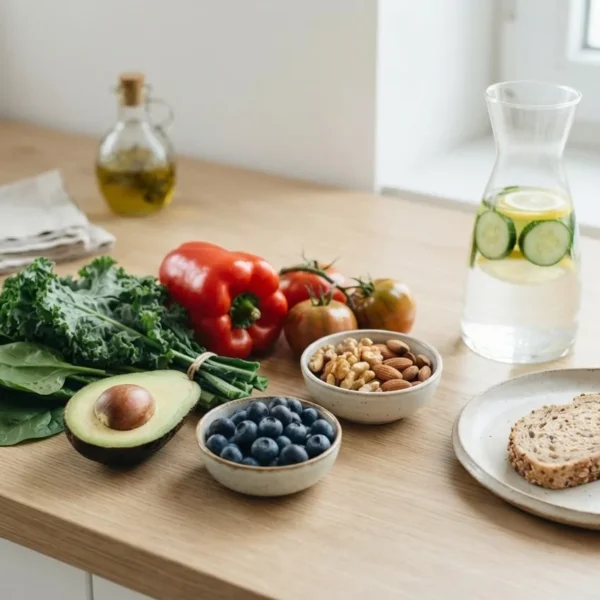
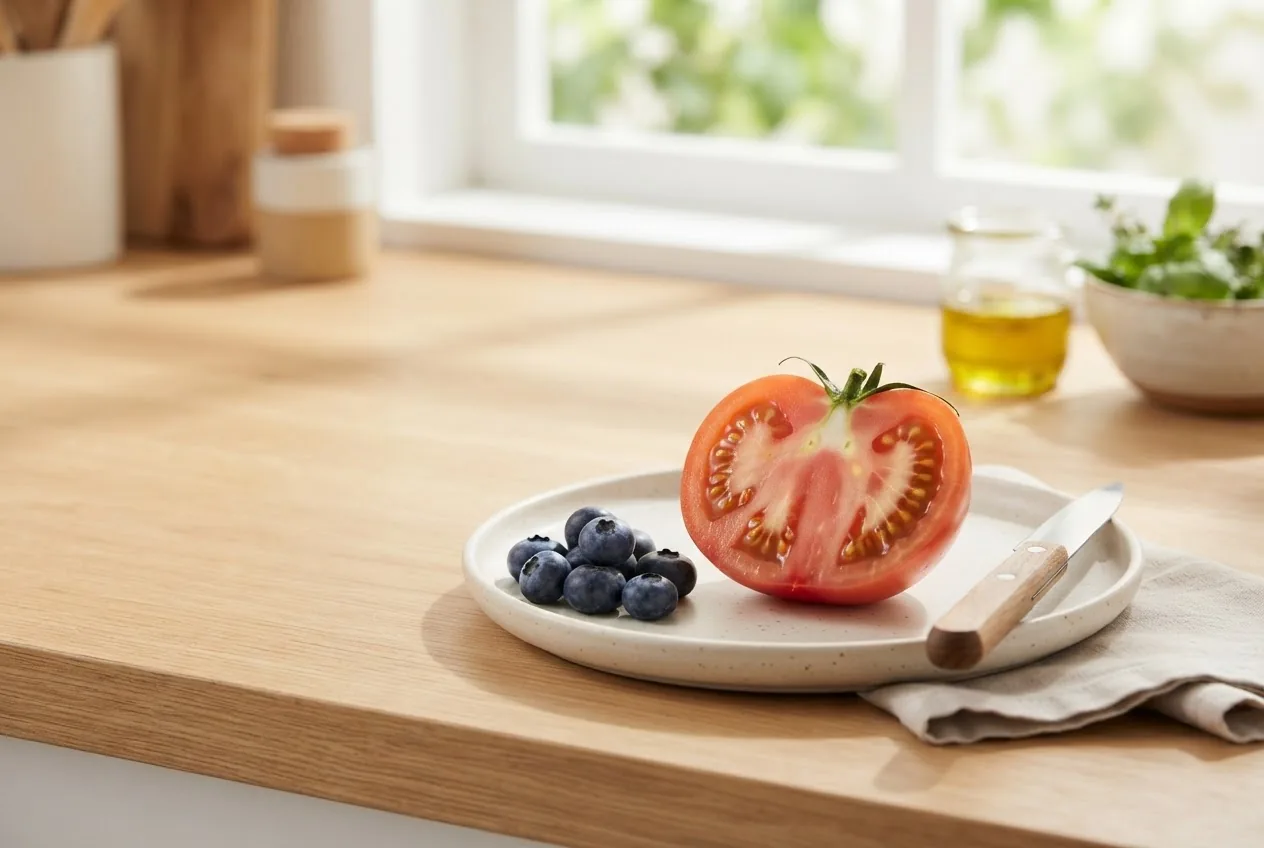
A fruit is the mature, seed-bearing structure that develops from the ovary of a flowering plant; it encloses or bears the seeds and often aids in seed dispersal. Botanically, any seed-bearing structure formed from the plant ovary is a fruit, regardless of culinary use or edibility.
Understanding What Makes a Fruit a Fruit?
Answer: A fruit is defined botanically as a mature ovary (or ovaries) of a flower that contains seeds; it originates from the flower’s pistil and functions primarily to protect and disperse seeds. This definition separates botanical criteria from culinary categories like “vegetables.”
Fruit: a mature, seed-bearing structure formed from the ovary of a flowering plant (angiosperm).
The botanical definition of fruit focuses on origin and function: fruits come from flowers. If a plant structure develops from the ovary and carries seeds, it qualifies as a fruit whether people eat it or not. For gardeners at Texas farmers’ markets, this means tomatoes, peppers and even squash are fruits in a botanical sense.
Transitioning to the exact scientific criteria clarifies technical terms such as ovary, pericarp and accessory fruit, which are essential to correctly identify fruit anatomy and role in reproduction.
The Botanical Definition of a Fruit: Scientific Criteria?
Answer: Scientifically, a fruit is any structure that develops from the flower’s ovary (after fertilization) and contains seeds; the pericarp (derived from the ovary wall) often forms distinct layers—exocarp, mesocarp and endocarp—that help classify fruits. Accessory tissues can also contribute to the edible portion.
Ovary: the part of the flower that contains ovules and, after fertilization, develops into the fruit.
Pericarp: the fruit wall derived from the ovary; typically divided into exocarp (outer), mesocarp (middle) and endocarp (inner).
Accessory fruit: a fruit in which tissues other than the ovary (such as receptacle or floral tube) become part of the mature fruit.
According to the USDA’s botanical resources and general plant classification guidance, the primary scientific criteria that define a fruit are (external source cited below):
- Origin from a flower’s ovary (or ovaries) after pollination and fertilization.
- Containment or direct association with seeds that developed from ovules.
- Presence of a pericarp (ovary wall) that often differentiates into layers—exocarp, mesocarp and endocarp.
- Functional role in protecting seeds and aiding dispersal (by animals, wind, or other means).
Short labeled explanations of the most relevant components:
- Ovule: structure inside the ovary that becomes a seed after fertilization.
- Seed: a mature ovule containing an embryo and often nutritive tissue.
- Exocarp: outermost layer of the pericarp (skin or rind).
- Mesocarp: middle layer, often the fleshy part eaten in many fruits.
- Endocarp: inner layer that may be stony (as in peaches) or papery (as in apples).
Botanical references clarify that not all edible “fruits” are solely ovary tissue; sometimes other floral parts enlarge and join the ovary to form an accessory fruit. Examples include strawberries (receptacle forms much of the edible portion) and apples (hypanthium contributes to the edible flesh).
External resources for the definitions above: USDA, botanical publications, and university extension services.
Transitioning to classification: once you understand the ovary-origin rule and pericarp layers, fruit types are sorted by how ovaries form and how seeds are arranged.
Classification of Fruits: Types and Examples?
Answer: Fruits are classified by ovary structure, seed arrangement and the tissues involved—commonly as simple, aggregate, or multiple (also by texture as fleshy or dry). Each category contains subtypes with characteristic pericarp behavior and dispersal strategies.
Simple fruit: develops from a single ovary of one flower.
Aggregate fruit: develops from multiple ovaries (carpels) of one flower.
Multiple fruit: forms from ovaries of many flowers clustered into an inflorescence.
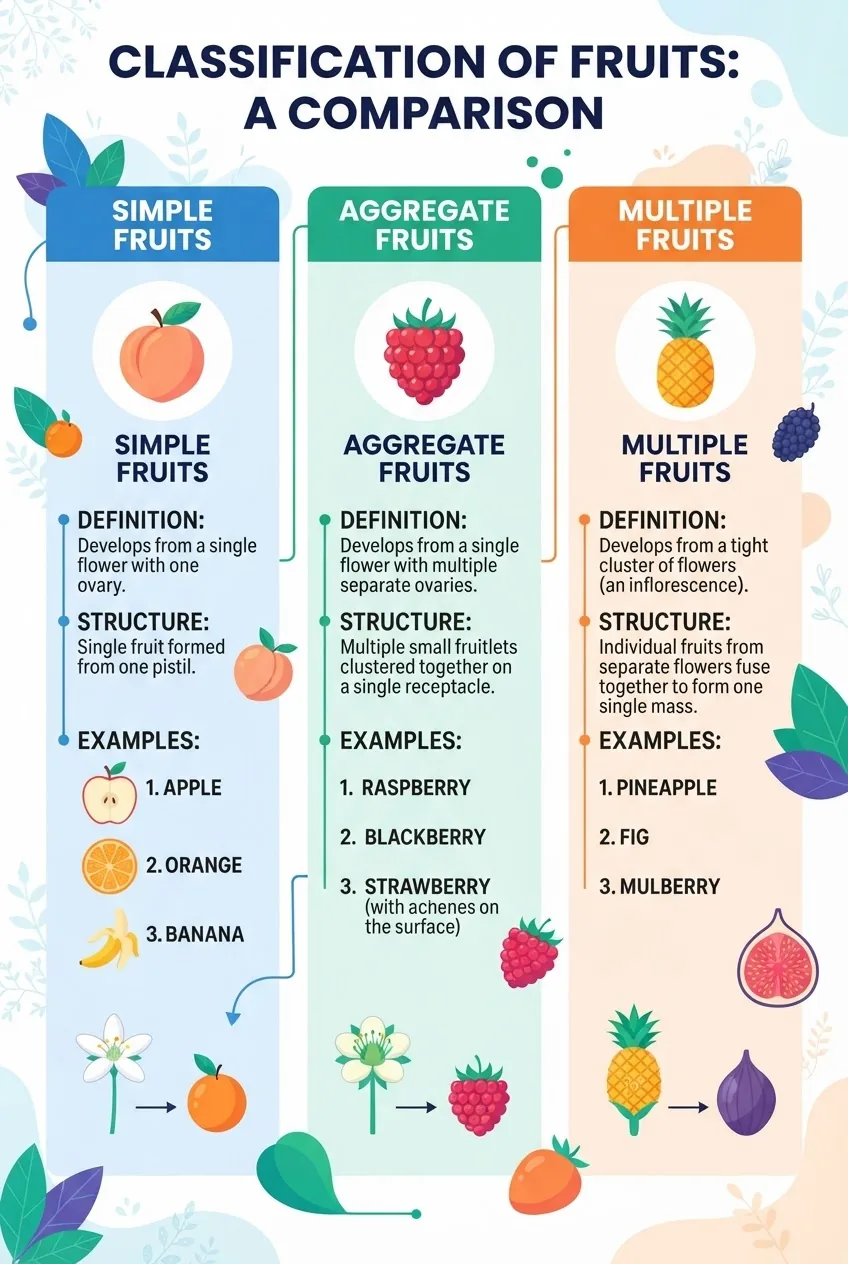
Numbered classification with clear examples and seed-arrangement notes:
-
Simple fruits — single ovary; further divided into:
- Fleshy simple fruits:
- Berries (multiple seeds embedded in soft pericarp): tomato, grape, blueberry.
- Drupe (single seed enclosed in a hard endocarp): peach, cherry, avocado.
- Pome (fleshy hypanthium with core from ovary): apple, pear.
- Dry simple fruits:
- Dehiscent (split open to release seeds): legumes (peas, beans), capsules.
- Indehiscent (do not split): nuts, achenes (sunflower seeds), samaras (maple keys).
- Fleshy simple fruits:
-
Aggregate fruits — many small fruits from one flower with multiple carpels; examples:
- Raspberry (each little drupelet is from one carpel).
- Blackberry.
- Strawberry (botanically accessory: seeds are achenes on the surface; the red part is enlarged receptacle).
-
Multiple fruits — fused ovaries from many flowers in an inflorescence:
- Pineapple (each “eyed” segment from individual flowers).
- Fig (syconium: an enclosed inflorescence forming a single structure around many flowers).
- Mulberry.
Classification based on seed arrangement and pericarp:
| Classification Factor | What to look for | Examples |
|---|---|---|
| Origin (ovary count) | Single ovary vs. multiple ovaries | Simple: peach; Aggregate: raspberry; Multiple: pineapple |
| Pericarp texture | Fleshy vs. dry | Fleshy: tomato; Dry: walnut |
| Seed arrangement | Many seeds vs single seed | Berry: many seeds; Drupe: single seed |
fruit types guide with benefits and nutritional information
Case study/anecdote from a Texas home garden: a backyard peach tree demonstrates drupe anatomy—skin as exocarp, fleshy mesocarp you eat, and stony endocarp protecting the pit (seed). Horticulture extension guides describe pruning and labeling fruit types to help with harvest timing and pest management (external sources cited earlier).
Transition: having seen classifications, we next address the frequent culinary mismatch that causes confusion.
Common Misconceptions: When Is a Fruit Not Considered One Culinarly?
Answer: Culinary definitions are based on taste, use, and tradition: many botanically defined fruits are treated as vegetables in the kitchen because they are savory rather than sweet. The botanical definition remains scientific; culinary labels are cultural and practical.
Accessory fruits: fruits where non-ovary tissue contributes significantly to the edible part (e.g., strawberry, apple).
Common sources of confusion:
- Flavor profile: savory produce like tomatoes or eggplants are cooked like vegetables.
- Kitchen use: vegetables are grouped by course (salads, sides), while fruits are often desserts or snacks.
- Regulatory or legal definitions (e.g., U.S. Supreme Court ruling on tomatoes in 1893 for tariff purposes) have reinforced culinary labels over botanical accuracy.
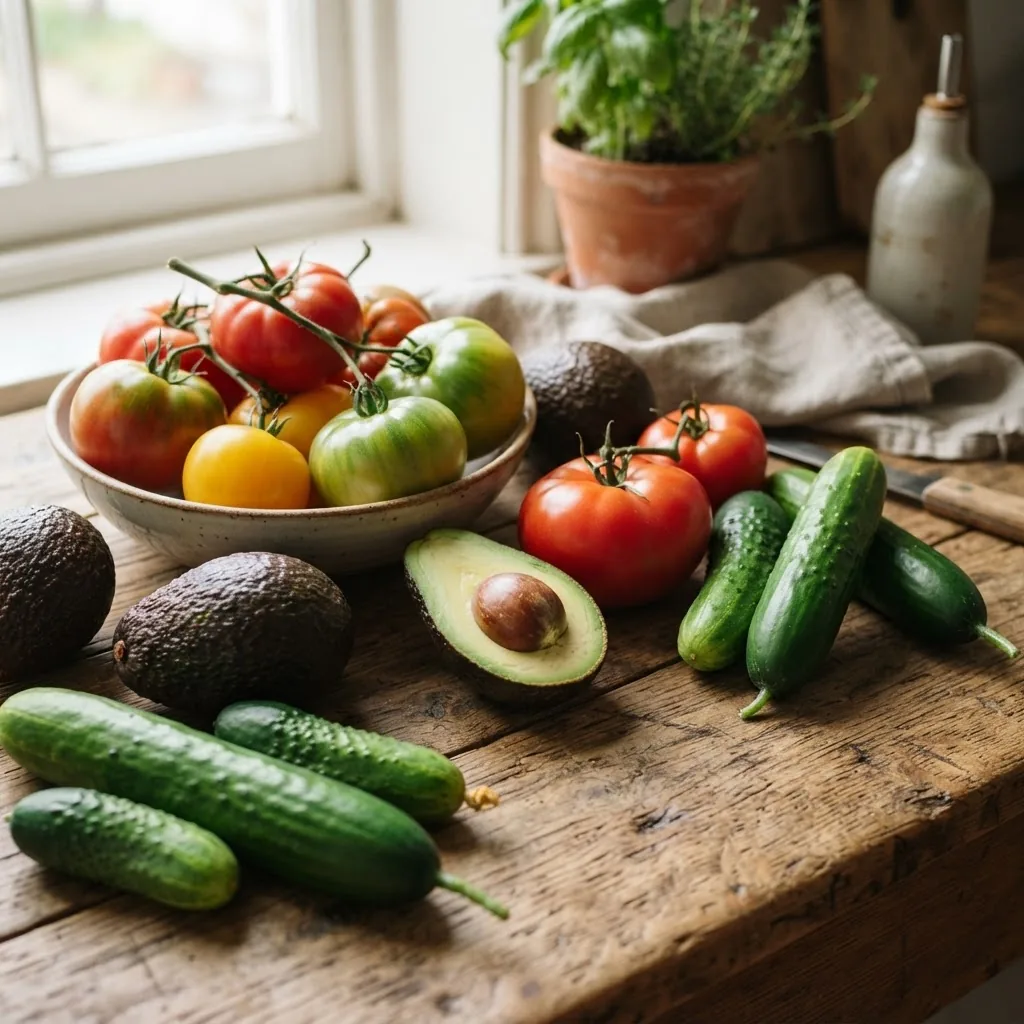
Examples often mistaken for vegetables:
| Produce | Botanical status | Culinary treatment |
|---|---|---|
| Tomato | Berry (simple fruit) | Used as vegetable in salads, sauces |
| Cucumber | Berry (pepo-type) | Used in savory salads, pickles |
| Avocado | Single-seeded berry (drupe-like) | Used as savory spread or garnish |
vegetable guide with pictures and nutritional info
green beans fruit or vegetable guide
Practical note: when cooking or choosing ingredients, follow culinary categories; when teaching gardening or botanical identification, follow ovary-derived definitions. Both systems are valid within their contexts, but confusion persists because they serve different purposes.
Transitioning to benefits: understanding botanical classification has practical implications for diet, garden planning, and seed-saving.
Why Understanding Fruit Classification Matters for Health and Gardening?
Answer: Knowing botanical fruit classification helps gardeners with pollination and harvesting, aids seed-saving accuracy, and informs dietary choices by clarifying plant-based food categories and their seed/structure relationships.
Practical benefits for Texas gardeners and healthy-living readers:
- Plant care and pollination: Recognizing whether a crop is a simple, aggregate or multiple fruit informs pruning and pollinator needs.
- Seed saving: Only fruits formed from fertilized ovaries produce viable seeds; understanding ovary-origin prevents wasted effort.
- Pest and disease management: Fruit anatomy (thick rind vs. thin pericarp) changes susceptibility to pests and storage life.
informational health guide on vegetables
best fruits for weight loss guide
Example: distinguishing between tomatoes (botanical fruit) and lettuce (non-fruit leaf vegetable) will determine whether seed-saving strategies focus on fruit drying or leaf propagation. Horticultural extension publications recommend tailored harvest and storage techniques per fruit type for optimal shelf life and germination rates (external sources referenced earlier).
Dietary implication note: while botanical classification doesn’t define nutrition, it can guide expectations—fleshy fruits often supply sugars and water; dry fruits or seeds supply oils and concentrated energy. For tailored nutrition planning consult fruit-type specific guides and nutritional resources.
Transition: the final section collects the practical criteria into a concise checklist for quick identification and recall.
Summary: What Constitutes a Fruit? Final Takeaways?
Answer: A fruit is any mature ovary-derived structure that contains seeds and contributes to seed protection or dispersal; culinary labels may differ, but botanical criteria hinge on origin (ovary), seed formation, and pericarp structure.
- Origin: derived from a flower’s ovary (defining criterion).
- Seeds: contains seeds (mature ovules) or is directly associated with seed-bearing tissue.
- Pericarp: presence of exocarp, mesocarp and endocarp (may be subtle or modified).
- Accessory tissues: fruits can include non-ovary tissue—identify if the edible part is floral tissue, not ovary.
- Classification: simple, aggregate, multiple; also fleshy vs. dry and dehiscent vs. indehiscent.
- Culinary vs. botanical: culinary categories are pragmatic but do not change botanical status.
Quick identification checklist for gardeners and shoppers:
- Did it develop from a flower? Yes → likely a fruit.
- Does it contain seeds or structures that become seeds? Yes → fruit.
- Is the edible portion an enlarged ovary or floral tissue? Note which to determine “accessory” status.
- Seed arrangement and pericarp texture help classify type and indicate handling/storage needs.
Final recommendation: For deeper nutritional and benefit-focused details on specific fruit types, see the fruit types guide with benefits and nutritional information.
Closing call to action: Use these scientific criteria to identify fruits when planning your Texas garden, choosing produce at local farmers’ markets, or saving seeds; share this guide with fellow gardeners who debate whether tomatoes are fruits or vegetables.