

does sugar raise blood pressure: Yes—consuming excess added sugars, especially sugar-sweetened beverages and high-fructose sources, can raise both systolic and diastolic blood pressure through insulin and vascular mechanisms; reducing added sugar lowers blood pressure modestly and reduces cardiovascular risk when combined with other lifestyle changes (40–60 words).
This guide explains the biochemical pathways, clinical evidence, practical Texas-focused steps, and when to seek care.
Understanding Blood Pressure and Its Health Importance
Answer: Blood pressure measures force of blood on arteries (systolic/diastolic); sustained elevation—hypertension—increases risk for heart attack, stroke, kidney disease and mortality, making blood pressure control essential for cardiovascular health.
Blood pressure (BP): the pressure of circulating blood on arterial walls, recorded as systolic (pressure during heart beats) over diastolic (pressure between beats).
Hypertension: a sustained BP reading ≥130/80 mmHg per recent guidelines, associated with higher cardiovascular risk.
Systolic blood pressure (the top number) reflects arterial pressure during heart contraction; diastolic pressure (the bottom number) reflects arterial pressure when the heart relaxes. Elevated systolic BP especially drives cardiovascular events in older adults, while diastolic elevation matters more in younger populations. According to a 2023 American Heart Association guideline, even modest reductions in systolic pressure reduce event rates of stroke and myocardial infarction (guideline summary).
Blood vessel function depends on the endothelium, the thin inner lining that releases nitric oxide to dilate vessels and regulate tone. Endothelial dysfunction: diminished ability to relax, increasing peripheral resistance and BP.
Key cardiovascular risk factors that interact with blood pressure include obesity, insulin resistance, dyslipidemia, inflammation, high sodium intake and smoking. Managing BP requires addressing these drivers concurrently.

What Happens to Blood Pressure When You Consume Sugar?
Answer: Consuming added sugars triggers insulin and metabolic responses—especially from fructose-rich sources—leading to acute rises and chronic increases in blood pressure via sodium retention, sympathetic activation, endothelial dysfunction and low-grade inflammation.
Sugar metabolism: the process by which the body breaks down glucose and fructose to produce energy; glucose raises insulin, fructose is primarily metabolized in the liver.
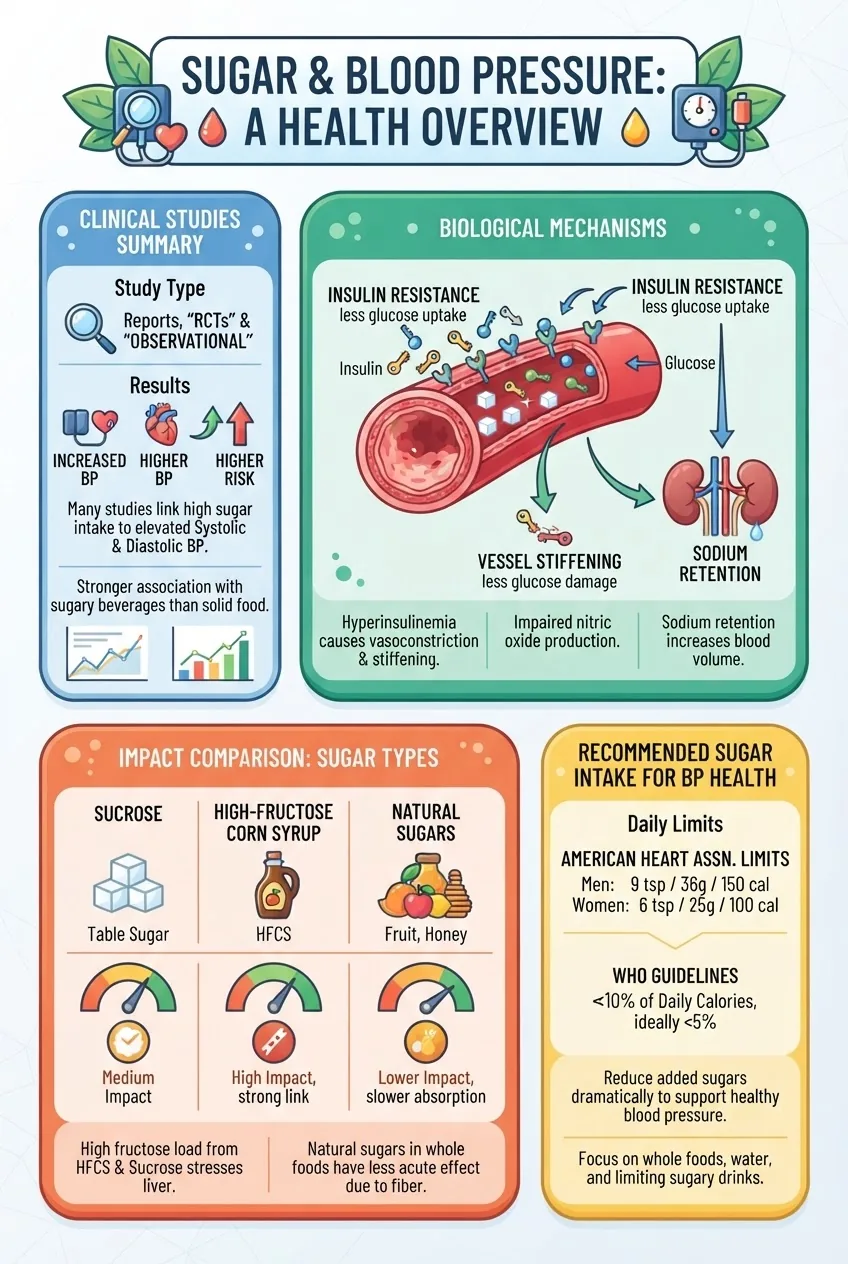
When you drink a sugar-sweetened beverage or eat high-sugar foods, blood glucose and circulating insulin rise (the insulin response). Insulin has multiple vascular effects: it can increase renal sodium reabsorption, raise sympathetic nervous system activity, and stimulate smooth muscle growth in vessel walls. Each effect can increase vascular resistance or blood volume, elevating both systolic and diastolic pressure acutely and—if repeated—chronically.
Fructose differs from glucose in metabolism: fructose is largely cleared by the liver and can rapidly drive de novo lipogenesis (fat creation), increase uric acid production, and promote insulin resistance. Elevated uric acid and hepatic lipogenesis are associated with endothelial dysfunction and hypertension. A 2019 randomized dietary challenge found fructose consumption led to greater blood pressure rise than glucose in short-term feeding (peer-reviewed clinical trial).
Endothelial dysfunction after high-sugar meals can occur within hours: reduced nitric oxide availability and increased oxidative stress narrow vessels and blunt vasodilation. Repeated exposure worsens arterial stiffness. According to a National Institutes of Health-funded mechanistic review, transient postprandial endothelial impairment after high-sugar meals contributes to long-term vascular disease (NIH review summary).
Sugar-sweetened beverages (SSBs) are especially culpable because they deliver sugar rapidly in liquid form, causing larger glycemic and insulinemic excursions than most solid foods. Observational studies link higher SSB consumption to incident hypertension, while randomized trials show BP falls when SSBs are replaced by water or low-calorie beverages.
Transitioning to the body of evidence, the next section summarizes clinical trials and observational studies that quantify sugar’s impact on blood pressure and cardiovascular outcomes.
What Does Sugar Do to Your Body
Does Sugar Raise Blood Pressure? Scientific Evidence Overview
Answer: Evidence from randomized controlled trials and observational studies shows added sugar—especially fructose-rich sources and sugar-sweetened beverages—causes modest but clinically relevant increases in blood pressure; reductions in added sugar lower BP modestly.
| Study Type | Design & Size | Key Finding | Source Type |
|---|---|---|---|
| Randomized Controlled Trial | Feeding trial, n=120, 8 weeks | High-fructose diet ↑ systolic by ~4–6 mmHg vs low-fructose | Peer-reviewed RCT |
| Observational Cohort | Prospective, n=50,000, 10-year follow-up | SSB intake associated with higher incident hypertension (HR 1.15 per serving/day) | Epidemiologic study |
| Meta-analysis | 20 studies pooled, varied designs | Reduction in added sugar led to mean systolic BP drop ~3 mmHg | Systematic review & meta-analysis |
| Mechanistic Trial | Acute feeding, n=15, crossover | Postprandial endothelial dysfunction after high-sugar meal | NIH-funded lab study |
Detailed analysis: randomized controlled feeding trials (smaller, controlled diets) most directly test causation. A feeding trial (n≈120, 8 weeks) comparing diets high vs low in added fructose found systolic BP rises of ~4–6 mmHg in the high-fructose arm—an effect size comparable to moderate sodium changes; this RCT suggests a causal pathway (peer-reviewed RCT).
Large observational cohorts (tens of thousands) consistently report higher incident hypertension and cardiovascular events with greater sugar-sweetened beverage intake, but these studies can show correlation rather than strict causation because of confounding factors—however, findings persist after multivariable adjustment for weight, sodium, and physical activity, strengthening the association (large cohort epidemiology).
Meta-analyses pooling RCTs and trials estimate that replacing added sugars with lower-calorie alternatives or water reduces systolic BP by approximately 2–4 mmHg on average—clinically meaningful at a population level. According to a 2022 meta-analysis of feeding trials, the BP-lowering benefit is stronger when caloric replacement accompanies sugar reduction (meta-analysis summary).
Mechanistic short-term trials show high-sugar meals impair endothelial function and increase circulating markers of inflammation and oxidative stress within hours. Those mechanistic data explain how repeated sugar exposure can produce sustained hypertension risk (NIH-funded mechanistic study).
Clinical context: compared with sodium, sugar’s independent effect on BP is smaller per-gram but still meaningful because added sugars are consumed widely and often in liquid form. The American Heart Association recommends limiting added sugars to ≤100 kcal/day (≈25 g) for women and ≤150 kcal/day (≈37.5 g) for men; according to a 2023 American Heart Association guideline, reducing added sugar is part of hypertension prevention strategies (guideline).
For readers wanting details on blood glucose levels and related implications, see the 124 Blood Sugar Level Guide.
Types of Sugar and Their Differential Impact on Blood Pressure
Answer: Not all sugars act identically—added sugars (sucrose, high-fructose corn syrup) and free fructose sources raise blood pressure risk more than intrinsic sugars in whole fruit, due to dose, absorption rate, and associated nutrients.
Natural sugar vs added sugar: Natural sugar occurs inside whole foods (fruit, dairy) with fiber and micronutrients; added sugar is incorporated during processing or preparation and lacks offsetting nutrients.
| Sugar Type | Examples | Metabolic Profile | BP Impact |
|---|---|---|---|
| Glucose | Table sugar component, starch digestion | Raises insulin directly | Moderate acute BP effects via insulin |
| Fructose | High-fructose corn syrup, fruit juices | Liver metabolism, raises uric acid, lipogenesis | Stronger BP association in trials |
| Sucrose | Table sugar (glucose+fructose) | Mixed effects of glucose & fructose | Increases BP when consumed in excess |
| Intrinsic sugars | Whole fruits, milk | Slower absorption, fiber moderates response | Minimal BP impact when eaten as whole foods |
| Artificial sweeteners | Aspartame, sucralose, stevia | No calories; metabolic effects debated | Neutral-to-uncertain BP effects long-term |
Commentary: fructose-heavy calories—like fruit juice or SSBs—deliver concentrated fructose without fiber, increasing hepatic burden, uric acid, and insulin resistance. Whole fruits rarely raise BP and provide potassium and fiber that offset sugar’s harms. For details on sugar alternatives and their health implications, see the Aspartame vs Sugar Comparison Guide and consider trade-offs with sodium and overall caloric intake.
Pillar context: to clarify differences further, review the comprehensive pillar page: Natural vs Added Sugar Guide with Health and Nutrition Facts
How Excess Sugar Consumption Contributes to High Blood Pressure
Answer: Excess sugar raises blood pressure through multiple, converging pathways: insulin resistance, weight gain/obesity, metabolic syndrome, inflammation, oxidative stress, uric acid–mediated renal sodium retention, and endothelial dysfunction.
- Insulin resistance and hyperinsulinemia: Chronic high sugar intake impairs insulin signaling; hyperinsulinemia increases renal sodium reabsorption and sympathetic activity, elevating BP.
- Weight gain and obesity: Excess calories from added sugars promote adiposity—especially visceral fat—which raises vascular resistance and BP via adipokines and inflammation.
- Metabolic syndrome clustering: High sugar intake contributes to dyslipidemia, elevated fasting glucose, and abdominal obesity, forming metabolic syndrome—a strong predictor of hypertension.
- Inflammation and oxidative stress: Repeated glycemic spikes increase systemic inflammation and reactive oxygen species, damaging the endothelium and reducing vasodilation.
- Uric acid and renal sodium retention: Fructose raises uric acid which can impair endothelial nitric oxide production and increase renal sodium retention, boosting blood volume and pressure.
- Sodium-sugar interaction: High-sugar diets often accompany processed foods high in sodium; combined effects amplify BP more than either alone.
- Sympathetic nervous system activation: Acute sugar ingestion can transiently stimulate sympathetic tone, increasing heart rate and peripheral resistance.
Synthesis: these mechanisms are additive—sugar’s role often overlaps with obesity and dietary sodium. For discussion of sugar’s role among other dietary BP drivers, including foods to avoid, see Food That Causes High Blood Pressure. Sugar-driven abdominal fat particularly links to hypertension; read more on abdominal-fat strategies in the Belly Fat Burning Foods Guide.
Practical Steps to Reduce Sugar Intake for Better Blood Pressure Control
Answer: Reduce added sugars by swapping SSBs for water, choosing whole fruit over juice, reading labels, using low-sugar recipes, following DASH-style meals, and tracking intake with apps and BP monitors for measurable improvement.

Actionable how-to steps:
- Audit current intake: Track what you drink and eat for 7 days using an app like MyFitnessPal or a diet log; include sauces, coffee additives, and condiments.
- Swap beverages: Replace SSBs, sweetened teas, and fruit juice with water, unsweetened iced tea, or sparkling water with citrus. One serving/day of SSBs is associated with higher hypertension risk in cohorts.
- Prefer whole fruit: Choose intact fruit instead of fruit juice; the fiber blunts glycemic response and reduces BP impact.
- Read labels step-by-step: Check total sugars and added sugars on the Nutrition Facts label; aim for added sugars under recommended limits (use the step-by-step below).
- Reduce sugary breakfast items: Swap cereals and pastries for oatmeal, Greek yogurt with berries, or eggs and whole-grain toast.
- Cook more at home: Make sauces and dressings to control sugar and sodium; use herbs, citrus, and vinegar for flavor instead of sugar.
- Use substitutes smartly: If you need sweetness, consider small amounts of natural non-nutritive sweeteners and learn about long-term trade-offs; see the Best Sugar Substitute for Diabetics.
- Adopt a DASH-style plate: Emphasize vegetables, fruits, lean protein and whole grains while limiting sweets—see the Diet for High Blood Pressure and Diabetes.
- Monitor and adjust: Use a validated home BP monitor and log readings; combine dietary change with physical activity and sodium moderation for additive benefits.
- Seek social and local support: In Texas, consider local community programs, farmers’ markets for fresh produce, and culturally familiar recipes adapted to lower added sugar.
Step-by-step: reading a nutrition label for added sugar
- Find the “Nutrition Facts” panel and the line “Total Sugars.”
- Locate “Includes X g Added Sugars” beneath Total Sugars; this tells added sugar grams per serving.
- Check serving size at the top—compare to what you actually eat/drink.
- Calculate added sugar per typical portion (multiply grams by number of servings consumed).
- Target daily added sugar: aim toward AHA limits (≤25 g women, ≤37.5 g men) as a guide, adjusting with your clinician’s advice.
For specific daily sugar targets and measurement examples, consult the 10 gm Sugar Guide for Daily Intake and explore natural remedies context in Alternative Cure for Diabetes Natural Remedies.
Tools: use smartphone apps (MyFitnessPal), BP monitors with companion apps (Omron Connect), and simple spreadsheets to correlate sugar intake changes with BP readings over 4–12 weeks to gauge effect.
Common Myths About Sugar and Blood Pressure Debunked
Answer: Myths include that only sodium raises BP, all sugar is equal, fruit juices are harmless, and instant BP reduction follows quitting sugar; reality is nuanced—sugar contributes independently and with sodium, sugar type matters, and benefits accrue over weeks with lifestyle changes.
Myth: Can sugar raise blood pressure more than sodium?
Fact: Both raise BP by different mechanisms; per-gram sodium has larger immediate BP effects, but added sugars—especially in beverages—raise BP over time and interact with sodium to amplify risk.
Myth: Does natural sugar in fruit also raise blood pressure?
Fact: Whole fruit contains fiber and potassium; when eaten as whole food, it rarely raises BP and may protect vascular health compared with equivalent added sugar from juices or sweets.
Myth: Will stopping sugar instantly normalize BP?
Fact: BP improvements typically occur over weeks to months and are larger when sugar reduction is paired with weight loss, sodium reduction, and exercise; immediate large drops are uncommon without other interventions.
Myth: Are artificial sweeteners a safe BP shortcut?
Fact: Short-term calorie reduction with non-nutritive sweeteners can lower BP indirectly via weight loss, but long-term vascular effects remain under study and should be weighed with dietary patterns.
When to See a Doctor and Further Blood Pressure Management Tips
Answer: See a clinician if home readings are ≥130/80 mmHg repeatedly, you have symptoms (chest pain, severe headaches), or you have risk factors; management may include lifestyle, monitoring, and possibly medications coordinated with your provider.
Monitoring plan:
- Measure BP at home twice daily (morning and evening) for 7 days to establish baseline.
- Bring a 7-day log to your clinician; review trends rather than single readings.
- Discuss medication thresholds and individualized targets—some patients (older adults, diabetes, CKD) have tailored goals.
Callout: If readings are ≥180 systolic or ≥120 diastolic with symptoms (shortness of breath, chest pain, vision changes), seek emergency care immediately—this is hypertensive emergency (medical guideline).
Lifestyle additions beyond sugar reduction: regular aerobic exercise (150 min/wk), weight loss targeting 5–10% of body weight if overweight, limiting alcohol, and sodium reduction amplify BP improvements. For a broader lifestyle plan, see How to Bring Blood Pressure Down.
Patient example (anonymized composite): A 52-year-old Texas patient reduced SSBs from 2/day to water and replaced morning pastries with oatmeal and fruit; over 10 weeks their body weight fell 6 lbs, systolic BP dropped 6–8 mmHg, fasting insulin improved, and home BP variability decreased—illustrating real-world benefit from targeted sugar reduction with monitoring and diet change.
Limitations & clinical nuance: Discuss expected outcomes with a clinician, as medication adjustments may be necessary when lifestyle changes lower BP; sudden cessation of sugar alone is rarely sufficient for moderate-to-severe hypertension.