By the end of this hands-on guide you’ll be able to identify, buy, store, cook and (if you garden) plant the main veg beginning with F. Expect to spend about 60–90 minutes reading and another few hours trying recipes or planting seeds; this guide assumes a beginner-to-intermediate home cook or gardener skill level.
Introduction to Vegetables Beginning with F
This guide focuses on vegetables beginning with F—practical, region-aware, and written for Texas cooks and gardeners. We’ll cover the most common F vegetables (fennel, fava bean, fingerroot, flat beans and French beans), their varieties, nutritional highlights (vitamins A, C, K, folate and fiber), and how to use them in Southern and Texan kitchens. You’ll also find clear seasonal availability notes tailored to Texas climates, step-by-step prep and cooking methods (raw, steamed, roasted), and growing/harvesting tips. If you want broader type-level context, see the
Fruit Types Guide with Benefits and Nutritional Information.
Transition: below we move from identification into hands-on steps that let you select, cook, and grow F vegetables with Texan seasonality in mind.
Before you start
- Tools: sharp chef’s knife, vegetable peeler, colander, roasting pan, steamer basket, kitchen scale (grams/ounces), 3–5 gallon pots for containers.
- Materials: fresh fennel bulbs, dried or fresh fava beans, fingerroot (if available at Asian markets), flat bean and French bean seed packets, quality compost.
- Reference links: USDA nutritional database, Texas A&M AgriLife Extension planting guides, NIH dietary advice.
- Timeframe: prep & cooking practice — 1–3 hours; planting to harvest — 60–120 days depending on crop and Texas zone.
-
Learn the core F vegetables and their uses.
Popular Vegetables Starting with F and Their Varieties
This numbered list covers each key F vegetable with varieties, quick facts and practical Texan cooking uses. Use these as your field guide at market or on the planting label.
-
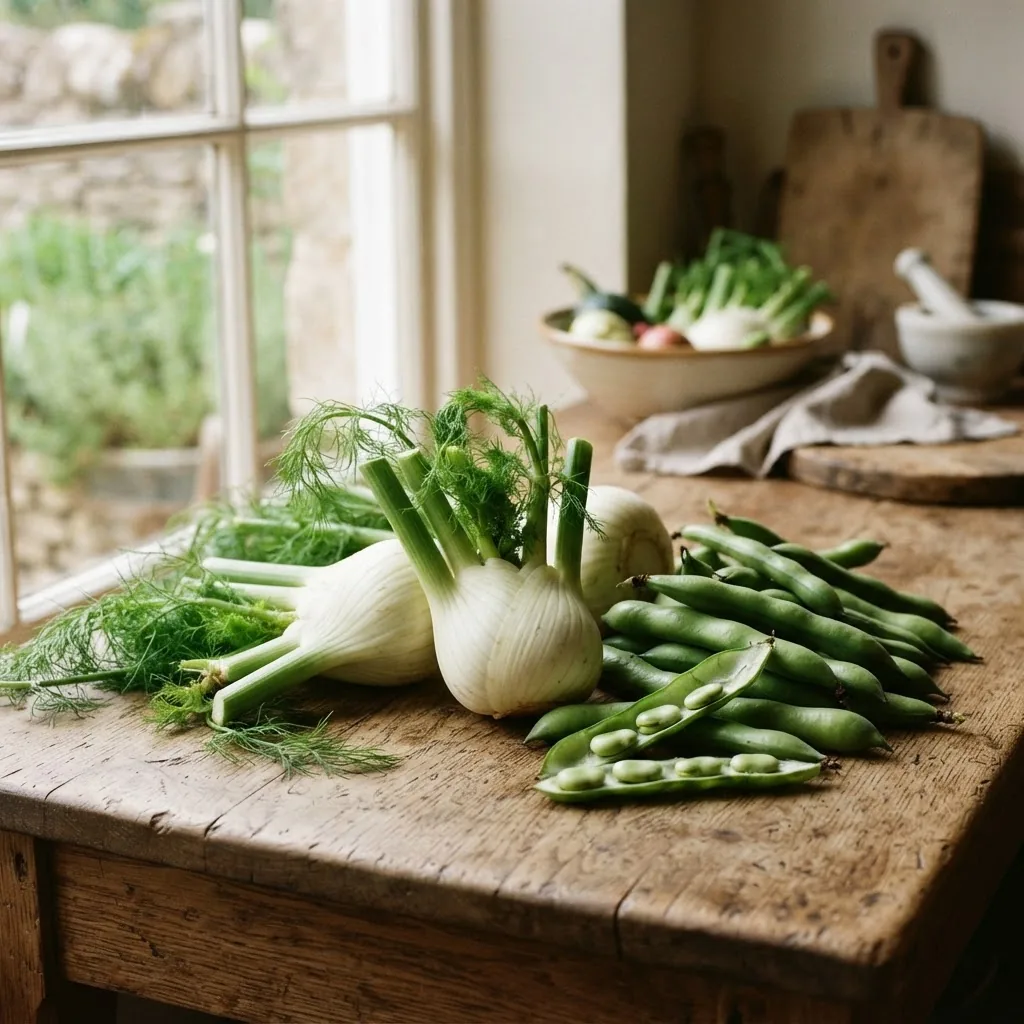
Fennel – Types and Nutritional Profile
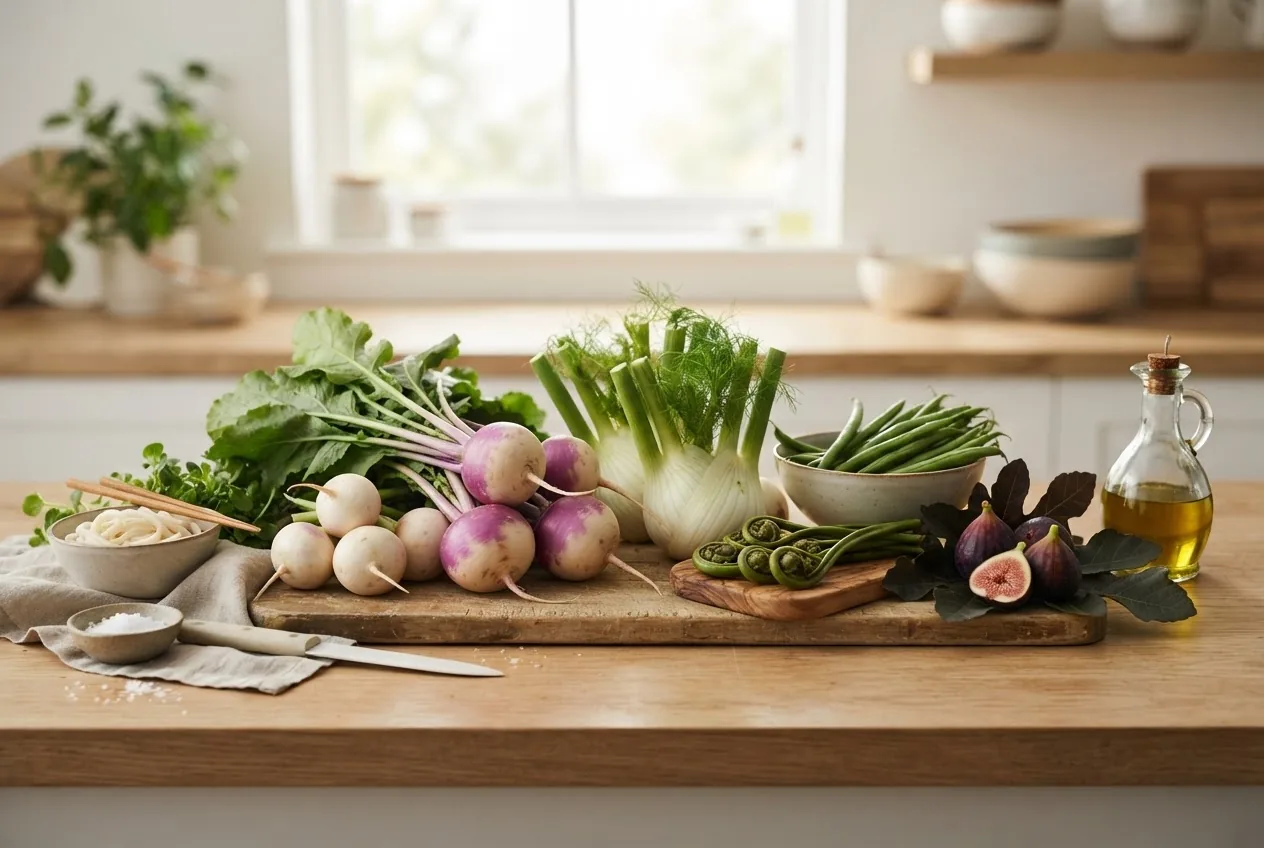
Varieties: Florence fennel (also called finocchio) — swollen bulbous stalks used as a vegetable; common fennel — tall, feathery herb used as an aromatic and spice.
- Quick facts: Crisp white bulb, feathery fronds, anise-like flavor; bulbs weigh 200–600 g each when mature.
- Origin: Mediterranean; widely used in Italian and Southern cuisines.
- Texture & flavor: Crunchy when raw, softens with roasting or braising; mild licorice/anise notes.
Nutritional highlights: Fennel is a source of fiber, vitamin C, potassium and folate. According to the 2023 USDA database, 100 g of fresh fennel provides approximately 3.1 g fiber and 12% of the daily value (DV) for vitamin C; consult
USDA nutrient data for full profiles.Culinary uses: Slice raw into salads, roast with olive oil and black pepper, braise for soups and stews, or use fronds as herb garnish. In Texas, I often pair thinly sliced fennel with citrus and grilled shrimp for a quick summer salad.
-
Fava Beans – Varieties and Cooking Tips
Varieties: Broad bean cultivars such as ‘Aquadulce Claudia’, ‘Windsor’, and small-seeded Mediterranean heirlooms; eaten fresh (in-season) or dried.
- Quick facts: High in protein (about 7–8 g per 100 g cooked), strong earthy flavor; pods must be opened and beans often blanched and peeled.
- Origin: Mediterranean to Middle East; grown in cool seasons.
Cooking tips: Fava beans need shelling and often an inner skin removal step for best texture. Follow these practical steps:
- Blanch and shock: Boil whole pods 2–3 minutes, then plunge in ice water to loosen skins.
- Shell: Remove outer pod and then the inner membrane around each bean.
- Lightly sauté or mash: Cook 4–6 minutes in olive oil with garlic and lemon, or mash with olive oil and salt for a dip.
Nutrition & health: According to the 2023 USDA database, cooked fava beans deliver substantial folate and iron, making them useful in heart-healthy and plant-protein focused meals. Because fava beans can cause favism in susceptible people, read the allergy caveat below and consult clinical resources such as
NIH. -
Fingerroot – Description and Uses
Varieties: Kaempferia spp. commonly called fingerroot, Chinese ginger or krachai; varieties differ mainly by size and aroma intensity.
- Quick facts: Tubular rhizome 2–8 cm long, aromatic with peppery, ginger-like notes; used fresh or dried in Southeast Asian cooking and folk medicine.
- Origin: Southeast Asia—Thailand, Indonesia, Malaysia.
Culinary uses: Sliced very thin and stir-fried with vegetables and seafood, blended into curry pastes or used raw in spicy salads. In Texan kitchens, fingerroot appears mostly in fusion dishes—think fingerroot-garlic marinade for grilled fish.
Medicinal/functional notes: Traditional uses include aiding digestion and reducing inflammation; modern research is exploratory. For validated claims, consult clinical literature via
NIH. -
Flat Beans and French Beans – Differences and Varieties
Flat beans (also called Romano or Italian flat beans) and French beans (a subtype of green beans often called haricots verts) share the bean family but differ in shape, pod thickness and preferred culinary treatments.
Characteristic Flat Beans (Romano) French Beans (Haricots Verts) Pod shape Wide, flat, 1–2 cm thick Narrow, round, 0.5–1 cm thick Texture Meaty, chewy when mature Tender, delicate Best uses Sauté, braise, stews Quick blanch, salads, steaming Typical varieties ‘Alderman’, ‘Romano’ types ‘Blue Lake’, ‘French filet’, ‘Haricot vert’ cultivars Transition note: For botanical classification questions like whether green beans are fruits or vegetables, see
Are green beans fruit or vegetable?.
-
-
Assess and apply the nutritional benefits of F vegetables.
Nutritional Benefits of Vegetables Beginning with F
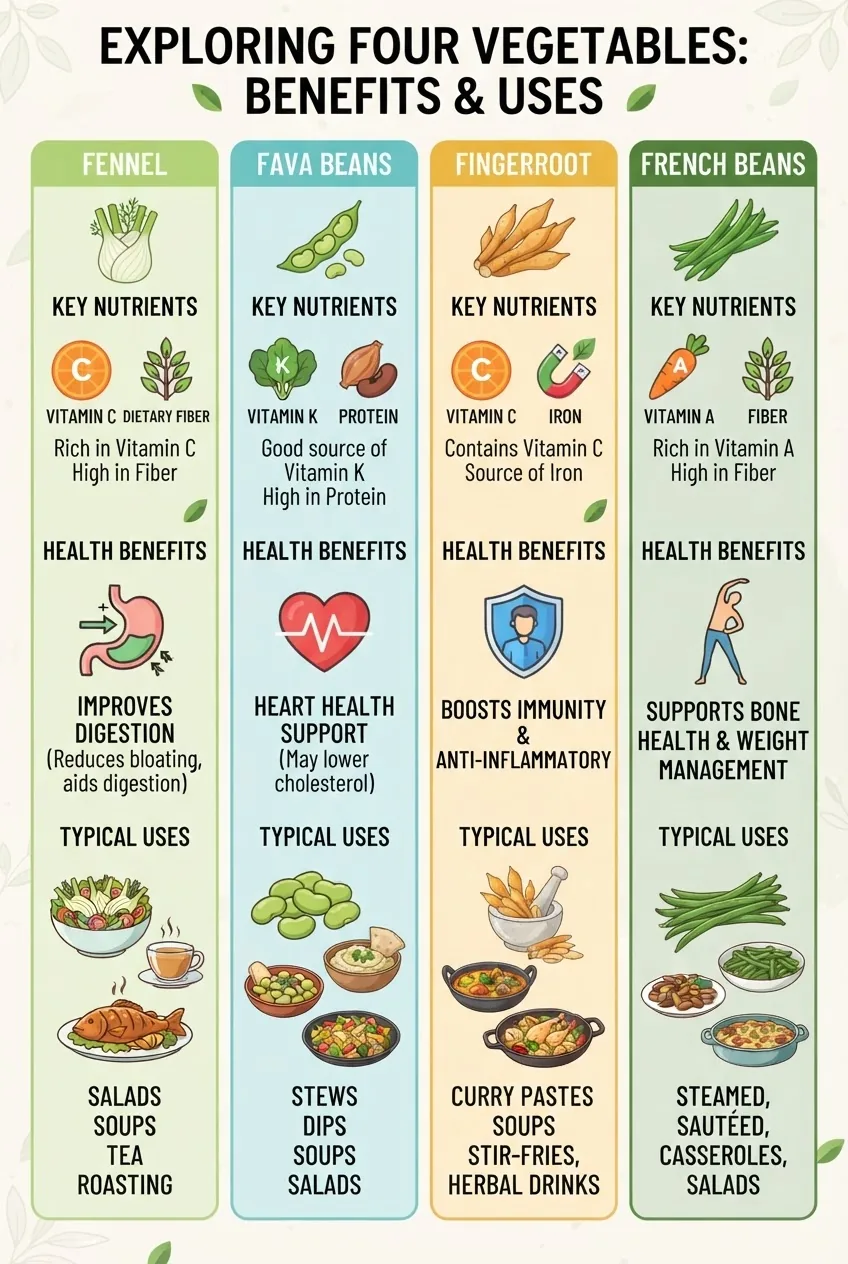
This section summarizes core functional nutrition across F vegetables—focus on fiber, vitamins (A, C, K), folate, protein (for fava beans) and antioxidants. These nutrients support heart health, digestion and cellular protection.
Stat block (selected values per 100 g edible portion):
- Fennel: ~3.1 g fiber, Vitamin C ~12% DV (According to the 2023 USDA database).
- Fava beans (cooked): Protein ~8 g, Folate provides 60–70% DV in 100 g cooked (According to the 2023 USDA database).
- French beans (green beans): Low-calorie, source of vitamin K and vitamin C, fiber ~3–4 g per cup (According to the 2023 USDA database).
- Fingerroot: low-calorie aromatic tuber; nutrients vary and are less documented in USDA database—refer to ethnobotanical literature and clinical databases for details.
Health advantages explained: fiber improves bowel regularity and satiety, folate supports cell division (important for pregnancy), vitamin C supports immune function and iron absorption, and phytonutrients in these vegetables provide antioxidant effects. For a deeper look at whether vegetables might pose risks or be over-consumed, see
Are vegetables bad for you?.Practical trade-offs and cooking: Steaming preserves water-soluble vitamins (B and C); roasting concentrates flavors and slightly reduces vitamin C but improves palatability for many (steaming 3–5 minutes versus roasting 20–30 minutes at 200°C/400°F). According to a 2022 cooking-nutrition review, short steaming retains most vitamin C; consult clinical nutrition summaries on
NIH.Comparative context: if you want to compare nutrient density with other vegetables, try the
broccoli nutrition facts page for a benchmark.Nutrition caveats: fava beans can trigger hemolytic anemia in people with G6PD deficiency (a genetic condition); verify with a medical provider or the NIH resources before introducing large portions if you or family members have known sensitivities.
Cross-reference for weight-loss planning: F vegetables pair well with high-fiber fruits; see
best fruits for weight loss for fruits that complement these veg. -
Practice selection, storage and preparation techniques.
How to Select, Store, and Prepare Vegetables Beginning with F
Follow these stepwise, measurable tips to retain flavor and nutrients and minimize waste.
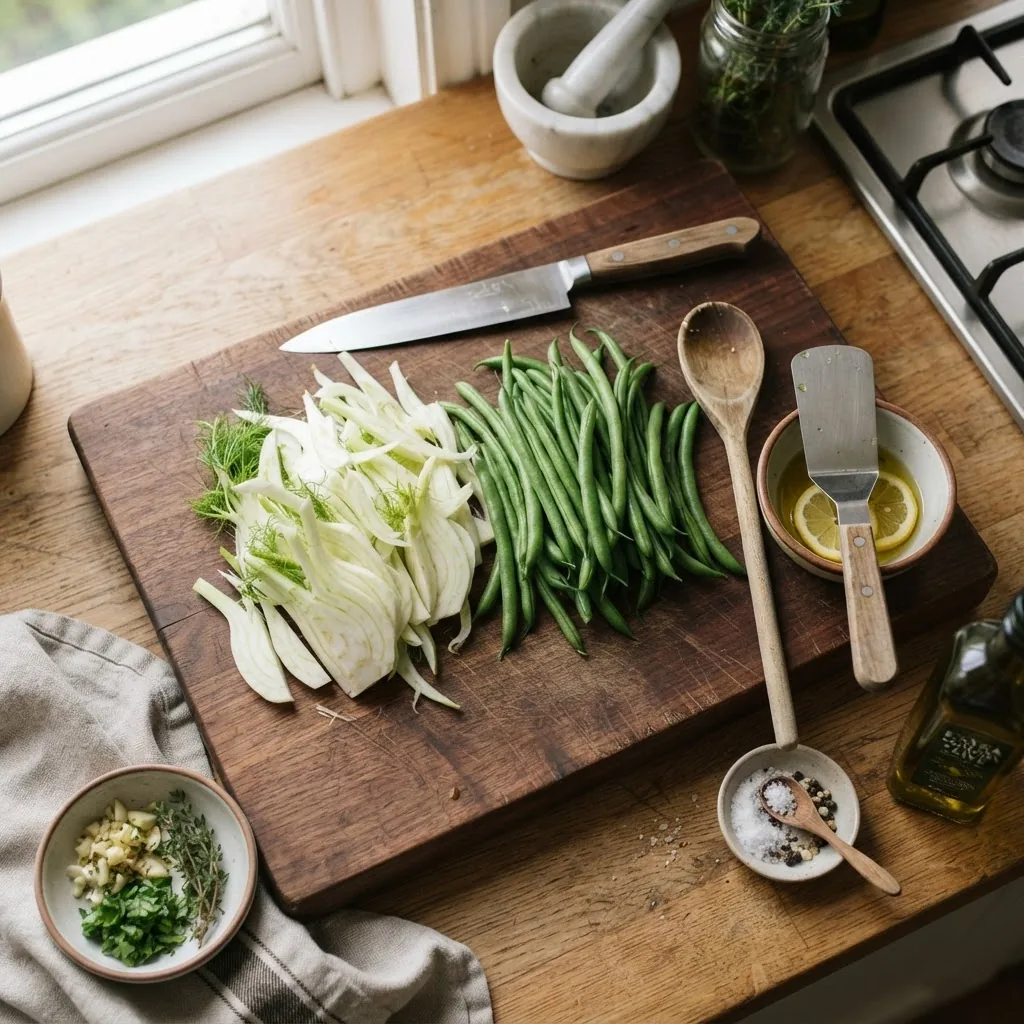
- Choose firm, heavy fennel bulbs — 200–600 g is common; look for bulbs with tight layers, no brown spots, and bright green fronds. Fronds should be aromatic and not limp.
- Pick fava beans when pods are plump — pods should feel full; for fresh shelled favas, select bright green beans 10–20 mm in diameter. If buying dried, look for uniform color and no moth damage.
- Inspect fingerroot carefully — firm, unwrinkled rhizomes, avoid soft or blackened sections; weigh tubers to ensure freshness (avoid >10% soft spots by weight).
- For French/flat beans — snap tests work: a fresh bean snaps crisply and has no fibrous string; measure batches in 250 g servings for recipes.
- Storage metrics: Refrigerate fennel in a perforated bag 4–7 days; trimmed French beans last 5–7 days in a sealed container with a damp paper towel. Cooked fava beans keep 3–4 days refrigerated. For longer storage, blanch beans 2 minutes, cool in ice water, dry and freeze in 250 g portions.
- Preparation methods: Raw fennel: slice 2–3 mm thin for salads. Steaming green beans: 3–4 minutes until bright green. Roast fennel: 20–25 minutes at 200°C/400°F with 1 tbsp olive oil per 300 g bulb. Boil fava beans briefly then sauté 4–6 minutes with aromatics.
For more on preserving nutrients in cooking and general techniques, see
how to prepare vegetables. -
Plan planting and manage seasonal availability in Texas.
Seasonal Availability and Growing Tips for F Vegetables in Texas
Texas spans USDA zones ~6–10. Local microclimates (hill country vs Gulf Coast) strongly affect frost dates and planting windows. Below are actionable planting and harvest windows and practical tips.
- Fennel: In North-Central Texas, plant spring transplants after last frost (March–April) for summer bulbs, or direct-seed in late summer for a fall harvest; start seed 4–6 weeks before transplanting. For bulb development, allow 70–90 days.
- Fava beans: Best fall/winter crop in much of Texas—plant in October–November for a winter-spring harvest; they tolerate light frost and prefer cool growth (60–65°F) for best pod set. Expect 90–120 days to harvest depending on variety.
- French/Flat beans: Warm-season crops—sow after last frost when soil is 60–70°F. In Texas heat, plant successive sowings every 2–3 weeks from April to July for continuous harvest; bush types yield in 50–60 days, pole types in 60–80 days.
- Fingerroot: Rare in home gardens—requires warm, humid conditions; best obtained from specialty growers or Asian markets in Texas.
Mini-case: I once planted fava beans as a winter cover in Austin; early cold snaps reduced germination by 20%. Solution: use row covers for first 3 weeks and plant into raised beds with well-draining compost to keep soil temperature stable. For region-specific advice, consult
Texas A&M AgriLife Extension. -
Cross-reference other letters for broader context, without diluting focus.
Brief Mention of Vegetables Beginning with Other Letters for Context and SEO
To situate F vegetables in a broader produce strategy, you may compare them to vegetables starting with other letters (B, N, D, H, T, S, U). These comparisons are useful for menu planning and nutrient balancing: for example, beans that begin with B (broad beans and bok choy) highlight protein and leafy nutrient sources; root veg starting with D or N often provide denser carbohydrates.
If you’re compiling a full reference, consult the
100 vegetables name guide for a complete alphabetical index, or for fruit/vegetable classification context see the
Avocado fruit guide.
Hands-On: Common mistakes and how to avoid them
I’ve observed these mistakes repeatedly; below are the failures I’ve made and how I corrected them.
- Failure: I once stored fennel in a sealed plastic bag and it turned rubbery in three days. Fix: I now store fennel in perforated bags in the crisper and use within 4–7 days.
- Failure: I boiled fava beans until mushy because I didn’t remove skins. Fix: blanch 2–3 minutes, shock, peel inner skins and then sauté for 4–6 minutes for best texture.
- Failure: Planting fava beans too late in a Texas spring caused heat stress and poor pod set. Fix: I plant favas as a cool-season crop (fall/winter) or use shade cloth when starting late-season plantings.
Verification checklist
- Did you identify fennel bulbs with tight layers and fresh fronds?
- Did you blanch and peel fava beans before final cooking?
- Did you store French/flat beans in a damp paper towel container and use within 5–7 days?
- Did you record planting dates and use row covers for early fava germination in Texas?
- Have you checked USDA nutrient entries for any values you plan to cite?
When to call in a professional
Hire a local extension agent or a certified dietitian when you face unusual garden pests, persistent crop failure, or medical dietary issues (e.g., potential favism or nutrient-drug interactions). For regional planting diagnoses, contact your local Texas A&M AgriLife Extension office; for complex dietary planning, consult a registered dietitian.
Conclusion
Key takeaways: fennel, fava bean, fingerroot, flat beans and French beans each bring distinct textures, nutrients and regional uses to a Texan kitchen. Use the selection, storage and cooking steps above to preserve nutrients (steam short, roast for depth), and follow the planting windows for your Texas zone. Start with one recipe—roasted fennel with charred French beans—or plant a small fava plot this fall. If you want a full alphabetical index of vegetables to expand your pantry beyond F, see the
100 vegetables name guide.
Ready to try one? Pick up a fennel bulb and a handful of French beans at a local Texas market this week and test the roast (20–25 minutes at 400°F / 200°C for fennel; quick 3–4 minute steam for beans) to see how these F vegetables shine together.