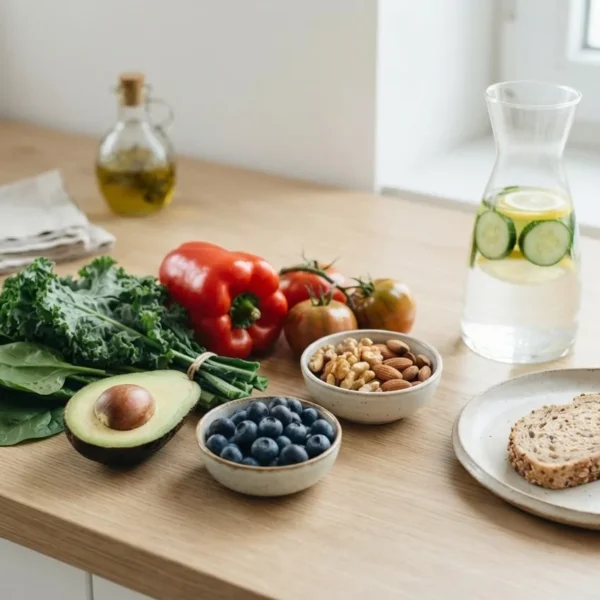
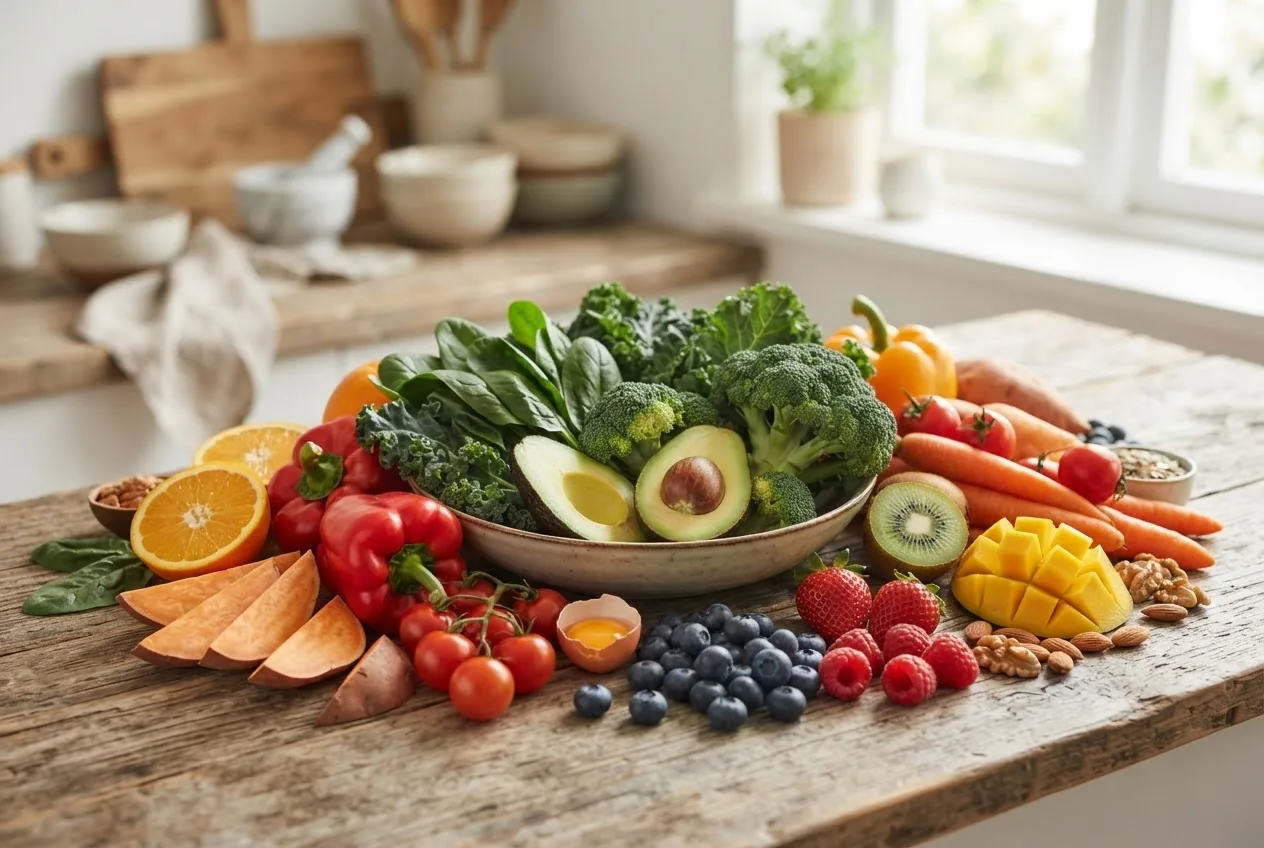
Sources of vitamin a b c d e k are best obtained from a mix of colorful fruits, vegetables, nuts, seeds, fatty fish, dairy (often fortified), and fermented foods; combining these foods across meals delivers the full range of A, B complex, C, D, E and K for most adults without routine supplementation.
Introduction to Vitamins A, B, C, D, E, and K?
Answer: These six vitamin groups include fat-soluble (A, D, E, K) and water-soluble (B complex, C) micronutrients that support vision, energy metabolism, immunity, bone health, antioxidant defenses and blood clotting; eating diverse whole foods provides bioavailable forms and precursors needed for daily needs.
Term: Fat-soluble vitamins are vitamins stored in body fat and absorbed with dietary fat; water-soluble vitamins dissolve in water and require more frequent intake because they are not stored long-term.
This guide emphasizes natural, whole-food sources—especially fruits and vegetables readily available to readers in Texas—while clarifying vitamin types, absorption differences, and practical shopping and cooking tips. For a broader overview of produce options and how each fruit category contributes vitamins, see fruit types guide with benefits and nutritional information.
According to a 2023 NIH report on dietary supplements and recommended intakes, food-first approaches are preferred and most vitamins can be met from diet when variety and fortified choices are included; when clinical deficiency exists, targeted supplementation under medical guidance is advised. For nutrient values by food, consult the USDA FoodData Central database.
Food Sources of Vitamin A?
Answer: Vitamin A comes directly as retinol from animal sources and indirectly as provitamin A carotenoids (notably beta-carotene) from plant foods; top food sources include liver, orange vegetables, and dark leafy greens that provide retinal precursors for vision and immune function.
Term: Beta-carotene is a provitamin A carotenoid — a plant pigment converted in the body into vitamin A (retinol) as needed.
-
Liver and organ meats — retinol (preformed vitamin A)
Explanation: Beef liver, chicken liver and cod liver oil supply preformed vitamin A (retinol), the most bioavailable form; a single ounce of beef liver can provide several times the Recommended Dietary Allowance (RDA). Use sparingly because of toxicity risk at high intakes — see caution below. Nutrient reference: USDA FoodData Central values.
-
Orange-fleshed vegetables — beta-carotene
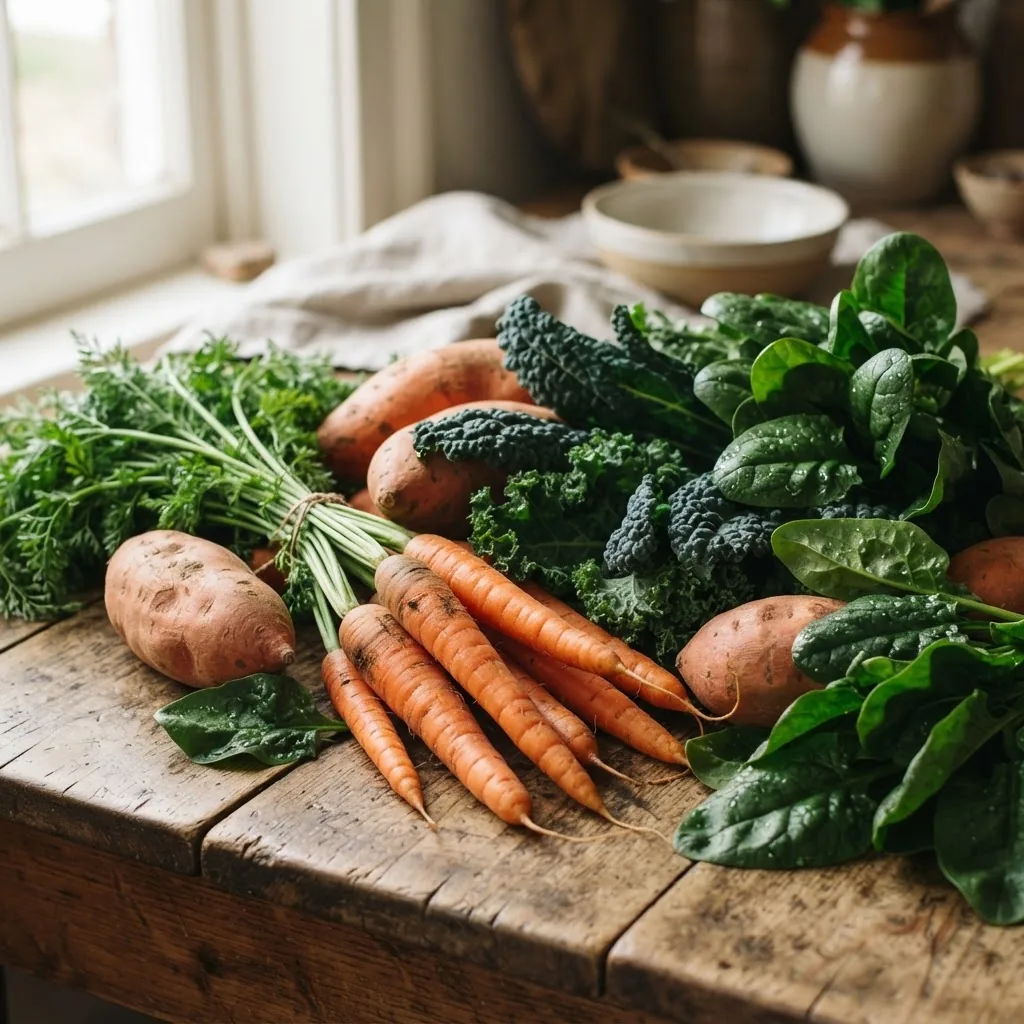
Explanation: Sweet potatoes, carrots, butternut squash and pumpkin are dense beta-carotene sources; a medium baked sweet potato commonly supplies more than the RDA for vitamin A when converted. Cooking with a little fat improves carotenoid absorption.
-
Dark green leafy vegetables — provitamin A
Explanation: Kale, spinach, collard greens and Swiss chard provide beta-carotene along with vitamin C and K; because leaves pack chlorophyll, carotenoid concentration per calorie is high—steam or lightly sauté with oil to enhance absorption.
-
Orange and yellow fruits — beta-carotene and carotenoids
Explanation: Cantaloupe, mango, apricot and papaya contribute provitamin A along with hydration and antioxidants; include fresh seasonal fruit for snacks or salsas to add carotenoid-rich servings.
-
Dairy and fortified spreads — retinol-fortified options
Explanation: Fortified milk, margarine and some yogurts contain added vitamin A; check product labels and prefer low-sodium, minimally processed versions. Fortified dairy is a practical item for Texas shoppers year-round.
-
Egg yolks and fatty fish
Explanation: Egg yolks and oily fish provide modest retinol and vitamin A activity and pair well with vegetables for balanced meals.
Practical Texas market tips: choose in-season orange produce (Texas-grown sweet potatoes and cantaloupe are often available in fall and summer), and buy local leafy greens at farmers markets for fresher carotenoid profiles. When tracking vitamin A intake, note that preformed retinol accumulates — excessive cod liver oil or liver intake can exceed safe upper intake levels.
Vitamin B Complex Rich Foods?
Answer: The B complex includes distinct vitamins (B1, B2, B3, B6, B12, folate among others); rich food sources span whole grains, legumes, nuts, seeds, leafy greens, dairy, eggs and animal proteins — each B vitamin has unique dietary patterns and bioavailability.
Term: Folate is the natural form of vitamin B9 found in food (distinct from folic acid, the synthetic supplement form).
-
Which foods supply vitamin B1 (thiamine)?
Answer: Whole grains, enriched cereals, pork, lentils and sunflower seeds are top sources; thiamine supports carbohydrate metabolism and nerve function. In the U.S., many grain products are enriched — check labels for added thiamine per USDA FDC data.
-
Which foods supply vitamin B2 (riboflavin)?
Answer: Milk, yogurt, eggs, lean meats, almonds and spinach provide riboflavin for energy production and antioxidant enzyme support. Dairy remains a reliable daily source for many Texans.
-
Which foods supply vitamin B3 (niacin)?
Answer: Chicken, turkey, tuna, mushrooms, peanuts and fortified grains are rich in niacin, which supports skin health, digestion and NAD/NADP cofactors in cellular metabolism.
-
Which foods supply vitamin B6 (pyridoxine)?
Answer: Potatoes, bananas, chickpeas, poultry and salmon are B6 sources important for neurotransmitter synthesis and amino acid metabolism.
-
Which foods supply vitamin B12 (cobalamin)?
Answer: B12 is found primarily in animal products—meat, fish, eggs and dairy—or fortified plant foods; vegans and older adults often require fortified foods or supplementation because B12 absorption declines with age. Clinical guidance: According to a 2022 clinical nutrition review, measured B12 deficiency is more common in populations avoiding animal products.
-
Which foods supply folate (B9)?
Answer: Dark leafy greens (spinach, romaine), asparagus, lentils, chickpeas and fortified cereals are top folate sources; folate is essential for cell division and fetal neural-tube development, which is why pregnant people are advised to consume fortified folic acid per public health guidelines.
-
Practical combinations and absorption tips:
- Include whole grains and legumes daily for B1 and B3; pairing with vitamin C–rich produce can enhance iron-related interactions that support energy.
- For vegans, rely on fortified plant milks and nutritional yeast for B12 or consider testing and supplementing under medical supervision.
- Roasting or steaming vegetables preserves more B vitamins than prolonged boiling; follow gentle cooking methods to retain water-soluble vitamins.
-
Find more vegetable examples for B vitamins: 100 vegetables rich in B vitamins
Note: The bioavailability of some B vitamins differs between food forms (e.g., B12 in meat vs fortified food); for nutrient quantification consult USDA FoodData Central for 100g values and portion comparisons.
Sources of Vitamin C in Fruits and Vegetables?
Answer: Citrus fruits, bell peppers, strawberries, kiwi, broccoli and Brussels sprouts are among the highest vitamin C sources; regular servings from fruits and vegetables supply antioxidant protection and immune support without need for high-dose supplements for most people.
Term: Vitamin C (ascorbic acid) is a water-soluble antioxidant essential for collagen synthesis, immune function and iron absorption.
- Citrus fruits (oranges, grapefruits, lemons): Classic vitamin C sources with easy portability and high per-serving vitamin C.
- Bell peppers (red, yellow, green): Exceptionally high—red bell peppers often contain more vitamin C per gram than oranges.
- Strawberries and kiwi: Sweet fruit options with substantial vitamin C and additional fiber and polyphenols; see serving guidance in related guides like best fruits with vitamin C for weight-conscious choices.
- Broccoli and Brussels sprouts: Cruciferous vegetables that pair vitamins C and K plus fiber—review specific lab values at broccoli vitamin C content.
- Tomatoes and leafy greens: Contribute vitamin C as part of mixed salads and salsas; cooking lightly preserves vitamin C and improves lycopene availability in tomatoes.
- Green beans: Fresh green beans can supply vitamin C—see botanical classification and nutrient context at green beans as vitamin C sources.
Practical tip: Vitamin C is heat- and water-sensitive; eat some produce raw (e.g., citrus, strawberries, peppers) and steam crucifers briefly to retain nutrients. For Texans, local citrus season and strawberries offer cost-effective C boosts; frozen vegetables photographed soon after harvest often retain comparable vitamin C to fresh options.
Vitamin D Food Sources and Natural Sunlight?
Answer: Vitamin D is synthesized in skin with UVB sunlight exposure and present in natural foods like fatty fish, egg yolks and some mushrooms; many dairy products and plant milks are fortified to help meet needs when sunlight is limited.
Term: Vitamin D refers primarily to D2 (ergocalciferol, from plants/fungi) and D3 (cholecalciferol, from animal sources and skin synthesis), both converted in the liver and kidney to the active hormone calcitriol.
Dietary sources and fortification:
- Fatty fish: Salmon, mackerel, sardines and tuna are among the richest natural food sources of vitamin D3; a single 3.5 oz serving of wild salmon can provide 50–100% of the RDA depending on species. Nutrient reference: USDA FoodData Central.
- Egg yolks and liver: Contain modest vitamin D; yolk content varies with hens’ diets.
- Mushrooms exposed to UV light: Provide vitamin D2 when treated with UV; wild mushrooms may naturally contain more but label-checked varieties vary.
- Fortified dairy, plant milks and cereals: Many milk products and breakfast cereals are fortified to provide around 100 IU (2.5 µg) per serving—read labels to verify amounts.
Sunlight synthesis vs food intake:
Balance sun exposure and skin cancer risk: short daily unprotected exposure (e.g., 10–20 minutes for lighter skin; longer for darker skin) can produce substantial vitamin D but varies by latitude, season and sunscreen use. For guidance, public health recommendations vary; according to a 2021 clinical review in The American Journal of Clinical Nutrition, relying solely on sunlight is unreliable for many populations, especially in winter or for those who avoid sun.
Can food alone supply adequate vitamin D?
Short answer: Often no—unless regular fatty fish, fortified foods, or supplements are used. According to a 2022 NIH status update, many adults in the U.S. have circulating 25(OH)D levels below optimal thresholds and may require fortified foods or supplements after testing. Clinical decisions should be individualized.

Foods High in Vitamin E?
Answer: Vitamin E (alpha-tocopherol) is concentrated in nuts, seeds, vegetable oils, and some green vegetables and avocados; these foods supply antioxidant protection and are best consumed with a source of dietary fat to improve absorption.
Term: Vitamin E refers primarily to alpha-tocopherol, a fat-soluble antioxidant that protects cell membranes from oxidative damage.
- Nuts: Almonds, hazelnuts and peanuts supply significant vitamin E per serving; a small handful of almonds often provides a substantial portion of the daily requirement.
- Seeds: Sunflower seeds and pumpkin seeds are portable, vitamin-E-rich snacks ideal for salads and trail mixes.
- Vegetable oils: Wheat germ oil, sunflower oil and safflower oil are concentrated sources; use sparingly for dressings and low-heat cooking.
- Avocado: A versatile fruit that contains healthy fats and vitamin E; see the detailed profile at avocado as a vitamin E rich fruit.
- Green leafy vegetables: Spinach and Swiss chard contain smaller but meaningful amounts when consumed in larger portions.
Practical serving ideas: sprinkle sunflower seeds on salads, add a sliced avocado to tacos, or snack on a mixed-nut portion. Because vitamin E is fat-soluble, eating it with dietary fat (e.g., oil-based dressings) enhances absorption.
Vitamin K Sources: Leafy Greens and Fermented Foods?
Answer: Vitamin K exists mainly as K1 (phylloquinone) in leafy green plants and K2 (menaquinone) in fermented foods and animal products; kale, spinach, cabbage and fermented soy (natto) are among the best dietary sources that support blood clotting and bone health.
Term: Phylloquinone (K1) is plant-based vitamin K; menaquinone (K2) refers to vitamin K forms produced by bacteria and present in fermented foods and some animal products.
Key food sources:
- Leafy greens (vitamin K1): Kale, spinach, collards, Swiss chard and cabbage are dense K1 providers—see practical nutrient notes on cabbage as a vitamin K rich leafy green.
- Fermented foods (vitamin K2): Natto (fermented soy) is exceptionally high in K2 (menaquinone-7); other fermented items like sauerkraut and certain cheeses contain variable K2 depending on fermentation cultures.
- Animal sources: Liver, egg yolks and some cheeses supply K2, which may have a longer half-life and specific roles in bone health.
Gut microbiome and K2: Intestinal bacteria can produce menaquinones, but the amount available for human use is inconsistent; including fermented foods is a reliable dietary strategy for K2. If you take anticoagulant medication (e.g., warfarin), keep vitamin K intake consistent and consult your clinician.
Summary Table of Vitamin A B C D E K Food Sources?
Answer: The table below compares top, practical food examples per vitamin to help you plan meals that deliver each nutrient efficiently.
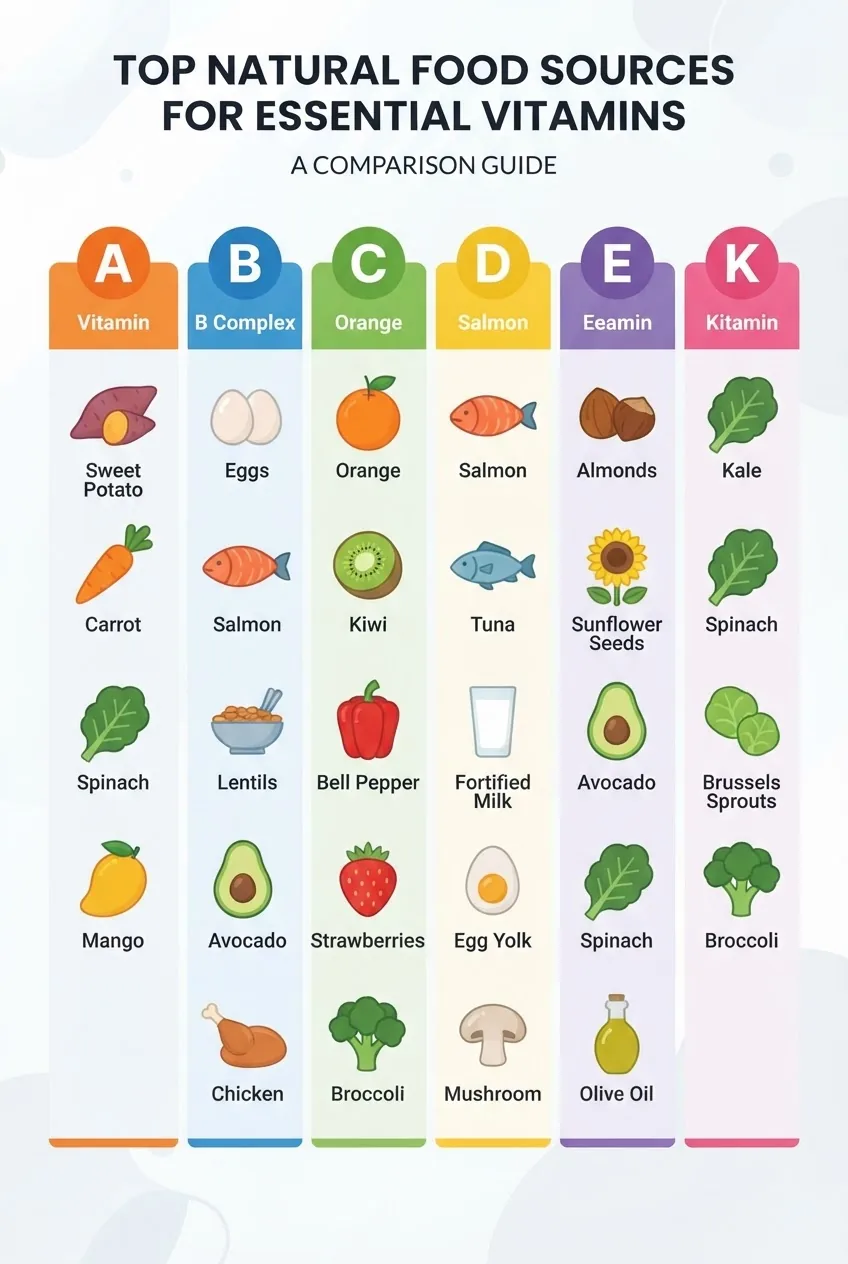
| Vitamin | Top Food Examples | Serving Notes |
|---|---|---|
| A | Beef liver; sweet potato; carrots; kale | Cook with fat; watch liver portion sizes |
| B (complex) | Whole grains; lentils; eggs; fortified cereals; spinach | Variety covers subtypes; fortified foods help B12 |
| C | Oranges; red bell peppers; strawberries; broccoli | Best raw or lightly cooked; pairs with iron-rich foods |
| D | Salmon; mackerel; fortified milk; UV-exposed mushrooms | Sunlight contributes; fortified foods useful in winter |
| E | Almonds; sunflower seeds; wheat germ oil; avocado | Consume with fat for absorption; snack options |
| K | Kale; spinach; cabbage; natto; aged cheeses | Leafy greens provide K1; fermented foods provide K2 |
Tips for Including Vitamins A B C D E K in a Balanced Diet?
Answer: Prioritize variety across plant colors, add small portions of animal or fortified foods for vitamins A and B12, use healthy fats to improve fat-soluble vitamin absorption, and consider seasonal Texas produce and fermented foods to cover K2 and D gaps.
- Rotate colors: include orange, red, green and yellow produce weekly to cover carotenoids and vitamin C.
- Combine foods: eat leafy greens with a drizzle of oil to improve absorption of vitamins A, D, E and K.
- Fortified staples: include fortified milk or plant milk and fortified cereals to help meet vitamin D and B12 needs, especially in low-sun months.
- Snack smart: choose nuts/seeds for vitamin E and whole-grain crackers with hummus for B vitamins and fiber.
- Use gentle cooking: steam or roast vegetables instead of long boiling to preserve water-soluble vitamins like C and some B vitamins.
- Fermented foods: add small servings of natto, sauerkraut or aged cheeses to boost vitamin K2 and support gut-related production.
- Consistency with medications: if on blood thinners, maintain consistent vitamin K intake and consult your clinician.
- Seek testing if at risk: older adults, those with limited sun exposure, or restrictive eaters should measure vitamin D and B12 levels before supplementing; clinical guidelines from NIH advise targeted supplementation when deficiency is confirmed.
Sample daily food plan (food-first, balanced): Breakfast: fortified oatmeal with sliced strawberries and almonds; Lunch: spinach-and-kale salad with roasted sweet potato, avocado, sunflower seeds and grilled salmon; Snack: orange or kiwi; Dinner: lentil stew with sautéed collards and a serving of yogurt. This combination supplies A, multiple B vitamins, vitamin C, vitamin D (from salmon/fortified milk), vitamin E and K across meals.
Texas grocery and farmers market walkthrough: seek local sweet potatoes, collards and seasonal citrus; when buying greens, ask vendors about harvest date for higher nutrient retention; prioritize frozen vegetables if fresh is out-of-season for consistent vitamin supply.
For further support on including vegetables for overall health and vitamin intake, see benefits of eating vegetables.
Safety and supplementation notes: Fat-soluble vitamins (A, D, E, K) can accumulate and cause toxicity when consumed in excess—particularly preformed vitamin A from supplements or excess liver; according to a 2023 NIH report, avoid high-dose self-prescribed fat-soluble vitamin supplements without testing. Water-soluble vitamin excesses are usually excreted, but very high supplemental doses can still cause adverse effects.
References and authoritative resources: Nutrient composition values and recommended intakes referenced from NIH Office of Dietary Supplements and the USDA FoodData Central; clinical evidence and review context referenced from peer-reviewed nutrition science literature such as The American Journal of Clinical Nutrition.