
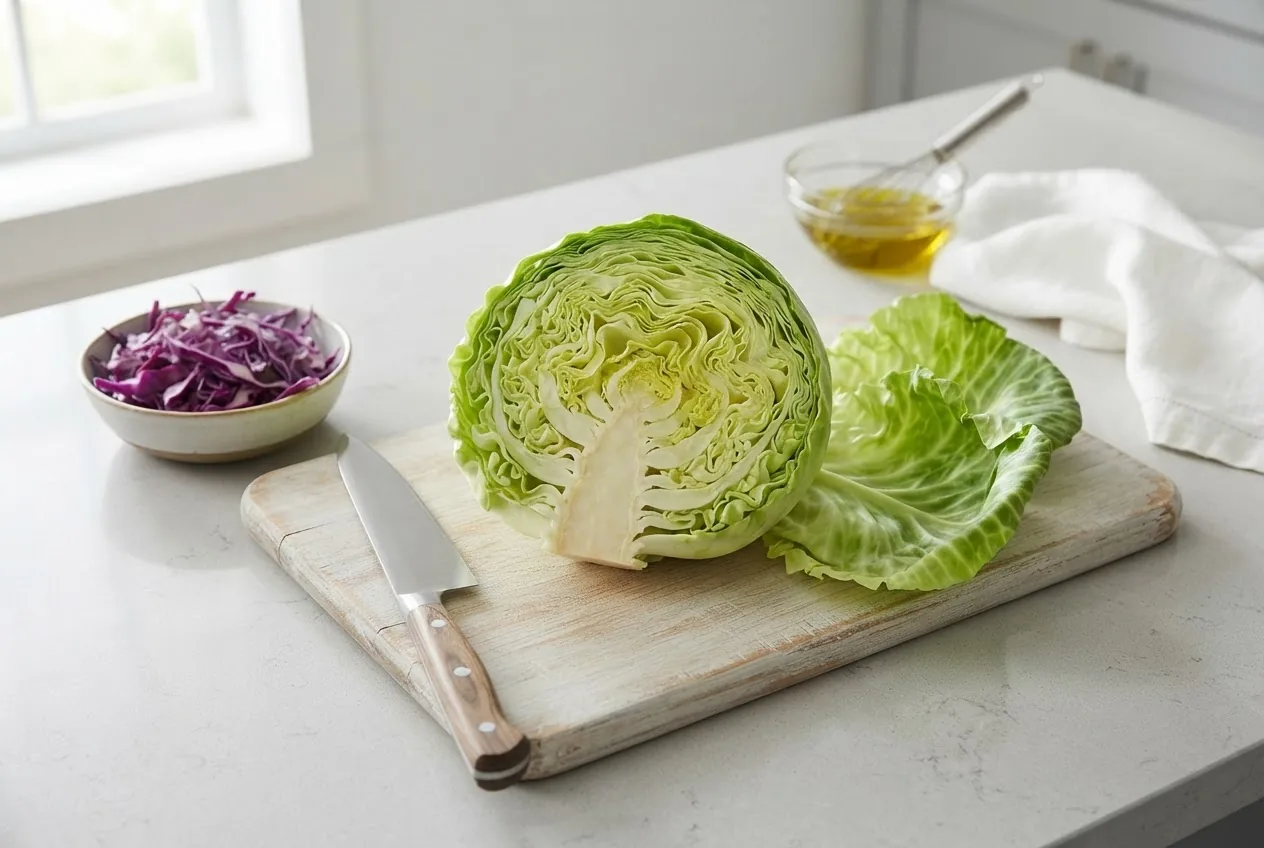
A typical cup (89 g) of raw chopped green cabbage contains about 22 calories, while 100 grams of raw green cabbage has approximately 25 kcal—making cabbage an extremely low-energy-density vegetable ideal for nutrient-dense, calorie-conscious eating (According to 2023 USDA data; USDA FoodData Central).
Introduction to Cabbage and Its Calorie Content
Answer: Raw cabbage is low in calories and rich in vitamins and fiber; specific calorie values vary by type and preparation but generally range from about 20–35 kcal per 100 g for raw varieties and will increase when cooked with fats.
Serving size: a commonly used measure is 1 cup chopped (≈89 g) for raw cabbage and 1 cup cooked (≈150 g) for steamed/boiled cabbage.
Macronutrients: macronutrients are carbohydrates, proteins and fats—the primary energy-yielding nutrients present in cabbage, mostly carbohydrates and fiber with small protein and negligible fat content.
This article deep-dives into cabbage to complement the site’s broader Fruit Types Guide with Benefits and Nutritional Information and to provide practical calorie and nutrient information for meal planning.
For readers who want broader coverage of produce, see our vegetable name and nutritional guide.
To compare cabbage calories with other plant foods, check calories in fruits and vegetables.
Transition: Next we quantify calories across cabbage types and show how cooking methods change energy content.
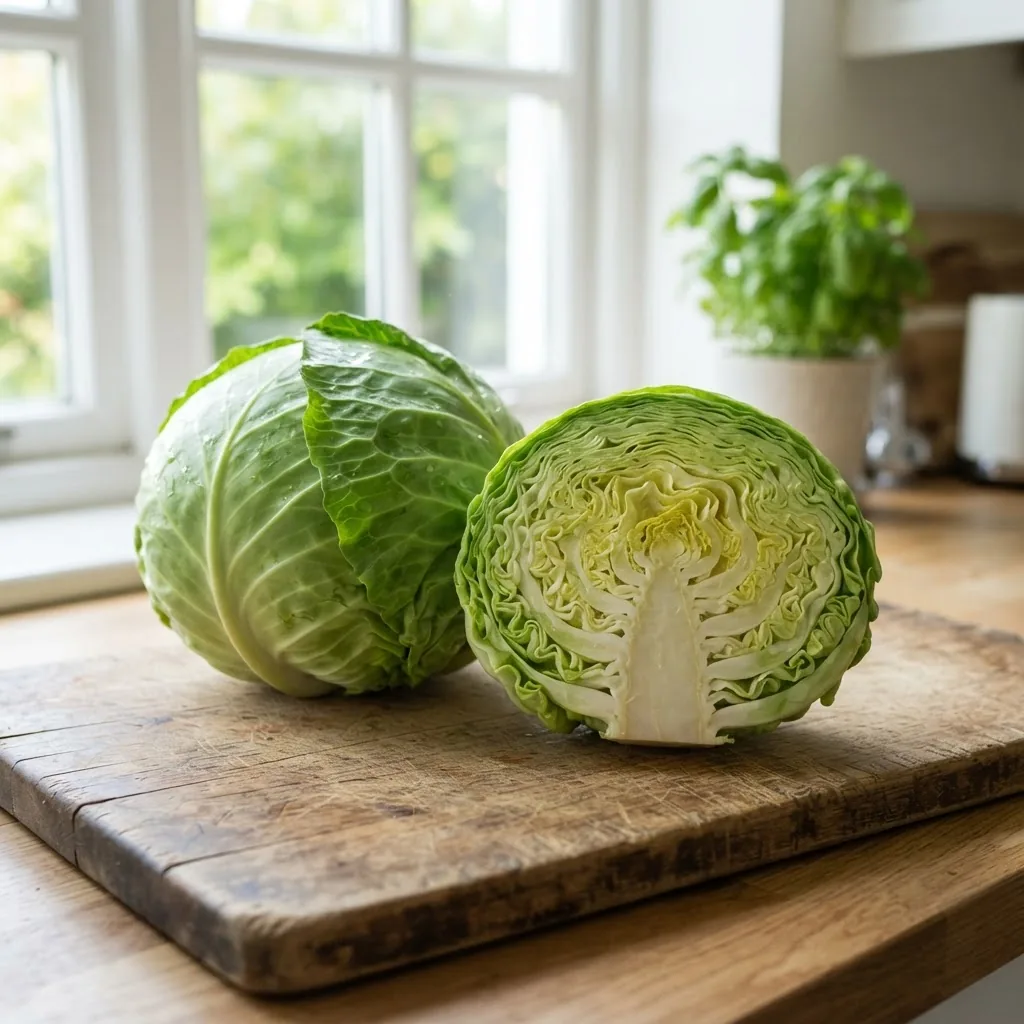
Detailed Calorie Content of Cabbage by Type and Preparation
Answer: Calorie density depends on cabbage variety and preparation—raw green cabbage averages ~25 kcal/100 g; other types fall in a similar low range; cooking without added fats does not greatly increase calories per cooked weight, but added oils or sauces do (According to 2023 USDA data; USDA FoodData Central).
Term: “energy density” means calories per unit weight (kcal per 100 g) and helps compare foods for weight-management planning.
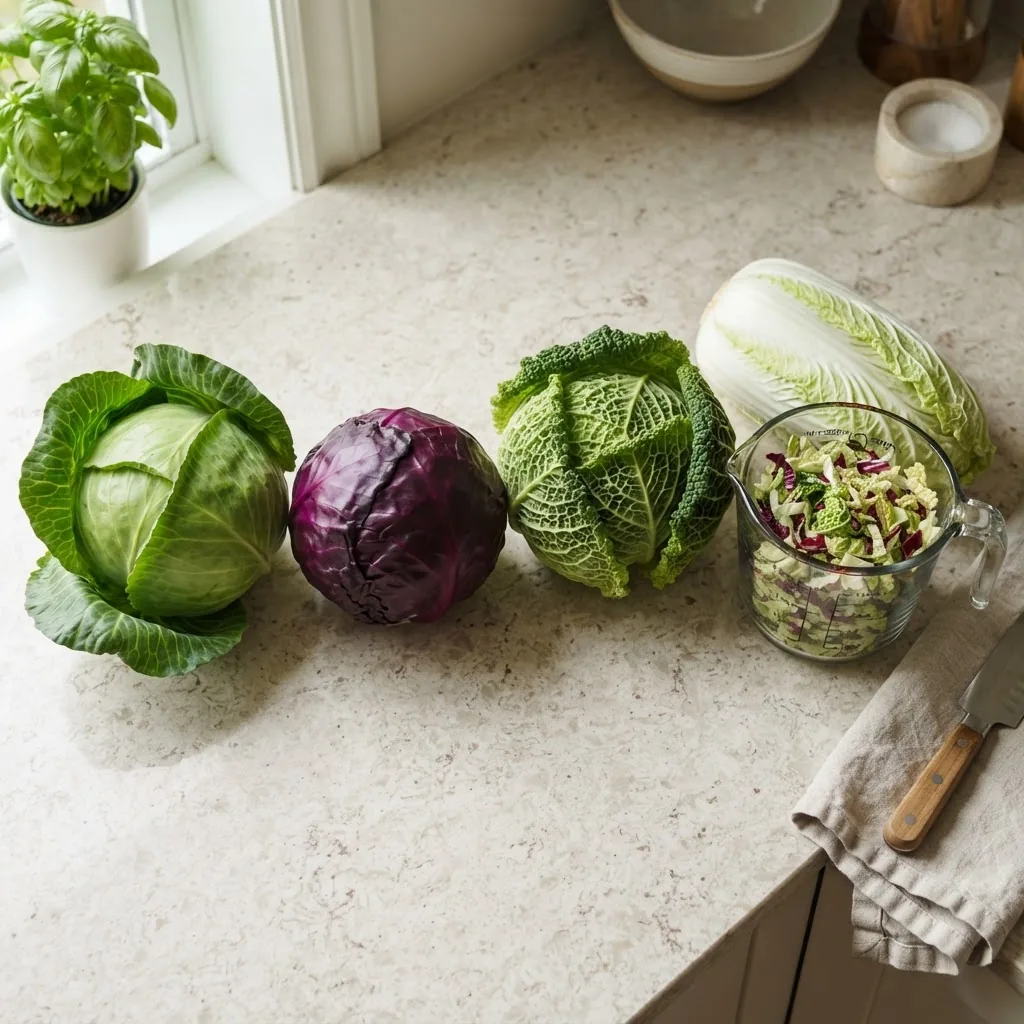
Below are concise tables showing typical calorie counts per 100 g, per common cup serving, and per a practical serving size (e.g., 1/6 head). All base values for raw/cooked vegetables are from USDA FoodData Central (2023) unless noted; cooked values assume no added fats.
| Type (raw) | Per 100 g (kcal) | Per cup chopped (≈89 g) | Practical serving (kcal) |
|---|---|---|---|
| Green (common) cabbage | 25 kcal | 22 kcal | 1 cup raw ≈22 kcal |
| Red cabbage | 28 kcal | 25 kcal | 1 cup raw ≈25 kcal |
| Savoy cabbage | 26 kcal | 23 kcal | 1 cup raw ≈23 kcal |
| Napa (Chinese) cabbage | 16 kcal | 14 kcal | 1 cup raw ≈14 kcal |
Source note: values above are rounded summaries based on 2023 USDA FoodData Central entries for common cabbage varieties; natural variation occurs by cultivar and growing conditions (According to 2023 USDA data; USDA FoodData Central).
Cooking changes calories two ways: (1) water loss concentrates calories per cooked gram and (2) added ingredients (oils, butter, sauces) add substantial kilocalories. Below compares plain cooked vs sautéed with oil using a standard assumption (1 tbsp olive oil = 119 kcal added to the cooked batch, portioned to servings).
| Preparation | Per 100 g (kcal) | Per cup cooked (≈150 g) | Notes / Assumptions |
|---|---|---|---|
| Steamed/boiled cabbage (no fat) | 23 kcal | 34 kcal | Cooked weight ≈150 g cup; no added fat (USDA base) |
| Sautéed cabbage (1 cup cooked + 1 tbsp olive oil shared among 2 servings) | ~102 kcal | ~153 kcal | Assumes 1 tbsp (119 kcal) divided across 2 servings; oil adds most calories |
| Cabbage in creamy slaw (dressing varies) | Varies widely | 200+ kcal per cup | Dressing type (mayo, sugar) drives calories—measure to estimate |
Practical takeaway: plain raw or steamed cabbage is extremely low-calorie; added fats and sugary dressings are the primary sources of extra calories (According to 2023 USDA data and standard food energy conversions).
Transition: With calories quantified, the next section breaks down vitamins, minerals, fiber and phytonutrients that make cabbage valuable beyond its low kcal count.
Comprehensive Cabbage Nutritional Information
Answer: Cabbage is low-calorie but nutrient-dense—providing vitamin C, vitamin K, small amounts of vitamin A and B-complex vitamins, fiber, potassium, calcium, magnesium and iron, plus antioxidants and phytonutrients that support health (According to 2023 USDA data; see NIH for vitamin function).
Term: “phytonutrients” are plant-derived compounds (non-essential nutrients) that can have antioxidant or signaling effects in the body.
Term: “antioxidants” are molecules that reduce oxidative damage by neutralizing reactive oxygen species.
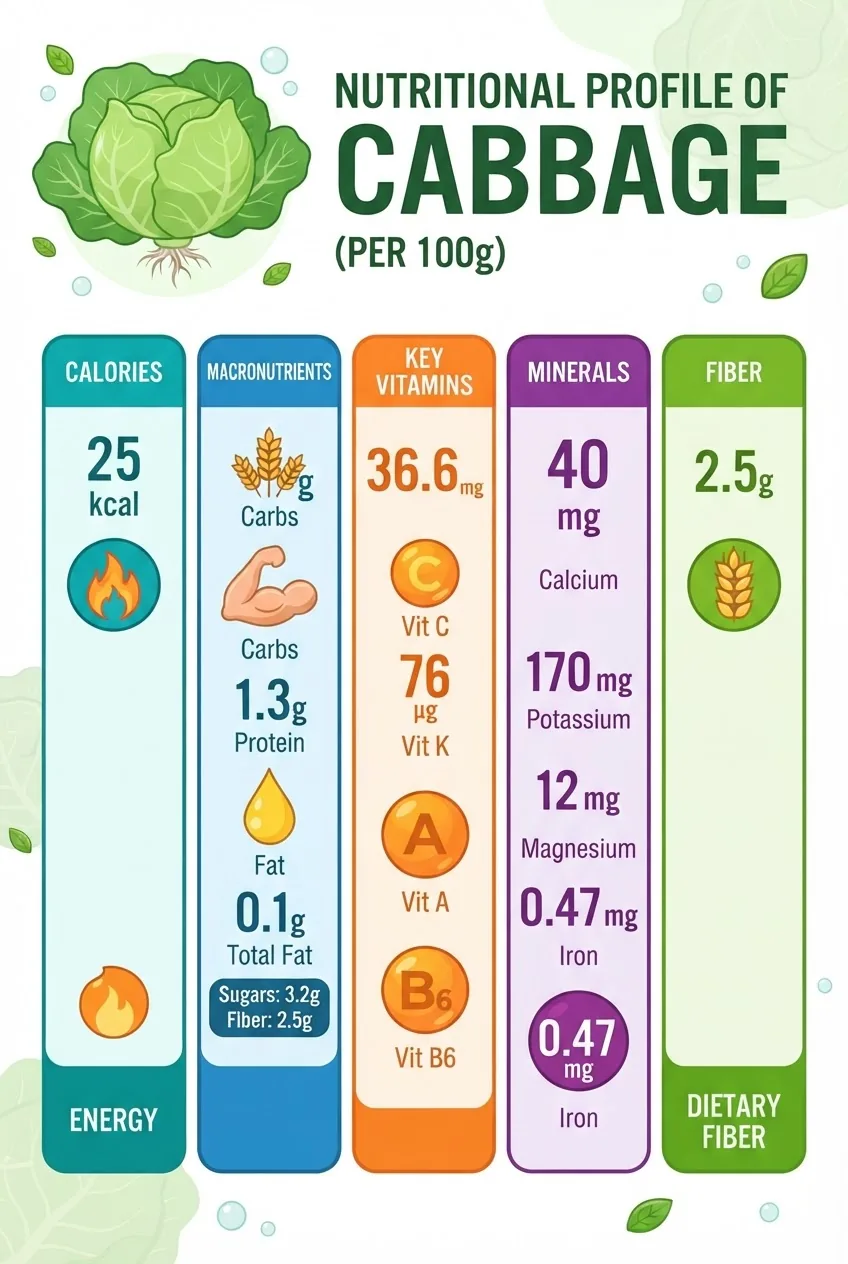
Below is a bulleted nutrient overview for raw green cabbage (per 100 g), using USDA FoodData Central 2023 entries and rounded values for readability.
- Calories: ~25 kcal per 100 g (According to 2023 USDA data; USDA FoodData Central).
- Carbohydrates: ~5.8 g per 100 g, including ~2.5 g dietary fiber (complex carbs and fiber are the main carbs).
- Protein: ~1.3 g per 100 g (small but useful for plant-based intake).
- Fat: ~0.1 g per 100 g (negligible in raw cabbage).
- Vitamin C: ~36.6 mg per 100 g — contributes to immune function and collagen synthesis (According to NIH Office of Dietary Supplements).
- Vitamin K: ~76 µg per 100 g — important for blood clotting and bone health (According to NIH Office of Dietary Supplements).
- Vitamin A (beta-carotene equivalents): small amounts (~5–10 µg RAE per 100 g) contributing to eye health.
- B-complex: folate (~43 µg), small thiamin/riboflavin/niacin amounts supporting energy metabolism.
- Minerals: potassium (~170 mg), calcium (~40 mg), magnesium (~12 mg), iron (~0.5 mg) per 100 g.
- Phytonutrients & Antioxidants: glucosinolates (cruciferous family compounds), anthocyanins in red cabbage, and flavonoids; these have antioxidant and signaling roles in cells.
For fiber-focused comparison with other vegetables, see our fiber and nutritional aspects of vegetables which places cabbage among lower-to-moderate fibre vegetables by weight.
Scientific context: vitamin and mineral roles are summarized by the NIH Office of Dietary Supplements; for example, vitamin K’s role in clotting and bone health is established (According to NIH – Office of Dietary Supplements).
Limitations & variability: exact nutrient amounts shift by cultivar, soil, harvest time and freshness—USDA values are averaged benchmarks for food labeling and diet planning (According to 2023 USDA data).
Transition: Next we review how those nutrients translate into evidence-based health benefits, with external authority context.
Health Benefits Linked to Cabbage Nutrients
Answer: Cabbage supports immune function (vitamin C), blood clotting and bone health (vitamin K), digestive health and regularity (fiber), and provides antioxidants and glucosinolates linked to anti-inflammatory and cellular-protective effects — benefits are stronger when cabbage is part of a balanced diet (See NIH and AHA resources).
Term: “antioxidant capacity” refers to the ability of foods to neutralize oxidative compounds that can damage cells.
Evidence and mechanisms:
- Vitamin C in cabbage supports immune defenses and collagen formation (According to NIH – Office of Dietary Supplements).
- Vitamin K contributes to normal blood coagulation and bone metabolism; people on anticoagulants should monitor intake consistency (According to NIH – Office of Dietary Supplements).
- Dietary fiber promotes satiety, supports bowel regularity and feeds beneficial gut bacteria; higher vegetable fiber intakes are associated with improved weight management when replacing higher-calorie foods (According to peer-reviewed nutrition reviews).
- Glucosinolates and derived isothiocyanates found in cruciferous vegetables (including cabbage) show antioxidant and anti-inflammatory effects in cellular and animal studies and are being studied for potential roles in reducing chronic disease risk (According to peer-reviewed research summaries and nutrition science reviews).
- Anthocyanins in red cabbage provide additional antioxidant activity and can contribute to cardiovascular health markers in population studies (According to nutrition research reviews).
Context on cardiovascular health: diets high in vegetables and low in saturated fat support heart health (According to the American Heart Association; AHA), and cabbage’s potassium and fiber content contributes positively when part of such dietary patterns.
Safety note: vitamin K levels are meaningful for people on warfarin-like medications; discuss consistent intake with a healthcare provider (According to NIH guidance).
Transition: Having covered benefits and cautions, the next section offers practical ways to use cabbage in meals with serving-size guidance and calorie-conscious preparation tips.
For broader context on vegetables and health safety, consult our vegetables and their health impact article.
Also compare nutrient-dense produce benefits with nutrient-rich fruits such as avocados in our nutritional benefits of nutrient-dense produce.
How to Incorporate Cabbage in a Healthy Diet (Including Serving Sizes)
Answer: Use cabbage raw in slaws, steamed as a side, or sautéed lightly with minimal oil; typical serving sizes are 1 cup raw ≈89 g (≈22 kcal) or 1 cup cooked ≈150 g (≈34 kcal); adjust for added ingredients to control calories.
Transition: The numbered list below gives stepwise, calorie-conscious ways to add cabbage to meals with serving-size examples and links to related planning resources.
- Raw slaw or salad base: 1 cup chopped raw (≈89 g) ≈22 kcal; dress with vinaigrette (1 tsp olive oil = 40 kcal) to keep calories low.
- Steamed side dish: 1 cup cooked (≈150 g) ≈34 kcal; season with vinegar, herbs, or a spray of oil to add flavor with few calories.
- Sautéed stir-fry: Use 1 tsp oil per serving (~40 kcal) instead of 1 tbsp; combine with lean protein for balanced plate portions.
- Fermented options (sauerkraut, kimchi): Small servings (1–2 tbsp) add flavor, probiotics, and vitamin B12-supporting foods when paired appropriately; watch sodium in commercial options.
- Soup and stews: Add chopped cabbage to brothy vegetable soups—adds bulk, fiber and low calories; 1 cup extra cabbage swaps for higher-calorie grain or starchy sides.
- Portion rule: Aim for 1–2 cups non-starchy vegetables per meal; use cabbage to fill half a plate in mixed-vegetable meals for satiety and low kcal density.
Diet-planning tips for Texas shoppers: buy in-season heads (see next section), chop once for multiple meals, and store tightly wrapped in the crisper to extend freshness and reduce waste.
For clarity on vegetable roles similar to cabbage in menus, see understanding vegetable classifications.
To integrate cabbage into weight-loss plans alongside fruit and vegetable strategies, consult our weight loss foods including fruits and vegetables resource.
Transition: Next we outline when and where to source the freshest cabbage in Texas and seasonal buying tips.
Cabbage Seasonality and Availability in Texas
Answer: In Texas, cabbage is most abundant and best valued from late fall through spring (roughly November to April depending on region), with spring plantings and cool-season harvests producing the freshest heads for local markets.
Sourcing tips:
- Shop farmers markets and local co-ops in the winter and early spring for fresh local heads—local growers often harvest cool-season crops and sell during peak freshness (According to seasonal produce guides and local extension service calendars).
- Choose heads that feel heavy for size, have crisp outer leaves and no strong odor; avoid loose, slimy outer layers.
- Organic vs conventional: nutrient differences are small; choose organic for lower pesticide residues if preferred and budget allows (According to comparative produce analyses and consumer guidance).
- Storage: store whole heads loosely wrapped in the crisper at 1–4°C for up to 2 weeks; cut heads should be used within a few days for best nutrient retention (According to post-harvest guidance from agricultural extension services).
Transition: Final section summarizes practical recommendations you can apply today.
Summary and Practical Recommendations
Answer: Cabbage is an economical, low-calorie, nutrient-dense vegetable—favor raw or lightly cooked preparations, watch added fats and dressings, and include cabbage regularly for fiber, vitamin C and K, and phytonutrients.
- Key calorie points: 100 g raw ≈25 kcal; 1 cup raw ≈22 kcal (According to 2023 USDA data).
- Eat 1–2 cups per meal to increase satiety with minimal calories.
- Prefer steamed or raw for lowest added calories; limit creamy dressings and excess oil.
- Buy in-season in Texas (late fall–spring) for best value and freshness.
Conclusion: Use cabbage as a low-calorie bulk vegetable to lower meal energy density while adding vitamins, minerals, and beneficial phytonutrients—start by swapping one starchy side per week for an extra cup of cabbage and track satiety and calorie changes.
Call to action: Explore practical recipes and meal plans on our site to apply these recommendations and optimize vegetable intake for your goals.