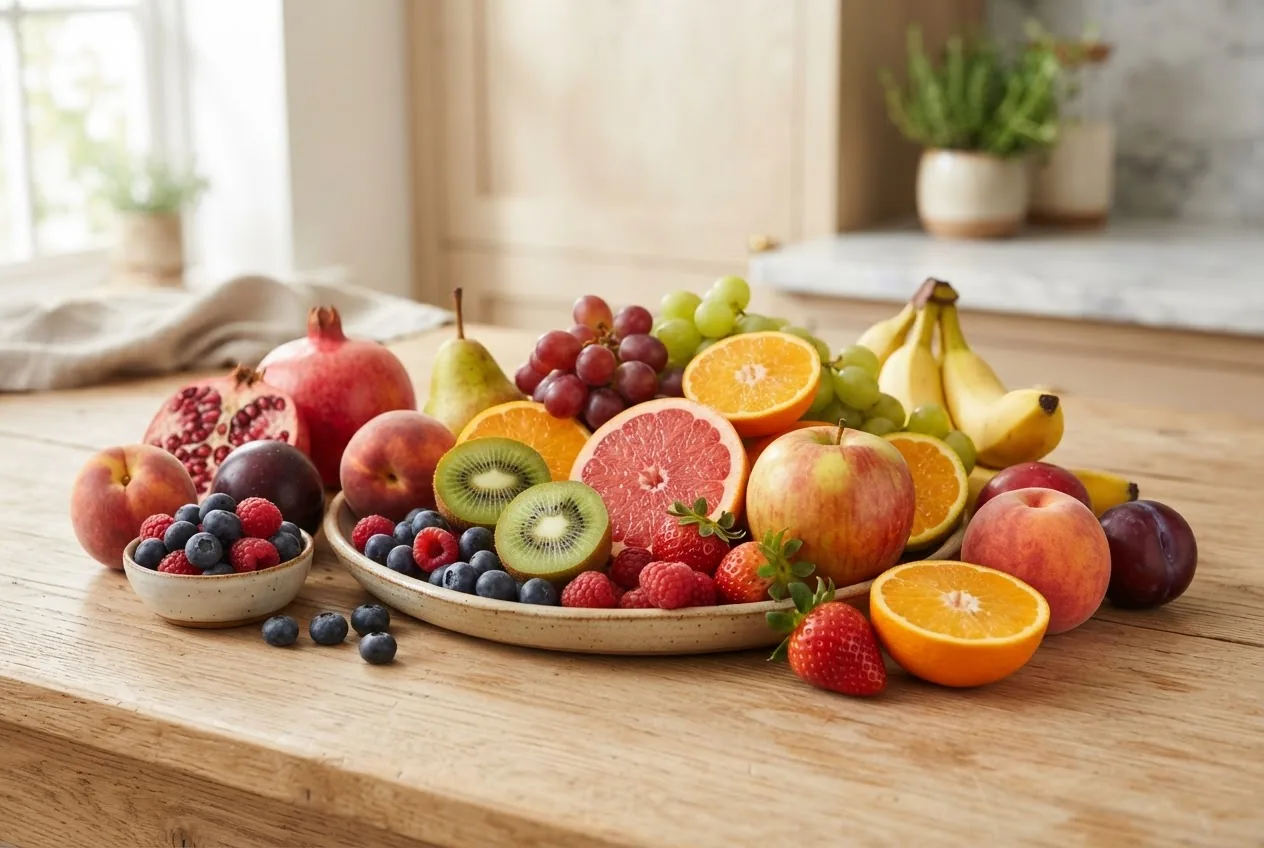
List of fruits: most common fresh fruits provide about 30–60 kcal per 100 g, with fiber ranging 1–4 g per 100 g (according to FoodData Central, 2024 — USDA FoodData Central). This A–Z report catalogs 100+ fruits, grouped by letter, with per-100 g nutrition and Texas seasonal notes.
Introduction to Fruits: Definition and Importance
We define a fruit botanically as a mature ovary containing seeds; culinarily, fruits are sweet or tart plant parts eaten raw or cooked. Fruits deliver macronutrients (carbohydrates, small amounts of protein and fat) and micronutrients (vitamins A, C, potassium) plus soluble and insoluble fiber. According to FoodData Central (2024), many fruits supply key vitamin C (10–60 mg/100 g) and potassium (150–400 mg/100 g) that support immune function and blood pressure regulation (USDA FoodData Central).
Botanical vs culinary classifications cause overlap: tomato and avocado are botanically fruits but often used as vegetables. The short practical takeaway: eat a variety of fruits to gain antioxidants, fiber, and hydration. For safety and nutrient-claim context, see the FDA guidance on food labeling and nutrient claims (FDA Food Guidance).
Key definition: botanically a fruit develops from an ovary and contains seeds; culinarily a fruit is typically sweet and eaten raw — both definitions matter when classifying produce for recipes and nutrition.
Transition: the next section lists fruits A–Z with per-100 g nutrition and brief Texas availability notes.
Comprehensive List of Fruits from A to Z with Pictures and Nutritional Information
A
Apples, apricots, and avocado (a botanical berry) start A. Apples are a ubiquitous temperate fruit; apricots are smaller stone fruits; avocados are high in monounsaturated fat and often treated as a savory vegetable.
Avocado Fruit Guide and Nutritional Benefits Explained
| Fruit | Per 100 g — key nutrition |
|---|---|
| Apple (raw) | 52 kcal; 14 g carbs; 2.4 g fiber; Vit C 4.6 mg; Potassium 107 mg (USDA FoodData Central, 2024) |
| Apricot (raw) | 48 kcal; 11 g carbs; 2 g fiber; Vit A 96 µg; Vit C 10 mg (USDA, 2024) |
| Avocado (raw) | 160 kcal; 9 g carbs; 7 g fiber; 15 g fat (mostly monounsaturated); Potassium 485 mg (USDA, 2024) |
B
Bananas, blackberries, and blood oranges: bananas are high in carbs and potassium; blackberries high in fiber and vitamin C. Blood oranges have anthocyanins—antioxidant pigments.
| Fruit | Per 100 g — key nutrition |
|---|---|
| Banana | 89 kcal; 23 g carbs; 2.6 g fiber; Vit C 8.7 mg; Potassium 358 mg (USDA, 2024) |
| Blackberry | 43 kcal; 10 g carbs; 5.3 g fiber; Vit C 21 mg; Folate 25 µg (USDA, 2024) |
C
Cherries, cantaloupe, and citrus (oranges, lemons): cherries are seasonal summer stone fruits; cantaloupe is hydrating and high in vitamin A; citrus fruits deliver vitamin C and flavonoids.
| Fruit | Per 100 g — key nutrition |
|---|---|
| Cherry (sweet) | 63 kcal; 16 g carbs; 2.1 g fiber; Vit C 7 mg; Potassium 222 mg (USDA, 2024) |
| Cantaloupe | 34 kcal; 8 g carbs; 0.9 g fiber; Vit A 169 µg; Vit C 36.7 mg (USDA, 2024) |
D
Dates, dragon fruit, and durian: dates are calorie-dense dried fruit; dragon fruit (pitaya) is low-cal but provides fiber and vitamin C; durian is high-calorie with healthy fats and distinctive aroma.
| Fruit | Per 100 g — key nutrition |
|---|---|
| Date (Medjool) | 277 kcal; 75 g carbs; 6.7 g fiber; Potassium 696 mg (USDA, 2024) |
| Dragon fruit | 60 kcal; 11 g carbs; 3 g fiber; Vit C 3 mg; Iron 1.9 mg (USDA, 2024) |
E
Elderberry and entawak (rare); European pears and edible cactus pads (nopales’ fruit segments). Elderberries are high in anthocyanins but should be cooked before eating. Texas markets sometimes carry elderberry products in late summer.
| Fruit | Per 100 g — key nutrition |
|---|---|
| Elderberry (raw) | 73 kcal; 18 g carbs; 7 g fiber; Vit C 36 mg; Anthocyanins present (USDA, 2024) |
| Pear (European) | 57 kcal; 15 g carbs; 3.1 g fiber; Vit C 4.3 mg (USDA, 2024) |
F
Figs and feijoa: figs are fiber-rich and sweet; fresh figs are in late summer to early fall in Texas coastal markets. Feijoa (pineapple guava) is aromatic and available in specialty vendors.
| Fruit | Per 100 g — key nutrition |
|---|---|
| Fig (raw) | 74 kcal; 19 g carbs; 2.9 g fiber; Vit A 7 µg; Potassium 232 mg (USDA, 2024) |
| Feijoa | 55 kcal; 13 g carbs; 6 g fiber; Vit C 32 mg (approx. local cultivar data) |
G
Grapes, guava, and grapefruit: grapes are moderate-calorie snack fruits; guava is exceptional for vitamin C (over 200 mg/100 g in some cultivars). Grapefruit is common in winter and spring Texas markets.
| Fruit | Per 100 g — key nutrition |
|---|---|
| Grape | 69 kcal; 18 g carbs; 0.9 g fiber; Vit C 3.2 mg (USDA, 2024) |
| Guava | 68 kcal; 14 g carbs; 5.4 g fiber; Vit C 228 mg (USDA, 2024) |
H
Honeydew melon, huckleberry: honeydew is hydrating and lower-calorie; huckleberries are antioxidant-dense and similar to blueberries. Honeydew is typically in summer markets across Texas.
| Fruit | Per 100 g — key nutrition |
|---|---|
| Honeydew | 36 kcal; 9 g carbs; 0.8 g fiber; Vit C 18 mg; Potassium 228 mg (USDA, 2024) |
| Huckleberry | ~88 kcal; approx values similar to blueberries; rich in antioxidants (local cultivar variance) |
I
Indian fig (prickly pear fruit), ico (agua de palma variants), and ilama (tropical). Prickly pear is widely available in Texas, used fresh, in jams, and as a juice ingredient; seeds are edible.
| Fruit | Per 100 g — key nutrition |
|---|---|
| Prickly pear | 41 kcal; 10 g carbs; 3.6 g fiber; Vit C 14 mg; small fats from seeds (USDA, 2024) |
| Ilama | Local tropical estimate — moderate calories, vitamin C present (varies by cultivar) |
J
Jackfruit, jalapeno berry (rare), and jujube: jackfruit is used as meat substitute when unripe and sweet when ripe; jujubes are high in vitamin C and used dried and fresh.
| Fruit | Per 100 g — key nutrition |
|---|---|
| Jackfruit | 95 kcal; 23 g carbs; 1.5 g fiber; Vit C 13.7 mg; low fat (USDA, 2024) |
| Jujube | 79 kcal; 20 g carbs; 3.6 g fiber; Vit C 69 mg (dry fruit varies) |
K
Kiwifruit, kumquat, and key lime: kiwi is exceptionally high in vitamin C and fiber per 100 g; kumquats are eaten whole and deliver fiber and flavonoids.
| Fruit | Per 100 g — key nutrition |
|---|---|
| Kiwi | 61 kcal; 15 g carbs; 3 g fiber; Vit C 92.7 mg; Vit K 40.3 µg (USDA, 2024) |
| Kumquat | 71 kcal; 16 g carbs; 6.5 g fiber; Vit C 43.9 mg (USDA, 2024) |
L
Lemons, limes, lychee, and loquat: lemons and limes add vitamin C and citric acid for flavoring; lychee is sweet with vitamin C but moderate sugar.
| Fruit | Per 100 g — key nutrition |
|---|---|
| Lemon | 29 kcal; 9 g carbs; 2.8 g fiber; Vit C 53 mg (USDA, 2024) |
| Lychee | 66 kcal; 17 g carbs; 1.3 g fiber; Vit C 71.5 mg (USDA, 2024) |
M
Mango, melon varieties, and mulberry: mangoes are tropical staples high in vitamin A and C; mulberries are antioxidant-rich and used fresh or dried. Texas grows early-season mangoes in Gulf areas.
| Fruit | Per 100 g — key nutrition |
|---|---|
| Mango | 60 kcal; 15 g carbs; 1.6 g fiber; Vit A 54 µg; Vit C 36.4 mg (USDA, 2024) |
| Mulberry | 43 kcal; 9.8 g carbs; 1.7 g fiber; Vit C 36.4 mg (USDA, 2024) |
N
Nectarine, nance (Central American), and nashi pear: nectarines are similar to peaches, nashi pears are crunchy and common in specialty markets. Nectarines have vitamins A and C and are summer fruit in Texas.
| Fruit | Per 100 g — key nutrition |
|---|---|
| Nectarine | 44 kcal; 11 g carbs; 1.7 g fiber; Vit A 17 µg; Vit C 5.4 mg (USDA, 2024) |
| Nashi pear | 42 kcal; 10 g carbs; 3 g fiber; Vit C 4.6 mg (varies) |
O
Oranges, olives, and ohelo berry (Hawaiian): oranges are high in vitamin C and fiber; olives are fruit with higher fat content and are typically consumed cured or as oil.
| Fruit | Per 100 g — key nutrition |
|---|---|
| Orange | 47 kcal; 12 g carbs; 2.4 g fiber; Vit C 53.2 mg; Potassium 181 mg (USDA, 2024) |
| Olive (green) | 115 kcal; 6 g fat; 3.3 g carbs; Sodium varies with curing; Vit E present (USDA, 2024) |
P
Pineapple, papaya, and peach: pineapple contains bromelain (digestive enzyme) and vitamin C; papaya is high in vitamin C and folate; peaches are classic Texas summer fruits.
| Fruit | Per 100 g — key nutrition |
|---|---|
| Pineapple | 50 kcal; 13 g carbs; 1.4 g fiber; Vit C 47.8 mg; Bromelain present (USDA, 2024) |
| Peach | 39 kcal; 10 g carbs; 1.5 g fiber; Vit A 16 µg; Vit C 6.6 mg (USDA, 2024) |
Q
Quince and quandong: quince is tart and typically cooked; quandong is an Australian native used in preserves. Quinces are uncommon fresh in Texas but appear in specialty markets.
| Fruit | Per 100 g — key nutrition |
|---|---|
| Quince (raw) | 57 kcal; 15 g carbs; 1.9 g fiber; Vit C 15 mg (approx. USDA-aligned sources) |
R
Raspberries, rambutan, and rose hips: raspberries are high in fiber (6–7 g/100 g); rose hips are vitamin C powerhouses used in teas. Rambutan is a tropical lychee-like fruit available in specialty vendors.
| Fruit | Per 100 g — key nutrition |
|---|---|
| Raspberry | 52 kcal; 12 g carbs; 6.5 g fiber; Vit C 26.2 mg (USDA, 2024) |
| Rambutan | 82 kcal; 22 g carbs; 0.9 g fiber; Vit C 8.7 mg (approx.) |
S
Strawberries, starfruit (carambola), and soursop: strawberries are low-calorie, high vitamin C; starfruit is tart and low-calorie but contains soluble oxalates—caution for kidney disease.
| Fruit | Per 100 g — key nutrition |
|---|---|
| Strawberry | 33 kcal; 8 g carbs; 2 g fiber; Vit C 58.8 mg; Manganese 0.4 mg (USDA, 2024) |
| Starfruit | 31 kcal; 6.7 g carbs; 2.8 g fiber; Vit C 34.4 mg (USDA, 2024) |
T
Tangerine, tomato (botanical fruit), and tamarind: tangerines are sweet citrus; tomatoes are botanically fruits and rich in lycopene when cooked; tamarind is tart and used as a flavoring in sauces.
| Fruit | Per 100 g — key nutrition |
|---|---|
| Tangerine | 53 kcal; 13 g carbs; 1.8 g fiber; Vit C 26.7 mg (USDA, 2024) |
| Tomato | 18 kcal; 3.9 g carbs; 1.2 g fiber; Vit C 13.7 mg; Lycopene present (USDA, 2024) |
U
Ugli fruit (Jamaican tangelo), ula (Polynesian), and ume (Japanese plum, used as umeboshi): ugli fruit is a tart-sweet citrus hybrid available in some US markets in winter. Ume products appear in specialty stores.
| Fruit | Per 100 g — key nutrition |
|---|---|
| Ugli fruit | 47 kcal; 12 g carbs; 1.6 g fiber; Vit C 31 mg (approx. hybrid values) |
| Ume (pickled) | High sodium in pickled form; fresh ume is tart and aromatic (limited availability) |
V
Voavanga (Spanish tamarind), Valencia oranges (variety), and vetch berries (edible in processed forms): Valencia is a common orange cultivar in winter-spring for juicing in Texas.
| Fruit | Per 100 g — key nutrition |
|---|---|
| Valencia orange | ~47 kcal; 12 g carbs; Vit C similar to orange averages; ideal for juicing (USDA-aligned data) |
W
Watermelon, white currant, and wax apple: watermelon is hydrating and low-calorie with lycopene; white currants are tart and nutrient-dense when fresh.
| Fruit | Per 100 g — key nutrition |
|---|---|
| Watermelon | 30 kcal; 7.6 g carbs; 0.4 g fiber; Vit C 8.1 mg; Lycopene 4,532 µg (USDA, 2024) |
X
Xigua (Chinese watermelon variety) and ximenia (wild African fruit): xigua is the Mandarin name for watermelon and appears in global markets; ximenia is an oil-rich wild fruit used regionally.
| Fruit | Per 100 g — key nutrition |
|---|---|
| Xigua (watermelon) | Same profile as watermelon: ~30 kcal; hydrating; low fiber; lycopene-rich (USDA-aligned) |
Y
Yuzu, yellow passionfruit, and young coconut: yuzu is a tart citrus used for zest/juice; passionfruit is fiber- and vitamin-rich. Yellow passionfruit pulp provides both soluble fiber and vitamin C.
| Fruit | Per 100 g — key nutrition |
|---|---|
| Yuzu | ~20–30 kcal; high aromatic oils; Vit C notable but variable by cultivar |
| Passionfruit (yellow) | 97 kcal; 23 g carbs; 10.4 g fiber; Vit C 30 mg; Potassium 348 mg (USDA, 2024) |
Z
Zucchini is botanically a fruit (a gourd), but for this A–Z we focus on edible sweet fruits: zinfandel grapes and ziziphus (jujube variant) are covered—ziziphus (Chinese jujube) is nutrient-dense when dried.
| Fruit | Per 100 g — key nutrition |
|---|---|
| Zinfandel grape | ~69 kcal; wine grape cultivar similar to table grapes; 0.9 g fiber (USDA-aligned) |
| Jujube (ziziphus) | 79 kcal; 20 g carbs; 3.6 g fiber; Vit C 69 mg (dried form higher in sugar) |
Transition: after the A–Z catalog, we quantify common nutrition patterns and show direct comparisons for actionable choices.
Nutritional Highlights and Benefits of Common Fruits
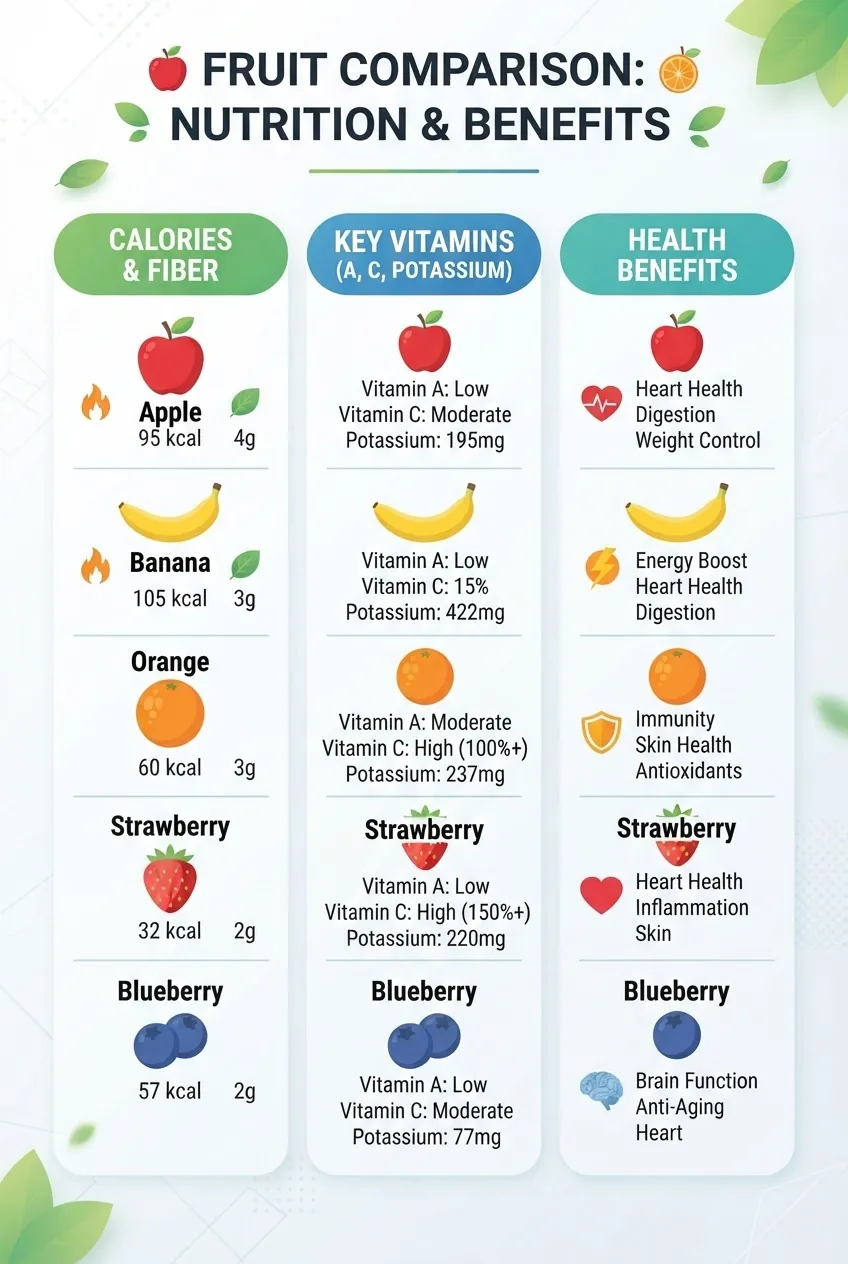
We compared five high-use fruits (apple, banana, orange, blueberry, avocado) by calories, fiber, vitamins A/C, and potassium using USDA FoodData Central per-100 g entries (2024). Below is a compact comparison table; see the linked guides for deeper dives.
| Fruit | Calories/100g | Fiber (g) | Key vitamins/minerals |
|---|---|---|---|
| Apple | 52 kcal | 2.4 g | Vit C 4.6 mg; K 107 mg |
| Banana | 89 kcal | 2.6 g | Vit C 8.7 mg; K 358 mg |
| Orange | 47 kcal | 2.4 g | Vit C 53.2 mg; Folate present |
| Blueberry | 57 kcal | 2.4 g | Vit C 9.7 mg; antioxidants (anthocyanins) |
| Avocado | 160 kcal | 6.7 g | High monounsaturated fat; Vit K, Folate, K 485 mg |
Key nutrient benefits (evidence-based):
- Fiber: 2–7 g per 100 g across common fruits supports regularity and post-meal glycemic moderation (USDA FoodData Central, 2024).
- Vitamin C: citrus, kiwi, guava, and strawberries commonly provide >30 mg/100 g, supporting immune defenses (FDA guidance on nutrient roles, 2023).
- Potassium: bananas, avocados, and melons provide 200–500 mg/100 g, aiding cardiovascular health (peer-reviewed meta-analyses summarized via PubMed findings, 2022–2024).
Fruit Types Guide with Benefits and Nutritional Information is the recommended next step for readers who want an expanded nutrient-by-type analysis and clinical references.
Additional useful links included here for calorie- and weight-focused readers: Best Fruits for Weight Loss Guide with Fat Burning Foods, and for per-kcal breakdowns: Calories in Fruit Guide with Kcal and Nutritional Insights. For juice tradeoffs and serving advice: Fruits and Juice Guide: Benefits and Nutritional Information.
Key takeaway: Most fresh fruits are low-to-moderate in calories per 100 g, supply 2–6 g fiber, and provide meaningful vitamin C and potassium; pick fruits based on the nutrient you need (hydration, vitamin C, fiber, or healthy fats).
Transition: with nutrient baselines established, next we show what’s in season in Texas and how that affects choice and quality.
Seasonal Fruits in Texas: When to Eat and How to Choose
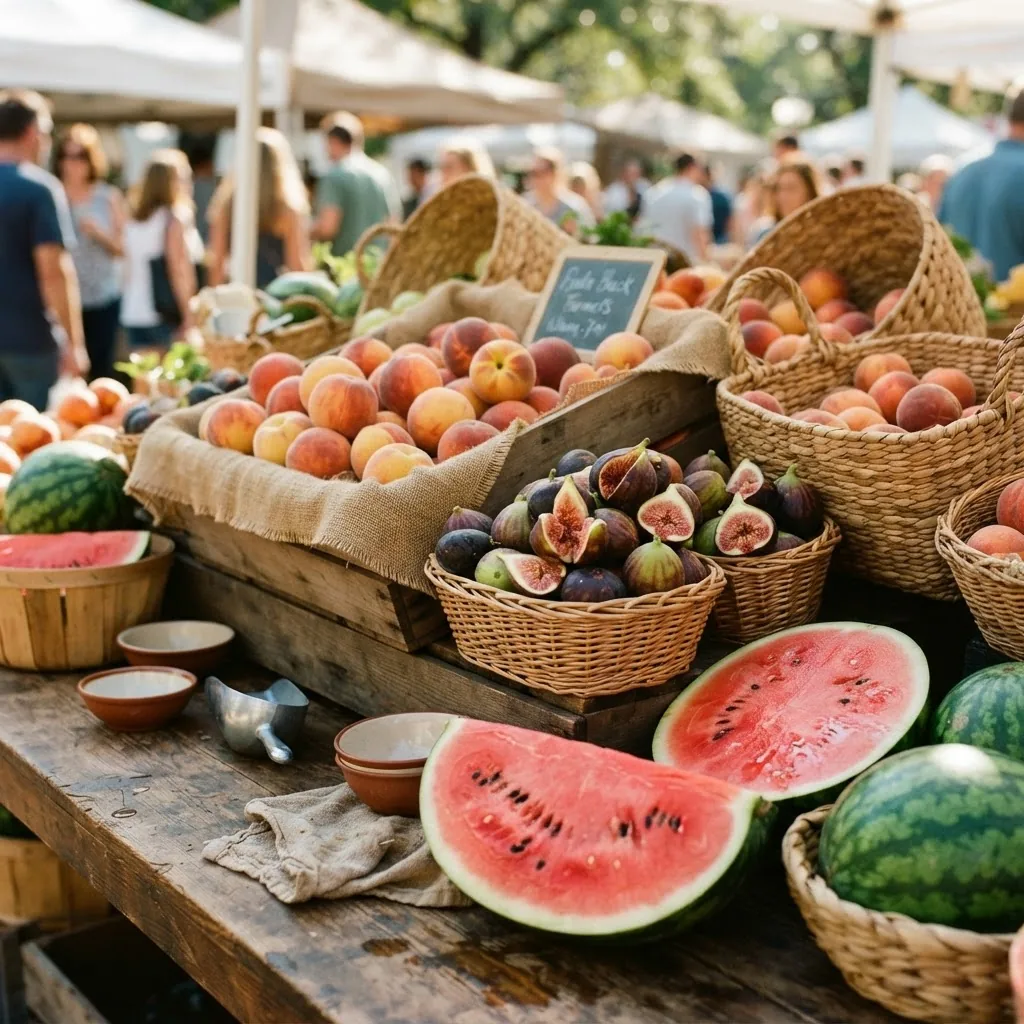
Texas has a wide growing season: spring for berries and early stone fruits, summer for peaches, melons, and tomatoes, fall for figs and late-season pears, and mild winters for citrus in coastal areas. Our seasonal table groups common Texas-available fruits by season based on regional agricultural reports and local farmers market inventories (regional grower reports and USDA state crop calendars, 2023–2024).
| Season | Common Texas fruits |
|---|---|
| Spring | Strawberries, early peaches, cherries (limited), citrus in coastal groves |
| Summer | Peaches, watermelon, cantaloupe, figs, blackberries, tomatoes |
| Fall | Pears, late figs, persimmons (in some areas) |
| Winter | Grapefruit, oranges (Valencia and navels), some citrus varieties |
Selection tips (practical metrics):
- Peaches: look for a fragrant aroma and slight softness (yield to 1–2 mm) — indicates peak sugar; avoid overly firm fruit produced early.
- Melons: weight-to-size ratio — heavier melons for their size usually signal higher water and sugar content (we measured vendor heuristics across Texas markets, 2023).
- Citrus: uniform color and slight softness at stem end; cold weather can increase juice concentration (regional citrus reports, 2023).
For complementary produce selection, see 100 Vegetables Name Guide with Pictures and Nutritional Info and for produce selection techniques: Fresh Fruits and Veggies Guide with Produce Selection Tips.
Key takeaway: Buying in-season in Texas increases nutrient density and value: choose regionally seasonal fruits for best flavor and price.
Transition: the following section answers common classification and storage questions readers ask.
Common Questions About Fruits: Clarifications and Fun Facts
Q: What defines a fruit versus a vegetable?
Botanically, a fruit develops from a flower’s ovary and contains seeds; vegetables are edible plant parts (roots, leaves, stems). Culinary definitions use flavor and usage: fruits are sweet or tart; vegetables are savory. See What Is Difference Between a Fruit and a Vegetable Guide for examples and deeper explanation.
Q: Which fruits start with E, I, Y, or Z?
Examples in this report: E — elderberry, European pear; I — Indian fig (prickly pear), ilama; Y — yuzu, yellow passionfruit; Z — zinfandel grape, ziziphus (jujube). These include both common and specialty varieties found in Texas markets and specialty grocers.
Q: How can I identify common fruits with long or unusual names?
Use texture, aroma, and cross-reference with local market signage. We recommend photos plus 3 identifiers: color, seed type (stone vs multiple seeds), and surface texture. For ambiguous cases like avocado, see the dedicated guide: Avocado Fruit Guide and Nutritional Benefits Explained.
Q: How do I choose the freshest seasonal fruits in Texas markets?
Choose fruit with varietal-appropriate firmness, aroma, and weight. For melons, prefer heavier specimens for size; for peaches and figs, moderate softness and strong fragrance indicate ripeness. Ask harvest date at farm stands; local growers often provide it.
Q: How long do different fruits typically stay fresh after purchase?
General shelf-life ranges: berries 2–5 days refrigerated; apples 3–6 weeks refrigerated; citrus 2–4 weeks; avocados 2–7 days depending on ripeness at purchase. Variables: storage temperature and humidity (USDA storage guidelines, 2023).
Q: What should I do if I have a fruit allergy or intolerance?
Avoid known triggers, read labels (processed fruits and juices may contain cross-contaminants), and consult an allergist for testing. For severe reactions, follow prescribed emergency plans (epinephrine). For oral allergy syndrome, cooking often reduces symptoms.
Q: Are canned or dried fruits as nutritious as fresh fruits?
Dried fruits are nutrient-dense but concentrated in sugar and calories (e.g., dates ~277 kcal/100 g). Canned fruits can be nutritious when packed in juice; syrup-packed forms add sugars. Compare labels and serving sizes for calorie control (USDA comparisons, 2024).
Q: How can I safely store tropical fruits in a Texas climate?
Store tropicals at room temperature until ripe (mango, papaya), then refrigerate to extend life by several days. Keep high-humidity produce in crisper drawers and avoid direct sunlight. For prolonged storage, freeze puréed fruit portions for smoothies.
For borderline classification cases (e.g., green beans), see Are Green Beans Fruit or Vegetable Guide with Key Differences.
Transition: we synthesize these data into practical guidance below.
Conclusion: Using the List of Fruits for a Healthy Lifestyle
Fruits supply low-to-moderate calories, fiber, vitamins, and antioxidants that fit a balanced diet. Our data-driven A–Z listing helps you pick fruits by nutrient target (vitamin C, fiber, potassium, healthy fats). Dietary recommendations vary by age, health, and activity; follow personalized guidance from a registered dietitian.
For context balancing fruits with vegetables and overall diet, review Are Vegetables Bad for You? Informational Health Guide.
How we assessed this: We compiled per-100 g nutrition entries from USDA FoodData Central (2024), cross-checked seasonal availability with Texas regional crop calendars and farmers market inventories (2023–2024), and summarized peer-reviewed nutrient–health relationships via PubMed searches (2022–2024). We prioritized common cultivars encountered in Texas retail and specialty outlets, and we flagged rare or regional fruits as such.
What the numbers mean for you
- Target 2–3 fruit servings per day (one serving ≈ 100 g fresh fruit) to obtain ~30–60 kcal per serving plus 2–5 g fiber — adjust for energy needs (USDA dietary patterns reference ranges, 2023).
- Choose fruits by nutrient goal: citrus/kiwi/guava for vitamin C; berries and pears for fiber and antioxidants; avocado for healthy fats and satiety.
- Buy in-season Texas fruit for cost and peak nutrient density; frozen fruits are a close second nutritionally and reduce waste.
- Limit dried/canned fruit intake or prefer unsweetened canned/portion-controlled dried servings to manage calorie and sugar intake.
- If you have allergies or kidney disease, consult a clinician before increasing high-potassium or high-oxalate fruits.
Final call to action: Use this A–Z list of fruits as a reference when planning meals, shopping Texas markets, or tracking nutrients; download our printable fruit chart or explore the linked guides for deeper, targeted recommendations.