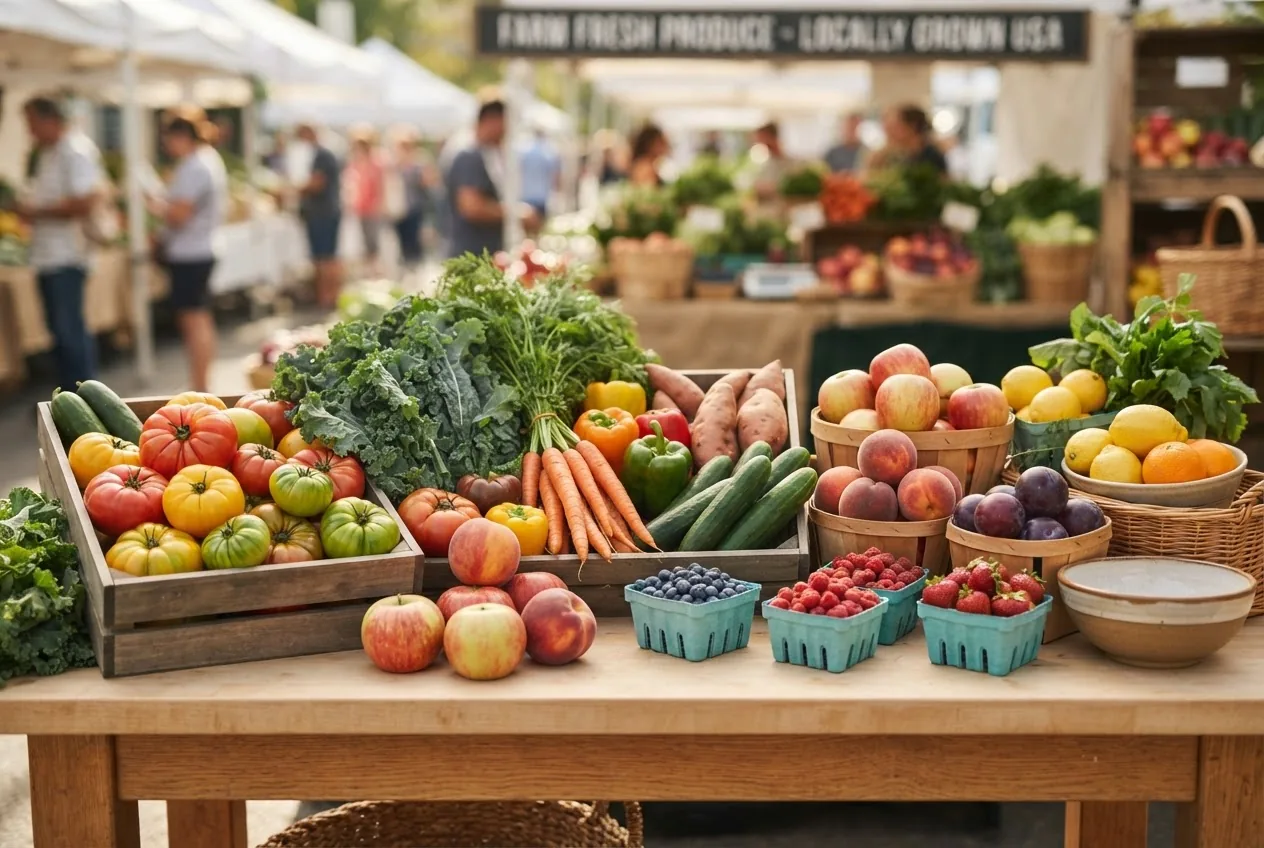
Produce examples you can use at market, in menus, and for meal planning — finished in one read (about 25–40 minutes) and suitable for beginners to intermediate home cooks, market managers, and nutrition-conscious shoppers. By the end you’ll have categorized lists, regional notes for America and Texas, practical selection and storage steps, and a ready checklist for freshness.
Before you start
- Notebook or phone for making a seasonal produce list
- Access to a local farmers market or grocery produce section (visit 1–2 times for practice)
- Basic kitchen tools: sharp knife, cutting board, storage containers, reusable produce bags
- Optional: cooler bag for transporting delicate items in hot weather
Introduction to Produce Examples
This hands-on guide defines and organizes common American produce and highlights Texas-specific availability. It deliberately avoids duplicating deep nutrition tables — instead you’ll find clear groupings, culinary uses, and local seasonality to make buying and cooking decisions faster. For deeper nutrient-by-nutrient detail, consult the Fruit Types Guide with Benefits and Nutritional Information.
What I mean by “produce”: fresh fruits and vegetables sold for immediate consumption, culinary use, or light processing. The USDA groups produce broadly as fruits, vegetables, and subgroups such as leafy greens and root crops; according to a 2024 USDA report, national fruit and vegetable intake still trails Dietary Guidelines recommendations, which affects demand and seasonality patterns (USDA).
Use this guide as an actionable reference: you can copy the lists into a market shopping sheet, integrate category-based storage advice, and apply Texas season windows to plan meals across the year. Next we move into vegetables, then fruits, followed by classification, regional specifics, handling tips, and a final checklist.
Vegetable Categories with Produce Examples
-
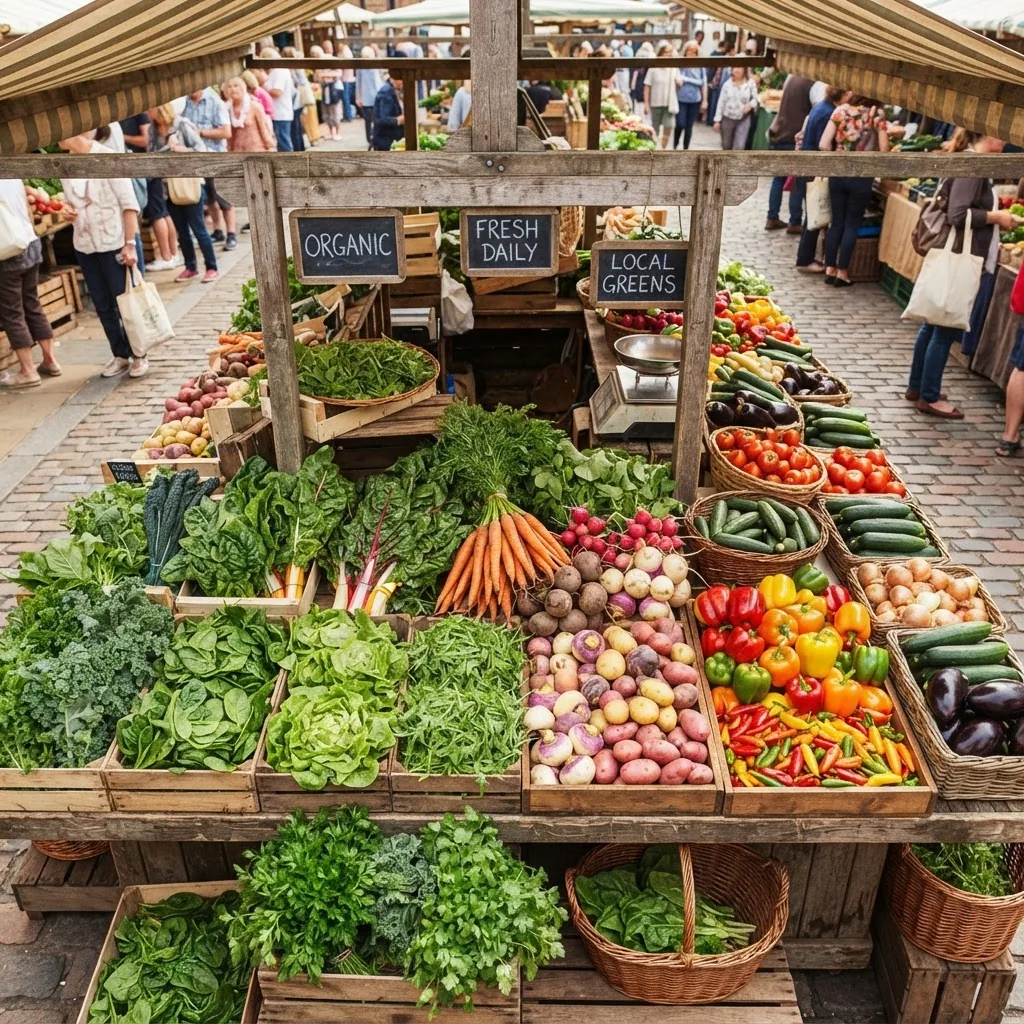
Leafy greens — pick tender or hearty depending on use.
Leafy greens are plants primarily grown for edible leaves. Tender greens (salad) and hearty greens (cooking) occupy different culinary roles.
- Tender salad greens: baby spinach, arugula, butter lettuce, spring mix — use raw, 30–60g per salad serving.
- Hearty cooking greens: kale, collards, mustard greens, Swiss chard — braise 6–12 minutes to tenderize.
- Microgreens and herbs: basil, cilantro, parsley, watercress — concentrated flavor, use 5–15g per dish.
Culinary note: use tender greens raw within 3–5 days refrigerated; hearty greens last 7–10 days when wrapped in a damp towel.
-
Root vegetables — long storage, high utility.
Roots are enlarged underground structures storing energy for the plant. They are versatile for roasting, mashing, and soups.
- Common examples: carrots, beets, parsnips, radishes, turnips.
- Starchy roots: sweet potatoes, yams; treat like tubers for roasting and baking (roast 40–60 minutes at 400°F / 200°C).
- Specialty roots: celeriac (celery root), horseradish — stronger flavors, use sparingly (10–20g in sauces).
Selection tip: choose firm, smooth roots with no soft spots; carrots and beets store best in a cool, moist root cellar or crisper drawer for 2–4 weeks.
-
Bulb vegetables — aromatic and layered.
Bulbs grow underground with a layered structure and often used for aromatic foundations in cooking.
- Examples: onions (yellow, white, red), garlic, shallots, fennel bulb.
- Cooking uses: sautéing as the flavor base (cook onions 5–8 minutes over medium heat); roasting fennel at 425°F for 25–30 minutes deepens sweetness.
- Storage: keep dry and ventilated; onions and garlic last 1–3 months in cool, dark conditions.
-
Stem vegetables — crunchy structure for texture.
Stem vegetables are the plant stalks or petioles eaten for their fibrous, crunchy qualities.
- Examples: celery, asparagus, kohlrabi, rhubarb (culinary use as vegetable).
- Cooking uses: asparagus (grill or roast 10–12 minutes at 425°F), celery for mirepoix base with carrots and onions (cook ~7–10 minutes).
-
Fruit vegetables — botanically fruits, culinary vegetables.
These are technically fruits (because they develop from the flower and contain seeds) but treated as vegetables in cooking.
- Examples: tomatoes, bell peppers, zucchini, eggplant, cucumbers, summer squash, okra.
- Varieties common in the U.S.: Roma and beefsteak tomatoes, bell pepper colors (red, yellow, green), Italian eggplant, English cucumber.
- Culinary notes: grill, roast, or sauté; most keep 3–7 days refrigerated (exceptions: tomatoes prefer room temperature for best flavor for 1–3 days).
-
Cruciferous vegetables — dense nutrition, versatile prep.
Members of the Brassica family are often cooked to reduce bitterness and increase digestibility.
- Examples: broccoli, cauliflower, Brussels sprouts, cabbage, bok choy.
- Cooking tips: roast broccoli florets 18–22 minutes at 425°F for crispy edges; steam bok choy 4–6 minutes to preserve texture.
-
Alliums and aromatics — flavor architects.
Alliums add savory depth; they’re used in almost every cuisine to build flavor layers.
- Examples: leeks, scallions (green onions), shallots, garlic, onions.
- Usage: sweat gently (3–6 minutes) to soften without browning for soups and sauces.
-
Salad vegetables and crunchy snacks.
These are often eaten raw or lightly dressed.
- Examples: cucumbers, radishes, bell peppers, snap peas, sugar peas.
- Selection: choose crisp specimens with no pitting; snap peas should “snap” firmly, indicating freshness.
-
Mushrooms — culinary fungi treated as vegetables.
Though not botanical vegetables, mushrooms are widely grouped with produce in culinary contexts.
- Examples: cremini, portobello, shiitake, oyster, white button.
- Storage: keep in paper bags; use within 5–7 days for optimal flavor.
-
Pulses and fresh legumes (edible pods).
Leguminous vegetables are harvested for fresh pods or immature seeds.
- Examples: green beans, snap peas, edamame (immature soybeans).
-
Specialty and ethnic vegetables — expand your pantry.
In many U.S. markets you’ll find vegetables reflecting cultural cuisines.
- Examples: jicama, taro, bitter melon, daikon radish, Chinese eggplant.
- Use: follow cultural prep methods—e.g., julienne jicama raw in salads, blister bitter melon to reduce bitterness.
Transition: those categories establish the vegetable side; next we’ll cover fruits by category with American and Texas notes and culinary use cues.
Fruit Categories with Produce Examples
-
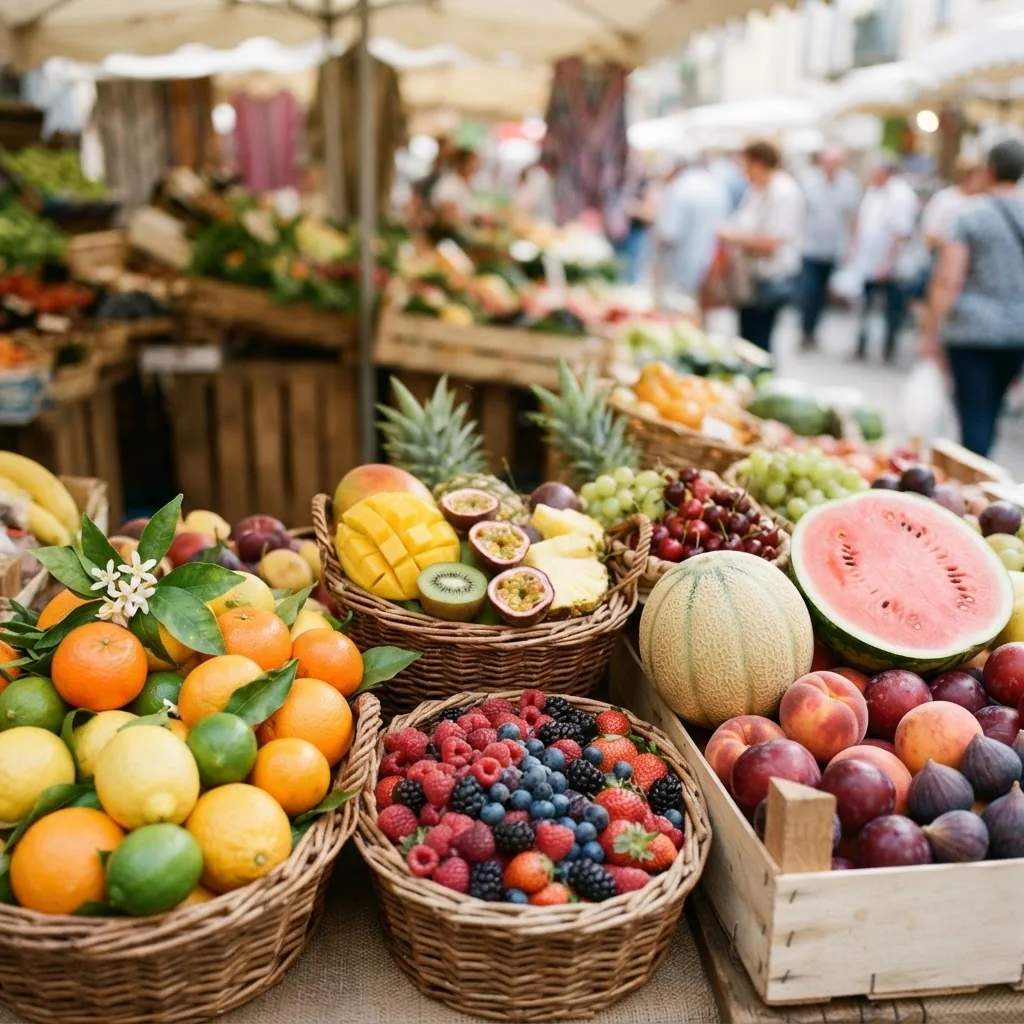
Citrus fruits — bright, acidic, and regionally sensitive.
Citrus is a top consumer favorite across America; many growers in southern states and California supply fresh citrus seasonally.
- Examples: oranges (navel, Valencia), lemons (Eureka, Meyer), limes (Persian), grapefruits (Ruby).
- American varieties: navel oranges for eating, Valencia for juice; Meyer lemons favored for baking and dressings.
- Texas notes: parts of southern Texas and Rio Grande Valley produce citrus; refer to the Texas Department of Agriculture for local crop reports.
-
Berries — small, high-flavor fruits best when fresh.
Berries tend to be delicate; prioritize same-day purchase when possible or buy frozen for off-season use.
- Examples: strawberries, blueberries, raspberries, blackberries.
- U.S. varieties & seasons: California and Florida supply winter/spring strawberries; blueberries peak late spring–summer in many states.
Storage: refrigerate unwashed in a breathable container; consume within 2–4 days.
-
Stone fruits — sweet with a central pit.
Stone fruits are summer highlights; they vary from firm (useful for baking) to very soft (best fresh).
- Examples: peaches, nectarines, plums, cherries, apricots.
- American varieties: clingstone vs freestone peaches; many U.S. summer markets carry both depending on harvest stage.
- Texas season: Texas Hill Country and Rio Grande produce peaches and plums in late spring through summer; check local farm calendars for exact windows.
-
Tropical fruits — flavor-forward and variable shelf life.
Tropical fruits are often imported in the U.S. but also grown in southern states and greenhouses.
- Examples: mangoes, pineapples, papaya, guava, passion fruit.
- Selection tip: use gentle pressure test for ripeness on mango (gives slightly), but avoid soft spots; ripen at room temperature 1–5 days depending on starting firmness.
-
Melons — hydrating summer staples.
Melons vary by texture and sweetness; American varieties are often labeled by region and harvest time.
- Examples: cantaloupe, honeydew, watermelon.
- Selection: melons should sound hollow when thumped and have a firm rind without soft spots; refrigerated cut melon lasts 3–4 days.
-
Pomaceous fruits — apples and pears, long keepers.
Pomaceous fruits store well and have multiple culinary uses from fresh eating to baking and fermenting.
- Examples: apples (Gala, Fuji, Granny Smith), pears (Bartlett, Bosc).
- American notes: many varieties are regionally specific; apples are available year-round due to cold storage.
-
Aggregate fruits and small-fruited categories.
These are fruit types where many small drupelets form a whole fruit.
- Examples: blackberries (aggregate), raspberries (aggregate), strawberries (accessory fruit).
- Culinary use: best fresh or lightly cooked into compotes; freeze within 24 hours for long-term use.
-
Dried and preserved produce (contextual mention).
While this guide focuses on fresh produce, many fruits (raisins, dates, dried apricots) are sold preserved; choose these as pantry staples for texture and concentrated sweetness.
- Usage: rehydrate 10–20 minutes in warm water for baking, or use as-is in trail mixes and cereals.
-
Fruits for weight management — practical choices.
For readers focused on weight, low-calorie, high-fiber fruits are helpful. For a focused list, see the Best Fruits for Weight Loss.
Transition: with fruit and vegetable categories covered, the next section explains why classification sometimes confuses shoppers and cooks.
Understanding the Difference Between Fruits and Vegetables
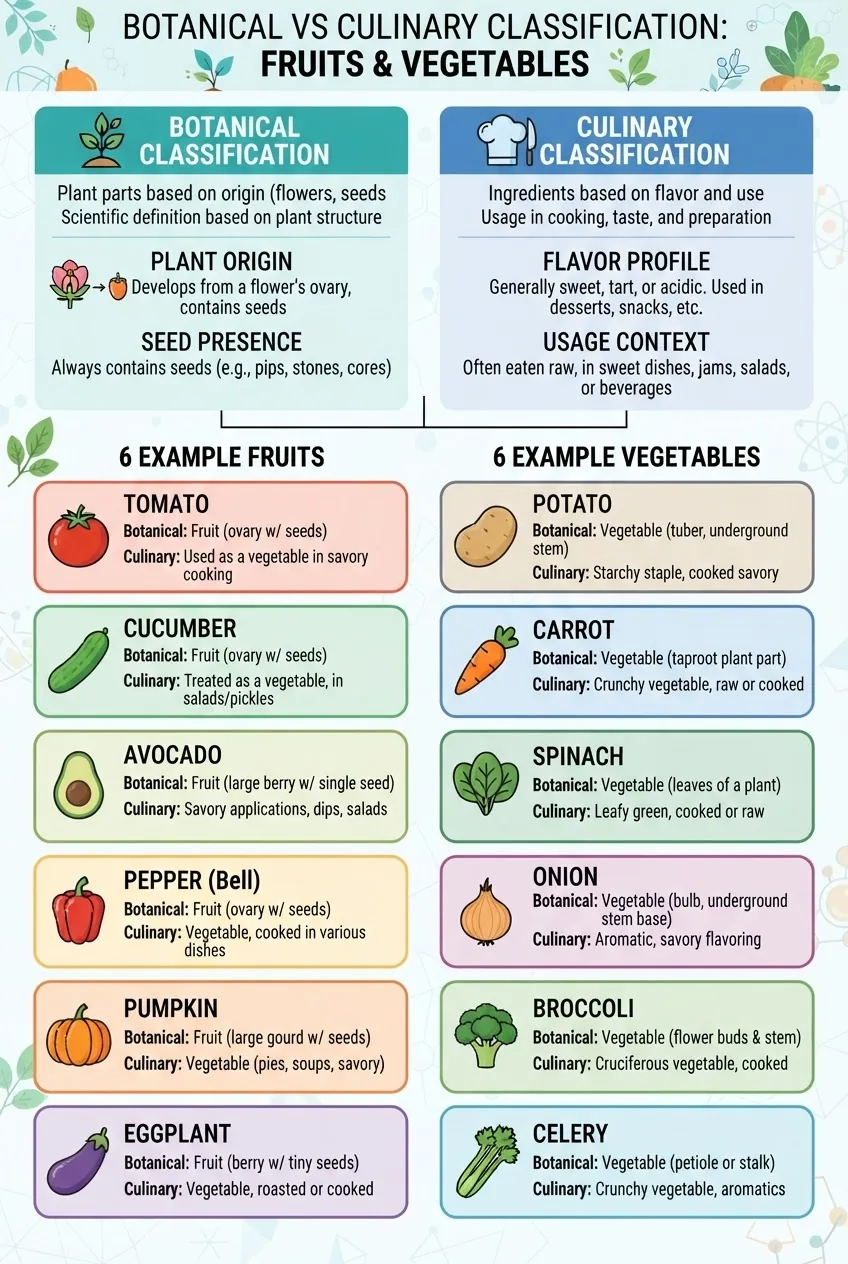
Botanical definition vs culinary classification: botanically, a fruit is the seed-bearing structure grown from the ovary of a flowering plant; vegetables are other edible plant parts such as leaves, stems, roots, bulbs, and tubers. Culinary classification groups items by taste and use — sweet items are usually treated as fruits, savory items as vegetables.
Practical examples:
| Botanical fruit (culinary vegetable) | Botanical vegetable (culinary vegetable) |
|---|---|
| Tomato — develops from flower, contains seeds, used in savory dishes | Carrot — root, not seed-bearing, used in both sweet and savory contexts |
| Bell pepper — botanical fruit, culinary vegetable | Lettuce — leaf, culinary vegetable |
| Cucumber — botanical fruit, culinary vegetable | Potato — tuber, culinary vegetable |
Common confusion arises because many garden and market staples—green beans, cucumbers, bell peppers—are botanically fruits but treated as vegetables. This distinction matters for growers, botanists, and some labeling, but for most home cooks it’s a practical difference: how you use them. For a detailed breakdown of one commonly debated example, see the Are Green Beans Fruit or Vegetable Guide.
Botanical nuances: some items like rhubarb are botanical stems but culinary fruits due to their tart-sweet applications, and mushrooms sit outside these definitions (fungi). For cultivation and botanical definitions, horticulture extension literature is a reliable source; consult university extension resources such as Texas A&M AgriLife Extension for technical horticulture guidance. Note: classification can be context-dependent; legal definitions have even been used in trade and tariff cases historically.
Transition: now that classification is clear, we’ll zoom into what’s available in America and specifically Texas, with practical seasonal highlights.
Produce in America and Texas: Regional Highlights
The U.S. supply chain and local agriculture shape what you see in markets. “Vegetable America” trends emphasize year-round availability thanks to multi-region growing (California, Florida, the Southeast) combined with imports. According to a 2024 industry report on U.S. specialty crops production, production concentration in a few states affects national seasonality and pricing (industry report, 2024).
Texas has unique windows due to its size and climate zones — from Gulf Coast subtropical areas to cooler Panhandle regions. Below is a practical snapshot of commonly grown Texas produce and a seasonal calendar for quick planning.
| Produce | Texas season (typical) | Best uses / regional note |
|---|---|---|
| Tomatoes | June–September | Fresh eating, canning; hill country and coastal valleys produce early crops |
| Bell peppers | July–October | Roasting and salsas; both hot and sweet varieties grown |
| Peaches | May–August | Hill Country varieties; great for preserves and grilling |
| Citrus (southern pockets) | November–March (some regions) | Limited commercial acreage; local markets may offer specialty citrus — check local growers |
| Melons | June–September | High heat tolerant varieties; roadside stands common during summer |
| Greens (collards, kale) | Fall–Spring (cool season) | Best planted for winter/spring harvest; hardy with frost tolerance |
For up-to-date crop reports and market-level availability, consult the Texas Department of Agriculture and local extension bulletins. Local farmers markets and CSA (community supported agriculture) programs are excellent for confirming exact harvest windows in your county — availability can vary year-to-year based on weather and water conditions.
Transition: armed with regional timing, the next section gives concrete selection and storage steps to keep produce fresher longer.
Selecting and Storing Produce for Freshness
- Inspect for firmness and damage. Avoid bruises, soft spots, or mold. For fruits, press gently: apples and pears should be firm; peaches should yield slightly.
- Smell for ripeness. Melons and pineapples often indicate ripeness by aroma; citrus should smell bright but not alcoholic.
- Buy local in season. Choose field-ripe, in-season items for best flavor and price — local seasonal produce is often picked at peak ripeness.
- Separate ethylene producers. Keep apples, pears, and bananas away from ethylene-sensitive items (e.g., leafy greens) to slow ripening.
- Temperature rules. Refrigerate most vegetables at 32–40°F (0–4°C); exceptions: potatoes, onions, and winter squash prefer cool, dark, dry storage ~50–60°F (10–15°C).
- Humidity control: leafy greens: high humidity (use crisper drawer with damp towel); mushrooms: low humidity in paper bag.
- Short-term transport: in hot weather, use a cooler bag; limit time in the car to under 30–60 minutes when temperatures exceed 85°F (29°C).
- Prep for storage: trim leafy green stems, don’t wash before storing (store unwashed), wash before eating to extend shelf life.
- Freeze within safe windows: blanch vegetables (1–3 minutes depending on type) before freezing; berries can be frozen unblanched on trays then bagged.
- Organic vs conventional: choose organic for produce known to retain more surface residues when you plan to eat the skin frequently (e.g., berries, leafy greens) — expect 10–40% price premium on average in retail U.S. stores (industry pricing surveys, 2023).
Conclusion and Quick Reference Tips
By now you have a clear, categorized list of produce examples across vegetable categories and fruit categories, practical classification guidance, Texas season windows, and selection and storage steps you can apply immediately. For a short health perspective, fruits and vegetables contribute fiber, vitamins, and phytochemicals — brief nutritional highlights are woven into category notes above; for extended nutrient specifics, consult dedicated guides.
Quick takeaways:
- Buy in-season, buy local when possible for best flavor and price.
- Store by category: roots & bulbs in cool dry places; leafy greens high humidity; fruits often separated to control ethylene.
- Know botanical vs culinary differences to avoid confusion at the market and in recipes.
- Use this guide as your market checklist for America and Texas produce planning.
Call to action: bookmark this guide and print a one-page category list for your next market trip — you’ll save time and reduce food waste.
Common mistakes and how to avoid them (from my experience)
I once stored tomatoes in the fridge to extend life, but they lost flavor; now I let ripe tomatoes sit at room temperature for 1–3 days before refrigeration. I also used to wash berries before storage and found moisture accelerated spoilage — now I wash only before serving. Lastly, I used to pack apples with delicate greens; the greens wilted quickly — now I separate ethylene producers.
Final checklist
- Do you have categories noted for your shopping list (leafy, root, fruit-vegetables)?
- Did you confirm local seasonality via your state agriculture or market calendar?
- Do you have storage zones set (fridge crisper, cool pantry, paper bag for mushrooms)?
- Have you separated ethylene producers and plan immediate use for delicate items?
When to call a professional
If you’re planning a commercial-scale produce purchase, starting a CSA, or launching retail produce displays, consult a local extension agent or post-harvest handling specialist for storage, packing, and legal labeling guidance. For cultivation questions, contact your county extension office for soil tests, pest management plans, and cultivar recommendations.