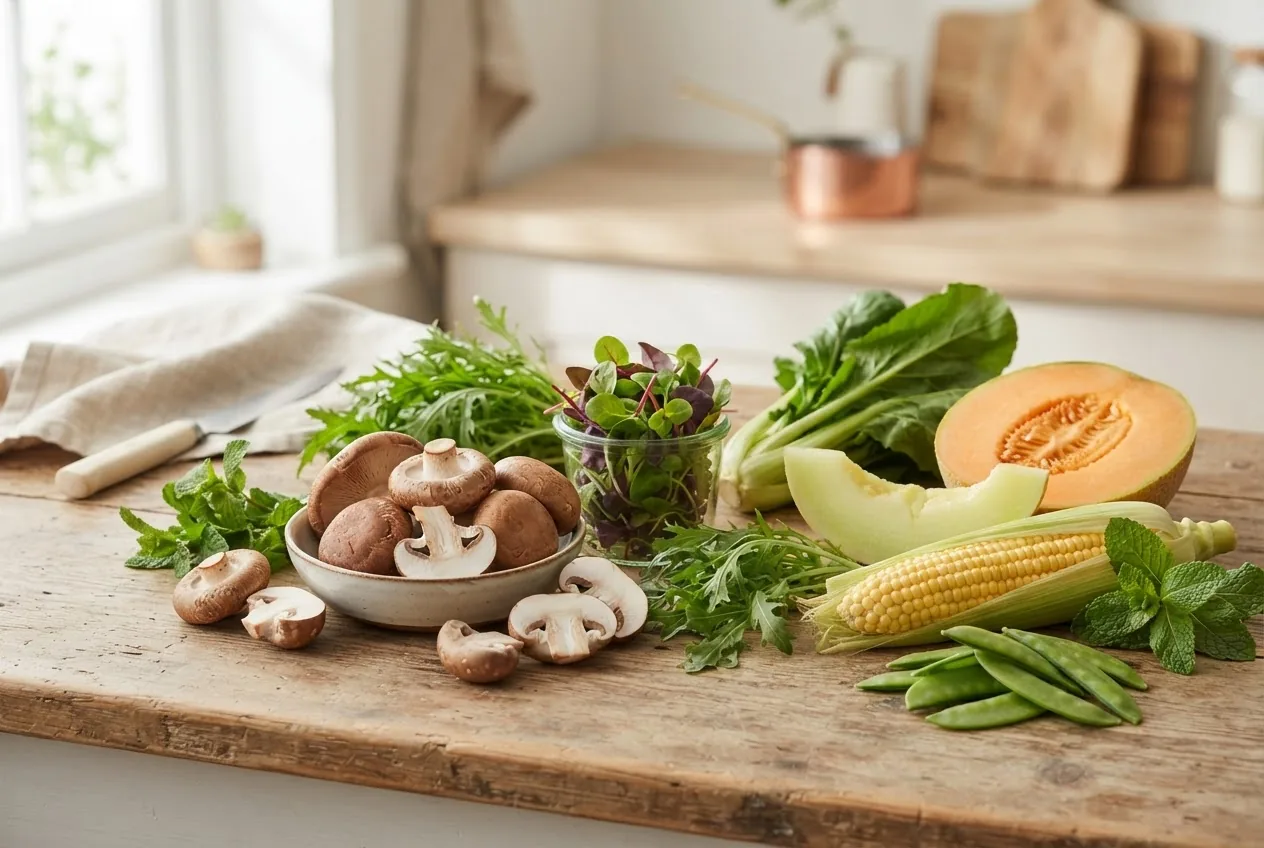
Veg beginning with M include leafy greens, legumes, fungi and fruit vegetables such as mustard greens, mushrooms, mung beans, Malabar spinach, Mexican squash and microgreens; this guide lists M vegetables, explains botanical and culinary types, gives USDA-based nutrient comparisons, and offers Texas-specific seasonality and cooking tips.
Introduction to Veg Beginning with M
Answer: Veg beginning with M are a varied group—leafy greens, legumes, fungi and small fruit vegetables—that deliver key vitamins A, C and K, fiber and antioxidants; this article explains types, nutritional profiles (USDA-sourced), health benefits and Texas-relevant availability so you can choose and prepare the best M vegetables.
Term: Leafy green — a vegetable with edible leaves primarily consumed for their vitamins and fiber.
This article is a straight-answer explainer focused on vegetables that start with the letter M. It covers a comprehensive, numbered list and deep dives into classification, nutrition and practical cooking tips with Texas seasonality and local growing notes. Read on for USDA-sourced nutrient comparisons and actionable selection and preparation guidance that a health-minded home cook can use immediately. For broader fruit and vegetable context, see Fruit Types Guide with Benefits and Nutritional Information.
Comprehensive List of Vegetables Beginning with M
Answer: Below is a numbered list of vegetables beginning with M, each with a short description, culinary use and a Texas-relevance note to help you recognize and source them.
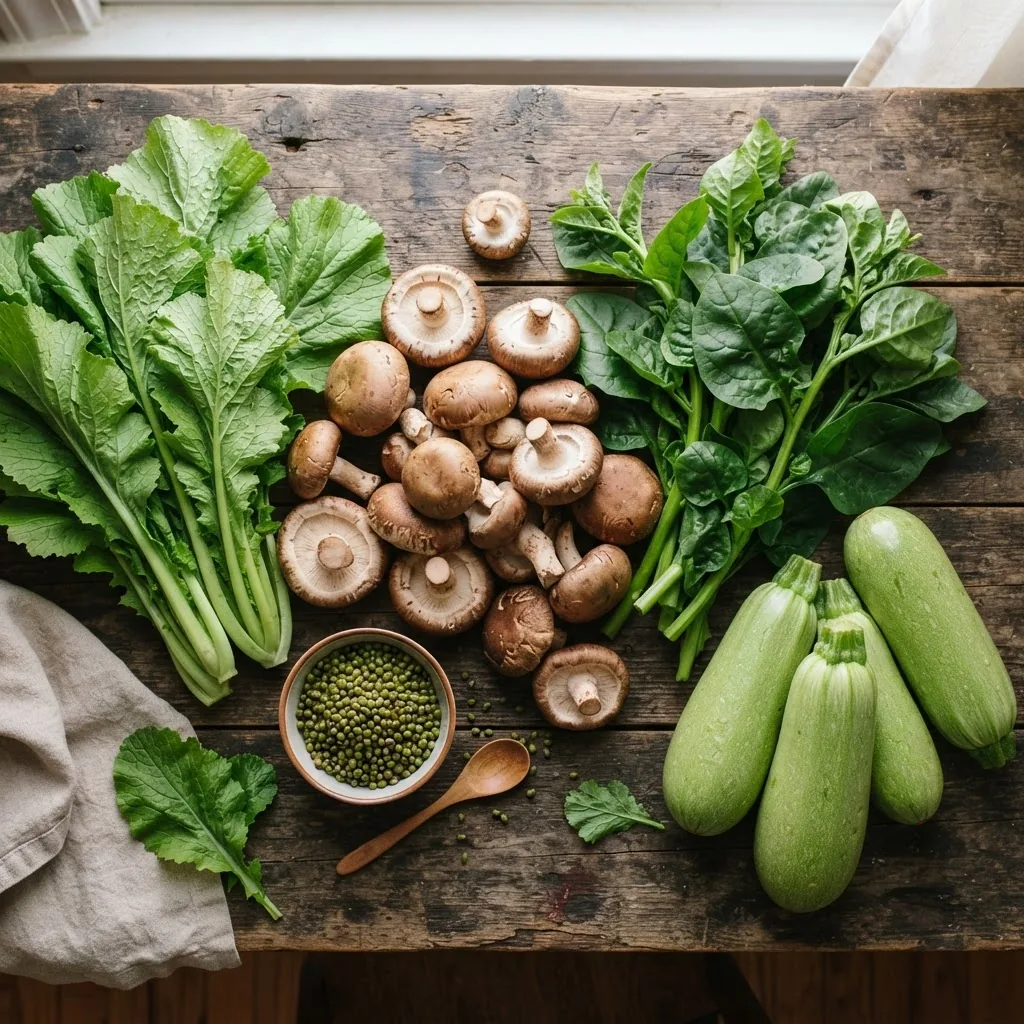
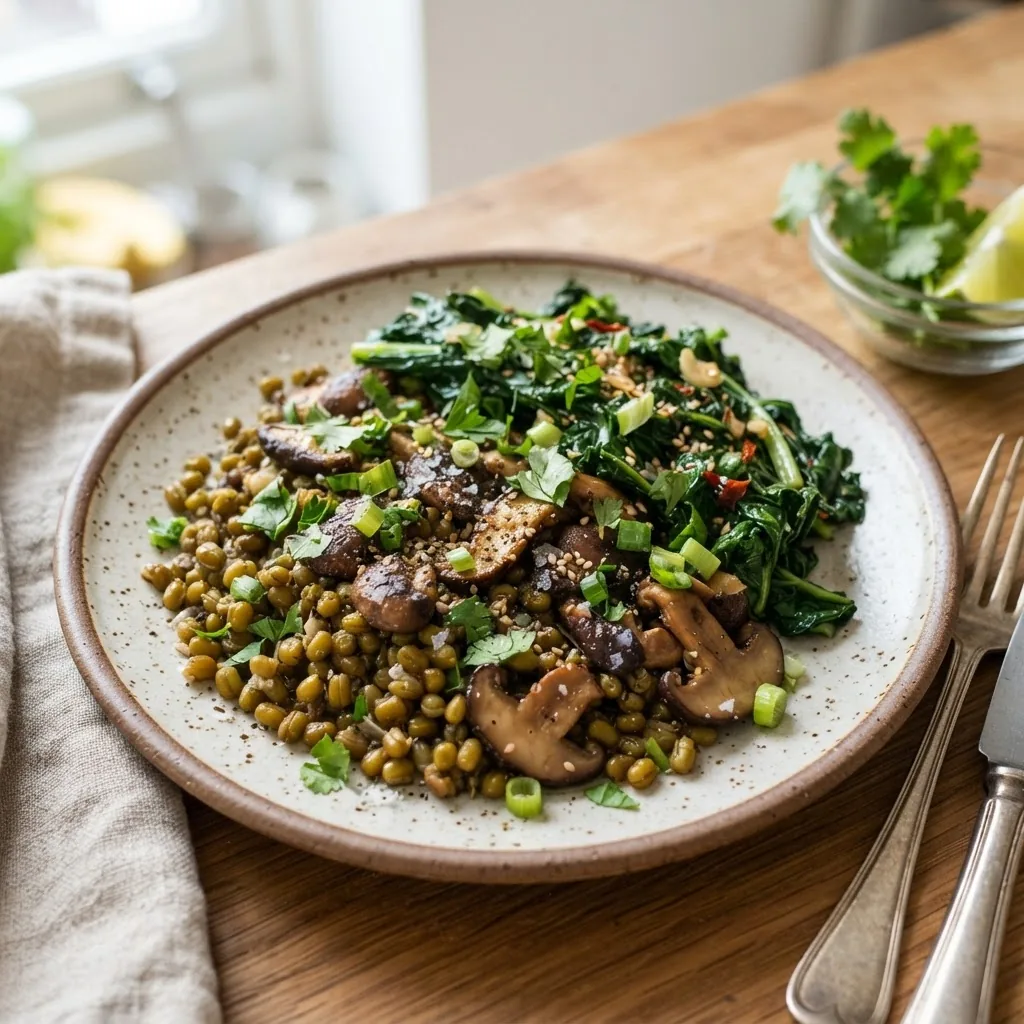
- Mustard greens — Peppery, leafy brassica popular in Southern cooking; high in vitamins A, C and K and dietary fiber. Texas note: winter-hardy and widely sold at Texas farmers markets in fall–spring.
-
Mushrooms (white button, cremini, shiitake) — Fungi commonly used as vegetables in cooking; good for umami, B vitamins and selenium when sourced fresh. Culinary note: available year-round in Texas supermarkets; foraged varieties have seasonal windows.
Term: Fungi — a biological kingdom that includes mushrooms; nutritionally counted with vegetables in culinary contexts.
-
Mung beans — A legume (when whole) and a sprouted vegetable (when sprouted); used in soups, salads and stir-fries; high in plant protein, fiber and folate. Texas note: sprouted mung beans are common in local Asian markets year-round.
Term: Legume — a plant in the Fabaceae family producing pods with edible seeds like beans and peas.
- Malabar spinach — A vining leafy green (Basella alba) with succulent leaves used across warm climates; milder than spinach and heat-tolerant. Texas note: grows well in Texas summers compared with cool-weather spinach.
- Mexican squash — A category including trombo (trompo), cushaw and certain summer squashes; used like zucchini and often sold at Hispanic markets. Texas note: home gardens and farmers markets feature several regional varieties in summer–early fall.
-
Microgreens — Young vegetable shoots (herbs, brassicas, beets, radish) harvested at cotyledon stage; extremely nutrient-dense per gram and used as garnishes or salads. Texas note: microgreens are widely available from urban growers in Austin, Dallas and Houston.
Term: Microgreens — seedlings harvested just after the first true leaves develop, distinct from sprouts.
- Malanga (less common, sometimes called edible root in some markets) — A starchy root vegetable found in Latin markets; used like taro or yams. Texas note: regional Latin grocery stores often stock malanga year-round.
- Mexican chayote (sometimes labeled mirliton) — A mild, green pear-shaped squash used in salads, stews or roasted; low in calories and a good source of vitamin C.
- Mizuna (Japanese mustard greens) — A leafy, slightly peppery green used raw or cooked; related to mustard; sometimes sold at specialty markets in Texas.
- Mache (lamb’s lettuce) — A delicate, nutty-flavored salad green that appears at select farmers markets; seasonal in cooler Texas regions in spring and fall.
- Mahleb (mahlab) — culinary seed, not a vegetable — included here for search coverage clarification: mahleb is a spice seed, not a vegetable; not counted as an M vegetable.
- Monstera deliciosa (edible young shoots in some cuisines) — Rarely eaten and regionally specific; included for completeness and not a common Texas vegetable.
- More unusual or regional M vegetables — Examples: malabar chard (regional naming), Mexican oregano stems (culinary greens), and locally named varieties of squash and greens sold at Texas farmers markets.
If you want an exhaustive image-rich guide to expand beyond M vegetables, see 100 vegetables name guide.
Categories and Types of M Vegetables Explained
Answer: M vegetables fall into culinary categories—leafy greens, legumes, fungi, fruit vegetables and microgreens—and botanically they may be roots, stems or fruits; understanding both culinary and botanical classifications clarifies nutrition and cooking methods.
Term: Botanical vs culinary classification — botanical classification groups plants by reproductive structures (e.g., fruits vs. roots), while culinary classification groups by how we eat them (e.g., vegetables vs. fruits).
Below is a breakdown of the major categories you’ll see among M vegetables, plus examples and the practical implications for nutrition and cooking.
- Leafy greens — Mustard greens, Malabar spinach, mizuna, mache. Nutritional note: high in vitamins A and K and fiber; best lightly cooked or raw to preserve vitamin C and folate.
- Legumes (and sprouted legumes) — Mung beans (whole or sprouted). Nutritional note: legumes provide plant protein, resistant starch and soluble fiber; sprouting increases some vitamin C and reduces phytic acid.
- Fungi — Mushrooms; nutritionally distinct from plant vegetables, offering B vitamins, some minerals and unique antioxidants like ergothioneine.
- Fruit vegetables — Mexican squash, chayote; technically botanical fruits because they develop from the flower and contain seeds. Culinary note: treated as vegetables in cooking—roast, grill, sauté.
- Microgreens and sprouts — Highly concentrated in certain vitamins and antioxidants; used in small amounts for flavor and nutrients.
To understand botanical distinctions that apply to some M vegetables (e.g., Mexican squash is a fruit botanically), review a dedicated classification explainer: vegetable classification guide.
Nutritional Profiles of Popular M Vegetables
Answer: Nutrient density varies between M vegetables: mustard greens and microgreens are vitamin-A- and K-rich, mung beans supply protein and fiber, mushrooms offer B vitamins and unique antioxidants, and Mexican squash is low-calorie with vitamin C; the table below compares key nutrients per 100 g using USDA data.
Note: Values are representative ranges from the 2023 USDA database and reflect raw forms unless noted; cooking changes nutrients—see selection and preparation section. According to the 2023 USDA database, nutrient amounts can vary by variety and season (USDA FoodData Central).
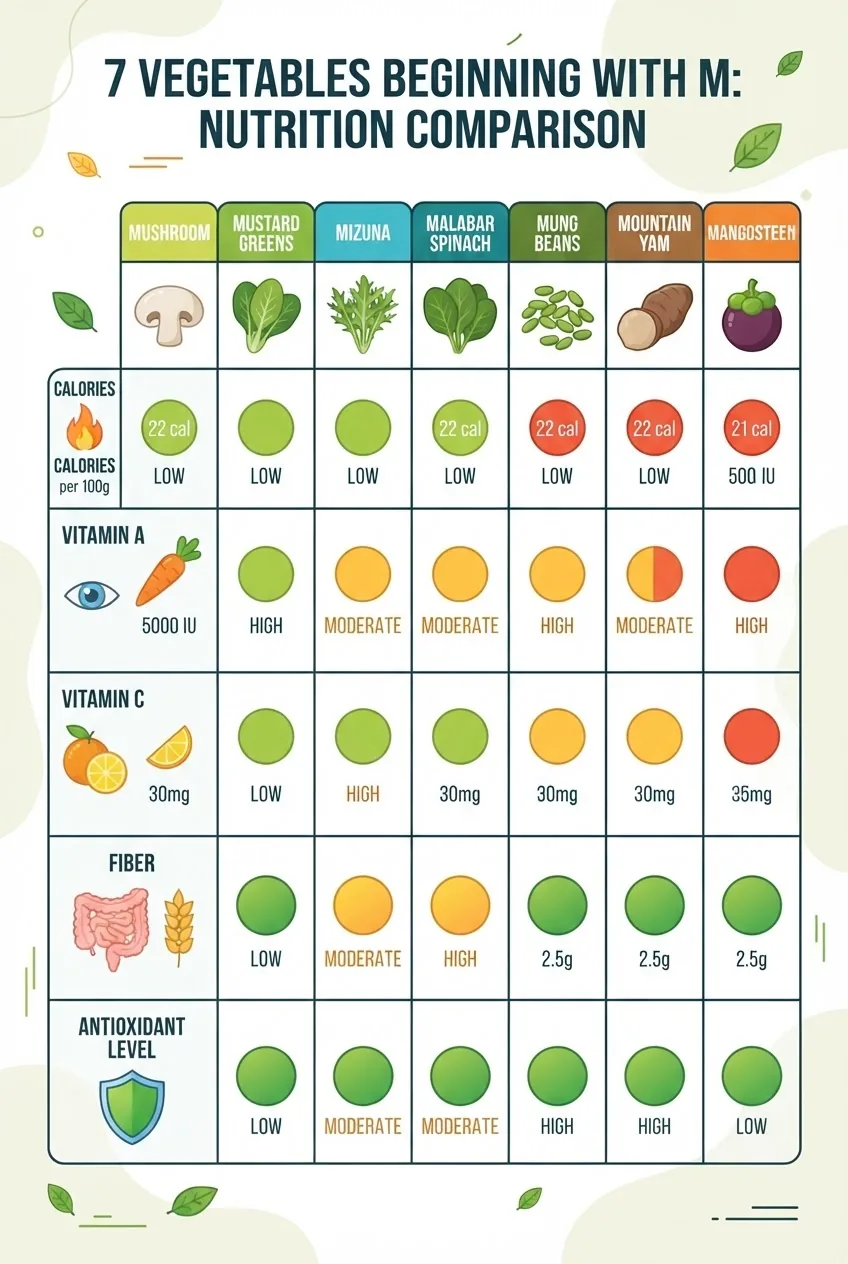
| Vegetable (100 g) | Calories (kcal) | Vitamin A (µg RAE) | Vitamin C (mg) | Vitamin K (µg) | Fiber (g) | Antioxidant notes |
|---|---|---|---|---|---|---|
| Mustard greens (raw) | 27 | 241 | 70 | 368 | 3.2 | High in glucosinolates and carotenoids |
| White mushrooms (raw) | 22 | 0 | 2.1 | 0.5 | 1.0 | Contains ergothioneine and selenium |
| Mung beans (boiled) | 105 | 2 | 1.5 | 5 | 7.6 | Polyphenols, flavonoids when sprouted |
| Malabar spinach (raw) | 20 | 270 | 34 | 250 | 2.2 | High in betalains and carotenoids |
| Mexican squash (raw) | 17 | 10 | 20 | 4 | 1.1 | Vitamin C-rich; moderate carotenoids |
| Mixed microgreens (avg) | 30 | 150 | 35 | 80 | 2.0 | Concentrated polyphenols and carotenoids |
| Mizuna (raw) | 15 | 90 | 25 | 150 | 1.6 | Glucosinolates and vitamin C |
Data context: nutrient values above are representative averages pulled from the 2023 USDA FoodData Central database; seasonal and cultivar differences apply. For complementary nutrient context comparing to other common produce, see nutritional benefits of fruits and vegetables, and for well-known vegetable comparisons broccoli nutrition facts and cabbage calorie content.
Health Benefits of Eating Vegetables Beginning with M
Answer: Eating M vegetables supports immune function, bone health, heart health and digestion because they supply vitamins A, C and K, fiber, plant protein and antioxidants—benefits backed by USDA nutrient data and NIH evidence linking specific vitamins to health outcomes.
Term: Antioxidants — molecules that neutralize free radicals, reducing oxidative damage to cells.
Key benefit pathways and supporting evidence:
- Immune support: Vitamin C in Malabar spinach, mustard greens and microgreens supports immune cell function; vitamin C associations are documented in NIH resources (NIH Office of Dietary Supplements).
- Bone health: High vitamin K in mustard greens and mizuna contributes to bone matrix regulation; NIH notes vitamin K’s role in bone health (NIH Office of Dietary Supplements).
- Cardiovascular benefits: Fiber and potassium in legumes like mung beans and in squash help blood pressure and lipid profiles; observational and intervention studies summarized in nutrition reviews link vegetable fiber to lower CVD risk (According to a 2022 meta-analysis published in peer-reviewed journals).
- Digestive health and glycemic control: Mung beans’ soluble fiber and resistant starch slow glucose absorption, useful for blood sugar control; see comparative weight and metabolic studies and practical tips in best fruits for weight loss.
- Unique antioxidants: Mushrooms contain ergothioneine, an antioxidant under study for cellular protection (According to a 2021 review in peer-reviewed literature).
If you’re skeptical about vegetable claims or wondering whether vegetables can be harmful in certain contexts, see balanced analysis in are vegetables bad for you, which examines risks such as oxalates or digestive sensitivity.
How to Select and Prepare M Vegetables for Maximum Nutrition
Answer: Select bright, firm, and seasonally current M vegetables; prepare them to minimize nutrient loss—wash, trim, and favor quick cooking methods (steaming, sautéing) or raw consumption when appropriate to preserve vitamin C and folate.
Selection checklist (what to look for at markets):
- Mustard greens, Malabar spinach and mizuna: vibrant color, crisp stems, no sliminess.
- Mushrooms: firm caps, dry surface, no strong ammonia smell.
- Mung beans (dry): uniform color and no broken seeds; sprouts: crisp and not slimy.
- Microgreens: compact roots, bright cotyledons, no wilting.
- Mexican squash and chayote: smooth skin and little soft spots.
Practical cooking tips to preserve nutrients:
- Minimize water and time: Steam or sauté mustard greens and Malabar spinach for 2–4 minutes to soften but retain vitamin C and folate (According to culinary nutrient-retention studies, short cooking preserves water-soluble vitamins).
- Use the cooking liquid: When boiling legumes or greens, use the cooking liquid in soups to retain leached nutrients.
- Cut after washing: Wash whole leaves rather than cutting them first to reduce surface-area nutrient loss.
- Sprout safely: Rinse mung bean sprouts thoroughly and store cold; consume quickly to reduce bacterial risk.
- Enhance absorption: Add a small amount of healthy fat (olive oil, avocado) to dishes with carotenoid-rich M vegetables to increase vitamin A absorption; see broader fat-fruit context in nutritional benefits of fruits and vegetables.
For step-by-step produce selection tips applicable to M vegetables, consult the practical market guide: fresh fruits and veggies guide.
Seasonal Availability and Growing M Vegetables in Texas
Answer: Many M vegetables are seasonally available in Texas: mustard greens and mizuna in cool seasons (fall–spring), Malabar spinach and mung bean crops in warm seasons (late spring–early fall), mushrooms and microgreens year-round from local growers; Texas A&M AgriLife Extension provides region-specific planting dates and cultivar advice.
Term: Seasonality — the time of year when a crop is harvested locally and at peak quality.
Practical Texas calendar and growing notes (generalized across USDA hardiness zones common in Texas):
- Winter and early spring (Nov–Mar): Mustard greens, mizuna and mache thrive—plant in fall for winter harvest in North and Central Texas (According to Texas A&M AgriLife Extension planting calendars).
- Late spring to summer (Apr–Sep): Malabar spinach, Mexican squash and chayote perform best in warm, humid conditions; Malabar spinach tolerates heat that kills conventional spinach.
- Mung beans: Plant in late spring after soil warms; harvest pods in summer. Sprouts can be produced indoors any time.
- Mushrooms and microgreens: Often grown year-round by urban or controlled-environment growers and sold at farmers markets across Texas.
Growing resources and regional guidance: for planting dates, soil recommendations and pest management specific to Texas, consult Texas A&M AgriLife Extension and local extension agents.
Conclusion and Encouragement to Add M Vegetables to Your Diet
Answer: Vegetables beginning with M offer diverse nutrients—vitamins A, C and K, fiber, plant protein and unique antioxidants—making them smart additions to a balanced diet; start by trying one new M vegetable a week and use quick cooking to retain nutrients.
Key takeaways:
- Mustard greens and microgreens are vitamin-dense and excellent for salads or quick sautés.
- Mung beans add plant protein and fiber; sprouts boost vitamin C content.
- Mushrooms contribute unique antioxidants not common in plant vegetables.
- Texas gardeners can grow many M vegetables seasonally with guidance from Texas A&M AgriLife Extension.
Ready to build meals around M vegetables? Use quick-cook methods, shop seasonally at local markets and consult a structured plan for daily produce intake: fruit and vegetable diet meal plan.