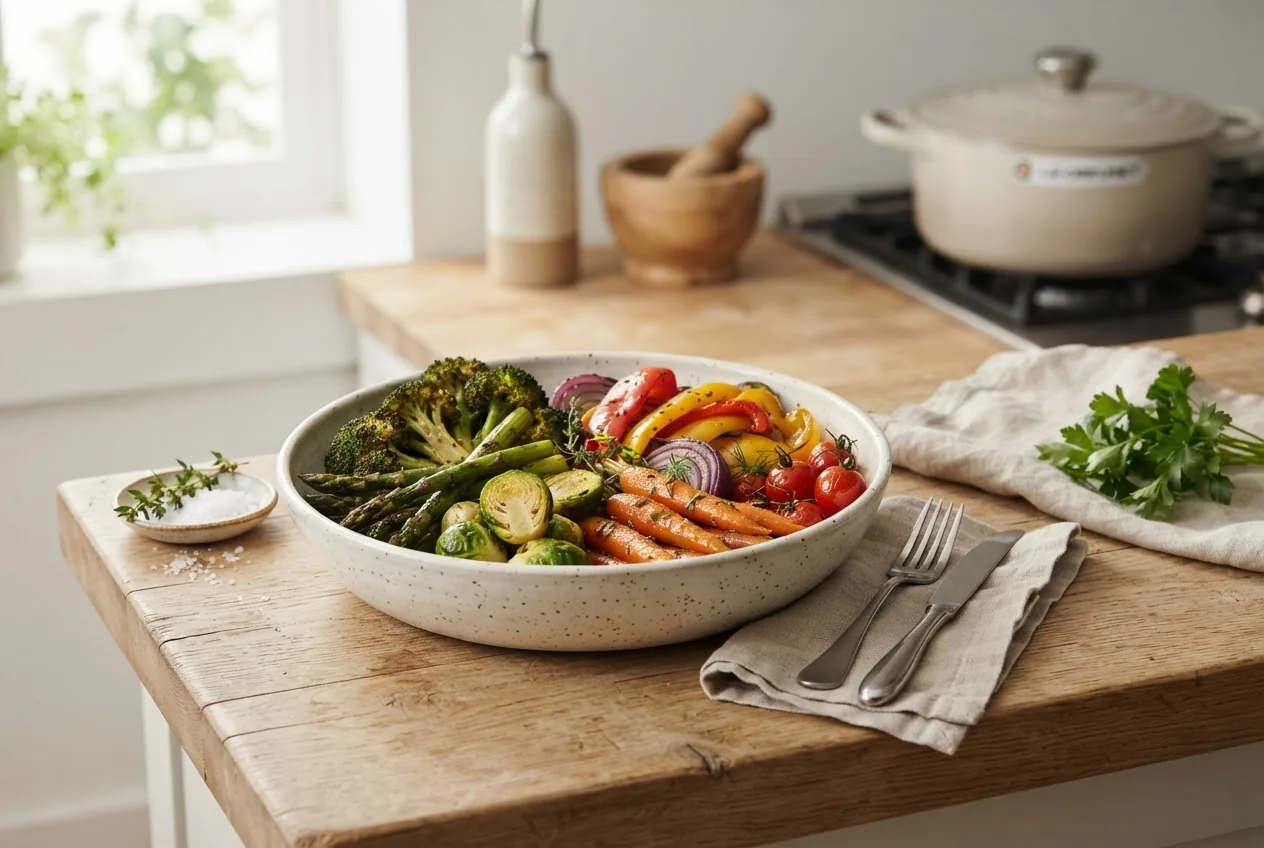
By the end of this hands-on guide you’ll know exactly how to prepare vegetables for safe storage, vibrant flavor and maximum nutrition — the full prep and cook workflow takes roughly 30–75 minutes depending on the menu and assumes a novice-to-intermediate home cook skill level.
Before we begin, this guide is practical for kitchens across Texas — from farmers’ markets in Austin to grocery runs in Houston — and includes specific timings, temperatures and food-safety references you can test at home.
Introduction to How to Prepare Vegetables
Preparing vegetables is more than washing and cutting: a few deliberate choices in how you clean, trim, cut and cook produce directly affect texture, flavor and nutrient retention. This guide focuses on the everyday, practical steps that protect vitamins and minerals while delivering better-tasting results in your skillet, oven or on the grill.
If you want broader context about types, seasonal picks and full nutritional tables, see the pillar resource below for deeper reading.
Fruit Types Guide with Benefits and Nutritional Information
To clear up a frequent beginner confusion about classification before we get hands-on, you may find this short primer useful:
Are Green Beans Fruit or Vegetable Guide with Key Differences
Step-by-Step Guide to Preparing Vegetables Before Cooking
Transition: start clean and organized — a good prep stage reduces nutrient loss, improves safety and speeds cooking. Below is a practical, numbered workflow you can follow for most vegetables, with exact times, tools and tricks.
Before you start
- Tools: chef’s knife (8–10″), paring knife, sharpener or steel, large cutting board, colander, mixing bowls, peeler, kitchen shears, chef’s thermometer.
- Cookware: steamer basket, heavy-bottomed sauté pan, sheet pan, grill or grill pan, microwave-safe dish with vented lid.
- Supplies: cold filtered water, white vinegar (optional, for heavy-soil produce), clean towels or paper towels, olive oil (extra virgin) and an unsaturated oil for high-heat (avocado oil).
- Time: allocate 10–20 minutes prep for a mixed tray of vegetables; 30–75 minutes total including cooking depending on method and quantity.
-
Sort and inspect: Remove bruised, slimy, or moldy pieces. For mixed batches, separate leafy greens from root vegetables. For delicate produce (berries, herbs), inspect and use first.
Experience note: I always check under leaves and at stem ends; insect damage or spoilage often hides there.
-
Rinse and wash properly: Use cold running water and a clean colander for most produce; rub firm vegetables with your hands or a soft brush for dirt. For leafy greens, submerge in a basin and agitate, then lift out; repeat until water is clear.
Food-safety reference: follow the FDA guidance on washing produce — FDA: Washing Fruits and Vegetables — which recommends rinsing under running water and avoiding soap. For heavy soil, a 1:9 vinegar-to-water soak for 1–2 minutes can help; rinse afterward.
-
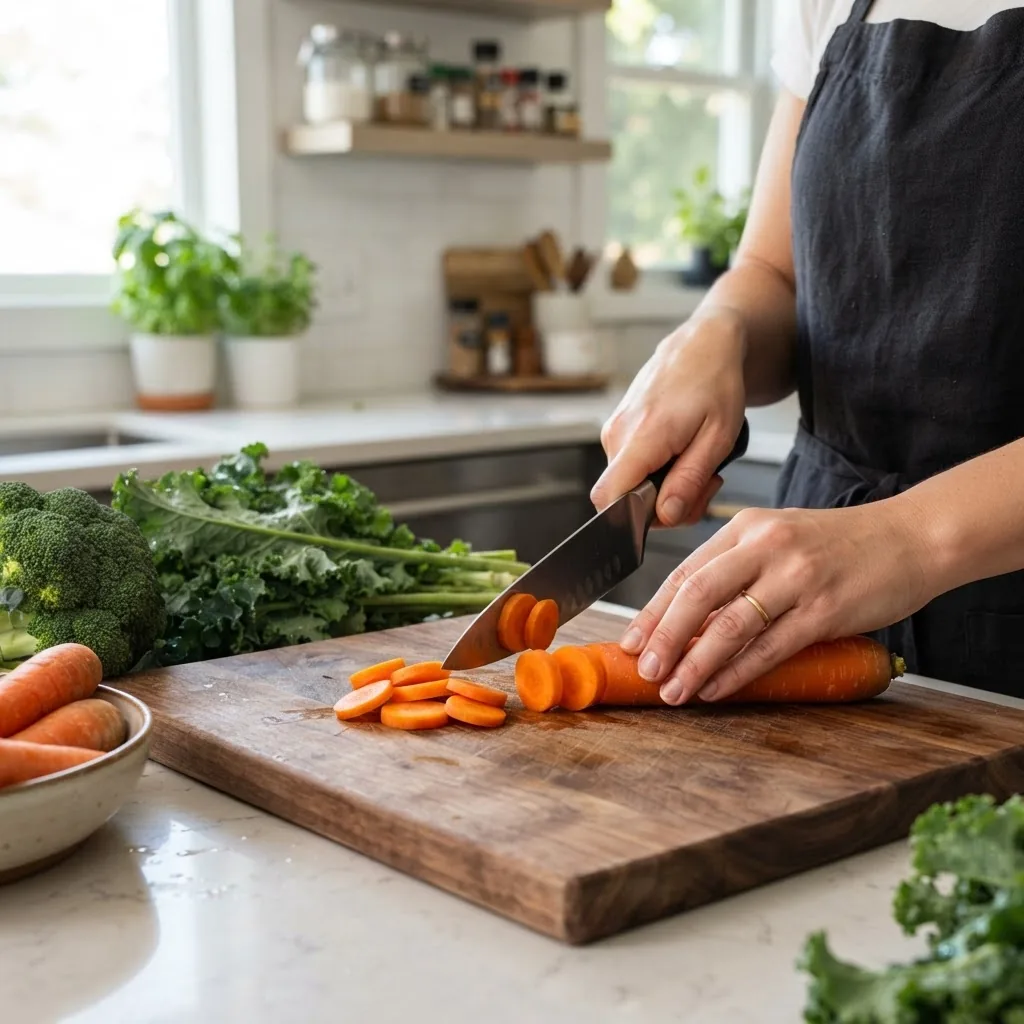
Trim and peel selectively: Only peel when necessary—nutrients and fiber often sit close to the skin. Peel root vegetables (potato, carrot) if skins are damaged or if desired texture requires it. Trim woody ends (asparagus), core tomatoes if seeding is needed for recipes.
Practical timing: peel carrots 1–2 minutes per 4 carrots; trim asparagus ends by snapping (no measuring required) or cut 1–2 inches from the bottom if crowded stems.
-
Cut with intent — choose the right method: Match the cut to the cooking method: dice for even roasting, slices for sautéing, julienne for quick stir-fries. Use the following guidelines:
- Dice: 1/2″ cubes for roasting to ensure 20–30 minute cook times.
- Julienne: 1/8″ strips for fast sauté (2–5 minutes).
- Slices: 1/4″–1/2″ for sautéing or grilling.
Knife safety: keep the tip anchored with a “claw” grip, sharpen regularly. A blunt knife forces longer contact time and crushes cells, which accelerates nutrient loss.
-
Mind enzymatic activity: After cutting, vegetables begin enzymatic browning and nutrient oxidation. To slow this, work quickly, keep produce cool and use acid (lemon or vinegar) on items like apples, potatoes or avocados that brown.
Expert note: blanching (brief hot-water exposure) deactivates enzymes for vegetables destined for freezing or long storage — more on blanching in the cooking methods section below.
-
Portion for cooking evenness: Arrange vegetables into uniform-size batches for consistent cook times. Group quick-cooking items (thin green beans, baby spinach) separately from dense roots (potatoes, beets).
Practical tip: for sheet-pan cooking, aim for pieces no larger than 1/2″–1″ cubes; smaller than that will crisp faster and retain more surface-seasoned flavor.
-
Season lightly before cooking: For roasting and grilling, toss with 1–2 teaspoons of oil per 8 ounces of veg and 1/4–1/2 teaspoon salt per pound. For steaming and boiling, season after cooking to avoid drawing water-soluble nutrients into cooking liquid.
Nutrition trade-off: salt and oil timing affects both flavor and nutrient retention; adding oil before high-heat roasting improves absorption of fat-soluble vitamins (A, K, E).
-
Plan your timing and tools: Preheat pans and ovens (oven 425°F/220°C for roasting; pan medium-high for sauté). Have steamer baskets and lids ready to minimize time vegetables spend at warm temperatures.
Case example: steaming broccoli for 5 minutes preserves more vitamin C than boiling for 10 minutes (see cooking methods section sources).
-
Handle and store prepped produce safely: Refrigerate prepped items within 2 hours; put leafy greens in a salad spinner or towel-lined container to keep crisp. Raw root vegetables last longer in perforated bags in the crisper.
Food-safety reference: the USDA recommends refrigerating perishable produce at or below 40°F (4°C) — USDA food safety resources for updated handling guides.
For tips on selecting the freshest produce before you prepare it, see Fresh Fruits and Veggies Guide with Produce Selection Tips.
Common mistakes and how to avoid them
From my experience: I once over-peeled a batch of carrots when hosting a family dinner; the dish lost visible color and texture. Now I peel only blemishes and keep pieces slightly larger to preserve moisture. I also used a dull knife and ended up with bruised eggplant; sharpening fixed that instantly.
Avoid these by keeping knives sharp, trimming only what’s needed, and organizing your mise en place for rapid transitions from prep to cook.
Prep checklist
- Sorted and inspected produce
- Washed and trimmed (or peeled) as required
- Cut to uniform size appropriate to cooking method
- Seasoned and portioned for cook method
- Stored or started cooking within 30 minutes of prep
When to call a professional
Call a professional (food safety inspector, dietitian, or experienced chef) if you encounter repeated spoilage in stored produce, suspect contamination after flooding or power loss, or need customized nutrition advice for medical conditions like renal disease or severe food allergies.
Popular Cooking Methods and Their Impact on Vegetables’ Nutrition
Transition: the cooking method you choose is the single biggest factor after freshness that determines nutrient retention and flavor. Below is a practical comparison table and short how-to for each common method, plus the nutrition trade-offs.
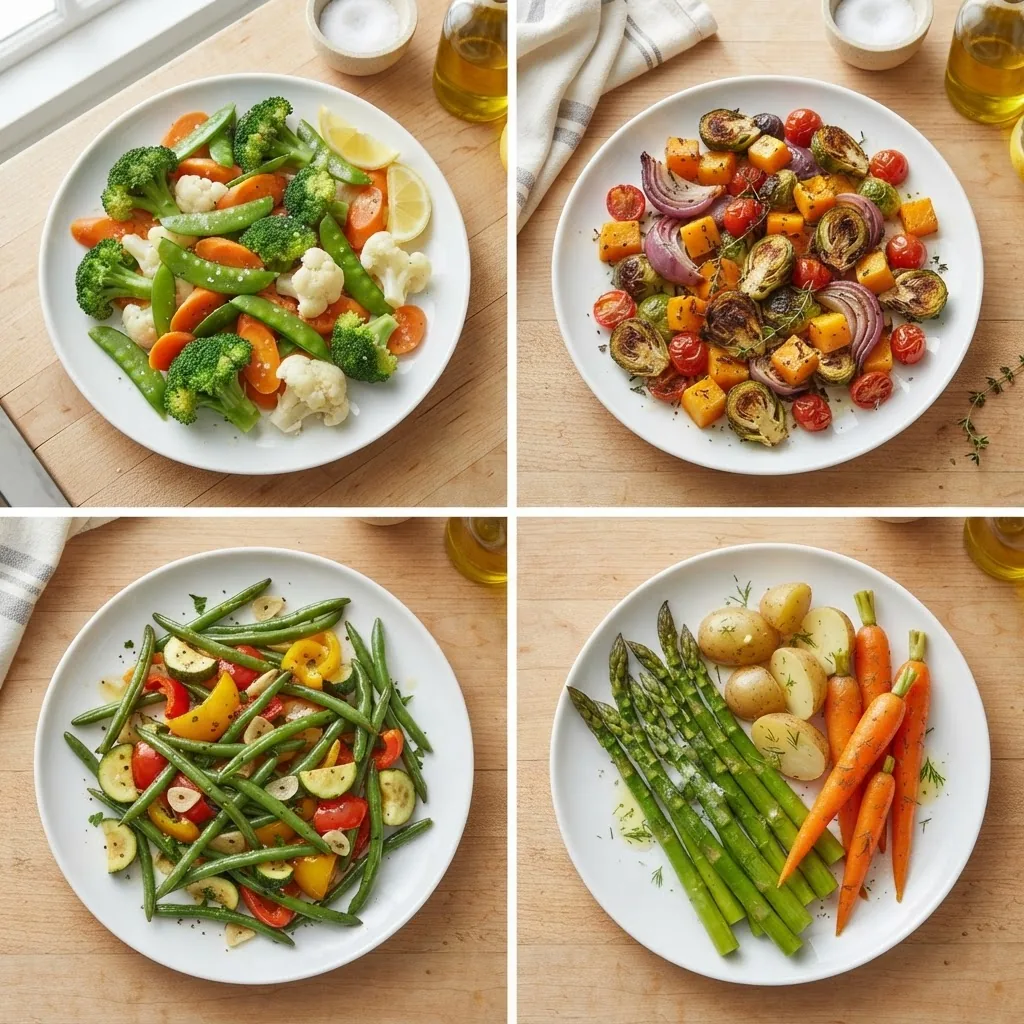
| Method | How it works | Nutrition retention | Typical timing/temps | Best for |
|---|---|---|---|---|
| Steaming | Vegetables cooked by steam above boiling water; minimal water contact. | High for water-soluble vitamins (C, B) and pigments | 5–10 minutes; steam basket over simmering water | Broccoli, green beans, carrots |
| Boiling | Submerged in boiling water, often results in leaching of water-soluble nutrients. | Medium–low, depends on water volume and time | 5–15 minutes; 212°F/100°C | Potatoes, beets (when you want soft texture) |
| Roasting | High dry heat caramelizes sugars and concentrates flavors; oil often used. | Medium; heat may degrade some vitamins but fat increases absorption of fat-soluble vitamins | 375–450°F (190–230°C); 20–45 minutes | Root vegetables, Brussels sprouts, cauliflower |
| Grilling | Direct high heat chars and adds smoky flavor; quick searing locks juices. | Medium; some nutrient loss at high temps but quick cook reduces time-based losses | High heat 400–600°F; 3–8 minutes per side | Peppers, zucchini, asparagus |
| Sautéing | Quick cook in a small amount of oil over medium-high heat. | High for short times; oil preserves fat-soluble nutrients | 2–8 minutes; pan at 325–400°F | Spinach, mushrooms, sliced peppers |
| Microwaving | Uses microwave energy to agitate water molecules; quick and uses little water. | High when using minimal water and short times | 2–6 minutes depending on volume | Frozen vegetables, quick single portions |
| Blanching | Short boil then rapid cool in ice water; used to stop enzymes and prep for freezing. | High if quick; stops enzyme-driven nutrient loss and preserves color | 30 seconds–3 minutes, then ice bath | Green beans, broccoli, peas for freezing or salads |
Short how-to descriptions and nutrition context for each method:
Steaming
How-to: bring 1–2 inches of water to a simmer, place veg in a steamer basket above water, cover and steam 3–10 minutes depending on density (broccoli 5–6 min; carrots 6–8 min). Nutrition: steaming minimizes water contact and preserves vitamin C and B vitamins. According to a 2022 Academy of Nutrition and Dietetics review, steaming is often the best home method for preserving water-soluble vitamins when compared to boiling.
Boiling
How-to: use a pot with ample water (3–4 quarts per pound), bring to a rolling boil, add veg and cook until tender. Drain immediately. Nutrition: water-soluble nutrients leach into cooking liquid — save that liquid for soups or sauces to reclaim nutrients. For vitamins like C and many B vitamins, losses increase with time and water volume; short boils with minimal water reduce losses.
Roasting
How-to: preheat oven 400–425°F (200–220°C), toss veg with 1–2 tsp oil per 8 oz and 1/4–1/2 tsp salt per pound, spread single layer on sheet pan, roast 20–45 minutes turning once. Nutrition: heat degrades some nutrients (vitamin C), but caramelization enhances flavor and fats help absorb vitamins A, K and E. A 2020 cooking-chemistry experiment demonstrated that roasted carrots retain beta-carotene bioavailability better when cooked with fat.
Grilling
How-to: oil and season vegetables lightly, preheat grill to medium-high (400–500°F), place veg on grill, flip once. Nutrition: fast exposure to high heat reduces time-based nutrient loss, but direct charring can form compounds you’d prefer to minimize — avoid excessive charring.
Sautéing
How-to: heat 1–2 tbsp oil per 8 oz veg in a heavy skillet over medium-high, add aromatic (garlic, onion) first, then add vegetables and toss for 2–8 minutes until bright and just tender. Nutrition: short times and moderate oil preserve nutrients and increase absorption of fat-soluble vitamins.
Microwaving
How-to: place chopped veg in microwave-safe covered dish with 1–2 tbsp water, microwave on high 2–6 minutes, stir once. Nutrition: because it’s quick and uses little water, microwaving often preserves nutrients as well as steaming. Use minimal water to protect water-soluble vitamins.
Blanching
How-to: plunge veg into boiling water for 30s–3min (depending on size), then immediately transfer to ice bath to stop cooking. Drain and dry. Nutrition and use: blanching inactivates enzymes that cause browning and nutrient loss during frozen storage; USDA and home-freezing tables recommend precise blanch times per vegetable to maximize retention.
For deeper reading on raw vs cooked comparisons, especially nutrient bioavailability differences, see this focused resource:
Raw Vegetables Guide with Benefits and Best Choices
Best Ways to Cook Vegetables for Optimal Flavor and Health
Transition: choose methods that balance flavor, texture and nutrient preservation — below are practical rules and tips to follow in a home kitchen, with quick references to nutrition trade-offs.
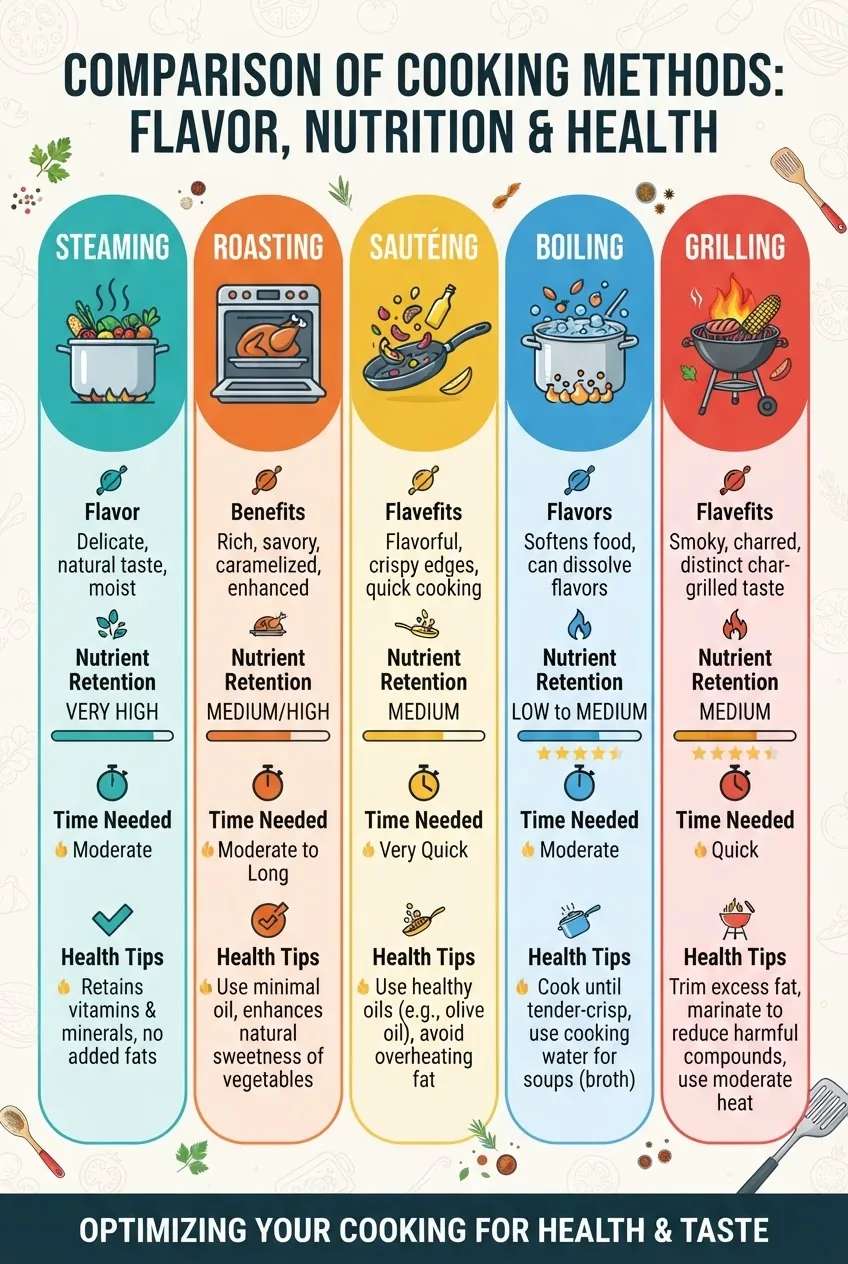
Core principles for flavor and health:
- Minimize water and time for vegetables high in vitamin C and B vitamins (steaming or microwaving is best).
- Use a small amount of unsaturated fat (1–2 tsp oil per 8 oz veg) to boost absorption of fat-soluble vitamins and improve texture.
- Avoid high-temperature charring more than once per week; favor quick sear then moderate finishing temperatures.
- Reserve cooking liquids from boiling for soups or sauces to reclaim leached nutrients.
- Blanch for freezing: follow USDA blanch times (30s–3min) then ice-bath immediately to stop enzyme activity.
- Finish with fresh acid (1 tsp lemon juice per cup of vegetables) and fresh herbs to enhance perceived flavor without added salt.
Practical tips (bullet points):
- For crisply tender greens: sauté 2 cups spinach in 1 tbsp oil for 60–90 seconds; wilt until bright green and slightly glossy.
- For roasted roots: 1″ cubes at 425°F for 25–35 minutes, toss halfway; use 1 tbsp oil per pound and 1 tsp salt per pound.
- For broccoli florets: steam 5 minutes for bright green, tender-crisp; longer (8–10 min) yields softer texture and more color loss.
- For maximum carotenoid absorption: lightly cook carrots and tomatoes with a fat source — studies show cooked tomato lycopene is more bioavailable.
- To keep beans bright and firm: blanch 2–3 minutes then shock in ice water before sautéing or freezing.
If you’re worried about overconsumption-related questions or nutrient extremes, this balanced resource addresses common health concerns:
Are Vegetables Bad for You? Informational Health Guide
Nutrition nuance: vitamins like C degrade with heat and oxygen — the kinetics often follow first-order decay where higher temperatures and longer times accelerate loss. Academy of Nutrition and Dietetics position statements and peer-reviewed studies (see references) show that quick, lower-water methods retain the most water-soluble vitamins.
For mixed-vegetable dishes, see this sibling resource comparing nutrient profiles across mixed cooked veg:
Mixed Vegetables Nutrients Guide with Health and Nutrition Facts
Common Vegetables and Their Specific Preparation and Cooking Tips
Transition: below are practical, vegetable-by-vegetable recommendations you can apply immediately. Each subsection has preparation times, cooking methods that preserve nutrition, and flavor tips.
Broccoli
- Prep: rinse under cold water, trim 1/2″ from stems, separate into uniform florets (about 1″ pieces) — 5–8 minutes for a head.
- Cook: steam 5–6 minutes for tender-crisp, roast at 425°F for 15–20 minutes for caramelized flavor.
- Nutritional tip: steaming preserves vitamin C; roasting with a drizzle of oil improves absorption of carotenoids.
- Serving tip: finish with 1 tsp lemon juice and 1 tbsp toasted almonds per 4 servings.
-
Broccoli Nutrition Facts 100g and Serving Size Guide
Carrots
- Prep: scrub or lightly peel; cut against the grain into 1/2″ coins or 1/2″ cubes (5–10 minutes).
- Cook: roast 25–30 minutes at 425°F for sweetness; quick sauté 6–8 minutes for tender-crisp.
- Nutritional tip: cooking with fat increases beta-carotene bioavailability; serve with 1 tsp oil per 1/2 cup cooked carrots.
- Calories in Carrots and Fiber Content Nutritional Guide
Leafy greens (spinach, kale, chard)
- Prep: wash in basin 1–2 times until water is clear, spin dry in a salad spinner (3–5 minutes).
- Cook: sauté spinach 60–90 seconds in 1 tbsp oil; kale benefits from 4–6 minutes sautéing or 5 minutes of steaming.
- Nutritional tip: oxalate-sensitive individuals should blanch and discard water to lower soluble oxalates; otherwise, quick cooking increases bioavailability of certain nutrients like lutein.
Potatoes and starchy roots
- Prep: scrub thoroughly; remove dark spots; leave skins on for fiber when possible.
- Cook: roast 1″ cubes at 425°F for 25–35 minutes; boil whole or in large chunks 15–25 minutes until fork-tender.
- Nutritional tip: boiling reduces resistant starch unless potatoes cool and are reheated — cooled boiled potatoes increase resistant starch and improve glycemic response.
- Is Potato a Vegetable? Classification and Nutritional Guide
Cabbage and crucifers
- Prep: remove outer leaves, core and thinly slice for slaws or chop for cooking (5–10 minutes).
- Cook: quick sauté 6–8 minutes or steam 5–8 minutes; over-boiling reduces vitamin C and glucosinolates.
- Nutritional tip: brief steaming preserves glucosinolate-derived health compounds better than long boiling. For more on cabbage nutrition see:
Calorie Content of Cabbage and Nutritional Information Guide
Green beans and peas
- Prep: trim ends, snap or cut to 1–2″ pieces (3–5 minutes).
- Cook: blanch 2–4 minutes then shock for bright color; sauté 3–5 minutes for a crisp finish.
- Nutritional tip: short blanching freezes well and preserves vitamin C for later use.
Tomatoes, peppers and summer squash
- Prep: core tomatoes and cut into wedges; seed peppers if desired; slice squash 1/4″ for quick sauté (5–10 minutes).
- Cook: roast or grill 6–12 minutes to concentrate sugars; sauté 3–6 minutes for tender-crisp texture.
- Nutritional tip: cooking tomatoes increases lycopene bioavailability; pair with a fat source for best absorption.
Mushrooms
- Prep: wipe with a damp towel or quick rinse and pat dry; slice as needed.
- Cook: sauté 6–8 minutes over medium-high until browned; avoid crowding the pan to prevent steaming.
- Nutritional tip: cooking increases umami and liberates B vitamins; fat helps flavor carry.
If you want a comprehensive list of vegetables and pictures for identification and additional prep notes, check this companion guide:
100 Vegetables Name Guide with Pictures and Nutritional Info
Storage Tips for Fresh and Cooked Vegetables
Transition: proper storage preserves texture, flavor and food safety. Follow these practical rules for short-term refrigeration and longer freezer storage.
Fresh storage guidelines:
- Refrigerate perishable produce at ≤40°F (4°C). According to a 2023 USDA report, refrigeration slows microbial growth and biochemical degradation for most vegetables.
- Leafy greens: store wrapped in a damp towel inside a perforated bag; use within 3–7 days for peak quality.
- Root vegetables: store in perforated bags in the crisper for 2–4 weeks depending on type.
- Tomatoes and bananas should be stored at room temperature until ripe; refrigeration blunts flavor development.
Cooked vegetable storage:
- Cool cooked vegetables to room temperature within 2 hours, then refrigerate in shallow airtight containers. Consume within 3–4 days.
- For freezing: blanch appropriate vegetables (see blanch times) and freeze in single-layer on a tray then transfer to freezer bags to prevent clumping. Properly blanched and frozen vegetables keep 8–12 months.
- Signs of spoilage: off-odors, sliminess, mold — discard immediately. When in doubt, follow the USDA’s safe handling guidelines: USDA food & nutrition resources.
Frequently Asked Questions About Preparing and Cooking Vegetables
Transition: quick answers to the common troubleshooting and timing questions home cooks ask most.