

Eating one to two medium oranges a day is safe and beneficial for most healthy adults, supplying vitamin C, fiber and hydration while staying within typical sugar and calorie limits; people with GERD, diabetes, or dental concerns may need to adjust portions and timing accordingly (40–60 words).
Nutritional Profile of Oranges
Answer: A medium orange (~131 g) provides vitamin C, dietary fiber, natural sugars, antioxidants and about 60–70 calories—an efficient nutrient-dense snack that contributes to daily fruit targets.
Vitamin C: an essential antioxidant and cofactor for collagen synthesis; helps immune function.
Fiber: nondigestible plant carbohydrate that supports bowel regularity and slows glucose absorption.
Antioxidants: compounds like flavonoids that neutralize free radicals and reduce oxidative stress.
The numbers below are for one medium orange (navel-type) unless noted. Energy and micronutrient values vary slightly by variety (navel, blood orange), ripeness, and size.
Key nutrient stat block — per medium orange (approx. 131 g):
- Calories: ~62 kcal — According to the USDA FoodData Central (2024 dataset, government database).
- Vitamin C: ~70 mg (~78% of the Daily Value) — According to the National Institutes of Health Office of Dietary Supplements (2023 fact sheet, government resource).
- Dietary fiber: ~3.1 g — According to the USDA FoodData Central (2024 dataset).
- Sugars (natural): ~12 g (fructose, glucose, sucrose) — According to the USDA FoodData Central (2024 dataset).
- Potassium: ~237 mg — According to the USDA FoodData Central (2024 dataset).
- Fat: 0.2 g; Protein: 1.2 g

Varietal differences: navel oranges are sweet and seedless, good for snacking; blood oranges have anthocyanin antioxidants that increase red pigmentation and slightly different antioxidant profiles (peer-reviewed analyses, 2018–2022). Seasonal and regional growing conditions (Texas winter citrus production) can alter sugar and acid balance modestly.
For broader context on fruits and nutrient density, see
Fruit Types Guide with Benefits and Nutritional Information.
Transition: Now that you know what nutrients an orange contains, the next section explains how many oranges you can safely eat each day and how official guidelines frame servings.
How Many Oranges Can You Eat a Day?
Answer: For most healthy adults, 1–2 medium oranges per day fits well within USDA fruit recommendations and AHA sugar guidance; adjusting for calories, added sugars, and medical conditions is essential.
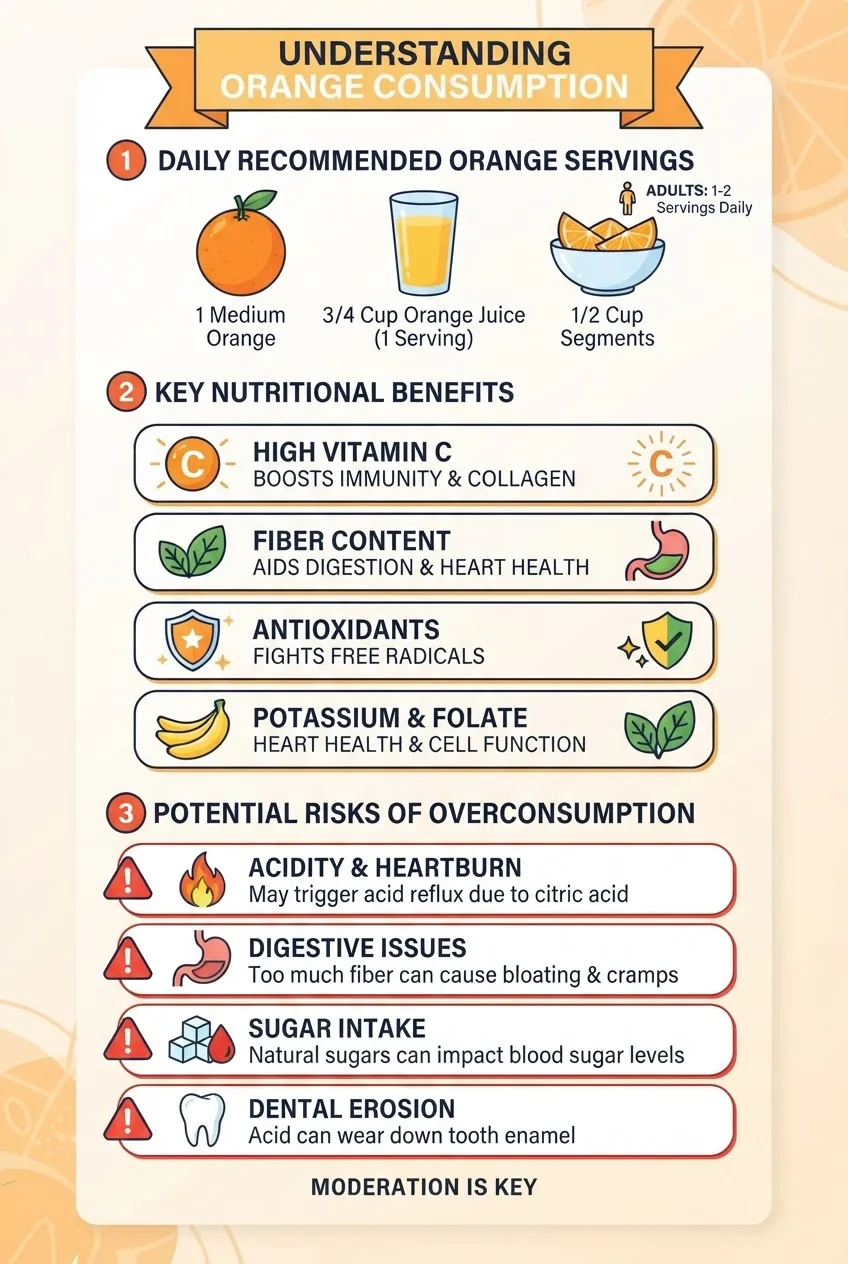
Official guidance and practical recommendations:
- Follow USDA fruit-equivalent servings: The USDA Dietary Guidelines for Americans 2020–2025 (government guidance) recommend 1.5–2 cups of fruit daily for most adults depending on age, sex and activity level; one medium orange counts as about 1 cup of fruit.
- Mind total sugar (AHA): The American Heart Association (scientific guidance) recommends limiting added sugars—while orange sugars are natural, AHA sugar-context advice suggests balancing whole-fruit sugar within overall carbohydrate and added sugar limits.
- Consider calorie and carbohydrate goals: If you eat 2 oranges, expect ~120–140 kcal and ~24 g natural sugar, which suits many energy budgets but may be high for low-carb plans or those monitoring postprandial glucose.
- Personalize for health conditions: People with diabetes, reactive hypoglycemia or GERD should consult a clinician and may limit to 1 orange or eat oranges paired with protein/fat to blunt glucose rise and acid impact.
Detailed expert recommendation breakdown:
- Low activity / 1,800 kcal diet: Aim for ~1.5 cups fruit/day (USDA 2020–2025), so 1 medium orange + a small fruit or ½ cup berries is appropriate (government guidance).
- Moderate/high activity / 2,200–2,800 kcal: 2 cups fruit/day can include 2 medium oranges or 1 orange plus mixed fruit servings (USDA guidance).
- Weight-loss context: For those using fruit to manage calories, 1 medium orange (~62 kcal) is a nutrient-dense low-calorie snack; see related best fruits for weight loss guidance for planning.
Practical portion-control strategies:
- Measure fruit cups early in the week to visualize weekly totals and avoid accidental overconsumption.
- Prefer whole oranges to juice to retain fiber and slow sugar absorption; one small glass of orange juice equals about 2 small oranges sugar-wise but lacks fiber.
- Pair oranges with protein or healthy fat (yogurt, nuts) to reduce blood sugar spikes and improve satiety.
Quantitative caution: Two medium oranges give ~24 g natural sugar; the AHA (guidance statement, 2018) suggests limiting added sugars to 36 g (men) and 25 g (women), and while natural sugars differ metabolically, total dietary carbohydrate load matters for glycemic control (American Heart Association resource). For specific nutrient absorption nuance, see the next sections.
Transition: With serving guidance set, here’s how daily oranges support health.
Health Benefits of Eating Oranges Daily
Answer: Eating oranges daily can support immune function, skin health, hydration and chronic disease risk reduction through vitamin C, fiber and antioxidants when consumed as part of a balanced diet.
Immune system support: Vitamin C contributes to immune defense by supporting epithelial barriers and immune cell function; regular intake from whole foods is linked to fewer and shorter respiratory infections in pooled analyses (systematic review, 2020).
- Immune defense: One medium orange (~70 mg vitamin C) helps meet daily needs; NIH ODS (2023 fact sheet, government resource) notes vitamin C supports collagen and immune cells.
- Skin health: Vitamin C is essential for collagen synthesis, which maintains skin integrity and wound healing; dietary vitamin C intake shows correlations with better skin aging scores in observational studies (peer-reviewed research, 2019–2021).
- Hydration and electrolytes: Oranges are 86–88% water and provide potassium (~237 mg), aiding fluid balance after exercise—useful in warm Texas climates during citrus season (USDA FoodData Central, 2024 dataset).
- Digestive health: The ~3 g fiber per orange contributes to daily fiber goals and supports regularity; fiber also slows glucose absorption and feeds beneficial gut bacteria (nutrition review, 2022).
- Antioxidant and chronic disease prevention: Flavonoids and vitamin C act as antioxidants; epidemiological studies link higher citrus intake to modestly lower risks of stroke and some cardiovascular outcomes (meta-analyses, 2017–2021).
Dietary context: Oranges deliver concentrated vitamin C and soluble fiber compared with many fruits, which makes them an efficient choice to help meet USDA fruit recommendations while supplying bioactive compounds associated with long-term health (USDA and NIH sources).
For guidance on plant-based diet balance, see vegetables bad for you?
Transition: While benefits are clear, daily orange intake also carries potential risks when overdone—read the next section for side effects and mitigation.
Potential Risks and Side Effects of Eating Too Many Oranges
Answer: Excessive orange intake can worsen acid reflux, erode dental enamel, raise blood sugar temporarily, and cause gastrointestinal upset or allergic reactions in sensitive people; moderation and pairing strategies reduce these risks.
Acid reflux (GERD): definition: backward flow of stomach acid into the esophagus causing heartburn and regurgitation.
Acid reflux and citrus acid impact
Oranges are acidic (citric acid) and can trigger or worsen gastroesophageal reflux disease (GERD) symptoms in susceptible individuals. Clinical guidelines and gastroenterology reviews (clinical review, 2019) list citrus as a common dietary trigger. If you experience heartburn after oranges, limit intake to small portions, avoid before bedtime, and pair with a low-fat protein to reduce reflux episodes.
Dental erosion and enamel concerns
Acid plus sugar exposure can erode dental enamel over time; dental research reviews (dental journal, 2018) recommend rinsing with water after citrus, avoiding prolonged sucking on orange segments, and waiting ~30 minutes before brushing to allow remineralization.
Blood sugar spikes and metabolic considerations
Although oranges contain fiber that slows glucose absorption, eating several at once or drinking juice can cause larger postprandial glucose rises. Diabetes treatment guidelines (endocrinology consensus, 2020) advise portion control—often 1 medium orange per snack—and pairing with protein or fat to blunt spikes.
Digestive discomfort and laxative effect
Very high intake of citrus fiber and sorbitol (a natural sugar alcohol in some fruits) may cause bloating, gas or osmotic diarrhea in sensitive individuals; reduce servings if you notice persistent gastrointestinal symptoms.
Allergic reactions and oral allergy syndrome
Some people experience oral allergy syndrome—tingling or swelling after fresh fruit—especially if pollen allergies are present (allergy review, 2017). Severe systemic allergy to citrus is rare but possible; seek medical evaluation for hives, swelling, or breathing difficulty.
For a broader review on overconsumption risks, see can you eat too much fruit?
Transition: To place oranges in context, compare their nutrient and sugar profile with other fruits and calorie-dense choices below.
Comparing Orange Intake With Other Fruits
Answer: Oranges are moderate in natural sugar and calories, high in vitamin C and water, and comparable in fiber to many fruits; compared with calorie-dense fruits like avocado, oranges are lower-calorie but higher in sugar.
Term: nutrient density — the ratio of nutrients (vitamins, minerals, fiber) to calorie content in a food.
| Fruit | Calories (per typical serving) | Sugars (g) | Fiber (g) | Notable nutrients |
|---|---|---|---|---|
| Orange (1 medium) | ~62 kcal | ~12 g | ~3.1 g | Vitamin C, potassium, flavonoids |
| Apple (1 medium) | ~95 kcal | ~19 g | ~4.4 g | Fiber (pectin), polyphenols |
| Banana (1 medium) | ~105 kcal | ~14 g | ~3.1 g | Potassium, B6 |
| Avocado (1/2 fruit) | ~120–160 kcal | ~0.2 g | ~6.7 g | Monounsaturated fats, fiber, potassium |
| Grapes (1 cup) | ~104 kcal | ~23 g | ~1.4 g | Resveratrol, antioxidants |
Explanatory notes: Data approximations are drawn from USDA FoodData Central (2024 dataset, government database) and peer-reviewed nutrient tables. Oranges are lower in calories than apples and bananas per typical serving, higher in vitamin C, and contain moderate fiber. Compare higher-calorie, high-fat fruits like avocado for different dietary goals.
For classification differences between fruits and vegetables, see fruit or vegetable guide.
To compare nutrient-dense fruits, read avocado fruit nutritional benefits.
For broader calorie comparisons, see calorie content of cabbage.
Transition: Next, practical ideas for adding oranges into a balanced Texas-friendly diet appear below.
Best Ways to Incorporate Oranges into a Balanced Diet
Answer: Incorporate 1 medium orange daily as a snack, salad topper, or breakfast component; prefer whole fruit over juice, pair with protein/fat, and use seasonal Texas oranges for best flavor and nutrient retention.
How-to steps for everyday integration:
- Snack smart: Eat 1 medium orange with a handful of almonds or a tablespoon of peanut butter to add protein and healthy fat that slow sugar absorption.
- Breakfast upgrade: Add orange segments to plain Greek yogurt with chia seeds to boost vitamin C and fiber in a balanced meal.
- Salad and savory pairings: Toss orange segments with mixed greens, roasted beets, and a small portion of feta or grilled chicken for a nutrient-forward lunch.
- Swap juice for whole fruit: Replace 6–8 oz of orange juice (about 2–3 oranges worth of sugar) with one whole orange to retain fiber and reduce glycemic load.
- Cooking and seasonality: Use blood oranges in winter vinaigrettes or salsa when available locally in Texas—zest adds aroma and vitamin-rich oils without added sugar.
Example meal/snack ideas:
- Mid-morning: 1 medium orange + 12 raw almonds (~200 kcal total).
- Lunch salad: mixed greens + orange segments + 3 oz grilled salmon + 1 tbsp olive oil.
- Snack: orange wedges with plain cottage cheese or Greek yogurt.
Pair oranges with a variety of vegetables—see the vegetables name guide for pairing ideas and nutrient complements.
For serving-size balance, consult broccoli nutrition facts and serving sizes.
Avoiding pitfalls: choose whole fruit over juice, avoid eating multiple oranges in rapid succession, and watch dental exposure—rinse with water after citrus and wait to brush.
Transition: If you’re shopping in Texas or at farmers markets, seasonal timing and selection matter—see tips below for picking quality oranges locally.
Seasonal Availability and Choosing Quality Oranges in Texas
Answer: In Texas, orange season typically runs late fall through early spring—choose heavy-for-size, fragrant oranges with firm skin, avoid soft spots, and store at room temperature short-term or refrigerated for longer freshness.

Sensory ripeness-check method (Texas climate tailored):
- Look: vibrant color with minimal green patches for navel; blood oranges show blush or deep red tones when ripe.
- Feel: should feel heavy for size (indicates juiciness) and firm with slight give; avoid wrinkled or overly soft spots.
- Smell: ripe oranges have a sweet, citrus aroma near the stem end—if you can smell it, flavor is more likely to be good.
Storage tips: Keep whole oranges at room temperature for 3–5 days; refrigerate in the crisper to extend to 2–3 weeks (produce storage guide, USDA extension recommendations, 2022). For best taste in Texas heat, refrigerate after purchase and bring to room temperature before serving.
Organic vs. conventional: Both are nutrient-similar; wash all fruit before eating. Choose organic if pesticide exposure is a concern—cost and availability vary by market.
Transition: Below is a short summary of the key takeaways and an action step you can try this week.
Conclusion
One medium orange a day fits well within USDA fruit recommendations and offers vitamin C, fiber and antioxidants with minimal calories; two medium oranges are acceptable for many adults but require attention to total sugar and individual conditions like GERD or diabetes. Try replacing juice with one whole orange daily and pair it with protein for balanced blood sugar control. For personalized advice, consult your healthcare provider.
Action: This week, swap one serving of orange juice for a whole orange and note changes in satiety and digestion.
External resources: USDA Dietary Guidelines for Americans, American Heart Association, and NIH Office of Dietary Supplements.