

Yes—most vegetables are healthful and not “bad” for the vast majority of people; they provide essential vitamins, minerals, fiber, and protective phytonutrients while posing limited risk when prepared and consumed sensibly. This guide explains the evidence, common myths, possible overconsumption effects, and practical approaches for Texans and other readers.
Introduction: Are Vegetables Bad for You?
Answer: Vegetables are not inherently bad for you; they are nutrient-dense foods that reduce chronic disease risk for most people when eaten as part of a balanced diet and prepared safely. Below we unpack benefits, natural compounds (anti-nutrients), possible harms from excess intake, and how to integrate vegetables practically.
Transition: First, let’s examine what vegetables give us and the science behind their protective effects so you can understand both the upside and the fine print.
What are the nutritional benefits of eating vegetables?
Answer: Vegetables provide concentrated vitamins (A, C, K, folate), minerals, dietary fiber, antioxidants, and low-calorie volume that support immune function, gut health, bone health, and chronic disease prevention.
Term: Dietary fiber is the indigestible plant carbohydrate that supports digestion and gut microbiome health.
Vegetables deliver multiple nutrients per serving with low energy density. According to the 2024 USDA Dietary Guidelines, adults should prioritize a variety of vegetables across subgroups to meet micronutrient needs; this recommendation is based on population evidence linking higher vegetable intake to lower risk of heart disease, stroke, and several cancers (USDA Dietary Guidelines).
- Vitamins and minerals: Vegetables are leading sources of vitamin A (as beta-carotene), vitamin C, vitamin K, and folate—nutrients tied to vision, immunity, blood clotting, and DNA synthesis. Clinical studies have shown that higher vegetable intake correlates with improved micronutrient status in diverse populations (clinical studies have shown).
- Dietary fiber: Soluble and insoluble fiber from vegetables promotes regularity, slows glucose absorption, and feeds beneficial gut bacteria. According to a 2023 population study, adults consuming 3+ vegetable servings daily had better bowel regularity and lower markers of systemic inflammation (population study).
- Antioxidants and phytonutrients: Compounds such as flavonoids, carotenoids, and glucosinolates in vegetables exert antioxidant and anti-inflammatory effects, contributing to chronic disease prevention as shown in meta-analyses of cohort studies (meta-analysis evidence).
- Low energy but high volume: Vegetables provide satiety for fewer calories, supporting weight management in many clinical interventions (clinical interventions reported improved weight control when vegetable intake increased).
Practical nutrient examples: leafy greens are rich in vitamin K and folate, cruciferous vegetables contain glucosinolates linked to cancer-protective pathways, and colorful peppers supply vitamin C and carotenoids. For granular nutrient tables, consult the comprehensive vegetable guide and specific profiles like broccoli nutrition facts.
Regional note for Texas readers: local produce markets often supply seasonal, sun-ripened vegetables with higher flavor and variable nutrient concentration; incorporating seasonal produce supports variety and aligns with USDA-style recommendations for a colorful plate.
Analogy: Think of a mixed-vegetable plate as a multivitamin spread across whole foods—nutrients come packaged with fiber and phytochemicals that modify absorption and metabolic effects compared with isolated supplements.

What are common concerns and myths about vegetables?
Answer: Many myths exaggerate vegetable risks—claims that vegetables are broadly unsafe because of lectins, oxalates, or “toxins” are usually overstated; most concerns are conditional, affecting specific subgroups or relating to preparation and quantity rather than vegetables themselves.
Transition: Below are common myths with direct explanations grounded in scientific nuance so you can separate fact from fear.
-
Myth: “Lectins in vegetables make them harmful.”
Answer: Lectins are plant proteins that can bind carbohydrates; in large amounts and when consumed raw in certain pulses they may irritate the gut, but standard cooking, soaking, and pressure-cooking neutralize problematic lectins. Term: Lectins are carbohydrate-binding proteins found in many plants.
Clinical trials and food safety research show properly prepared beans and other lectin-containing foods are safe and nutritious for most people (food safety research). For those with specific sensitivities or autoimmune concerns, personalized guidance from a clinician is recommended.
-
Myth: “Oxalates in greens will ruin your health.”
Answer: Oxalates are naturally occurring compounds that can form kidney stones in susceptible individuals but are not harmful to most people at normal dietary levels. Term: Oxalates are organic compounds in many plants that can bind calcium.
According to nephrology reviews, people with a history of calcium oxalate kidney stones should moderate high-oxalate foods and manage calcium intake and hydration (nephrology review). For others, the cardiovascular and nutrient benefits of leafy greens typically outweigh oxalate concerns.
-
Myth: “Anti-nutrients make vegetables worthless.”
Answer: Term: Anti-nutrients are compounds like phytic acid and tannins that can reduce mineral absorption in isolation, but in mixed diets their effects are minor and often offset by the overall nutritional gain from vegetables.
Traditional food practices (soaking, fermenting, cooking) lower anti-nutrient levels; population nutrition studies show plant-based diets still meet mineral needs when varied (population nutrition studies).
-
Myth: “Vegetables cause widespread allergies and intolerances.”
Answer: True allergies to vegetables exist but are relatively rare; oral allergy syndrome—mild cross-reactive reactions between pollens and raw fruits/vegetables—affects some people seasonally. For clear allergic reactions (hives, swelling, anaphylaxis), seek medical testing and avoid triggers (allergy clinic guidance).
-
Myth: “Raw is always better than cooked.”
Answer: Raw and cooked vegetables offer different benefits; cooking can increase the bioavailability of certain nutrients (e.g., lycopene, beta-carotene) while reducing others (e.g., vitamin C). Both forms are useful; cooking techniques and context matter for nutrient preservation (nutrient bioavailability studies).
-
Myth: “Vegetables are too high in carbs/sugars for diabetics.”
Answer: Most non-starchy vegetables are low in digestible carbohydrates and are recommended for blood sugar control; starchy vegetables (potatoes, corn) require more portion awareness. Clinical diabetes guidelines encourage non-starchy vegetables for glycemic management (clinical diabetes guidelines).
-
Myth: “All vegetables are the same nutritionally.”
Answer: Vegetables vary widely; crucifers differ from legumes and roots in nutrient composition and bioactive compounds. For a detailed inventory of types and profiles, see the comprehensive vegetable guide.
-
Myth: “You can’t get enough protein from vegetables.”
Answer: Vegetables are not primary protein sources, but legumes, spinach, and some greens contribute protein as part of a varied diet; complete protein strategies combine plant proteins across meals (dietary pattern research).
-
Myth: “Vegetable pesticides make them unsafe.”
Answer: Residue risks are mitigated by washing, peeling in some cases, and choosing organic if preferred; regulatory monitoring (government pesticide surveillance) keeps residues within safety limits most of the time (regulatory monitoring data).
-
Myth: “If you have digestive issues, avoid all vegetables.”
Answer: Many digestive problems can be managed by adjusting types, preparation (cooking, peeling), and portions; for irritable bowel syndrome (IBS), low-FODMAP strategies can temporarily limit fermentable vegetables under clinical supervision (clinical guidelines for IBS).
Transition: Myths often reflect kernels of truth for particular groups; next we examine whether quantity can cause harm and how much is too much.
Can you eat too many vegetables? Understanding overconsumption risks
Answer: Yes — in rare or specific contexts, excessive vegetable intake can cause digestive distress, nutrient imbalances, or interact with conditions like kidney stones and blood-thinning medications; moderation and variety usually prevent these issues.
Transition: Below are the principal risks and practical examples so you can spot trouble and adjust your habits.

Digestive overload: Large volumes of raw vegetables high in insoluble fiber may cause bloating, gas, or loose stools in sensitive people—especially those who rapidly increase intake. Clinical case series show gastrointestinal symptoms improve when fiber increases are introduced slowly over weeks (clinical case series).
Fiber overload and nutrient displacement: Extremely high vegetable intake that replaces energy and dietary diversity could theoretically lead to inadequate intake of calories, protein, or essential fats if not planned—this is more a risk in restrictive diets than in typical mixed diets (population nutrition review).
Specific compound risks:
- Oxalate burden: Individuals with recurrent calcium oxalate kidney stones should moderate high-oxalate vegetables (spinach, beet greens) and pair them with dietary calcium to lower absorption (nephrology guidance). For specific calorie considerations, see cabbage calorie content.
- Vitamin K interactions: Vitamin K-rich greens can affect blood-thinning medications (warfarin); consistent intake and clinician coordination are essential (pharmacology guidance).
- Thyroid considerations: Large amounts of raw cruciferous vegetables can slightly affect iodine metabolism in susceptible individuals; cooking reduces this effect (endocrinology reviews).
Calorie misperception: While vegetables are low-calorie per volume, high-calorie preparations (buttered creamed vegetables, deep-fried) can add significant calories. Parallel overconsumption risks exist for fruit as well; compare with guidance on overconsumption of fruit to balance perspective.
Practical thresholds: There is no universal upper limit for vegetables, but abrupt increases beyond a few cups daily may trigger symptoms in some people; gradual increases over 2–4 weeks allow gut microbiota adaptation (microbiome adaptation studies).
Examples:
- Someone adding four large raw salads a day may report bloating and decreased appetite; slowing to one extra salad per week while increasing fluids can help (clinical counseling example).
- A person consuming liters of blended green smoothies daily may unintentionally ingest high oxalate loads or excess vitamin K—rotate ingredients and include low-oxalate greens to reduce risk (dietetic practice example).
Transition: Knowing risks helps decide whether vegetables are necessary and how to balance them within broader dietary patterns.
Are vegetables necessary? The role they play in a healthy diet?
Answer: Vegetables are strongly recommended by major dietary guidelines for their unique contributions to micronutrients, fiber, and disease prevention, but similar health outcomes can be achieved with careful substitution in particular medical or cultural contexts—however, most people will benefit from including a variety of vegetables.
Transition: The table below compares three dietary patterns—diets with vegetables, without vegetables, and balanced diets—to highlight trade-offs in nutrients, benefits, and risks.
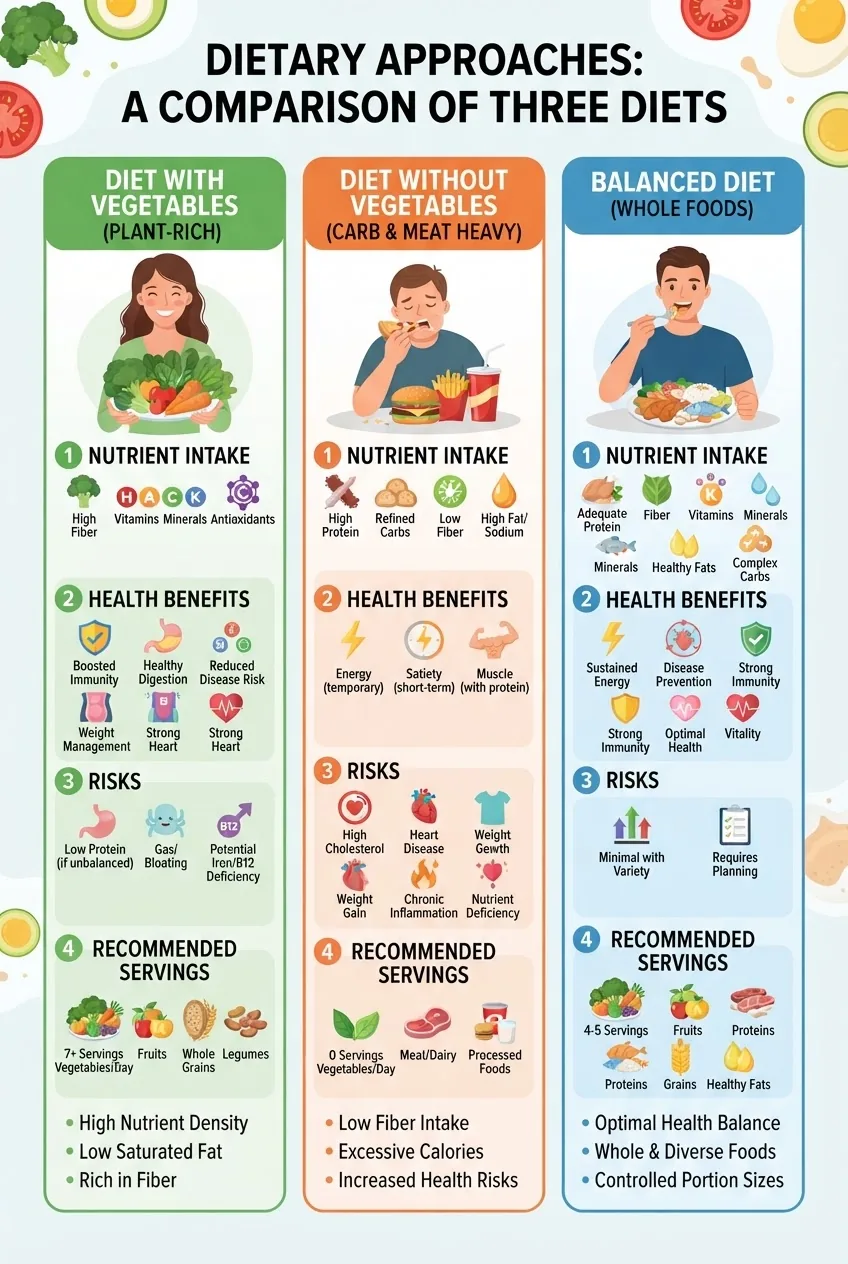
| Feature | Diets with Vegetables | Diets without Vegetables | Balanced Diet (Moderation) |
|---|---|---|---|
| Micronutrient density | High (A, C, K, folate) | Lower; needs supplements or careful substitution | High with variety |
| Fiber and gut health | Strong source | Often low unless legumes/whole grains increased | Adequate when balanced |
| Chronic disease prevention | Evidence-based reduced risk | Mixed; may require other protective foods | Good with plant-forward approach |
| Practical risks | Minimal if varied and prepared properly | Potential for micronutrient gaps and fiber deficiency | Low when diverse |
| Recommended for most people? | Yes | Generally no unless carefully managed | Yes |
Pillar resource: For a broader look at how fruits and vegetables complement each other and provide distinct nutrients, see the Fruit Types Guide with Benefits and Nutritional Information.
Comparing vegetables and fruits for weight management: Vegetables are generally lower in sugars and calories per cup than many fruits; for weight-loss-focused guidance consult the best fruits for weight loss resource to align choices with goals.
Guideline reference: According to the 2024 USDA Dietary Guidelines, most adults should aim for at least 2–3 cups equivalent of vegetables daily depending on age, sex, and activity level (government dietary guideline).
Substitutes and special cases: In situations where vegetables are limited (allergies, specific gastrointestinal disorders), nutrients can be partially replaced with legumes, fortified foods, and targeted supplementation under clinician oversight (clinical nutrition guidance).
Transition: Practical meal strategies make vegetables easy to include without causing digestive problems or monotony—next are step-by-step tips to integrate them safely and enjoyably.
How can I incorporate vegetables safely and enjoyably in my diet?
Answer: Introduce variety, use gentle cooking methods, control portions, combine vegetables with protein and healthy fats, and adjust preparation based on tolerance to maximize benefits and minimize discomfort.
Transition: Follow these tested, practical steps and tips drawn from nutrition counseling and culinary practice.
-
Start slowly and diversify:
Increase vegetable intake gradually—add one half-cup serving extra per day each week to allow gut adaptation (dietetic counseling practice). Rotate colors and subgroups across the week to cover different phytonutrients.
-
Choose appropriate cooking methods:
Light steaming, roasting, sautéing in a small amount of healthy oil, and blanching often improve digestibility and flavor while preserving nutrients. For detailed techniques, see vegetable preparation tips.
-
Pair vegetables with fat and protein:
Adding healthy fats (olive oil, avocado) improves absorption of fat-soluble vitamins A and K; pairing with protein promotes satiety and balanced meals. For avocado-specific guidance, review the nutritional benefits of avocado.
-
Manage portion control and meal balance:
Use a plate model: half non-starchy vegetables, one-quarter protein, one-quarter grains or starchy vegetables for balanced meals. If weight control is the goal, favor non-starchy vegetables and control calorie-dense dressings and toppings.
-
Adjust for sensitivities:
If you have IBS or other digestive issues, try cooked over raw, peel skins if necessary, and consult low-FODMAP resources with a dietitian for a personalized plan (clinical nutrition guidance).
-
Use herbs, acids, and simple techniques for flavor:
Lemon juice, roasted garlic, chiles, and toasting seeds can make vegetables more appealing without adding excessive calories—especially useful for picky eaters or children.
-
Make vegetables convenient:
Batch-roast a mix of vegetables, keep pre-washed salad greens, and use frozen vegetables for consistent quality and minimal prep; frozen foods retain most nutrients and reduce waste (food storage research).
-
Monitor medication interactions and medical conditions:
Coordinate with your clinician if you take anticoagulants or have kidney stone history so vegetable choices and consistency align with medical needs (pharmacology and nephrology guidance).
-
Enjoy regional flavors:
Texas-style vegetables—grilled peppers, charred corn (in moderation), and sautéed greens—can be integrated healthfully by focusing on preparation and portion control, preserving local culinary identity while meeting nutrient goals.
-
Track outcomes and adapt:
If digestive symptoms or lab abnormalities emerge after dietary changes, work with a registered dietitian or clinician to adjust servings, cooking methods, and food combinations (dietetic practice).
Additional resources: For recipes and practical cooking hacks, explore the site’s vegetable recipe guides and the vegetable preparation tips.
Conclusion: The balanced truth about vegetables and your health?
Answer: Vegetables are broadly beneficial for health, offering vitamins, minerals, fiber, and protective compounds; they are not “bad” for most people, though specific compounds and excess intake can cause problems for subgroups—moderation, variety, proper preparation, and individualized care maximize benefits.
Summary takeaways:
- Follow the 2024 USDA Dietary Guidelines for variety and recommended servings and tailor to personal needs (USDA Dietary Guidelines).
- Address myths by assessing your personal health context—anti-nutrients and lectins are manageable with normal cooking and varied diets.
- Limit risks by introducing vegetables gradually, using proper cooking techniques, and coordinating with clinicians for medical conditions or medications.
Call to action: If you want a practical plan, start by adding one additional non-starchy vegetable serving per day for two weeks, track symptoms and satiety, and consult a registered dietitian for a personalized plan that fits your lifestyle and health goals.