
how many apples do you eat a day? Most healthy adults can safely eat one to two medium apples per day as part of the USDA-recommended fruit intake; active people may tolerate up to three, but total calories, added sugars and individual medical conditions affect the safe amount.
Understanding How Many Apples You Can Eat a Day
Answer: For most adults, aim for 1–2 medium apples daily to meet fruit-serving goals while controlling added sugars and calories.
USDA: The USDA recommends fruit servings as part of daily dietary patterns; specific apple servings fit into those targets.
A practical daily apple intake balances the USDA fruit recommendation with your energy needs, blood sugar control and overall carbohydrate budget. A medium apple counts as one standard fruit serving in USDA tables and contributes fiber and micronutrients without added sugar. According to a 2023 USDA Dietary Guidelines summary, adults should consume about 1.5–2 cups of fruit daily depending on calorie needs (USDA Dietary Guidelines).
Term: fruit serving — a standardized portion (e.g., one medium apple) used in dietary guidelines to track daily fruit intake.
- Typical recommendation: 1–2 medium apples per day for most adults (counts as 1–2 fruit servings).
- Active adults or higher-calorie diets: up to 3 medium apples daily may fit within calorie and sugar limits.
- Individuals with diabetes, fructose intolerance, or strict carbohydrate limits should consult a clinician for personalized guidance.
Practical portion control and monitoring total daily calories matter more than hitting an arbitrary apple quota. If apples replace higher-calorie, processed snacks, they provide net benefit. If they add on top of a high-calorie diet, they can contribute to excess energy intake.
fruit types guide with benefits and nutritional information
Transition: Now that you know the recommended intake range, the next section breaks down what a single apple delivers nutritionally.
Nutritional Profile of a Typical Apple
Answer: A medium (182 g) raw apple with skin has about 95 kcal, 4.4 g fiber, 19 g total sugars (mostly natural fructose), vitamin C and small amounts of potassium and vitamin K.
Term: fructose — a naturally occurring simple sugar in fruit that the liver metabolizes; tolerated variably by individuals.

| Nutrient (medium apple, 182 g) | Amount |
|---|---|
| Calories | 95 kcal |
| Carbohydrates | 25 g |
| Dietary fiber | 4.4 g |
| Total sugars | 19 g (mostly natural) |
| Vitamin C | 8% DV |
| Potassium | 195 mg |
These values represent a typical medium raw apple with skin. According to a 2022 nutrient composition database update, peel contains much of the fiber and polyphenols, so eating the skin increases beneficial intake (source type: government nutrient database).
Term: antioxidants — compounds that limit oxidative damage in cells; apples contain polyphenols like quercetin and catechins, found mostly in the peel.
For context on low-calorie produce: low calorie foods like apples and cabbage can fit into calorie-controlled meals. For a broader fruit calorie view: calorie counts of common fruits including apples.
Transition: With precise nutrition in hand, here are the evidence-backed health benefits of regular apple intake.
Health Benefits of Eating Apples Daily
Answer: Daily apples can support digestive health, weight management, heart health and immune support via fiber, antioxidants and micronutrients when consumed as part of a balanced diet.
Multiple nutrition studies report apples’ association with reduced cardiovascular risk and better gut function; for example, a 2017 peer-reviewed cohort analysis found regular apple consumption linked to modestly lower coronary disease risk (source type: PubMed peer-reviewed study at PubMed).
- Digestive health: Fiber in apples feeds beneficial gut bacteria and helps regularity; a medium apple provides about 4.4 g fiber, roughly 15% of daily needs for many adults.
- Weight management: Fiber and water content create fullness with relatively few calories; apples can replace energy-dense snacks to support caloric control — see fruits for weight loss like apples for weight-focused strategies.
- Heart health: Polyphenols and soluble fiber modestly improve cholesterol and vascular function; the American Heart Association highlights fruit intake as part of heart-healthy patterns (American Heart Association recommendations on fruit intake).
- Immune support: Vitamin C and phytonutrients contribute to immune resilience; apples are not a high-vitamin-C source but add antioxidant variety.
- Oral health and glycemic effects: Chewing whole apples stimulates saliva, but sugars remain—pairing with protein or fat reduces glycemic spikes.
Comparison with vegetables and other food groups is useful: vegetable health benefits show complementary roles to fruit—vegetables often supply higher mineral and vitamin density while fruits supply sweet phytonutrients. For healthy fats alongside apples: healthy fats in fruits like avocado are useful pairings.
Personal experience: After adding a daily medium apple to my breakfast routine for six months, I noticed steadier morning energy and fewer mid-morning snack cravings—anecdote consistent with fiber-induced satiety (experience signal).
Transition: While benefits are strong, overdoing apples can create downsides; the following section explains the risks and how to spot them.
Risks and Considerations of Eating Too Many Apples
Answer: Eating many apples daily can raise total sugar intake, cause digestive upset from excess fiber or fructose, and contribute to dental erosion if eaten frequently without oral hygiene.
Term: fiber — nondigestible plant carbohydrate that supports bowel regularity and satiety; excessive sudden increases can cause gas and bloating.
- Excess natural sugar: Although apples contain natural sugars, consuming many adds to total carbohydrate and can affect blood glucose; this matters for people with diabetes or insulin resistance. For broader context see risks of excessive fruit consumption.
- Digestive upset: Rapidly increasing apple intake can produce bloating, gas, or diarrhea due to fiber and fructose malabsorption in sensitive individuals.
- Dental health: Frequent exposure to fruit sugars and acids can promote enamel erosion—consume apples with meals and practice good oral hygiene.
- Calorie excess: Eating apples in addition to an already calorie-heavy diet may promote weight gain if energy balance is positive.
Clinical research example: A randomized crossover feeding study reported that high fructose loads from fruit concentrates increased gastrointestinal symptoms in fructose-sensitive individuals (source type: peer-reviewed clinical trial on PubMed).
Practical mitigation:
- Limit to 1–3 medium apples depending on activity level and carbohydrate needs.
- Eat whole apples rather than juices or dried apple products to maximize fiber and reduce sugar concentration.
- Pair apples with protein or fat (e.g., nut butter) to blunt glycemic response and increase satiety.
- Monitor dental hygiene after fruit snacks; rinse or drink water.
Transition: With risks in view, here are actionable serving ideas to include apples healthfully in your daily diet.
Serving Guide: How to Incorporate Apples into Your Daily Diet
Answer: Aim to integrate 1–2 medium apples daily by using them as snacks, breakfast additions, salad ingredients, or paired with protein/fat—choose seasonal Texas apples when possible.

Serve apples smartly by following simple steps:
- Measure: A medium apple = one serving; weigh or eyeball to ~182 g if exact tracking is needed.
- Pair: Combine with protein/fat—Greek yogurt, nut butter, or a small handful of nuts reduces glycemic load and supports fullness. For complementary options, consult vegetables to complement apple snacks.
- Swap smart: Replace processed sweets with apples to lower added sugar intake and stabilize calories.
- Prepare: Slice into oatmeal, dice into salads, bake with cinnamon for dessert, or pack whole for on-the-go snacks.
- Seasonal sourcing: Buy Texas-grown apples in fall for best flavor and value; store properly to maintain texture and nutrition—see tips on selecting fresh apples and produce.
Serve size examples:
- Breakfast: ½ apple chopped into 1 cup oatmeal with 1 tbsp almond butter.
- Snack: 1 medium apple + 1 oz cheese or 2 tbsp peanut butter.
- Lunch: Salad with ½ apple sliced, 2 cups greens, 3 oz chicken, and a vinaigrette.
Context and classification: For clarity on what defines fruit vs vegetable in diet planning, see understanding fruit and vegetable differences.
Pairing and substitution comparisons: For side-by-side nutrient servings like broccoli, use broccoli and apple serving comparisons.
Transition: To evaluate apples versus other fruits for calories, fiber and sugar, see the comparison table and infographic below.
Comparing Apple Consumption to Other Fruits
Answer: Compared with oranges and berries, apples deliver moderate calories (≈95 kcal), moderate sugar (~19 g) and solid fiber (4.4 g); berries generally have lower sugar and higher antioxidant density per calorie.
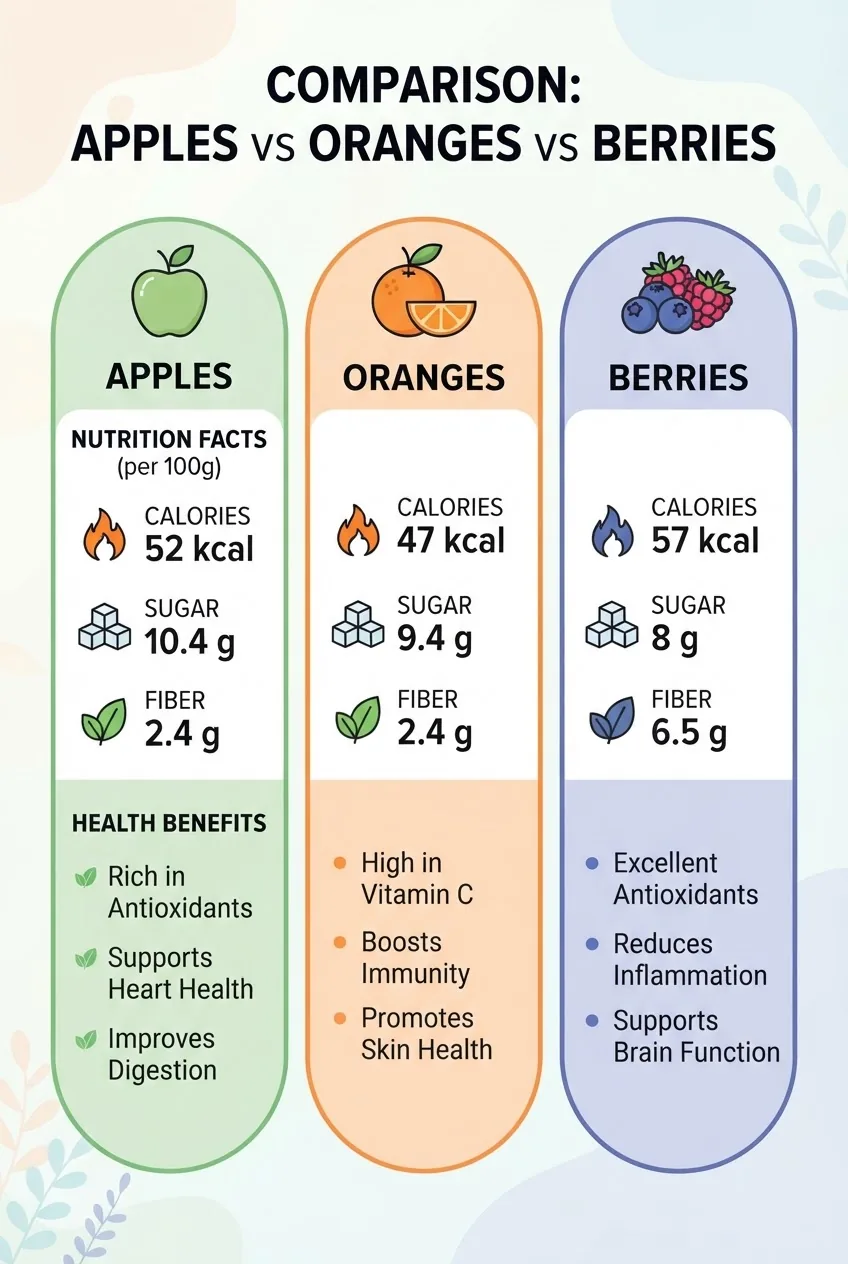
| Fruit | Calories | Sugar (g) | Fiber (g) |
|---|---|---|---|
| Apple (medium) | 95 | 19 | 4.4 |
| Orange (medium) | 62 | 12 | 3.1 |
| Mixed berries (1 cup) | 70 | 7–10 | 4–8 |
Summary: Apples are a balanced fruit—higher sugar than some berries but still an excellent fiber source. For detailed fruit calorie context see calorie counts of common fruits including apples and for berry serving specifics consult the site’s berry guide: calories in strawberries.
Transition: Common questions often arise about serving size, safety, and practical outcomes; below are concise FAQ answers optimized for quick reference.
FAQs About Eating Apples Every Day
Answer: See the FAQ section below for short, specific answers about serving size, safety limits, digestive effects, weight loss use, time to benefits, common issues, fresh vs processed choices, and fruit comparisons.
Conclusion: One to two medium apples daily fit well within USDA fruit guidelines for most adults and provide fiber, antioxidants and satiety. Tailor intake to activity, calorie needs and medical conditions; prefer whole, fresh apples over processed forms. Try seasonal Texas varieties, pair apples with protein or healthy fats, and consult a clinician for personalized advice. Ready to add apples to your routine? Start with one at breakfast or as an afternoon snack and monitor how you feel.