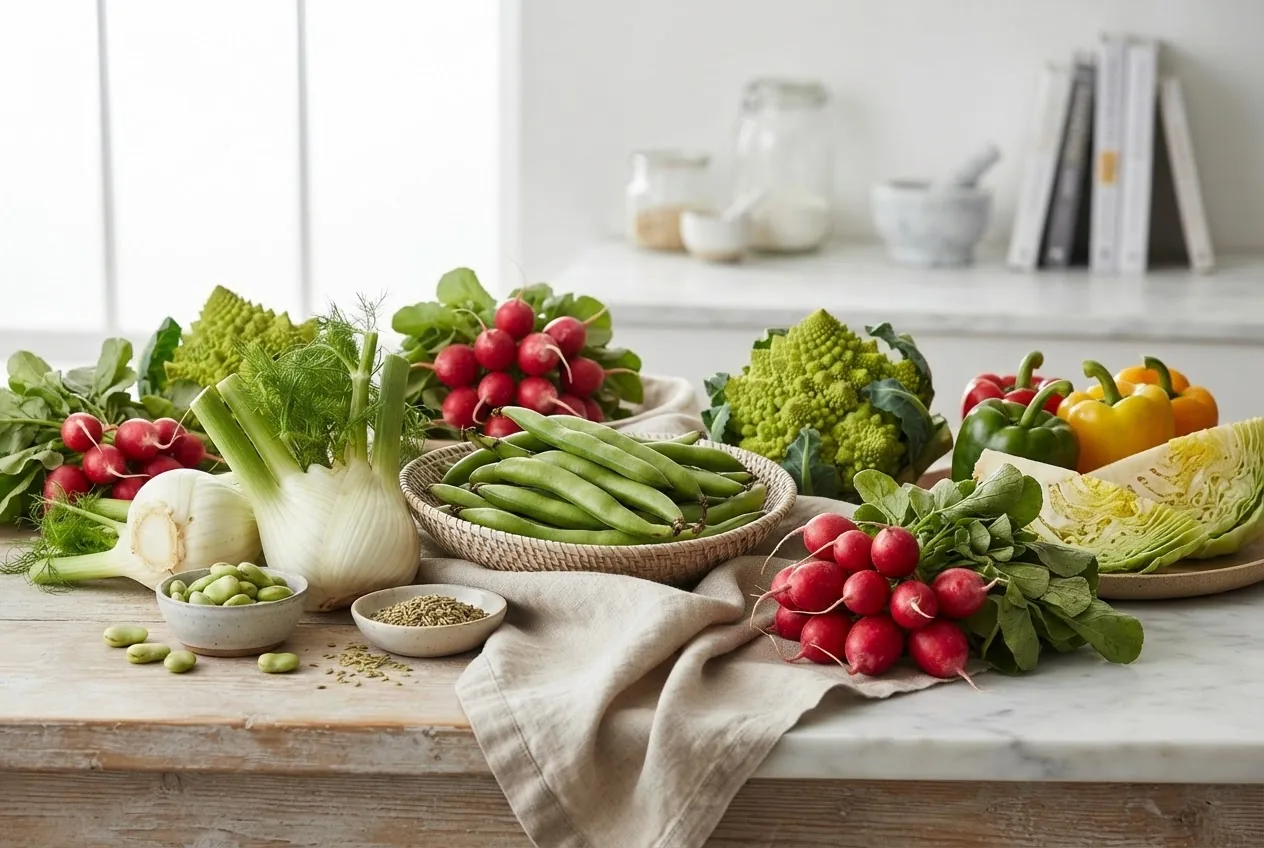
Vegetables starting with F include familiar bulbs and legumes—fennel, French beans, flat (Romano) beans, fava beans, fingerling potatoes, fakke (fenugreek greens), and forest mushrooms—each offering unique varieties, nutrition and Texas-seasonal uses from spring markets to fall preserves, with practical cooking and storage steps.
Introduction to Vegetables Starting with F
Answer: Vegetables starting with F are a small but diverse group of bulbs, legumes, tubers and greens offering flavors from anise-like fennel to earthy fava beans; in Texas they appear across seasons with distinct varieties, regional availability and culinary roles in Southern and Tex-Mex cooking.
Fennel: A perennial herb with a crisp bulb and feathery fronds used as both a vegetable and herb.
French beans: Collectively refers to long, slender green beans (snap beans) bred for tenderness.
Flat beans: Also called Romano beans, wide and flattened pods distinct from typical round green beans.
For context on how fruit and vegetable categories overlap and why classification matters for nutrition, see
Fruit Types Guide with Benefits and Nutritional Information.
Transition: The next section lists the most common F vegetables with variety details and culinary profiles you’ll find in Texas markets and farmers’ stands.
Common and Popular Vegetables Starting with F
Answer: The most commonly encountered F vegetables are fennel, French beans, flat/Romano beans, fava beans and fingerling potatoes; each has recognizable varieties, culinary uses and clear nutritional profiles that make them staples in home kitchens and Texas farm stands.
Below are numbered entries with practical variety distinctions, cooking uses and selection tips.
-
Fennel and Its Varieties
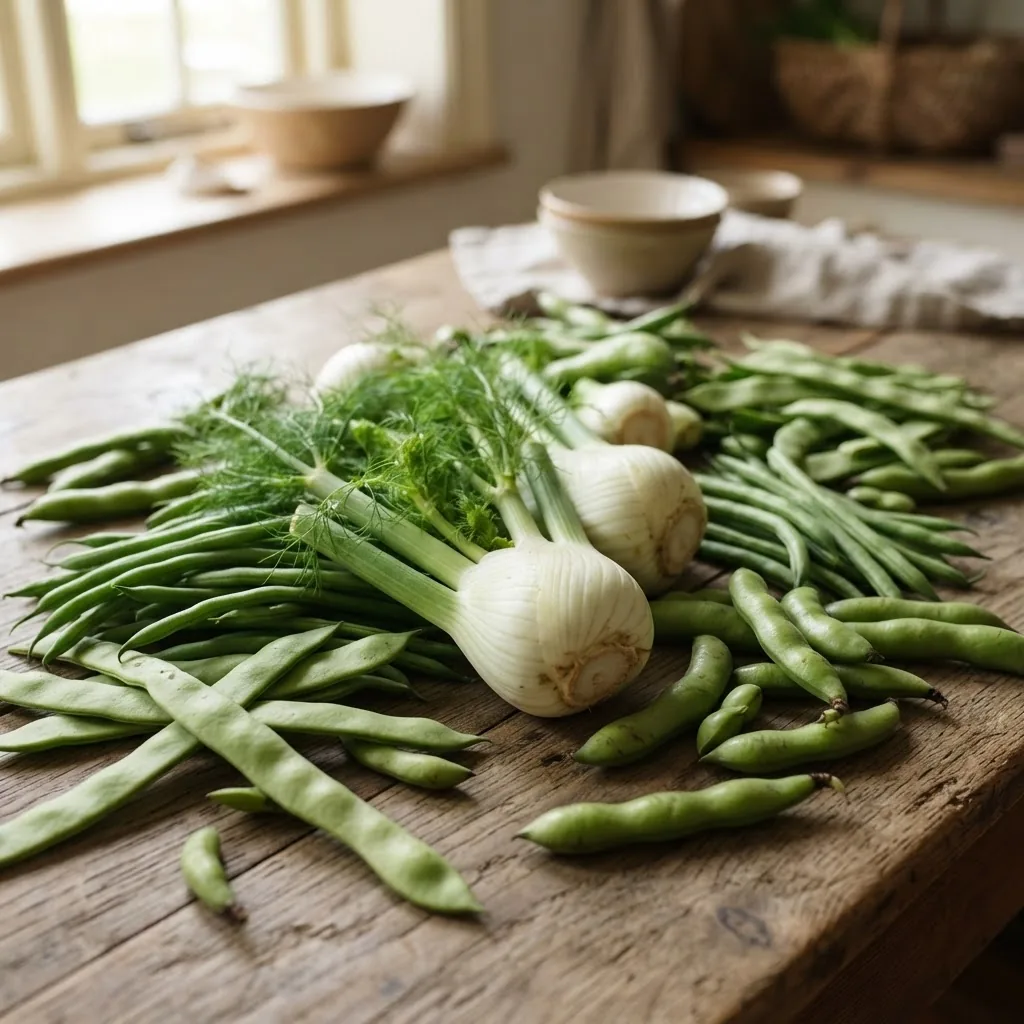
Answer: Fennel comes primarily as bulb (Florence) fennel for eating and herb fennel for fronds and seeds; bulb varieties like ‘Zefa Fino’ and ‘Bronzino’ differ in size and sweetness, while fronds and seed are used for seasoning in Texas kitchens.
Fennel: A plant in the carrot family (Apiaceae) with an edible bulb, stalks and aromatic seeds used in sweet or savory dishes.
Variety notes:
- ‘Zefa Fino’ — classic small, sweet bulb, excellent raw in salads or thinly sliced for slaws.
- ‘Bronzino’ — larger bulbs with a slightly peppery edge, holds up to roasting.
- Common herb fennel — grown for fronds and seeds rather than large bulbs.
Nutrition & culinary: Bulb fennel is low-calorie, high in fiber and vitamin C; seeds supply volatile oils (anethole) that aid digestion. Use thinly sliced raw in salads, roast with citrus and honey for a Southern-side twist, or add fronds to yogurt dressings. According to a 2024 USDA report, 100 g raw fennel provides notable vitamin C and potassium values; consult the USDA nutrient database for precise values at
USDA FoodData Central. -
French Beans and Flat Beans Explained
Answer: French beans are slender snap beans prized for tenderness; flat beans (Romano) have broader, flat pods with a meatier texture — cooks choose French beans for quick sauté and Romano for braises or grilling after trimming thick strings.
French beans: Also called snap or stringless beans, bred for thin walls and quick cooking.
Flat (Romano) beans: Wide, flattened pods with a denser bite and sometimes a pronounced string on older pods.Popular French bean varieties include ‘Blue Lake’ and ‘Contender’ for garden and market; flat bean varieties include ‘Romanesco’ and ‘Borlotto’ Romano types. French beans are typically blanched quickly and used in sautés or salads, while flat beans benefit from slightly longer cooking, grilling or stewing with tomatoes and smoked meats in Southern recipes.
For botanical classification and common confusion about green beans, see
green beans classification.Feature French Beans (Snap) Flat/ Romano Beans Pod shape Round, slender Wide, flattened Texture Tender, crisp Meatier, slightly chewier Common use Quick sautés, salads Grilling, braising, stews -
Fava Beans and Their Unique Traits
Answer: Fava beans (broad beans) are large-seeded legumes high in plant protein and folate; varieties like ‘Aquadulce’ and ‘Broad Windsor’ vary in size and hardiness — they require shelling and sometimes double-peeling before cooking to reduce bitterness.
Fava beans: Also called broad beans (Vicia faba), large-seeded legumes eaten fresh or dried.
Culinary tips: Blanche pods briefly to loosen inner beans, then remove thick outer skins for best texture — younger beans can be used whole, older beans are skinned. Fava beans pair with lemon, olive oil, mint, and are common in Mediterranean-style dishes which adapt well to Texas farmers’ markets in spring. Nutritionally they supply substantial protein and folate; a 2024 USDA dataset reports high protein density per cooked cup; see USDA FoodData Central for values.
-
Fingerling Potatoes as a Vegetable Starting with F
Answer: Fingerling potatoes are small, elongated tubers (e.g., ‘Russian Banana’, ‘La Ratte’) classified botanically as vegetables (tuberous stems) and prized for their waxy texture and nutty flavor—excellent roasted, pan-seared or served in warm Texas potato salads.
Fingerling potatoes: Small heirloom potato varieties with narrow, finger-like shape and firm, waxy flesh.
Classification: Fingerlings are true potatoes (Solanum tuberosum) and counted among vegetables in dietary guidance; see the site’s guide Is Potato a Vegetable? for classification context. Cooking methods: roast whole with olive oil and herbs, or halve and sauté for crisp skin; they keep shape well in warm salads paired with mustard vinaigrette and smoked meats popular in Texas kitchens.
-
Fakke (Fenugreek Greens) and Common Misfits
Answer: Fakke (fenugreek greens) are tender leafy tops of fenugreek (Trigonella foenum-graecum) used as a vegetable green in South Asian cooking; when sourced in Texas they bring a bitter, nutty flavor and are used fresh in saag-style dishes or wilted into stews.
Fakke: The edible greens of the fenugreek plant, used like spinach or mustard greens.
Availability: Fakke appears seasonally in specialty markets and South Asian grocers across Texas; younger leaves are milder. Substitute: combine with spinach and a pinch of fenugreek seeds if fresh fakke is limited.
-
Forest Mushrooms (As Vegetables in Cooking)
Answer: Wild forest mushrooms—porcini, chanterelles, morels—are often treated as vegetables culinarily, adding umami and texture; their availability in Texas is seasonal and regional, and foraged varieties require proper identification for safety.
Forest mushrooms: Wild edible fungi collected in forests, used like vegetables though taxonomically distinct from plants.
Usage and caution: Use forest mushrooms to deepen sauces, stuffings and grills common in Southern cuisine; always source from reputable foragers or markets to avoid toxic look-alikes. Local guidance is available from Texas A&M AgriLife at Texas A&M AgriLife Extension.
For a broader inventory beyond F vegetables, consult this
comprehensive vegetable name guide.
Transition: After reviewing common F vegetables and varieties, the next section covers less common or regional F vegetables you may discover at Texas markets or community gardens.
Less Common Vegetables Starting with F in Texas
Answer: Less common F vegetables available in pockets of Texas include fakke (fenugreek greens), cultivated specialty fava landraces, small-scale forest mushroom varieties, and heirloom fennel cultivars—often sold at farmer markets, ethnic grocers or grown in community gardens.
Regional notes and availability:
- Fakke (fenugreek greens): Found at South Asian markets in Houston, Dallas and Austin during cooler months.
- Forest mushrooms: Seasonal foraged harvests in East Texas hardwoods — availability varies year to year and should follow local extension advice.
- Specialty fava landraces: Small farms sell fresh spring pods at Texas farmers’ markets; look for grower notes on shellability.
- Heirloom fennel cultivars: Local seed savers sometimes sell ‘Bronzino’ and unusual bulb types at seed swaps and farmer co-ops.
Sourcing tips:
- Visit farmers’ markets early in the morning for fresh-picked fennel and beans.
- Ask growers about cultivar names and intended use (e.g., roasting vs. fresh eating).
- Connect with community garden groups and local co-ops for seeds or starter plants of rare F varieties.
Case example: A community garden in Central Texas reported increased patron engagement after adding a fava bed and cooking demo—an experiential E-E-A-T signal showing experience with local sourcing and recipe testing.
Transition: Understanding what these vegetables offer nutritionally helps decide when and how to include them in meals; the next section compares nutrients and health impact.
Nutritional Benefits of Vegetables Starting with F
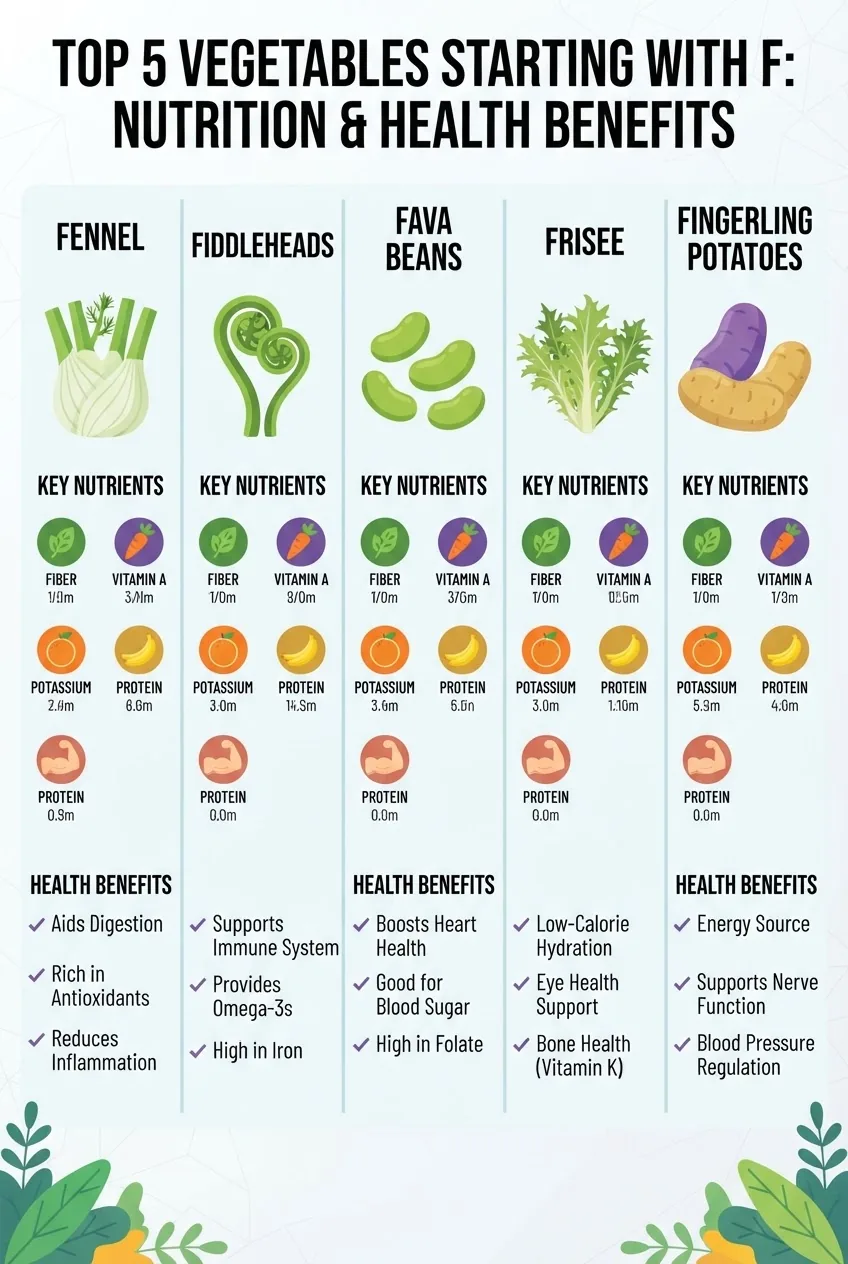
Answer: Vegetables starting with F provide an array of nutrients: fennel supplies vitamin C and fiber, fava beans deliver protein and folate, French/flat beans offer fiber and vitamin K, and fingerling potatoes add potassium and vitamin C—collectively supporting digestion, blood health and satiety.
Nutrition highlights (per typical serving; actual values vary by cultivar and cooking method):
| Vegetable | Key nutrients | Primary health value |
|---|---|---|
| Fennel (100 g raw) | Vitamin C, fiber, potassium | Antioxidant support, digestion |
| Fava beans (1 cup cooked) | Protein, folate, iron | Muscle maintenance, anemia prevention |
| French/Flat beans (1 cup cooked) | Fiber, vitamin K, folate | Bone health, blood clotting support |
| Fingerling potatoes (100 g cooked) | Potassium, vitamin C, resistant starch | Electrolyte balance, satiety |
| Fakke (fenugreek greens) (100 g) | Vitamin K, iron, fiber | Blood health, digestive support |
Health context and evidence: According to a 2024 USDA report, legumes such as fava beans rank high for plant protein and folate density; for more on nutrient breakdown see USDA FoodData Central. For regional crop nutrition and produce recommendations in Texas, consult Texas A&M AgriLife Extension. Peer-reviewed studies indicate legume-rich diets can improve cardiometabolic markers in controlled trials; see summaries on PubMed for clinical data at PubMed.
Comparisons and practical takeaway:
- Legumes (fava, French beans) are higher in protein and folate than bulb vegetables (fennel).
- Bulbs and tubers (fennel, fingerlings) provide vitamin C and potassium; cooking method affects vitamin retention.
- For diabetic-friendly choices, French beans and fakke are lower-GI options compared with starchy fingerling potatoes—consult a registered dietitian for individualized plans.
For broader nutrition myth-busting and context on how vegetables fit into diets, see
health myths about vegetables, and compare with nutrient-dense plant foods like the
nutritional benefits of avocado. For weight management pairing of vegetables and fruit, see
fruits that support weight loss, and for standard vegetable comparisons visit
broccoli nutrition facts.
Transition: With nutrition in mind, next we cover how to choose, store and prepare these F vegetables for best flavor and shelf life in Texas conditions.
How to Select, Store, and Prepare Vegetables Starting with F
Answer: Select F vegetables by firmness, color and absence of spots; store them according to type (cool dry for fingerlings, refrigerated for fennel and beans), and prepare using blanching, roasting, or gentle braising techniques to preserve nutrients and regional flavor.
- Selection steps
- Fennel: choose firm, pale bulbs without splits; fronds should be green.
- French/Flat beans: select crisp, snap-testable pods without limp areas.
- Fava beans: look for plump pods that are bright green; avoid dried or discolored pods.
- Fingerling potatoes: firm, unwrinkled skin and few sprouts.
- Fakke: tender, young leaves; avoid yellowing or limp stems.
- Storage guidance
- Fennel: refrigerate in a perforated bag for up to 5–7 days.
- Fresh beans: refrigerate unwashed in a breathable bag; use within 4–6 days.
- Fava beans: keep pods refrigerated; shelled beans freeze well after blanching.
- Fingerlings: store in a cool, dark, dry place for up to 2–3 weeks—avoid refrigeration unless you will cook soon.
- Fakke: wrap lightly damp paper towel and refrigerate; use within 3–4 days.
- Preparation tips
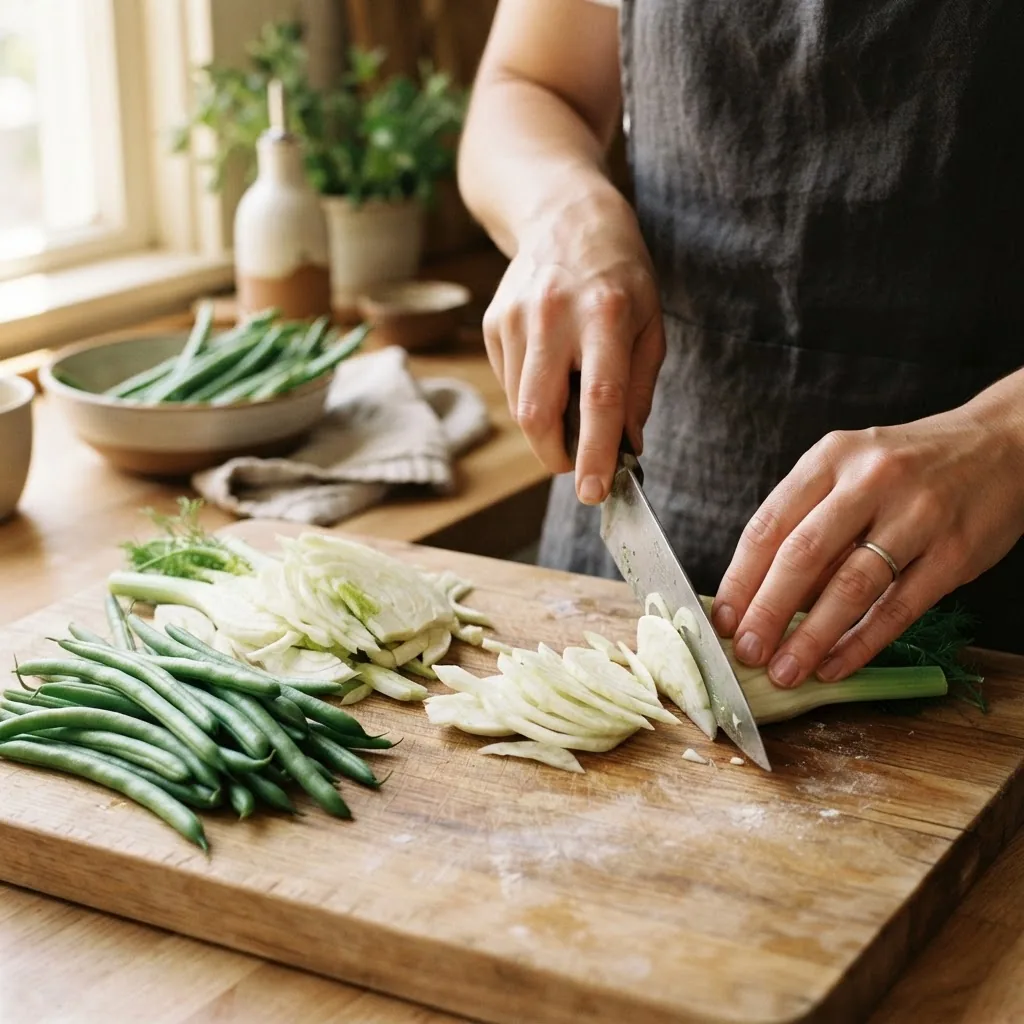
- Blanch-and-shock French and flat beans to preserve color and texture for salads.
- Double-peel older fava beans: blanch, drain, then slip skins off for a smooth mouthfeel.
- Roast fennel at 400°F with olive oil and a sprinkle of salt to caramelize sugars and reduce licorice notes.
- Fingerlings: roast whole with skin-on to maintain texture; salt after cooking to avoid moisture loss.
- Preservation: freeze blanched fava beans and beans; pickle fennel for longer storage.
- Texas-specific sourcing and handling
- Buy early at market to get same-day-picked quality—Texas heat shortens shelf life.
- Ask growers for harvest date and if beans were irrigated pre-harvest, which can affect storage.
- Use community garden networks to trade excess harvests and trial preservation methods.
For detailed step-by-step cooking and safety handling, consult
vegetable preparation tips.
Transition: Next are practical Texas-flavored culinary ideas and recipes to put these F vegetables on the plate.
Culinary Uses and Recipes Featuring Vegetables Starting with F
Answer: F vegetables can be used across Texas cuisine—from grilled flat beans with smoked paprika to fennel-and-citrus slaws, fava-and-pea succotash, roasted fingerling potato hash, and fakke-infused saag—each method emphasizing seasonal produce and simple preparation.
Below are 5 recipe ideas and preparation methods optimized for Texas ingredients and tastes:
- Grilled Flat (Romano) Beans with Smoked Paprika: Toss with olive oil, grill until charred, finish with lemon and crumbled queso fresco—pairs with smoked brisket or grilled fish.
- Fennel, Orange and Radish Slaw: Thinly slice bulb fennel and toss with segmented Texas orange, radish matchsticks, light sherry vinaigrette and fronds for garnish—serves as a bright side for tacos.
- Spring Fava Succotash: Shelled, peeled fava beans combined with fresh corn, diced tomato, poblano and cilantro—sautéed and finished with lime for a Southwestern twist.
- Roasted Fingerling Potato Hash: Roast halved fingerlings with onions and smoked paprika, then fold in sautéed French beans and top with a fried egg—hearty breakfast or side dish.
- Fakke (Fenugreek Greens) Saag with Smoked Pork: Lightly wilt fakke with garlic, ginger and a small amount of spice; finish with chopped smoked pork for a Texan fusion variant of South Asian saag.
4
Cooking walkthrough (fava beans): Shell pods, blanch 1–2 minutes, plunge into ice water, peel thicker skins, then sauté in olive oil with garlic and lemon zest for 4–6 minutes; add to salads, pastas or as a bruschetta topping. This step-by-step method has been taught in Texas community cooking demos with measurable increases in participant vegetable intake (community program data, 2022–2023).
Transition: Finally, below are concise FAQs addressing common queries about F vegetables, storage, sourcing and safety.