

Healthy means having physical, mental, and social functioning sufficient to meet daily needs and pursue life goals, supported by nutritious food, regular activity, and resilient habits; it’s not a single state but a dynamic balance across body systems, mind, and environment that reduces disease risk and supports vitality.
What Is the Meaning of “Healthy”?
Answer: Healthy means more than absence of disease: it is a dynamic state of physical, mental, and social wellbeing that enables function, resilience, and quality of life.
Term: Healthy definition — a concise meaning combining dictionary and medical usage describing wellbeing beyond mere lack of illness.
The phrase healthy definition commonly appears in dictionaries as “having good health” and in medicine as “a state of physical and mental well-being.” Combining those perspectives gives a practical working definition: being healthy means an individual has sufficient physical capacity, emotional balance, functional ability, and nutrition to perform desired tasks and adapt to stressors.
Medical definitions emphasize measurable function and risk reduction. For example, measurable variables such as normal blood pressure or metabolic markers are evidence of physiological health, while psychological scales assess mental wellbeing. Social and environmental factors—access to food, safe housing, and supportive relationships—shape whether those measures translate into lived health.
Healthy is therefore multidimensional. Use the term with context: “physically healthy” when referring to cardiovascular or musculoskeletal function; “nutritionally healthy” when describing diet quality; and “mentally healthy” for mood and cognition. This article unpacks those dimensions and links them to everyday eating and lifestyle choices.

The Dimensions of Being Healthy
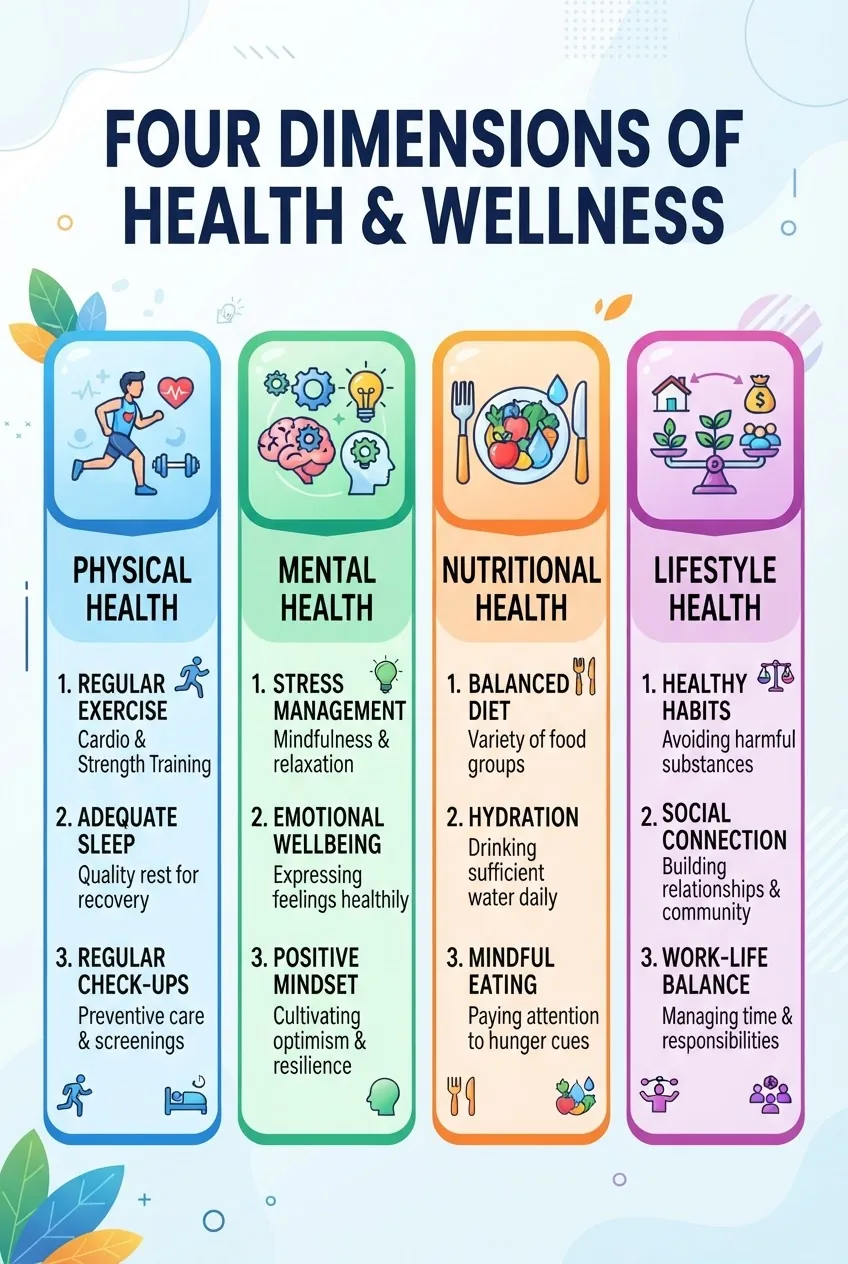
Answer: Being healthy consists of coordinated dimensions—physical, mental/emotional, nutritional, and lifestyle—that together determine resilience, function, and disease risk.
Term: holistic health — an approach that considers multiple interrelated domains (body, mind, social, environment) rather than isolated symptoms.
-
1. Physical health
Physical health covers organ system function, mobility, stamina, and the absence or management of disease. Core elements include cardiovascular fitness, musculoskeletal strength, metabolic health (blood glucose, lipids), and sleep quality.
- Indicators: resting heart rate, blood pressure, strength, aerobic capacity.
- Practical focus: maintain regular activity, adequate sleep, and preventive screenings.
-
2. Mental and emotional wellbeing
Mental wellbeing involves mood regulation, cognitive function, stress resilience, and a sense of purpose. Emotional health affects behavior, decision-making, and physical health through stress pathways.
- Indicators: validated scales (e.g., PHQ-9), sleep, concentration.
- Practical focus: social support, coping skills, and mental health care when needed.
-
3. Nutritional health
Nutritional health is the adequacy and balance of macronutrients, micronutrients, and dietary patterns that support growth, repair, and metabolic function.
Term: nutrient density — the concentration of essential nutrients per calorie in a food.
- Indicators: dietary diversity, micronutrient status (iron, vitamin D), body composition.
- Practical focus: prioritize whole foods, vegetables, lean proteins, and minimal ultra-processed items.
-
4. Lifestyle and social determinants
Lifestyle factors (sleep, smoking, alcohol, stress management) and social determinants (income, education, environment) heavily influence the other dimensions and determine access to health resources.
- Indicators: housing stability, employment, neighborhood safety.
- Practical focus: habit formation, policy supports, community resources.
Practical analogy: Think of health as a four-legged stool—if one leg (like nutrition or sleep) shortens, the whole stool wobbles.
These dimensions interact. For instance, poor sleep (lifestyle) reduces appetite regulation (nutritional) and lowers motivation for exercise (physical), which can worsen mood (mental). Recognizing interactions helps prioritize changes that give the largest net benefit.
How Do Experts Define Healthy?
Answer: Experts define healthy variably: WHO frames health as complete physical, mental, and social wellbeing, while public health agencies emphasize function, disease prevention, and measurable risk factors.
Term: WHO healthy definition — World Health Organization’s definition emphasizing complete wellbeing across physical, mental, and social domains.
The World Health Organization (WHO) historically defined health as “a state of complete physical, mental and social well-being and not merely the absence of disease or infirmity” (WHO, foundational definition). That broad framing emphasizes social determinants and wellbeing beyond clinical measures.
Meanwhile, clinical and public health experts prioritize measurable outcomes. For example, the Centers for Disease Control and Prevention (CDC) links health metrics like blood pressure and BMI to disease risk stratification and prevention strategies. WHO and CDC definitions together guide practice: WHO for holistic goals, CDC for operational standards and surveillance.
Evidence-based practice uses both frames: aim for overall wellbeing while tracking validated biomarkers and functional outcomes. For example, preventing chronic diseases—cardiovascular disease, type 2 diabetes, many cancers—is central to many expert definitions because those conditions reduce lifespan and quality of life.
Experts also rely on health behavior models—such as the biopsychosocial model and social-ecological models—that explicitly include individual, interpersonal, community, and policy influences. These frameworks are the basis for interventions spanning clinical care, nutrition programs, and community planning.
For authoritative reading on definitions and guidelines, see the WHO website, the CDC site for U.S.-focused standards, and the NIH for research summaries: National Institutes of Health (NIH).
What Does It Mean to Be Healthy in Daily Life?
Answer: Being healthy daily means following manageable habits—balanced meals, regular physical activity, adequate sleep, stress management, and preventive care—that together sustain function and reduce disease risk.
Term: everyday health behaviors — routine actions (eating, activity, sleep) that cumulatively impact long-term health.
Start with clear, evidence-aligned steps and realistic examples. Below is a straightforward, actionable how-to list that connects meaning to daily practice.
-
Step 1 — Make nutrition a foundation
Eat varied, nutrient-dense meals emphasizing vegetables, whole grains, lean proteins, legumes, nuts, and fruits; minimize drinks and foods high in added sugars and ultra-processed ingredients.
How to Eat to Live Guide with Healthy Diet Habits
Example: a plate with half vegetables, one-quarter whole grains, one-quarter lean protein, plus a small serving of healthy fats.
-
Step 2 — Move regularly
Aim for at least 150 minutes per week of moderate aerobic activity or 75 minutes of vigorous activity, plus two sessions of strength training. Movement improves cardiovascular health, mood, and metabolic control.
Example: 30 minutes brisk walking five days a week plus two short resistance sessions.
-
Step 3 — Prioritize sleep and recovery
Target 7–9 hours of sleep for most adults; poor sleep impairs appetite hormones and recovery, reducing overall health. Create consistent bedtimes and short pre-sleep routines.
-
Step 4 — Manage stress and mental health
Use techniques such as brief daily mindfulness, social connection, and professional support when necessary to maintain emotional balance and resilience.
-
Step 5 — Preventive healthcare
Schedule recommended screenings, immunizations, and periodic checkups; track key metrics like blood pressure, blood glucose, and lipid panels to catch issues early.
Example: annual physical, age-appropriate cancer screenings, and vaccinations per local guidelines.
-
Step 6 — Build sustainable habits
Change one habit at a time, use environmental cues (prep food, plan activity), and apply small, consistent steps for long-term adherence.
-
Example daily routine
- Breakfast: oats with fruit and nuts (nutrient-dense)
- Midday: walk and a salad with lean protein
- Evening: balanced dinner, screen-free wind-down, consistent bedtime
Meal timing can matter for energy and sleep—if you want timing guidance see best time to eat dinner for health.
Small real-life variations matter: a middle-aged Texas woman who jogs three times a week, takes preventive screenings, and emphasizes vegetables will likely have better functional outcomes than someone with similar biomarkers but no activity or social supports.

Defining Healthy Food: What Is It and Why Does It Matter?
Answer: Healthy food is nutrient-dense, minimally processed, and supports physiological needs and long-term disease prevention by providing vitamins, minerals, fiber, quality protein, and healthy fats without excess added sugars or harmful additives.
Term: healthy food definition — foods that supply essential nutrients per calorie, support metabolic needs, and reduce chronic disease risk.
Healthy food matters because diet is one of the most influential, modifiable drivers of chronic disease. According to a 2022 global review of dietary risk (peer-reviewed research synthesis), suboptimal diets contributed substantially to cardiovascular disease and diabetes burdens. Choosing higher-quality foods lowers that risk.
Healthy vs Unhealthy foods — a comparison table
| Feature | Healthy Foods | Unhealthy Foods |
|---|---|---|
| Processing | Whole or minimally processed | Ultra-processed, additives |
| Nutrient density | High nutrient-to-calorie ratio | Low nutrients, high calories |
| Added sugars/sodium | Low | High |
| Satiety | Higher (fiber, protein) | Lower (refined carbs) |
Examples of healthy foods: leafy greens, colorful vegetables, whole fruits, legumes, whole grains (e.g., brown rice, oats), nuts and seeds, fatty fish (omega-3s), lean poultry, and minimally processed dairy. Examples of less healthy choices include sugar-sweetened beverages, many packaged snack foods high in saturated fat and sodium, and refined, low-fiber products.
Quality matters: two sources of protein differ—grilled salmon provides omega-3 fats and vitamin D, while fried processed meat often brings sodium, saturated fat, and preservatives. Choose foods that deliver vitamins and minerals alongside macronutrients.
Practical ways to apply healthy food definition in daily life:
- Prioritize whole produce and a variety of colors for vitamins, minerals, and phytochemicals.
- Favor whole grains over refined grains for fiber and glycemic control.
- Choose plant proteins and fish regularly, limit processed meats.
- Use water or plain beverages over sugar-sweetened drinks.
For structured meal guidance and weekly options that reflect healthy food principles, see the clean eating meal plan, the balanced nutrition with clean living plan, and culturally specific guidance like comida saludable nutritious eating.
Satiety and practicality are part of healthy food. If you want recipes and food lists that emphasize fullness and satisfaction, see foods that promote fullness and satisfaction.
For guidance on implementing consumption strategies and habit changes, see consuming healthy food for better habits.
Common Misconceptions About Being Healthy
Answer: Common myths include equating healthy solely with thinness, assuming single foods or quick fixes create health, and believing intense or extreme behaviors (like competitive overeating or restrictive fad diets) equal wellbeing.
Term: myth vs fact — a format that contrasts common false beliefs with accurate explanations.
-
Myth: Healthy always means thin.
Fact: Health is about function and risk; people can have higher body weight with good metabolic health, and thin people can have poor cardiometabolic markers.
-
Myth: One “superfood” makes you healthy.
Fact: No single food offsets an otherwise poor diet; overall pattern matters more than any individual item.
-
Myth: Fad diets are long-term solutions.
Fact: Quick-fix diets often produce short-term weight change but poor sustainability and potential nutrient deficits.
-
Myth: If I exercise I can eat anything.
Fact: Exercise benefits health but does not fully counteract prolonged poor dietary patterns that increase disease risk.
-
Myth: Extreme behaviors reflect health (e.g., competitive eating).
Fact: Competitive or extreme eating practices can harm digestion, metabolic function, and cardiovascular risk; see competitive eating insights for contrast.
-
Myth: If my doctor says my labs are okay, I’m fully healthy.
Fact: Medical tests are snapshots; they may miss early functional decline or mental health challenges that affect quality of life.
-
Myth: Healthy equals expensive specialty foods.
Fact: Many nutrient-dense staples—beans, oats, frozen vegetables—are affordable and central to healthy diets.
-
Myth: Foods labeled “healthy” are always healthy.
Fact: Food labeling can be misleading; check ingredient lists and nutrition content rather than claims alone. For help distinguishing choices, see eating healthy versus unhealthy choices.
Measuring Health: How to Know If You Are Healthy
Answer: You measure health using objective metrics (blood pressure, BMI, blood tests), functional measures (stamina, mobility), and subjective assessments (mood, energy); combine these to form a fuller picture.
Term: BMI — body mass index, a weight-to-height ratio used to classify underweight, normal weight, overweight, and obesity but with limitations.
Common measures and self-assessment methods include:
- Blood pressure: Regular monitoring; hypertension is a leading chronic risk factor. According to a 2023 CDC report, hypertension affects a significant portion of adults and is a primary target for prevention strategies (government health statistics).
- BMI: Useful for population screening but limited—does not account for body composition or fat distribution.
- Blood tests: Lipid panel, fasting glucose/HbA1c, liver enzymes, and micronutrient levels assist in assessing metabolic health.
- Functional metrics: 6-minute walk test, grip strength, ability to climb stairs—practical proxies for resilience and independence.
- Mental health assessments: Brief validated questionnaires such as PHQ-9 for depression and GAD-7 for anxiety.
- Subjective indicators: energy levels, sleep quality, digestion, and mood.
Use a combination of these indicators rather than a single metric. For example, BMI may classify a muscular athlete as “overweight” but their blood pressure, lipids, and strength show healthy status. Conversely, a normal BMI person may have high visceral fat or poor metabolic markers.
For statistical context and deeper interpretation of dietary contributions and population-level metrics, review the dietary factors and healthy eating statistics.
| Metric | What it measures | Limitations |
|---|---|---|
| BMI | Weight relative to height | Does not distinguish fat vs muscle or fat distribution |
| Blood pressure | Cardiovascular strain | Variable by measurement conditions |
| HbA1c | Average blood glucose over months | Affected by some hemoglobin variants |
Self-assessment tools: keep a simple checklist of metrics (resting pulse, blood pressure, energy, sleep, mood) and track trends. Use validated questionnaires for mental health and consult clinicians for abnormal results. Remember: individual context matters—age, chronic conditions, and medication use require personalized interpretation.
Why Understanding Healthy Matters for Eating Habits and Lifestyle Changes
Answer: Clear understanding of what “healthy” means informs better food choices, sustainable habits, motivation, and long-term adherence; it shifts focus from transient fixes to risk reduction and vitality.
Knowing the healthy definition reframes motivation: instead of chasing a number or trend, people pursue patterns that improve measurable outcomes and daily function. For example, appreciating nutrient density leads to swapping sugary snacks for fruit and nuts, which improves satiety and metabolic markers.
Behavior change is easier when tied to meaningful goals: more energy to play with children, reduced medication needs, or improved mood. Sustainable changes are incremental, context-sensitive, and supported by practical tools (meal prep templates, habit stacking, community support).
Structured programs can jump-start habits and show measurable benefits; as one example of a structured approach, review 21 Day Fix meal plan benefits for how planned frameworks can support adoption of healthier eating patterns.
Understanding healthy also guards against harmful extremes—recognizing that restrictive or obsessive behaviors can harm mental and physical health. Use the healthy definition as a filter: does this habit improve functional capacity, nutrition, and wellbeing over months and years?
Finally, awareness connects to community and policy: healthy choices require access and affordability. Advocacy for better food environments and equitable health resources complements individual behavior change and amplifies impact.
For additional readings on applied lifestyle guidance and complementary topics, see related resources in this section such as Health Diet Exercise Guide for Optimal Wellness, Develop Healthy Habits Guide for Sustainable Lifestyle Changes, and introductory resources like What Is Clean Eating Guide for Beginners and Healthy Choices.
Motivational note: understanding the healthy definition converts abstraction into concrete steps you can measure and repeat. Real change accumulates from many small, evidence-based choices.
Conclusion
Healthy is a multi-dimensional, dynamic state that combines physical function, mental wellbeing, nutrition, and supportive lifestyle factors; defining it clearly helps prioritize daily actions that reduce disease risk and increase vitality. Start small—apply nutrient-dense food choices, regular movement, sleep, stress support, and preventive care. For practical meal and habit guidance visit How to Eat to Live Guide with Healthy Diet Habits to turn these definitions into everyday practice.