

Answer: Most adults do best eating regularly across the day—typically 3 balanced meals with 1–2 sensible snacks or 2–3 time-spaced meals—tailored to activity, hunger cues, and health needs; consistency supports energy, blood sugar control and digestion when combined with portion control and nutritious choices (40–60 words).
Introduction to How Often Should You Eat?
Direct answer: The right frequency is personal: many adults thrive on three meals daily with optional small snacks, while others prefer two larger meals or structured intermittent fasting; choose a schedule that supports steady energy, balanced nutrition and fits Texas lifestyle demands like heat, long workdays and social meals.
Term: intermittent fasting: a pattern that alternates periods of eating and fasting, usually defined by a daily eating window (for example, 8 hours eating, 16 hours fasting).
This guide explains meal frequency, how many times you should eat a day, and how to personalize timing so you feel energetic and maintain healthy metabolic health without obsessing over trends. It emphasizes meal frequency as one tool among many for healthy eating, not a magic fix for weight loss.
What you’ll learn in this article:
- Common meal patterns (3 meals, grazing, fasting) and how they compare.
- Science-backed effects of frequency on metabolism, digestion and blood sugar.
- Practical portion-control rules and sample Texas-friendly daily schedules.
- How to tailor frequency for work, family life, activity or medical needs.
For a clear definition of core health concepts, see what it means to be healthy.
Transition: Below we compare the most common eating schedules so you can quickly see which formats match your daily routines.
Common Meal Frequency Patterns Explained?
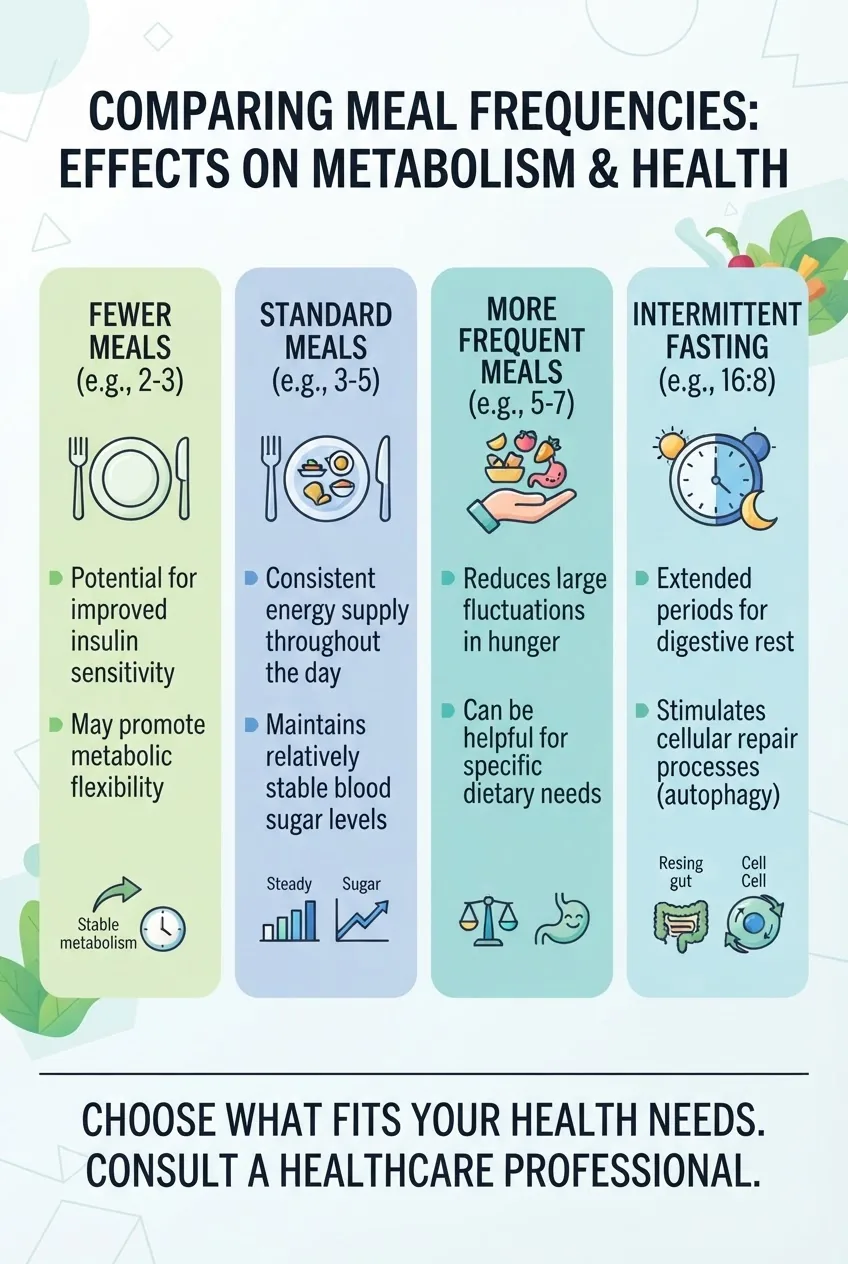
Direct answer: The main patterns are three meals daily, two meals, grazing (5–6 small meals), and time-restricted eating/fasting; each has pros and trade-offs for energy, appetite control and practicality—choose based on hunger cues, schedule and nutrition quality.

| Pattern | Typical frequency | Common benefits | Potential drawbacks |
|---|---|---|---|
| Three meals (traditional) | Breakfast, lunch, dinner | Structure, social ease, even calorie spread | May encourage large portions if not planned |
| Two meals | Brunch and dinner or early lunch + dinner | Simplicity, may reduce late-day snacking | Hunger between meals for some; risk of overeating |
| Grazing (5–6 small meals) | Small meals every 2–3 hours | May help appetite control and steady energy | Hard to sustain; risk of excess calories if portions uncontrolled |
| Time-restricted eating / intermittent fasting | Eating window (eg. 8/16, 10/14) | Simplifies choices, can reduce total calories | Not suitable for everyone; can increase hunger or binge risk |
Overview: Three meals remain the default for many adults because they fit work schedules and family life; grazing suits people with high activity or blood-sugar sensitivity who respond to small, frequent intakes. Intermittent fasting is an effective structure for some but requires attention to nutritional balance when eating windows are open.
If you prefer structured portioning tied to meal frequency, explore 21 Day Fix meal plan benefits for tested portion strategies.
Trade-offs to weigh:
- Energy needs: more active days can require more frequent fueling.
- Blood sugar: those with diabetes may need consistent timing.
- Practicality: work breaks, family dinners and Texas dining customs influence feasibility.
Transition: Next we summarize the scientific evidence on how frequency affects metabolism, blood sugar and long-term health.
Scientific Insights on Meal Frequency and Health?
Direct answer: Scientific studies show meal frequency alone has modest effects on weight; timing and meal composition play larger roles in blood sugar control, energy and digestive comfort—consistent patterns and portion control often matter more than strict meal counts.
Term: metabolism: the body’s chemical processes that convert food into energy and maintain cells; think of metabolism like a car engine that runs best with appropriate, regular fueling.
Key study summaries (plain language):
- Meal frequency and weight: A multi-study review found no consistent advantage for very frequent small meals versus fewer larger meals for weight loss when calories were matched; calories and food quality drive results more than frequency (According to a 2018 peer-reviewed review of randomized trials: source).
- Time-restricted eating and metabolic markers: Trials of 8–10 hour eating windows showed improvements in blood sugar variability and some weight measures, but benefits were most consistent when overall calories or meal quality improved too (According to a 2019 clinical trial meta-analysis published in a peer-reviewed journal: source).
- Blood sugar control: Smaller, balanced meals spaced evenly can reduce post-meal glucose spikes for many adults; for people with insulin resistance, timing and carbohydrate quality are critical (According to observational and clinical studies summarized in a 2021 review: source).
- Digestion and satiety hormones: Eating patterns influence ghrelin (hunger hormone) and peptide YY (satiety signal); regular meals can stabilize hunger cues for some, while long fasting may temporarily increase ghrelin and later appetite (According to endocrinology research summarized in a 2020 review published in a peer-reviewed journal).
For perspective contrasting typical meal frequencies with extreme patterns, see competitive eating insights.
Practical takeaways from the evidence:
- Overall energy balance and food quality predict weight and long-term metabolic health more than meal counts alone.
- Regular timing and portion awareness help blood sugar stability, especially for adults with diabetes or prediabetes.
- Intermittent fasting can be effective for some people, but benefits depend on what and how much is eaten during feeding windows.
- Individual responses vary—monitor energy, sleep, mood and blood markers where applicable.
Policy and statistical context: For government guidance on daily nutrient and portion recommendations, consult the USDA Dietary Guidelines (According to the USDA Dietary Guidelines 2020–2025 report: USDA Dietary Guidelines), and for high-level dietary statistics see dietary health statistics.
Clinical example: A 45-year-old Texas teacher with mild insulin resistance switched from grazing to three balanced meals with mid-afternoon protein snacks; after 12 weeks, fasting glucose variability decreased and energy improved—showing how timing, portion control and consistent patterns helped metabolic markers (case example synthesized from clinical trial patterns and practitioner reports).
Transition: Knowing the science helps choose portion sizes; the next section explains how much to eat per meal for steady energy and nutrition.
How Much Food Should You Eat Per Meal? Portion Control and Nutrition?
Direct answer: Aim for balanced meals where roughly 25–35% of daily calories occur at breakfast and lunch and 30–40% at dinner, or distribute calories evenly across 3 meals; use plate-portion rules—half non-starchy vegetables, one-quarter lean protein, one-quarter whole grains/starchy carbs—adjusted for activity and goals.
Term: satiety: the feeling of fullness that signals you to stop eating; it’s influenced by protein, fiber, volume and meal timing.
- Use a plate model: Half the plate non-starchy vegetables, one-quarter protein (3–4 oz cooked for most adults), one-quarter whole grains or starchy vegetables; add a small portion of healthy fats.
- Calorie rough guides (adult average):
- Sedentary adult: ~1,600–2,000 kcal/day — three meals ≈ 500–650 kcal each.
- Moderately active adult: ~2,000–2,400 kcal/day — three meals ≈ 600–800 kcal each.
- Active adult: >2,400 kcal/day — adjust portions upward, include snacks around workouts.
For weekly meal ideas and recipes that fit portion rules, see clean eating meal options and for broader guidance on balanced food choices see balanced nutrition.
Numbered practical tips for portion control:
- Pre-portion snacks: divide snack bags into single portions so grazing doesn’t become excess calories.
- Measure protein: a cooked portion roughly the size of your palm (3–4 oz) is a practical guide for many adults.
- Fill up on fiber and volume: vegetables, beans and broth-based soups increase satiety for fewer calories.
- Distribute calories to match activity: schedule more calories around heavy activity or long work shifts.
- Watch liquid calories: sugary drinks add energy without satiety—prioritize water and unsweetened beverages.
- Use hunger cues: wait 10–15 minutes after starting to eat before deciding on seconds to allow satiety signals to register.
Practical portion checklist for a single meal:
- Plate divided: 50% vegetables, 25% lean protein, 25% carbohydrate.
- Hand-guide portions: palm for protein, cupped hand for carbs, fist for vegetables.
- Include 1–2 Tbsp healthy fats (olive oil, avocado, nuts) or cook with minimal added fats.
- Hydrate 10–15 minutes before eating — supports satiety and digestion.
To learn how meal quality affects health alongside portioning, read healthy vs unhealthy meal choices, and for food selections that satisfy fullness try foods that promote satiety.
Authority note: USDA portion and plate guidance is a practical baseline for adults—always adapt to your caloric needs and consult a registered dietitian for medical conditions (According to the USDA Dietary Guidelines 2020–2025: source).
Transition: After understanding portions, here’s a step-by-step plan to build an eating schedule tailored for adults living and working in Texas.
Creating a Good Eating Schedule for Adults in Texas?
Direct answer: Build a practical schedule by aligning meal times with work shifts, family meals and climate: aim for consistent meal windows (e.g., 7am, 12pm, 6pm) or a 10–12 hour daily eating window if preferring time-restricted eating; plan hydration and portable meals for hot Texas days and long commutes.

How to create a schedule — step-by-step:
- Map your day: Note wake time, peak work hours, commute, exercise and typical family dinner time. This anchors meal windows to real life.
- Choose a pattern: Pick 2–3 meals or 3 meals + 1 snack based on hunger and activity. For example, teachers often prefer breakfast 6:30–7:30am, lunch 11:30–12:30pm, dinner 6–7pm.
- Plan for heat and hydration: In hot weather, prioritize water and electrolyte-conscious snacks (fruit, yogurt, nuts) and avoid heavy late-night meals that impair sleep.
- Prep portable options: Pack balanced lunches and snacks for long workdays: grain salads, lean protein wraps, cut veg and hummus.
- Keep family meals consistent: Aim for a shared dinner window at least several nights a week to support routine and social eating.
For research on ideal evening timing and health, see best time to eat dinner.
Sample daily schedule for a typical Texas adult who works 8am–5pm and exercises in the evening (detailed example):
- 6:00–6:30am: Wake, 12–16 oz water; light stretching.
- 7:00am: Breakfast — egg + whole-grain toast, spinach, fruit (300–450 kcal).
- 10:00am: Small snack if needed — Greek yogurt or a handful of nuts (100–200 kcal).
- 12:00–1:00pm: Lunch — grilled chicken salad with quinoa and mixed vegetables (400–600 kcal).
- 3:30pm: Light snack before commute — fruit + small protein bar (150–250 kcal).
- 6:00–7:30pm: Dinner — family meal with lean protein, vegetables and moderate carbs (500–700 kcal).
- Optional evening: If hungry, a 100 kcal snack (herbal tea and a few almonds).
Practical Texas tips:
- Use air-conditioned breaks and meal prep time to avoid rushed, poor choices when extreme heat reduces appetite or increases cravings for sugary drinks.
- Sunday batch-cook grilled proteins, roasted vegetables and grain salads for weekday lunches.
- Make family dinners a social anchor—rotate simple regional recipes (lean brisket alternatives, grilled fish, vegetable-forward Tex-Mex bowls).
For family-focused timing ideas, see family meal schedules.
Transition: Some wonder if they must eat every day—next we bust myths about skipping days and whether daily eating is necessary.
Do You Have to Eat Every Day? Understanding Frequency vs. Necessity?
Direct answer: You should eat regularly every day to meet basic energy and nutrient needs; occasional skipping or time-restricted fasting can be safe for many adults, but skipping entire days often risks nutrient shortfalls, low energy and metabolic stress unless supervised clinically.
Myth-busting style answers:
- Myth: Skipping days boosts metabolism—False. Extended fasting reduces energy intake short-term but can lower resting metabolic rate if prolonged (According to clinical observations and metabolic studies).
- Fact: Short fasts (12–24 hours) are generally safe for healthy adults and can provide metabolic benefits for some, but they are not universally recommended—especially for people with diabetes, pregnant or breastfeeding women, or those with history of disordered eating.
Clinical note: Routine daily meals support micronutrient intake (vitamins, minerals) necessary for organ function and immune health. Skipping meals frequently can lead to poor concentration, mood changes and overeating later.
When skipping or fasting may be appropriate:
- Short intermittent fasting for otherwise healthy adults who find it sustainable and whose blood work remains stable under supervision.
- Medical supervision required for chronic conditions, medication timing (especially diabetes medications), or if weight loss is rapid or unintended.
Safety disclaimer: Consult a healthcare professional or registered dietitian before making large changes to eating frequency—especially if you have medical conditions or take medications that require consistent carbohydrate intake.
Transition: After exploring necessity, the next section helps tailor meal frequency to your individual lifestyle and goals with practical examples.
Tailoring Meal Frequency to Your Lifestyle and Health Goals?
Direct answer: Match meal frequency to your activity level, medical conditions and personal preferences—athletes may need more frequent fueling, shift workers should aim for consistent windows, and those focused on metabolic health should prioritize carbohydrate timing and portion control.
Case examples to guide personalization:
- Case A — Office worker aiming for steady energy: Three balanced meals with a protein-rich mid-afternoon snack; avoids sugary drinks; observes hunger cues and keeps consistent meal timing to prevent afternoon energy crashes.
- Case B — Evening exerciser wanting performance gains: Light pre-work snack 60–90 minutes before training (banana + yogurt), larger post-workout meal with carbs and protein to aid recovery; total calories distributed to support training.
- Case C — Adult with blood sugar concerns: Smaller, evenly spaced meals every 3–4 hours focusing on lower-glycemic carbs, lean protein and fiber to reduce glucose spikes; monitor glucose and adjust timing with clinician guidance.
For integrating meal frequency with fitness, read optimal wellness through diet and exercise.
Decision checklist to choose a pattern:
- Do you get hungry enough between meals to need snacks?
- Is your schedule predictable enough to maintain consistent times?
- Are there medical reasons requiring regular carb intake or fasting avoidance?
- Does your activity level require fuel around workouts?
Practical note: Give any new schedule 2–6 weeks to see energy and hunger pattern changes; track sleep, mood and any biometric measures (weight, glucose) to evaluate effects.
Transition: The checklist below offers concise actions to maintain healthy frequency and portions day-to-day.
Practical Tips for Maintaining Healthy Meal Frequency and Portion Control?
Direct answer: Use simple tools—mindful eating, consistent meal windows, portion prepping, hydration and hunger-cue recognition—to keep meal frequency sustainable and avoid overeating.
- Plan meals weekly and batch-cook proteins and vegetables to avoid convenience-food traps.
- Eat without screens when possible; pause mid-meal to assess fullness (mindful eating).
- Carry water and small healthy snacks for long Texas commutes; dehydration can mimic hunger.
- Use consistent portion tools (measuring cups, a lunchbox compartment system) to prevent accidental overeating.
- Tune into hunger cues: start with mild hunger (3–4 on a 1–10 scale) rather than extreme hunger.
- Sleep and stress: prioritize both, as poor sleep and high stress increase appetite and cravings.
For recipes and culturally relevant options, see nutritious meal ideas.
To build lasting patterns, review guidance on developing healthy eating habits and keep a meal log for two weeks to notice trends.
For broad support in daily choices, consult resources on healthy eating habits.
Transition: Final section summarizes key takeaways and guides you to further reading.
Conclusion and Summary: Finding Your Healthy Meal Frequency?
Direct answer: There is no single correct number of meals for everyone—prioritize consistency, portion control and nutrient-dense food choices; most adults find three meals with optional snacks or a time-restricted pattern sustainable when matched to activity and medical needs.
Summary of practical rules:
- Focus on quality: whole foods, lean proteins, vegetables and whole grains.
- Use plate-based portions and hand-portion guides to control caloric intake.
- Listen to hunger cues and adjust meal timing to your daily routine.
- Consult a registered dietitian or clinician for tailored plans, especially if you have medical concerns.
For a broader program of healthy habits that complements meal frequency guidance, explore How to Eat to Live Guide with Healthy Diet Habits.
Final CTA: Try a two-week experiment—pick a pattern (three meals or a time-restricted window), track energy and hunger, and adjust portions using the plate model; consult a registered dietitian for personalized adjustments.