

Obesity and healthy eating — this hands-on guide shows how to choose foods, portion control techniques, and behavior strategies to prevent or manage obesity. By the end, you will have a ready-to-follow dietary change plan, portion-measure walkthroughs, and a 6-week habit schedule; plan on 30–90 days to see measurable changes, beginner skill level required.
Before you start
- Prerequisites: basic kitchen tools (measuring cups, food scale optional), a journal or phone notes app, and access to fresh produce or a grocery list.
- Materials: common household items for portion control (cup, deck of cards, fist-sized container), a thermometer for food safety when cooking proteins.
- Time: set aside 60–90 minutes weekly for meal planning and 10–15 minutes daily for mindful meals.
- Medical check: consult your primary care provider if BMI >35, on medications for diabetes, or with heart conditions before major dietary changes.
This Hands-On Guide is organized as step-by-step actions you can perform. Follow the numbered steps, then review common mistakes, a verification checklist, and guidance on when to call a professional.
Understanding the Link Between Obesity and Healthy Eating
Step 1–2 below build a practical foundation: what causes obesity, which health risks to monitor, and how diet alters metabolism and long-term weight management. Read each step and perform the short checks at the end of the section.
-
Identify primary causes and personal risk factors.
Obesity arises from a sustained energy intake that exceeds energy expenditure combined with genetic, environmental, and behavioral contributors. Common drivers include high-calorie processed foods, sugary beverages, sleep deficits, and prolonged sedentary time. According to the 2023 CDC obesity report, adult obesity prevalence remains high across the U.S., increasing risks for type 2 diabetes, heart disease, and certain cancers — track your baseline weight, waist circumference, and relevant blood work before changing diet. CDC obesity resources.
Action checklist: write down your current weight, waist measurement (in inches), last fasting glucose or A1c, and any medications that affect appetite or metabolism.
-
Map how foods impact metabolism and long-term risk.
Foods alter hunger hormones (leptin, ghrelin), blood glucose spikes that drive fat storage, and the gut microbiome — all influencing weight. Use simple metabolic rules: prioritize fiber, lean protein, and unsaturated fats to blunt glucose spikes and increase satiety. For more context on national dietary patterns and research, see a summary of dietary factors and obesity statistics.
Practical test: after a mixed meal (protein + veg + whole grain), note hunger at 2 and 4 hours to learn your body’s response.
Transition: with the mechanisms and risks clear, move to concrete dietary changes you can implement this week.
Key Dietary Changes to Prevent and Manage Obesity
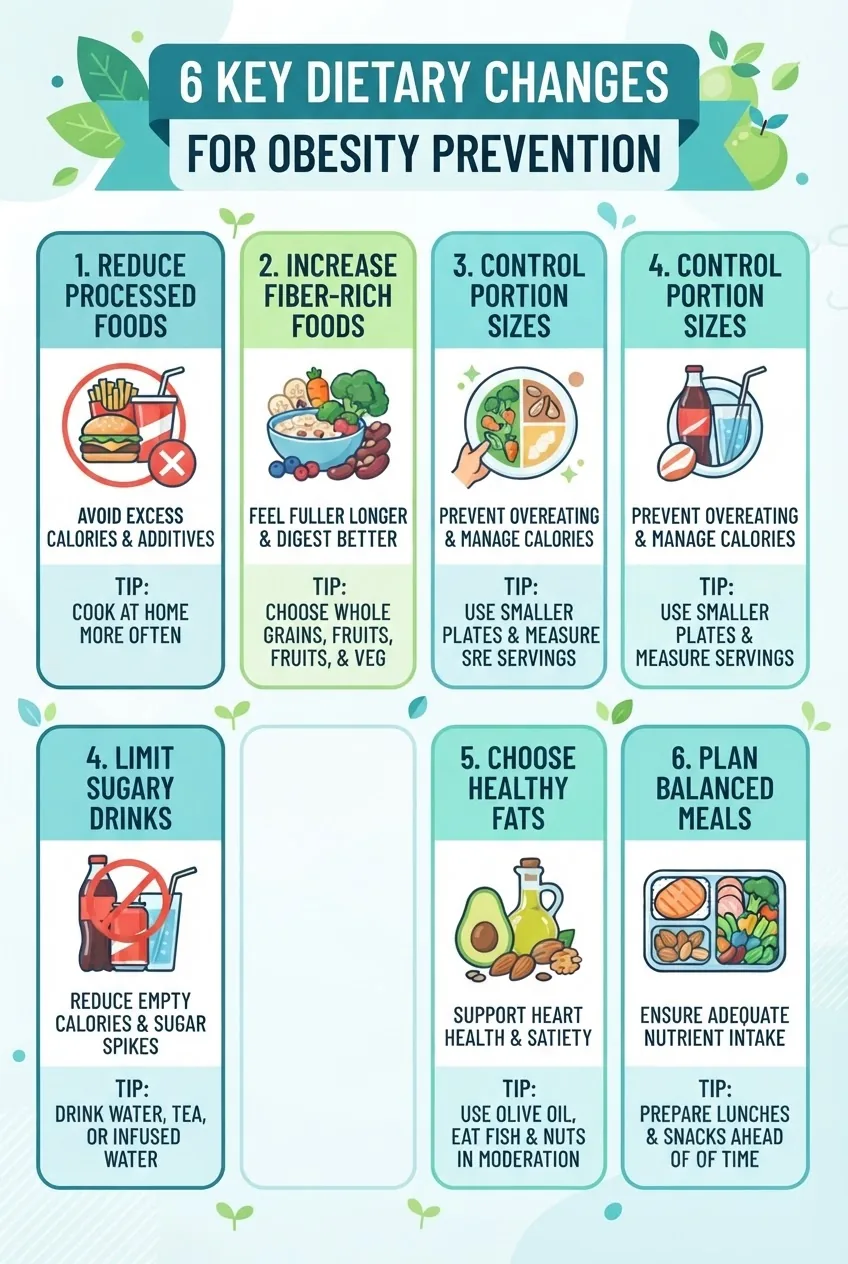
Below is a prioritized, numbered list of high-impact dietary changes proven to reduce excess weight and lower disease risk. Each item includes exact substitutions and measurable targets.
-
Replace sugary drinks with water or low-calorie alternatives.
Target: cut 12–24 oz of sugar-sweetened beverages/day to reduce 150–300 kcal/day. Swap for water, seltzer with citrus, or unsweetened iced tea. Keep a 20-oz water bottle as your baseline; finish it twice daily.
Evidence & guidance: recommendations align with the American Heart Association on limiting added sugars. A single step like this can reduce weekly caloric surplus significantly.
-
Increase fiber-rich whole foods to boost satiety.
Target: 25–35 grams of fiber daily. Add 1 cup cooked beans (~15g fiber/day when combined), 1 medium apple (4.5g), and 1 cup steamed broccoli (5g) across the day. Swap refined grains for whole grains at two meals daily.
Example substitution: trade a 6″ white flour tortilla for a whole-wheat or corn tortilla plus an extra cup of salad greens to fill the plate with volume not calories.
-
Prioritize lean protein at each main meal.
Target: 20–30 grams of protein per meal for most adults to maintain muscle and promote fullness. Use portion cues: a palm-sized cooked portion (3–4 oz) = ~20–25 g protein (chicken breast, tofu, fish). For budget-friendly protein, include canned salmon, eggs (one large egg = 6 g), and beans.
-
Reduce processed, calorie-dense foods; favor whole ingredients.
Target: aim for processed foods >50% less often than baseline. Replace packaged snacks with hands-on alternatives: air-popped popcorn (3 cups = 100 kcal) vs. 1 oz potato chips (150 kcal). According to a 2024 industry report, processed food consumption remains a leading calorie source in many households.
-
Practice portion control using household measures.
Target: reduce plate-served portions by 20–25% initially to produce a daily 300–500 kcal deficit for steady weight loss. Use a standard 1-cup measuring cup: one cup cooked rice = 200 kcal, one fist = ~1 cup. One deck-of-cards sized protein = 3 oz. Use a smaller dinner plate (9 inches) to limit visual portion size.
-
Plan balanced meals and a realistic grocery list each week.
Target: plan at least 4 home-prepared meals per week. Use meal templates: 50% vegetables, 25% lean protein, 25% whole grains or starchy veg. As an example of structured planning, see the 21 Day Fix meal plan benefits for how calibrated portions support obesity prevention.
Shopping tip: buy produce in two textures (one crunchy, one leafy), three lean proteins, and two whole-grain staples every week.
Transition: with core dietary substitutions in place, learn how to reframe stigmatizing language and choose the most nutrient-dense options.
What “Food for Fat People” Really Means: Choosing Nutrient-Dense Foods
We reframe the phrase to mean “foods that support people carrying excess weight” — focusing on nutrient density, satiety per calorie, and cultural acceptability. This section compares recommended groups versus those to limit and offers culturally relevant Texas-friendly ideas.
| Recommended (Eat Often) | Limit (Eat Less Often) |
|---|---|
| Vegetables (leafy greens, peppers, squash), whole fruits, legumes | Fried foods, high-sugar desserts |
| Lean proteins (chicken, fish, beans), eggs | Processed meats, large restaurant portions |
| Whole grains (brown rice, oats, corn tortillas) | Refined grains, sugary cereals |
| Healthy fats in small amounts (avocado, nuts, olive oil) | Trans fats, oversized portions of nuts/nut butters |
| Fermented and high-fiber foods for gut health | Sugar-sweetened beverages and energy-dense snacks |
For culturally relevant swaps: choose charred grilled lean meats with a side salad instead of fried alternatives, use corn tortillas and black beans for filling meals, and add pickled vegetables for flavor. For clean-eating examples, review clean eating meal plan options.
Explore Spanish-language recipes and neighborhood markets by viewing nutritious comida saludable.
Transition: nutrient choices matter, but eating patterns and portion control turn good foods into effective weight-management tools — next we cover moderation steps and the psychology behind them.
How to Eat in Moderation and Lose Weight Successfully
Moderation combines portion control techniques, mindful eating, and psychological strategies for hunger and cravings. Below are actionable steps and measurable practices you can adopt immediately.

-
Practice mindful plate composition pre-meal.
Before you eat, assemble your plate to 50% vegetables, 25% protein, 25% starch. Pause 30 seconds to note hunger level (scale 1–10). Wait 10 minutes after the first forkful; many people experience subjective fullness increase in this period.
-
Use simple household items to measure portions.
Walkthrough: a closed fist = ~1 cup (vegetables); cupped hand = ~½ cup (grains); deck of cards = ~3 oz protein; thumb tip = ~1 tbsp (oils/nut butter). To reduce a pasta portion by 25%, use a 1-cup measuring cup instead of a heaping scoop — that saves ~150–200 kcal per meal.
-
Apply the “half-plate swap” for calorie-dense favorites.
Replace half of the surface area of a caloric dish (mac-and-cheese, loaded nachos) with steamed or grilled vegetables. This lowers calories while preserving the meal’s flavor profile. Track one swap per week and tally calories saved.
-
Address “will eating” and emotional triggers with rules, not shame.
“Will eating” — the attempt to rely on raw willpower alone — often fails when urges are strong. Instead, design rules: limit sweets to two weekends incidents per month, pre-portion snack bags (1 oz), and schedule “planned indulgences” to avoid unplanned bingeing. For timing that aids moderation, see research on the best time to eat dinner to complement moderation tactics.
-
Increase foods that prolong fullness.
Include soluble fiber (oats, beans) and protein at meals to increase satiety. For additional ideas, review foods that increase satiety.
-
Practice “5-breaths” pause to handle cravings.
When craving strikes, inhale 5 slow breaths, note the urge, and delay action by 10 minutes. Often the craving decreases by 30–50%. Log triggers in a simple chart: time, mood, hunger rating, outcome.
-
Measure progress with weekly non-scale indicators.
Track energy, sleep, mood, clothing fit, waist measurement at the navel, and a single weekly weigh-in. If weight stalls for 3 weeks, re-check portion sizes and added liquid calories.
Transition: moderation tools work best when they become habits — the next section shows how to build sustainable changes that last beyond short diets.
Developing Sustainable Healthy Eating Habits for Long-Term Weight Control
Shift the goal from “weight loss quick fixes” to consistent, maintainable habits that improve health metrics. Below are behavioral steps, a case example, and habit-building techniques linked to clinical guidance.
-
Create a 6-week habit-building plan with specific micro-goals.
Week 1: add 1 extra cup of vegetables daily. Week 2: swap one sugary drink for water. Weeks 3–4: practice portion measurements at two meals daily. Weeks 5–6: solidify a twice-weekly meal prep routine (90 minutes each prep session). Use a simple tracking sheet and check off daily wins.
-
Use social support and environmental design to reduce friction.
Practical moves: keep sweets out of sight, place fruit in a visible bowl, and cook with a partner once weekly. For foundational guidance on building sustainable diet habits, see the How to Eat to Live Guide with Healthy Diet Habits.
-
Implement stimulus control for high-risk situations.
Have a go-to low-calorie snack (Greek yogurt, 1 cup) and a relaxation routine for stress instead of food. Schedule non-food rewards (walk, music) to reinforce milestones.
-
Leverage evidence-based habit strategies from NIH research.
NIH-sponsored studies support small, repeated behavior changes: start with micro-habits and scale up. For clinical summaries on behavioral interventions, consult NIH/NHLBI guidance and adapt the strategies to your context.
-
Case example: a realistic dietary change plan for obesity management.
Client profile: 45-year-old Texan, BMI 33, sedentary office job, enjoys Tex-Mex. Plan: Week 0 baseline measurements; Week 1–2: swap sweetened iced tea for unsweetened iced tea with lime, add 1 cup black beans twice weekly; Week 3–4: replace fried breakfast tacos with scrambled eggs, corn tortilla, sautéed peppers; Week 5–6: meal-prep grilled chicken, roasted vegetables, and brown rice for four meals. Expected measurable results: 1–3% bodyweight loss in 6 weeks and improved fasting glucose in routine bloodwork. Track using photos, waist measurement, and energy levels recorded weekly.
-
Practical resources and daily routine templates.
Template: Morning — water (16 oz), protein-rich breakfast (20–30 g), midday — salad with 3 oz protein, evening — lean protein + veg + ½ cup whole grain. Replace desserts with a piece of fruit twice weekly. For additional practical tips, consult consuming healthy food tips.
Transition: habit building surfaces common practical problems — next is a troubleshooting guide for those barriers most often encountered.
Common Challenges and Solutions in Dietary Changes for Overweight Individuals
Below are frequent problems with clear responses you can try immediately. Each item follows a problem → direct solution format used in clinical behavior-change coaching.
- Problem: Cravings after 8 pm. Solution: Have a 100–150 kcal planned snack (Greek yogurt, cinnamon) and do a 15-minute relaxation practice; reduce evening caffeine earlier in the day.
- Problem: Weekend overeating. Solution: Schedule one planned weekend indulgence and pre-portion it; alternate indulgences with active social activities.
- Problem: Dining out leads to large portions. Solution: Order a half-portion or share an entrée; request dressings on the side and start with a vegetable appetizer.
- Problem: Emotional eating during stress. Solution: Use a 10-minute coping list (call a friend, walk, five-breath pause) and practice tracking emotions before eating.
- Problem: Confusion from fad diets. Solution: Prioritize balanced meals over elimination; if considering a specific plan, compare it to clean eating principles and seek professional guidance.
- Problem: Competitive or binge eating scenarios. Solution: Learn from competitive eating insights to understand cue-driven consumption and build rules to limit exposure.
Transition: after troubleshooting, review common practitioner-observed mistakes and how to preempt them.
Common mistakes and how to avoid them
I often see clients skip the portion training and expect willpower alone to solve overeating; that fails within two weeks. Instead I coach them to practice household-item measurements for seven days and to pre-portion snacks. I also regularly observe all-or-nothing thinking; I recommend planning two realistic indulgences per month rather than total abstinence.
Another frequent error: ignoring liquid calories. I advise tracking drinks for seven consecutive days; after counting, most people reduce 200–400 kcal/day simply by cutting sugary drinks and specialty coffees.
Checklist: Verify your work
- Do you have baseline measures recorded (weight, waist, bloodwork)?
- Have you implemented at least three of the key dietary changes above for two weeks?
- Can you demonstrate portion control using a fist, cup, and deck-of-cards method?
- Are you tracking one behavioral metric (sleep, hunger, mood) weekly?
- Have you scheduled a 90-minute weekly meal-prep block for the next 6 weeks?
When to call in a professional
Contact a registered dietitian, primary care provider, or endocrinologist if you have BMI >35, rapid weight changes, uncontrolled diabetes, or medications that affect appetite. Seek immediate medical attention for symptoms like chest pain, fainting, or sudden dizziness. For structured medical interventions and therapy, professionals can tailor caloric targets, address medication interactions, and offer accountability.
Final summary: adopt a few high-impact changes (remove sugary drinks, increase fiber, control portions), practice mindful moderation, and build habits in six-week micro-goals. Ready to start? Download your 6-week habit sheet and try week 1 swaps this week.
Disclaimer: individual results vary. Before making major dietary changes, consult your healthcare provider, especially with pre-existing conditions or medications.